Author: Trish

  • DM’s Pocket Guide Ep 12:  Other Combat Actions Pt. 2

    DM’s Pocket Guide Ep 12: Other Combat Actions Pt. 2

    Other Combat Actions Pt. 2 DM’s Pocket Guide

    We finished up our conversation on combat actions other than attacking and casting by discussing Ready, Search, and Use Object. Roar Cat makes a brief appearance in this episode.  Roll a DC12 Perception check to see if you can find him! Please like, review, and share to support DM’s Pocket Guide! We’re Tricia and Rachel from Roar Cat Reads.  If you would like to learn about a specific D&D rule or spell, send us a request at roarcatreads@gmail.com.  Transcripts of every episode are available!   If you want more rules, buy a copy of the Player’s Handbook! Follow us on Twitter and Instagram  Artwork by Haley Boros DM’s Pocket Guide is unofficial Fan Content permitted under the Fan Content Policy. Not approved/endorsed by Wizards. Portions of the materials used are property of Wizards of the Coast. ©Wizards of the Coast LLC.

    Transcription

    Welcome to DM’s Pocket Guide, where we discuss the rules, spells, and monsters of Dungeons and Dragons, 5th edition.

    Tricia:  Hello, we are going to continue our previous conversation on Other Combat Actions

    Rachel:  Yeah! So next up is the Ready action. Sometimes you want to get the jump on a foe or wait for a particular circumstance before you act.  To do so, you can take the Ready action on your turn, which lets you act using your reaction before the start of your next turn. That’s a lot of –

    T:  Action, reaction, ready, turn? 

    R:  Yes, say well this is essentially doing is saying that the thing that you would usually do in your turn is to say, “Wait!  When this thing happens, I’m going to do a thing.” The thing that you get to do is a reaction, which is like a limited form of action.  Some things, some players will have a reaction ready to go, like there is a spell that I’m thinking of that puts like a barrier up between.

    T:  Oh yeah. Like Shield of Faith or something. 

    R:  Yeah. So you use that as a reaction to something that’s happening. So this whole ready action is designed for those circumstances where… “I want to wait until the goblin appears that back out from behind that pillar again, and then I’m gonna do blah.”

    T:  Yeah. But you do have to specifically say what you’re going to do and under what circumstances, which is the thing that we have not done. When we learned, oh you can like ready your action, we had just been giving a full turn whenever they wanted basically. 

    R:  Yeah, I had allowed people to just literally take their two attacks and use their movement and yeah, do whatever it was they wanted to do in that time. That’s not the purpose here. 

    T:  Yeah, because we would also use it of just like, when players were taking too long to figure out what they wanted to do,we’d be like, “You want to just hold your action and do it later?”  

    R:  I mean, that’s a good time management piece. If you want to use that, like, feel free to do that.  But the proper use of the ready action is to specifically specify what it is you want to do and then take a limited turn when it is your turn.  So, the examples it gives in the book is things like using your movement. So usually in a turn, you would get to use your movement and make an attack or do another action. Well, you can’t do that if you ready your action.  If you ready your action to move then you just move.

    T:  Yeah. Which you would use in a case for like, “Well, if that guy gets any closer to me, I’ll back up.” 

    R:  Exactly. Yeah. 

    T:  So another thing you can do with the ready action is ready a spell. Perhaps you don’t want to use it during your turn for whatever reason – perhaps the monster you want to attack isn’t actually in your line of sight yet, but you’re hoping it will move and you can – and so you cast it as normal during your turn, but you hold its energy to release during your turn.  I think the thing to remember with this is that if you are attacked while you are holding this energy waiting for your reaction to use it, then you still have to do the typical…Your concentration is broken, you have to roll to see if you can maintain concentration. So, there is a lot there with the spells. You can’t just be like, well, no matter what I cast this spell when I want to. 

    R:  I think it might also be interesting in that you use this spell slot on your turn, and if your concentration is broken, you know, the spell slot is still used.  The energy is–

    T:  Yeah, you’ve already siphoned it out.  

    R:  You’ve mustered it or gathered it together. Yeah, just making sure that’s the thing. And yeah, I think that’s the Ready action. 

    T:  Yeah.  Next up is Search. When you take the search action, you devote your attention to finding something. Depending on the nature of  the search, the DM might have you make a perception check or an investigation check.  This is pretty obvious.  I honestly don’t really understand why it’s listed here with combat actions. 

    R:  I mean, I guess, just so it’s written down. And I mean, I didn’t think to do it until I actually read through, saw it, and needed to use it.  It was in the game that we played together that you DM, and I asked that one of my characters who was familiar with fighting monsters if they could tell a certain characteristic about that monster.  I wanted to find out if it was undead and then relay that information to the rest of the party because I knew that there were spells they had that targeted specifically undead and you let me I think roll one of these two… I still had to roll for it to work out if my character knew this information, but that was one way to use it. Another way would be like, looking for a weakness in a rock wall to try and bring it down. 

    T: Yeah, you want to shoot an arrow and have it collapse right on the encroaching hoard!

    R:  Or just put a wall between you and yeah, encroaching hoard, I think is what I might do. So searching for it and allowing and – I think it’s an opportunity as a player, and as a DM, to allow your players to resolve combat in maybe different ways. And that might be a use of the Search action.  And then the last one is Use an Object.  You normally interact with an object while doing something else, such as when you draw a sword as part of an attack. When an object requires your action for its use, you take the Use Object  action.  This action is also useful when you want to interact with more than one object on your turn. 

    T:  So for instance, this would be useful if you’re fighting this encroaching horde and you’re like, “Aw man, there’s no way we can do this alone. We must ring the bells to summon our companions!”  So your action would be to use an object, pick up a bell hammer and strike a bell. 

    R:  Yeah, I mean, this is one that feels obvious to me of like, yeah, you could always, you know, use your turn to turn away and do another thing. But this is a specific thing.  There might also be items that require an action to use.  I think I’ve seen that written on some magical items. 

    T:  Yeah, that’s true. I think kind of what we’re saying with both search and use an object is covered in this little added bit to the book that’s called Improvise an Action. Which basically is just, your character can do things not covered by the actions in this chapter such as breaking down doors, intimidating enemies, sensing weaknesses, etc, etc.  And I think that that is the key point.  Even though we were kind of locked into this attack, cast a spell and we’re like, wow, there’s so much more you could do. There’s so much more beyond that. D&D is fundamentally a game about imagination and as long as you can justify doing a thing within six seconds, it could be a combat action. 

    R:  Yeah, it’s really good to consider the other things that you can do. And it’s always trying to say yes, whatever it is that the player’s wanting to try and just encouraging that creativity.

    Thanks for listening!  If you have something you’d like us to cover, email it to roarcatreads@gmail.com or find us on Twitter and Instagram @roarcatreads. 

  • Adventure Queers:  Meet Bonnie Hammond of Bits & Keys

    Adventure Queers: Meet Bonnie Hammond of Bits & Keys

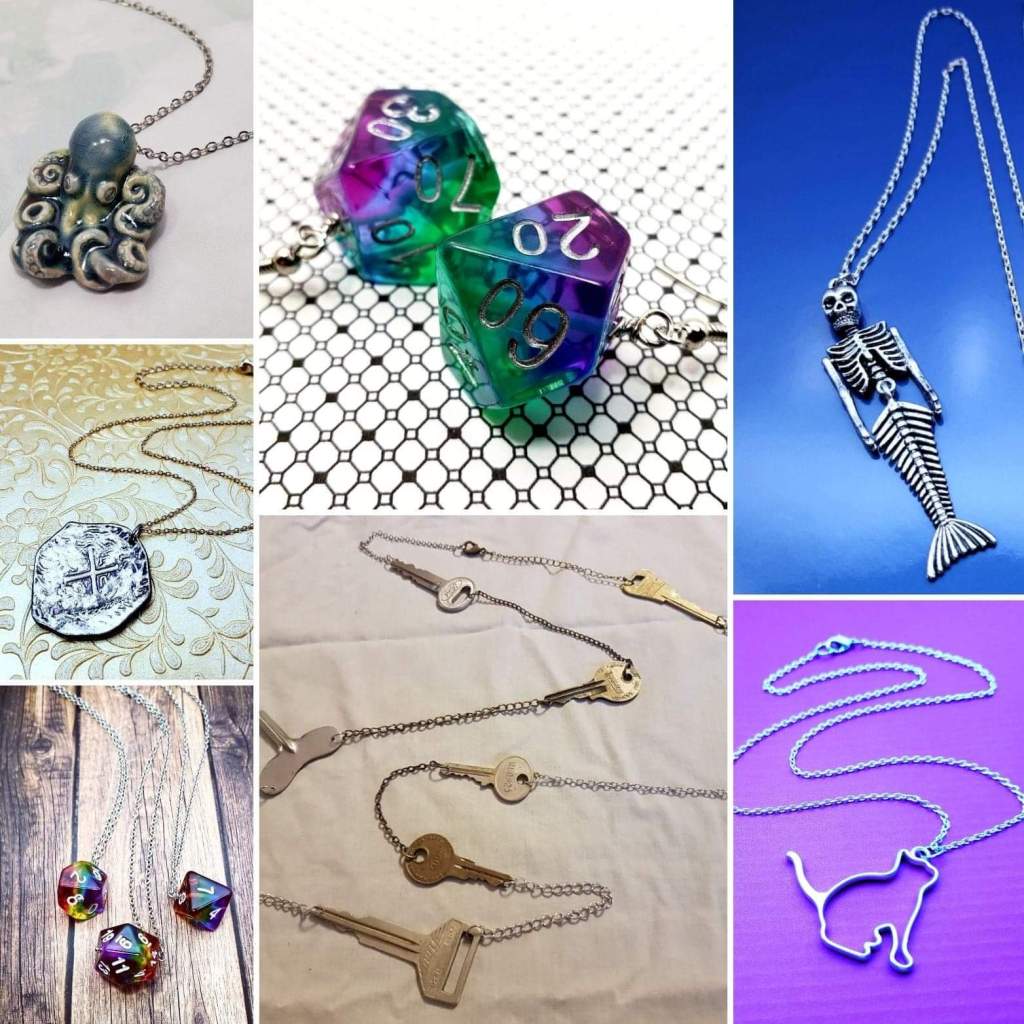
    Bonnie Hammond (she/her) is the queer, disabled, neurodivergent feminist your parents warned you about. Not quite nerdy and not quite popular growing up, Battlestar Galactica was the series that saw her transition from sleeping with geeks to actually being one. She went to school for math and tourism, spent a while as a labour activist, and then accidentally started making jewellery for a living. She started with keys and now collects flatware, keychains, old watch bits, tiny teacups, broken jewellery, and dice (drilling holes through the 1 out of spite). She’s a Whovian, a Browncoat, a Supernatural fangirl, and the most extroverted nerd you will find. Bonnie thinks consent is sexy (when it’s clearly and freely communicated), has been twice hired to sit in the back at comedy shows due to the volume and infectious nature of her laugh, and is probably allergic to whatever you’re eating right now.


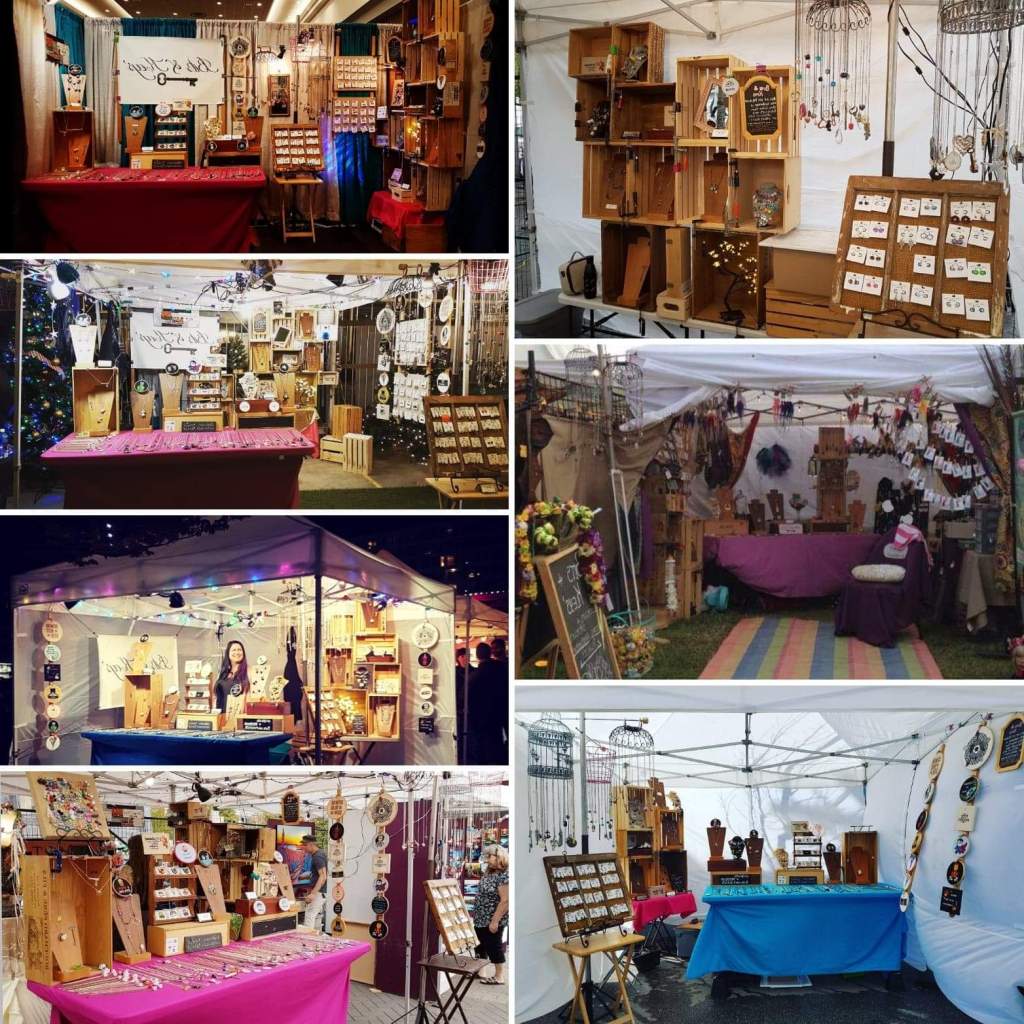
    Bits & Keys makes jewellery from bits and pieces of upcycled and recycled other stuff. Old keys, single earrings, gaming dice, pocket watches, and flatware (for example) are brought back to life in new and creative ways. We carry a variety of unique, interesting, often nerdy, wearable art which we can customize to match the pieces to the person.

    Bonnie, you are the owner of Bits & Keys where you sell upcycled bits and pieces of things that you’ve transformed into beautiful and unique jewellery. What was your inspiration to start this business?

    In 2012 I visited San Francisco for Pride, and while I was there I happened upon a little farmers market/craft fair. I fell in love with a necklace that featured some chain maille and an antique key. When I got back, I was working with a group of people who were fundraising to send a bunch of us to a socialist convention in Ecuador. We decided to hold a craft fair of our own, and I realised I could perhaps do something inspired by my new favourite piece. So I ran off to a flea market, spent WAY too much money, and stayed awake for many days. I sold out of pieces at the event, and six months later it was my full-time job.

    You work alongside a community of diverse creatives. What is the benefit of being connected to other crafters?  

    Honestly, the benefits are so enormous it’s actually a little hard to accurately qualify. My community supports me, inspires me, and drives me by sharing their struggles. They pull me through when times are tough, they give me space to unapologetically be me, and they teach me new things. Practical making techniques are shared, and also what it’s like to be a crafter with different life circumstances, in different bodies, with different identities. Crafting (for a living) is often a solo activity, especially during these unprecedented times, so it’s really important to me to stay connected and rooted in a non-homogeneous community. If I only talk to people who look like and live life like me, I’m not going to be able to align my business and my life with my moral choices. Forming a community and support systems underpins a lot of my values and motivations, as it does for many struggling millennials. For me, it’s less about building business contacts and networking, and more about establishing vulnerable, trusting, symbiotic relationships.

    You identify as both queer and disabled. Have these identities affected the way you create? The way you do business?

    Absolutely! Creating a physical space that is as safe and as accessible to as broad a base of people as possible is really important to me. A few other creators and I have a soft-running competition to see who can make their booth and their products the most visibly queer. There is nothing I love better than attending an event that is NOT particularly or intentionally inclusive and by the end having all the lgbtq+ people feel welcome in my space. I want my booth and products to be a way for people to challenge gender norms, or explore personal identity. 

    As for accessibility, I actively work to accommodate a variety of needs. For instance, having the booth be wheelchair accessible sounds basic, but it’s unfortunately uncommon. I’m mindful when accommodating for allergies, sensitivities, and tactile sensory issues. Especially at events that are large or multiple days (like music festivals), I try to incorporate a space away from most of the people, that has a variety of seating options if people need to rest, or need less stimulation to make choices. I am personally really loud and have what’s politely referred to as A LOT of personality, so if I notice people are having trouble with eye contact or are struggling to communicate, my goal is to hold space for those needs and meet people where they’re at. Much of my jewellery is designed with different physical needs in mind. I can offer counter-weighted necklace attachments to move the weight of things off the back of the neck to the shoulders. Many pieces are actually compartments for water or pills for people who struggle with purses or whose clothes don’t have pockets. I also try really hard to accommodate different body shapes, I alter necklace lengths for no charge (within some reason) so everyone can have it sit where their body finds it the most comfortable. Designing jewellery for people with larger necks, longer torsos, or larger busts is something I’m happy to work around in a judgement-free environment.

    The personal is political, and I would add that business is political as well. Tell me about your motivation to sell crafted items made by marginalized people.

    The truth is that I and many of my closest friends live in abject poverty simply because we are disabled or intersectionality marginalized. The only real power I have is to continue to try to help my community to sell their wares. I worked for a long time attempting to influence policy change politically, and while I still participate in many of those circles, the truth is I no longer have the physical ability to BE there. So this is a small way I can help. It’s mutually beneficial to have different products in the booth. When possible, I hire people at a fair and livable wage; this way I can give back a little bit and it creates a space where my friends and I can survive late-stage capitalism without letting it eat our morals. There are a lot of organizations and businesses out there who frame their whole objective through a lens of top-down charity. What I personally want to foster with my business comes from a place of mutual support and equality.

    Your support extends beyond artists to your customers. What sort of experience do you hope people have when they work with you?

    It sort of rolls back into the same philosophy. I have a business, I sell things, and I participate in capitalism (because I have too). Because of the nature of my products, I am often selling to people who have lower than ‘average’ privilege, so it’s important to make that experience as least exploitative as possible. I want people to fall in love with the pieces they buy from me. I offer discounts or trade situations when I can with a variety of payment options, and I work with people virtually if that’s easier. Consent isn’t just about intimate or personal situations for me, I want to communicate fully with my customers to make sure that people feel valued. Some of my closest friendships started as customers. I never want my business to feel purely transactional. There is also a dollop of self-interest worked into this: nothing beats down my self-doubt or imposter syndrome down like people being genuinely excited to interact about my pieces. Having them send photos, remember me at later events, or share the happy moments of their loved ones receiving the perfect gift that I made is the best feeling I’ve ever had. I couldn’t give it up for anything and building a strong community with my customers makes that possible.

    I’ve heard that you try to have the “gayest, nerdiest booth at every event.” That’s catnip for us at Roar Cat Reads (pun intended). What does that look like?

    Many many rainbows. Like absurd amounts of rainbows. It means when I make things with representation in mind, I’m mindful to include as many different flags as possible and that I will work on requests for new flags as I can. It means having visible pronouns on my business cards and making name tags with pronouns on them, especially in spaces where that’s not considered. Music festivals, Christmas markets, nerd events; I want people to know that my space is a safer space. It also means being the biggest nerd I can be, embracing lots of different fandoms, listening to people get excited about stuff they’re excited about. Researching new cosplay requests and pieces, and exploring fandoms that usually don’t peak my personal interest, but that others are excited about. It also means making sure our nerdy fandoms don’t make space for racist, sexist, ableist, and anti-lgbtq+ themes. Acknowledging that we sometimes have to let books, shows, and fandoms go because the actors, directors, writers, or creators’ behaviour no longer aligns with our morals and they’ve refused to change. It always breaks my heart, but you have to be intolerant of intolerance or the space is no longer a safer space.

    Business aside, what queer and nerdy content would you like to recommend to readers?

    Well, if I’m putting My business aside, one of my favourite crafters is Miss Stitched (Facebook or Instagram). She has an amazing line of sassy and nerdy cross-stitch wall art and catnip pillows and transforms an ancient feminine art medium into a modern feminist nerd platform.  

    In non-businessy recommendations, I always highly recommend any and all books by Terry Pratchett, who of course is a super popular writer, but is unparalleled in mixing fantasy with social justice themes (don’t start with the first Discworld novel, start somewhere in the middle and work your way out).

    I also unabashedly love Wil Wheaton, The Good Place, The She-ra reboot, @dez.thelez (tiktok), @mercurystardust (tiktok), and @thatb1tchkarma (tiktok)


    Sign up for Roar Cat Reads’ Monthly Newsletter

    Every month one subscriber wins a prize!

    Processing…
    Success! You're on the list.

    By clicking submit, you agree to share your email address with the site owner and Mailchimp to receive marketing, updates, and other emails from the site owner. Use the unsubscribe link in those emails to opt out at any time.

  • Iron Widow by Xiran Jay Zhao

    Iron Widow by Xiran Jay Zhao

    Genre | YA Fantasy/Science Fiction
    Page #s | 394
    Publishing Date | September 2021

    The boys of Huaxia dream of pairing up with girls to pilot Chrysalises, giant transforming robots that can battle the mecha aliens that lurk beyond the Great Wall. It doesn’t matter that the girls often die from the mental strain.

    When 18-year-old Zetian offers herself up as a concubine-pilot, it’s to assassinate the ace male pilot responsible for her sister’s death. But she gets her vengeance in a way nobody expected—she kills him through the psychic link between pilots and emerges from the cockpit unscathed. She is labeled an Iron Widow, a much-feared and much-silenced kind of female pilot who can sacrifice boys to power up Chrysalises instead.​

    To tame her unnerving yet invaluable mental strength, she is paired up with Li Shimin, the strongest and most controversial male pilot in Huaxia​. But now that Zetian has had a taste of power, she will not cower so easily. She will miss no opportunity to leverage their combined might and infamy to survive attempt after attempt on her life, until she can figure out exactly why the pilot system works in its misogynist way—and stop more girls from being sacrificed.

    Goodreads

    Iron Widow is an absolute page-turner with a propulsive plot, a mysteriously unique and totally awesome setting, and an amazing series of “Oh, this old trope? NOPE!” twists. Zhao is a very talented writer who knows how to immediately grab readers’ attention. Although I felt the middle section veered a little too close to other stories (notably, The Hunger Games), Zhao then dismantles all the things that feel familiar with feminism and queerness while ratcheting up the plot and leaving us desperate for a sequel. Um, YES PLEASE.

    The furious feminism that is embedded in every page is a breath of fresh air. No opportunity is missed to point out personal or systemic sexism. This is a story about a woman who sees how society has broken women in innumerable ways, through gender roles in marriage, through access to education, through foot bindings, through the propaganda told about what a woman is good for. Zetian is livid and determined to burn it all down, and she does not care a single bit if she looks like a villain for it. It. Is. AWESOME.

    The worldbuilding is immediately believable while also being a huge mystery. From the prologue describing a mech battle (how is it the third paragraph and I’m just now mentioning mech battles – THERE ARE MECH BATTLES!) with tech handed down by the gods, I was fully immersed. Most importantly, I also fully bought in, because there is enough here that maps onto our everyday experience (i.e. the sexism!) that the world feels very grounded despite the regular alien invasions.

    I don’t want to say too much about the storylines revolving around romances because some of the book’s best twists and turns are found here. I will just say that I loved that Zetian’s fierceness never dies just because she’s crushing on someone, and that I loved seeing two very different but equally healthy forms of masculinity portrayed. Beyond that…just read it for yourself!

    As far as I can see, there is no firm release date for the sequel, but I am going to read it as soon as it’s released!

    What Makes This Book Queer?

    Xiran Jay Zhao is a queer person who uses they/them pronouns. Queerness is sprinkled through the first half of the book and then comes into the second half in a big way. But I don’t want to say more – discover the details for yourself!

    Who Do I Recommend This Book To?

    Give Iron Widow to your feminist friends that you want to expose to genre and/or to your genre friends that you want to expose to feminism!

    Check out our Queer Lil Library for more book recommendations and reviews!

  • DM’s Pocket Guide Ep 11: Hide Action

    DM’s Pocket Guide Ep 11: Hide Action

    Hide Action DM’s Pocket Guide

    In today's episode, we pull information from two different locations in the Player's Handbook to learn about all the advantages and rules involved in the Hide Action.  Now I want to play a stealthy rogue and put them all to use! Please like, review, and share to support DM’s Pocket Guide! We’re Tricia and Rachel from Roar Cat Reads.  If you would like to learn about a specific D&D rule or spell, send us a request at roarcatreads@gmail.com.  Transcripts of every episode are available!   If you want more rules, buy a copy of the Player’s Handbook! Follow us on Twitter and Instagram  Artwork by Haley Boros DM’s Pocket Guide is unofficial Fan Content permitted under the Fan Content Policy. Not approved/endorsed by Wizards. Portions of the materials used are property of Wizards of the Coast. ©Wizards of the Coast LLC.

    Transcription

    Welcome to DM’s Pocket Guide, where we discuss the rules, spells, and monsters of Dungeons and Dragons, 5th edition.

    Tricia:  Hello!  Today we are going to talk about Hide.  We did not include it when we went over “Other Combat Actions” because it references two other parts of the Player’s Handbook.  We’re going to dive into all of that today.

    Rachel:  So the DM decides when the circumstances are appropriate.  When you’re trying to hide, you make a Dexterity Stealth check.

    T:  That makes sense.

    R:  For sure.  –Until you are discovered, or you stop hiding.  So you roll to sneak away, and you stay hidden until you decide not to or someone finds you.

    T:  Yeah, so you can’t be like, “Naw, but I’m hidden!” as the monster stands over you.

    R:  In order to do that, any creature that’s actively searching for you will be making a Perception check to look for signs of your presence, and I assume it’s going to be contesting the Stealth check that you use to hide.  That’s how I would certainly do it.

    T:  Yeah, that makes sense.


    R:  You can’t hide from a creature that can see you clearly.  This one is really important.  People will try and pull the hide action all the time, like “It’s an action I can do.”  Well, you can’t do it if the thing can see you.

    T:  “But I ducked down!”

    R:  Ducked down behind what?  I’ve certainly had players sneak behind other players, other characters, particularly if they’re a size class larger or you know, just out of the way, to try and hide.  If you give away your position or make a noise, you can also stop from hiding.  An invisible creature can always try to hide, so if you can make yourself invisible, you can take this action literally whenever you like.  It does note here in the book, actually, that signs of its passage might still be noticed – it does have to stay quiet, still.  There are ways that even an invisible could give away–

    T:  Footprints in the sand!

    R:  Exactly, yup.  In combat, most creatures stay alert for signs of danger all around, so if you come out of hiding and approach a creature, it usually sees you.  I know that there are a lot of rogues that like to use the stealth…

    T:  Sneak attack.

    R:  Yeah, sneak attack.  So this is an interesting one for that.  If they are hiding, and they come out of hiding and rush 20 feet toward an enemy that is looking right at them…

    T:  Not so sneaky anymore.

    R:  No, that’s right.  But if that creature were distracted in some way, you could allow that to succeed.

    T:  Which, hey!  Maybe another player uses the Help action to distract them so that the other person can sneak up and maintain their Hide.

    R:  Yeah, exactly.  So actually, any creature that is coming out of hiding will get advantage on an attack if the other creature that it’s attacking doesn’t know it’s there.  Then we’ve got some notes on passive perception.  So when you hide, there’s a chance someone will notice you, even if no one is actively searching for you.  To determine if such a creature notices you, the DM compares your Stealth check with the creature’s passive perception, which is actually a static score on most monster sheets.  You can work it out yourself, because it’s 10 + the creature’s wisdom modifier and any bonuses that might apply.

    T:  Nice.  And that is also what you had said earlier about contrasting perception with stealth, so you were right about that.

    R:  Yeah, those are the two things that oppose each other.  One of the main factors in determining whether you can find a hidden creature or object is how well you can see the area, as being lightly or heavily obscured, which is explained in chapter 8: Adventuring.

    T:  I think that makes sense.  If a place is dark, and other things don’t have darkvision, it’s going to be easier for you to hide.  If it’s bright sunlight, it’s going to be harder for you to hide.  If there’s fog, if there’s dust in the air; those things make it easier to hide.

    R:  Yeah, so I think as a DM, that’s probably going to influence the DC check, like how to make the check for Hide.  Players will get bonuses if they describe the area around them, why it’s obscured.  If you mention about dust or something like that.

    T:  So another piece to the Hide action is that it links you to Unseen Attackers and Targets to know what bonuses hiding gives you.  This section of the Player’s Handbook also mentions that, in addition to hiding, you could gain these bonuses through the invisibility spell or by lurking in darkness.

    R:  I don’t know any player that would like to lurk in darkness!


    T:  When you attack a target that you can’t see, you have disadvantage on the attack roll.  So if you as the DM are playing the monsters, and a player is hiding, you’re going to have disadvantage when you try to attack them.  This is true whether you’re guessing the target’s location or you’re targeting a creature you can hear but can’t see.  So if you’re not 100% sure of their visible location, you’ll be attacking at disadvantage.

    R:  Oh, that’s interesting, actually, because I had this circumstance come up in a game I was running where I wanted to – my monster was blinded and I wanted to just kind of wildly lash out, and we got into a discussion of like, “Oh, well if they attack is targeting this square, it automatically fails,” which I’m sure is a rule.  But my monster should be able to lash out with its sword and have a chance of hitting something.

    T:  At disadvantage, but yeah.  If the target isn’t in the location you targeted, you do automatically miss, but the DM doesn’t have to say if you guessed the location correctly or not.  So like, if you are blindly shooting at something and you are correct for where they are but you miss the attack roll vs. you blindly shoot in an area and they’re not even there at all and you miss…the DM just says, “You miss,” and you have no idea if you were close or not.

    R:  Oh, that’s good to know.  As a DM, I would feel obligated to say, “Yes, that hits…”

    T:  Well, if it hits you have to say, but if it misses, it doesn’t matter how near or far you are from missing it.

    R:  So it would be the case of wording it in such a way that it doesn’t give away that.  Which I would be terrible at remembering in the moment.

    T:  Yes, yes, that’s good.  Um, when a creature can’t see you, you have advantage on attack rolls against it, so if you are hiding, you are able to attack at advantage.  However, if you are hidden, both unseen and unheard, and you make an attack, you give away your location whether your attack hits or misses.  So you get it at advantage, but basically once, and then you have to hide again.

    R:  Once you come out of hiding to stab something in the ankle, it knows you’re there.

    T:   Yes.  So that is Hide!

    Thanks for listening!  If you have something you’d like us to cover, email it to roarcatreads@gmail.com or find us on Twitter and Instagram @roarcatreads. 
  • Queer Books, Queer Readers:  Haley Boros Recommends Beyond: The Queer Sci-Fi & Fantasy Comic Anthology

    Queer Books, Queer Readers: Haley Boros Recommends Beyond: The Queer Sci-Fi & Fantasy Comic Anthology

    Hi there! I’m Haley Boros, my pronouns are she/her, and I’m an award winning graphic designer, illustrator, and published cartoonist. Outside of my career in the label printing and flexible packaging industry, my creative practice focuses on whimsy and fantastical creatures – think dogs doing fantasy jobs! I’ve contributed to several comic and art anthologies since 2017, most of which can be found on my website at haleyboros.com. You can also become a supporter of mine at ko-fi.com/hihaleyboros, or follow along at @hihaleyboros on twitter and instagram!

    What queer book have you chosen to share with our readers today?

    Today I’ve chosen Beyond: The Queer Sci-Fi & Fantasy Comic Anthology. Featuring 18 stories by 26 contributors, Beyond is a 250+ page, black and white, queer comic anthology, full of swashbuckling space pirates, dragon slayers, death-defying astronauts, and monster royalty.  Each story celebrates and showcases unquestionably queer characters as they explore the galaxy, mix magic, have renegade adventures, and save the day!

    Why is this book one of your favorites?

    I’m a BIG fan of comics that are sci-fi and fantasy all rolled into one. It’s the best of both genres!

    How would you describe yourself as a reader?

    That’s a terrific question. I would have to say that I enjoy books that match the mood I’m in, for the most part. As an example, I picked up the newest Chris Hadfield book from the library (where I’ve been doing a lot of my current reading from!!) because I felt it would be a good mix of things I love – Space and Mystery. Even though I have borrowed it from the Library twice now, I really don’t think I could get into it again. It just didn’t feel like something I could see myself spending my time doing. If I’m not connecting with something within 50-100 pages, I abandon it and find something else that sparks my interest.

    As a queer person, have books helped you explore or express your queer identity?

    Yes, ABSOLUTELY! I’ve found I really relate so much to my queer comics peers when I read their works. I’ve found little pieces of myself in them, and it brings me so much joy. Getting to read about different character’s experiences in their own queer journeys has really made me consider that mine is unique and should be cherished.

    Other than reading, are there any queer nerdy recommendations that you would like to leave with our readers?

    Queer and Nerdy recommendations that aren’t reading…hmmm.. OH! There are quite a few television shows and movies up on Netflix that are very good and very queer. Some that stand out to me are Feel Good, Everything Sucks!, Schitt’s Creek, Sex Education, SheRa and the Princesses of Power, and One Day at a Time.

    Thank you, Haley!

    Check out our Queer Lil Library for more book recommendations and reviews!

    Processing…
    Success! You're on the list.
  • Spinning by Tillie Walden

    Spinning by Tillie Walden

    Genre | Contemporary Fiction Graphic Novel
    Page #s | 400
    Publishing Date | September 2017

    Poignant and captivating, Ignatz Award winner Tillie Walden’s powerful graphic memoir, Spinning, captures what it’s like to come of age, come out, and come to terms with leaving behind everything you used to know.

    It was the same every morning. Wake up, grab the ice skates, and head to the rink while the world was still dark.

    Weekends were spent in glitter and tights at competitions. Perform. Smile. And do it again.

    She was good. She won. And she hated it.

    For ten years, figure skating was Tillie Walden’s life. She woke before dawn for morning lessons, went straight to group practice after school, and spent weekends competing at ice rinks across the state. It was a central piece of her identity, her safe haven from the stress of school, bullies, and family. But over time, as she switched schools, got into art, and fell in love with her first girlfriend, she began to question how the close-minded world of figure skating fit in with the rest of her life, and whether all the work was worth it given the reality: that she, and her friends on the figure skating team, were nowhere close to Olympic hopefuls. It all led to one question: What was the point? The more Tillie thought about it, the more Tillie realized she’d outgrown her passion–and she finally needed to find her own voice.

    Goodreads

    I fell in love with Tillie Waldon’s art style and storytelling ability when I read On a Sunbeam. Spinning is an entirely different story, but it retains the same self-reflective, honest heart. In this graphic novel, Waldon shares the story of her childhood; it centers on her experiences as an ice skater but includes much more.

    Walden was an anxious, perfectionistic kid, so this story is incredibly relatable! She is harder on herself than anyone else is (excluding the odd coach here and there), and she doggedly continues her ice skating career even though she doesn’t actually enjoy it very much. It’s heartbreaking, and such an accurate portrayal of the powerlessness and confusion of being a kid.

    In addition to ice skating, the major theme is Walden’s acceptance of her attraction to women, and the reactions of those around her. Her various comings out are drawn in a series of panels that capture the gamut of reactions you can expect, from positive to negative to those comments that you tell yourself are positive but still contain a kernel of judgment.

    Although it isn’t a dramatic book, necessarily, there is a slow empowerment that builds in Walden that is far more realistic than is portrayed in most books. It is the small moments when she stands up for herself and makes her own choices that resonate.

    Who Do I Recommend This Book To?

    Spinning is the book to give to your friend who doesn’t think graphic novels are books in order to prove them wrong.

    Check out our Queer Lil Library for more book recommendations and reviews!

  • DM’s Pocket Guide Ep 10: Other Combat Actions Pt. 1

    DM’s Pocket Guide Ep 10: Other Combat Actions Pt. 1

    Welcome to DM’s Pocket Guide DM’s Pocket Guide

    Welcome to DM’s Pocket Guide, a podcast where we take one rule, spell, or monster from D&D 5e and discuss it in nine minutes or less.   If you would like to learn about a specific D&D rule or spell, send us a request at roarcatreads@gmail.com.  We’re Tricia and Rachel from Roar Cat Reads where we make queer and nerdy content based out of Vancouver, BC. Please like, review, and share to support DM’s Pocket Guide! Follow us on Twitter and Instagram  Artwork by Haley Boros  

    Transcription

    Welcome to DM’s Pocket Guide, where we discuss the rules, spells, and monsters of Dungeons and Dragons, 5th edition.

    Tricia:  Hello!  Today we are going to be talking about Other Combat Options, and this is on page 192 and 193 of the Player’s Handbook.

    Rachel:  So as well as attacking and casting a spell, which is what most people do on their turn, there are a bunch of other things that you can do.

    T:  Yeah!  Which we often don’t use.

    R:  I didn’t use it for the longest time.  I was super surprised the first time one of my players pulled one of these on me.

    T:  “You mean you can do something other than hack and slash??”

    R:  Yeah!  You can Dash!

    T:  Why don’t you get us started?

    R:  Dashing!  So what it allows you to do is double your movement speed and use that.  So if your speed was 30 feet, for example, you could move up to 60 feet on your turn.  So any increase or decrease to your speed changes this by the same amount.  So if you have swim speed, that’s going to be affected in the same proportion; it just doubles your speed.  It’s not adding a specific number.  An interesting thing that we had noted about this is, if you’re moving over difficult terrain, which typically halves your speed, if you choose to Dash over it, those two things should counteract each other.  You would be able to move over that difficult terrain at your regular speed.  Like a spider monkey.

    T:  Yeah, you’re going over hot coals, and you’re like, hup hup hup hup hup!  You’re not really going that fast, but it’s a lot faster than you would normally go.  I think it would also be worth noting that you can move UP TO 60 feet or whatever your double is.  You could also just Dash to 35 feet.  Like, say, you’re 35 feet away from the monster and you want to get right up close to it, you can’t get there in one normal movement.  You don’t have to Dash past it.  I feel like that’s obvious, but just to say.

    R:  Yeah, you don’t have to use it all, just like with any movement.  You can use up to a certain amount.

    T:  The second other combat action is Disengage.  If you take the Disengage action, your movement doesn’t provoke opportunity attacks for the rest of the turn.  This is one that I feel like an utter fool, because often when I get stuck in combat, I’m just like, “Well, I’m not going to give them an attack of opportunity, so I’m just here until I maybe die.”

    R:  You were just a big damage spunge?

    T:  Yeah!  And so, knowing that this is an option, which also can be used not just to get away from dying, but just feels like a useful skill to have to be like, “Oh, I Disengage and run away so that someone else can get in close” or something like that.

    R:  The next one on the list is the Dodge action.  To take the Dodge action, you focus entirely on avoiding attacks until the start of your next turn.  Any attack made against you has disadvantage if you can see the attacker.  So you can’t Dodge an invisible creature.  You’ve got to know where it is if you’re going to try to get out of the way of its – 

    T:  You can’t Dodge if you’re hiding behind a pillar with your back to the monster.

    R:  Yeah, because I guess you wouldn’t see the attack or where it’s coming…You also make dexterity saving throws at advantage; so you’re at such a heightened state of readiness that you get advantage on those saving throws.  You do lose that benefit if you are incapacitated.  So if you take the Dodge action, but then your enemy takes an action that imposes this condition on you, like Grapple or a spell I suppose, that incapacitates you…your Dodge will no longer be useful if you can’t move.

    T:  One of my players used this recently in a way that I was like, “Ohhh, that’s useful.”  It was kind of a tight combat situation.  His character wouldn’t move forward to attack, so he took the Dodge action.  He was stuck waiting for the chance to be able to move closer, but he was like, “In the meantime I’ll make sure it is unlikely that any of their damage hits me.”

    R:  That’s super smart.

    T:  Yeah.  The next one is Help. You can lend your aid to another creature in the completion of a task.  When you take the Help action, the creature you aid gains advantage on the next ability check it makes to perform the task you are helping with, provided that it makes the check before the start of your next turn.  I don’t know if this is the case for you, but that sentence was hard to parse out.

    R:  Yeah, there is kind of a lot here.  Essentially, I don’t think I’ve ever seen this used in combat for this purpose of an ability check, but I definitely see players using it outside of combat.  They want to lend their aid to another player on an ability check.  So that’s where I see this most commonly.  Because its an action in combat, why wouldn’t you have it as an action out of combat?

    T:  Yeah, that’s true.  It’s kind of nice, players working together.  The second part of the Help action is in combat.  Alternatively, you can aid a friendly creature in attacking a creature within five feet of you.  You feint, distract the target, or in some other way team up to make your ally’s attack more effective.  If your ally attacks your opponent before your next turn, the first attack roll is made with advantage.

    R:  Yeah, so this one – the key thing to know on this one is your…YOU have to be within five feet.  You’re up in the monster’s face, waving your arms and drawing its attention.  The attacker – the person you’re trying to aid – doesn’t have to be within five feet.  They can be across the room shooting an arrow.  It’s your act of interference, essentially, is the thing there.

    T:  I picture this, even though it’s probably not the five feet rule, I picture this as Merry and Pippin distracting the orcs so that Frodo and Sam can get away – or Frodo, I guess, at that point.  So the orcs are like, hunting Frodo down, but Merry and Pippin Help and distract the orcs so that Frodo – I guess it kinda falls apart pretty quickly.  But it’s that general idea.

    R:  Yeah, you’ve got the right sort of idea with the drawing attention piece.  Okay, the next action is Hide, and Hide has a lot of caveats to it.  It actually has so many caveats to it that it deserves to be its own episode.

    T:  Almost like it’s hiding from this episode?

    R:  Pretty much, yeah.  It’s passed its dexterity stealth check in an attempt to Hide from us.  It follows the rules of chapter 7 for hiding – 

    T:  Which we haven’t read yet, so let’s do that.

    R:  We’ll read chapter 7 and get back to you on how to Hide in D&D.

    Thanks for listening!  If you have something you’d like us to cover, email it to roarcatreads@gmail.com or find us on Twitter and Instagram @roarcatreads. 
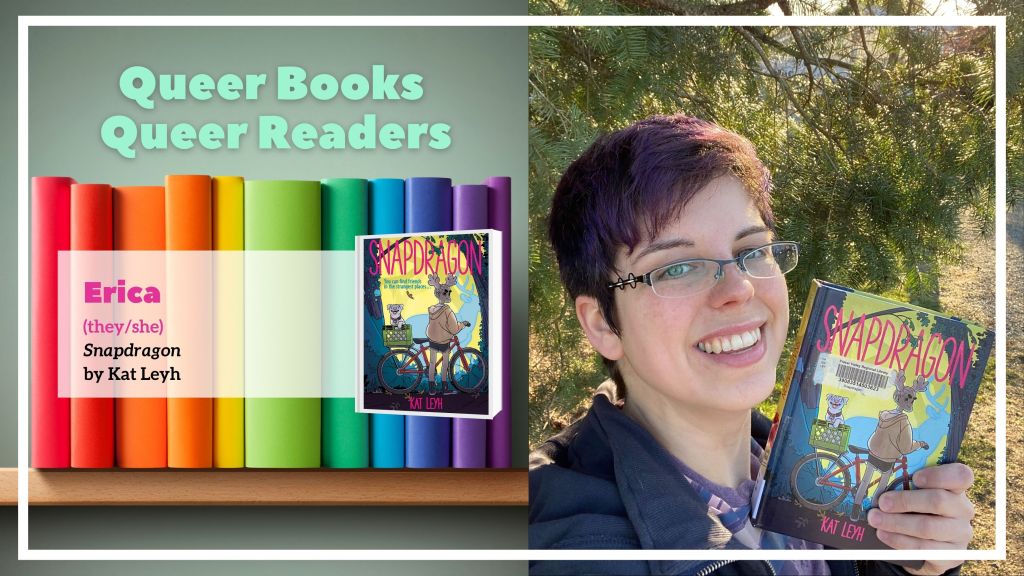
  • Queer Books, Queer Readers:  Erica Reads Snapdragon!

    Queer Books, Queer Readers: Erica Reads Snapdragon!

    Hi, I’m Erica (they/she)! I’m a ceramics artist, library worker, theatre-goer, and – of course – a reader. I sometimes share my art and my cat on Instagram: @airekker.

    What queer book have you chosen to share with our readers today?

    I’m glad to have the opportunity to gush about Snapdragon by Kat Leyh, a young adult graphic novel about a creepy old witch who lives in the woods selling roadkill online, a teen girl who needs her help, and a web of connections that brings everything together. I was so charmed by the expressive art, the flow of the story, the transitions – gah! It’s all just so beautiful! It’s a very wholesome read. When I finished this comic my heart felt full.

    Why is this book one of your favorites?

    When I was a teen I read a lot of old-dead-white-guy sci fi that was very heteronormative. I thought a lot about the future in the abstract sense, but while embroiled in these very patriarchal visions I don’t think I could realize my own identity or picture what my own future could look like. I think that’s why Snapdragon spoke to me; there’s this teen girl who doesn’t quite fit the mold or understand herself, and she finds comfort in an elder queer, and that’s just pure hope to me. That teens now will see older queer people living and thriving and imagine themselves doing the same. My great dream is for children and teens to be able to envision their queer futures and for that vision to be hopeful.

    How would you describe yourself as a reader?

    Flighty! I have a long, long list of books I want to read but I don’t move through it methodically at all. Some books have been on that list for a decade, but I can’t resist a pretty cover that passes under my nose. And working at the library, that happens a lot!

    As a queer person, have books helped you explore or express your queer identity?

    For sure. Often when I read information about identity language I think, “hmm, so that’s what some people experience and how they describe it.” But when I read queer fiction or memoir, I see that experience firsthand and I realize – wait – that’s how I feel, too. Am I also that thing? Sometimes it helps me to connect the dots on how aspects of my identity relate to each other. It opens new doors for understanding myself and articulating my own realizations.

    Other than reading, are there any queer nerdy recommendations that you would like to leave with our readers?

    I’ve sunken a lot of time into Fire Emblem: Three Houses. I wish it had more gay romance options, but there are some great ships to be had wrapped up in a great strategy game.

    Thank you, Erica!

    Check out our Queer Lil Library for more book recommendations and reviews!

    Processing…
    Success! You're on the list.
  • Twelfth Moon by Halli Starling

    Twelfth Moon by Halli Starling

    Genre |Romance Novella
    Page #s | 134
    Publishing Date | December 2021

    Elsie’s a small town with a lot of heart. Isn’t that how most small town romance stories begin? But this isn’t any love story. These five stories cross paths and connections, age, gender, sexuality, and different kinds of relationships. Stories like that of Harriet, the owner of Twelfth Moon perfumery and adopted mother to her nephew, Nu. Harriet always figured she’d be single for the rest of her life, but Dela Atwater appearing in her shop one blustery autumn day sparks something within her. A bit of romance and longing she’d long thought buried. 

    And what about Nu, Harriet’s nephew? He’s quickly falling for Miles, who works in the coffee shop next door to Twelfth Moon. The shop is owned by Miles’s brother, Jones, who has his own ideas about sex and lust and romance (or lack thereof). Across town, Maeve is learning how to exist as a widower but when they meet Evie, a spark is lit. And Yuri, Nu’s best friend, is anxiously awaiting the holidays so he can see his girlfriend, Beckett, once more. 

    It’s about hope and joy and queer love in so many shapes and forms, from the author of the dark fantasy/romance novel Wilderwood (“…will shatter readers’ expectations with its bewitching complexities…” – The BookLife Prize).

    Goodreads

    Twelfth Moon is a novella of five intersecting romances set in a small town queer utopia. It is a quintessential comfort read with a handy table of contents that informs readers what pairings to expect as well as where a story falls on a “sweet to smut” scale. Starling shines in her diverse characters and diverse relationships, and I especially loved how often the romantic stars were older women.

    Every shade of the rainbow is represented here! I was most surprised to see a polyamorous non-monogomous pairing celebrated; because this is a romance novel, I was cringing, half expecting them to realize their love for each other would make them want to be only with each other. No! They stay true to their values and preferences while having a great time together.

    Undoubtedly my favorite story was of a widow grieving her dead partner and connecting with someone and feeling romantic sparks for the first time in years. It is a sweet story that acknowledges the importance of honoring relationships while also being open to something new. It also doesn’t push characters into situations that wouldn’t make sense outside of a romance novel. Instead, we get to see a connection form and be happy for her to have found someone else that GETS her in the same way her partner once did.

    Basically, we should all be so lucky as to live in Elsie. Starling has said we might get more from this setting, and I am ready for it!

    Who Do I Recommend This Book To?

    Gift Twelfth Moon to your friend who wants a queer pick-me-up that can be read during their commute.

    Check out our Queer Lil Library for more book recommendations and reviews!

  • DM’s Pocket Guide Ep 9: Sleep Spell

    DM’s Pocket Guide Ep 9: Sleep Spell

    Sleep Spell DM’s Pocket Guide

    The D&D 5e Sleep Spell has some unusual mechanics and has to be used carefully if you want to it to be effective.  We go through the spell description and give helpful examples so you'll never forget how to use this spell! We’re Tricia and Rachel from Roar Cat Reads.  If you would like to learn about a specific D&D rule or spell, send us a request at roarcatreads@gmail.com.  Please like, review, and share to support DM’s Pocket Guide! Transcripts of every episode are available!   If you want more rules, buy a copy of the Player’s Handbook! Follow us on Twitter and Instagram  Artwork by Haley Boros DM’s Pocket Guide is unofficial Fan Content permitted under the Fan Content Policy. Not approved/endorsed by Wizards. Portions of the materials used are property of Wizards of the Coast. ©Wizards of the Coast LLC.

    Transcription

    Welcome to DM’s Pocket Guide, where we discuss the rules, spells, and monsters of Dungeons and Dragons, 5th edition.

    Tricia: Today, we are going to talk about the spell Sleep.

    Rachel: This spell is on page 276 of the Player’s Handbook, and it’s one that does have a couple of intricacies about how it’s used.

    T: This is one of those spells that if you’re not familiar with it, and a player uses it in a fight, you’re hurriedly trying to skim through it and will likely miss something…I might be speaking from experience.

    R: Yeah, for sure. Okay, so the casting time for this one is one action. It’s going to take up a player’s full turn to try and cast this. The range is 90 feet, so it’s got a good amount of range. It’s probably going to cover most of your battlefield that you’re using. And it does require all three spell components. And this isn’t something we use a huge amount. But it does mean it has a verbal component, a somatic component and a material component. If your players can’t speak – if they’ve been silenced – they aren’t able to cast this spell. If they can’t move – if they’ve been restrained – then they wouldn’t be able to cast this spell. And if they didn’t have the right ingredients, which is a pinch of fine sand, rose petals, or a cricket, then they can’t cast this spell. I usually don’t hold my players accountable to having all their spell components. 

    T: Yeah, I don’t either. But I do like – there’s a specific kind of group that would be very into that. And I’ve had one player who was kind of interested in like, “Oh, I’m in this area, are there any crickets around?” And it can lead to some fun, some fun little role-playing bits. But that’s up to you how much you want to follow this or not.

    R: For sure. And then the duration for this spell is one minute. So anything that falls subject to this will fall asleep for one minute.

    T: That’s 10 rounds of combat.

    R: Excellent. So the spell itself reads, “This spell sends creatures into a magical slumber. Roll 5d8s; the total is how many hit points of creatures this spell can affect. Creatures within 20 feet of a point that you choose within range are affected in ascending order of their current hit points.” That ignores unconscious creatures. And there’s an important point here about ascending weights. 

    T: Yeah, so if you are casting this against a group of four goblins, say, and they’re all within that 20 feet, then if they’re all at their full seven hit points, I think it would just be randomly chosen. But if some of them have already taken damage, the ones that are most damaged will be put to sleep first.

    R: So if you’ve taken damage, you are more vulnerable to this spell is maybe the way to remember it. Okay, so starting with the creature that has the lowest current hit points, each creature affected by this spell falls unconscious until the spell ends, the sleeper takes damage or someone uses an action to slap or shake the sleeper awake. It’s up to one minute is the duration of the spell, don’t forget, so these guys aren’t going to be asleep forever. And it will be a long time in six second rounds of combat, but there are some things that can happen to end the spell. Taking damage, I think is probably the most likely one in a battle situation. 

    T: Remember not to attack the sleeping creatures.

    R: Or if you’re the DM, remember to have damage, maybe full on some of those sleeping creatures if you need to get them up, especially if the players are throwing around area of effect spells, like yeah, that’s a good consequence for just randomly throwing that around. So you subtract each creatures’ hit points from the total before moving on, and that’s the total of those 5d8s. And then you move on to the creature with the next lowest hit point. Creatures’ hit points must be equal to or less than the remaining total for that creature to be affected.

    T: So let’s play that out. We have 5d8 here, go ahead and roll them. 

    R: Okay. I have a total of 18.

    T: So if we are fighting those four goblins, they typically have seven hit points each. If they were full health, how many would you get?

    R: So 7, 14, 21. So I’ll get two of those goblins with my 18 points to spend. The two of them will be totally covered, and then I would have four points of Sleep left. I would try to use that on this goblin, and it would be ineffective because I don’t have enough to cover the amount of hit points that the goblin has. Because I’m rolling the dice, I have to meet or beat the hit points.

    T: Yep. And there’s no like, oh, they fall half asleep or anything. Those points just go away.

    R: It’s all or nothing. Yeah.

    T: What about if you were attacking a troll, which is a much more difficult creature? They have 84 hit points.

    R: Yeah. So a player might come into this encounter and be like, “I’m gonna just make that troll fall asleep!” Well, even if you roll the maximum amount of 5d8s, you are not going to equal 84 hit points. But if that troll was taking damage, then you are much more likely be able to, to Sleep a damaged troll than you would a fully functional troll.

    T: Yeah, so this is a strategic spell you want to use when you’re pretty sure they have lower hit points than 5d8.

    R: Not something that should be used at the beginning of the combat. Although it would be quite useful towards the end, like let’s see, if it’s a really pitched battle, a few of your players have taken damage, and you need to recuperate pulling out a first level – like, you probably got a lot of first level spell slots – it would be probably quite effective to do it at that point. That’s where I see myself using the spell.

    T: Yep.

    R: There are some immunities. So undead creatures cannot be put to sleep. So no vampires, no zombies.

    T: Those things don’t sleep. They’re just shambling around.

    R: That’s fair. And there are some creatures that are also immune to being Charmed. So make sure you check the immunities on your, on your creatures. Stone golems are a good example of that. They’re immune to being Charmed, so that doesn’t work.

    T: Yeah, that’s the thing to remember that I don’t know that I would necessarily until we read through this, that putting something to sleep is being Charmed. So that’s useful.

    R: You’re lulling them to sleep. Singing them a lullaby. 

    T: Yup. 

    R: And then the last part that’s in the Player’s Handbook is at higher levels. So when you’re casting this above first level, you had 2d8s for every spell slot. And so yeah, maybe you could take on that troll if you were, you know, casting it at fifth level and rolling at – Oh, my goodness, how many even is that? That’s 10 plus the original 5. 15d8s might get you there!

    T: That would be awesome. 

    R: Yeah. Excellent. Yeah, I think that’s Sleep

    T: That’s Sleep. And that is on what page?

    R: Page 276 of the Player’s Handbook.

    Thanks for listening!  If you have something you’d like us to cover, email it to roarcatreads@gmail.com or find us on Twitter and Instagram @roarcatreads. 
  • Adventure Queers:  Meet Skald of Shenanigans from Awfully Queer Heroes!

    Adventure Queers: Meet Skald of Shenanigans from Awfully Queer Heroes!

    Em (She/Her) goes by Skald or Skald of Shenanigans and is an avid player, content creator and Game Master for TTRPGS. She is co-owner of Awfully Queer Heroes with Kel, which runs a live play podcast in addition to creating Dungeons and Dragons content, all of which promotes LGBTQA+ representation. When she’s not playing games, Skald currently spends time in pursuit of her PhD in mythological studies while balancing work and outdoor hobbies in the mix. She loves a good story, a hike in the woods, or a game session. She currently works on her own small supplemental content in addition to working with Awfully Queer Heroes, and is a player on their latest “Tower of the Soul” podcast.

    @AwfullyQHeroes
    (Awfully Queer Heroes)

    https://www.awfullyqueerheroes.com/


    What were your first experiences playing D&D like?  What has kept you interested in the game?

    My experiences with D&D took some time to build momentum. When I had only just learned to read, one of my school friends had an older brother who had the original Monster Manuals, which I used to spend hours poring over despite barely being able to read a word. The first game I played didn’t come until high school when I joined a mini-campaign with yet another school friend, whose father happened to be a professional DM. Being able to take on a different persona – to build and play a unique character – and to work our way through an adventure of endless possibilities was absolutely captivating in the best way possible. I knew from then that not only did I want to continue to play, but to run campaigns of my own.

    Having some form of creative expression has always been important to me, and D&D is a critical part of that. Beyond just the creative elements, the social connections that can be made and strengthened through a good group can be wonderful. TTRPGs in general have since been a huge part of my life because of this. D&D was the creative outlet through which I was able to pull myself out of some rough spots in my past. Additionally, some of my most important friendships and human connections have been made in, and through, D&D. There is an endless potential for creative expression, collaboration, and human connection.

    You run the liveplay podcast Awfully Queer Heroes, which you’ve described as “pure queer chaos.”  Why do you think our readers should listen?  

    First of all, it’s a ton of fun. The group has excellent chemistry, the Dungeon Master is fantastic, and there is no shortage of laughs and ridiculous shenanigans thrown in with the more dramatic aspects of the adventure. Part of what makes this podcast unique is the emphasis on queer elements, especially inclusion and representation. This is reflected not only in the identity and orientation of the characters but of the players as well. Some of the topics that have also naturally emerged as elements of the campaign include things like found family, chosen names, acceptance, and more.

    This particular campaign uses a module (Tower of the Soul) previously published by Awfully Queer Heroes. It is unique in that the players are aligned with the forces of “chaos”, playing races that are typically vilified in D&D and fighting against those who wish to bring order. It’s a good mix of fun and seriousness in the way it addresses the repeated issues of queer repression and ostracization. It’s a fun mix of advocacy and representation, mixed in with the kind of chaos that can ensue in any D&D session with no limit to crazy ideas, encounters, and unexpected yet hilarious outcomes.

    What episode do you recommend new listeners start with?

    Anyone who wants to dive in can’t go wrong with episode one. It sets the scene for the rest of the campaign, as well as giving listeners an introduction to the players in the podcast. However, for those wanting a bit more action and a straight-shot to the tower itself, episode two has a bit more combat and excitement. There are some small details that might be missed, however, so I would say the best place to begin, is quite simply at the beginning.

    How do you think queer storytelling makes a difference to D&D?

    I think it’s absolutely critical to get more queer representation into D&D. Firstly, because as in many other areas there is a not insignificant lack of it. Not only having content that contains and promotes queer elements but also viewing storylines from that perspective is important not only for combating prejudice but also for increasing the amount of representation that can be found in these games. It’s additionally important for the experience of the players. Increasing the amount of queer storytelling in and behind these games is important when it comes to players being comfortable and able to explore and express their own unique identities. To not only feel like they have the freedom to play in a setting that is welcoming to them, but to also feel comfortable in their own identity in
    the play environment.

    As a queer person, have roleplaying games helped you explore or express your queer identity?

    Absolutely. At the time I started playing, I hadn’t actually identified myself as a sapphic. I frequently played male characters, mostly because I played in games with people who at the time identified as cisgender heterosexual, and I discovered that in playing a male I wasn’t underestimated in the same way I often was if I played a female character. Additionally, I found myself drawn to other female characters and playing a male made that acceptable.

    Exploring different gendered roles and norms, being able to take on a different persona and explore those things in an environment where it was ‘socially acceptable’ for me to do so, were some of the steps on my own journey to coming out as a sapphic. Even presently, playing characters of different identities is a way of exploring my own persona, and expressing different aspects of myself.

    You also make queer content on Kickstarter.  What can you tell us about your creations?

    There are a number of different projects up on Kickstarter, including the “Tower of the Soul” which is a level 1-20 adventure geared towards queer representation. Additionally, there is the “Sun Blades” spells and subclasses. The adventures, spells and subclasses all contain elements of queer representation (spells such as “Rainbow Bridge” and “Summon a Protective Lesbian”) or structure (such as in the “Tower of the Soul”) that is made specifically around increased queer representation and storytelling. Digital copies of previous Kickstarter content is also available on the Awfully Queer Heroes website.

    What are you currently working on/selling?

    We are extremely excited for our next project, which is “Adventures in ADHD”. The Kickstarter went live on Tuesday, March 23, and it is the largest we have done yet. The adventure is designed for levels 5-6, and is set in the Feywild. The party will adventure through a serious of quests to help an overwhelmed member of the Fey who quite literally ‘borrows’ their attention, giving them certain ADHD traits in return. In this adventure the sub-classes, spells, and quests are all designed to help educate players about the wide spectrum of ADHD symptoms while having fun along the way. There has been a lot of input on the project, as it is a topic that we want to do in a way that is respectful and accurate. The response from reviewers and play testers alike has been overwhelmingly positive. It’s been additionally exciting to work on as it has a lot of content, including amazing artwork, STL files, token, maps, and more.

    Do you have any recommendations of queer nerdy content that you would like people to know about?

    The TTRPG sphere on Twitter is a surprisingly (for social media) positive space for creators and players alike. The number of projects people are working on and content that is being created is absolutely mind blowing. I would highly recommend the live play Pathfinder podcast from Bad Heroes (@BadHeroesCast), they are a fantastic crew and really fun to listen to.


    Sign up for Roar Cat Reads’ Monthly Newsletter

    Every month one subscriber wins a prize!

    Processing…
    Success! You're on the list.

    By clicking submit, you agree to share your email address with the site owner and Mailchimp to receive marketing, updates, and other emails from the site owner. Use the unsubscribe link in those emails to opt out at any time.

  • A Marvellous Light by Freya Marske

    A Marvellous Light by Freya Marske

    Genre | Fantasy Historical Romance
    Page #s | 377
    Publishing Date | November 2021

    Red White & Royal Blue meets Jonathan Strange and Mr. Norrell in debut author Freya Marske’s A Marvellous Light, featuring an Edwardian England full of magic, contracts, and conspiracies. 

    Robin Blyth has more than enough bother in his life. He’s struggling to be a good older brother, a responsible employer, and the harried baronet of a seat gutted by his late parents’ excesses. When an administrative mistake sees him named the civil service liaison to a hidden magical society, he discovers what’s been operating beneath the unextraordinary reality he’s always known.

    Now Robin must contend with the beauty and danger of magic, an excruciating deadly curse, and the alarming visions of the future that come with it—not to mention Edwin Courcey, his cold and prickly counterpart in the magical bureaucracy, who clearly wishes Robin were anyone and anywhere else.

    Robin’s predecessor has disappeared, and the mystery of what happened to him reveals unsettling truths about the very oldest stories they’ve been told about the land they live on and what binds it. Thrown together and facing unexpected dangers, Robin and Edwin discover a plot that threatens every magician in the British Isles—and a secret that more than one person has already died to keep.

    Goodreads

    What a glorious age we live in! A Marvellous Light is the highest quality of fanfiction in published format, and my teenaged self cannot believe that 1) it happened, and 2) to great commercial success. In the publishing industry, there tends to be a strict differentiation of genre. Fanfic is where people can play, and A Marvellous Light brings all that is best about this quality, revelling in fantasy, romance, and historical fiction at the same time.

    This is a gay love story from start to finish, but it’s also a magical MacGuffin mystery (try saying that five times fast). The magic system in this book is really fun and unique, and I loved the different ways it could be used by those with more or less magical power. The stakes feel genuinely high straight from the start, which is a big reason why this book was a page turner for me.

    The other reason is, well, the romance! I love a good jock/nerd pairing with extrovert/introvert layers, and Edwin and Robin are fabulous together. They admire each other’s differences, worry that these differences will keep them apart, then realize they are stronger together because of their differences. Swoon! And just honestly, give me a thousand characters where they love books more than people…well, okay, maybe ONE person is better than books.

    A last note: although this book is focused on men during a historical time period when men were the focus, there are some awesome female side characters who seem to be set up as main players in future books. I also really loved the fact that our heroes kept realizing that the women around them were doing awesome things, but men just weren’t paying attention. I can’t wait for more of this in the sequel which, if the cover is anything to go by, will center on an f/f pairing!

    Who Do I Recommend This Book To?

    Give A Marvellous Light to your fanfic-reading friend who really needs to look at something other than a computer screen.

    Check out our Queer Lil Library for more book recommendations and reviews!

  • Lambda Literary Award Finalists 2022

    Lambda Literary Award Finalists 2022

    The Lambda Literary Awards are an excellent place to find LGBTQ+ book recommendations with 24 categories of 5 books. Last year I tried to read as many of the finalists as I could, and I’m going to do the same again in the lead up to the 34th Annual Lambda Literary Awards on June 11th.

    I’ve chosen to focus on XX categories that are most interesting to me. If there is a book in another category that you think I would enjoy, please let me know!


    Lesbian Fiction

    • How to Wrestle a Girl by Venita Blackburn
    • Matrix by Lauren Groff
    • Skye Falling by Mia McKenzie
    • The Five Wounds by Kirstin Valdez Quade
    • With Teeth by Kristen Arnett

    Transgender Fiction

    • A Natural History of Transition by Callum Angus
    • Detransition, Baby by Torrey Peters
    • Margaret and the Mystery of the Missing Body by Megan Milks
    • She Who Became the Sun by Shelley Parker-Chan
    • Summer Fun by Jeanne Thornton

    LGBTQ Nonfiction

    • Dear Senthuran by Akwaeke Emezi
    • Deep Sniff: A History of Poppers and Queer Futures by Adam Zmith
    • Girlhood by Melissa Febos
    • Let the Record Show by Sarah Schulman
    • Northern Light: Power, Land, and the Memory of Water by Kazim Ali

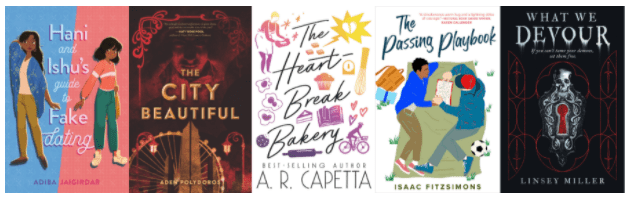
    LGBTQ Young Adult

    • Hani and Ishu’s Guide to Fake Dating by Adiba Jaigirdar
    • The City Beautiful by Aden Polydoros
    • The Heartbreak Bakery by A.R. Capetta
    • The Passing Playbook by Isaac Fitzsimons
    • What We Devour by Linsey Miller

    LGBTQ Comics

    • Cheer Up! Love and Pompoms by Crystal Frasier and Val Wise
    • Our Work is Everywhere: An Illustrated Oral History of Queer & Trans Resistance by Syan Rose
    • Shadow Life by Hiromi Goto
    • Stone Fruit by Lee Lai
    • Thirsty Mermaids by Kat Leyh

    Check out our Queer Lil Library for more book recommendations and reviews!

  • Queer Books, Queer Readers:  Nico Recommends Little Blue Encyclopedia

    Queer Books, Queer Readers: Nico Recommends Little Blue Encyclopedia

    Hello! My name is Nico (they/them pronouns), and I am a queer Torontonian who loves (and loves learning about) art and ASL. I identify as a genderqueer bi+ peep who is slowly getting into DnD and RPGs but has always loved literature and stories more than anything else. You can find me sneakily liking all your animal photos.  

    What queer book have you chosen to share with our readers today?

    It was a tough choice because I have a hard time picking favourites, but the queer book I chose to share today is Little Blue Encyclopedia (for Vivian) by Hazel Jane Plante. The book is a trans femme sapphic text. The premise is that this text is an encyclopedia for an imaginary show called “Little Blue,” a show which the narrator’s best friend / love interest is obsessed with. It is likely one of the queerest unrequited sapphic love letters I have ever read. Using encyclopedia entries as the framing device, the reader learns about the narrator, their best friend / love interest, “Little Blue” and how one’s relationship to fandom can be integral to your existence.  

    Why is this book one of your favorites? 

    This is one of my favourite representations of queer longing, which is so complicated and beautiful and could be carried for eons. The book asks you: What do you do with those emotions? Do you feel guilt and anger or anguish for carrying that longing for so long, knowing it will never be requited? This book proves that you can live with these questions and maybe never figure out any answers. I appreciate its messiness and how the emotions portrayed in the book bleed into one another. I find comfort in the loose ends and lack of resolution and resistance to completion.  

    How would you describe yourself as a reader? 

    I am a dedicated reader when I have enough time to be alone with a book. Right now, it’s a bit difficult to get that time, but I try to always carry something with me. That’s part of why I love travelling; books make the best travel companions, and that time is already there. I especially gravitate towards books with different structures or formats, which is why I love books like Little Blue and graphic novels like Are You Listening. I appreciate the meta approach taken in books that play with how they present themselves, and love writers and artists take risks that make their work different but meaningful.  

    As a queer person, have books helped you explore or express your queer identity? 

    Honestly, I think I am who I am because of queer literature. Queer books, queer bookstores, and the queer sections of every library and bookstore have been my havens and my mirrors when I needed them most, when I needed to know I was still real and still existed. My identity is oftentimes in this cycle of realization and affirmation thanks to books, and I discover things about myself, rediscover things I’ve forgotten, and reignite what I lost or gave away. I’m my own little forest of reading, and some of these stories bloom or decay along my path, but they are all always present and part of the cycle, nourishing me as I grow into the person I hope to be.  

    Other than reading, are there any queer nerdy recommendations that you would like to leave with our readers? 

    I recommend Shing Yin Khor and their games. I am currently playing Remember August, about a time-travelling friend who needs you to remember them, and I’ve responded to it so sincerely it kind of hurts sometimes. They are usually solo games, but I believe they can be adapted as needed.  
     
    I also recommend the Tea Dragon Society series. Super queer, they are adorable graphic novels, but their creators also made the CUTEST dragon plushes ever.  
     
    Also also, I recommend StoryGraph if you’re looking for a replacement for Good Reads; the site is run by a Black web designer who wanted a recommendation site that did not actively work with Amazon. I really liked the recommendations it gave me, and hope you do too 😊  

    Thank you, Nico!

    Check out our Queer Lil Library for more book recommendations and reviews!

    Processing…
    Success! You're on the list.
  • DM’s Pocket Guide Ep 8: Goblins

    DM’s Pocket Guide Ep 8: Goblins

    It's Goblin time!  These classic low-level monsters are just as likely to end up adopted by your party as they are to be killed.  What makes goblins so fun?  We dig into the Monster Manual and discover some fun facts about everyone's favorite mischievous creatures! We’re Tricia and Rachel from Roar Cat Reads.  If you would like to learn about a specific D&D rule or spell, send us a request at roarcatreads@gmail.com.  Please like, review, and share to support DM’s Pocket Guide! Transcripts of every episode are available!   If you want more rules, buy a copy of the Player’s Handbook! Follow us on Twitter and Instagram  Artwork by Haley Boros DM’s Pocket Guide is unofficial Fan Content permitted under the Fan Content Policy. Not approved/endorsed by Wizards. Portions of the materials used are property of Wizards of the Coast. ©Wizards of the Coast LLC.

    Transcription

    Welcome to DM’s Pocket Guide, where we discuss the rules, spells, and monsters of Dungeons and Dragons, 5th edition.

    Tricia: Today we are going to talk about goblins!

    Rachel: Goblins. Gobbos.

    T: Little gobbos! They are on page 165 and 166 of the Monster Manual. They are, you know, stereotypical goblins. It’s usually in the first couple of adventures that happen in a D&D party, you’re gonna run into some goblins. But how well do you actually know them?

    R: I mean, I think pretty well.

    T: Well, let’s see. We’re gonna start with their stat block and then move into the story. So goblins are small humanoids that are neutral evil.

    Rachel: Oh, just straight out evil. But neutral about it.

    T: Yeah, they’re not particularly lawful or chaotic, just out for themselves.

    R: Middle of the road evil.

    T: Yeah. They have an armor class of 15 with only 7 hit points. 

    R: Squishy.

    T: Very squishy, and a speed of 30 feet. So pretty normal. As far as their individual ability stats go, they’re strongest in dexterity, and everything else is pretty average or bad.

    R: Yeah, so if you’re thinking of them as small little nimble creatures.

    T: Yes. And specifically stealthy, because their only skill is that they have a +6 to Stealth.

    R: Oh, wow. That’s pretty good. 

    T: They also have dark vision and a passive perception of 9, which is not good.

    R: No, that’s not. You can definitely sneak up on a goblin.

    T: Yes. But they are going to be able to see in the dark, which you may or may not, especially if you’re playing like level one characters.

    R: Okay. Oh, yeah. Darkvision up to 60 feet.

    T: Yeah. They can speak Common and Goblin. So you can do what you want with that.

    R: Oh, yeah, that’s interesting. I definitely had where I’ve had my players encounter goblins, and then had a language barrier between them. But I guess what this is saying is the goblins can make themselves understood to human or yeah, to speak Common if they want to.

    T: And then they have a challenge rating of 1/4. So as we said before, extremely squishy.

    R: It’s almost as low as it goes.

    T: Yes. Goblins have a feature called Nimble Escape, which fits in with what we know of them, where the goblin can take the Disengage or Hide action as a bonus action on each of its turns.

    R: Oh, that’s cool. I can imagine like a goblin running up and attacking and then like kicking someone in the shin and running away and hiding, right?

    T: Yes, yeah. So that’s going to be I think the thing that often is missed with goblins that we will come back to. These are not creatures that are just going to stand there and fight to the death. They’re going to try to get in, there get out.

    R: Yeah, goblins have high sense of self-preservation. 

    T: Yes. And as far as actions go, they have both a scimitar and a short bow that they can use to attack. They only get +4 to hit and +2 on their damage. So they’re not the strongest, but they do have both melee weapons and long-range weapons.

    R: And they’re rolling a d6 with the damage plus their Dex scores.

    T: So as you’re playing goblins, I think the thing to note is they are not very strong individually. So goblins, if you’re using them in your games, it is going to be about the number – the quantity – of goblins, not the quality. They’re a good one to have waves upon waves if your characters accidentally wipe them out too quickly. You’re like, ah, six more goblins pour out of the tunnels!

    R: Ambushes, I think. That works in the goblin favour. If you think of the sneakiness and their want for self-preservation. They’re always going to make sure that odds are in their favor before they do something.

    T: Yeah, I think self-preservation is a good term to keep in mind with goblins. They are not going to just run out and die in big heaps. They’re going to try to overwhelm players and try to get out of there if they sense that they’re not going to win. So as far as the kind of lore around goblins goes, which is on 165 of the Monster Manual, goblins are described as small, black-hearted, selfish humanoids. They live in caves, abandoned mines and despoiled dungeons. So that makes them ideal D&D characters. This also specifically mentions that they’re individually weak, but they do gather in large groups. So that is where their power comes from. They have related beings like hobgoblins and bugbears that are their stronger cousins. These are the creatures that often end up as like the warlords or the chieftains of goblin tribes.

    R: Yeah, I’ve definitely seen a few adventures with that kind of dynamic setup already.

    T: I do think that’s a good way to go of, oh, it’s five goblins and one hobgoblin or mixing things up a little bit. Goblins are also just super cute, in my book, because the next section is called “Malicious Glee.” They’re motivated by greed and malice, and they can’t help but celebrate the few times they have the upper hand. They dance and caper with sheer joy when victory is theirs. So I think some of these qualities are why I have definitely played in a couple of campaigns where goblins were adopted by the adventuring party.

    R: And once you get past a certain level of like, player character level and goblins just don’t pose any kind of threat, the lean towards adoption is very great.

    T: Yes, yes. Some interesting bits that are also mentioned is the fact that goblins tend to festoon their lairs with alarms designed to signal the arrival of intruders. And they also have narrow tunnels, bolt holes, continuing with that theme of – goblins are always looking for a way out. So I think when designing places and locations where goblins are, it’s good to keep that in mind, that they are going to have some sort of system setup to try to like warn themselves of intruders and they’re going to have a backup plan of how to get away. 

    R: Yeah, for sure. 

    T: And then they also are noted to have an affinity with rats and wolves, which I feel like I have seen goblins and wolves, but not so much rats.

    R: Oh, interesting. I think I’ve seen either, actually.

    T: Like, you know, like goblins on wolves – wolf riders. Lord-of-the-Rings-esque, the wargs!

    R: Oh, right. Yes. Okay. I think of those things as goblins. I suppose I should.

    T: So I like that as just kind of flavor that you can always kind of have some rats and wolves in a goblin lair. That’s nice. And then the most unusual thing that I had never heard about was that goblins worship Maglubiyet.

    R: Mag-what? I’m sorry. 

    T: Maglubiyet.

    R: Maglubiyet.

    T: The mighty one, the lord of depths and darkness.

    R: Oh my goodness.

    T: And so this is the god of goblinoids, which is pictured as an 11-foot tall battle-scarred goblin with black skin and fire erupting from his eyes.

    R: Wow.

    T: Yeah.

    R: Maglubiyet.

    T: He’s worshipped not out of adoration, but fear. And in fact, goblins believe that when they die, their spirits will join in his army. And they don’t want that to happen. They fear this.

    R: Oh, so they want to live as long as possible. Yeah.

    T: Yeah! Which is also really sad. These poor guys are anticipating, like, an eternity of service to this terrifying warlord.

    R: Wow, that is really good motivation to stay alive.

    T: Yes. And I do also like – I don’t ever think of goblins as religious creatures. So I think that is an interesting way to incorporate some of that in there. Like I’m picturing players dressing up as  Maglubiyet and scaring the bejeezus out of them.

    R: Oh, man, if we found your next Halloween costume?

    T: Yes, Maglubiyet! And that is Goblins, on pages 165 and 166 of the Monster Manual.

    Thanks for listening!  If you have something you’d like us to cover, email it to roarcatreads@gmail.com or find us on Twitter and Instagram @roarcatreads.