Category: Book Review

  • Pride Flag Book Tag

    Pride Flag Book Tag

    Rekindled Bibliophile shared another great book tag, and I had to jump on the train! This tag was originally developed by Common Spence on YouTube.

    RED – LIFE

    A book with a spirited protagonist who is totally proud of who they are. Someone who gives you LIFE!

    Take a Hint, Dani Brown by Talia Hibbert (contemporary romance)

    Take a Hint, Dani Brown is a super fun romance novel starring Dani, a confident bisexual black woman who knows how great she is and knows what she wants from life. She questions her aversion to committed relationships when she fake dates sweetie pie Zafir (“what if this fake dating was…real dating?” she wonders against her will), but she never questions her self-worth or her bisexuality.

    ORANGE – HEALING

    A book that made you, as the reader, find a deeper meaning or catharsis in your own life.
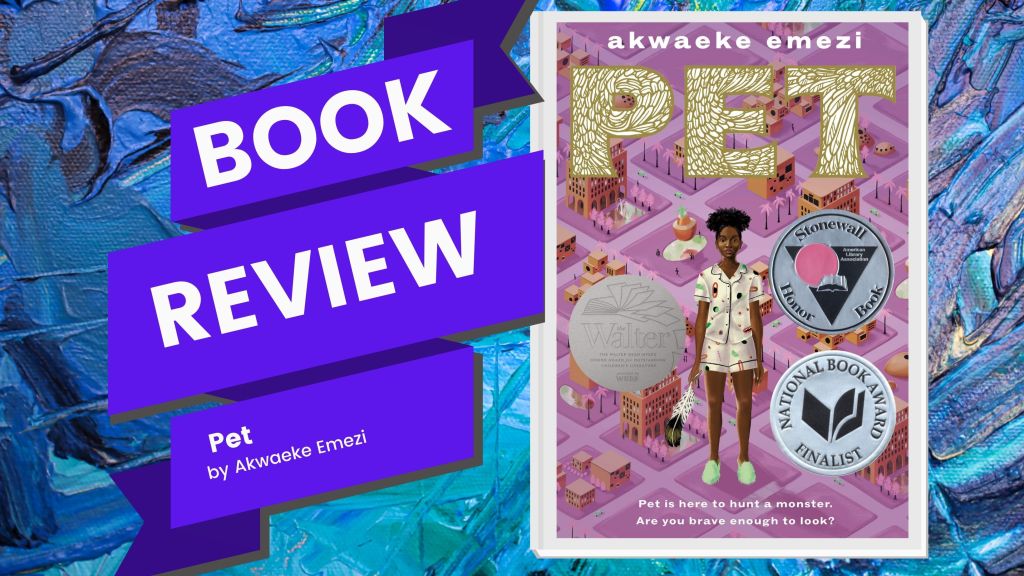
    Pet by Akwaeke Emezi (YA fantasy)

    Pet is a short but powerful book about the dangers of letting optimism turn into blinders. I was blown away by the way the book used monsters metaphorically and literally, challenging readers to question monstrosity – what it is and how to live in a world that says monsters are eradicated.

    YELLOW – SUNSHINE

    A book that fills you with so much joy it could brighten even your darkest day.

    The House in the Cerulean Sea by TJ Klune

    The House in the Cerulean Sea is such an adorable book! When a magical social worker is assigned to evaluate an especially dangerous orphanage, we watch him fall in love with the kids (actual son of satan Lucy, wyvern Theodore, tentacled bellhop-afficiando Chauncy, and many others) and fall in love with the man who runs the place. It’s the formation of a queer family, with all the love and fear and uniqueness that makes queer families great!

    GREEN – NATURE

    A book that is set out of this world — a reality different to our own.

    The Unspoken Name by A.K. Larkwood

    Most of the books I read could apply to this topic, but The Unspoken Name is my favorite queer fantasy novel. A lesbian orc protagonist who disobeys her culture’s mandate to die and instead becomes an assassin for a wizard…how could anyone not love this plot? The world building is so creative and fun, and there are multiple queer relationships to enjoy!

    BLUE – PEACE

    A book where one of the characters finds peace with a difficult truth.
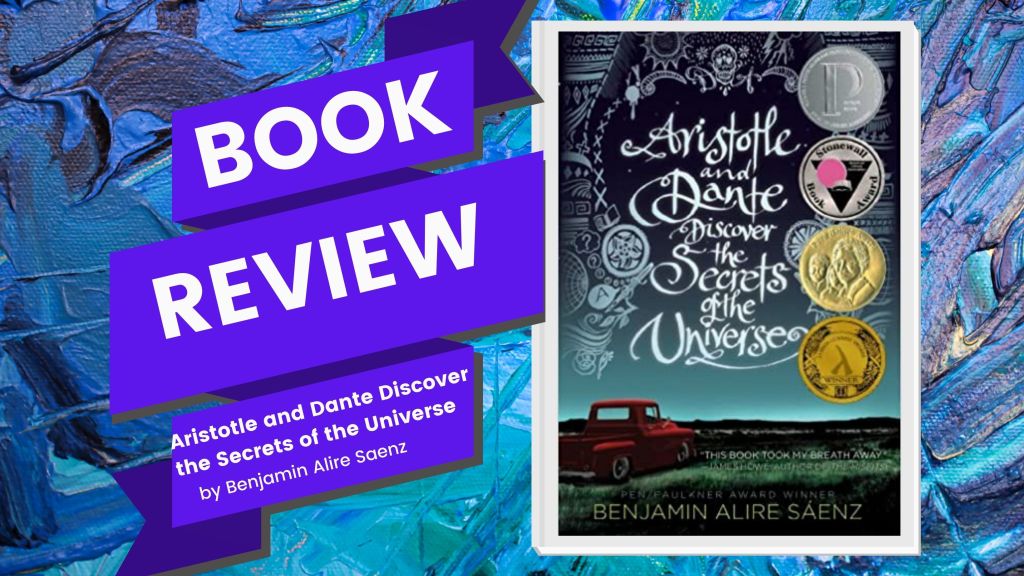
    Aristotle and Dante Discover the Secrets of the Universe by Benjamin Alire Saenz

    Aristotle and Dante Discover the Secrets of the Universe is an old favorite of mine, telling the story of two Latinx young men who are best friends struggling (to varying degrees) with their attraction to each other. Dante is our protagonist, a thoughtful, quiet, angsty kid who finally blossoms into self-acceptance in stunningly beautiful scenes. It’s a quiet book, but a page turner, and I love it more on every reread.

    PURPLE – SPIRIT

    A book that deals with LGBT+ themes and religion.

    Naamah by Sarah Blake

    Naamah is the fictional name of Noah’s wife, and in this retelling of the biblical flood narrative, she is a bisexual woman who rails against the horror of surviving a global genocide that wiped out her female lover and everyone else besides. This book wrestles with survivor’s guilt, faith (or lack thereof) in a deity that would cause such destruction, and how to build a new life after unimaginable grief. I can’t recommend it highly enough!

  • Sharp Ends by Joe Abercrombie

    Sharp Ends by Joe Abercrombie

    Genre | Grimdark Fantasy
    Page #s | 287
    Publishing Date | April 2016

    Sharp Ends is the ultimate collection of award winning tales and exclusive new short stories from the master of grimdark fantasy, Joe Abercrombie.

    Violence explodes, treachery abounds, and the words are as deadly as the weapons in this rogue’s gallery of side-shows, back-stories, and sharp endings from the world of the First Law.

    The Union army may be full of bastards, but there’s only one who thinks he can save the day single-handed when the Gurkish come calling: the incomparable Colonel Sand dan Glokta.

    Curnden Craw and his dozen are out to recover a mysterious item from beyond the Crinna. Only one small problem: no one seems to know what the item is.

    Shevedieh, the self-styled best thief in Styria, lurches from disaster to catastrophe alongside her best friend and greatest enemy, Javre, Lioness of Hoskopp.

    And after years of bloodshed, the idealistic chieftain Bethod is desperate to bring peace to the North. There’s only one obstacle left — his own lunatic champion, the most feared man in the North: the Bloody-Nine . . .

    Goodreads

    I am not a person who is drawn to grimdark stories, but Joe Abercrombie is Rachel’s favorite fantasy author. She asked me to read Best Served Cold a year ago, and this year she had me read Sharp Ends. We couldn’t stop talking about it for two days, so even though my main reaction is, “He’s clearly an amazing author; why can’t he just write about nice things?”, it is clear his work leaves a mark.

    Sharp Ends is a series of interlocking short stories that can be read alone but would resonate more deeply if you already knew the characters from his other series. Even though I only recognized some of the names, I was still immediately drawn in. Abercrombie is an absolute master when it comes to creating relatable characters with rich personalities in only a few lines. I honestly don’t know how he makes dozens of believable characters, some of whom only live for a page or two.

    Because that’s the thing…this book is so violent! And gratuitously so. If the people in the stories weren’t having such interesting feelings about the terrible things they find themselves doing, I wouldn’t give this book even one star. But every character is so interesting, most of them wrestling with some kind of cognitive dissonance, wanting to be good people but then rationalizing leaving a wounded person to be murdered or having to kill ten people to finish a thieving job. If nothing else, this book makes a very compelling case for the philosophical argument that people aren’t bad, we’re all just products of a system that necessitates bad actions.

    I also admire Abercrombie for never shying away from the implications of the violence in his world. In one of the most memorable short stories, we see “nobodies” who died in the wake of Murcatto’s warpath of revenge in Best Served Cold. From a bank teller who worries about pleasing his wife to a prostitute who comforts a soldier who needs a good cry, their lives are snuffed out by another protagonist’s actions. We aren’t allowed to revel in the violence, because the faceless masses are given faces. I like that quite a lot.

    Another thing Abercrombie does well is his ability to write women as actual people. They’re as grumpy, snarky, and brutal as any man in the book, but they also worry about their itchy inseams and if the girl they’ve always pined after is only using them. Even though there is a lot of prostitution in his stories, there isn’t explicit sexual violence. Instead, the job is portrayed like all the other jobs – something that is often unwanted and unsavory, but necessary to get by.

    I’m never going to gravitate to a Joe Abercrombie book because my heart is overly sensitive. But I can appreciate his skill and wish I had a stronger stomach when Rachel offers me the next book in a year.

    What Makes This Book Queer?

    The only storyline that is repeatedly returned to is of Shev, a lesbian thief who has fallen in love with courier who repeatedly sells her out. Romance is not an optimistic endeavor in this book, but Shev’s relationship with Carcolf isn’t the one that’s most meaningful. Instead we get an amazing female duo in Shev and Javre, a massive warrior woman who insists that Shev is her henchman, sidekick maybe, definitely not partner. They are a joy to behold, and I would definitely read a whole book about them without needing a yearlong break in between.

    Who Would I Recommend This Book To?

    Sharp Ends is great little book for someone who wants to dip their toes into Abercrombie’s world or for someone who just wants a “realistic” fantasy setting (aka violent and dark).

    Rating: 4 out of 5.

    Come chat books with us on Roar Cat Reads’ discord.

  • We Have Always Been Here: A Queer Muslim Memoir by Samra Habib

    We Have Always Been Here: A Queer Muslim Memoir by Samra Habib

    How do you find yourself when the world tells you that you don’t exist?

    Samra Habib has spent most of her life searching for the safety to be herself. As an Ahmadi Muslim growing up in Pakistan, she faced regular threats from Islamic extremists who believed the small, dynamic sect to be blasphemous. From her parents, she internalized the lesson that revealing her identity could put her in grave danger.

    When her family came to Canada as refugees, Samra encountered a whole new host of challenges: bullies, racism, the threat of poverty, and an arranged marriage. Backed into a corner, her need for a safe space–in which to grow and nurture her creative, feminist spirit–became dire. The men in her life wanted to police her, the women in her life had only shown her the example of pious obedience, and her body was a problem to be solved.

    So begins an exploration of faith, art, love, and queer sexuality, a journey that takes her to the far reaches of the globe to uncover a truth that was within her all along. A triumphant memoir of forgiveness and family, both chosen and not, We Have Always Been Here is a rallying cry for anyone who has ever felt out of place and a testament to the power of fearlessly inhabiting one’s truest self.

    Goodreads

    An excellent memoir about the intersectionality of being Muslim and queer, written with honesty and directness. Habib’s story is one of restriction to freedom, including the freedom to return to the religion that imposed the original restrictions. After growing up in Pakistan, Habib and her family fled to Canada to escape religious persecution. She was married twice by the time she was 20, first in an arranged marriage to her cousin, and second to a friend who agreed to marry her primarily to provide her social security. As an adult, she began to accept her queerness, dating women, trans women, and gender non-binary folx. Having come to terms with her queer identity, she returned to Islam. She came out to her parents, who were also changed by their time in Canada, and discovered a mosque for LGBTQ+ Muslims. She developed a passion for sharing photographs of queer Muslims, giving a face to a population few realize exist.

    I think Habib is a remarkable woman, and I enjoyed this short memoir very much. However, it does suffer slightly from a common memoir issue: The stories of her childhood are fluid and concise. The nearer she gets to her current age, the more details are included, sometimes unnecessarily.

    The section that resonated with me most deeply was Habib’s description of traveling when she was newly out. She talks about the freedom of self-expression while traveling, of trying out a new identity in a place where no one knows the older versions of you. I have experienced that many times myself, and she expressed the joy and relief very well.

    I have to admit that before reading this book, I was one of those people who didn’t know much about queer Muslims. I knew that it was statistically likely that just as many people were queer in Muslim countries as in others, but I couldn’t point to any stories or people that I knew. I would love for Habib to write a book highlighting all of the queer Muslim folx that she interviewed – it would be hugely beneficial to me, and I assume to many others as well.

    Rating: 4 out of 5.

    Check out our Queer Lil Library for more book recommendations and reviews!

  • Basically Queer edited by Claire Robson, Kelsey Blair, and Jen Marchbank

    Basically Queer edited by Claire Robson, Kelsey Blair, and Jen Marchbank

    Basically Queer offers an introduction to what it can look and feel like to live life as lesbian, gay, bisexual, asexual, two spirited and trans. Written by youth and elders who’ve lived these lives first hand, the book combines no-nonsense explanations, definitions, and information with engaging stories and poetry that bring them to life. Basically Queer answers those questions that many want to ask but fear will give offence: What is it really like to be queer? What’s appropriate language? How can I be an ally? It also provides a succinct and readable account of queer history and legal rights worldwide, addresses intergenerational issues, and offers some tips and tricks for living queer. It does so in an easy and conversational style that will be accessible to most readers, including teens. The text will be of interest to those teaching courses in gender, sexuality, queer and women’s studies. It will be a useful resource for those who are questioning or examining their sexual or gender identities and those who are in relationship with them, such as doctors, teachers, parents, or friends.

    Goodreads

    This local book was recommended in Olga and Natasha’s interview, so of course I had to check it out! This series of essays is a collaboration between Quirk-e (Queer Imaging & Riting Kollective for Elders) and YfAC (Youth for A Change), two activist groups in the Vancouver area. Although the group of youth have some excellent poems, I have to say the essays that won me over were almost entirely from the elders.

    Anyone who wants to learn more about queer history from multiple individual’s perspectives would enjoy this book, but it’s especially meaningful for those of us who live in Vancouver. There’s something very special about seeing how different neighborhoods have evolved in their attitudes toward LGBTQIA2S+ communities (and sometimes, how they have not). And the overarching conceit – of queer elders offering wisdom and queer youth offering new insights – is an intergenerational joy. A lovely anthology.

    Rating: 4 out of 5.

    Check out our Queer Lil Library for more book recommendations and reviews!

  • Carry On by Rainbow Rowell

    Carry On by Rainbow Rowell

    Simon Snow is the worst Chosen One who’s ever been chosen.

    That’s what his roommate, Baz, says. And Baz might be evil and a vampire and a complete git, but he’s probably right.

    Half the time, Simon can’t even make his wand work, and the other half, he starts something on fire. His mentor’s avoiding him, his girlfriend broke up with him, and there’s a magic-eating monster running around, wearing Simon’s face. Baz would be having a field day with all this, if he were here — it’s their last year at the Watford School of Magicks, and Simon’s infuriating nemesis didn’t even bother to show up.

    Carry On – The Rise and Fall of Simon Snow is a ghost story, a love story and a mystery. It has just as much kissing and talking as you’d expect from a Rainbow Rowell story – but far, far more monsters.

    Goodreads

    I’ve JUST finished the book, like two seconds ago, and I LOVED IT.  I expected to like it, an a sort of ironic “Isn’t this odd, reading a pseudo Harry Potter fanfiction that was excerpted in Rowell’s Fangirl?” And for a while, I was mostly interested in assigning every character to their HP equivalent, but that quickly turned into genuine investment.

    I LOVE Simon!  I love Baz!  I love Penelope!  I even love Agatha, although for a while she was a useless wet blanket (but then she acknowledges her role as a useless wet blanket, only meant to further someone else’s story, and when she said “peace out!” I adored her for it).  I love the magical world in Carry On, how they have phones and computers and are simply just like Normals, but with magic.  That makes more sense to me than Harry Potter’s culturally-backwards wizarding world.  But!  I’m not comparing!  (Okay, it’s impossible not to compare.)  

    I loved the crackling dialogue, and I laughed out loud SO OFTEN at Simon and Baz’s repartee, like when arguing about the benefits and challenges of being a vampire:

    Simon lowers his eyebrows.  “When you look at it that way, why doesn’t everyone cross over?”
    “Because it’s death,” I say.
    “It clearly isn’t.”
    “They say your soul dies.”
    “That’s tosh,” he says.
    “How would you know, Snow?”
    Observation.”
    “Observation,” I say.  “You can’t observe a soul.”
    “You can over time,” he says.  “I think I’d know–”
    “It’s death,” I say, “because you need to eat life to stay alive.”
    “That’s everyone,” he says.  “That’s eating.”

    Those crazy kids.  But seriously, there’s nothing I love more than a romance built on hatred!  Or, in this case, mutual obsession that turns into need that turns into trust that turns into a love based on their mutual brokenness. And Penelope!  She and Simon are such great friends, and I loved how Rowell had her and Baz become friends too.  They all felt like real characters with interlocking lives and independent motivations.  Very impressive for, as I mentioned earlier, a pseudo-Harry Potter fanfiction that was excerpted in Rowell’s Fangirl.

    Originally posted on my other blog, www.itistrish.com.

    Check out our Queer Lil Library for more book recommendations and reviews!

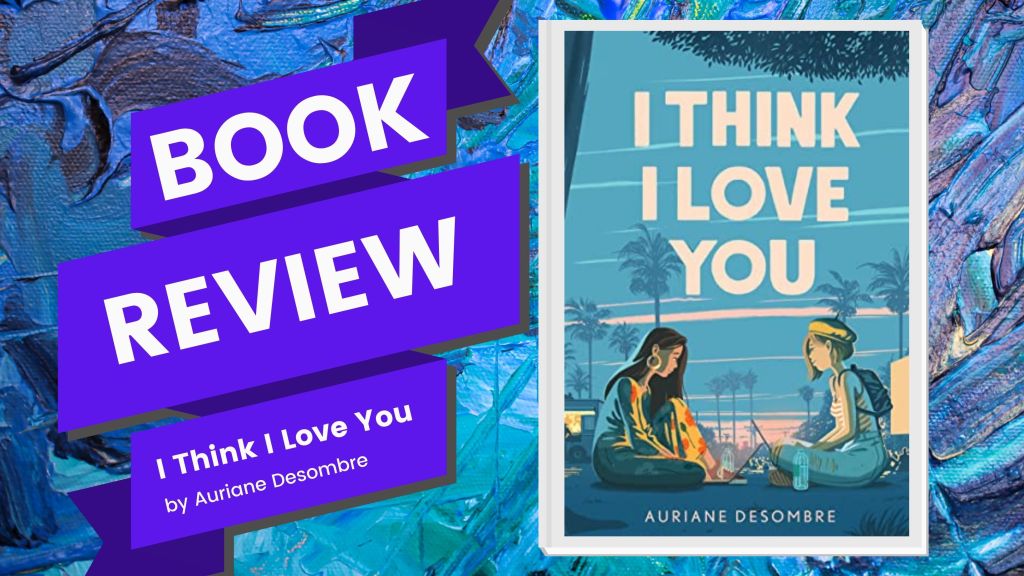
  • I Think I Love You by Auriane Desombre

    I Think I Love You by Auriane Desombre

    A sweet and funny debut novel about falling for someone when you least expect it . . . and finding out that real life romance is better than anything on screen.

    Emma is a die-hard romantic. She loves a meet-cute Netflix movie, her pet, Lady Catulet, and dreaming up the Gay Rom Com of her heart for the film festival competition she and her friends are entering. If only they’d listen to her ideas. . . 

    Sophia is pragmatic. She’s big into boycotts, namely 1) relationships, 2) teen boys and their BO (reason #2347683 she’s a lesbian), and 3) Emma’s nauseating ideas. Forget starry-eyed romance, Sophia knows what will win: an artistic film with a message.

    Cue the drama. The movie is doomed before they even start shooting . . . until a real-life plot twist unfolds behind the camera when Emma and Sophia start seeing each other through a different lens. Suddenly their rivalry is starting to feel like an actual rom-com.

    Goodreads

    I love a good queer love story, and I love fanfic tropes, but I Think I Love You fell flat for me. But before I get into that, let’s talk about the positives.

    Desombre captured Emma’s fear of coming out to her parents really well. No matter how progressive someone seems, it still feels desperately confusing to anticipate how they will react to you. And I appreciated a story that shows the hurt that comes from parents reacting with a calm and cool demeanor…saying it isn’t a big deal is hard to hear when you’ve worked up more courage than you thought you could muster.

    I also appreciated Sophia’s character throughout the first half of the book. Her fear of being excluded from her friends but reacting by overcompensating with stories about her time in France felt so realistic. She couldn’t stop shooting herself in the foot, and wow, I have been there.

    Unfortunately, almost nothing else felt realistic about this book. Emma and Sophia hate each other, which splits the group apart. So their friends tell each of them that the other has a crush on them, and suddenly their eyes are opened! For a moment I thought it was a funny acknowledgment about how powerful it is to be liked. “She likes me? She has good taste, maybe she’s better than I realized.” But they fall in love so fast (oh, and all of these 14-year-olds are throwing around the word “love”), ignoring all of the things that they disliked about each other for years before. That would be enough to drive me crazy, but then there are plot twists and misunderstandings, and nobody acts like a real human being. Maybe I should have let the drama of it all wash over me, but I just couldn’t. It was too much drama for the sake of drama.

    I love a story with a bisexual girl and a lesbian falling in love. But unfortunately, not this one.

    Rating: 2 out of 5.

    Check out our Queer Lil Library for more book recommendations and reviews!

  • Alice Payne Arrives by Kate Heartfield

    Alice Payne Arrives by Kate Heartfield

    A disillusioned major, a highwaywoman, and a war raging across time.

    It’s 1788 and Alice Payne is the notorious highway robber, the Holy Ghost. Aided by her trusty automaton, Laverna, the Holy Ghost is feared by all who own a heavy purse.

    It’s 1889 and Major Prudence Zuniga is once again attempting to change history―to save history―but seventy attempts later she’s still no closer to her goal.

    It’s 2016 and . . . well, the less said about 2016 the better!

    But in 2020 the Farmers and the Guides are locked in battle; time is their battleground, and the world is their prize. Only something new can change the course of the war. Or someone new.

    Little did they know, but they’ve all been waiting until Alice Payne arrives.

    Goodreads

    Alice Payne Arrives is a fun novella about women of color being awesome during all time periods. Alice is an 18th century Englishwoman who has a side hobby of robbing men who are known to be rapists or wifebeaters with the help of her lady lover’s automaton. Prudence is a 22nd century teleosopher (someone who studies the way time travel changes history) with a drastic plan to end the History War.

    I’ll be honest, the nuances of time travel usually go over my head, so what I’m looking for in a time travel story is interesting characters (mentioned above) and something thought-provoking. In the future, time travelers are divided between Farmers and Misguideds. Prudence is a Farmer, the more conservative group that believes history should be altered with care. The Misguideds (“No one is wrong, the Farmer’s creed declared. Only misguided.”) are more liberal, traveling throughout history to nudge people into more progressive timelines, usually with negative effects.

    I was surprised at first, as I assumed that the book was therefore anti-progressive. That’s not it at all, though. The book is anti-extremism. As the two groups further entrenched themselves in their viewpoints, traveling throughout history to counteract the other group’s actions, time spiraled out of control into chaos. Reactionary extremism is a very salient topic nowadays, and not one I expected to find in a sci-fi novella!

    What Makes This Book Queer?

    Alice is explicitly bisexual and is in a secret relationship with Jane, her companion and a talented scientist. They are in an established relationship, and I am astounded at home much depth their relationship is given in such a short novel (I keep mentioning this fact – I wish the story were longer!).

    I mean, how can you not love a book that includes one lady saying to another: “Kiss me, and then take my hand, because I don’t know what happens next.”

    I’ve already got the second book, Alice Payne Rides on hold. I can’t wait to read it!

    Rating: 4 out of 5.

    Check out our Queer Lil Library for more book recommendations and reviews!

  • How to Start a Local Book Club

    How to Start a Local Book Club

    When I first moved to Vancouver, I knew that one of the ways I wanted to try to make friends was by starting a book club. It’s been three years since I first started asking around, and I’m happy to report that despite moves and pandemics, the core of our group still meets every month to discuss a book! If you are thinking of creating a local book club, here are some questions to consider:

    Who do you want to participate?

    Although this might seem simple – my friends! – I recommend a little discernment before you start inviting people. Your book club should be full of people who read like you. What I mean is, if you want to read one book per month, you need to make sure your book club has members who have the bandwidth and interest to read an “assigned” book every month. There is no point in filling out a group with a lot of people if only two have taken the time to read the book. That is a quick way to turn a book club into a hangout; that might be just as fun, but it is a different event.

    Once you have an idea of the kind of reader you want for your book club, invite widely. Mention your book club at work, with your friends, post online, and mention it at the library. Encourage anyone who shows interest to invite people that you don’t know. Book clubs are a great place to expand your social circle since you will automatically be united in the goal of reading and discussing fun books.

    Remember as you are inviting: Be clear about what you are envisioning so that people know what they are signing up for!


    What will you read?

    I am a big believer in the creative power of limitations. When anything goes, often…nothing does. My book club reads “anything that is not by a straight white man,” which encourages us to look beyond the bestsellers to diverse books by queer folx, people of color, and women. We especially like to read books by queer women of color.

    Maybe you want to focus on a particular genre, era, or page length. Narrowing the scope of your book options will often prompt you to look for more interesting reads that you might have otherwise passed up. And of course, you can choose to read a certain genre for the first 6 or 12 months before switching to something new.

    When it comes to choosing particular books for your book club, consider whether your participants will be buying their own books or checking them out from the library. If purchasing, it’s smart to go with something popular that will be easily accessible at most book stores. If you’re going the library route, you should probably do the exact opposite. Popular new books often have long queues, and it will be difficult for all of your book club members to check one out and read it before the meeting.


    When do you want to meet?

    Once you’ve put together a group of people and decided on the kinds of books you will read, you need to work together to decide the frequency of your meetings. I meet with my group on the first Tuesday of every month, where we discuss a single book from start to finish. You might want to meet more often, but discuss smaller chunks of a book. Or maybe you want to meet quarterly! (Though be careful with meeting less regularly than monthly. One missed quarterly meeting, and you’re only seeing people twice per year. It’s hard to create a cohesive group with that kind of attendance.)

    You also need to consider what time of day you want to meet. Some coffee shops close early, and some book club members might have family obligations that require them to be home at a certain time. You will likely have to give up on the idea of satisfying everyone. Instead, I find it best to make your goal what works for the majority of the people the majority of the time.


    Where will you meet?

    If you truly went broad in your invitations, you might have to hold your book club online. The pandemic unintentionally caused my book club to move to Google Meet. While I look forward to returning to our preferred coffee shop to chat books, meeting online has been fun too!

    If you can meet in person, try to find a location that is fairly central to all members. That might be a person’s house or a local restaurant, bar, or coffee shop. Make sure that wherever you are, there is space for everyone to sit comfortably and an atmosphere conducive to talking.

    Remember: be kind to your host if you choose to meet at a member’s house! Consider either rotating hosting duties amongst all participants or go out of your way to ensure that your host feels appreciated. Far too often hosts clean and supply food without any compensation. If one person always hosts your book club, maybe the rule is that everyone else is responsible for bringing snacks, or everyone chips in to buy them a thank you gift.


    Why are you starting a book club?

    Although this question is less obvious than those previous, I think it’s important to consider the “why” of it all. Is your primary purpose to read books, to hang out with friends, or to make connections of some kind? Knowing WHY you are starting a book club will help shape all of the considerations, and it will also help you know if your book club needs to change in some way or even come to a close. Of course, it’s always reasonable to change your “why” if you find a motivation that fits you better!


    How will you function?

    Now is the time to consider all the other little details of running a book club:

    • How do you choose books? I recommend rotating through members so that everyone gets to choose at least one book. If you want total control over book choices, it’s a good idea to have decided the titles before asking anyone to join so that people know what they are signing up for!
    • How do you communicate between sessions? A group chat is the easiest option, of course. It might be helpful to discuss expectations regarding the group chat: Is this for book talk only, or are personal conversations allowed? Would you like people to announce if they can’t attend a meeting, and if so, is there time frame that you would like to know by?
    • How do people join or leave the group? Once established, can people continue to invite friends to join in? What is your size limit (this might be constrained by location) or preference?

    I know that some of these considerations are a little ridiculous. What can I say? I’m an anxious control freak who likes to plan! But I genuinely do believe that it is better to do some thinking before putting a group together so that you are set up for long term success.


    Have you created a book club? What worked well for you? Is there anything you wish you had done differently? Leave a comment and let me know!

  • A High Five for Glenn Burke by Phil Bildner

    A High Five for Glenn Burke by Phil Bildner

    Genre | Middle Grade Contemporary Fiction
    Page #s | 274
    Publishing Date | February 2020

    A heartfelt and relatable novel from Phil Bildner, weaving the real history of Los Angeles Dodger and Oakland Athletic Glenn Burke–the first professional baseball player to come out as gay–into the story of a middle-school kid learning to be himself.

    When sixth grader Silas Wade does a school presentation on former Major Leaguer Glenn Burke, it’s more than just a report about the irrepressible inventor of the high five. Burke was a gay baseball player in the 1970s–and for Silas, the presentation is his own first baby step toward revealing a truth about himself he’s tired of hiding. Soon he tells his best friend, Zoey, but the longer he keeps his secret from his baseball teammates, the more he suspects they know something’s up–especially when he stages one big cover-up with terrible consequences.

    A High Five for Glenn Burke is Phil Bildner’s most personal novel yet–a powerful story about the challenge of being true to yourself, especially when not everyone feels you belong on the field.

    Goodreads

    A High Five for Glenn Burke is a sweet story about a sweet kid starting his journey toward accepting his sexuality and coming out to those closest to him. And baseball. I was more interested in one of these things.

    Silas is obsessed with baseball, both playing on his team, the Renegades, and researching baseball history. He is especially interested in Glenn Burke, an African American baseball player who lost everything when he came out as gay. He also invented the high five, which is the only part of Burke’s story that Silas shares in a school speech. Nevertheless, he is simultaneously proud of himself and deathly afraid that someone will realize he talked about a person who was gay. This is a piece of the coming-out narrative that I had never seen represented before, but immediately recognized.

    Silas comes out to his best friend Zoey and Coach Webb. They are supportive, and it was nice to see the difference of support available from a peer vs. an adult authority figure. Silas is a lucky kid surrounded by supportive people, but he’s still terrified of coming out, which is a story I think we will see a lot during this in-between cultural moment where homosexuality is becoming more accepted…but you never know for sure.

    This was a nice little middle grade book that captures a lot of the young queer experience alongside just, so much baseball. You are forewarned!

    Who Would I Recommend This Book To?

    It would be perfect for a queer middle schooler who loves baseball. If that is too specific, I think any queer middle schooler would relate to Silas’s passion and fear.

    Rating: 5 out of 5.

    Check out our Queer Lil Library for more book recommendations and reviews!

    Find more books nominated for Lambda Literary Awards reviewed here.

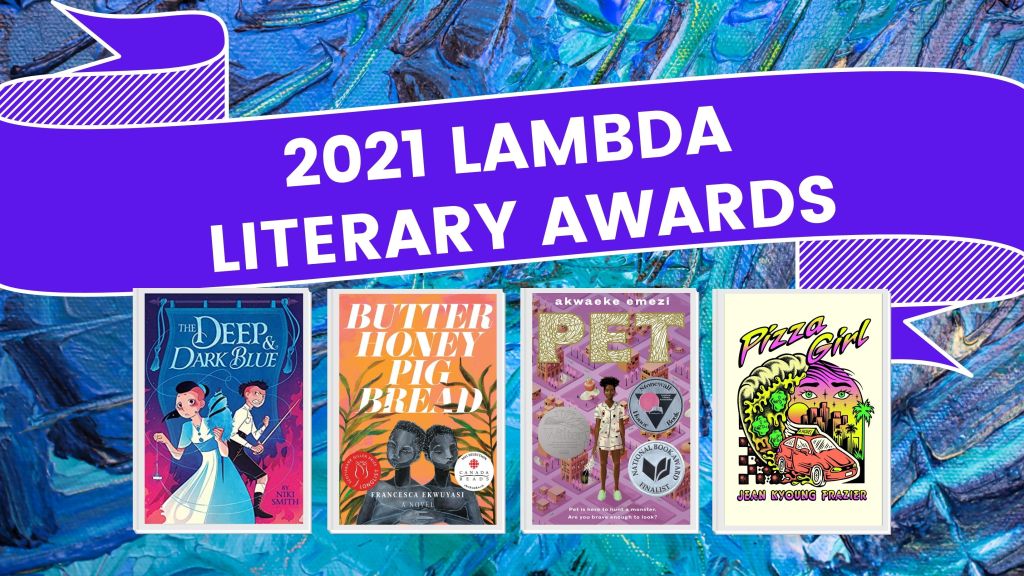
  • 2021 Lambda Literary Awards AND WINNERS

    2021 Lambda Literary Awards AND WINNERS

    The Lambda Literary Awards highlight LGBTQ writers each year. I did my best to read as many of their nominated books from six categories I was most interested in before the 33rd Annual Lammy Awards on June 1. There are 24 categories in total, and I highly recommend you check out the full list.

    I will continue to update this post with links to book reviews as I continue to make my way through these nominees and winners!

    Lesbian Fiction

    • Bestiary by K-Ming Chang
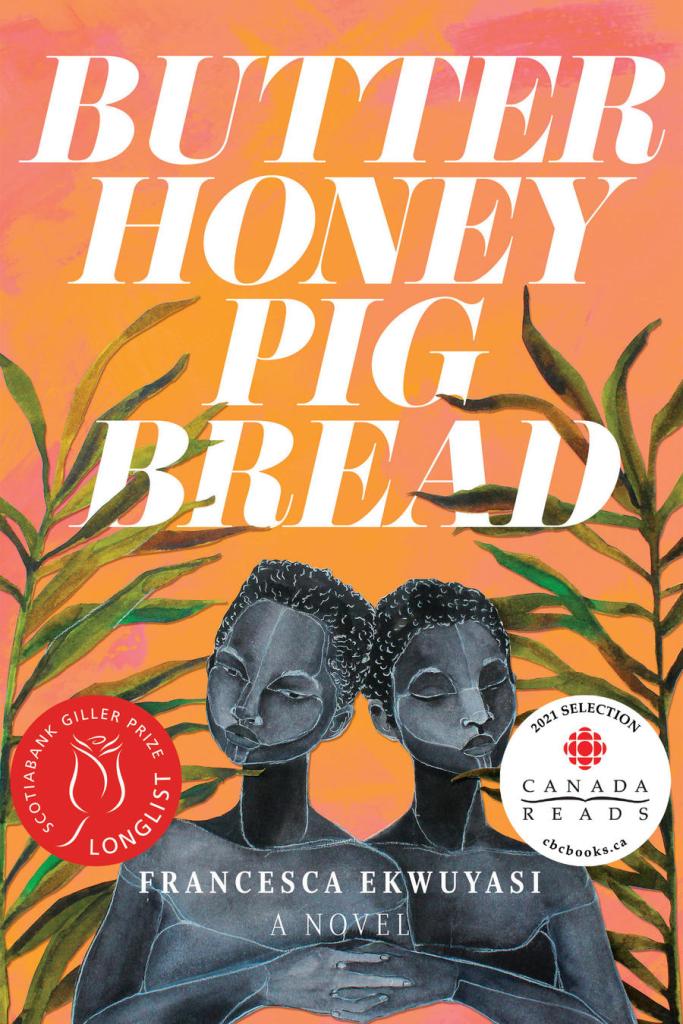
    • Butter Honey Pig Bread by Francesca Ekwuyasi
    • Exile Music by Jennifer Steil
    • Fiebre Tropical by Juli Delgado Lopera
    • Pizza Girl by Jean Kyoung Frazier

    My vote: Butter Honey Pig Bread
    The winner:
    Fiebre Tropical by Juli Delgado Lopera

    Gay Fiction

    • Cleanness by Garth Greenwell
    • Neotenica by Joon Oluchi Lee
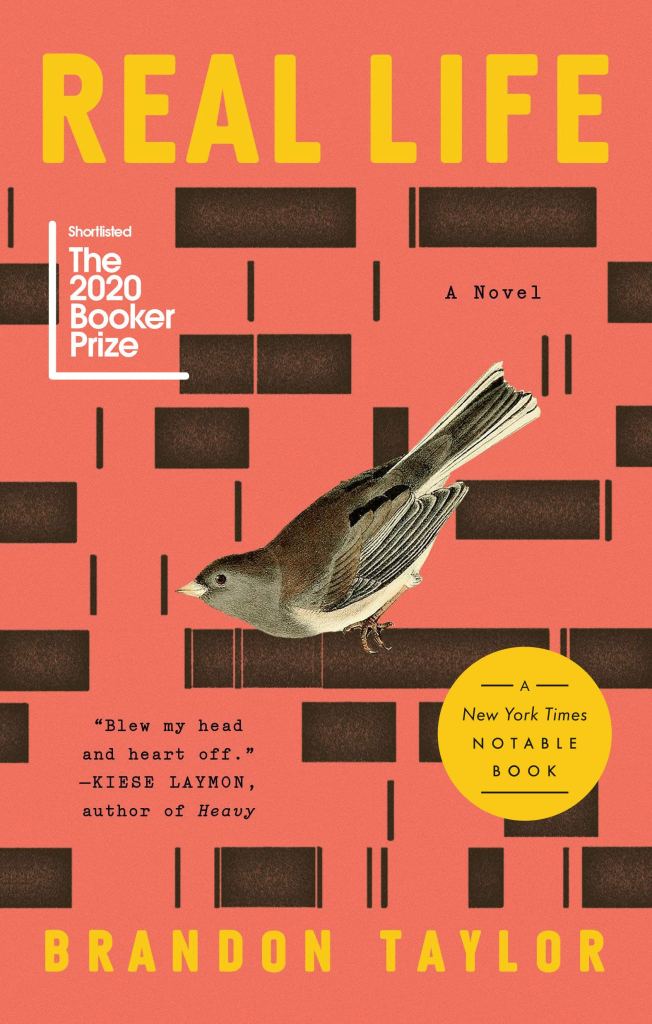
    • Real Life by Brandon Taylor
    • Shuggie Bain by Douglas Stuart
    • This Town Sleeps by Dennis E. Staples

    My vote:
    The winner:
    Neotenica by Joon Oluchi Lee

    Bisexual Fiction

    • Catherine House by Elisabeth Thomas
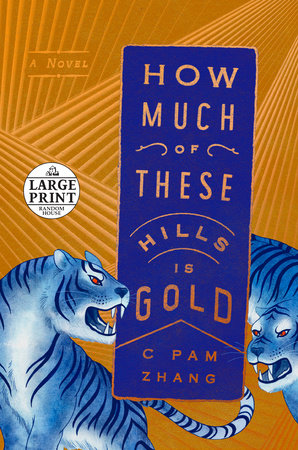
    • How Much of These Hills is Gold by C Pam Zhang
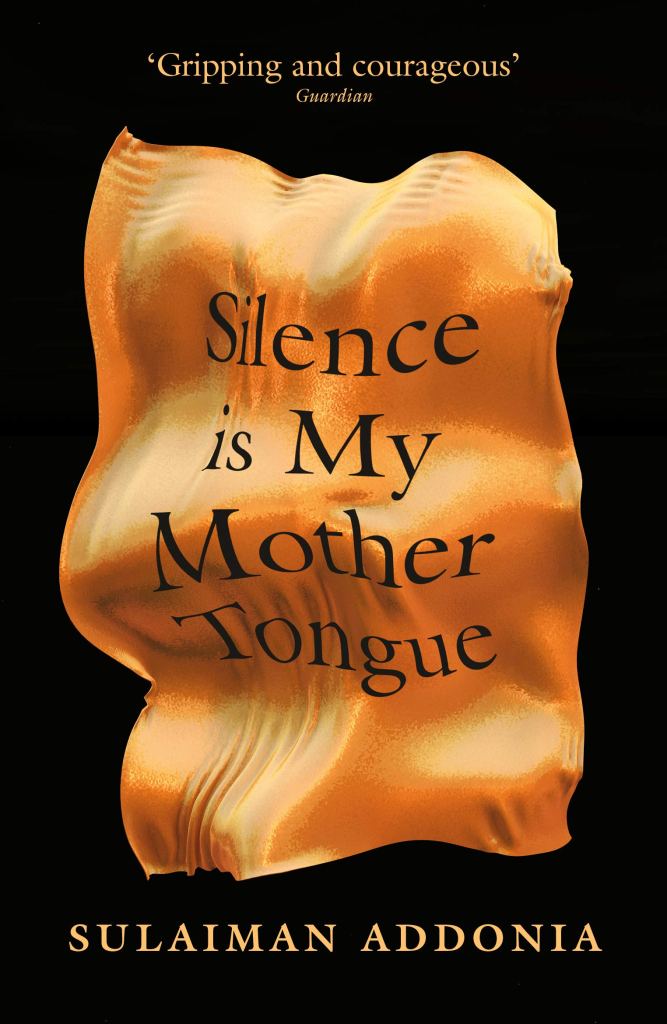
    • Silence Is My Mother Tongue by Sulaiman Addonia
    • Take a Hint, Dani Brown by Talia Hibbert
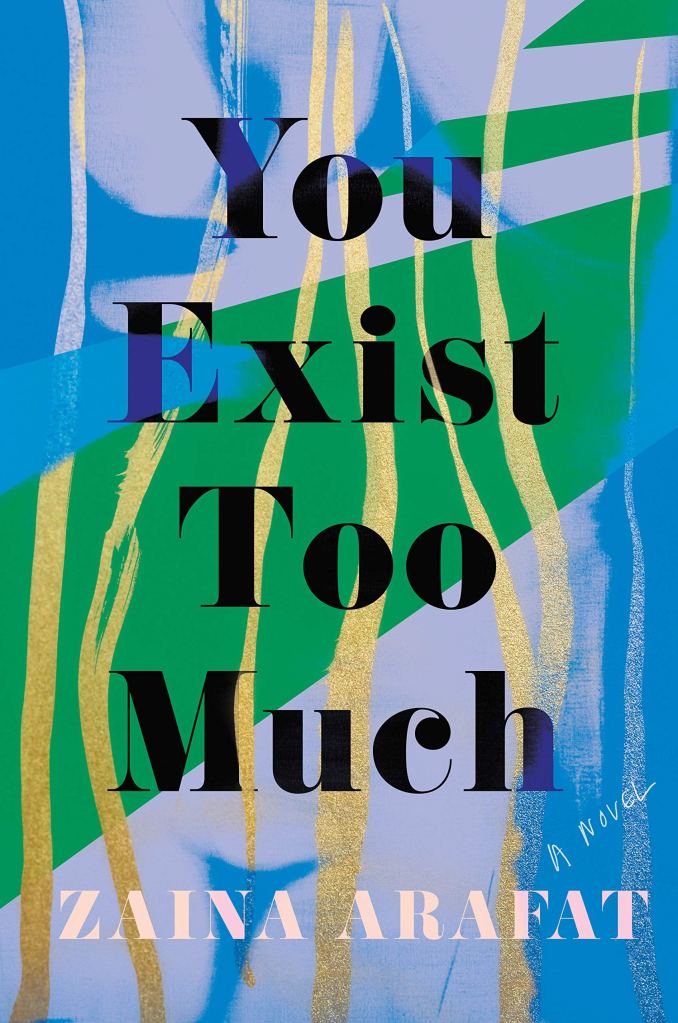
    • You Exist Too Much by Zaina Arafat

    My vote: Take a Hint, Dani Brown by Talia Hibbert
    The winner:
    You Exist Too Much by Zaina Arafat

    Transgender Fiction

    • FINNA by Nino Cipri
    • The Seep by Chana Porter
    • The Subtweet by Vivek Shraya
    • The Thirty Names of Night by Zeyn Joukhadar
    • Trans-Galactic Bike Ride: Feminist Bicycle Science Fiction Stories of Transgender and Nonbinary Adventurers by Lydia Rogue

    My vote: Trans-Galactic Bike Ride edited by Lydia Rogue
    The winner:
    The Thirty Names of Night by Zeyn Joukhadar

    LGBTQ Children’s / Middle Grade

    • The Deep & Dark Blue by Niki Smith
    • From Archie to Zack by Vincent X. Kirsch
    • A High Five for Glenn Burke by Phil Bildner
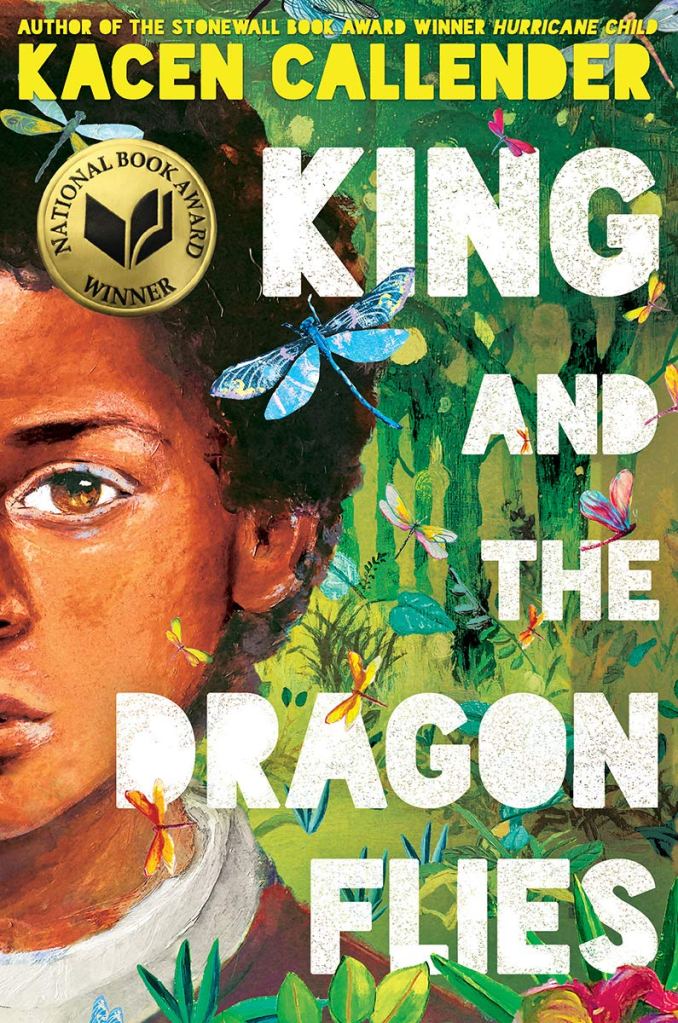
    • King and the Dragonflies by Kacen Callender
    • Our Subway Baby by Peter Mercurio

    My vote: The Deep & Dark Blue
    The winner:
    King and the Dragonflies by Kacen Callender

    LGBTQ Young Adult 

    My vote: Flamer
    The winner:
    Flamer by Mike Curato

    Have you read any of the Lambda Literary Award books?
    Which is your favorite?

    Leave a comment and let me know!

  • Last Night at the Telegraph Club by Malinda Lo

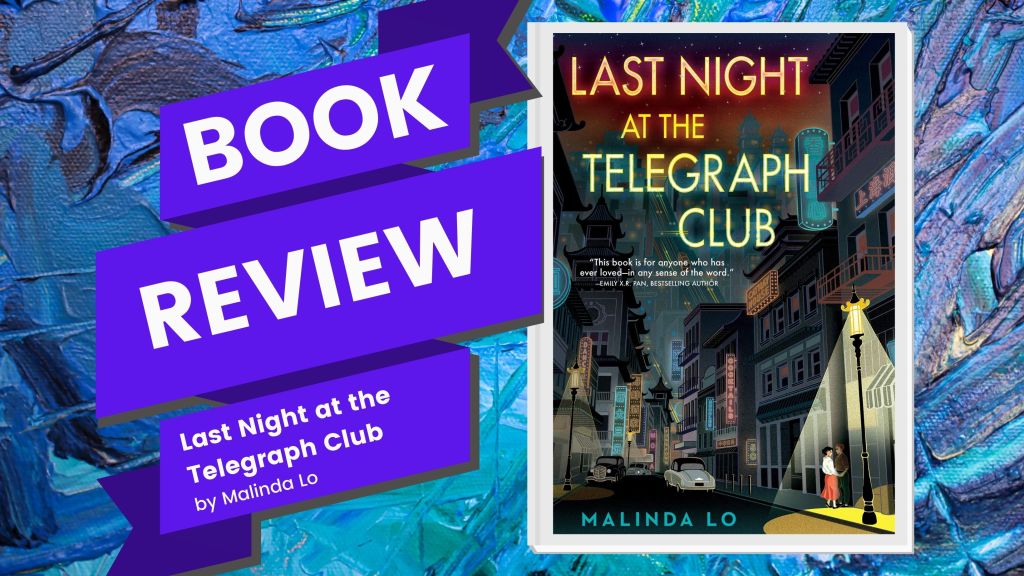
    Last Night at the Telegraph Club by Malinda Lo

    Acclaimed author of Ash Malinda Lo returns with her most personal and ambitious novel yet, a gripping story of love and duty set in San Francisco’s Chinatown during the Red Scare.

    “That book. It was about two women, and they fell in love with each other.” And then Lily asked the question that had taken root in her, that was even now unfurling its leaves and demanding to be shown the sun: “Have you ever heard of such a thing?”

    Seventeen-year-old Lily Hu can’t remember exactly when the question took root, but the answer was in full bloom the moment she and Kathleen Miller walked under the flashing neon sign of a lesbian bar called the Telegraph Club.

    America in 1954 is not a safe place for two girls to fall in love, especially not in Chinatown. Red-Scare paranoia threatens everyone, including Chinese Americans like Lily. With deportation looming over her father—despite his hard-won citizenship—Lily and Kath risk everything to let their love see the light of day.

    Goodreads

    This was a lovely YA historical novel about a Chinese American young woman coming to terms with her attraction to women, exploring queer community in 1950s San Francisco, and growing strong enough to stand up for herself and the life that she wants to create for herself.

    Stories about the 1950s often leave me feeling one of two ways: they either lure me into a believing that it was a simpler, nicer time, or else the racism, homophobia, and sexism makes me incredibly grateful to have born in the 80s. Although there were definitely moments when Lily’s world was sweet and appealing, I was mostly stuck on the horrifying elements: Lily endures consistent racist comments and actions whenever she leaves the safety of Chinatown, and the homophobia of the day is of the “will get arrested if found publicly gay” variety. It’s not good!

    (As I write this, I am aware that racist comments and consequences for being publicly queer are not relegated to the past. They are a current reality for many people.)

    I cannot imagine having the bravery Lily shows throughout this book. She knows something is different about herself, but it isn’t until she finds a paperback novel with two women on the cover that she realizes she isn’t alone. Watching her slowly fall in love with her new friend Kathryn was swoonworthy, all the more so because they know they are sharing something forbidden.

    The true star of this book is, fittingly, the Telegraph Club. Oh, how I wish there were a lesbian bar like this in Vancouver! With performances by male impersonators, new friends and lovers sharing drinks, and the good times continuing at house parties after closing, Lo paints a vivid picture of a community that easily ensnares both Lily and myself.

    A bit of warning: While the ending is hopeful, it is also a story true to its time. There are very real familial consequences for Lily, and this might be triggering to some readers.

    Rating: 5 out of 5.

    Check out our Queer Lil Library for more book recommendations and reviews!

  • The Last 10 Books Tag

    The Last 10 Books Tag

    Shannen at Rekindled Bibliophile recently posted this book list, and I was inspired to do the same.

    1. Last Book I Bought

    Binti by Nnedi Okorafor. It isn’t a queer book and therefore won’t be making an appearance on Roar Cat Reads, but I’m glad I get to plug it here! It is an awesome sci-fi novella that everyone should buy.

    2. Last Book I Re-Read

    Gideon the Ninth by Tamsyn Muir. I first read it over a year ago and wanted to reread it before writing my review on it. I had loved it the first time I read it, but it was even better upon re-read (and after having read its sequel Harrow the Ninth). There was so much groundwork laid and hints given that I totally missed the first time I read it!

    3. Last Book I Gave Up On

    Cleanness by Garth Greenwell. It’s nominated for a Lambda Literary award, so I was excited to read it. However, there was an explicit sexual assault in the second chapter that just really turned my stomach. It seemed to be written in a series of vignettes, so there is a good chance the rest of the book didn’t include more of the same. But I had lost my interest in the book, so back to the library it went!

    4. Last Book I Said I Read But Didn’t

    I don’t remember ever saying I’d read a book that I hadn’t. I do this about internet posts that people send me all the time though. “Oh yeah, I read that!” really means “I opened the link and skimmed the first paragraph.”

    5. Last Book I Wrote in the Margins Of

    I have no idea. It would likely have been a book I read for grad school, because in general, I don’t write in the margins. I don’t even like to underline things. I used to because I thought that was what bookish people do, but I’m far too much of a perfectionistic neat freak to intentionally deface my books. Haha, strong opinions much?

    6. Last Book That I Had Signed

    Ice Massacre by Tiana Warner. I bought this at VanCaf 2019 and had the author sign it right then and there! Man, I miss conventions.

    7. Last Book I Lost

    Hyperbole and a Half by Allie Brosh. I was convinced I lost this book for months and was about to buy a new one when I suddenly remembered that I had leant it to a friend. This is why libraries record things that are checked out!

    8. Last Book I Had to Replace

    Flora Segunda by Ysabeau Wilce. Every time I move, I do a huge purge of books. In the subsequent years, my favorite books make themselves known by slowly returning to my bookshelves. This is one of my all time favorites, and I only purged it because I want more people to read this little known series!

    9. Last Book I Argued Over

    Sharp Ends by Joe Abercrombie. Rachel loves grimdark fantasy, and I read it occasionally to support her interests. We argued for two days about whether the darkness was “realistic” or “unnecessary,” before I finally admitted that it was a pretty excellent book for stimulating so much conversation.

    10. Last Book You Couldn’t Find

    Mysteries of the Middle Ages: The Rise of Feminism, Science and Art from the Cults of Catholic Europe by Thomas Cahill. Cahill is one of my favorite history non-fiction authors, and I’ve loved his books How the Irish Saved Civilization, The Gifts of the Jews, and Sailing the Wine-Dark Sea. Every time I go to a bookshop I look to see if they have something by him that I haven’t read, but unfortunately, his books are rarely available. Gah!
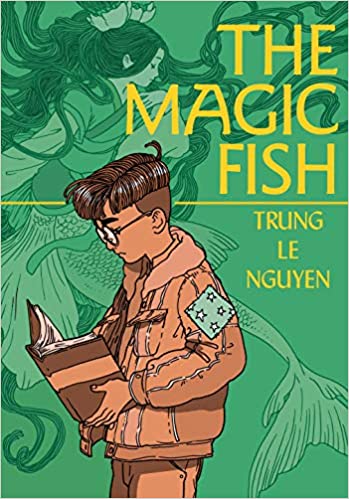
  • Pizza Girl by Jean Kyoung Frazier

    Pizza Girl by Jean Kyoung Frazier

    In the tradition of audacious and wryly funny novels like The Idiot and Convenience Store Woman comes the wildly original coming-of-age story of a pregnant pizza delivery girl who becomes obsessed with one of her customers.

    Eighteen years old, pregnant, and working as a pizza delivery girl in suburban Los Angeles, our charmingly dysfunctional heroine is deeply lost and in complete denial about it all. She’s grieving the death of her father (who she has more in common with than she’d like to admit), avoiding her supportive mom and loving boyfriend, and flagrantly ignoring her future.

    Her world is further upended when she becomes obsessed with Jenny, a stay-at-home mother new to the neighborhood, who comes to depend on weekly deliveries of pickled covered pizzas for her son’s happiness. As one woman looks toward motherhood and the other towards middle age, the relationship between the two begins to blur in strange, complicated, and ultimately heartbreaking ways.

    Bold, tender, propulsive, and unexpected in countless ways, Jean Kyoung Frazier’s Pizza Girl is a moving and funny portrait of a flawed, unforgettable young woman as she tries to find her place in the world.

    Goodreads

    Pizza Girl is a very well written book with a story I didn’t care for. I can appreciate the skill with which Frazier conveys the listlessness, anxiety, and obsession of a closeted pregnant teen girl. But I spent most of the book clutching my pearls and screaming, “STOP MAKING BAD CHOICES!” It reminded me a lot of a lesbian Juno.

    This is a book that handles generational trauma and the fear of becoming the parent who neglected you (as you actively neglect your fetus by drinking excessively while pregnant oh my god!!) through a protagonist who survives life by escaping it. During this novel, her escape takes the form of a middle aged mother who orders pickle pizza every Wednesday. Jane’s obsession with Jenny is deep, earthy, and kind of sweet in a weird way. She fantasizes about them breathing into each other’s mouth, hot and meaty. Very visceral, weirdly sexual….fun! But her obsession grows to the point of danger, both to herself and others, and with no real consequences. I did not know what this book was trying to tell me, other than the fact that life is complicated and difficult.

    The characters are realistic, sad, and well constructed. Jane makes all the wrong decisions and doesn’t appreciate any of the good things around her. What can I say? This is a book that captures the emotions of a teenager perfectly, and I am now mom-aged and cannot handle them.

    What Makes This Book Queer?

    It would be easy to read Jane as a closeted lesbian, pregnant with her perfect boyfriend’s baby but fantasizing about women. I liked that Frazier kept things a little more nuanced, as she does seem to truly love her boyfriend and enjoy romance and sex with him on occasion. There is also a simplistic interpretation of this story that Jane’s repression of her sexuality is leading to her repressing all other parts of her life – her grief for the death of her alcoholic father, her fear about being a parent, her confusion about what to do with her life. I think it is more accurate to say that her fear about addressing any one of those issues makes her more likely to ignore everything else; it’s a two-way street.

    When Jane asks her gay coworker how he knew he was into boys, he says that while he liked girls and boys, only boys had the power to ruin his life. I love this definition!

    There were some really lovely moments in this book, and I tore through it in horrified curiosity, but it wasn’t my jam. However, I am absolutely positive that it will be exactly what someone else wants.

    Rating: 3 out of 5.

    Check out our Queer Lil Library for more book recommendations and reviews!

    ‘ discord!

    Find more books nominated for Lambda Literary Awards reviewed here!

  • Flamer by Mike Curato

    Flamer by Mike Curato

    Genre | YA Graphic Novel
    Page #s | 368
    Publishing Date | September 2020

    Award-winning author and artist Mike Curato draws on his own experiences in Flamer, his debut graphic novel, telling a difficult story with humor, compassion, and love.

    I know I’m not gay. Gay boys like other boys. I hate boys. They’re mean, and scary, and they’re always destroying something or saying something dumb or both.

    I hate that word. Gay. It makes me feel . . . unsafe.

    It’s the summer between middle school and high school, and Aiden Navarro is away at camp. Everyone’s going through changes—but for Aiden, the stakes feel higher. As he navigates friendships, deals with bullies, and spends time with Elias (a boy he can’t stop thinking about), he finds himself on a path of self-discovery and acceptance.

    Goodreads

    Using spare colors with an inviting cartoon aesthetic, Curato has created a beautiful graphic novel about a young boy on the cusp of adolescence who struggles to accept his attraction to boys during a Boy Scouts summer camp. Occasionally haunting but ultimately uplifting, I adored this book and want everyone to read it.

    This is Aiden’s last summer before high school, and he wants his camp experience to be a fun, safe space for him to be fully himself. Unfortunately, he is at camp with a bunch of boys, and they throw insults and gay slurs at each other with abandon. Curato captures these microaggressions with nuance, showing how they hit differently for someone who worries he actually IS gay while also showing how good it can feel to turn the tables and call a bully a f*****.

    Although this is a quick read, the length of the novel allows us to get a full sense of Aiden’s life. The main action takes place during summer camp, but we get flashbacks to his family, his school, and his church that better inform what he is experiencing in the present day as he participates in orienteering, archery, and basket weaving.

    Aiden is such a cute boy who can’t, and doesn’t want to, hide his feminine side despite being very in the closet when it comes to accepting his attraction to bunkmate Elias. Every night he dreams of the two of them together. These were my favorite sections of the book, as he imagines the pair of them as Frodo and Sam or Wolverine and Jean Grey, in an adorable fantasy that increasingly turns dark as he tries to push the feelings aside.

    The story culminates in a dark moment that might be triggering for some readers, though the scene is handled with care. The fires that Aiden worries will engulf himself ultimately manifest as his own life energy, a fire full of strength and vitality that cannot be put out. It’s a lovely book, drawn with skill and passion, that should be on the shelf of every school library.

    Who Would I Recommend This Book To?

    It’s great for readers of all ages, but this is a book to prioritize giving to young queer kids who will see themselves in Aiden.

    Rating: 5 out of 5.

    Check out our Queer Lil Library for more book recommendations and reviews!

    Find more books nominated for Lambda Literary Awards reviewed here.

  • 7 Books for International Day Against Homophobia, Transphobia, and Biphobia

    7 Books for International Day Against Homophobia, Transphobia, and Biphobia

    May 17th is International Day Against Homophobia, Transphobia, and Biphobia. Created in 2004, this holiday draws attention to the violence and discrimination experienced by those with marginalized sexual and gender identities. I didn’t want to create a list of books that depict the most harrowing and disturbing things that LGBTQIA+ people endure, mostly because I don’t like to read that kind of story. Instead, I believe that representation of queer positive stories and characters can help create a world with less homophobia, transphobia, and biphobia.

    With that goal in mind, here are seven trans, bisexual, and gay books that inspire readers to accept their own identities and to embrace the identities of others.

    Edit: Updated in 2022


    The Deep & Dark Blue by Niki Smith

    This middle grade graphic novel is about thwarting a plot to overthrow a fantasy kingdom’s ruling family, but one of the escaped princes realizes that she prefers her hidden identity as a girl. She wrestles with what this means for herself and her family, ultimately having her female identity validated by her twin brother and by a magical tapestry! I highly recommend this book for readers young and old.

    FINNA by Nino Cipri

    The protagonist of this novella has just broken up with a nonbinary person right before they get sent on an inter-dimensional adventure through IKEA analogues of varying degrees of evil. Jules (the ex) mentions the casual transphobia that they deal with on a regular basis and how being chased by hive mind zombies is preferable. I mean, that’s a mood.

    Pet by Akwaeke Emezi

    Set in a utopian world that has eradicated the various -isms that haunt our society, little Pet screamed “Girl! Girl! Girl!” as a child when her parents called her a boy, and they immediately adjusted. She was given medical access to hormones without question, and it is a joy to read about a world without transphobia. The plot hinges on the fact that utopias must be vigilantly maintained, however, and I think this message is one to keep in mind as we begin to create safe spaces for those who are currently marginalized.

    Take a Hint, Dani Brown by Talia Hibbert

    This one is for all my bisexual friends who are dating men! You are valid, and your sexuality is valid. Dani Brown is a bisexual delight who loves women and men passionately (though she hates commitment). This romance novel centers on her friends to lovers tropetastic relationship with Zafir, a hunky security man who has a side gig teaching teen boys how to process their emotions in healthy ways. If I remember correctly, there is no biphobia in this book, so I recommend it as a sign of the world we aim to create!

    We Have Always Been Here: A Queer Muslim Memoir by Samra Habib

    Homophobia, transphobia, and biphobia exist everywhere, but there is a special kind of pain that comes from growing up in a culture that doesn’t even acknowledge your existence. Habib’s memoir describes her journey coming out as a queer woman after her Muslim family moves from Pakistan to Canada. Although she leaves her faith for awhile, ultimately she finds a community of queer Muslims and uses her photography talents to show the world the faces of others just like her.

    A Psalm for the Wild-Built by Becky Chambers

    Sometimes the best antidote to transphobia is a novella set in a future where trans folks are a normal and accepted part of society. Dex is a non-binary tea monk, which means they bike their tiny house from city to city, making tea for people and listening to their problems. When they find they want something more, they venture into the wilds, where they meet Mosscap, a robot who wants to understand humans. This is a cozy, sweet read where in the future, humans made all the right choices. May life imitate art!

    The House in the Cerulean Sea by T.J Klune

    Queer families are a beautiful support system in the face of discrimination, and this adorable novel takes the concept quite literally. Linus is sent to inspect an orphanage designed for dangerous children, by which I mean a gnome, a sprite, a wyvern, an unidentifiable green blob, a were-Pomeranian, and the Antichrist. Their ostracization reads as queer, but it doesn’t stop there: Linus finds love with the man who runs the orphanage before his job assignment is complete, throwing everything he thought about his life into sweet disarray.


    What books would you add to my list? Leave a comment and let me know!

    Check out our Queer Lil Library for more book recommendations and reviews!