Category: Interview

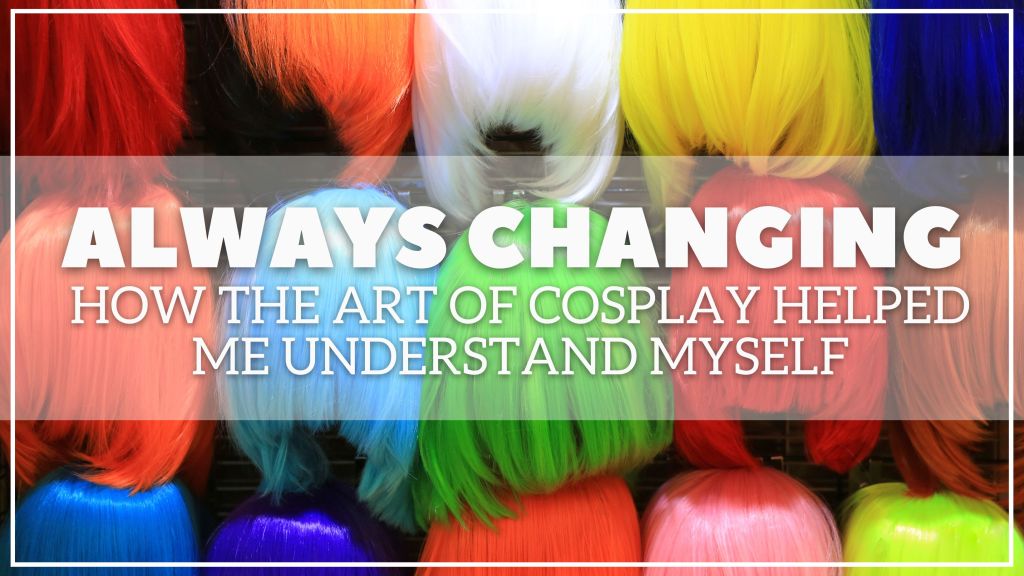
  • Always Changing: How the Art of Cosplay Helped Me Understand Myself
    Always Changing: How the Art of Cosplay Helped Me Understand Myself


    Always Changing: How the Art of Cosplay Helped Me Understand Myself

    An essay written by Daze

    Cosplaying, Cross-playing, and Gender-playing

    I was 14 or 15, fresh after a lot of traumatic experiences in middle school and some “ambivalent friendships” I still find hard to define – pure and simple bullying.

    Why am I telling you all of this? Firstly, I’m fine now – as fine as someone can feel, I guess; secondly, I want to give you a clear idea of what I was experiencing not long before going to my first comic-con.

    As strange as it sounds, high school was a sort of promised land to me: a place where I could finally find people with the same interests, open minded and intellectually stimulating. I was right to some extent, but living with the same people for five years in a very stressful environment is not easy. People come and go.

    I remember quite clearly that one of my friends suggested we go to this small convention, and that we should dress up for the occasion. Cosplayers weren’t so popular at that time and the main reason to wear a costume was the discount ticket. My friend chose to dress up as a character from Hetalia, while I decided to bring a sort of original character that was a mix between Jareth the Goblin King (Labyrinth) and a leather dressed elf that was the protagonist of a famous YA fantasy.

    The result was not that good, honestly, and I’m happy all the pictures were lost between one memory card and another. 

    My second cosplay is the one I consider my official entry into this crazy, beautiful world and my first step towards a late realization – one of those moments when you see everything in retrospect and think, “Wow, now it actually makes sense.”

    I attended my second CC dressed as Undertaker (Black Butler) – a tall, lean shinigami (“god of death”)  with penetrating green-yellow eyes, bringing a Death Scythe I’d love to build now that I have the skills.

    The thing is, despite his androgynous appearance, Undertaker is a male character. Explaining this now sounds so silly, but there’s a huge part of the Italian cosplay/fandom community that doesn’t appreciate Cross-playing (dressing as character belonging to another gender, usually women dressing up as male characters) and Gender-playing (changing a character to make them fit into another gender, usually a feminization/masculinization of a character). 

    Many purists think changing a character’s gender or hiding the cosplayer’s real gender is a deviation from the original reference. Which is true. 

    So what?

    The reason why I started cross-playing and gender-playing (which I consider just two of the many ways to cosplay) is because many anime/manga, videogames and tv shows had poorly written female characters. I usually don’t cosplay a character I don’t feel like is mine, and I prefer bending the limits of canon to make them fit my point of view. 

    Another reason for this choice was that I’ve felt uncomfortable with my body for a long time, so almost naked, sensual female characters were totally out of the question. 

    I’m working on this still and things are going quite fine now, but I was barely a teenager when I started cosplaying. The perception I had of my body and the impossible beauty standards portrayed in the media were a huge limitation for me – still are, sometimes.

    Despite all my insecurities, cosplaying became a safe space where I could understand myself and open up to new experiences. I think I never bothered to define myself as a cosplayer or to find a “cosplay style” – which is really a social media thing now. To me, cosplaying is still about feeling good and sharing this fun activity with my friends. Likes and visibility come after.

    It was in this space and the related fandom life that I had my first encounters with the LGBTQ+ reality (in canon, fanon and real life).

    I know there’s a toxic side in every fandom and a lot of “Oh no, they are just friends” people out there, but I had the luck to stay away from that since the beginning. The people I usually meet at cons might have weird tastes in ships, characters and fan contents, but they were always quite respectful – or at least discreet in criticizing others

    I’ve always admired people who are open about who they are and what they like, and I think cons are the perfect place to express your true self. No one will judge you for going full goth mode, wearing too many colors, or just being proud. 

    They might not know it, but I really owe them a lot of who I am today.

    Gender Expression Exploration and Self-Confidence

    A huge part of my gender expression has been shaped by fictional characters and people I’ve met at comic cons through the years. Seeing them being so comfortable with themselves encouraged me to step out of my shell. 

    As a glam rock fan (especially David Bowie’s music) since I can remember, I was very young when I understood that there are so many ways to express femininity and masculinity – and they are not related to a person’s gender! Writing it down now, it sounds obvious. But growing up in a small town, I never had the chance to experience queerness until recently.

    In many ways, comic cons were the only place where I really could.

    Seeing people dressing up the way they wanted, characters or not, even just for a day, is one of the things that pushes me to continue this activity. 

    Have you ever seen someone wearing a costume outside the social realm? I think it’s refreshing. 

    There’s something special in the way cosplayers hold themselves, the way they act and speak in and out of characters, that made me understand why this hobby is so important.

    We all need to evade reality sometimes and to feel in contact with our true self. It might sound trite, but the real mask is the one I have worn every day for a long time, not the wig and heavy makeup.

    After attending a few cons, I felt the need to take that sense of pride, of comfort, and experience it in my everyday life. Self-confidence is highly addictive – especially when you have no self-esteem. That’s how my adventure in discovering gender expression started, way before I could even label it with this term.

    Cosplaying as different characters is a challenge to me, a way to push my deepest sense of self outside the limits of “who I should be” according to others. It’s not really about the makeup and clothes and haircut – even though it’s probably the first thing people notice, it’s about not caring about all the voices telling you what is proper and what is not; it’s about choosing the way to express yourself that really suits you. And the thing I love is that you don’t have to be coherent! Trying to fit in the box is so exhausting and people will always have their opinions. So why should we try at all?

    Sexual Orientation and Labels

    During the first lockdown in 2020, I had time to think. Too much time, actually. I’m one of those people that needs a constant noise in their head because when everything stops, they have to face reality. Which I think is the reason why I’m a huge media consumer.

    It’s in this context that I came to terms with my sexual orientation. At some point, I felt the need to ask myself some questions and put a label on that specific part of myself. I don’t think labels are a necessity to understand yourself, but in my case I found it really comforting – it means that I’m a complete mess of a human being, but at least I’ve got something figured out.

    So, how does bisexuality relate to cosplaying?

    Honestly, I don’t know. It just does! I don’t think there’s a linear explanation for this connection, but I’ll do my best.

    The only thing that I know is that in the moment I accepted myself for who I am, my heart became lighter and I felt the exact same sense of freedom I feel wearing a costume. Something in my mind clicked and I realized that maybe I didn’t need to overthink the whole thing: I was already living as my true self even when I didn’t have a name for it.

    Being surrounded by cosplayers who play with their appearance so much, I understood that to me attraction is something fickle that can’t be limited to a person’s gender/gender identity. There’s so much more cosplayers can express and their gender – or the gender of the character – become completely superfluous.

    Support and follow Daze:

    Daze’s Linktree: https://linktr.ee/DazedAndInked
    Ko-Fi: https://ko-fi.com/dazedandinked

    Sign up for Roar Cat Reads’ Monthly Newsletter

    Processing…
    Success! You're on the list.

    By clicking submit, you agree to share your email address with the site owner and Mailchimp to receive marketing, updates, and other emails from the site owner. Use the unsubscribe link in those emails to opt out at any time.

  • Queer Books, Queer Readers:  Alex Recommends The Traitor Baru Cormorant

    Queer Books, Queer Readers: Alex Recommends The Traitor Baru Cormorant

    Alex (he/him) is a bisexual bilingual Britalian currently living on xʷməθkʷəy̓əm, Sḵwx̱wú7mesh, and səlilwətaɬ land. He is a literary translator from Italian into English, though he also dabbles with French and RPGs, and is co-editor of The Norwich Radical. His work has been published in NYT Magazine, The Massachusetts Review, The Short Story Project, and PEN Transmissions. You can find him around the internet at alexv.fyi or alexvalente.fyi.

    What queer book have you chosen to share with our readers today?

    Seth Dickinson’s The Traitor Baru Cormorant was the first book featuring queer women by a male writer that did not make me want to scratch my eyes out in frustration. It is also an intricate, detailed, historically accurate while being ahistorical, fantasy dissection of the powers of empire, colonialism, oppression and, most of all, assimilation. Baru is a young savant from the latest colony of the Masquerade, who decides to rise through the ranks and destroy the empire from within. Of course, at every step of her silent revolution, there are temptations (the women who work with, for, or against her tend to be most of them, especially Tain Hu, her field general) and limitations to what her imperial power can do, and Dickinson makes sure to wring every ounce of gut-churning tears and screams of frustration up to the very last page. It’s brutal, it’s visceral, it’s like nothing I had ever read before, and I will never forgive him for the ending. 

    Why is this book one of your favorites?

    I am very, very wary of books written by men about women, especially queer women. Dickinson came with some very good recommendations, and it still took me over a year to try the first book – in fact, it was his blog post about the world of Baru Cormorant that finally gave me the last push (and a good friend of mine reading ahead of me to vet it). I have been disappointed too many times, but this one managed to get so many things just right, while also not holding back on several punches and horrible twists, in a way that built a world instead of placidly and tacitly becoming complicit with the homophobia, transphobia, xenophobia and layers of oppression that the Masquerade enforces upon its subjects and colonies. It sits in the same general area as The Poppy Wars, She Who Became the Sun, The Unbroken as part of a new canon of queer explorations and subversion of colonial fantasy. It’s the one book I would recommend to anyone trying to write fantasy or any form of world-building. It’s just that good.

    How would you describe yourself as a reader?

    I am a very focused reader, both by professional deformation (translation: not even once) and by choice. I have very specific criteria on what books to choose to read because I have to dabble in so many I might not usually want to read for work. So I rarely choose litfic for pleasure, and tend to not read a lot of recent YA, for example, and try to steer clear of anything with law enforcement as main characters. But as I said above, I also avoid male writers unless they come from a marginalised background or identity, unless they come incredibly highly recommended, or their work is online as short stories or poems or novelettes. And even then, I have so much catching up to do with so many good really imaginative fiction (horror, fantasy, scifi, all of the above) writers I never even knew existed from my first decades of reading mostly male authors. I’m sure The Men won’t be missing me as a reader!

    As a queer person, have books helped you explore or express your queer identity?

    This might not be the answer you’re looking for but: I’m not sure it has. Or at least, not exactly. I do remember being shaken to the core when I first read Jeanette Winterson’s Written on the Body, but it was a similar reaction to Patrick Ness’ A Monster Calls or watching A Single Man – I’m not sure if queer stories are what I needed, but now that I look at it, there is a pattern of queer authors and creators that have had a recognisable impact on my own development and discovery, yes. 

    Other than reading, are there any queer nerdy recommendations that you would like to leave with our readers?

    There are many many many TTRPGs that are off the beaten track (i.e. D&D and its siblings) which deal with issues of identity, sexuality, marginalisation, class awareness, and subversion of violence as conflict resolution. Narrative games like Wanderhome and A Quiet Year, social games like Monsterhearts 2 or Big Gay Orcs, solo games like A Thousand Year Old Vampire or The Magus or Plot Armor, and even a few two people games, like Enticement, or Things, Eldritch and Terrifying. Go take a look at itch.io, try a few, and let them change how you look at stories, at games, and yourself.

    Thank you, Alex!

    Check out our Queer Lil Library for more book recommendations and reviews!

  • Adventure Queers:  Dana Ebert with TPK Brewing Co.

    Adventure Queers: Dana Ebert with TPK Brewing Co.

    Dana Ebert (she/her) is an openly bisexual and transgender author, game designer, and voice actor, best known for her contributions to Pathfinder 2e and Starfinder. Dana created Pathfinder’s first canonical in-world gender affirmation clinic (also boutique and day spa!), and some of her other works include OGL 5e-compatible content. You can find more information and links to her website, social media, and upcoming projects on her LinkTree.


    Dana, when did you first start playing D&D and TTRPGs?  What do you enjoy the most about the game?

    My first TTRPG was the Tom Moldvay edition of Basic D&D, which I played for the first time with my older brother and his friends when I was ten. That was a huge turning point for me, because I instantly fell in love with the medium. The part I enjoy most is the shared storytelling—those moments of surprise and triumph that lead to stories that get re-told around the table for years to come. As a player, I also enjoy the catharsis that comes from fully inhabiting another character for a few hours.

    As a queer person, have roleplaying games helped you explore or express your queer identity and/or sexual orientation?

    Oh, jeez. Let’s just say that the character I played nearly every week in high school was named Mavis. She was 6′ tall, with olive-green hair and shoulders for days. But the best part about playing her, the part I wouldn’t admit back then, was that during our sessions, everyone at the table referred to me in-character and used she/her pronouns. As Mavis, I also explored in other ways, such as near the end of the campaign when she married one of the party NPCs (a goblin who polymorphed himself into an excruciatingly handsome human to get her attention). So yes, that was very much my experience, even if I didn’t realize it at the time.

    You are a professional DM. What is your style of DMing and what kinds of players would most enjoy playing with you?

    My style can be very writerly, and I almost exclusively run original content. Past players have told me that the things they enjoyed most were my worldbuilding, my willingness to improvise and take their story in unexpected directions, and how I let them alter and impact my campaign settings. The “rule of cool” and roleplay-heavy scenes are two things that I enjoy utilizing immensely, and while I can also adhere to other styles of play, I think the players who strongly prefer my style tend to like those same things.

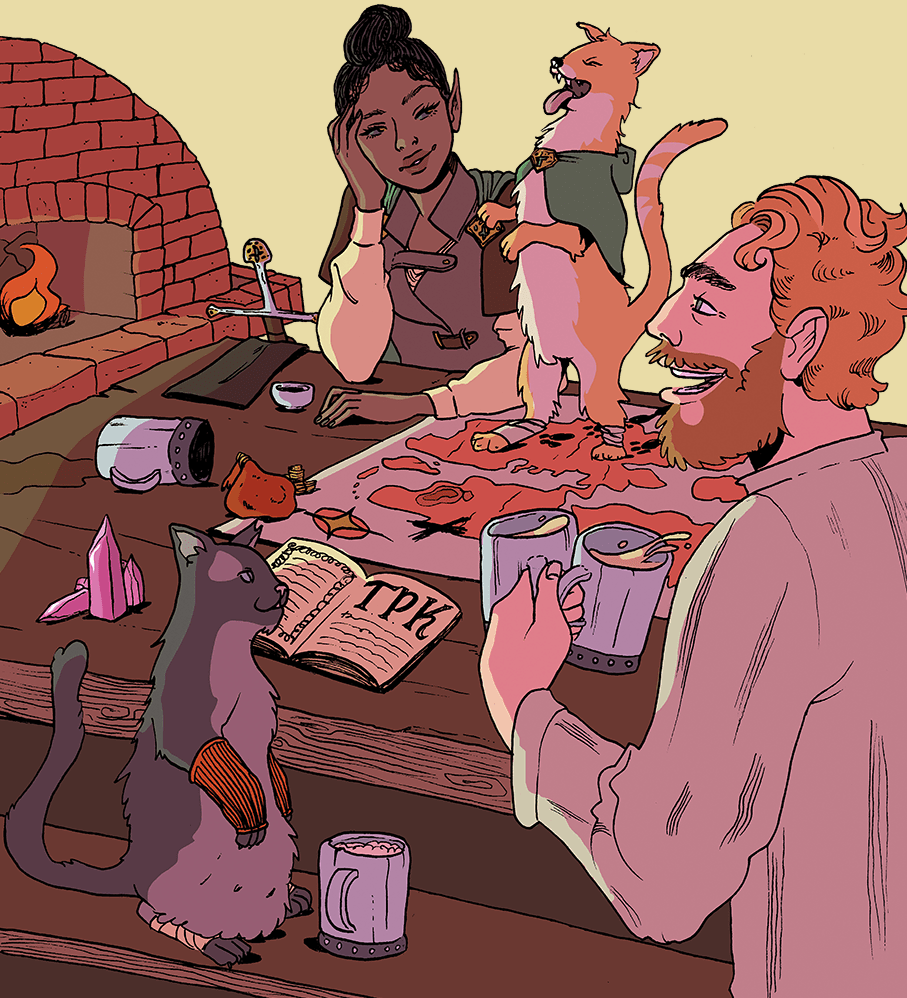
    You are bringing your love of TTRPGs into an exciting new project.  What can you tell readers about TPK Brewing Co., a TTRPG-themed brewery in Portland, Oregon?

    TPK Brewing Co. is a craft brewery where, in addition to world-class food and original brews, our guests will be able to book games with full-time Game Masters. We’re going to offer a variety of titles, but our flagship experience will be an OGL 5e-compatible campaign called the “Leyfarer’s Chronicle.” It takes place in an original post-cataclysmic fantasy world called Val’Ruvina, which groups of player characters will simultaneously explore while contending with broken magical fields, warped creatures, and regular storyline events. I explain much more in our upcoming promos, so please sign up for our newsletter at tpkbrewing.com!

    TPK Brewing Co. is majority-owned by queer women of color. In what ways do you anticipate that this ownership model will be an asset to the company and to future visitors and guests?

    Part of our company’s mission is to create space for marginalized groups in the craft beer and gaming communities, and that begins with ensuring that our own spaces are as safe and inclusive as possible. On the gaming side, this means that safety tools will be part of our culture, we’ll always strive to keep our content inclusive and anti-racist, and we won’t hesitate to remove guests who can’t adhere to our community guidelines. In this way, we hope to build a durable and welcoming community for ourselves and our guests.

    When should people (myself included!) plan to come to TPK Brewing Co.?

    We plan to open our doors in the spring of 2023! We would love to see you there!

    Finally, do you have any recommendations of queer nerdy content that you would like to share with readers?

    I’ve had the pleasure lately of getting to work with several Portland-based artists, and I’d love to highlight a couple of them from the LGBTQ community!

    • Spyder Dee is simply a phenomenal creature artist—they always manage to exceed my expectations with their wonderfully terrifying blend of the fantastical and the grotesque.
    • Alejandra Gutiérrez is a powerhouse. At Image Comics she has contributed to titles including Twisted Romance and SFSX, and was the one who created our promotional splash page featured above.
    • Brie Golden has been up-and-coming for some time, producing stunning battle maps for AP podcasts and livestreams. We should all expect to hear her name more in the future.
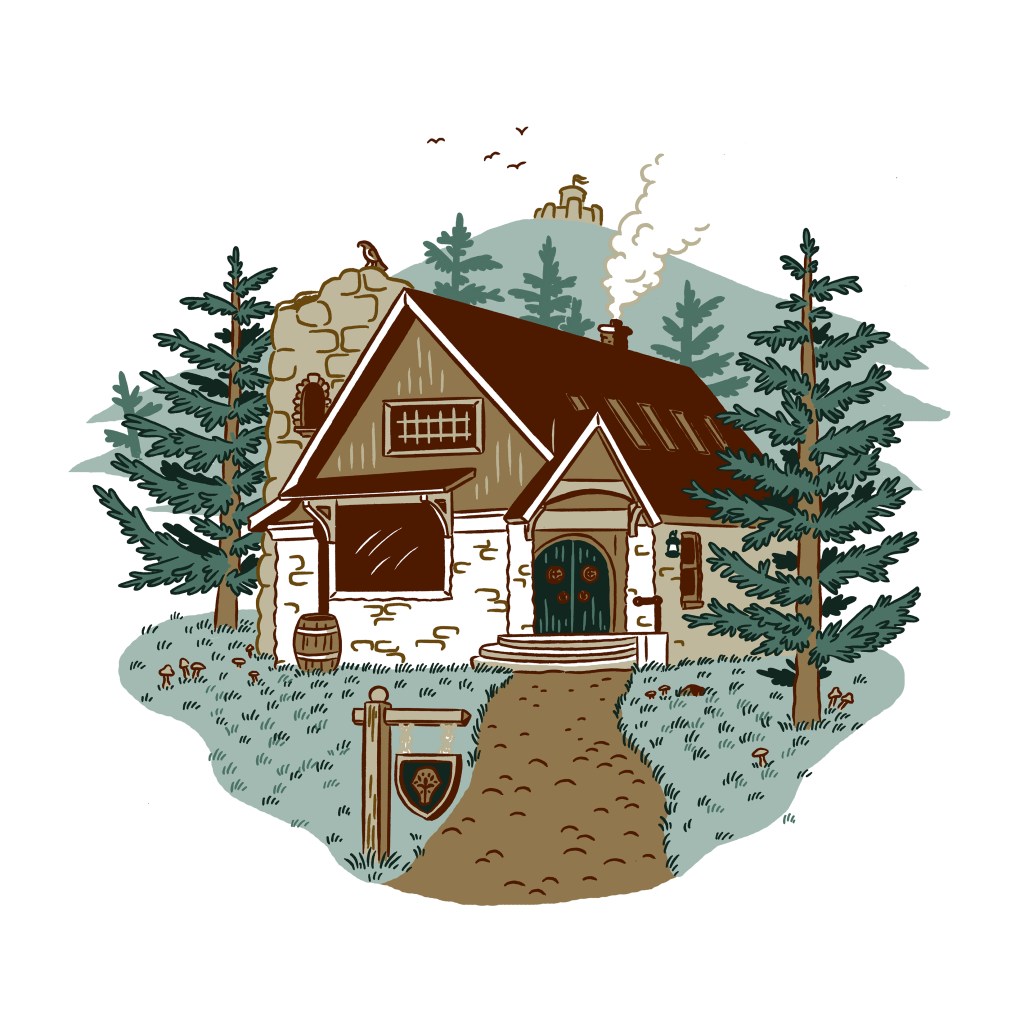
    • Elodie Kahler has a whimsical illustration style that never fails to make me smile. She recently finished an illustration of our building that we all absolutely adore.

    For more from Dana, check out her LinkTree!


    Sign up for Roar Cat Reads’ Monthly Newsletter

    Processing…
    Success! You're on the list.

    By clicking submit, you agree to share your email address with the site owner and Mailchimp to receive marketing, updates, and other emails from the site owner. Use the unsubscribe link in those emails to opt out at any time.

  • Adventure Queers:  Meet Bonnie Hammond of Bits & Keys

    Adventure Queers: Meet Bonnie Hammond of Bits & Keys

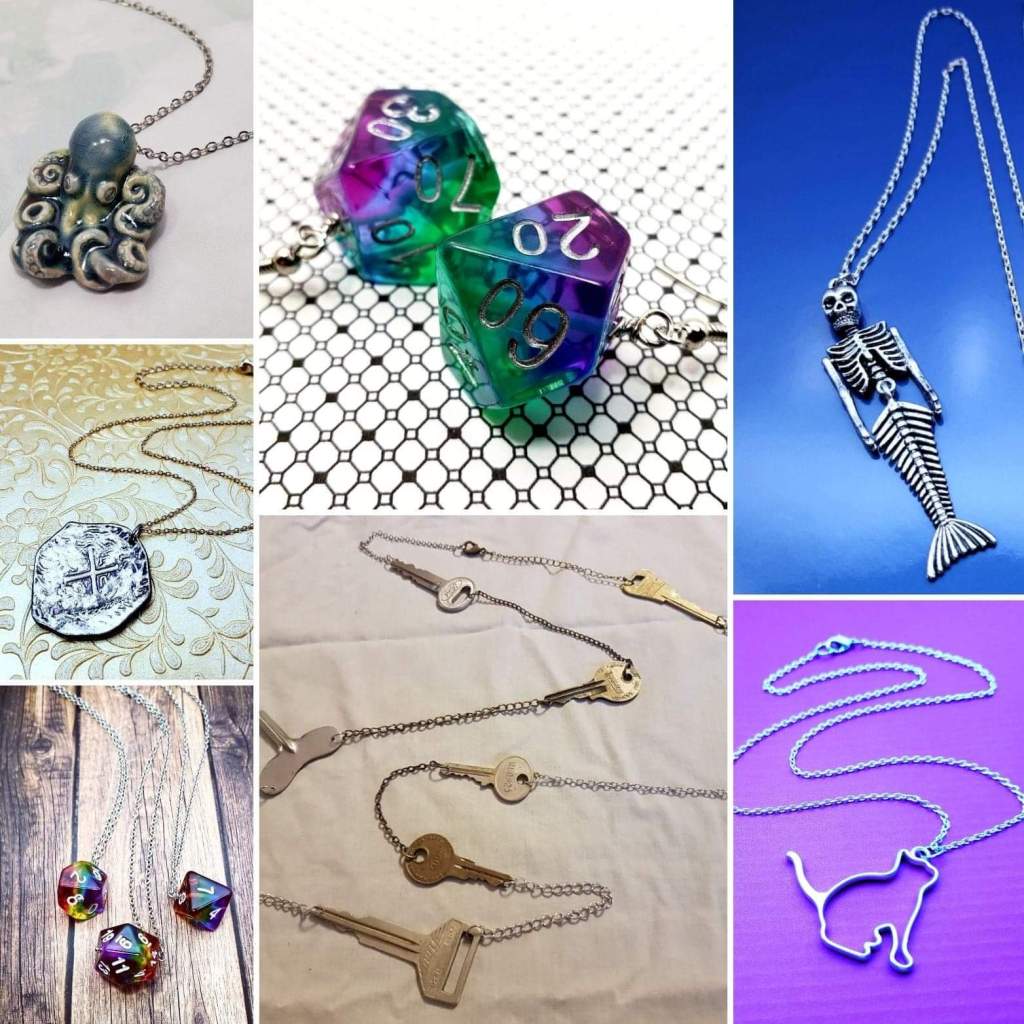
    Bonnie Hammond (she/her) is the queer, disabled, neurodivergent feminist your parents warned you about. Not quite nerdy and not quite popular growing up, Battlestar Galactica was the series that saw her transition from sleeping with geeks to actually being one. She went to school for math and tourism, spent a while as a labour activist, and then accidentally started making jewellery for a living. She started with keys and now collects flatware, keychains, old watch bits, tiny teacups, broken jewellery, and dice (drilling holes through the 1 out of spite). She’s a Whovian, a Browncoat, a Supernatural fangirl, and the most extroverted nerd you will find. Bonnie thinks consent is sexy (when it’s clearly and freely communicated), has been twice hired to sit in the back at comedy shows due to the volume and infectious nature of her laugh, and is probably allergic to whatever you’re eating right now.


    Bits & Keys makes jewellery from bits and pieces of upcycled and recycled other stuff. Old keys, single earrings, gaming dice, pocket watches, and flatware (for example) are brought back to life in new and creative ways. We carry a variety of unique, interesting, often nerdy, wearable art which we can customize to match the pieces to the person.

    Bonnie, you are the owner of Bits & Keys where you sell upcycled bits and pieces of things that you’ve transformed into beautiful and unique jewellery. What was your inspiration to start this business?

    In 2012 I visited San Francisco for Pride, and while I was there I happened upon a little farmers market/craft fair. I fell in love with a necklace that featured some chain maille and an antique key. When I got back, I was working with a group of people who were fundraising to send a bunch of us to a socialist convention in Ecuador. We decided to hold a craft fair of our own, and I realised I could perhaps do something inspired by my new favourite piece. So I ran off to a flea market, spent WAY too much money, and stayed awake for many days. I sold out of pieces at the event, and six months later it was my full-time job.

    You work alongside a community of diverse creatives. What is the benefit of being connected to other crafters?  

    Honestly, the benefits are so enormous it’s actually a little hard to accurately qualify. My community supports me, inspires me, and drives me by sharing their struggles. They pull me through when times are tough, they give me space to unapologetically be me, and they teach me new things. Practical making techniques are shared, and also what it’s like to be a crafter with different life circumstances, in different bodies, with different identities. Crafting (for a living) is often a solo activity, especially during these unprecedented times, so it’s really important to me to stay connected and rooted in a non-homogeneous community. If I only talk to people who look like and live life like me, I’m not going to be able to align my business and my life with my moral choices. Forming a community and support systems underpins a lot of my values and motivations, as it does for many struggling millennials. For me, it’s less about building business contacts and networking, and more about establishing vulnerable, trusting, symbiotic relationships.

    You identify as both queer and disabled. Have these identities affected the way you create? The way you do business?

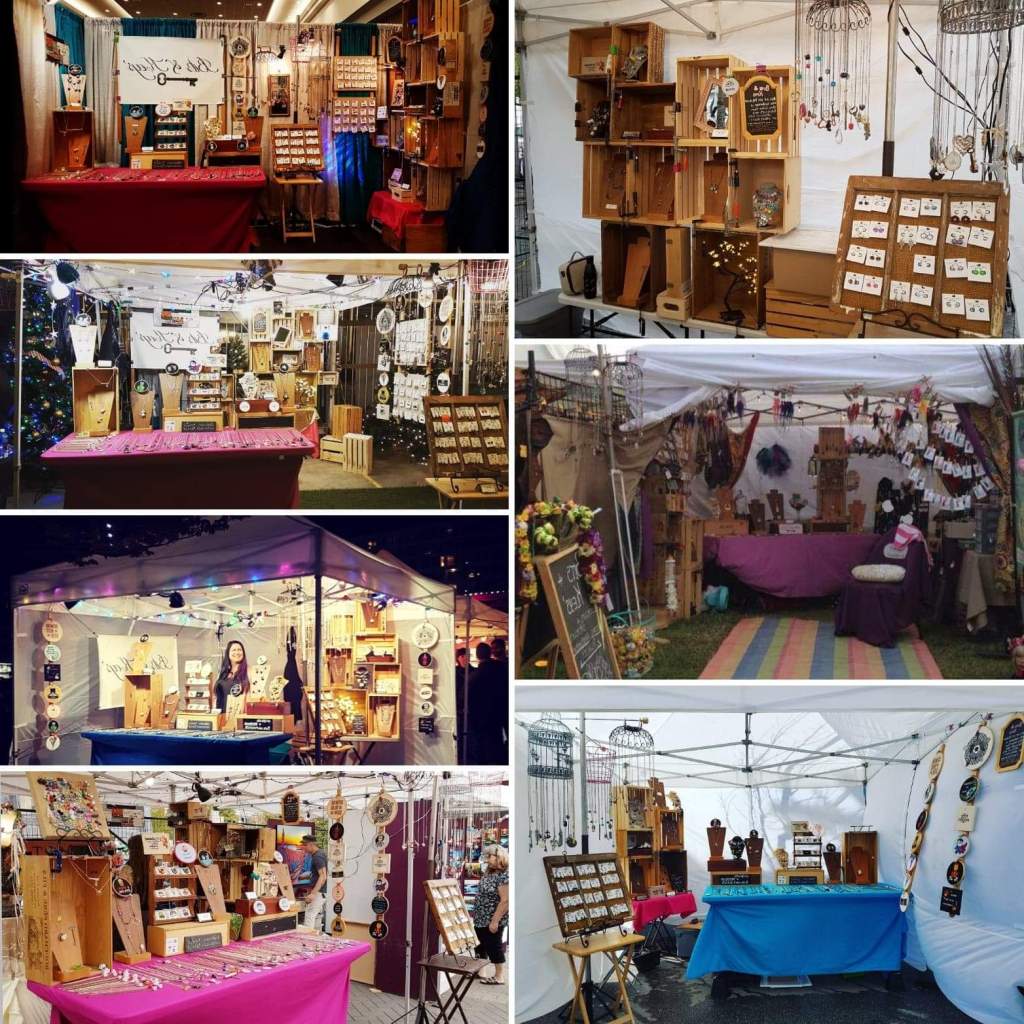
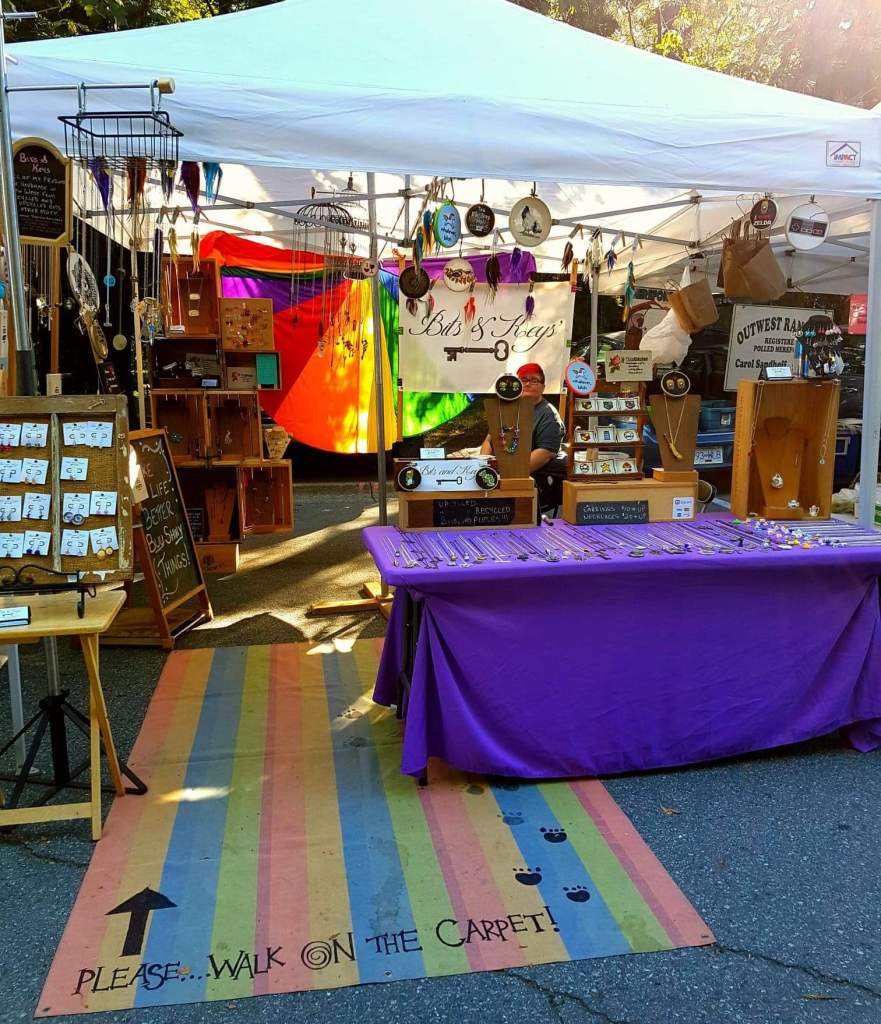
    Absolutely! Creating a physical space that is as safe and as accessible to as broad a base of people as possible is really important to me. A few other creators and I have a soft-running competition to see who can make their booth and their products the most visibly queer. There is nothing I love better than attending an event that is NOT particularly or intentionally inclusive and by the end having all the lgbtq+ people feel welcome in my space. I want my booth and products to be a way for people to challenge gender norms, or explore personal identity. 

    As for accessibility, I actively work to accommodate a variety of needs. For instance, having the booth be wheelchair accessible sounds basic, but it’s unfortunately uncommon. I’m mindful when accommodating for allergies, sensitivities, and tactile sensory issues. Especially at events that are large or multiple days (like music festivals), I try to incorporate a space away from most of the people, that has a variety of seating options if people need to rest, or need less stimulation to make choices. I am personally really loud and have what’s politely referred to as A LOT of personality, so if I notice people are having trouble with eye contact or are struggling to communicate, my goal is to hold space for those needs and meet people where they’re at. Much of my jewellery is designed with different physical needs in mind. I can offer counter-weighted necklace attachments to move the weight of things off the back of the neck to the shoulders. Many pieces are actually compartments for water or pills for people who struggle with purses or whose clothes don’t have pockets. I also try really hard to accommodate different body shapes, I alter necklace lengths for no charge (within some reason) so everyone can have it sit where their body finds it the most comfortable. Designing jewellery for people with larger necks, longer torsos, or larger busts is something I’m happy to work around in a judgement-free environment.

    The personal is political, and I would add that business is political as well. Tell me about your motivation to sell crafted items made by marginalized people.

    The truth is that I and many of my closest friends live in abject poverty simply because we are disabled or intersectionality marginalized. The only real power I have is to continue to try to help my community to sell their wares. I worked for a long time attempting to influence policy change politically, and while I still participate in many of those circles, the truth is I no longer have the physical ability to BE there. So this is a small way I can help. It’s mutually beneficial to have different products in the booth. When possible, I hire people at a fair and livable wage; this way I can give back a little bit and it creates a space where my friends and I can survive late-stage capitalism without letting it eat our morals. There are a lot of organizations and businesses out there who frame their whole objective through a lens of top-down charity. What I personally want to foster with my business comes from a place of mutual support and equality.

    Your support extends beyond artists to your customers. What sort of experience do you hope people have when they work with you?

    It sort of rolls back into the same philosophy. I have a business, I sell things, and I participate in capitalism (because I have too). Because of the nature of my products, I am often selling to people who have lower than ‘average’ privilege, so it’s important to make that experience as least exploitative as possible. I want people to fall in love with the pieces they buy from me. I offer discounts or trade situations when I can with a variety of payment options, and I work with people virtually if that’s easier. Consent isn’t just about intimate or personal situations for me, I want to communicate fully with my customers to make sure that people feel valued. Some of my closest friendships started as customers. I never want my business to feel purely transactional. There is also a dollop of self-interest worked into this: nothing beats down my self-doubt or imposter syndrome down like people being genuinely excited to interact about my pieces. Having them send photos, remember me at later events, or share the happy moments of their loved ones receiving the perfect gift that I made is the best feeling I’ve ever had. I couldn’t give it up for anything and building a strong community with my customers makes that possible.

    I’ve heard that you try to have the “gayest, nerdiest booth at every event.” That’s catnip for us at Roar Cat Reads (pun intended). What does that look like?

    Many many rainbows. Like absurd amounts of rainbows. It means when I make things with representation in mind, I’m mindful to include as many different flags as possible and that I will work on requests for new flags as I can. It means having visible pronouns on my business cards and making name tags with pronouns on them, especially in spaces where that’s not considered. Music festivals, Christmas markets, nerd events; I want people to know that my space is a safer space. It also means being the biggest nerd I can be, embracing lots of different fandoms, listening to people get excited about stuff they’re excited about. Researching new cosplay requests and pieces, and exploring fandoms that usually don’t peak my personal interest, but that others are excited about. It also means making sure our nerdy fandoms don’t make space for racist, sexist, ableist, and anti-lgbtq+ themes. Acknowledging that we sometimes have to let books, shows, and fandoms go because the actors, directors, writers, or creators’ behaviour no longer aligns with our morals and they’ve refused to change. It always breaks my heart, but you have to be intolerant of intolerance or the space is no longer a safer space.

    Business aside, what queer and nerdy content would you like to recommend to readers?

    Well, if I’m putting My business aside, one of my favourite crafters is Miss Stitched (Facebook or Instagram). She has an amazing line of sassy and nerdy cross-stitch wall art and catnip pillows and transforms an ancient feminine art medium into a modern feminist nerd platform.  

    In non-businessy recommendations, I always highly recommend any and all books by Terry Pratchett, who of course is a super popular writer, but is unparalleled in mixing fantasy with social justice themes (don’t start with the first Discworld novel, start somewhere in the middle and work your way out).

    I also unabashedly love Wil Wheaton, The Good Place, The She-ra reboot, @dez.thelez (tiktok), @mercurystardust (tiktok), and @thatb1tchkarma (tiktok)


    Sign up for Roar Cat Reads’ Monthly Newsletter

    Every month one subscriber wins a prize!

    Processing…
    Success! You're on the list.

    By clicking submit, you agree to share your email address with the site owner and Mailchimp to receive marketing, updates, and other emails from the site owner. Use the unsubscribe link in those emails to opt out at any time.

  • Queer Books, Queer Readers:  Haley Boros Recommends Beyond: The Queer Sci-Fi & Fantasy Comic Anthology

    Queer Books, Queer Readers: Haley Boros Recommends Beyond: The Queer Sci-Fi & Fantasy Comic Anthology

    Hi there! I’m Haley Boros, my pronouns are she/her, and I’m an award winning graphic designer, illustrator, and published cartoonist. Outside of my career in the label printing and flexible packaging industry, my creative practice focuses on whimsy and fantastical creatures – think dogs doing fantasy jobs! I’ve contributed to several comic and art anthologies since 2017, most of which can be found on my website at haleyboros.com. You can also become a supporter of mine at ko-fi.com/hihaleyboros, or follow along at @hihaleyboros on twitter and instagram!

    What queer book have you chosen to share with our readers today?

    Today I’ve chosen Beyond: The Queer Sci-Fi & Fantasy Comic Anthology. Featuring 18 stories by 26 contributors, Beyond is a 250+ page, black and white, queer comic anthology, full of swashbuckling space pirates, dragon slayers, death-defying astronauts, and monster royalty.  Each story celebrates and showcases unquestionably queer characters as they explore the galaxy, mix magic, have renegade adventures, and save the day!

    Why is this book one of your favorites?

    I’m a BIG fan of comics that are sci-fi and fantasy all rolled into one. It’s the best of both genres!

    How would you describe yourself as a reader?

    That’s a terrific question. I would have to say that I enjoy books that match the mood I’m in, for the most part. As an example, I picked up the newest Chris Hadfield book from the library (where I’ve been doing a lot of my current reading from!!) because I felt it would be a good mix of things I love – Space and Mystery. Even though I have borrowed it from the Library twice now, I really don’t think I could get into it again. It just didn’t feel like something I could see myself spending my time doing. If I’m not connecting with something within 50-100 pages, I abandon it and find something else that sparks my interest.

    As a queer person, have books helped you explore or express your queer identity?

    Yes, ABSOLUTELY! I’ve found I really relate so much to my queer comics peers when I read their works. I’ve found little pieces of myself in them, and it brings me so much joy. Getting to read about different character’s experiences in their own queer journeys has really made me consider that mine is unique and should be cherished.

    Other than reading, are there any queer nerdy recommendations that you would like to leave with our readers?

    Queer and Nerdy recommendations that aren’t reading…hmmm.. OH! There are quite a few television shows and movies up on Netflix that are very good and very queer. Some that stand out to me are Feel Good, Everything Sucks!, Schitt’s Creek, Sex Education, SheRa and the Princesses of Power, and One Day at a Time.

    Thank you, Haley!

    Check out our Queer Lil Library for more book recommendations and reviews!

    Processing…
    Success! You're on the list.
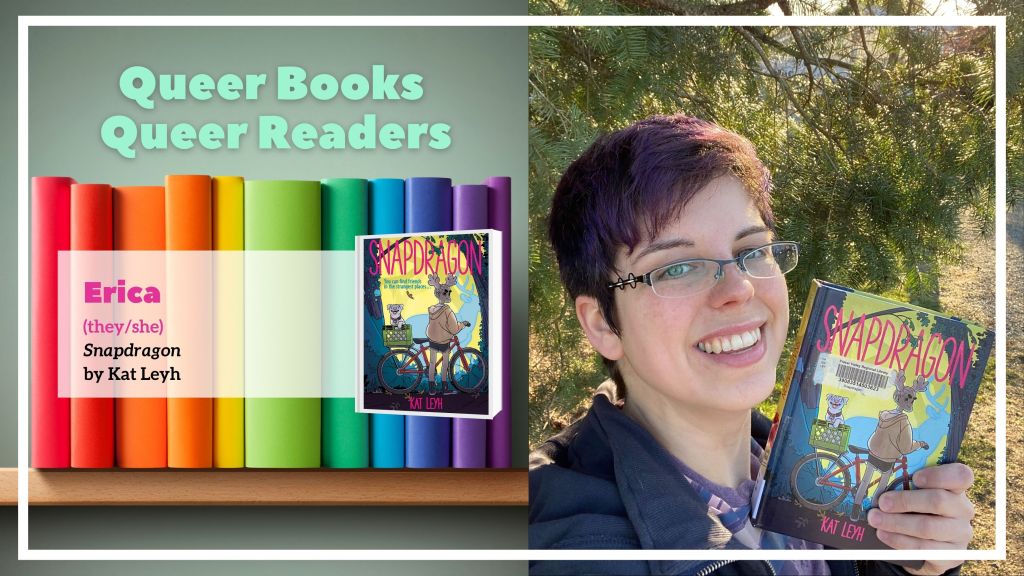
  • Queer Books, Queer Readers:  Erica Reads Snapdragon!

    Queer Books, Queer Readers: Erica Reads Snapdragon!

    Hi, I’m Erica (they/she)! I’m a ceramics artist, library worker, theatre-goer, and – of course – a reader. I sometimes share my art and my cat on Instagram: @airekker.

    What queer book have you chosen to share with our readers today?

    I’m glad to have the opportunity to gush about Snapdragon by Kat Leyh, a young adult graphic novel about a creepy old witch who lives in the woods selling roadkill online, a teen girl who needs her help, and a web of connections that brings everything together. I was so charmed by the expressive art, the flow of the story, the transitions – gah! It’s all just so beautiful! It’s a very wholesome read. When I finished this comic my heart felt full.

    Why is this book one of your favorites?

    When I was a teen I read a lot of old-dead-white-guy sci fi that was very heteronormative. I thought a lot about the future in the abstract sense, but while embroiled in these very patriarchal visions I don’t think I could realize my own identity or picture what my own future could look like. I think that’s why Snapdragon spoke to me; there’s this teen girl who doesn’t quite fit the mold or understand herself, and she finds comfort in an elder queer, and that’s just pure hope to me. That teens now will see older queer people living and thriving and imagine themselves doing the same. My great dream is for children and teens to be able to envision their queer futures and for that vision to be hopeful.

    How would you describe yourself as a reader?

    Flighty! I have a long, long list of books I want to read but I don’t move through it methodically at all. Some books have been on that list for a decade, but I can’t resist a pretty cover that passes under my nose. And working at the library, that happens a lot!

    As a queer person, have books helped you explore or express your queer identity?

    For sure. Often when I read information about identity language I think, “hmm, so that’s what some people experience and how they describe it.” But when I read queer fiction or memoir, I see that experience firsthand and I realize – wait – that’s how I feel, too. Am I also that thing? Sometimes it helps me to connect the dots on how aspects of my identity relate to each other. It opens new doors for understanding myself and articulating my own realizations.

    Other than reading, are there any queer nerdy recommendations that you would like to leave with our readers?

    I’ve sunken a lot of time into Fire Emblem: Three Houses. I wish it had more gay romance options, but there are some great ships to be had wrapped up in a great strategy game.

    Thank you, Erica!

    Check out our Queer Lil Library for more book recommendations and reviews!

    Processing…
    Success! You're on the list.
  • Adventure Queers:  Meet Skald of Shenanigans from Awfully Queer Heroes!

    Adventure Queers: Meet Skald of Shenanigans from Awfully Queer Heroes!

    Em (She/Her) goes by Skald or Skald of Shenanigans and is an avid player, content creator and Game Master for TTRPGS. She is co-owner of Awfully Queer Heroes with Kel, which runs a live play podcast in addition to creating Dungeons and Dragons content, all of which promotes LGBTQA+ representation. When she’s not playing games, Skald currently spends time in pursuit of her PhD in mythological studies while balancing work and outdoor hobbies in the mix. She loves a good story, a hike in the woods, or a game session. She currently works on her own small supplemental content in addition to working with Awfully Queer Heroes, and is a player on their latest “Tower of the Soul” podcast.

    @AwfullyQHeroes
    (Awfully Queer Heroes)

    https://www.awfullyqueerheroes.com/


    What were your first experiences playing D&D like?  What has kept you interested in the game?

    My experiences with D&D took some time to build momentum. When I had only just learned to read, one of my school friends had an older brother who had the original Monster Manuals, which I used to spend hours poring over despite barely being able to read a word. The first game I played didn’t come until high school when I joined a mini-campaign with yet another school friend, whose father happened to be a professional DM. Being able to take on a different persona – to build and play a unique character – and to work our way through an adventure of endless possibilities was absolutely captivating in the best way possible. I knew from then that not only did I want to continue to play, but to run campaigns of my own.

    Having some form of creative expression has always been important to me, and D&D is a critical part of that. Beyond just the creative elements, the social connections that can be made and strengthened through a good group can be wonderful. TTRPGs in general have since been a huge part of my life because of this. D&D was the creative outlet through which I was able to pull myself out of some rough spots in my past. Additionally, some of my most important friendships and human connections have been made in, and through, D&D. There is an endless potential for creative expression, collaboration, and human connection.

    You run the liveplay podcast Awfully Queer Heroes, which you’ve described as “pure queer chaos.”  Why do you think our readers should listen?  

    First of all, it’s a ton of fun. The group has excellent chemistry, the Dungeon Master is fantastic, and there is no shortage of laughs and ridiculous shenanigans thrown in with the more dramatic aspects of the adventure. Part of what makes this podcast unique is the emphasis on queer elements, especially inclusion and representation. This is reflected not only in the identity and orientation of the characters but of the players as well. Some of the topics that have also naturally emerged as elements of the campaign include things like found family, chosen names, acceptance, and more.

    This particular campaign uses a module (Tower of the Soul) previously published by Awfully Queer Heroes. It is unique in that the players are aligned with the forces of “chaos”, playing races that are typically vilified in D&D and fighting against those who wish to bring order. It’s a good mix of fun and seriousness in the way it addresses the repeated issues of queer repression and ostracization. It’s a fun mix of advocacy and representation, mixed in with the kind of chaos that can ensue in any D&D session with no limit to crazy ideas, encounters, and unexpected yet hilarious outcomes.

    What episode do you recommend new listeners start with?

    Anyone who wants to dive in can’t go wrong with episode one. It sets the scene for the rest of the campaign, as well as giving listeners an introduction to the players in the podcast. However, for those wanting a bit more action and a straight-shot to the tower itself, episode two has a bit more combat and excitement. There are some small details that might be missed, however, so I would say the best place to begin, is quite simply at the beginning.

    How do you think queer storytelling makes a difference to D&D?

    I think it’s absolutely critical to get more queer representation into D&D. Firstly, because as in many other areas there is a not insignificant lack of it. Not only having content that contains and promotes queer elements but also viewing storylines from that perspective is important not only for combating prejudice but also for increasing the amount of representation that can be found in these games. It’s additionally important for the experience of the players. Increasing the amount of queer storytelling in and behind these games is important when it comes to players being comfortable and able to explore and express their own unique identities. To not only feel like they have the freedom to play in a setting that is welcoming to them, but to also feel comfortable in their own identity in
    the play environment.

    As a queer person, have roleplaying games helped you explore or express your queer identity?

    Absolutely. At the time I started playing, I hadn’t actually identified myself as a sapphic. I frequently played male characters, mostly because I played in games with people who at the time identified as cisgender heterosexual, and I discovered that in playing a male I wasn’t underestimated in the same way I often was if I played a female character. Additionally, I found myself drawn to other female characters and playing a male made that acceptable.

    Exploring different gendered roles and norms, being able to take on a different persona and explore those things in an environment where it was ‘socially acceptable’ for me to do so, were some of the steps on my own journey to coming out as a sapphic. Even presently, playing characters of different identities is a way of exploring my own persona, and expressing different aspects of myself.

    You also make queer content on Kickstarter.  What can you tell us about your creations?

    There are a number of different projects up on Kickstarter, including the “Tower of the Soul” which is a level 1-20 adventure geared towards queer representation. Additionally, there is the “Sun Blades” spells and subclasses. The adventures, spells and subclasses all contain elements of queer representation (spells such as “Rainbow Bridge” and “Summon a Protective Lesbian”) or structure (such as in the “Tower of the Soul”) that is made specifically around increased queer representation and storytelling. Digital copies of previous Kickstarter content is also available on the Awfully Queer Heroes website.

    What are you currently working on/selling?

    We are extremely excited for our next project, which is “Adventures in ADHD”. The Kickstarter went live on Tuesday, March 23, and it is the largest we have done yet. The adventure is designed for levels 5-6, and is set in the Feywild. The party will adventure through a serious of quests to help an overwhelmed member of the Fey who quite literally ‘borrows’ their attention, giving them certain ADHD traits in return. In this adventure the sub-classes, spells, and quests are all designed to help educate players about the wide spectrum of ADHD symptoms while having fun along the way. There has been a lot of input on the project, as it is a topic that we want to do in a way that is respectful and accurate. The response from reviewers and play testers alike has been overwhelmingly positive. It’s been additionally exciting to work on as it has a lot of content, including amazing artwork, STL files, token, maps, and more.

    Do you have any recommendations of queer nerdy content that you would like people to know about?

    The TTRPG sphere on Twitter is a surprisingly (for social media) positive space for creators and players alike. The number of projects people are working on and content that is being created is absolutely mind blowing. I would highly recommend the live play Pathfinder podcast from Bad Heroes (@BadHeroesCast), they are a fantastic crew and really fun to listen to.


    Sign up for Roar Cat Reads’ Monthly Newsletter

    Every month one subscriber wins a prize!

    Processing…
    Success! You're on the list.

    By clicking submit, you agree to share your email address with the site owner and Mailchimp to receive marketing, updates, and other emails from the site owner. Use the unsubscribe link in those emails to opt out at any time.
  • Queer Books, Queer Readers:  Nico Recommends Little Blue Encyclopedia

    Queer Books, Queer Readers: Nico Recommends Little Blue Encyclopedia

    Hello! My name is Nico (they/them pronouns), and I am a queer Torontonian who loves (and loves learning about) art and ASL. I identify as a genderqueer bi+ peep who is slowly getting into DnD and RPGs but has always loved literature and stories more than anything else. You can find me sneakily liking all your animal photos.  

    What queer book have you chosen to share with our readers today?

    It was a tough choice because I have a hard time picking favourites, but the queer book I chose to share today is Little Blue Encyclopedia (for Vivian) by Hazel Jane Plante. The book is a trans femme sapphic text. The premise is that this text is an encyclopedia for an imaginary show called “Little Blue,” a show which the narrator’s best friend / love interest is obsessed with. It is likely one of the queerest unrequited sapphic love letters I have ever read. Using encyclopedia entries as the framing device, the reader learns about the narrator, their best friend / love interest, “Little Blue” and how one’s relationship to fandom can be integral to your existence.  

    Why is this book one of your favorites? 

    This is one of my favourite representations of queer longing, which is so complicated and beautiful and could be carried for eons. The book asks you: What do you do with those emotions? Do you feel guilt and anger or anguish for carrying that longing for so long, knowing it will never be requited? This book proves that you can live with these questions and maybe never figure out any answers. I appreciate its messiness and how the emotions portrayed in the book bleed into one another. I find comfort in the loose ends and lack of resolution and resistance to completion.  

    How would you describe yourself as a reader? 

    I am a dedicated reader when I have enough time to be alone with a book. Right now, it’s a bit difficult to get that time, but I try to always carry something with me. That’s part of why I love travelling; books make the best travel companions, and that time is already there. I especially gravitate towards books with different structures or formats, which is why I love books like Little Blue and graphic novels like Are You Listening. I appreciate the meta approach taken in books that play with how they present themselves, and love writers and artists take risks that make their work different but meaningful.  

    As a queer person, have books helped you explore or express your queer identity? 

    Honestly, I think I am who I am because of queer literature. Queer books, queer bookstores, and the queer sections of every library and bookstore have been my havens and my mirrors when I needed them most, when I needed to know I was still real and still existed. My identity is oftentimes in this cycle of realization and affirmation thanks to books, and I discover things about myself, rediscover things I’ve forgotten, and reignite what I lost or gave away. I’m my own little forest of reading, and some of these stories bloom or decay along my path, but they are all always present and part of the cycle, nourishing me as I grow into the person I hope to be.  

    Other than reading, are there any queer nerdy recommendations that you would like to leave with our readers? 

    I recommend Shing Yin Khor and their games. I am currently playing Remember August, about a time-travelling friend who needs you to remember them, and I’ve responded to it so sincerely it kind of hurts sometimes. They are usually solo games, but I believe they can be adapted as needed.  
     
    I also recommend the Tea Dragon Society series. Super queer, they are adorable graphic novels, but their creators also made the CUTEST dragon plushes ever.  
     
    Also also, I recommend StoryGraph if you’re looking for a replacement for Good Reads; the site is run by a Black web designer who wanted a recommendation site that did not actively work with Amazon. I really liked the recommendations it gave me, and hope you do too 😊  

    Thank you, Nico!

    Check out our Queer Lil Library for more book recommendations and reviews!

    Processing…
    Success! You're on the list.
  • Adventure Queers: Meet Nicole!

    Adventure Queers: Meet Nicole!

    Hi, my name is Nicole (She/Her). I am a multipotentialite, world-traveler, podcaster, aspiring comedian, and nerd just trying to make the best of life in this mortal realm. One of my favorite pastimes is getting together with friends and playing board games or D&D, it’s a great way to connect with others and disconnect from everything else. You can find me on social media as @itswafflebitz.


    Nicole, you have said that you enjoy playing D&D “with the right crowd.” I can definitely relate!  What does that mean to you?  

    Those rare times I play D&D, I love for the energy in the room to just be sort of… chaotic. I really enjoy being able to just be silly and do absurd things in-game and enjoy it even more when the people playing with me can match that energy. Feeling this “vibe” in the group creates a judgment-free, safe space to just let go and have fun for a few hours.

    As a queer person, have roleplaying games helped you explore or express your queer identity?

    When I first started playing games like D&D, I experimented with my different character’s gender expression & identity. I was still trying to figure myself out in real life, so playing those characters and seeing how supportive the people around me were of that helped me become more comfortable in real life. 

    We love a gamer at Roar Cat Reads, and you are into both board games and video games!  What are some of your favorites, and why?

    I have played 100’s of board games so it’s hard to name just a few, but some of the games I keep coming back to are: Parks, Betrayal at House on the Hill, and Codenames. These have a lot of replayability and are easy to teach. As for video games, I enjoy a game with a well-written story. One of my favorite games is the Walking Dead series from Telltale Games and a great co-op game I played recently is “It Takes Two”. 

    I hear you’ve got a podcast in the works.  What can you tell us about it?  When can we expect it to be released?

    My friend Allonté and I are in the process of creating our podcast, The Imperfect Matters. In our podcast, we talk about societal issues that are far from perfect but really matter. The tone is a healthy balance of informative, comedy, and satire. There is no release date yet, but we have a few episodes already recorded and aiming to release this year (2022).

    In addition to your nerdy interests, you’re a frequent solo traveler.  What are some of your favorite travel destinations?  Do you find that you travel differently when you’re on your own?

    On my first solo trip, I spent 2 months traveling around parts of SE Asia. It was so nerve-wracking leaving the comfort of my country and having to figure things out in a completely new environment. That trip holds a special place in my heart because I literally consider it life-changing. I now love and prefer traveling solo because not only is it easier to meet wonderful people along the way, but also it feels so empowering, especially as a female. Traveling with others can be fun, but there’s always the issue of managing multiple itineraries and schedules, and it’s more difficult to be spontaneous and take as long as you want to do certain activities. Meeting new people can also be difficult when traveling with others because you’re more likely to stick together. I have solo traveled to Mexico, Germany, and Sweden since that trip and have many more to come. 

    Do you have any recommendations of queer nerdy content that you would like people to know about?

    YES. I’m a huge fan of the Avatar the Last Airbender & Legend of Korra universe. There is a TTRPG from Magpie Games coming out very soon that I backed on Kickstarter set in this universe. I’m really looking forward to playing it. 


    Sign up for Roar Cat Reads’ Monthly Newsletter

    Every month one subscriber wins a prize!

    Processing…
    Success! You're on the list.

    By clicking submit, you agree to share your email address with the site owner and Mailchimp to receive marketing, updates, and other emails from the site owner. Use the unsubscribe link in those emails to opt out at any time.
  • This is Why Rainbow Refugee Matters: Olga and Natasha’s Story

    This is Why Rainbow Refugee Matters: Olga and Natasha’s Story

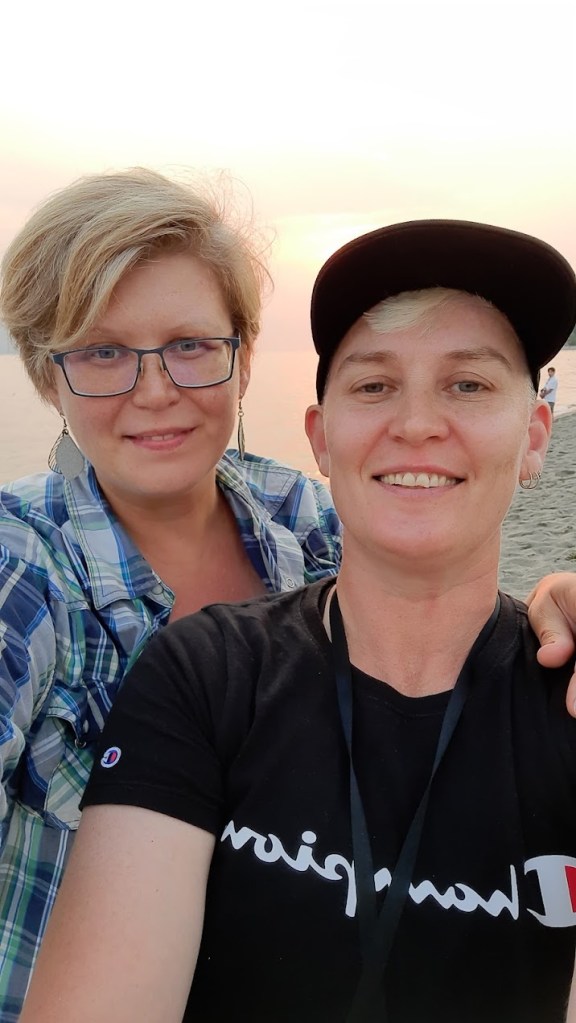
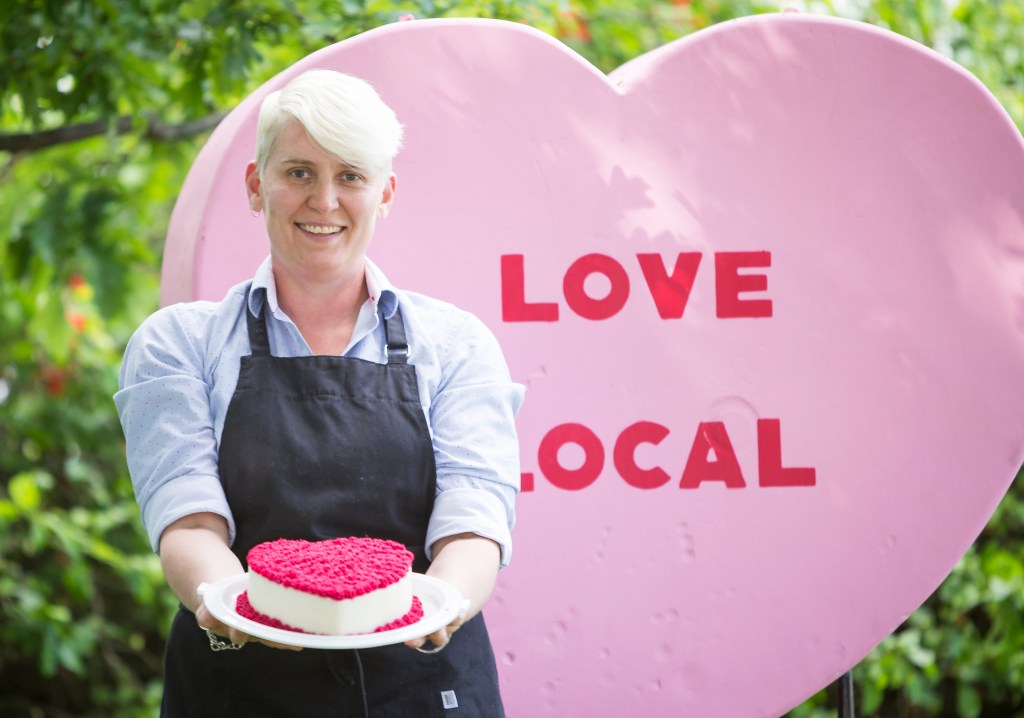
    Olga and Natasha Vernev are local business owners in Vancouver.  Together, they own The Great Canadian Dog Cakes where they make healthy dog food as well as beautiful dog cakes and cookies.  Their path here has not been easy.  As a lesbian couple in Russia, they fled persecution to Thailand and Cambodia before eventually immigrating to Canada with the help of Rainbow Refugee.  Olga and Natasha have partnered with Roar Cat Reads to raise awareness of the awesome work Rainbow Refugee is doing and encourage all readers to participate in our upcoming fundraising event.  You can donate HERE now!


    How did the two of you meet?  When did you know that you were in love?

    This is a funny story about how I have known Natasha for twenty years, and she has only known me for ten years.

    I met Natasha in 2001 when I was a university student. I left the library and saw her standing in the street and talking to her friends. And she was amazing. Like a character from some comic about lesbian superheroines (does such a comic exist at all? It’s a pity if not).

    I immediately fell in love with her at first sight, and she didn’t even notice me.

    Ten years after that, we met on social networks.

    At this point, we were both already pretty disappointed in relationships, both after difficult breakups. For my part, I would not have agreed to try to meet if it was anyone but Natasha.

    We got pretty tough about the boundaries of our future relationship, and both agreed that we would have a date and one night stand. Nothing but this! And…there must be a joke about lesbians who move in together after the first meeting. 

    We’ve been together for almost ten years since that date, because she also fell in love at first sight, only with a slight lag.

    I don’t want you to discuss anything that makes you uncomfortable, but why did you know that you weren’t safe staying in Russia?

    Oh, we’ve talked about this so many times that it has become my new comfort zone, something like sitting on nails. You know, there is a method of self-help therapy to tell a story so many times until all the emotional content evaporates from the narrative. I can’t say that we finally succeeded, but we both have therapists, and our PTSD is under the supervision of a very good Canadian doctor.

    My wife and I had very different backgrounds. Natasha is a little older than me and managed to capture some rather dangerous times in the 90s in Russia, and she was subjected to the most brutal attacks several times. She was literally beaten to a pulp. So she was closed and wary.

    I came out to a more or less prosperous beginning of the 2000s, and did not see any danger at all. I lived openly. I even had a rather dangerous hobby – trolling homophobes on the streets. If someone came up to say something disgusting to me, I literally took the person by the hand and gave him an educational lecture in the most serious tone until he ran away screaming and cursing. I didn’t believe at all that someone could do me any harm other than verbal. 

    Because of these different experiences, Natasha and I had some disagreements about how we would behave on the outside while with each other.

    When the Russian government began to develop a draft law banning the promotion of homosexuality, the speed of events shocked us. Previously, we all hoped that Russia would move closer to the Western path of development, but Putin’s government suddenly took a sharp conservative turn, and then real troubles began, especially in provincial cities like ours.

    As I said, I lived quite openly. My friend and I had a shop of hand-made queer stuff, we drew and sold t-shirts, posters, and calendars online. At first, our store received threats and we were forced to close it. Then some of our friends were attacked and the police refused to help them. And then Natasha and I also began to receive threats. Some people wrote terrible phrases and threats to kill us in our car and on the front door of the apartment.

    With this law, the state seemed to make it clear to the aggressively-minded part of the population that they can freely express their aggression and there will be no consequences for them. I’m seriously telling you, there was a criminal case shortly before our departure about a man who killed a gay man with an ax and received a two-year suspended sentence.

    And then there was a Nazi organization that practiced hunting gay people for money, it was called “safari.” People were lured into fake dates on social networks, locked up in an apartment, beaten, and monstrously humiliated. These acts were filmed and published on the Internet to destroy the lives of these people permanently. This organization built something like a franchises – those who wished could open a safari club in any city and invite participants to hunt for a fee. Very inexpensive, by the way.

    In addition, some absolutely terrible false information about gay people poured from TV screens in prime time. For example, talk shows had disgusting discussions in which participants freely expressed their most vile opinions and desires. Intolerance in society began to grow under the influence of this information.

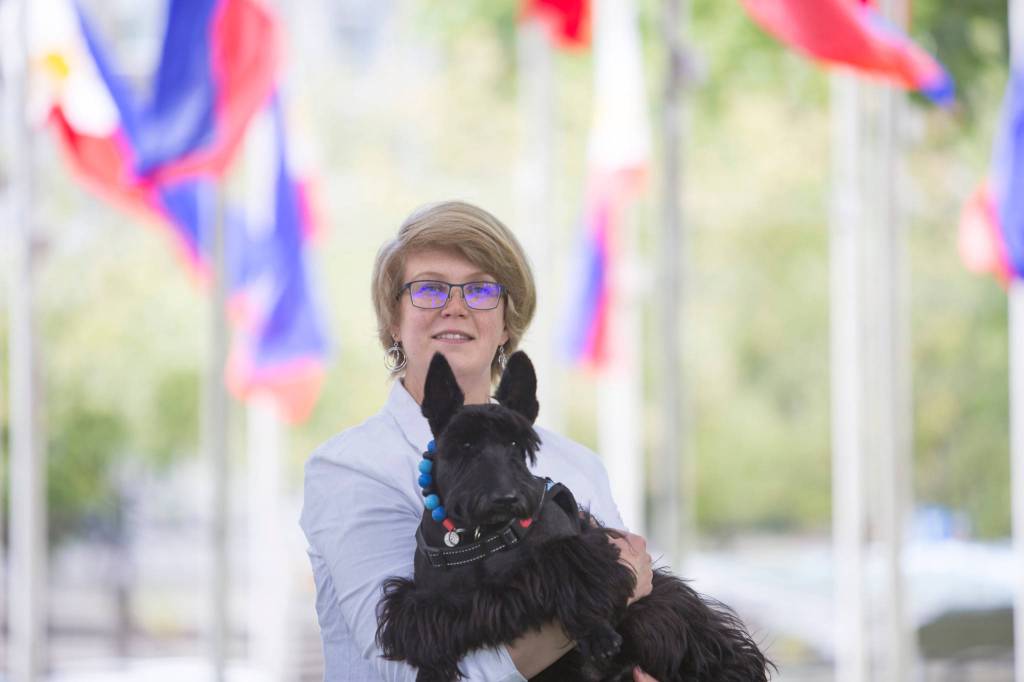
    Natasha gifted me a Scottish Terrier puppy for my 30th birthday. He and I once went to a local grocery shop and came across a group of young men who, with the words “Well, lesbian, finally you got a man?” kicked Spielberg and ran after me. I grabbed the dog and ran, and just managed to close the doorway.

    Natasha, who had much more negative experience than me, immediately realized that it wouldn’t end well for us. Soon, we sold everything we had and left the country with one suitcase and a puppy. We went to Thailand, then to Cambodia. From Thailand, we turned to Canada for help.

    How did you end up connecting to Rainbow Refugee?  

    We googled a well-known lawyer, Robert Hughes, and he helped us get in touch with Chris Morrissey directly. Here it should be said that everything was complicated by the fact that we didn’t speak English, so I used a lot of Google translator, which in those days was far from perfect. Ultimately, Chris became a member of our support circle.

    We have been asked many times something like, “But how did you get in touch with Hughes?!” and we reply “We googled.” Can you imagine the level of responsiveness of the people involved in LGBT issues in Canada? You just accidentally write to a celebrity lawyer who simply answers, “Ok, let’s see what we can do about it,” and the superstar of the Canadian LGBTQ+ movement, Chris Morrissey, starts to deal with your case!

    How did Rainbow Refugee support you, both as you immigrated to Canada and after you arrived in Vancouver?

    We have received tremendous support from Rainbow Refugee. In our opinion, it is great luck that this organization exists and helps people. We were supported psychologically (in the last year in Cambodia I was in almost daily correspondence with members of the circle of support) and we were very strongly supported financially.

    When you are a refugee of a sponsor group, the first year after arriving is completely focused on adaptation. There is a big difference between coming here as a tourist to see beautiful British Columbia, and arriving to start your life here from scratch.

    The whole system here does not work the way you are used to. You need to learn something new every day – how to use public transport, how to get an appointment with a doctor, how to pay bills, where to get an insurance number, where to go to learn English, how to sort the garbage correctly, how to fill out the tax return correctly – an endless to-do list.

    Often, by the time of arrival, refugees are morally exhausted, traumatized by all that they have experienced, disoriented, or in a depressive period or anxiety. Having help with simple bureaucratic actions and exploring a new world in these situations is priceless. Every day, someone from the support group helped us deal with all of this. We made friends with many of them and still maintain relations.

    You came here with your pet dog, Spielberg.  Did Rainbow Refugee help with bringing a pet to Canada?

    Yes, Rainbow Refugee completely orchestrated Spielberg’s arrival. For a long time we didn’t dare to tell Chris or anyone else that we had a dog. We were worried that this might affect the decision to take our case at all. Then it turned out that this is the most common thing – to flee from a dangerous country, taking a pet. Our case is not exceptional.

    Why do you think it’s important for people to support Rainbow Refugee?

    I have a story about this. A few weeks ago I was sketching on Jericho Beach and a nice family sat next to me. We started a conversation and they asked me where I was from and how I came to Canada. I said I was a refugee because, you know, I have this idea that every time I don’t hide it, I kind of destroy a tiny bit of stigma around that word. 

    Some media tries very hard to portray refugees as a frightening, faceless crowd of freeloaders, and sometimes this affects people. But every refugee has a long, individual story behind them. It seems to me this is such a challenge – here I called myself, here I am, here is my wife, it is difficult to depersonalize us at this moment.

    This nice family turned out to be very radical in their views on refugees and LGBTQ+ in particular, so I just sat there and destroyed their every assumption.

    When they said that refugees come and spend money from Canadian people, I replied that we have been working since the third day of our stay in Canada and pay taxes. When they started talking about sin, I said – look, here is my wife, we have been together for many years, just like you. And when in the end they said that refugees, with their low-paying jobs, increased the financial burden on the state system during the pandemic, I shrugged my shoulders and said that it was at this time that we launched our business.

    Do you know why I’m so bold? Why I can afford to stand in front of skeptical people and lay out all these crushing arguments in front of them?

    Because how quickly we found a job, integrated into the local community, spoke English and created our company is the result of Rainbow Refugee and our support team’s work in the first year.

    Every minute of the work of volunteers who helped us overcome frustration in the bureaucratic part of our process and in adapting to life in Canada, every donated dollar – all this was spent so that we could take language courses, plan and build our new life without paralyzing fear that tomorrow we will be thrown out on the street in an unfamiliar country.

    Being a sponsored refugee is a privilege that gives you the greatest head start on integrating into Canadian society. The first year with a support group for a refugee is as important as the first year of a baby in the mother’s arms.

    We had a rare chance to find out what it is like to be taken care of so that you can become a conscientious and resourceful member of society. It’s priceless.

    As we grow, we will try to help others in the same way that all these people have helped us.

    Is there anything else you would like readers to know about the organization or your experience?

    You know, the hardest part about the refugee process is suspense. You drop everything and go on a journey without a return ticket, with no guarantees of a happy ending. Often this means that all family and friendship ties are cut off, you have to reconsider everything that you knew, and you yourself have to go through a serious test.

    I used this metaphor in an open letter to fundraising participants a couple of years ago, and I will repeat it now, because I still don’t know how to describe the refugee process any better. Imagine that you’re a trapeze acrobat under a circus dome performing a trick for the first time in complete darkness. You swing, unclench your hands and fly into the unknown. You don’t know if there is another trapeze at the end of your route or if you can grab it. There is an abyss below you.

    Rainbow Refugee are the people who pick you up in the middle of the flight in this complete darkness and literally carry you to your final destination in their arms. Someone turns on the flashlight and someone grabs your wrists for you to complete the trick.

    Natasha and I wish no one ever has to experience such a flight. But for this we need some other world, probably.

    Finally, we would like to end on a fun note.  This is a queer, nerdy blog!  If you could choose to have one super power, what would it be?

    Natasha says that she would like to fly like a superhero, and I would like to have an Incinerate Look. In some life situations, this could be a very useful skill! Although in Canada it would be of little use to me. This country is inhabited by some absolutely amazing people.

    Well, and we both would like the main superpower – that our English becomes as good as our Russian, so guys, many of you have one important superpower, you just don’t realize!


    Help people like Olga and Natasha by donating to our Rainbow Refugee fundraiser now!

  • Queer Books, Queer Readers:  Patrick Myers Recommends Alec

    Queer Books, Queer Readers: Patrick Myers Recommends Alec

    Patrick Myers (he/him) is a freelance writer and playwright. His practice encompasses a variety of disciplines, including but not limited to writing, producing, criticism, and teaching. His work has appeared in American Theatre, HowlRound Theatre Commons, and ARTSATL, and he can be found tweeting irreverently @patrickrmyers on Twitter.

    What queer book have you chosen to share with our readers today?

    I’ve picked Alec by William di Canzio. It’s inspired by the novel Maurice by E.M. Forster, where two men fall in love in Edwardian England and run away together – destined to be happy for the rest of their days. Where Maurice explores the world through the gentleman Maurice’s perspective, di Canzio explores the world through the eyes of his working class lover, Alec, and expands the plot to what happens after they run away together.

    Why is this book one of your favorites?

    I love Maurice, and Alec is the perfect companion piece to that novel – where Maurice was written in 1913, the 21st century perspective on the events of the novel allows for an understanding of what comes next for Maurice and Alex: World War 1. With that as the catalyst, the novel becomes a sweeping romance not just for how they come together, but how they stay together. What is more romantic than unyielding and undying commitment? Also, it has some of the best sex scenes between two men ever written, both realistic and hot. There is nothing left on the table. I could want nothing more from a book.

    How would you describe yourself as a reader?

    I’m a terrible reader. I either devour book after book or read infrequently, if at all. I use random bills or printouts or credit cards as bookmarks. I stop halfway through a book and don’t continue reading until months or years later, picking it back up where I left off as if no time had elapsed. I live and die by a book and recommend it to friends and when they ask for the plot, I seem to be unable to conjure any of the narrative for them. I start and stop multiple books before I pick one to finish, as if I was at a wine tasting, sampling for the bottle I’d bring home. I love books. But I’m a tedious, unrepentant, awful lover to have.

    As a queer person, have books helped you explore or express your queer identity?

    I didn’t have access to queer books as a child or teenager, but I did have an internet connection, so I spent much of my youth online reading and writing fanfiction for some of my favorite books. I would write about characters I identified with and used them as proxies for my burgeoning queer identity. In that way, I was able to use accessible books to explore queerness when I had none available to me. And it was reading that opened up that door for me.

    Other than reading, are there any queer nerdy recommendations that you would like to leave with our readers?

    For anyone who loves to game, I’d definitely recommend Hades published by Supergiant Games. It’s a roguelike dungeon crawler, which is normally not my type of game. HOWEVER! You play as the son of Hades and Persephone, Zagreus, and throughout your many attempts to escape the depths of hell, you are given the opportunity to reunite some of Greek mythology’s most iconic couples, including the warriors Achilles and Patroclus. On top of that, Zagreus has multiple characters he can romance, including the dashing and mysterious God of Death, Thanatos (or Than for short). It’s brutal and romantic and filled with unearthly wonder – perfect for a rainy day on the couch.

    Thank you, Patrick!

    Check out our Queer Lil Library for more book recommendations and reviews!

    Processing…
    Success! You're on the list.
  • Queer Books, Queer Readers:  Chelsea Recommends Loveless

    Queer Books, Queer Readers: Chelsea Recommends Loveless

    I’m Chelsea (she/her), an asexual and aromantic librarian, who blogs about books over at Spotlight on Stories. You can also find me on Instagram (@crdinsmore) or twitter (@doh_rae_me). 

    What queer book have you chosen to share with our readers today?

    Loveless by Alice Oseman was one of my favourite reads of 2020. It has a special place in my heart because it’s one of the first times I felt seen by a book. A Young Adult aromantic asexual coming-out story, Loveless is set at Durham University and follows fanfic-loving protagonist Georgia. As a romantic, she believes that she will find her happily ever after eventually, but soon begins to question why the romance that comes so easily to her friends is so hard for her. Although Loveless isn’t autobiographical, author Alice Oseman writes from experience and Georgia’s exploration of her identity as an aro-ace person hit home for me. A charming tale of acceptance that celebrates love in all its forms.

    Why is this book one of your favorites?

    As a reader in my thirties I’m moving away from Young Adult as a genre these days, but Alice Oseman’s books are the exception! Like the characters in her webcomic series Heartstopper and those in her previous novel Radio Silence, Georgia and her friends grapple with questions of identity, and specifically queer identity, in realistic ways. The characters are so endearing and believably teenage. I absolutely love how platonic relationships are prioritized in this book and how well Oseman develops each of Georgia’s friendships. Loveless is the first book I’ve read with such prominent aro-ace representation and it really is uncanny that I wound up reading this book about an aro-ace nerd who starts a Shakespeare Society with her friends at a time when I, an aro-ace nerd, was performing in weekly Shakespeare plays over zoom!

    How would you describe yourself as a reader?

    I’d describe myself as a voracious reader of diverse books, with a special fondness for science-fiction and fantasy. I love the creativity and escape that SFF offers as a genre and I feel like we’re living in a golden age of diverse SFF right now, which makes it an exciting genre to follow! Some of my best bookish friends read literary fiction and champion translated works though, and I’ve been picking up more of their recommendations, even when they’re outside of my comfort zone.

    As a queer person, have books helped you explore or express your queer identity?

    The biggest way in which books have helped me explore my queerness is through connecting me to other LGBTQIA+ readers and the broader queer community. 

    I was in my mid-twenties before I learned that there was a word for people like me who don’t experience sexual or romantic attraction. Even after I identified as asexual, it took me awhile to feel comfortable calling myself queer because I wasn’t sure if I would be accepted as part of the community or if I was “queer enough”. Strengthening friendships with other queer readers who share an interest in books and working with wonderful queer library workers on a regular basis have helped me to feel like I have a place within the queer community.

    I didn’t see myself represented on screen or on the page when I was growing up. Too often it looked like a happy ending could only be achieved through a romantic relationship, a path that I knew wasn’t for me. It’s only in the last five years that I’ve started to see books with asexual and/or aromantic characters being released by mainstream publishers. I think shifts in the publishing industry will make it easier for teens and young adults exploring their asexuality these days, but I do wish there were more books targeted at adults with asexual and aromantic characters.

    Other than reading, are there any queer nerdy recommendations that you would like to leave with our readers?

    My go-to rec is Black Sails, but I think Roar Cat Reads has that covered, so I’m recommending In the Flesh, a 9-episode British show that is the most original take on a zombie apocalypse I’ve ever seen. The show is set a few years after “The Rising”, a period in which thousands of people around the world reanimated as zombies, wreaking havoc. Now a medication has been developed to restore consciousness to those who suffer from “Partially Deceased Syndrome” (PDS), but prejudice abounds. Pansexual protagonist Kieran is a sufferer of PDS who returns to his hometown and his family but feels guilty over what he did in his rabid state.

    As far as other pursuits go, since April 2020 I’ve been part of Project Shakespeare, a group of friends who gather on zoom to perform Shakespeare plays, complete with props, costumes, and schtick. I’m naturally an introverted, shy person and it took a few months to come out of my shell, but if you have a safe and supportive group of friends I highly recommend acting out some Shakespeare as a queer and nerdy pastime!

    Check out our Queer Lil Library for more book recommendations and reviews!

    Processing…
    Success! You're on the list.
  • Queer Books, Queer Readers:  Kelly Slaven Recommends John Irving

    Queer Books, Queer Readers: Kelly Slaven Recommends John Irving

    Hi there, my name is Kelly Slaven and my pronouns are she/her/hers.

    What queer book have you chosen to share with our readers today?

    OK, I know that I am beginning the interview by breaking the rules. I LOVE John Irving. I love him so very much that I will always read anything he writes and I love the detail and mundane that he provides in his writing. So, here’s the deal, I suggest ALL of his books. In In One Person, Billy is the bisexual narrator and the heroines of the novel are two transgender women, in The Cider House Rules, Dr. Larch is reported to only have had sex one time, and Johnny Wheelwright, who is the “nonpracticing homosexual” narrator of A Prayer for Owen Meany, never has sex. There are transgender characters in The World According to Garp and A Son of the Circus, and gay characters in The Hotel New Hampshire and Son of the Circus.

    Why is this book one of your favorites?

    I trust John Irving to show me every detail of the story, especially the day to day ones, so that I believe him. Life is not always exciting so his mundane details are what make his writing real to me.

    How would you describe yourself as a reader?

    The opposite of who I am in life. In life, I don’t want all of the details, just the big picture and tell me in one sentence, not 20. But, in a book, when I slow down, I want to know it all! The more words the better.

    As a queer person, have books helped you explore or express your queer identity?

    I think that any representation helps me in this way. The author, Glennon Doyle, has helped me realize myself and all of my details (being queer, being female, etc) more than anyone else because she says what everyone is thinking and allows space to explore it without shame.

    Other than reading, are there any queer nerdy recommendations that you would like to leave with our readers?

    I love the podcast We Can Do Hard Things with Glennon Doyle and Abby Wambach.

    Thank you, Kelly!

    Check out our Queer Lil Library for more book recommendations and reviews!

    Processing…
    Success! You're on the list.
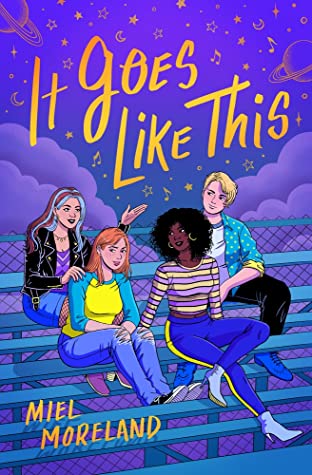
  • Queer Books, Queer Readers:  Lauren Recommends It Goes Like This

    Queer Books, Queer Readers: Lauren Recommends It Goes Like This

    Hi, I’m Lauren! Or Lo. I use she/her or they/them pronouns. I’m queer and neurodivergent and a little witchy and book obsessed. You can find me occasionally posting about books at @readingwithfeelings on Instagram.

    What queer book have you chosen to share with our readers today?

    Okay, after many false starts and much deliberation, I have chosen to tell you about IT GOES LIKE THIS. An absolutely beautiful debut from Miel Moreland, it is a YA book about a queer pop group who have broken up but come back together for a benefit concert after a storm ravaged their hometown. 

    Why is this book one of your favorites?

    It made me feel so many feelings. If a book makes me both laugh and cry, I am basically forever obsessed with it. Steph’s exploration of gender identity and their feelings around Moonlight Overflow constantly being referred to as a girl group. Their love of family and trying to balance that with living their own life. Celeste and Eva and their relationship and the ways we can hurt those we love, and hopefully the ways we heal from that hurt. The song lyrics! The fact that everyone was allowed to be young and make mistakes and figure out what they wanted! Ugh, so, so good and I wish it got more hype 💜

    How would you describe yourself as a reader?

    Voracious? I read a lot. Definitely every single day. It is a form of escapism and learning both. I definitely read more fiction than nonfiction but I try to get in a few nonfiction books per month. I also read more queer than not, and I love the over abundance of queer books now! I have so many I want to read!

    As a queer person, have books helped you explore or express your queer identity?

    I feel like I read a lot of YA that teenage Lo would have benefitted from greatly. I feel like my main responsibility as a queer person is to constantly question my own beliefs and make sure I am interrogating my own internalized homophobia, racism, sexism, ableism, xenophobia, etc. Reading keeps me intersectional. I am loving Andy’s intentional reading challenge for this year! (You can check it out at Andy’s Insta @foreverinastory)

    Other than reading, are there any queer nerdy recommendations that you would like to leave with our readers?

    This is also book related, but: I love the Bookstagays podcast! Alex and Sam are amazing.

    Thank you, Lauren!

    Check out our Queer Lil Library for more book recommendations and reviews!

    Processing…
    Success! You're on the list.
  • Adventure Queers: Meet Jade!

    Adventure Queers: Meet Jade!

    My name is Jade, I go by She/Her Pronouns as a Transwoman Of Color. I am a part of my LGBTQ Metal Band “Fallen Stars“.


    Jade, when did you first start playing D&D?  What do you enjoy the most about the game?

    I only started a few years ago. A friend invited me to a session, and it was a homebrew campaign that has spanned over 4 years and multiple parties. I found it the most boring thing ever. All my friends spoke to old NPC’s who I had no clue who they were, and was very confused as we spent over an hour of playtime in the starting town. I didn’t even roll dice until 3 hours later. But months later there was a dropin DnD at Metrotown, and it was a life-changing experience. It was all oneshots that existed within this small world. The DM was amazing and went with anything, no matter how crazy. We had pie eating contests, talent shows, epic dungeon quests, and so much more. I learned how much fun it was playing with people who just played for fun. I later explored Adventure League and other drop ins, but the Metrotown drop in will always have a special place in my heart.
    The game, to me, is pure imagination. I used to read all these build your own adventure books, and I loved novels and films that sucked you into their world. And here you have a chance to create your own. 

    As a queer person, have roleplaying games helped you explore or express your queer identity?

    When playing games in the past, I was always nervous about playing a female character even though that’s what I wanted to be. But upon moving to Vancouver, I was able to just be myself and enjoy it with like minded people. Even in non-queer Roleplaying groups I have been able to express myself and my characters however I wish. My characters are often Bi-sexual, but I just let it happen naturally and want to have depth as a character, just as they would as a real person.

    More broadly, how have your nerdy and geeky interests helped you discover and understand yourself in different or deeper ways?

    In highschool, the “geeks and nerds” always looked like they were having the most fun. Playing Magic, dressing up as wizards at lunch, or just generally being silly. I quickly was drawn to them and immersed myself in the culture and found things that resonated with me such as anime, sci-fi and so much more. Surprisingly, there was a connection between the metal heads of my school that were just huge nerds so we would often play games and listen to symphonic metal or power metal. Those were the days.

    If you had to choose, what would you say are your top three science fiction movies and why?

    Aliens, StarShip Troopers, and SpaceBalls. Sigourney Weaver was such a powerful role model to me without me even knowing it. The story telling and message behind StarShip Troopers was always so amazing, and the giant war scenes made my imagination explode. SpaceBalls because it takes everything I love about the genre and has so much fun with it. I would watch it on repeat and always wished I found someone who appreciated it as much as I.

    What nerdy hobby are you most into at the moment?

    DnD is my main at this moment. I’m tempted to start DMing as I keep having all these fun ideas. I listen to Dungeons and Daddies which I highly recommend to ANYONE, as it combines improv, story telling, DnD and amazing character development all in one podcast. I long for the days where I can have friends over again and turn down the lights, crank up the creepy dungeon music and dive into our imagination.

    Jade, you started the LGBTQ metal band “Fallen Stars.” What can you tell readers about it?

    I started Fallen Stars by writing a bunch of songs near and dear to me. Originally wanting to collaborate with many accomplished musicians in Vancouver, it didn’t work out that way. Rose (my partner at the time) suggested that I sing overtop of the instrumentals I created. After doing so and putting it online on my Youtube channel, it quickly had over 1,000 views and tons of comments saying that they loved the sound. I wanted to then make this an actual band and there was only one person I trusted to bring the fire and energy to these songs… Rose (my then Ex-Wife). We set upon re-recording the songs with Rose at the helm. Our first single got radio play in the UK, Australia, Austria, Germany, and the USA. We quickly gathered more members and it’s been a journey ever since. 

    We just celebrated our 4 year anniversary of the formation of the band. We’ve played most venues around town that allow bands, as well as many local festivals and even being the first heavy metal band to perform at East Side Pride. 

    To me, the band is a place where I can create musical magic with friends who are much better musicians than myself. They take all my ideas, bring them to life and make them 100 times better than my original idea. Ive been able to write about Trans Issues, Love, Loss, Joy, everything that makes me… me. 

    I could not be prouder of what we do. We are playing the Rio Theatre on Feb 5th with a night of Burlesque, Drag, and Circus Performances.

    Do you have any recommendations of queer nerdy content that you would like people to know about?

    Please listen to Dungeons and Daddies if you haven’t already. And so many local groups doing all this amazing stuff, such as yourself (Roar Cat Reads), Geekenders, and a huge shoutout to everyone who hosts a game night at their store, so that those kids who were like me, longing to find a group to be accepted, will finally find a home.


    Sign up for Roar Cat Reads’ Monthly Newsletter

    Every month one subscriber wins a prize!

    Processing…
    Success! You're on the list.

    By clicking submit, you agree to share your email address with the site owner and Mailchimp to receive marketing, updates, and other emails from the site owner. Use the unsubscribe link in those emails to opt out at any time.