Genre | FantasyHorror Page #s | 298 Publishing Date | August 2022
Out on the Yorkshire Moors lives a secret line of people for whom books are food, and who retain all of a book’s content after eating it. To them, spy novels are a peppery snack; romance novels are sweet and delicious. Eating a map can help them remember destinations, and children, when they misbehave, are forced to eat dry, musty pages from dictionaries.
Devon is part of The Family, an old and reclusive clan of book eaters. Her brothers grow up feasting on stories of valor and adventure, and Devon—like all other book eater women—is raised on a carefully curated diet of fairytales and cautionary stories.
But real life doesn’t always come with happy endings, as Devon learns when her son is born with a rare and darker kind of hunger—not for books, but for human minds.
Goodreads
I had a hard time getting into Book Eaters for the first hundred pages until the alternating time lines began to dramatically affect each other; then I couldn’t put it down! Set in a world where otherworldly Families made of book eaters (yup, literally creatures who eat books to survive) maintain their bloodlines through patriarchal bullshit, this book follows Devon, a book eater who will do anything, and double cross anyone, to protect her son, who is a rare and dangerous mind eater.
The plot itself is propulsive, but the themes are where this book really shone for me. Let’s start with that patriarchal bullshit I mentioned. Book eaters are rare creatures, and female book eaters are the rarest of all. They are therefore treated with extreme care and fed only fairy tales until they are old enough to “marry” into another Family, birth a child, and leave for another “marriage.” It’s horrifying! But I’ve never seen a work of fiction handle that particular patriarchal message of “we control you because you’re special” so well.
Most importantly, this is a book about monstrous love. Devon commits actual atrocities to protect her son, and the book never lets her wave away the moral or emotional consequences. Instead, she acknowledges that she is in impossible situations, and that she willingly chooses to prioritize the wellbeing of her son over everyone else, including innocent bystanders. I loved that her motherly love was not allowed to be above reproach, which actually led it a weird beauty all its own.
“Everyone is scared of me, even the other mind eaters here. You’re not scared of me because you’re an even bigger, meaner monster than me… You’d eat the whole world to help me out and I think I’d do that for you, too. You’re my monster and I’m yours.”
Book Eaters
What Makes This Book Queer?
Devon is a queer woman; her role within the Family essentially being a breeder, she doesn’t realize her own preferences matter until she breaks free of the system. It’s an interesting take, since homophobia doesn’t seem to exist amongst the book eaters, but repressing your desires for the sake of duty definitely does.
Additionally, one of the few people Devon befriends identifies as asexual, and there’s a lovely conversation between the two where she asks what that means. It’s probably a great introduction to readers who aren’t too familiar with the term.
Who Do I Recommend This Book To?
If you love moral complexity and a new take on magical realism, Book Eaters is for you!
Check out our Queer Lil Library for more book recommendations and reviews!
Genre | Fantasy Page #s | 478 Publishing Date | April 2022
“I was born on the full moon under an auspicious constellation, the holiest of positions—much good it did me.”
So begins Kaikeyi’s story. The only daughter of the kingdom of Kekaya, she is raised on tales about the might and benevolence of the gods: how they churned the vast ocean to obtain the nectar of immortality, how they vanquish evil and ensure the land of Bharat prospers, and how they offer powerful boons to the worthy. Yet she watches as her father unceremoniously banishes her mother, listens as her own worth is reduced to the marriage alliance she can secure. And when she calls upon the gods for help, they never seem to hear.
Desperate for independence, she turns to the texts she once read with her mother and discovers a magic that is hers alone. With it, Kaikeyi transforms herself from an overlooked princess into a warrior, diplomat, and most favored queen.
But as the evil from her childhood stories threatens the cosmic order, the path she has forged clashes with the destiny the gods have chosen for her family. And Kaikeyi must decide if resistance is worth the destruction it will wreak—and what legacy she intends to leave behind.
Goodreads
I love mythological retellings, and Kaikeyi was a very accessible and highly engaging reimagining of the Hindu epic Ramayana from the perspective of Rama’s villainous mother. Spoilers! When you see a story from a woman’s point of view, she’s a lot less villainous!
In this decades-spanning novel, we follow the titular Kaikeyi as she navigates court life, first as a girl who is twin to the future king, then as a woman who is third wife to another king. She is consistently given power in accordance with her wisdom and intelligence, only to have the power taken away on a whim simply because she’s a woman. It’s a frustratingly realistic portrayal of the limits of female power within patriarchal systems.
In addition to the politics, there is a lot of magic! Kaikeyi learns at a young age how to enter the Binding Plane, a place where she can see the threads that tie people together. She learns to influence those ties for her own good as well as the good of others. This is a very cool bit of magic, but it is annoyingly unexamined from a moralistic viewpoint. Later in the book she discovers someone else has this same power, and she is appalled a the way it is used without ever once acknowledging the similarities to her own habits of manipulation.
Some of the other things I loved in this book was the depiction of the relationship between Kaikeyi and her husband’s other two wives. There is never a whiff of jealousy between them when it comes to their relationship to their husband or their role in the hierarchy. It was incredibly satisfying to read about a polygamous relationship of support without the assumption of drama.
I am also a sucker for stories of people fighting against fate. Although I was unfamiliar with the story of the Ramayana, it was clear that terrible things were going to happen, if not for the reasons recorded in the original myths. Watching Kaikeyi desperately try to avoid disaster, only to cause it, was classic storytelling at its best. What elevates the experience is Patel’s merging of this classic device with modern storytelling. Although Kaikeyi cannot defy her fate, we the readers are invited to question the goodness of the gods, as well as whether the tragic fate of a royal household ought to be the focus of the story at all.
What Makes This Book Queer?
Kaikeyi is consistently described as asexual and aromantic. She is married off to a king at the age of 19, and although she admires him as a friend and partner, she never loves or desires him, nor anyone else. Her role as a wife who will bear children to a king despite being asexual nicely aligns with the book’s themes regarding women without choice fighting for autonomy and control of their lives.
Who Do I Recommend This Book To?
Kaikeyi is the perfect book to give to fans of mythological retellings who grew up on Percy Jackson and want to bite into something with a little more literary depth.
Check out our Queer Lil Library for more book recommendations and reviews!
Genre | Graphic Novel Memoir Page #s | 240 Publishing Date | May 2019
In 2014, Maia Kobabe, who uses e/em/eir pronouns, thought that a comic of reading statistics would be the last autobiographical comic e would ever write. At the time, it was the only thing e felt comfortable with strangers knowing about em. Now, Gender Queer is here. Maia’s intensely cathartic autobiography charts eir journey of self-identity, which includes the mortification and confusion of adolescent crushes, grappling with how to come out to family and society, bonding with friends over erotic gay fanfiction, and facing the trauma of pap smears. Started as a way to explain to eir family what it means to be nonbinary and asexual, Gender Queer is more than a personal story: it is a useful and touching guide on gender identity—what it means and how to think about it—for advocates, friends, and humans everywhere.
Goodreads
Graphic novel memoirs are one of my favorite genres (see also: Spinning by Tillie Walden, Flamer by Mike Curato, and The Fire Never Goes Out by Nate Stevenson), and Gender Queer is one of the best. Kobabe chronicles eir winding gender journey with poignant honesty and an attention to detail that highlights the fact that it’s often the small moments in life that shape our understanding of ourselves.
For anyone outside of the binary, this book is a breath of fresh air. In a world made for labels and boxes, it is incredibly disorienting to find oneself outside of the prescribed spaces. Tellingly, Kobabe points out that in avoiding societal boxes, e made eir own, which were sometimes equally unhelpful. One of my favorite stories was the realization that, because e is AFAB, e gravitated toward masculine outfits and hair styles. But when e dressed up as a man for Halloween, it gave em an allowance to lean into sequins and sparkles. It was a joy to watch Kobabe find eir fashion at the end that is a unique embrace of masculine and feminine styles.
Within the book, Kobabe makes clear that some of the most impactful moments for eir self-esteem was when e had access to education and representation that normalized what e experienced. E has passed that gift on to queer readers, who will find themselves reflected on these pages, and to cis readers, who will have a personal story to lead them toward empathy and understanding.
Who Do I Recommend This Book To?
Gender Queer is a quick, deep read that is perfect for anyone who values honest reflections and well-told memories.
Check out our Queer Lil Library for more book recommendations and reviews!
Genre | YA Contemporary Fiction Page #s | 433 Publishing Date | July 2020
The fourth novel from the phenomenally talented Alice Oseman – one of the most authentic and talked-about voices in contemporary YA.
It was all sinking in. I’d never had a crush on anyone. No boys, no girls, not a single person I had ever met. What did that mean?
Georgia has never been in love, never kissed anyone, never even had a crush – but as a fanfic-obsessed romantic she’s sure she’ll find her person one day.
As she starts university with her best friends, Pip and Jason, in a whole new town far from home, Georgia’s ready to find romance, and with her outgoing roommate on her side and a place in the Shakespeare Society, her ‘teenage dream’ is in sight.
But when her romance plan wreaks havoc amongst her friends, Georgia ends up in her own comedy of errors, and she starts to question why love seems so easy for other people but not for her. With new terms thrown at her – asexual, aromantic – Georgia is more uncertain about her feelings than ever.
Is she destined to remain loveless? Or has she been looking for the wrong thing all along?
This wise, warm and witty story of identity and self-acceptance sees Alice Oseman on towering form as Georgia and her friends discover that true love isn’t limited to romance.
Goodreads
This book was recommended by Chelsea in her Queer Books, Queer Readers interview, and I’m so glad I checked it out! Loveless is a YA contemporary fiction novel about growing up, going to college for the first time, and figuring out who you are. This includes many things, including navigating shifting friendships, new roommates, and hobbies, but for Georgia it also means coming to terms with her sexuality.
I have never read a book that so effortlessly portrays asexual representation. I’m on the asexual spectrum (nearer demisexual), and I resonated so much with some of the thoughts Georgia had and laughed at her belief that everyone shared them. I used to believe everyone had the same perspective on sex and relationships that I did, and was shocked to find out I was in the minority! I also used to think that my obsession with fanfic and romance meant I was experiencing life the same way my peers did and was annoyed to realize that wasn’t the case!
There were other elements of Georgia’s experience that I did not relate to, and honestly, some aspects of asexuality that I hadn’t quite understood on an emotional level. This book helped embody those experiences and gave me even greater understanding and empathy for my aroace friends.
The beauty of Loveless is that it’s beautifully queer in myriad ways. Georgia’s acceptance of her asexuality is the heartbeat of the book, but we also get side characters who identify as lesbian, bisexual, gay, and nuanced subcategories of each. And like any good queer book, it’s all about community. Georgia finds acceptance through her friends and through her school’s Pride society, and it is such a joy to watch her flourish because of and alongside her people.
Who Do I Recommend This Book To?
Loveless is a heartwarming YA book that is a perfect comfort read with broad appeal.
Check out our Queer Lil Library for more book recommendations and reviews!
Genre | Science Fiction Novella Page #s | 153 Publishing Date | September 2019
In her new novella, Sunday Times best-selling author Becky Chambers imagines a future in which, instead of terraforming planets to sustain human life, explorers of the solar system instead transform themselves.
Ariadne is one such explorer. As an astronaut on an extrasolar research vessel, she and her fellow crewmates sleep between worlds and wake up each time with different features. Her experience is one of fluid body and stable mind and of a unique perspective on the passage of time. Back on Earth, society changes dramatically from decade to decade, as it always does.
Ariadne may awaken to find that support for space exploration back home has waned, or that her country of birth no longer exists, or that a cult has arisen around their cosmic findings, only to dissolve once more by the next waking. But the moods of Earth have little bearing on their mission: to explore, to study, and to send their learnings home.
Carrying all the trademarks of her other beloved works, including brilliant writing, fantastic world-building and exceptional, diverse characters, Becky’s first audiobook outside of the Wayfarers series is sure to capture the imagination of listeners all over the world.
Goodreads
To Be Taught, If Fortunate is a love letter to science. In this sci-fi novella, Chambers steps away from alien societies and focuses on human astronauts traveling the galaxy to study, learn, and appreciate.
As is common in her books, this story is more about ideas and characters than plot. In fact, the dramatic events happening on Earth that lead to discontinued communications are quickly ignored by the astronauts as outside of their control and therefore not worth dwelling on. Instead, we travel with the small group of four to worlds diverse in life, from the subtle to the beautiful to the horrifying.
In contrast to a conquering mentality, our intrepid space scientists have the explicit goal of not influencing the worlds in which they live for years at a time. They are meticulous about this, and the few instances in which they fail to separate their space from the alien planet’s inhabitants are harrowing, both for the characters and for the readers. I loved seeing the joy that can be found in exploration simply for the sake of observation and appreciation rather than claiming or subjugating.
What Makes This Book Queer?
This is a subtly queer book, as three of the four astronauts are quietly polyamorous, one is trans, and one is asexual. The queerness is secondary to everything else that is going on and offers a representation of a future where queer relationships are so normalized as to be background information.
Who Do I Recommend This Book To?
Like most of Becky Chambers’ books, I think literally everyone would enjoy this! But if I have to be specific, this is for your friend who listens to science podcasts and loves learning for the sake of learning.
Check out our Queer Lil Library for more book recommendations and reviews!
Genre | Non-fiction Page #s | 210 Publishing Date | September 2020
An engaging exploration of what it means to be asexual in a world that’s obsessed with sexual attraction, and what we can all learn about desire and identity by using an ace lens to see the world
What exactly is sexual attraction and what is it like to go through the world not experiencing it? What does asexuality reveal about consent, about compromise, about the structures of society? This exceedingly accessible guide to asexuality shows that the issues that aces face—confusion around sexual activity, the intersection of sexuality and identity, navigating different needs in relationships—are conflicts that all of us need to address as we move through the world.
Through interviews, cultural criticism, and memoir, ACE invites all readers to consider big-picture issues through the lens of asexuality, because every place that sexuality touches our world, asexuality does too.
Journalist Angela Chen uses her own journey of self-discovery as an asexual person to unpretentiously educate and vulnerably connect with readers, effortlessly weaving analysis of sexuality and societally imposed norms with interviews of ace people. Among those included are the woman who had blood tests done because she was convinced that “not wanting sex” was a sign of serious illness, and the man who grew up in an evangelical household and did everything “right,” only to realize after marriage that his experience of sexuality had never been the same as that of others. Also represented are disabled aces, aces of color, non-gender-conforming aces questioning whether their asexuality is a reaction against stereotypes, and aces who don’t want romantic relationships asking how our society can make room for them.
Goodreads
The Roar Cat Reads community includes many people who identify as asexual, and I’ve long felt like the term demisexual could be a good fit for me. Despite this, I was eager to read Chen’s book to further educate myself and dispel cultural stereotypes about asexuality. I was not disappointed! This is a phenomenal book that is equally useful for those within and without the asexual community.
For those who identify as asexual (or who might after learning more about the term), this book offers validation and inclusion. Asexuality is a spectrum with many lived experiences. Although the thing that binds asexuals is a lack of desire for sex, there is still a huge variety within the community of those who are sex-repelled, those who enjoy sex, and those who are somewhere in between. Additionally, the book covers aromanticism and the way that this interacts with asexuality. “If you think you belong, then you belong” seems to be the message of this book.
For those who are not asexual, Ace does a great job providing frames of reference to allow anyone a brief glimpse from an asexual perspective (the anecdote about the game show Naked Attraction was very effective). Chen also calmly takes apart common stereotypes that exist about sexuality with compassion and an utter lack of judgment.
My favorite chapters were those that dealt with the intersection between asexuality and race and/or disability. There are cultural stereotypes about Asian men and disabled people that cause asexuals within these groups to feel like they are letting down the cause by seemingly supporting the stereotype. Desire is a nebulous concept impacted by multiple factors, and Chen allows for all of this, ultimately insisting that the label of asexuality applies if you want it to apply.
As soon as I finished this book, I wanted to read it again. It’s so educational and inspiring, and I want its messages to sink even deeper into my brain! Definitely a book worth buying.
Who Do I Recommend This Book To?
This book is great for everyone, but for different reasons. If you are asexual, or think you might be, this book will validate your experience. If you’re not asexual, this book will educate and enlighten.
Check out our Queer Lil Library for more book recommendations and reviews!
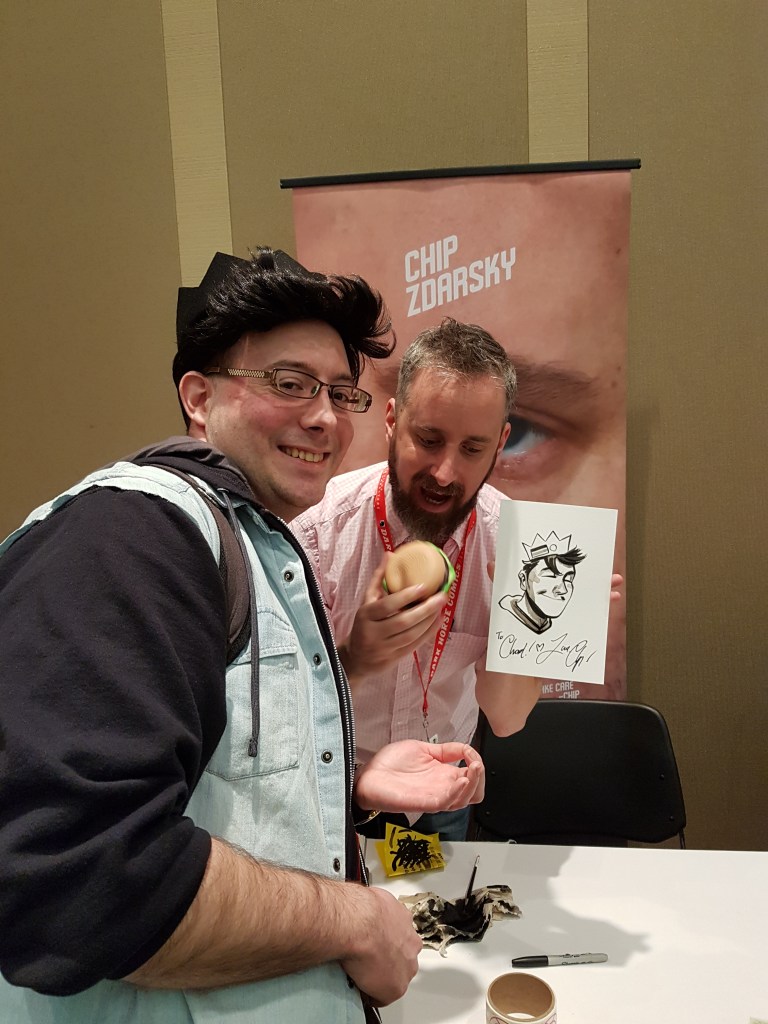
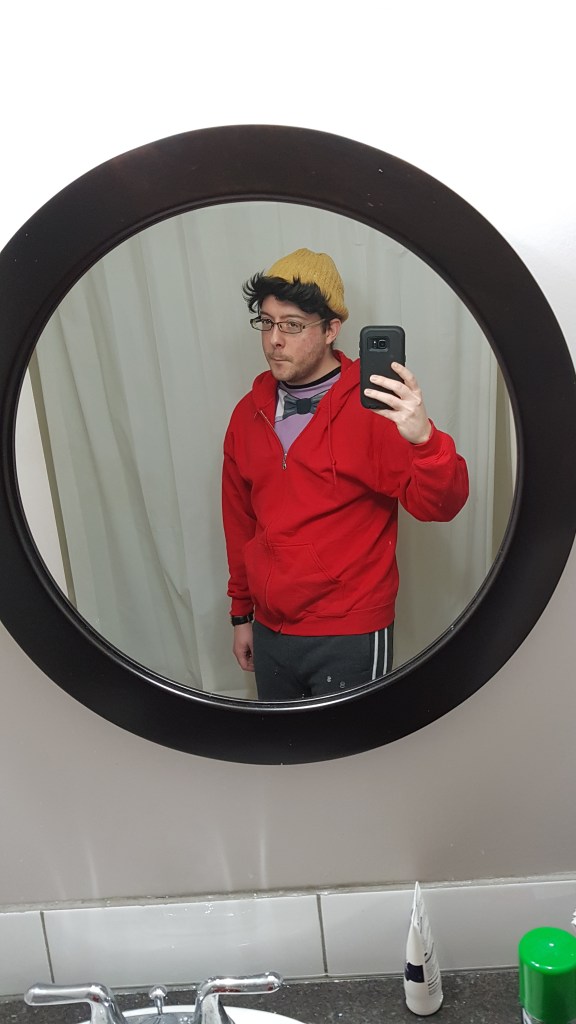
Please welcome Chad Charest (he/him)! He is a geek of all types, master of none, and he is in the running to become World’s Coolest Uncle. You can hear more from him in his podcast interview with DMs of Vancouver, and stay tuned! He is writing an urban fantasy series; it will hopefully be on your bookshelf in the future.
Chad, when did you first play Dungeons and Dragons? What was the experience like?
My experience with roleplaying games actually started with MSN role play chat with friends. We made stuff up with no material or oversight, just one person acting as gamemaster and the rest of us reacting. When I was 12-13 years old, I would go to a local Chilliwack game store (now Bastion Games) to play Yu-Gi-Oh!. Another teenager invited me to play D&D, and actually, we still play together! For years, I was mostly playing with people older that me, usually with straight cis men. I would love to play with a more diverse group, but queer female nerds tend to live outside of Chilliwack.
Nowadays, I usually split my time between DMing and playing 50/50. DMing is more work, but I like trying to force people to role play. A normal group is very hack and slash based, so I will give them prompts during character creation to expand a little. The one I usually use is the prompt “You are lost, either physically, mentally, or emotionally. Why?” Then in a twelve-session campaign, each character gets three sessions of focus to find the thing that is lost.
As a player, my characters have changed a lot over time. I used to like paladins a lot, then I went through a charisma character phase. Right now I’m obsessed with intelligence based characters like wizards and artificers. I recently played gnome wizard inspector, and it was really fun.
I hear that you’ve introduced your nephews to D&D. How did that go?
Yeah, I recently taught my two nephews (aged 11) how to play D&D! The system allows for people to play at any age. Some handholding is necessary at first, and having an experienced player other than the DM at the table is helpful. But let them do what they want, and don’t guide them or be too helpful. Make suggestions and remind them what they’re capable of, but let them make decisions on their own.
When I was starting with my nephews, I gave them a walkthrough of every class and where they typically end up focusing, but I also gave them flexibility if they changed their minds. I think it’s also important to base the game on things they’re already interested in, like Minecraft. And sometimes it’s important to change how to play to fit their style. I usually play D&D with theater of the mind, but I bought them miniatures because I knew they’d love it. Now they’re playing by themselves, and they give me regular updates. I’m usually like, “That’s definitely not following the rules, but you’re having fun!” It feels so good to have passed this on to them.
How do you bring your asexual identity into D&D and roleplaying games? Has D&D played a part in exploring or understanding your sexuality?
Honestly, not really. I only figured out that I am asexual when I was 27 – about seven years ago. My D&D characters have just never been sexual, and usually I was playing with cis dudes who weren’t going to role play flirting with each other, and if they did romance an NPC, the scene would fade to back.
I love playing bards, but contrary to popular stereotypes, they don’t flirt. Instead, they’re cocky and fun, and they make great friendships with other characters.
What makes a D&D table a queer-friendly atmosphere to you?
I haven’t had much trouble with that. When I came out as asexual, my friends were accepting and it was fine – not a big deal. I do like to play with queer people; when I have it’s awesome. You get a lot less of the hack and slash role play, and you get diverse characters who care about more things and have more in-depth identities (though of course cis people sometimes do too). Izzy introduced non-binary characters into their campaign, and that was awesome. I want more of that! For now I seek out that representation and community in literature or TV shows.
What would you like to see done differently in D&D (either the culture surrounding the game or the mechanics of the game itself)?
Wizards of the Coast have made some good steps recently; Tasha’s Cauldron of Everything no longer forces stats based on race. We need more things like that! We should also moving away from stories based in imperialism and be more creative by telling different kinds of stories. I try to bring that into my campaigns when I can.
Are there TTRPG systems that you enjoy other other D&D? What are they, and what do you like about them?
I love Warhammer RPGs. It’s a well-established world. Even though it is very imperialistic, they’re fun! There is a wealth of history and lore that gives you a lot to work with, so you can lean away from imperialism and play from other alien species perspectives to get into more interesting content. Orcs grow from mushrooms, so let’s have asexual orcs!
I also like Clockwork and Chivalry. In fact, my queerest experience happened in that game…with non-queer people. There is a table you can roll to determine how you know the other characters. The one woman in the group was in love with my character, and everyone else was in love with another character. It led to this great scene where everyone spent the night sneaking to someone else’s tent, only to find it empty because the other person was sneaking off to someone else’s empty tent!
Of all the TTRPGs I’ve played, though, I think Rolemaster is my favorite. It is a little bit like D&D but it’s complex; there are 270 skills. In D&D, your characters are badasses too easily. In Rolemaster, you have to be really careful in combat situations. A group of goblins can take out a level 10 character if you aren’t strategic about your location or defenses.
Do you have any recommendations of asexual representation done well in a nerdy property (TV show, podcast, book)?
I actually got to sit on a panel at Emerald City Comic Con about asexual representation in media. We talked about Todd Chavez in Bojack Horseman and Jughead from Archie comics. Often in media, male representation of asexuality leads to characters that are infantilized and treated like children. On the other hand, there is a lot of amazing female representation. There is a drama podcast called ARS Paradoxica with a lead who is asexual, and it’s the best time travel anything that I’ve ever experienced. Elizabeth Moon’s fantasy novel The Deed of Paksenarrion has a main character who doesn’t use the word “asexual” to describe herself, but she does talk about not being interested in sex or romance.
Thank you for coming on Roar Cat Reads to share your experience with us, Chad!
Are you an Adventure Queer? Do you love to play D&D? Email us at roarcatreads@gmail.com to let us know you would like to be interviewed!






 Roar Cat Reads