Tag: Book Review

  • More Happy Than Not by Adam Silvera

    More Happy Than Not by Adam Silvera

    Part Eternal Sunshine of the Spotless Mind, part Aristotle and Dante Discover the Secrets of the Universe, Adam Silvera’s extraordinary debut confronts race, class, and sexuality during one charged near-future summer in the Bronx.

    Sixteen-year-old Aaron Soto is struggling to find happiness after a family tragedy leaves him reeling. He’s slowly remembering what happiness might feel like this summer with the support of his girlfriend Genevieve, but it’s his new best friend, Thomas, who really gets Aaron to open up about his past and confront his future.

    As Thomas and Aaron get closer, Aaron discovers things about himself that threaten to shatter his newfound contentment. A revolutionary memory-alteration procedure, courtesy of the Leteo Institute, might be the way to straighten himself out. But what if it means forgetting who he truly is?

    Goodreads

    I can’t say I liked this book, but I’m so glad I read it and I want everyone in the world to read More Happy Than Not.  I read the entire thing in one night: it was wholly engrossing, and then the plot kicked me upside the head and I learned a new kind of desperation for MUST READ.  This is not a feel-good book, but it might leave you feeling….no I can’t do the cheesy “more happy than not” line.  Because honestly, I closed the book feeling more UNhappy than not.  I tend to expect my YA books to have happily ever after endings, and this one was serious is a wonderful but disconcerting way.  

    More Happy Than Not is an intersectional LGBTQ+ novel, telling the story of young gay teenagers who live in poverty as people of color.  I really appreciated Silvera opening my eyes to the stories of men like Aaron…even though this is also, technically science fiction.

    And isn’t that so cool??  That I would wait until the end of the second paragraph to mention that there’s a sci-fi element, the Leteo Institute, which can alter and erase people’s memories.  Silvera masterfully creates a not-too-distant future that, for once, is far more about the things that are similar to our time than about the differences.  I found it really refreshing to read a book that wasn’t up in my face about Cool New Ideas and Technologies.  It made the sci-fi elements more believable, because if they were normal….people wouldn’t insist on talking about them 24/7.

    Anyway, this book will break your heart, make you think, and blow your mind.  So obviously–go read it!

    Originally posted on my blog www.itistrish.com.

    Check out our Queer Lil Library for more book recommendations and reviews!
  • I Wish You All the Best by Mason Deaver

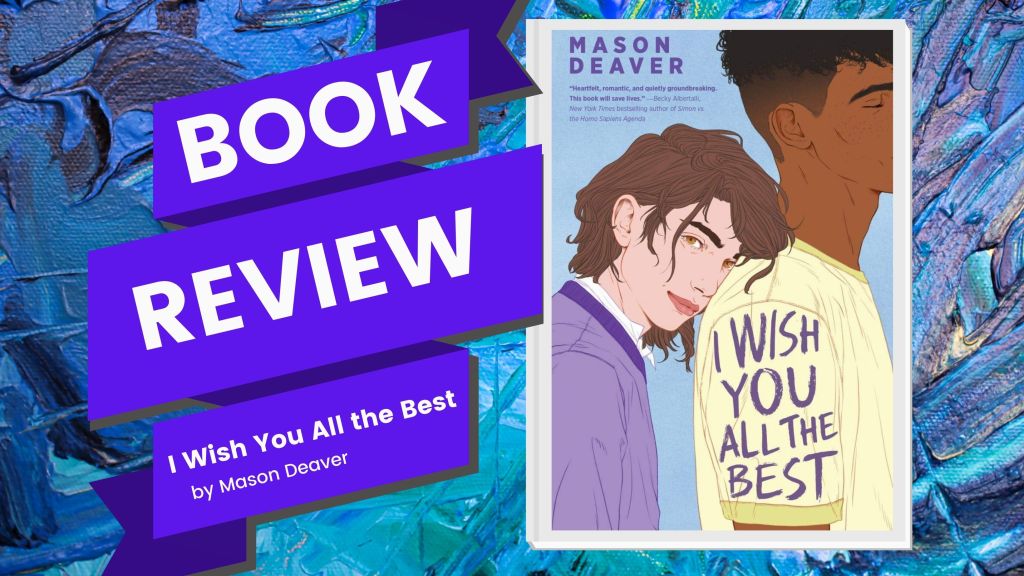
    I Wish You All the Best by Mason Deaver

    When Ben De Backer comes out to their parents as nonbinary, they’re thrown out of their house and forced to move in with their estranged older sister, Hannah, and her husband, Thomas, whom Ben has never even met. Struggling with an anxiety disorder compounded by their parents’ rejection, they come out only to Hannah, Thomas, and their therapist and try to keep a low profile in a new school.

    But Ben’s attempts to survive the last half of senior year unnoticed are thwarted when Nathan Allan, a funny and charismatic student, decides to take Ben under his wing. As Ben and Nathan’s friendship grows, their feelings for each other begin to change, and what started as a disastrous turn of events looks like it might just be a chance to start a happier new life.

    At turns heartbreaking and joyous, I Wish You All the Best is both a celebration of life, friendship, and love, and a shining example of hope in the face of adversity. 

    Goodreads

    A coming of age coming out novel that handles the fear of being fully yourself with patience. It stresses the importance of finding safe people to be your foundation so that you can better survive the spaces and people who are less safe (or actively dangerous).

    Ben begins the story at their lowest moment, having just been kicked out of their house after telling their parents that they are nonbinary. I can tell I am old because I just wanted to cuddle them and make everything okay for this tiny precious child. In a nice twist of the “found family” story, Ben finds a family…in their estranged older sister. It was a joy to see the two of them reconnecting and building a new relationship while addressing the pain of their initial separation (which had more to do with their parents than each other).

    Ben finds family in other ways too, of course. I loved the role of the Internet in Ben’s life. It is through Internet role models and community that Ben is able to label themselves nonbinary, and the friends they make online are a support throughout the book. Queer folx often find community online, so this felt very true. But I did like that they eventually joined an in-person support group as well.

    As for those parents…ugh. They are awful in very realistic ways. The dad is just pure bigotry with an utter lack of desire to understand his child. The scene where he condescendingly says, “Now who’s misgendering someone?” to Ben just reeked of smug superiority. It is infuriating and heartbreaking. The mom is more subtly bigoted. She wants to love her child, but under terms that she understands. I do feel a bit sympathetic toward her; I wonder what her reaction might have been if she were married to someone different.

    The romance in this book is adorable, and the chemistry between Ben and Nathan is SO CUTE. However, I have a gripe. No matter how anxious and insecure Ben is, could they REALLY doubt Nathan’s feelings toward them? Nathan overtly flirts with Ben from day one, holding their hand, repeatedly saying they are handsome and cute. I mean, come on!! Teenage boys do not do that sort of thing with their friends. Still…so cute.

    The last thing I’ll note is that I really liked that the book allowed space for people close to Ben to mess up. Sometimes people slipped and called them something masculine. Ben’s inner monologue let’s us know that they are hurt by this, but they model healthy relationships by pointing out instances of misgendering and allowing people to apologize and learn. I think these depictions can help those of us who identify as cisgender to enter into conversations and relationships with nonbinary folx with a little more confidence.

    Rating: 4 out of 5.

    Check out our Queer Lil Library for more book recommendations and reviews!

  • The Unspoken Name by A.K. Larkwood

    The Unspoken Name by A.K. Larkwood

    What if you knew how and when you will die?

    Csorwe does — she will climb the mountain, enter the Shrine of the Unspoken, and gain the most honored title: sacrifice.

    But on the day of her foretold death, a powerful mage offers her a new fate. Leave with him, and live. Turn away from her destiny and her god to become a thief, a spy, an assassin—the wizard’s loyal sword. Topple an empire, and help him reclaim his seat of power.

    But Csorwe will soon learn – gods remember, and if you live long enough, all debts come due.

    GoodReads

    This instantly became one of my favorite books, and I want to thrust it into the face of anyone who likes fantasy or queer ladies or, ideally, both!

    Where lesser fantasy novel would drag out this plot into a multiple books, The Unspoken Name has a pace that crashes readers through twists and time jumps while feeling cohesive and satisfying. Bonus: This IS the start of a series, but that is only because there is so much good story to cover, not because Larkwood held anything back this time around. We start with Csorwe (An orc protagonist! My heart!) as a child raised to be a sacrifice, then quickly leap several years ahead after she decides to abandon her fate. I found it so much more interesting to see how that time had changed rather than read every detail of what changed her.

    Also, the idea of a sacrifice refusing to play into the role that’s dealt to them….but there being consequences? I love that! I feel like most stories with this conceit revolve around the sacrifice realizing that the religion is corrupt or sacrifices are unnecessary, but this iteration felt so much more powerful and interesting to me.

    That detail speaks to the joy that is the worldbuilding of The Unspoken Name. Every person and place that we meet feels rich and well thought out. I wanted to know more and see more, so it delights me that Larkwood is working on a sequel, The Thousand Eyes, due to be released in June 2022.

    All of this is just a lead up to my favorite aspect of this book: the characters are SO GOOD. The wizard who “rescues” Csorwe is unapologetically ambitious and selfish, and Tal, his other apprentice, is an asshole. The three of them together is *chef’s kiss*. Their relationships are so complicated and messy, and there is literally nothing I love more.

    What Make This Book Queer?

    The Unspoken Name has multiple queer relationships! Huzzah! The central lesbian relationship warmed my little heart, and I especially liked that their attraction to each other was as much about what they each had lost as it was sparks and lusty times. Their relationship built very naturally and slowly, and I cannot wait to see more of them.

    On the other hand, we have a gay relationship that is revealed out of nowhere and is so sad, but in a deliciously dramatic way. I won’t say more than that.

    Rating: 5 out of 5.

    Check out our Queer Lil Library for more book recommendations and reviews!
  • Song of Achilles by Madeline Miller

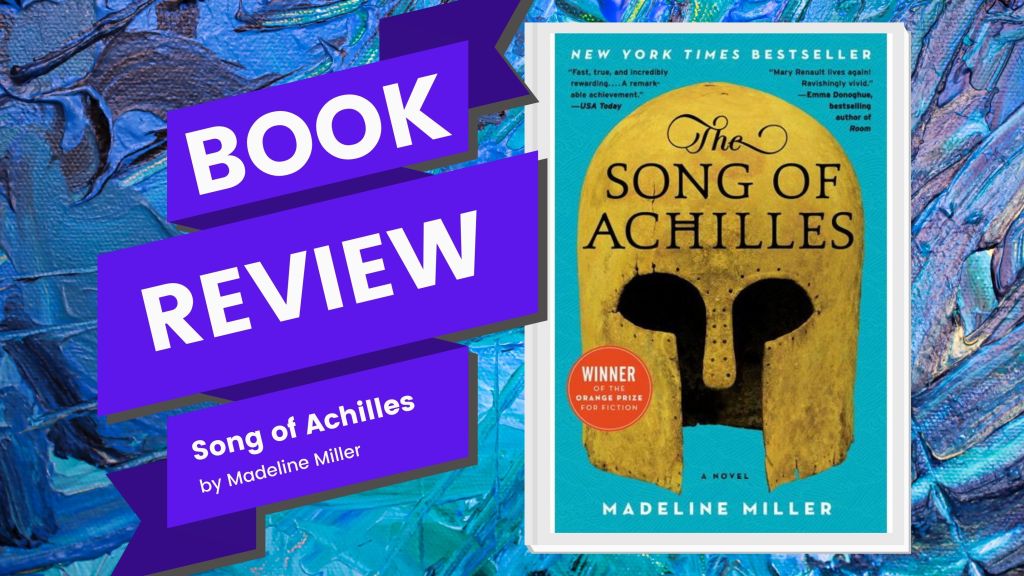
    Song of Achilles by Madeline Miller

    Greece in the age of heroes. Patroclus, an awkward young prince, has been exiled to the court of King Peleus and his perfect son Achilles. By all rights their paths should never cross, but Achilles takes the shamed prince as his friend, and as they grow into young men skilled in the arts of war and medicine their bond blossoms into something deeper – despite the displeasure of Achilles’ mother Thetis, a cruel sea goddess. But then word comes that Helen of Sparta has been kidnapped. Torn between love and fear for his friend, Patroclus journeys with Achilles to Troy, little knowing that the years that follow will test everything they hold dear.

    Profoundly moving and breathtakingly original, this rendering of the epic Trojan War is a dazzling feat of the imagination, a devastating love story, and an almighty battle between gods and kings, peace and glory, immortal fame and the human heart.

    Oh wow, I am losing it!  This book made me feel EVERYTHING, and there’s no way this review will be anything coherent.  I guess I know why The Iliad continues to be read millenia after it was created–no one can create a drama like the Greeks!  The tragedy here is SO STRONG, with characters acting so stupidly human that you want to shake them, but you totally see their point, and then everything falls apart because there are no real “good” guys and “bad” guys, only dumb humans seeking glory, and AHHHH!

    Okay, I’ll try again.  Reading The Song of Achilles is like watching Titanic.  I knew what was going to happen, but I couldn’t help but desperately hope things would turn out differently.  Every bit of foreshadowing heightened the horrified anticipation so that when the climax came I was just helplessly awash in emotion.  I mean, I actually thought I was holding it together pretty well, until I read the very last paragraph and surprised myself by bursting into tears.  

    Miller takes one of Western history’s greatest stories and plays up the romance angle, milking two sets of drama for all they’re worth.  She doesn’t have to change anything at all for Achilles and Patroclus to believably be in the most epic romance of all time.  I am a total sucker for friendship turning into romance, so one set in ancient Greece against the backdrop of gods and goddesses, blood oaths and battles – I was a goner.

    The Song of Achilles was amazing and everyone should read it. I want to read it again as soon as I stop jumping up and down to get rid of all the feels crawling around in my heart.

    Rating: 5 out of 5.

    Check out our Queer Lil Library for more book recommendations and reviews!
  • Aristotle and Dante Discover the Secrets of the Universe by Benjamin Alire Saenz

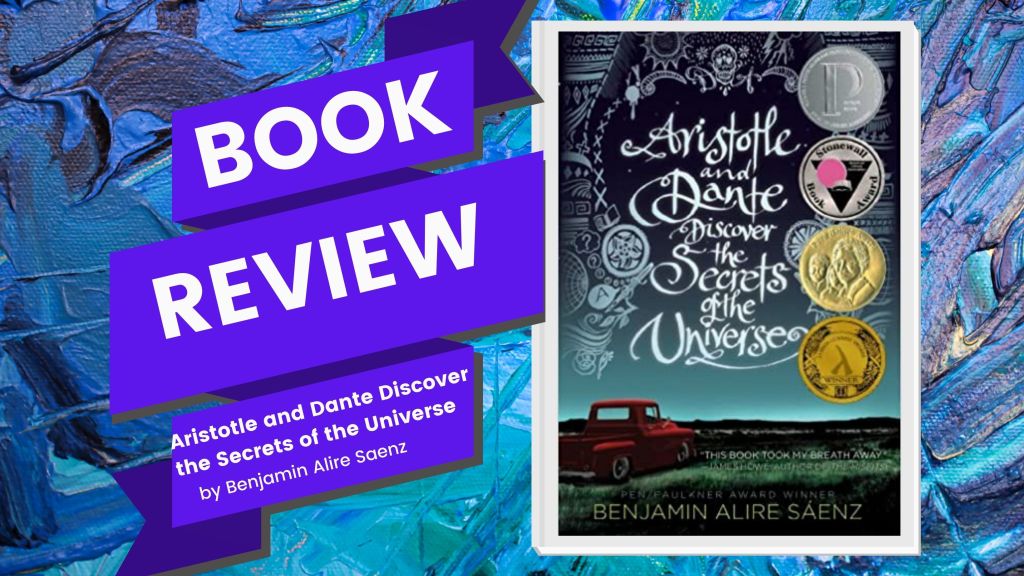
    Aristotle and Dante Discover the Secrets of the Universe by Benjamin Alire Saenz

    A lyrical novel about family and friendship from critically acclaimed author Benjamin Alire Sáenz.

    Aristotle is an angry teen with a brother in prison. Dante is a know-it-all who has an unusual way of looking at the world. When the two meet at the swimming pool, they seem to have nothing in common. But as the loners start spending time together, they discover that they share a special friendship–the kind that changes lives and lasts a lifetime. And it is through this friendship that Ari and Dante will learn the most important truths about themselves and the kind of people they want to be.

    Goodreads

    SPOILER because I’m annoyed by the book description: By “friendship,” the paragraph above means BOYFRIENDS. This book is queer as hell and so cute.


    This book is lovely.  I read it for the first time in one day, staying up until 2:00 in the morning because I couldn’t sleep until I had the whole thing finished.  This book has everything I love – friendship and the awkwardness of a new romance, families that are deeply scarred but deeply loving, introspective thoughts about growing up and finding yourself.  And the whole thing is told in Saenz’s beautifully simplistic prose.

    I honestly don’t know how to describe how awesome this book is.  Aristotle (Ari) is a loner because he lives too much in his own head, burying himself under pain and doubt and confusion.  Dante is a loner because he is too enthusiastic, too smart and too concerned with beauty and life.  Together they complete each other, in both stupid and meaningful ways.

    I loved the subtle comparisons between Ari and Dante’s relationships and those of their parents.  Seems like quiet melancholy people need outgoing emotional people and vice versa.  Relationship dynamics are so fascinating to me, and it was cool to see three different variations on the same theme of opposites attracting and complementing one another.

    Underlying all the relationships is Ari’s struggle with growing up.  Everything is changing for him, and he doesn’t know how to be himself.  I’m a huge fan of coming-of-age stories, and Ari’s introspective nature makes for a really wonderful look inside an adolescent’s head.

    This book is so fantastic, I wish I could read it again for the first time over and over.

    NOTE: The audiobook is read by Lin-Manuel Miranda, so do yourself a favor and read the hard copy AND listen to the audiobook.

    Rating: 5 out of 5.

    Check out our Queer Lil Library for more book recommendations and reviews!

  • Naamah by Sarah Blake

    Naamah by Sarah Blake

    With the coming of the Great Flood—the mother of all disasters—only one family was spared, drifting on an endless sea, waiting for the waters to subside. We know the story of Noah, moved by divine vision to launch their escape. Now, in a work of astounding invention, acclaimed writer Sarah Blake reclaims the story of his wife, Naamah, the matriarch who kept them alive. Here is the woman torn between faith and fury, lending her strength to her sons and their wives, caring for an unruly menagerie of restless creatures, silently mourning the lover she left behind. Here is the woman escaping into the unreceded waters, where a seductive angel tempts her to join a strange and haunted world. Here is the woman tormented by dreams and questions of her own—questions of service and self-determination, of history and memory, of the kindness or cruelty of fate. 

    In fresh and modern language, Blake revisits the story of the Ark that rescued life on earth, and rediscovers the agonizing burdens endured by the woman at the heart of the story. Naamah is a parable for our time: a provocative fable of body, spirit, and resilience.

    Goodreads

    I adored this complicated feminist retelling of Noah and the flood, from the perspective of his bisexual wife Naamah. It’s mysterious and sad and hopeful and never easy – like life.

    I grew up with Bible stories, and (spoiler!) they are overwhelming male stories about men doing things with other men. When a woman exists in the story, she is usually nameless, as Noah’s wife is. Blake names her Naamah, which is the name of a demon in Jewish mysticism. This is fitting, because she is a wild woman, desperately unhappy to live with the burden of surviving a worldwide disaster, angry at God for causing it, and acting out her grief in healthy and unhealthy ways. She’s deeply sensual and very opinionated. And the kicker? It’s all of these unruly qualities that makes God (or his representation in this novel) like her. Not to get too personal, but this was revelatory and healing for me as I try to reconcile what faith looks like for me as an adult.

    Naamah (both the woman and the book) wrestles with themes of unimportance and identity. “What makes a woman a woman?” is echoed throughout the book, especially with the awesome dreams with an angelic Sarai (another biblical woman who was given short shrift compared to her husband).

    Speaking of angels! The Angel and Metatron are fascinating. I love an asshole vulture angel. Some of the more outlandish ideas – like Naamah having sex with an angel – is all the more delightful because there IS a biblical precedent for it.

    And I guess, speaking of sex! There is a lot of it. Naamah is a very body-centric person, and it was satisfying to read about a middle-aged woman who processed joy and pain through sex. She’s an excellently written bisexual woman who loves her husband and also loves the women she sleeps with. It’s complicated and messy and very real.

    I don’t know if this book would speak to people who weren’t raised deeply evangelical the way it did me, but I loved seeing a story I thought I knew from a very different perspective, and being led into grief, hope, and healing in a way that felt more biblical than the Genesis story.

    Rating: 5 out of 5.

    Check out our Queer Lil Library for more book recommendations and reviews!

  • Miranda in Milan by Katharine Duckett

    Miranda in Milan by Katharine Duckett

    With Miranda in Milan, debut author Katharine Duckett reimagines the consequences of Shakespeare’s The Tempest, casting Miranda into a Milanese pit of vipers and building a queer love story that lifts off the page in whirlwinds of feeling.

    After the tempest, after the reunion, after her father drowned his books, Miranda was meant to enter a brave new world. Naples awaited her, and Ferdinand, and a throne. Instead she finds herself in Milan, in her father’s castle, surrounded by hostile servants who treat her like a ghost. Whispers cling to her like spiderwebs, whispers that carry her dead mother’s name. And though he promised to give away his power, Milan is once again contorting around Prospero’s dark arts.

    With only Dorothea, her sole companion and confidant to aid her, Miranda must cut through the mystery and find the truth about her father, her mother, and herself.

    Goodreads

    I don’t remember much about “The Tempest” from my high school English class beyond the vague idea that the quote about “All the world’s a stage” is from it (Spoilers, this memory is wrong! That quote is from “As You Like It.”) With so little knowledge about the original, I was worried that the sequel wouldn’t make sense to me. But it appeared on some list recommending books about ladies loving ladies, and I decided to give it a try!

    I’m so glad I did. For starters, it’s a short little book at only 204 pages. By the end I wanted more because I enjoyed the characters so much, but I admire Duckett for keeping the book to exactly the length the story needed and no more.

    If you, like me, fear your meager Shakespeare knowledge will mean this book is not for you, do not worry for even a second. Duckett explains enough of the plot of “The Tempest” to catch you up to speed, but it’s enough to know that a young woman is returning to normalcy after having been raised on a fantastical island by a powerful (and power mad) father.

    Miranda is an excellent protagonist who straddles the line between wanting to engage in this new world that intrigues and confounds her while also being realistically overwhelmed and scared. It doesn’t help that, in addition to preferring wild hair and comfortable clothing to the restrictions of a proper Italian gentlewoman, she gets weird looks and whispers anytime she shows her face.

    It’s a mystery tied to her dear departed mother, and guys, this mystery is so great! The whole book plays with the theme of women as monsters in really interesting ways, from sexuality to aging to cultural misconduct. I hope it’s not too much of a spoiler to say that I love a book where women are redeemed not by shucking the label of “monster” but by embracing it.

    As for the gay stuff, wow it’s so much fun! The only woman who will treat Miranda as a human is Dorothea, a servant who has secrets of her own. Their relationship development is quick but realistic and so sweet. I also really liked how they handled the power imbalance of a noblewoman and a servant hooking up; it isn’t ignored, but it’s also not insurmountable.

    If you like historical fantasy or seeing patriarchal classics given a feminist twist, you owe it to yourself to read Miranda in Milan!

    Rating: 4 out of 5.

    Check out our Queer Lil Library for more book recommendations and reviews!