Tag: Guest Post

  • Black Sails + Halt and Catch Fire

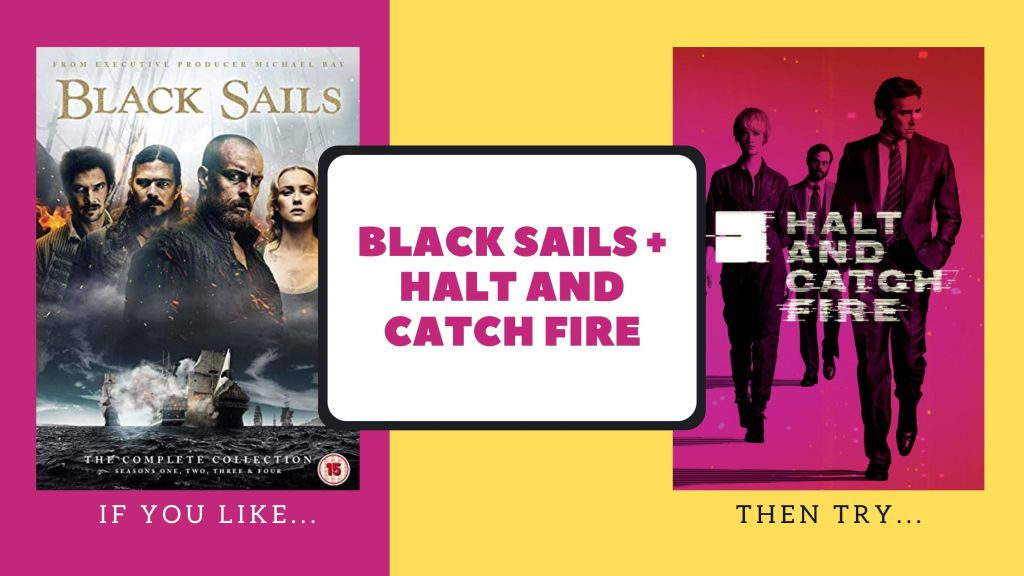
    Black Sails + Halt and Catch Fire

    by Elizabeth Minkel

    Given the open-ended prompt of “can you write and/or talk about greatest show of all time Black Sails”—an ask I’ve been lucky enough to receive a few times since I fell for the show and started evangelizing for it five years ago—it’s hard for me to pick just one area of focus. 

    If I don’t start by zeroing in on a specific character (Thomas Hamilton!), I usually jump first to Black Sails as a post-colonial text, refashioning the historical record as a political act, and centering the marginalized to reclaim those histories from their oppressors. But that leaves me wanting to talk about the broader themes of narrative manipulation, the meta-ness threaded throughout the show: characters in the story repeatedly talking about how they’re characters in a story, the way they deliberately play with the idea of “character” as they reinvent themselves. 

    Of course that then leaves me wanting to talk about pirates—narrative was what Golden Age piracy was all about! Real pirates didn’t actually do a ton of fighting: garner a fearsome enough reputation, and crews of the ships you’re raiding will surrender without spilling a drop of blood. But real pirate history just leads me to a wider history of the period, the actual rabbit hole I tumbled down when I was at the height of my Black Sails fandom: English history around the turn of the 18th century, imagining how the politics and social conditions of the late Restoration would have fundamentally shaped these characters’ lives.

    But when this particular “can you write something about Black Sails” ask came in, I was falling hard for another show—one that, on its surface, doesn’t have very much to do with 18th-century pirates. AMC’s Halt and Catch Fire is a drama about technologists at the dawn of personal computing who are always on the cusp of the next big thing; it begins in Dallas, Texas in 1983, and follows the characters over the course of the next decade. Coincidentally, HACF aired at the same time as Black Sails—2014-2017—and also like Black Sails, its fourth and final season brought the story to an intentional (very satisfying!) conclusion.

    Those are surfacey coincidences, of course. But digging a little deeper, parallel elements and themes run through them both: their ideas about reinvention, or the way they handle their protagonists’ queerness, or the way they show a broader spectrum of human relationships than a lot of media I’ve encountered, particularly the idea of partnership as romance. So when I was asked to write about Black Sails and half-joked, “As much as I love Black Sails, it’ll be hard for me to think about another show right now,” I was delighted when I was encouraged to actually write about them both: a letter of recommendation for HACF for people who love Black Sails.

    Halt and Catch Fire was pitched as “Mad Men but computers in the 1980s,” and its first few episodes carry the clunkiness of that premise—the main characters are attempting to reverse-engineer an IBM PC, and critics were quick to draw on that conceptually as they accused the show’s writers of trying to reverse-engineer Mad Men, which was still on the air and was, of course, one of AMC’s biggest hits of all time. But halfway through the first season, it starts to shuck off that premise and free its characters from the archetypes that initially bound them—and by the second season, it starts to truly come into its own, shifting from a show about computers to a show about the people working on those computers. 

    Though it becomes a true ensemble show, the ostensible protagonist of HACF is Joe MacMillan, played by Lee Pace (if I wrote a “letter of recommendation for HACF for people who love Lee Pace,” it’d simply read, “Seriously you haven’t watched this yet??”). Joe is the aforementioned queer protagonist—he’s bisexual, written and portrayed in a beautifully nuanced way, especially with one particular storyline in the final season that’s my favorite of the entire show. A slick-talking salesman with grand visions for the future of technology, Joe initially brings together hardware engineer Gordon Clark (Scoot McNairy), a sort of sadsack failed-genius type, and software engineer Cameron Howe (Mackenzie Davis): a young, brash gamer who’s able to write such beautiful code that she never feels like she has to compromise on anything.

    The early trio eventually breaks apart, and in the second season, Gordon’s wife, Donna (Kerry Bishé) is elevated from her season one role of “Gordon’s wife” to an equal fourth slot in the ensemble—also a hardware engineer, she enters into a working partnership with Cameron at an early online gaming start-up called Mutiny. Their partnership—and the enduring one between Gordon and Joe—are the heart of the show, even more than the characters’ configurations in traditional romantic relationships (in addition to the Clarks’ marriage, Joe and Cameron’s on-again, off-again relationship is a beautifully entertaining train wreck). 

    HACF leans into the theme of work-as-romance; it partly feels fueled by the technology industry itself and the mythos around start-up co-founders, but it’s partly about the specific way the show privileges the emotional depth of these working partnerships: what it means to love the person you’re collaborating with, and how the fracturing of a partnership can be as emotionally scarring as any romantic breakup. And because they’re all working around the same technologies and the same ideas, their romantic relationships complicate their work, too: it all leaves you beautifully frustrated by how much potential they could have, the things they could create, if only they could actually manage to work together.

    Black Sails plays with similar configurations of overlapping platonic and romantic partnerships: where HACF leans into duos, Black Sails loves a trio, from Flint and the Hamiltons to Flint, Silver, and Madi, or the original Ranger trio followed by Max, Anne, and Jack. The murky spaces of these triangles offer some of the greatest pleasures of Black Sails: sorting out interpersonal desires from actual shared ideals and goals, and the sort of push-and-pull between them, as each side of the triangle brings traits that balance out the others.  

    The shows’ shared themes of reinvention feel both parallel to each other as well as contextually specific—where Black Sails plays with reinvention in its meta-exploration of narrative, HACF is working within the overarching ethos of the tech industry, where the cycle of failure, pivot, and reinvention are so elevated and romanticized that they’re essentially a Silicon Valley cliché. All the characters shift a great deal over the course of the decade-long timeline of the show, but none so much as Joe: there is a wholly new Joe MacMillan every season, each 180 a pleasure to try and untangle, as you sort the artifice from the genuine. 
    On the surface, these shows feel somewhat distant, audience-wise: my friends who love Black Sails tend to like genre fare, and my friends who love HACF like, well, other AMC dramas. But I think that the complexities of each of these shows—and the ways they overlap thematically—create plenty of space between the two. If you love Black Sails and you’re looking for a show that portrays a full and complicated array of intimacies between characters, I highly recommend Halt and Catch Fire. (Plus, a reminder: Lee Pace!)  


    Elizabeth Minkel (she/her) is a writer, editor, and consultant who focuses on digital technologies and fan culture. I’ve written about fandom (and other topics) for the New Statesman, The MillionsThe GuardianThe New Yorker, and more. (See “clips” for a full(er) list.) I co-host a podcast about fandom called “Fansplaining” with Flourish Klink, and I collaborate with Gavia Baker-Whitelaw on “The Rec Center,” a weekly newsletter featuring fandom articles, fanart, and fic recs, which was a finalist for a Hugo Award in 2020.


    Sign up for our queer nerdy newsletter!

    Processing…
    Success! You're on the list.

  • Black Sails, Queer Representation, and the Valid Canonicity of Subtext

    Black Sails, Queer Representation, and the Valid Canonicity of Subtext

    by Char Q

    There are a multitude of reasons to love Black Sails and to proclaim it “the best show of all time,” as the fans so often do, and one of those reasons is that it rewards analysis. Black Sails is many things: a manifesto demonstrating the power of solidarity between the oppressed in the fight against white supremacy; a commentary on how the history of the marginalized is a narrative manipulated by those in power; and a story about stories–to name only a few. But its open awareness of all of its themes is partially what makes it so powerful, self-referential, and multifaceted. That is especially true when it comes to analyzing the depth and complexity of the dynamics between its main cast of characters, nearly all of whom are explicitly or subtextually queer.

    The need for more queer representation in media is an ongoing and popular conversation topic. More recently, many of the public discussions tend to revolve around people’s opinions that surely there must be One Superior Way to depict queer relationships and identities. For most, that superior way is considered to be “explicit representation,” often defined more or less as “queer content so obvious and loud that even cisgender heterosexual people can’t argue against its validity.” Interestingly, different people have different ideas of what, by this metric, constitutes as “good enough.” As a result, the goalposts seem to always be moving, and are based on the shifting sands of personal opinions. No single person has the authority to decide what “counts,” but that doesn’t stop many people from trying anyway. It is a debate fundamentally doomed to failure, because its basic premise is a flawed one: the value of queer representation should not and cannot be measured by the thoughts of those who misunderstand it at best, or act as queer oppressors at worst. To futilely attempt to measure it in such a way is to try to bend queer content to honor the impossibility of cisheteronormative standards or requirements, while seeking unwinnable, universal cisheteronormative approval.

    So truly, what does it mean to be “queer enough,” either personally or narratively? Is it using a specific label to describe oneself? Proclaiming romantic love openly, in so many words? Visibly being in a romantic relationship with someone of the same sex, and defining it as such? Holding hands? Kissing? Having sex? The point is that there is no single or correct answer, and queerness as an umbrella concept is somewhat less about what one is specifically, and rather more about what one is not (namely, cisgender and/or heterosexual). Queer identities, relationships, and experiences are as diverse as every visible and invisible color in the wavelengths that make up a rainbow. Having enough variety in media to even scratch the surface of portraying that diversity should be the ultimate goal.

    Black Sails is the rare piece of media that understands this concept, and embodies it to a groundbreaking and incomparable level. Because the writers built its narrative on central queer themes, Black Sails exists in an extraordinarily unique space: it includes explicit textual representation that meets the most popular mainstream standards, but it also includes subtext and queercoding to inform and enrich the story’s layers. Having the former meant the writers had the hard-won luxury of not feeling an obligation to sacrifice the latter, as well as the brilliance to recognize that there is value in and a need for both forms of representation to coexist.

    The writers did not give into the false dichotomy that drags down so much of the common circular debates, as people argue that surely there must be only one correct way to depict queerness properly. Instead, by choosing to show a myriad of queer relationships both explicitly and subtextually–with no pressure to openly define all or even most of them by cisheteronormative standards–the show not only did right by its characters and what was best for its narrative, but it also exemplifies the very principles the story is about. The characters live and love diversely, while simultaneously acting as mirrors of one another in the literary sense. As they reflect and reveal each other’s traits, the resulting parallels between the more openly queer and the more subtly queer relationships highlight what the deliberate similarities can tell you about both. Underlining those similarities through these methods also effectively emphasizes how many of the characters are alike in more ways than they differ–or at least, in the ways that count the most.

    As Charles Vane says to Billy Bones, “They can’t tell the difference between you and I.” The pirates are all defined in the same way by their oppressors, labeled as uncivilized monsters because they dare to fight for freedom, and love, and freedom to love without restraint. It demonstrates why solidarity amongst the oppressed is both valuable and essential. The various undefined examples of queerness that the show sets also take it a step further: true freedom is arguably being allowed to coexist authentically, beyond the constraints of expectation or the requirements of definitions. The diversity of such portrayals, depending on context, can even act as a commentary on the variety of real life queer experiences. Queer love, identities, and relationships are no less valid or impactful–or, in the case of fiction, no less canonical–for sometimes remaining somewhat undefined or understated. Simultaneously, when care is taken to define them, there is power in acknowledging such specificity without losing sight of how it does not or should not compromise the solidarity found in the community.

    This is the value in subtext and queercoding as deliberate media languages. Such tools of the trade were invented to and are still used to navigate around imposed restriction and censorship of stories. If one knows or learns to stop seeing heterosexuality as the default, a whole world of depth comes to light, particularly when and where one can factor in precious knowledge of authorial intent. There should be no standard these media languages must be beholden to, or no requirements that they must adhere to, in order to be “good enough”; they can be placed with intention to be seen and understood, and if we see and understand them, then that is inherently enough in its own way. This remains true even when overt restriction and censorship are not present, such as was presumably the case in regards to Black Sails. These media languages are originally by us, for us, and there is beauty and power in their subtlety and complexities, as well as the shared community of understanding that they encourage. While explicit representation is undeniably important, overemphasizing it as the only valid way of canonically conveying queerness runs the risk of devaluing the inherent, inarguable canonicity of other methods–or losing acknowledgment of what makes them beautiful and valuable to include at all.

    Including subtext and queercoding in stories encourages mutual conversations rather than passivity–conversations between a piece of media and its audience members, between one audience member and others, between one audience member and their internal self, and so on. Black Sails’ creators understood that intimately, and used it to inform and enrich their story, while also doing justice to their characters’ situations and dynamics with realistic–and thus, sometimes understated and complicated–portrayals. The result is some of the truest, most profound, and most nuanced depictions of queerness in a fictional narrative of all time. How apt it is that such a narrative was created by people who clearly both understand and revere how stories work.

    This show is many things, but ultimately, it is an invitation and a challenge to look deeper. But like any invitation or challenge, the choice is left in the hands of the viewers. Black Sails is, of course, an entertaining piece of media even from a surface level perspective, and how deeply a person examines the media they consume is always optional. This show’s explicit queer representation also means that looking deeper is not a requirement for queer recognition, yet its creators still understood and exemplified the value of multifaceted queer portrayals. To consciously oversimplify this show and its varied subtext–or, worse yet, disregard those who highlight its complexities–does its creators, their work, and the points that this story is carefully conveying a disservice.

    While the show mirrors its characters and relationships, it also holds up a mirror to viewers in a variety of ways. This topic is only one, and it connects to how the show makes us repeatedly aware of the power that stories hold, as it reminds us that the show itself is a story too. It asks us questions: This is a story, and stories have power, so what do you see in this? What do you take from it? What do your experiences tell you about its characters, and in turn, what do its characters reveal to you about yourself?

    In the eternally applicable words of Jack Rackham, “It’s the art that leaves the mark. But to leave it, it must transcend. It must speak for itself. It must be true.” As a body of work, Black Sails speaks for itself quite clearly in multiple avenues. It has a lot to say, explicitly and subtextually alike, and demonstrates the power in and necessity of both.

    It’s simply up to us how much we choose to listen.


    Char Q (they/she) identifies as multiple passionate interests stacked in a human shape, often says they don’t know how to casually like things, and believes that storytelling is part of what it means to be human. Graphic designer by trade and writer by hobby, you may find them inadvisably writing character-counted media analysis as Twitter threads like it’s an extreme sport. Very occasionally, they write a longer piece elsewhere, as a treat.

    For more thoughts from Char Q, check out their personal Twitter, Black Sails Twitter, personal Tumblr, Black Sails Tumblr, and website.


  • 7 Queer YA Reads

    7 Queer YA Reads

    When children and young people see themselves or those in their lives properly represented in fiction, it can be a transformative moment. Interesting children of any age in reading, and providing materials for them to represent their lived experiences, or to introduce them to new ones, is vital to helping them see the world through another’s eyes. With the recent attacks by U.S. legislators on books dealing with puberty, sex, anatomy, race, U.S. history, and more (attacking anything that isn’t Christian, white, and heterosexual, or in the words of one legislator, books that “might make students feel discomfort, guilt, anguish, or any other form of psychological distress because of their race or sex.”), we need to lift up diverse books for kids even more.


    Continuum by Chella Man (part of the Pocket Change Collective series)

    I LOVE this series. Every single entry is a brilliant, passionately written primer on a topic meaningful to modern teens. But Chella Man’s entry is particularly poignant. He’s a transgender, genderqueer, deaf, Jewish person of color and an artist, activist, and actor and his story of overcoming and persevering is inspiring and truly remarkable. I highly recommend the audio, because Chella narrates and it’s one of the only audiobooks ever recorded by a person with deafness.


    The Witch King by H.E. Edgmon

    My initial reaction to this book was, “THIS IS EVERYTHING I NEED!” (Yes, in all caps, I couldn’t help myself). Wyatt, a trans witch with quite a bit of power – power he lost control of one awful night – has a good life now. A best friend, a lovely adopted family, everything he could ever want. Except for resolving the little issue of his past, and the kingdom and fiancé he left behind. Now back in his former home and former life, Wyatt has to face down a ton of changes after he’s made the biggest one for himself. The book features a diverse cast of people of color, queer, trans, and nonbinary folks, and some great worldbuilding.


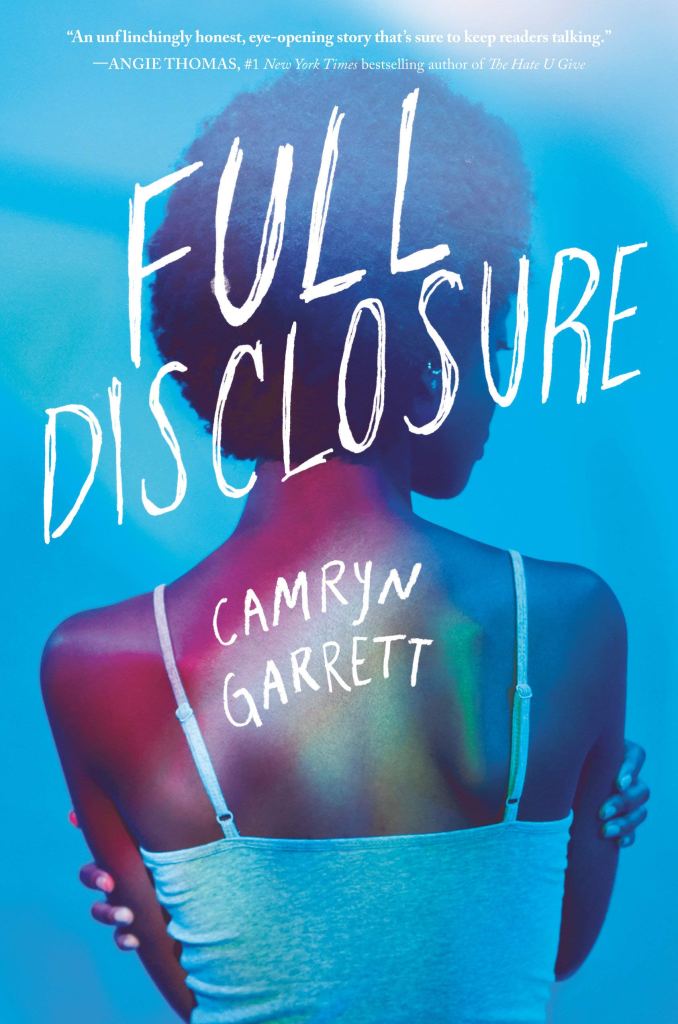
    Full Disclosure by Camryn Garrett

    Camryn Garrett’s debut came out of the book publishing gates on FIRE, and rightfully so. Simone is 17 years old, a person of color, bisexual, and HIV-positive. But her outlook is bright, as she knows the way to stay safe and hidden is be celibate and tell no one. But it’s not that easy when she meets Miles and falls head over heels. But no one knows her truth, and this fear of having her status known -and likely used against her – drives the main plot of the story. It’s honest, occasionally raw, and a book everyone should read.


    Camp by L.C. Rosen

    The joy in this book cannot be understated. I am a big fan of promoting queer books that showcase happiness and love and joy and hot damn, this book has it all and more. An adorable, glittering summer romance that also tackles masc/fem stereotypes, it starts with Randy, who loves Camp Outland and all the people there. It’s a queer/gay summer camp for teens like him, and there no one bats an eye at his love for nail polish and unicorns and anything sparkly. But this year is going to be different, because as much as he fell hard for Hudson, Hudson just didn’t feel the same. So Randy reinvents himself as Del – buff, sports-loving man’s man. Surely Hudson will fall now, right? And then Randy can return, little by little, in all his unicorn and nail polish glory.


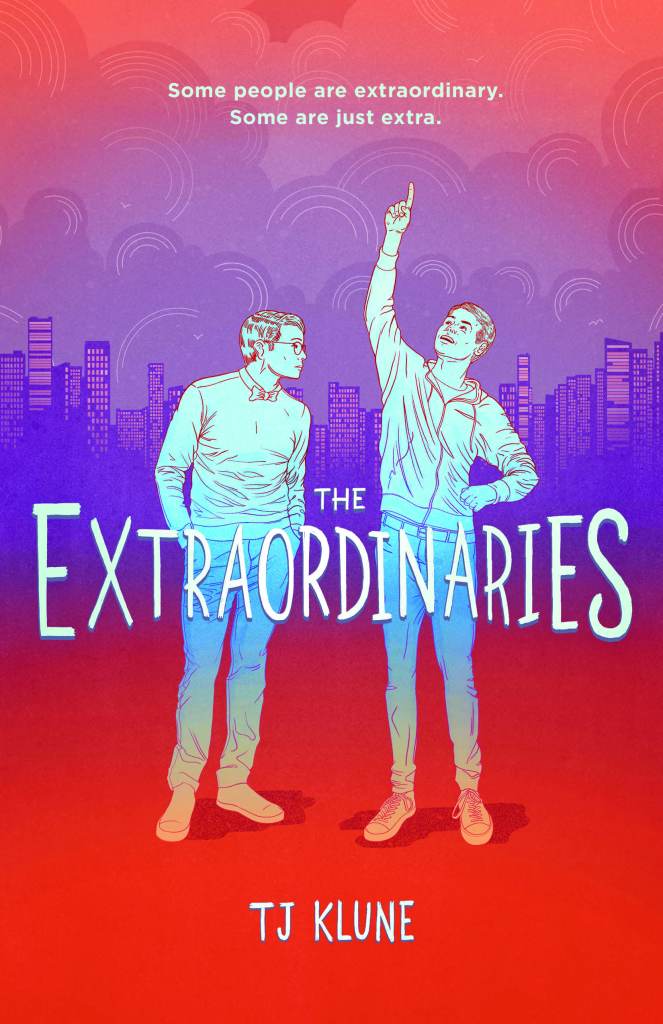
    The Extraordinaries by TJ Klune

    Yes, THAT TJ Klune, of The House in the Cerulean Sea and Under the Whispering Door! TJ is known for his adult books full of whimsy and cozy feelings and he brings that trademark style, and his tender writing, to this book. The Extraordinaires is the first in a trilogy and it is a complete delight. Nick’s claim to fame isn’t as Nick, but as the most popular fanfic writer for the Extraordinaires fandom. The fandom focuses on a group of real-life superheroes and when Nick bumps into Star Shadow, his favorite Extraordinare and focus of his biggest crush, everything changes. But left on the sidelines is Seth, Nick’s best friend. And maybe the one he’s really meant for.


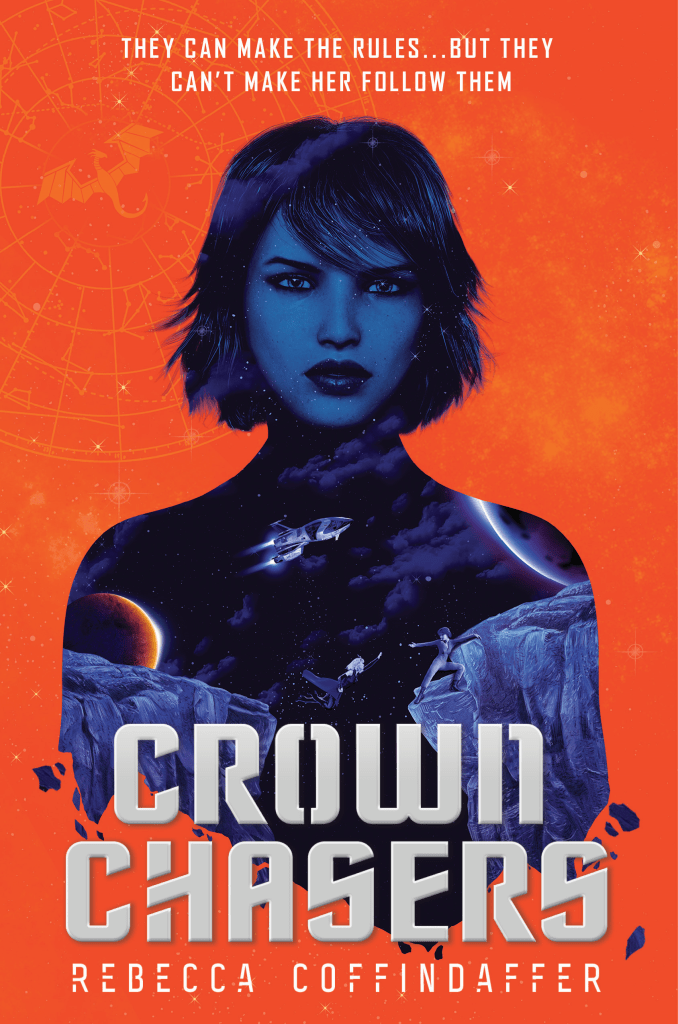
    Crownchasers by Rebecca Coffindaffer

    Where was this book when I was a questioning fifteen year old who loved sci-fi and living in small town Ohio? (I still love sci-fi, don’t get me wrong. But fifteen year old me would have lived for this book!). Alyssa is our pansexual main character and in line for the crown, but she’s been able to squeak out of royal duties. For the time being. But when she learns that her uncle has died and a crownchase has been decreed, Alyssa and her engineer, Hell Monkey, are caught up in the dangerous game that apparently everyone wants to participate in. It’s funny, fast-paced, and thrilling, and it hits all the marks with snarky wordplay, breathless spaceship chases, and fascinating sci-fi worldbuilding.


    Wilder Girls by Rory Power

    It’s one of the most chilling, complex YA books I’ve ever read. And it freaked me out. Power’s debut novel rips into your psyche and leaves you questioning the nature of humanity, the value of a life, and the ties that bind us all. It’s a thriller, a post-apocalyptic/survival story, and a story of friendship to which you’d go to the ends of the Earth for. And the Earth is ending, as climate change affects us all and devastates the landscape in which Hetty and Byatt live. Best friends, they’re inseparable, but when the Tox hits and the teachers at their all-girls school fall ill and then die, the girls are largely left on their own. And then Byatt goes missing and Hetty knows she’ll go to the ends of the earth to find her.


    Halli Starling (she/they) writes fantasy worlds, vampires, and romance, focusing on stories with deep emotional investment. And the occasional bloody bit of violence.

    Website | Twitter