I was thrilled to ask Mira Ong Chua (they/them) some questions about ROADQUEEN: Eternal Roadtrip to Love, a lesbian fake dating graphic novel that had me laughing out loud. Please enjoy this interview with Mira Ong Chua (TwitterInstagram):
Roadqueen: Eternal Roadtrip to Love takes place in a world in which queer ladies go to school on a mountain via motorbike; this amazing creation is indicative of the story as a whole. It’s every lesbian fever dream I didn’t know I had put to page! How did you make this absolutely perfect thing?
When I embark on a new personal project I try to set a challenge for myself in some way, like working within a new format or genre. For ROADQUEEN, it was writing a story where I’d be forced to draw motorcycles. Everything else was based on that premise.
The story is centered around the fake dating trope – one of my favorites! Vega says that she wants to see if Leo can be a decent lesbian. What, in your opinion, makes a lesbian decent?
I don’t want anyone to worry about that.
Leo’s long-suffering friends were very relatable, as was Leo’s desperate (and often failed) attempts to do right by Vega. You balance a super fun light-hearted romp with very realistic character work. How did you develop this skill?
Practice, probably. I was fortunate to have a day job at the time where one of my responsibilities was writing comedy scripts under tight deadlines. I’d often look back and think “Okay, well, I didn’t like how this part came out, so next time I’ll try this instead…” Once you begin building a body of work, you start understanding the things you’re drawn to.
I can’t imagine this story as a heteronormative romance. What do you think are some hallmarks of queer/lesbian love stories?
Rather than looking for hallmarks, I’d like to see queer love stories expand upon every single style and genre and niche imaginable.
What do you hope your readers take away from the story?
I hope readers have fun. And if they’re inspired to go make something of their own, too, that would be great.
Will we ever get more Leo and Vega, or another story set in this world?
Those characters started it all for me, so in a way I feel like they’re in every story I write. As for more stories set in their world…who knows!
I see that you have a new book out (I’m going to be ordering that immediately!) called Goodbye, Battle Princess Peony. Can you tell us a little about it and where people can buy it?
Goodbye, Battle Princess Peony is a gothic fairytale romance about an otherworldly princess falling into the hands of the villain who has always tormented her. It was funded through Kickstarter earlier this year, and is now available exclusively through my online store. And on October 1 I am launching my next book project: a queer 18+ romcom called Vampire Blood Drive, based on a short comic I did of the same name.
To buy Mira Ong Chua’s fabulous books, please visit her online store.
Nicholas Eames (he/him) is the author of Kings of the Wyld and Bloody Rose, the first two books in the hilarious and heartfelt trilogy The Band. I’m grateful that he took the time to speak with me about the musical influences on his work, how he decided to write a book with a queer female protagonist, and what we can expect from the final book in his trilogy. Please enjoy this interview with Nicholas Eames:
The world of Kings of the Wyld and Bloody Rose feel very inspired by D&D and RPGs. What is it about those systems and stories that inspired to you write these books?
The main premise of the series is inspired by rock bands, but there are a lot of similarities between bands and RPG groups, namely, getting together with friends to have a good time. I hope the books capture the spirit of roleplaying with the camaraderie and friendship that can form while playing RPGs with a lot of laughter and drinks.
I’ve played D&D since my first year of high school. I skipped school for the very first time to play D&D and had this epic odyssey getting home, jumping ditches and dodging cops. It was pretty memorable. Right off the bat, I immediately knew I wanted to tell the stories myself. I’ve been DMing ever since.
What motivated you to write the second book in your series with a queer woman as the protagonist?
It wasn’t something I set out to do when I originally wrote it. The main character was a boy named Tom, but halfway into it, I wasn’t liking the way his relationship with the band and Rose in particular was playing out. It was all too cliché. I talked to my editor, and even though it was pretty late in the writing process, I made the main character a girl instead. It wasn’t as easy as changing “he”s to “she”s; every conversation became different. I had to go back to the beginning and start over. It made a night and day difference to the story; Tam’s relationship with Rose felt right, and her relationship with Cura developed. The character just fit better.
When my editor and I were talking about making this change, we knew there would be some pushback. Kings of the Wyld was a book about older white cis dudes, and that appeals to a certain kind of reader who is going to expect more of the same. We knew assholes would gripe about it, and we checked in with each other: Do you care? No – okay, let’s do it. Luckily, people responded pretty well. And ultimately, if you get one teenage girl who writes and says she sees herself in the character, it’s worth it.
I didn’t find it difficult to write from the perspective of a queer woman, but you obviously want to be as careful as you can and not to fall into any stereotypes. With all of my characters, their sexuality doesn’t define them. It’s something that affects them, but it’s not everything. A lot of fantasy will make a big deal out of a gay character; I wanted to make it a fact of life.
I really enjoyed seeing the story through Tam’s perspective, and I would love to know why you chose to make her the protagonist rather than the titular Rose?
I was using famous rock and roll tropes, and Bloody Rose is Almost Famous with a rock journalist on the road with the band. When a band is full of self-destructive assholes, you can’t see that as much when you’re in their shoes. You have to see that from someone else’s perspective. Axl Rose telling his story would just be, “I’m amazing.” And yes, Axl Rose is the inspiration for Rose’s name.
Your female characters are all very diverse and complex, and Cura became one of my favorite characters. The reveal that she has been weaponizing and reliving her trauma through her tattooed summons was really powerful, as was the way she eventually started healing. What inspired you to tell this particular story?
Kings of the Wyld was about the music of the 70s, and Bloody Rose is about 80s music. The characters in the second book had to be larger than life, with the equivalent of the facepaint and big hair in the 80s. The tattoos were originally not about trauma. She had butterfly wings tattooed that would come out, and fireballs tattooed on her arm. I hadn’t gotten through the first scene with her before realizing it sucked. I knew it had to be something more, and with the theme of the self-destructiveness and self-harm that happened with 80s rock, I wanted her story to be about gaining mastery over something that haunts you.
One of my favorite themes is “hurt people hurt people” and the cycle of violence. We see this on both a personal and systemic level in your books. Why did you choose to focus your story on this theme?
I wrote Kings of the Wyld as a standalone, but my publisher asked if it could be a series and obviously I said yes. I knew I was not going to keep the same main characters, which turned into the idea that the series would move through eras of music and involve different generations. You can read them in any order, but the events in one affect what happens in the next. Within each book, the characters carry something forward from the past – like resentment of or love from parents – and consequences are always cascading into the future. That cycle is the point of the whole series.
What can you tell readers about the third book in the series?
It’s called Outlaw Empire, and it’s inspired by 90s music. If I’m picky, it’s about early 90s anti-establishment music: grunge, hip hop, Rage Against the Machine. They were all angry about things. I’m going to keep the book funny and light, relatively, but it will definitely be defined by its music.
There will be some carry over characters. It’s the final book of the series, so anyone who’s alive might be in there at some point. If anyone had kids, you can almost guarantee they’re in there. In fact, you’ve already met three of the four band members. One of the characters is a kobold named Shortknife; he’s mentioned briefly in a Kings of the Wyld scene. By the time I was writing the third book, I knew the group would be made up of both men and monsters, and he was a perfect character to put in. He’s got a really cool power, and he’s that one character who gets to say the fun and ludicrous things (in the first book, that was Moog, then Roderick in Bloody Rose).
It must be a very different experience to write a book on your own in contrast to writing the third book of a series with an already established audience. How has that experience been for you?
Before I wrote Kings of the Wyld, I spent ten years writing a giant grimdark fantasy book. I was racking up rejection letters, and I decided I wanted to write something that was the exact opposite. I didn’t want to get lost in worldbuilding, and I let the story be funny and goofy. Kings of the Wyld was a one in a million idea, and I’m so lucky that I thought of it, and that no one else had thought of it first. Bloody Rose is good, but it was more challenging to write.
I was hellbent on finishing Bloody Rose quickly while Kings of the Wyld came out. I had a rough time dealing with expectations, especially in my own head. Honestly, I had a relatively miserable time writing most of it. There came a point at the end of it when I had also started writing the third book that I just snapped. I knew I couldn’t keep stressing out about it. I would lay in bed and get out a calculator to work out how far behind on my word count I was, and how many days were left until the deadline. But I came to the realization that nothing is worth your mental health, so I took a big step back. Now I’m working toward finding a balance.
Is there anything else readers should know about your books?
I have curated playlists on Spotify (Kings of the Wyld | Bloody Rose), with songs that are a chapter by chapter breakdown for Kings of the Wyld on my website. They’re not imperative, but they add a lot to the books. Certain songs were so important that they unravelled scenes I was stuck on, and you can listen to them and read the chapter beat by beat.
Queen’s song “Too Much Love Will Kill You” is Freecloud’s song, and Meatloaf’s “For Crying Out Loud” is the final battle scene in Bloody Rose. I listened to it 4 or 5 times on the way to work to plot out that scene, right down to a pause for the moment Tam releases her arrow.
What queer and/or nerdy things are you enjoying at the moment?
Gideon the Ninth and Harrow the Ninth. Harrow in particular is bewildering as hell, but worth the read for the writing itself – it’s phenomenal. Both books remind you that you can tell a fantasy story with a contemporary voice.
The Unspoken Name. My god, I love it. It’s great, and the last sentence is absolutely beautiful.
For more information on Nicholas Eames and his work, please visit his website.
It was my absolute pleasure to interview Sarah Blake (she/her) about Naamah. This retelling of the story of Noah from his bisexual wife’s perspective became a fast favorite of mine, and I can’t seem to stop including it in my “BestOf” Lists. Please enjoy this interview with Sarah Blake:
What motivated you to retell the story of Noah?
In my poetry, I was rewriting the stories of women I’d been introduced to in my childhood. In these new stories about them, I wanted them to be women that I would have been drawn to. So many stories of women ended in heartache, sacrifice, punishment, and death. And the happy endings took place at marriage, which seemed a little early to me.
What themes were you keen to explore and make your own?
I wanted to explore hopelessness. That’s what drew me to Naamah. I felt hopeless in my life (in the face of gun violence and rising antisemitism), but her situation was hopeless to the extreme. She was stuck on the water with no end in sight, with every task at hand a difficult one, and with everyone she knew dead. I wanted to offer her things–gifts, respite, love, escape.
And I was drawn to the time period. We have so little evidence about that time, I could imagine it however I wanted. I could explore sexuality, gender, and marriage without any of the social constraints of today. In a book about God trying to get the world right, I could make something closer to the world I wanted.
Naamah is a bisexual woman whose sexuality is complicated but never apologized for. Why was it important for you to create her this way?
I thought this was important, yes, but I also thought it would be the truth! I didn’t feel like I was creating Naamah that way. Instead I felt like I was interrogating what a woman would be like in this time, given these circumstances. That she would be bisexual (or pansexual) seemed beyond question to me. If you strip back all of the terrible things we’re taught about what’s normal and what’s not, about what to have shame about, what to have guilt about, I think what’s left is people experiencing attraction all over the spectrum of sexuality.
You chose to represent Naamah’s experience, in part, through her loss of vision. To me, that evokes so much of the hopelessness you described as a theme – the literal representation of not being able to see anything, let alone something better. What does Naamah’s inability to see the animals on the ark say about her way of coping with immense tragedy?
I’ve always been fascinated with the ways our minds try to protect us–what we forget and what we remember–and how often our mind gets it wrong. Holding onto some terrible memory isn’t actually protecting us from future harm! When I thought about Naamah on the ark, after months had passed, with no end to the flood in sight, I imagined that her mind might try to protect her. And the first thing I thought it might do is strip her of her ability to see them, which, of course, puts her in more danger.
For Naamah, the unseen world (of angels, visions, and memories) becomes more real than the family and animals that are stuck on the boat with her. Why did you focus so much of Naamah’s journey on her interactions with Sarai, with the Metatron, etc.?
The children, still alive under the water, were a gift to Naamah, and to myself. It was hard to face all of the tragedy that the flood posed. Sarai, too, was a gift–a glimpse into the future, some small hope that all of Naamah’s work is not for nothing.
From the start of the book, I knew Naamah would have to talk to God the way that Noah had talked to Him. And I knew that, according to ancient Jewish texts, this would be through the Metatron. (I also love Kevin Smith’s Dogma, and Alan Rickman’s portrayal of the Metatron, so I had to include him!) Building up her encounters with the Metatron allowed me and her to have that final conversation with God.
I am also struck by how much Naamah lives in her body, in her physicality. This is especially evident in her vibrant sex life. These sorts of representations are few and far between, never mind the fact that this is a reimagining of a biblical story. Did you have any pushback when you were creating or selling the book?
This is so important to me, across all of my work. I love bodies, and my body, and I want everyone to love their body. And I especially want people to have the language and the comfort level that they need to talk about their body, be it to their partner(s) or to medical professionals.
Luckily, I didn’t have any pushback. There were many agents who only wanted to represent the book if I removed the sex or the cursing or the whathaveyou. So I waited until I found the right agent! And she knew instantly which editor would love this book and would stand behind every part of it that mattered to me. I was very lucky.
What do you hope readers take away from Naamah?
I hope at the end of the book there’s a sense of power and joy. That’s what I wanted for Naamah and for myself.
Your new book, Clean Air, comes out February 8, 2022. What can you tell Roar Cat Reads readers about it?
I’m so excited about Clean Air. It’s about Izabel, her husband, Kaito, and their daughter, Cami. They live in a future where unfiltered air is unbreathable due to pollen levels. Their lives take place in dozens of airtight domes. At the very start of the book, someone begins slashing those domes, killing the families inside by exposing them to the air. Soon Izabel and her family get tangled up with the killer in a few unpredictable ways, and it’s a pretty wild ride!
For more information on Sarah Blake and her work, please visit her website.
My name is Sean Hagen (he/him), co-host of DMs of Vancouver with Jessy Boros (he/him). I’ve been playing video games almost my entire life, and only somewhat recently got into tabletop RPGs via D&D 5th Edition. Since then I’ve played a whole bunch of games and have plans to play a whole bunch more. You can find me online on Twitter at @seanphagen, Instagram at @seanpatrickhagen, or on my website https://seanhagen.ca !
As one of the hosts of the podcast DMs of Vancouver, you have interviewed a lot of D&D players and DMs. How has your experience of D&D changed as a result of the podcast?
It’s been eye-opening for sure. I think the biggest thing has been realizing that everyone comes to the table for a different reason, and that as a DM you’ve got to be open to that. Some players are there to be social with friends, some are there for story, one of a thousand other reasons, or even a mix of reasons! I think that’s definitely part of the anxiety new DMs feel, wondering how they could possibly run a game that makes all their players happy. What I’ve learned while doing the podcast is that all you can do is be open and honest with your players about what kind of game you want to run, and to ask for honest feedback that you incorporate into your game. There are things you can do ( like running a session zero and using the safety toolkit ) to ensure that everyone is on the same page and having as much of a good time as possible.
Everyone coming to the table with a different set of purposes and experiences is great, because you can run a really fun game that is utterly unique to your table, and that’s mind blowingly awesome to me. Getting to tell an epic story of a group of adventurers facing down death & danger as they go about saving folks sounds like an awesome way to spend time with friends. The downside is that sometimes trying to relate stories of your awesome game to friends or family feels like trying to explain a dream, but that’s a price worth paying, I think!
Also, as a DM I’ve learned that not only is it okay to have parts of the game that excite you more than others, that’s great! For example, the recommended wisdom for new DMs is to start small, maybe only build a town or small province to run a homebrew game in. When building the world for my first homebrew game I went down a rabbit hole of map making and history building. I surfaced after a week with a binder of maps and tables and a calendar with major celestial events to use when running the game. I put, honestly, probably too much work into that binder.
I felt kind of foolish after putting in all that work into building this world, but soon realized that it had an awesome side benefit: I could ad-lib bits of history and art with total confidence, because I had already sketched out so much that I had a whole world inside my head I could draw upon. I ad-libbed all the descriptions for the statues and mosaics in a dwarven tomb because I knew their history and major events (and how dwarves in that world tended to hugely exaggerate their stories, good and bad parts alike). I was able to foreshadow an upcoming plot point as part of a mosaic because I had all that info in my head, waiting to be put to use. I don’t think I’d go that in-depth again in the future, but if I do I know not to worry about it.
We’ve talked to so many DMs with different jobs and experiences and views on D&D – each of their games is going to be unique to that DM. So for any new DMs (or folks thinking of taking the plunge): don’t worry that your game is going to be different from what you’ve seen online or read about; that difference and uniqueness is why your players are going to love YOUR game!
You are a straight man, but you have included many LGBTQ+ people in your podcast and intentionally create safe and welcoming spaces. How did you cultivate this attitude and awareness?
Honestly it’s been on my mind since we started the podcast. In tabletop games, the voices of straight white dudes are kind of predominant. We’re assumed to be the default consumer for tabletop games in most circles. I’d bet that for the majority of people, if you asked them to picture a D&D player they’d probably imagine someone who looks something like me.
If there’s one thing I know from my day job as a programmer it’s this: having a diverse set of folks contributing to the thing you’re making can only make it better. As a straight white dude, I can do all of the reading, come up with checklists, and do my best to make something inclusive – but I’m going to mess up at some point. I’m going to forget something, or not notice something problematic simply because it’s not something I have to deal with as a straight white dude.
I see it all the time in programming; features that should have either never made it to market or been seriously re-worked got released because there were no women, BIPOC, queer, indigenous, or other marginalized voices on the team. There was nobody to point out that this feature would make it easier for an abuser to track someone down, or that feature would make it easier to out someone before they’re ready, and so on.
And the same thing goes for tabletop games. How long has D&D been able to get by with all of the racism baked in simply because they assumed the audience was straight white dudes who didn’t care?
So since we started the podcast, I’ve been doing what I can to educate myself. I keep an eye out for articles about problems like racial coding in D&D to learn about the problematic bits of the hobby and learn how to do better. I’ve also been looking for non-straight, non-white, non-male folks in the tabletop space on Twitter to follow so I can learn from them. I’m also just taking the time to analyze stuff I’m thinking about putting into a game to try and make sure I’m not leaning on problematic tropes.
It’s an ongoing process that requires ongoing work on my part. But it’s worth it! There are so many experiences and viewpoints out there, making the games we play more inclusive will only make them better. Also, there’s more than enough Western fantasy-inspired stuff out there, so getting more diverse folks creating in the tabletop space means more awesome stuff for me to check out. I’ve had more than enough of that in my life.
Give me more of the Afrofuturism from Black Panther. Show me a fantasy world built on the myths and traditions of an Asian culture, written by someone from that culture and not a white dude. Amaze me with a sci-fi world built by folks from South America. What does an urban fantasy game built by someone from India look like? There are so many rich myths and fantastic folklore traditions in the world — time to give them their chance to shine in the spotlight. And we’re starting to see some of that stuff coming out, too. I’ve got my eye on Thirsty Sword Lesbians, because that looks like a super fun game.
What advice do you have for other DMs about how to create safe spaces for queer players at their tables?
Whether you’re trying to make a space fun or safe, it all comes back to one thing: communication. Regardless of what system you’re running, the biggest piece of advice I can give is this: RUN A SESSION ZERO. Your first session should always be a Session Zero, no questions asked. Whether it’s your 500th game of D&D or your first game in a new system, running a session zero has so many benefits.
There’s all the basics of a session zero you’re probably aware of: agreeing on what kind of campaign you’re going to run, what kind of tone, how the party all know each other, and stuff the players would like to achieve ( “I want to earn the trust of a gryphon and learn to ride it!” ). It’s also a chance to go over more mundane stuff, like any house rules for critical successes or failures.
But beyond that, session zero is also where you lay the groundwork for creating a safe space for your players, queer or otherwise.
Lay out all the bits of the safety toolkit, and explain how they’ll be used. Go over stuff like the X card, lines & veils, and decide as a group on what kind of film rating you’re aiming for ( it’s a zany PG-13 adventure with swearing” VS “it’s an R rated horror film with vivid descriptions of body horror” ).
Let players know that if there are topics that should absolutely be avoided that they can say so now or send you an email or text. They don’t need to provide any kind of reason – and don’t ask for one, either. Also, their issue doesn’t have to be related to queerness or otherness. It’s a time for anybody to speak up about stuff you can do to make their experience at your table better.
For example, maybe you’ve got an arachnophobe in your group — so replace the giant spiders with giant snakes. Maybe you’ve got a player with auditory processing issues, so they’d prefer no loud music during battles. Another player might have PTSD from being in a war zone, so you know to try not to make any sudden loud noises without warning them. Anybody might have something that if encountered at the table will lead to a bad experience, and the session zero is your chance to become aware of all of those things so you can avoid them.
You shouldn’t be planning to jump into the campaign during session zero, so you’ve got time to make any tweaks or adjustments.
And yeah, it might take some work, especially if you’re running a module; but it’s worth doing because then you know you’re running a game where everybody at your table is having a fun time. I don’t know about you, but it’s hard to feel good about running a game when someone isn’t having any fun.
And when it comes to running games that deal directly with stuff like racism or sexism, or games where those play a major part? My suggestion is that unless a group of players come to you specifically wanting to play in a game that deals with that kind of stuff, maybe just leave that stuff out entirely.
Okay, so you want to know the best part about doing all this stuff, and doing it right? You don’t have to even know that one or more of your players is queer!
It’s kind of like having someone with undisclosed trauma or PTSD – someone can have something that will trigger them and lead to a real bad time, and it’s pretty easy to avoid those things if you put in literally the tiniest amount of effort.
I think that’s what I find so bizzare about the people who complain about safety tools and running a safe table for everyone. It’s not that much effort, and you get to know you’re running a game that everyone actually is enjoying! I don’t know about you, but I want folks to have a good time when they play at my table. It’d absolutely crush me to find out someone has been spending the last few sessions miserable because of something I said or did without thinking. So to know what stuff to avoid ahead of time means I’m more confident that I’m creating an experience everyone can enjoy.
Because I want to have fun when playing tabletop games, and for me to have fun everyone has to have fun.
Lastly: if you’re a straight white dude and this all sounds annoying, or like a lot of work, or wah wah I’m thin skinned and don’t like new things – either do the work or go back to your cave. I’ll be over here running awesome games with fantastic people and having the time of my life.
In general, what are some of your favorite tips and tricks that you use while DMing, either in the creation stage or while playing?
I think I fall more on the “improv” side of the DM spectrum, so my tips and tricks definitely revolve around prep.
Donjon is indispensable, whether you’re running D&D or not. It’s got generators for all sorts of things, including generating world maps.
Another great system-agnostic tool is RPG Cards. I used this to generate cards for any magic items I was planning to give out, as well as generating a bunch of cards for stuff like potions, scrolls, and whatnot. The Gale Force 9 spell & monster cards are great as well — I’ve got a full set of the base spell cards, which I hand out to my players so they’ve got an easier time referencing their spells than flipping through the Player’s Guide. The only downside is that the Gale Force 9 cards are not exactly cheap. Maybe suggest to your players a deck as a thank you gift after you run a great campaign for them?
Another great tool is RPG Tinker. I use it to generate “captain” NPCs – NPCs that have special abilities so that I can mix up combat a bit. Useful for friendly or enemy NPCs, or if you just need something more than a regular human as the boss of a gang or something.
Lastly, I think something that’s more advice than tip or trick: be aware of when you’re getting burnt out! As a DM, you’re going to have a lot on your plate; not to mention all the stuff from your life away from the table. If you find yourself not looking forward to playing, or find it impossible to get psyched about game night: take some time and examine why you’re feeling that way.
I got burnt out after switching to playing online (which happened before the pandemic, funnily enough). The reason was that due to a quirk of my brain, the maps that I would draw on the battle mat when we were all around the table just weren’t good enough and so I ended up spending hours trying to make maps to use in Roll20. All the extra effort ended up burning me out and I ended the campaign early. They beat the big bad, but rather than having to chase down the lich to find and destroy the phylactery, I just ended the campaign after the boss fight.
Now I know that if I’m going to run a game online it has to be entirely theatre of the mind, otherwise I’ll just get burnt out trying to produce assets for virtual tabletops like Roll20.
So keep an eye on how you’re feeling when you sit down to prep (or if you’re unable to even sit down to do prep!). Your players should be okay with you taking a week or two to recharge so that you can come back to the table full of vim and vigour. And to be frank, if you’re not happy running a game your players aren’t going to have fun playing in it.
I care about you, reader, and want you to enjoy running games; so take care of yourself! It’s important.
What can we expect from DMs of Vancouver in the future?
Good question!
I’m hoping to run a contest or two in the future. I’ve got some goodies from backing Kickstarters at a level where I’d get duplicates, specifically with the idea of giving them away to our listeners.
I’m also hoping that we can continue to showcase non-D&D games. At the start of 2021 we started doing reviews of non-D&D games, and it’s been a blast. I love getting to talk about other systems, and not because I’m bored of D&D. There are so many systems out there that are much better suited to different themes and play styles, so getting to explore those and tell our listeners about them has been a blast. I also have a bad habit of buying rule books before I even know if I’m going to run a game in that system, so I’ve now got an excuse to buy a few more rule books!
We’re also going to continue to do our best to lift up and showcase non-white, non-straight, non-male voices. Whenever I think about this topic, I keep coming back to the Issac Newton quote “If I have seen further it is by standing on the shoulders of Giants”. I think it’s time for white folks (especially white dudes) to realize we’re the giants.
We need to lift up and champion the voices of folks not like ourselves – otherwise the hobby will just stagnate or regress. There’s so many folks out there with awesome ideas. Making the hobby more inclusive doesn’t mean less for us, it means more awesome for everyone! And the more diverse voices who engage with the hobby, the better and stronger our hobby will get.
Thanks so much for giving me some space on your site to blather on! And to you reader, I can’t think of any way to close this out than to do it the same way we close out our episodes of DMs of Vancouver: Hope to see you out there at the gaming table!
Thank you Sean! Everyone should give DMs of Vancouver a listen today.
As a co-host of the podcast DMs of Vancouver, you have interviewed a lot of D&D players and DMs. Has your experience of D&D changed as a result of the podcast?
Yes, and for multiple reasons. Making the show and talking to people is a really valuable experience because you get to hear people talk about how they run a game. I always try to approach each episode with the perspective that there are very few wrong ways to run a game, other than “Don’t be terrible to your players” and “Don’t abuse your players.” I try to come in with an open mind. It helps that when we started the show, I really wanted to learn from people, both how to play and how to DM.
Of course, sometimes I learn useful skills from our guests that I would never want to put into practice. One of our guests (Jane Perella, episode here) is a school teacher who runs a D&D Club for fifteen children! I never want to do that exactly, but I still learned a lot from her. In fact, that’s one of my favorite episodes, and she is going to be on a follow up episode soon!
The other reason my experience of D&D has changed is because I’m on social media so much for the podcast. I keep track of the TTRPG Twitter sphere, and I see a lot of different generational differences. I once saw someone say, “If your DM ever says no to you, that’s bad.” I don’t agree with that, but I also tried to look at it, consider it, and figure out where they were coming from.
Are there any specific examples of things you’ve changed in your D&D style over time?
I learned to use online tools from Sean. Honestly, it’s hard to know how I’ve changed, because I don’t notice when it’s happening. I’m starting a new campaign after a long pandemic pause, so maybe I’ll notice that I’m a completely different DM because it’s been a while.
I do still think about something that Milo Applejohn said about representing neurodivergent characters in your games. They said to include those characters but don’t make that characteristic the whole character. Especially if you’re not a part of that group, make it a detail, but don’t play it a stereotype. Always keep in mind that people are much more than just being neurodivergent, LGBTQ+, etc.
You are a straight white cis man, but you have included many LGBTQ+ guests on DMs of Vancouver. I have been very impressed with how you intentionally create safe and welcoming spaces for queer people. How did you cultivate this attitude and awareness?
Honestly, when Sean and I interviewed our friends for early episodes, we sometimes didn’t know they were queer. As people come out as trans, I try to go back and change their dead names in the episode titles. I also became friends with people who are openly queer as my wife Haley and I became involved with the Vancouver comics community.
When it comes to creating a safe space, we really just want the podcast to be welcoming to everyone who isn’t a raging asshole. We are constantly trying to do better. For instance, during the Black Lives Matter movement, we took a look through our list of guests and realized that we don’t have many POC guests. We want to change that moving forward. It’s funny, when we mentioned this in an episode, someone messaged and asked if we were called out. We weren’t! I’m just on Twitter in leftist spaces, and I paid attention to the conversations people were having. It’s a joke that the old guard of D&D are all straight white cis guys. We are straight white cis men, but we always want to be improving.
What advice do you have for other DMs about how to create safe spaces for queer players at their tables?
I never want to do anything homophobic or transphobic anyway, and most of my regular players are queer. If I do something shitty, I hope that they’ll tell me, “That sucked. Don’t do that.” I think DMs should listen to their players, both verbally and nonverbally. Pay attention if they’re obviously uncomfortable. And if you’re a straight white cis guy, do your research! Find trans or queer creators and read and watch their stuff. People think it’s harder than it is. Just listen, learn, and try.
Specifically, I recommend Kienna Shaw and Lauren Bryant-Monk’s TTRPG Safety Toolkit.
In general, what are some of your favorite DM tips and tricks?
Like I mentioned earlier, I’m starting a new campaign. For the first time, I sat down with my players beforehand to create the world together. I gave them some general details and big picture stuff, but we made the setting as a group. That won’t work for everybody, but if you’re open, I think you should give it a try! You get some really interesting ideas.
Our campaign will be in a post-apocalyptic setting where magic faded with the advancement of technology, but that fell apart and now magic is re-emerging. It’s mostly a desert, but there is a single snowy mountain in the middle of it all. They really helped me put together a complex interesting world. Because it’s the desert, we decided most people would live underground, and someone had the idea that people would live in abandoned parking garages, with property divvied up by the lines there.
When we were creating together, there were a lot of moments when I was thinking, “I’m mad I didn’t think of that; that’s amazing!” I would have come up with something more like a stock fantasy town, and now it’s going to be way more interesting. Of course, I still have a lot of work to do to tie together some disparate ideas, but now my players are already invested in the campaign.
DM Advice from Jessy:
Talk to your players and ask if they’re enjoying the game. If no one is having fun, it’s okay to just stop the campaign! It sucks, but it’s better than dragging on too long. My first campaign ended with me being super burnt out and not wanting to play or DM again. That feeling ended pretty quickly, but there’s no need for it to get to that point.
If you hear an idea that everyone seems to use or love, but you don’t like it, don’t feel like you ought to. I don’t like critical fumble/hit tables, so I don’t use them.
If you are going to use homebrew rules, let your players know before you begin the session or campaign. If you make something up on the spot while playing, talk to the players to agree and then give everyone a grace period to get used to the new rule.
What can we expect from DMs of Vancouver in the future?
Our 100th episode will air in late October. We’re still deciding how we want to celebrate, so stay tuned!
As we move forward, one of the things we want to focus on is playing more games and reviewing them. It’s been a lot of fun when we’ve done it in the past, but they take a lot of work.
Recommendations:
Rolling with Rainbows is an actual play podcast by GM Sophie (Curio on YouTube) where they play a Call of Cthulhu TTRPG, and their episodes are only about an hour long.
Thank you for taking the time to share your stories with Roar Cat Reads, Jessy! Everyone should head over to DMs of Vancouver and check out their nearly 100 episodes.
DC 10 Wisdom (Perception): From Vancouver, Canada, The GM Tim is a busy gaymer: He dungeon masters private games for multiple roleplaying groups. In the before-time he hosted the Quests + Queers board game nights, and DMed Fierce Adventures – a monthly live D&D Drag show which is on hiatus until COVID19 restrictions end. The GM Tim currently streams Star Trek Online and Star Trek: Lost Voyages.
GM Tim, how did you become the GM that you are today?
I was lucky to have a DMing Yoda who taught me to play at the table. We played TTRPG Star Wars, Star Trek, Star Gate…all the Stars! Star Trek was my favorite – that’s my nerd jam. I ran my own Star Wars game with him, and he coached me through it, showing me how to listen to players and roleplay.
I started DMing two groups in Vancouver many years ago; they were weekly games that grew bigger and bigger. The players trusted me enough to – well, not screw around, but to dive into their characters’ backgrounds. One had a whole story created that his mom was evil, and his dad had trained him. I later built up a huge Darth Vader reveal that his dad was the one who was evil and had killed his mom. There were tears at the table! But you can’t do something like that without trust. I have a table rule that I call The Golden Box. Anything players put on their character sheet is untouchable, but if they share anything about their characters in game, like memories, I’m allowed to twist that into a story if I want.
The other group was all women, a mix of cis and trans women. I was super lucky and really honored to run this group for them. It was one of the big wake up calls for me. It was enlightening in how different the sessions were. The dynamics at the table, the way they interacted with NPCs and monsters – it was so different from typical grognard BS. The experience allowed me to be more narrative and creative as a DM.
What do you love about D&D?
When I first started playing, it was total escapism. It was a way to not be me. Today it’s a little bit of that, but I just love it. I don’t know that there is One Thing. The power for storytelling is incredible. Maybe the thing I like most is that you realize you’re more creative than you think you are. You can play with tropes and twists of tropes, and people love when you do that. It’s like someone who thinks they don’t have a mind for math, but soon they’re pulling off complex equations! It showed me that I can write and conceptualize things, and it’s opened a lot of avenues for me.
Have you experienced any differences playing D&D with queer people vs predominantly straight groups?
Oh yeah! In 2017, right as I became “The GM Tim,” I had a group of all queer guys. It’s the most diverse group I’ve ever had, and we all met through Grindr of all places. It was a lot of fun with a lot of jokes and great interplay. The best thing about it was that it was unapologetically gay. There was a complete normalization of queerness with zero worries or concern. We didn’t have to think or second guess ourselves. We didn’t have to worry that the straight guy across from us thought we were hitting on them. There was no body shaming or ageism. In fact, we had a recurring NPC called Mondo the bugbearian (a bugbear barbarian) who wound up dating a player’s rock gnome character. There were a lot of top/bottom jokes. They got so attached to him that when they thought he was dead they went on a quest to find a wish spell to bring him back to life!
I have another group that’s been playing with me for 4 years that is a group of straight cis guys. With all of my groups, I am unapologetically gay, and I make that known on the first night. If you’re not okay with that, the game is not going to go beyond that night. I will make just as many jokes about hot guys as they make about hot girls. Honestly, one of the things I’ve noticed is that straight cis players are less likely to get into relationships in the game if they’re dating someone in real life. Their monogamy extends into fiction. But gay or straight, any group can be just as good at story, and the trust factor between GM and players should exist no matter what. The vibe is just different.
Tell me about the D&D Drag Show you ran before the pandemic. It sounds amazing!
Matt Baume, a colleague in Seattle, started the concept with Queens of Adventure, first in bars and now a podcast. I asked him if I could do something similar in Vancouver. Fierce Adventures is mix of drag show with D&D starring four queens. A couple weeks before the event, we sit down to go over plot outline. We’ve only got two hours to perform, so as a group we agree that we need this and that to happen by this time, and by the end, we have to be there. Then we decide what numbers they want to do. We theme the numbers to what is happening in the game, so they can use the number as a way to defeat a monster, play into a joke, solve a trap, or reveal what the character is thinking.
There is heavy audience interaction. We charge cover, but queens are largely dependent upon tips, so we let the audience purchase bonuses throughout the game. We have someone walk through the audience to sell +2 and -2 cards. Throughout the game, a queen will yell out “I need a two!” and someone can boost their roll. But early on, it changed to applying any time I say a number. “There are five trolls, no three trolls. Okay, there is one troll; nope, negative one trolls…the trolls have joined your group.” The audience can also decide on voices. Once when I asked what draconic sounds like, someone said, “Bad Swedish,” so that’s what happened.
We hope to restart soon, but we’re waiting for venues to open up. Hopefully by the end of the year we’ll be performing again.
How do you create safe nerdy spaces for queer players?
I learned a lot when I did Quests & Queers at Stormcrow Alehouse and Tavern. It was a queer board game night, and everyone working there understood that for the night, the bar was a gay bar. It was hands down a safe space. All the servers wore pronoun tags and we introduced ourselves with our pronouns to normalize it.
What does “safe space” mean, though? It’s very individual. I think it just means making a space comfortable, welcoming, and supportive. I do that for all of my games, even with a bunch of straight guys. If you help someone feel safe, you can teach someone or encourage them to grow as an individual because they’re not on the defensive. When someone is on the defensive, their guard is up and they won’t have an open mind.
Representation can also create safe spaces. When I normalize nonbinary NPCs in my adventures, it makes it easier for players to normalize nonbinary people away from the table. I created a polyamorous relationship between two nonbinary characters with they/them pronouns and a third whose pronouns were he/him for the Adventurer’s League, and one of the nonbinary characters was so popular that they’re in other adventures now! I hope that anyone who is questioning their gender identity feels welcomed and safe because that character exists.
What advice would you give to someone who wants to try playing or DMing D&D?
If you want to start playing D&D, there are a lot of DMs for hire [like The GM Tim himself]. You can also look for D&D podcasts with discord channels for “looking for games.”
If you want to DM, try to remember that it is not some mystical role. DMs are players in the game too. Like with all games, you play and get better as you go. If you think you need to be ready for anything, there’s no way that’s going to happen. Just grab an adventure in Adventurer’s League – they’ve got everything you need to get started.
If you want to create your own adventure, grab a piece of paper and write down a couple of encounters. The easiest hook is to just “collect the thing from the forest.” What are they going to fight? Maybe it’s the ghost of the last person who tried to get the treasure. Throw in some traps – quicksand is a good one – and maybe some monkeys who cause havoc and try to steal your stuff as you go by. The process doesn’t have to be complex.
Tips and Tricks from The GM Tim!
If a character gets knocked out during a battle, give them something to do. Usually I give them the monster’s stat sheet and a note with a plot point that needs to happen and let them go! This accomplishes two things: it keeps them invested in the game, and it gives them a small taste of being a DM. Of course, if they don’t want to, they can just roll death saves and wait.
Subtly take notes of what your players think is going to happen in the campaign and adjust accordingly. If you’ve planned for the Big Bad to be an Umber Hulk but they’re convinced a Black Dragon is behind everything, they’ve just given you a storyline that they are invested in. Give someone the opportunity to say, “I KNEW IT!”
A good test to see whether you like creating adventures is to use the charts on pages 99-101 of the Dungeon Master’s Guide to create a dungeon. As you roll for Dungeon Location, Creator, Purpose, and History, a story will probably start to take form. [Note: The GM Tim walked me through this exercise, and we created a dungeon stronghold beneath a mesa, ruled by elves who had moved there to escape an ancient green dragon who had corrupted the nearby forest. It was a surprisingly easy way to create the foundation of an entire adventure or even campaign.]
You run a book club for gamers: How does it work? What queer nerdy books do you recommend?
I wanted to have more ideas for my adventures, so I went to books for inspiration. I started re-reading the Dragonlance Chronicles. While it has a special place as my first foray into fantasy and the catalyst for all this, they are a product of their time, and it’s an inherently white story. For so long, white men (J.R.R. Tolkien, C.S. Lewis, A.A. Milne) told us what fantasy is. I wanted to change that, so I made a list of books called Appendix Lit and formed a book club around them. Our first book was TheCandle and the Flame by Nafiza Azad, a Canadian author. Ten months in, we are reading our first white male author with Agency by William Gibson. I made the list 50% female identifying, 50% BIPOC, and at least ⅓ Canadian. The next list I make will be even more diverse.
We read speculative fiction, historical fiction, and science fiction. My hope is that the stories we read inspire you as a DM or player to come up with different ways to see the world. One of my favorites that we’ve read so far is Stealing Thunder by Alina Boyden. The author is a trans woman with an anthropology doctorate in Indian/Pakistani studies, and the book has a trans main character.
If you want to join us, you can check out the dates for our book club conversations here and join the discord to chat here.
Thank you so much for a fun conversation, The GM Tim! I’m reading Agency and looking forward to the book club on August 14th. I hope some Roar Cat Reads readers will join in too!
Victoria Fraser (she/her) is a freelance writer and podcaster. She has worked on several podcasts, most notably Boardgame B*tch where she reviews board games and has all sorts of fun board game badassery.
I recently had the privilege to be a guest on Boardgame B*tch to discuss one of my favorite table top games: Wingspan! Check out the episode now on the Podcast delivery site of your choice: Apple | Spotify | Google Podcast.I wanted to get to know Victoria a little more, and she kindly agreed to chat with me about her history playing games and some recommendations of board games that I’m eager to try out!
Victoria, you host the podcast Boardgame B*tch where you discuss the rules and playability of table top board games. What prompted you to create Boardgame B*tch?
I got into podcasting during university through the UBC Creative Writing program. We had to focus on three different genres; although I mostly took classes in children’s writing, comics, and poetry, during the last semester I took a podcasting class. Honestly, I hadn’t really listened to a podcast before that class! I knew about radio plays and radio dramas, though, so I thought it would be fun.
That class made me fall in love with podcasts! My classmates recommended some of their favorites, like “Spirits,” “Serial,” and “The Adventure Zone.” We had to make practice podcasts for school, which made me want to start a podcast of my own. From the very beginning, I wanted to host a podcast about board games because they’re one of my favorite things to talk about. But it wasn’t the right timing at that point. Instead, two years ago, my friend Allie and I startedI Like Your Dress where we reviewed Vancouver-based restaurants, festivals, and other things. That’s how I became connected to the Cave Goblin Network.
A year ago I started freelancing and focusing on my business, and that left less time for our podcast. I stepped away, but couldn’t stop dreaming about that original idea of a board game podcast. When my life felt a little more balanced, I decided to give it a try. Boardgame B*tch was on Patreon for a few months before going fully live in April 2021, and I’ve just started my second season!
It sounds like board games have been important to you for a long time. What is your history with board games?
I like to say I’m a third generation gamer! My grandmother played bridge, and my mom loves playing games. In fact, she bought a bunch of D&D books in the 80s but couldn’t find anyone to play with. I taught her how to play a couple years ago as a Mother’s Day present! I grew up playing cards, poker, board games, and Euro games with my family all the time. I have a picture of myself when I’m 2 or 3, and I’m rolling dice, looking super fucking pumped; I still play “Dice” (a simplified version of Yahtzee) with my family. Every Christmas we all get board games as gifts and then we spend Boxing Day playing them.
That’s amazing! And what would you say is your favorite board game currently?
I’m glad you said “currently”! It changes all the time, but right now I would say Tokaido. It’s this great game set in Japan where players are tourists traveling the Tokaido road taking pictures and buying souvenirs. It’s a very peaceful board game that is artistically very lovely and has cool mechanics and movements.
I also love party games! Even if they’re mechanically simple, they’re so much fun socially. Rules are great, and I love a complicated game, but sometime you just want some quick fun with your friends. I especially loveSuperfight, a game where you create fighters in a ring with weird traits and Cult Following, where you’re all cult leaders trying to start a cult. You have to create a story and recruit more players to join your cult than someone else’s.
I have not heard of any of those, but I’m definitely going to check them out! If someone wants to get into the world of board games and table top games, what are 2-3 options you would suggest as starter games?
I think it’s important to introduce people to games with something simple and fun. You want a little bit of complexity, but not too much!
Citadels. It’s an easily transportable card game that only takes about an hour to finish, and it doesn’t take up much space. It’s a game with a lot of player interaction, and it’s set in a Medieval setting, so people can easily latch on to that. It’s not new, but it holds up!
Betrayal at the House on the Hill. This is a game that is good for storytelling. It’s one of the best co-op games, so it’s great for people who are learning and want to work together. It’s a good middle game – not so complex that it’s impossible, but it’s not so easy that it’s boring.
King of Tokyo. This is a dice game that is pretty simple but gets more complicated with expansions, which makes it great to slowly build up for people.
I love all of your recommendations! If someone wants to hear more of your thoughts on board games, which podcast episode would you suggest people start with if they want to start listening to Boardgame B*tch (other than my episode on Wingspan, obviously)?
I really love the “Hive” episode. It’s a two player game, and my guest and I had a really fun conversation goofing off and talking about bugs. Otherwise, scroll through the options and choose the one that resonates with you!
What can we expect to see from Boardgame B*tch in the future?
When I first launched my podcast, it was a solo show. Now I am focusing on board game interviews and board game conversations with guests. I’m branching out a beyond just reviews to have episode about things like board game design and D&D etiquette. I would also like to someday do episodes about conventions outside of Vancouver!
One last question: Roar Cat Reads is a blog for queer, nerdy content. What’s your favorite nerdy book of the moment?
Welcome to Mina’s: A Diner Comic Anthology by Cloudscape Comics. It’s a Kickstarter project that I backed because I know Haley Boros, one of the creators, and the premise sounds really cool. It takes place over time but always centered on the same diner in Vancouver. A couple of the chapters focus on queer couples!
I also really like Sidequesting, a fantasy podcast about avoiding the main plot. It’s not queer, I don’t think, but it is very nerdy and fun.
Thank you so much for talking board games with me, Victoria!
If you would like to see more of what Victoria is up to, check out her Bio and her Podcast. Listen, subscribe, and share it with a friend!
Allonté Barakat (he/they) is a burgeoning content creator, GM/DM, player, and voice actor. When they grow up they hope to meld the power of gaming with the healing of therapy. Best known as Kryst Z’Grande, he evolved his talents in pursuits of elevating more voices. Be sure to look out at their social media for a new upcoming podcast and audio drama!
Allonté, we first got to know you when you played in Rachel’s D&D session for Andrea’s Adventurers Charity RPG Livestream. You were enthusiastic, smart, and your character had a mechanical cat – obviously we liked you!
I liked you too! Also, I had fun with the party! I feel like I lucked out with your DM/GM style. Early on I remember you saying, “The collaborative aspect is my favorite part, if as the GM I haven’t spoken in 20 mins because my players are planning a talent show to boost the morale of their pirate crew, I am happy!” This is such a beautiful and refreshing sentiment, you gave us the freedom to be weird. If one is not weird, they might be boring, at least that’s my personal philosophy. So much platinum coins to you and/or maybe some churu for the kitten!
When did you first play Dungeons and Dragons? What was the experience like?
I played Dungeons and Dragons in the late 3.5 era… for a class! I dreamed of being a game designer and in the pursuit of an Interactive Media and Game Design degree, I found myself in a fun storytelling class. Until then, I didn’t know what it was or what it could be. The experience as a whole was interesting. I honestly can’t say I enjoyed it until a story moment just seemed to align like a constellation of badassary! Through an obscuring fog, facing imminent death from a plague rat in the musty murky sewers, a single, last-ditch spinning keen-edge of a dagger seemed to part this occlusion sea. This desperate edge pierced the skull of the mammoth plague beast and one-hit-K.O.’d it, saving our party (and our session). I walked away from that experience changed, knowing that a TTRPG has the power to evoke emotions in an ever-lasting way.
I went on to try to reclaim and recreate this experience but I have often gone up against huge gate-keeping walls. So many people like to tell others the “correct way to play” or hold on too strong to strict ideals that somehow a world where literally and figuratively anything could happen has to be a carbon copy of the real one with all its woes. No thanks. So I took a long break until about 2-3 years ago where I performed, or live-played, a character in 5e for an audience!
What is your favorite part of playing D&D?
I don’t know if I can just pick one thing! There is something so attractive about embodying, exploring, and experiencing a world that is (hopefully) so much better than our real one. I am gay. I am a person of color. This world is not, shall we say, often kind. Being in these worlds gives me hope. In that hope, I have seen the loving power to change people, to slay demons within and without, and have some fun! From all these experiences I want to see us bring these ideals back to the real world.
In a slightly less existential way, I would have to say I love pushing the boundaries of what things could happen, using my character and abilities in ways that are unexpected. As some would put more succinctly, the rule of cool. Say we were on a boat. The night is a heavy backdrop of deep night, with a single pale light source in the sky. Fog rolls in from all sides making it neigh impossible to decipher East from North from South-West. Why can’t I, as a Sorcerer, use Absorb Elements in a ritualistic dance to bring that fog into me as my compatriots light the way forward and steer? Or perhaps we should do a one-on-one duel, against a mighty wizard. My back against the wall, the arena engulf in flames, and I am inches away from death. I steal their prized tome, with a lifetime of lifeworks inside, and threaten to burn it unless they surrender. Are these ways of existing and playing bad D&D? I for sure don’t think so! (P.S. I’ve done all those things in previous games!)
Have you experienced any differences playing D&D with queer folx vs. predominantly straight groups?
I. Need. To. Play. With. More. Queer. Beings! It is a massive difference. So many straight groups come with this baggage-notion that there is one path, one right way to play, and/or one way to be. There may also be the dreaded, I’m going to play as [insert marginalized group or proxy] without understanding the depths or doing the work. Don’t even get me started on the dangerous implicit biases we have all seen or experienced firsthand. This is not why we play!
There may be that living and fighting for a life that is different from the majority of others gives us marginalized individuals an emotional superpower. I have had more fun, connected with, been accepted by, and every other positive and loving attribute possible by other queer gaymers! Queer people bring the love and space for you to be you at whatever stage of being you are at and willing to pull you towards the light. We are guardians of the ideal world. I love that prejudice has no place in our spaces, or at least not without proper talking beforehand and aftercare.
What makes a nerdy space feel safe to you as a queer person? Are there any (positive or negative) signals that you look for?
A quick visual cue for me is, how homogenous does space looks from the outside? Are there wonderfully out loud queer folk? Are there people of color? Are there women? If none of these exist, you should probably run away screaming. Well, use your best judgment. I have, a countless many times, had to be a pioneer of various spaces so that others can feel comfortable. I also say for joining a new group, or even looking at various content, look at the legacy. If women, people of color, or queer people are being cycled through or do not wish to come back to the game, while other more “palatable” people remain, there are core issues there that do not deserve your awesomeness.
So this is the part where I have to confess to you, that when I joined the charity stream, you were my absolute first choice in being my GM/DM! I distinctly remember making an audible sigh of relief when I got in your game, I naively knew, well hoped, that the wall of “this is what this is” didn’t exist. That let me be free to be the Fyrrin Brande possible in our game. By the way, my question to you is one unanswered in game, what does transmutation magic taste like?
It’s like eating a handful of every flavor beans – you don’t know what you’re going to get, and it changes as you eat them!
That being said, the positive signals are always openness, understanding, and making good decisions that keep our human need for connection strong. If people are making non-selfish choices, are being inclusive, and can recognize your human needs, then set some gaming roots!
You were a part of a live-play podcast. How did you become involved in that project? What were the highlights and lowlights?
I was, indeed. Truth be told, it was a bit out of the left field. A friend of mine I played card games with suggested I try out for this project that started from nothing. I never thought of myself as charismatic or anything but I figured why not try. I didn’t think I’d end up being first-choice casting. In my tenure as the Crystalline Sorcerer + Creation Bard, Kryst Z’Grande, I set out to tell a story that means something, so that even if the project failed, I did something that maybe someone out there could connect to and not feel alone. From the onset, I wanted to tell a story about trauma, that you, the listener, can know in the back of your mind that no matter what was done to you, you can and will overcome. It was also important to play a queer person of color because our stories don’t get told. We do not get to be heroes, just sacrifices. I also confess I played an idealized self. I think in some way everyone does that, they bring a lot of themselves into whatever they play.
My highlight is experiencing the power this story had. There were so many beautiful messages from many beautiful souls about being inspired, heard, seen, that I got to help people through tough times being someone they could reach out to. In that, I think there exists my lowlight, that even throughout all the good, through what was a great character performance (I hope), in my opinion, reality became just another sad tale-reflection of issues marginalized people face to this day.
Do you have any tips or advice for people who want to try playing D&D? Any tools that you recommend?
Dive. Right. In! There is no true right or wrong way to play! If you are new, grab your friends and do a one-shot amongst yourselves. You can also hire an understanding GM to run a game for you if that seems daunting. Be willing to have conversations before and after the game, not just about expectation but about actions that happen in game. Give kiddos the rule of cool or have a conversation about why a choice was harmful to others. A party of adventurers in a TTRPG is most often a reflection of the real-life relationship connections at the table, so if you want a strong party, build strong friendships.
For the more experienced folk, go out and play more games, more TTRPG, more everything! D&D is great but by no means perfect. Remember this is a world where literally anything can happen, so make it happen. Dust off those mechanics where you can, for example, fail a roll but with some advantage! There are some great tools out there like DnDBeyond to make characters, monsters, NPCs, and see other homebrews. Foundry or Roll20 for playing the game with, quite literally, all the bells and whistles. Check out r/dndmaps, Inkarnate, Watabou, to find or make maps. MyNoise.net to play around with ambient music/noise to get the room feeling like your scene or setting. 2MinuteTabletop is also great for tokens.
So to all you wonderful, beautiful, creative souls, get out there and get gaming!
Thank you, Allonté! And thank you for leaving us a picture of you with your oldest kitten, Sir Winston.If you want more of Allonté, check out their linktree.
A
If you are a queer person who plays or DMs/GMs Dungeons and Dragons and you would like to be interviewed, please send me a message at roarcatreads@gmail.com.
It’s Pride Month! To celebrate, Jess and Tricia talk about their experiences as women who identify as bisexual and/or queer. Having come out later in life, they find themselves dealing with very similar issues of internalized biphobia despite the fact that Tricia is dating a woman and Jess is dating a man.
Biphobia and Other Struggles of Queer Women
Realizing We Were Queer
Jess:
I came out as bi when I was 28 (which I would later change to queer because the fluidity and nuance of sexuality fit in much better with my idea of being queer rather than being bi) and also wrote a blog about it. I didn’t begin to seriously think about my sexuality being something other than straight until I met Tricia, who had just begun her questioning. Everything she said felt familiar and something that had been running through my head. I even remember the first time we met over pizza and listening to her story I literally thought “… Am I bi?” As this revelation came on the heels of my deconstruction from Christianity, I didn’t want to invest too much energy and thought process into a new change in my life and so I moved on with the occasional nagging thought at the back of my head reminding me that I had to eventually dive into this. I remember experiencing sexual attraction to women but chalked it up to just noticing their beauty and since I never had a crush on a girl (as we later talk about sexual vs. romantic attraction) I was hesitant to take this label on, letting it further feed into my internalized biphobia.
Tricia:
I came out as queer when I was 30 (I wrote an entire post about it here). Although I had had “friendship crushes” on women since childhood, it wasn’t until I was drawn to a lesbian – someone who might feel something romantic back – that I stopped to think, “What if these are just plain crushes?” It was both a shocking revelation and a comfortable one, as so many of my past decisions now made sense (That’s why I felt so strongly about not using pronouns to describe potential partners!). My coming out was tied specifically to one person – the woman I had fallen in love with. This made things easier in some ways, as I had a concrete person to point to and say, “I’m queer because I’m with her!” but it also made it hard to understand and explore the more nuanced parts of my sexuality. Am I gay? Bisexual? Queer? Does it even matter?
Sexual Attraction vs. Romantic Attraction
Jess:
Something that I had not been prepared for when coming out was making a distinction between sexual and romantic attraction. Looking back, this should have been pretty obvious as there have always been men that I may have been sexually attracted to but not romantically. I have considered the idea of dating a woman or a AFAB non-binary person and have been having a hard time imagining what it would be like. I have to ask myself whether that may be because of a lack of romantic attraction or yet another example of internalized bi-phobia. I have never had an actual crush on anyone other than a man but is that because it genuinely didn’t happen or because I have always been told that this wouldn’t even be a possibility?
Tricia:
So much cultural emphasis is placed on sexual attraction that it was easy for me to ignore the romantic attractions I have felt toward women my whole life. However, even my “sexual attraction” to men throughout my life was mostly reserved for fictional characters (Loki!) or gay men (sigh). For a while I thought I was asexual, incapable of the kind of fiery lust that other people described. I was also a deeply satisfied rules follower in a Christian tradition that placed lust at the top of the sins list, so I was good at pushing down anything that felt vaguely sexual. When I was first considering whether I was bisexual or queer, I would stare at people’s butts with scientific focus to determine if the person’s sex affected the level of attraction that I felt. My anxious overthinking still means that I’m not entirely comfortable as a sexual being, so apart from my actual relationship, the way I feel about everyone else is largely a giant question mark. In a lot of ways, I think the label “demisexual” fits me pretty well. If I’m emotionally and romantically attracted to someone, they then become sexually attractive to me.
Attraction or Admiration?
Jess:
Do I want to be with her or do I just want to be her? There are many times I have wished I was someone else and it’s easy, as a woman, to compare yourself to other women as we have been taught to do since we were little. There will always be someone who is smarter, funnier, cuter, hotter, more talented, more outgoing, etc. For someone who is bi it gets infinitely harder to figure out, however, if you just want the person’s traits as your own or if you can see yourself being intimate with them, especially if it’s a person whose gender presentation is the same as yours. Are you maybe actually just envious? Do you wish you could trade lives with them? Or is there a part of you that wants to explore things with them together? Of course this has a lot to do with your own self-esteem. The more secure you are with yourself I imagine the easier it is to figure out the distinction.
Tricia:
I second everything Jess said! It makes me laugh now, the number of times I looked at a woman with metaphorical heart eyes and thought, “She is so cool” with no queer awareness. Maybe straight women do this? But there is truly such a fine line between admiring a woman, wanting to be around her all the time, wanting to know her thoughts, feelings, opinions, desires, and…hey, that’s a straight up crush! Compulsory heteronormativity is a powerful drug.
Queer vs. Straight Aesthetic
Jess:
Another way biphobia shows up, especially in today’s media, is the pressure to conform your aesthetic to your sexuality. You’ve heard the stereotypes of bisexuals: the cuffed jeans, the flannels, the coloured hair, the septum piercings, the weird way we supposedly sit in chairs, etc. Some of that I genuinely enjoy (especially contorting my body on a chair) but, at the same time, I wonder if any of this is actually me and not a version that is begging to be accepted by the queer community and desperately wanting to fit in instead, particularly as I am femme presenting. Especially as someone who is in a straight passing relationship with a man, I have found it important to “flaunt my queerness” so as to not get swallowed up in heteronormativity. “I don’t want to look like just another straight woman” is an awful thought I’ve had before. But what if my partner doesn’t want me to look “too queer”? Am I still going to be attractive? Which pressure do I give in to? Looking more straight or looking more queer? But then again, is it necessarily wrong to adopt a cultural aesthetic for the purpose of identifying yourself to the community? Is it virtue signalling? I mean, just like styles, sexuality is also fluid, on the spectrum, and ever changing, so is it actually an issue of biphobia? I don’t have an answer but I certainly think it’s a question worth asking.
Tricia:
I am also femme presenting; although I love a good bulky boot, I would ideally pair them with a flowy dress. When I started dating a woman and becoming a part of the queer community in Vancouver, I felt a lot of internal pressure to dress more “queer.” What did that mean? Cutting my nails (practical and queer-signaling!), mostly. I went without makeup for a while, but I hated it and quickly went back to my trusty eyeliner. The combination of queer freedom and COVID freedom meant I finally got around to dying my hair varying shades of pink and purple. But mostly, I look the same as I always did. Do I want an undercut? Yes! And cutoff jeans and flannel shirts and all the rest, but every time I dress a little more butch, it feels like a costume. No one has ever pressured me to “look more gay,” so I know this is my own issue. I do think I’d like to find spaces to explore a more queer aesthetic, but ultimately, I’ve always been me, and dating a woman doesn’t change that.
Language – How Do We Define Ourselves?
Jess:
I find the discourse on labels especially the difference between bi, pan, and queer exhausting. I have come to my own conclusion that there isn’t one universal definition of these sexualities and the fact that there is infighting within the queer community about this makes it a lot more difficult to find actual roots in this community. My own evolution of language has taken me from bi-curious to bisexual to queer because I refuse to pinpoint my incredibly fluid sexuality and find that the umbrella term “queer” fits best. I have used “gay” before but that seems to be another sore point in the LGBTQIA group especially when used by bisexuals.
Tricia:
I prefer to go by queer or bisexual, though I also don’t often correct people who label me a lesbian. I don’t know if I’ll ever FULLY know where I fall on the Kinsey scale since I don’t plan on having sex with a man (or woman) while in a relationship with my girlfriend. There are definitely times when I wish I had the team solidarity of choosing one definitive label – think of all the merch I could buy if I knew my specific pride flag colours! But mostly I’m just anything that is “not straight,” and that’s good enough.
Bisexual Gatekeeping
Jess:
There is the age-old question of: Can you call yourself bisexual if you haven’t actually had certain experiences? This one has haunted me the most as I was in the beginning stages of figuring out my sexuality. I had casually kissed girls before but nothing ever went beyond that so how could I know that I was into them? I felt invalidated every time I saw discourse about “straight passing” relationships and how you’re not actually queer if you’re dating someone who is not the same gender as you. “You have no right to call yourself part of this community.” I am certainly privileged due to the fact that I can still explore my bisexuality because my straight, male partner and I are non-monogamous, but what about those individuals who, for whatever reason, are not able to explore that for themselves? Does that invalidate their queerness? Absolutely not. If someone who is straight takes a vow of celibacy we wouldn’t necessarily call them ace, would we? They might still have sexual desires towards the opposite gender, but simply choose to not act on it. Bisexuals without experiences are still bisexuals and I wish this discourse would end already.
Tricia:
I am in the exact opposite camp as Jess. I am technically a “gold star lesbian,” though I do not identify as a lesbian. I had intense crushes on guys throughout my life; does the fact that I almost always chose men who were unattainable mean I was subconsciously saving myself from having to actually be sexual with a man? I will never know for sure, and it ultimately doesn’t matter. I still think those experiences were meaningful and valid, and I remember them with much fondness and angst. If I never had sex with a man, and I don’t plan to in the future, why label myself bisexual or queer rather than lesbian? For me, it simply comes down to the fact that “lesbian” just doesn’t feel like it fully fits me. Honestly, the whole conversation of labels exhausts me, and I can only assume other people who find themselves outside of the binary often feel the same. I think that we are moving towards a space that allows for nuance and even conflicting feelings/experiences, and I hope that this continues. Sexuality is a complicated beast; I’m all for trying to understand it, but we should respect that we will probably never know all of its contours and iterations and be kind to people who experience sexuality differently than we do!
There has never been a better time to be a queer Dungeons and Dragons fan, but let’s be honest: not all groups are safe or inclusive. In this blog series, I ask queer D&D fans about their experiences playing TTRPGs and what they think could be done to make the gaming experience better for all.
I first discovered Diana (she/they/he) in the Adventuring Academy podcast episode “Give People More Room (with Diana Gaeta).” I loved their unapologetic preference for story and character over gaming rules, and when I learned that they had a podcast of their own, I immediately binged the entire catalogue of Femsplained (my particular favorites are the episodes on Dragon Age, Indie TTRPGs, and of course, Black Sails!). I’m so honoured that Diana agreed to be interviewed for Roar Cat Reads, so without any further ado:
Welcome, Diana!
I’m Diana Gaeta aka Superdillin, a tabletop RPG creator, entertainer, and event organizer. I published a 5e compatible setting based on Neverland from Peter Pan and stream LOTS of tabletop games.
Diana, when did you first play Dungeons and Dragons?
I first saw a game being played when I was in middle school, but was told it was boys only, so I angrily avoided the game for years after that. I think the first time I played D&D specifically was when I was just out of college.
Do you currently play D&D? What is a recent memorable moment that you would like to share?
I do still play D&D with my home game group that’s been going for about 3-4 years now. Every moment with them is special, but one in particular is the first time I ever saw this group get deeply invested in their characters. They were all new to TTRPGs in general, and in the beginning everything was very silly and loosey-goosey. Then I reintroduced a character from someone’s backstory, and for the first time saw them start pacing around my living room, trying to figure out what to do, and what to say. It was like a light switch flipping on.
Have you experienced any differences playing D&D with queer folx vs. straight groups?
In general, yes. I don’t love being fully openly queer or playing characters that are in groups where I’m the only queer person. It feels too vulnerable and uncomfortable, even when I love and trust the folks I’m playing with.
When you DM, how do you create a queer-friendly atmosphere in your group?
Step one is being loud and upfront about my own identity, that tends to drive away people that won’t contribute to a safe table. Next is including pronoun introductions as a normal part of the character creation process for everyone. Safety tools and checklists also help.
What is your favorite aspect of playing D&D?
Getting to explore new parts of myself and to create stories with people.
What is your favorite aspect of DMing?
Seeing the excitement on people’s faces when you surprise them with something cool, or when you say yes to the cool-as-hell thing they just thought up, or when they figure out the mystery you put together.
Do you have any tips or advice for people who want to try playing or DMing D&D? Any tools that you recommend?
Random generators got me through my first year of DMing. Donjon.bin.sh is the greatest thing on earth.
And finally, if you could change one thing about Dungeons and Dragons culture, what would it be?
Wizards of the Coasts entire upper management team needs an overhaul, and they need to actually vocalize dissent against the “old guard” who harass people in the hobby (and in the MtG hobby as well).
Thank you, Diana!
If you are a queer person who plays or DMs/GMs Dungeons and Dragons and you would like to be interviewed, please send me a message at roarcatreads@gmail.com.
May is Celiac Awareness Month, and my good friend Arica Sharma is an advocate who supports Celiacs with resources and educates non-Celiacs like me in how to be good allies. If you have Celiac Disease or know someone who does, I think you will find this interview with Arica illuminating!
What is a day in the life like for you as you live with Celiac Disease?
What’s a day like for you? Ha ha, if I’m honest, my day regarding food is the same as anyone’s day regarding food! You figure, what am I going to eat? What’s at home? If I go grocery shopping, then I can eat at home! What are my options around town? There’s an App for that – findmeglutenfree.com because I try my best to get take-out from kitchens that have dedicated GF prep stations.
I think what makes a Celiac’s day a hurdle most is on a social level. When you’re hanging out with others who are also hungry, one person can suggest pizza, and it’s a sure winner. But I’ll stand there with an immediate checklist in my head:
Will they have GF dough? Totally possible!
Will they have a dedicated GF kitchen? Unlikely.
Will they maybe have a section and tools for GF food prep? Totally possible!
Will they use the same oven? Oh – I’ll have to ask that too.
Will they know which sauces, marinades, dips, and ingredients have gluten as filler or thickener? Ah man, they’re gonna hate talking to me.
Anxiety!
There will definitely be a salad. With no croutons, or dressing.
Meanwhile, other suggestions are thrown about, and eventually all eyes will rest on me, and someone will say, “Arica should pick!” Newly diagnosed Arica would have told everyone to eat what they want, and that she would be fine. Today, I much prefer to have others BEND TO MY WILL and we all try something new!
What is something you wish more people knew about Celiac Disease?
It’s not an allergy!
An auto immune disorder is the body attacking a part of itself. Just like with diabetes where the pancreas is affected, or rheumatoid arthritis that attacks joints, or Lupus attacking almost everything, in Celiac Disease the intestines are attacked. And like all of the above, if left untreated it leads to a host of other issues.
That’s why labelling is so important! Wheat is a common allergen, that’s why you see so many “may contain wheat” statements. That’s the company choosing to let you know that there isn’t a wheat free environment. That’s also why sometimes it’ll say “may contain wheat and gluten” in the same line, even if all the ingredients are gluten free. I really appreciate a company that takes the time to let me know my health matters to them, not just my money!
Raising awareness and funds for research to support the charity is a personal priority for me. I’m a talker and have zero hesitation discussing Celiac Disease with anyone who will listen!
Right now I am the co-editor of our newsletter, which has a range of Celiac related reading from medical research, interviews, first-person articles, how-to, and of course, recipes.
I was lucky enough to have worked at the last GF Expo in 2020, interacting with people who are newly diagnosed, as well as those with over 50 years of Celiac experience. It was an absolute life changer.
Having been told to “Never eat lunch alone,” I ventured to the kitchen at work and met Cynthia, who happens to be on the BC Chapter Board! Guess what magic happened next?
What resources does CCABC offer to those with Celiac Disease?
Our website and socials offer a host of resources! From safe places to eat in BC, FAQs, how-to tax deductions, and education for newly diagnosed folks. And of course recipes.
What is your favorite gluten-free restaurant in Vancouver?
What do you wish you saw more of in restaurants in Vancouver?
A minimum standard of education would be great at restaurants. It would be a dream come true for all restaurants to know what Gluten is because they have to. For now, you can get certified if you want to here: https://www.brcgs.com/
How can people support CCABC and their friends or family members with Celiac Disease?
Advocacy is so important! Taking a slight interest in others can go such a long way! Like with any issue that affects a large population, it’s important to inform yourself. Use #ItsNotPretend throughout the month of May for Celiac Awareness! Spread the word, learn what others have to say, and try GF recipes for yourself at home because why not add a variety of flours and grains to your diet? Order the GF option at your local café, try the new gluten free bakery nearby. Every time you make a conscious effort to eat GF you help a Celiac!
Roar Cat Reads is a blog for queer, nerdy content. What’s your favorite nerdy book at the moment?
I am reading Eisenhorn by Dan Abnett right now! It’s a Warhammer 40,000 classic, and I’m totally digging it. Humankind hangs in the balance! Space, guns, heretics, alien conspiracies…. There’s talk of a TV show which could be pretty fabulous.
What social media or events would you like to plug?
May is Celiac Awareness Month, and we have weekly contests! I have been reaching out to local businesses and communities to raise awareness and increase participation. For example, there’s this great Queer Blog that is going to feature an interview about Celiac Disease!
On Saturday, March 27 and Sunday, March 28, Terminal City Tabletop Convention (TCTC) hosted its annual event, online for the second year in a row. I had Twitch on the TV throughout both days to watch as games were played. In particular, I was eager to see how the RPG Free Spacer could run, and Rachel participated in a playtest run of ‘Tis Mutiny, a pirate card game. Eager to learn more, I reached out to Andrea, one of the co-owners of TCTC to find out more about the convention and about the nerdy community here in Vancouver, BC.
By day, Andrea Driedger (she/her) is a communications specialist with the local school district. By night, Andrea is a storyteller, roleplaying gamer, board gamer, bibliophile, writer, introvert, cancer survivor, and drinker of ALL THE TEA. She co-owns Terminal City Tabletop Convention (Vancouver’s tabletop gaming convention) and Adventure Dice (a tabletop gaming online store) with her husband, Blair. You can find her on socials @wisdomcheck.
Andrea, when did you become a fan of tabletop games?
I’ve been playing tabletop games since I was a kid. Whether it was family Monopoly marathons, or getting my butt kicked at Scrabble or Hearts, games have always been part of my life. When I was in university back in the aughts, I joined an online, post-based, Star Trek RPG. It’s really what introduced me to the bigger world of gaming. I’d had an interest in D&D, but the group I tried it with wasn’t the best introduction to the game. The interest waned until I met Blair at a convention, who opened the door to tabletop RPGs and other board games.
What is your favorite tabletop game and why?
That’s like having to choose my favourite book! Yikes! If I had to pick one, I’d say Pandemic. I love cooperative games. You get to win together or not, and nobody feels like they got the short end of the gaming stick. It’s easy to teach, but still offers a lot of strategy.
I know that you have participated in TCTC since it’s very first year. How has the con changed in the years since then?
It’s definitely scaled up in size. Going from the Firefighter’s Club in Burnaby to three rooms of the Croatian Cultural Centre has definitely been a big change. It’s given us the opportunity to add a dedicated RPG room, a small space for vendors, and more game play tables. I know events can sometimes lose that magic when they get big, but TCTC has been lucky to have been able to keep its heart and community intact even as it has grown.
When did you and your husband Blair begin working/volunteering with TCTC? What prompted you to do so?
We both have a passion for sharing our love of gaming with others. We’d run a few small board gaming events with friends in the past, volunteered at some other conventions, hosted board game nights at our local FLGS, and even run a charity RPG event. Shannon (TCTC’s founder) had made a post looking for extra help as the convention was growing, and we knew it was a good opportunity to help our local gaming community.
What has been the hardest part about organizing a virtual convention?
Last year it was pivoting from an in-person event to an online event with two weeks’ notice. This year I think it’s been screen fatigue. Everyone is tired from being online so much more, so trying to come up with ideas that would motivate folks to be online for another two days felt tricky. But our community is so supportive and passionate about TCTC, that it didn’t end up being an issue at all.
What is the most rewarding part of organizing TCTC?
Seeing someone discover a new favourite game, no matter if they’re totally brand new to gaming or they’ve been playing for years.
Did you come away from the con excited to play any new games?
I am really excited for Steam Up: A Feast of Dim Sum from local designers Hot Banana Games. This was their second year demoing at TCTC and their game looks like a lot of fun (and super adorable and delicious too). I mean… mini foam dim sum pieces?!
What can we look forward to from TCTC in the future?
I think I speak for everyone when I say we’re just excited to hopefully be able to get back to in-person events.
What else would you like people to know about?
We hope folks will join us June 5-6, 2021 for Andrea’s Adventurers Charity RPG Livestream! We’ll have two days on the TCTC twitch (@terminalcitycon) featuring some fun RPG adventures while we try to raise $5,000 for the Canadian Cancer Society. More details coming soon, but if you watch the TCTC, Adventure Dice, or my own twitter accounts there will be more details coming soon.
I’ve got Andrea’s Adventurers Charity RPG Livestream in my calendar, and I am already looking forward to playing new tabletop games at next year’s Terminal City Tabletop Convention!
Did you attend TCTC this year? If so, did you fall in love with any new games?
A Spotlight on Queer-Owned Businesses in Vancouver, BC
The Great Canadian Dog Cakes is a local small business run by Olga and Natasha Vernev. They make healthy dog food as well as truly beautiful dog cakes and cookies that can be purchased on their website. I reached out to Olga on Instagram and asked if she would like to be interviewed for Roar Cat Reads. She very kindly agreed. I hope you enjoy getting to know Olga, Natasha, and The Great Canadian Dog Cakes as much as I did!
Hello Olga! You were recently interviewed by Vancouver Magazine, and I highly recommend that all readers head there to read your story. Both of you were born and raised in Russia and endured homophobia in many forms before escaping to Thailand and then Cambodia. You were eventually able to immigrate to Canada through Rainbow Refugees. What has been your experience living in Vancouver as a lesbian couple?
The first year in the life of an emigrant is called “the year of rose-tinted glasses”. Everything seems extremely magnificent, and your head spins like a weather vane. In addition, one of our great desires came true – we ceased to be a sensation for others. It became clear that all of our social self-defense mechanisms were completely unnecessary in Vancouver. When you are a lesbian in a Siberian city far from a somewhat more tolerant capital, you have to behave like a mongoose in a danger, using your appearance to show that you are a much more threatening and dangerous person than you really are. In Vancouver, it became obvious that those around us were not going to make comments or look at us like exotic animals. And, goddess, people smile at each other easily and help each other without expecting anything in return. In four years here, we have only twice encountered someone’s rudeness. It is very different from being faced with rudeness twice a day! Returning to the pink-tinted glasses, one of our friends who observed our enthusiasm for Vancouver and its residents in the first days after landing, said, “Live here for six months, and I will ask your opinion again.” Well, several years have passed, and we are still delighted.
You brought your Scottish terrier Speilberg with you to Vancouver. Tell us a little about him!
This is a special dog in the sense that for many years, I dreamed of getting a Scottish Terrier and calling him Spielberg. I have had a childhood fixation since the time when Enid Blyton’s detectives about Five Find-Outers became available in Russia. The Scottish Terrier Buster was there, and he stole my twelve-year-old heart. Natasha gifted me the puppy for my 30th birthday; we didn’t know then that we would leave Russia in seven months. Spielberg’s passport name is Cynic In A Scottish Skirt, but we renamed him because such a long name is inconvenient to shout when your puppy is eating trash outside.
His socialization in Siberia was impaired because his childhood fell in the winter when long walks are difficult for both dogs and owners. So he was raised by two cats who lived with us in those days. Since then, he is confident that he is partly a cat. His two main hobbies are standing in the doorway and sleeping on our chest. In Thailand and Cambodia, he had almost no friends. All of this ended when we brought a dog to Canada who did not know how to wave its tail and had no idea why it was needed. But here in Vancouver, he learned how to use it!
Olga and Natasha, you are both romantic and business partners. How do you manage both of these roles in your relationship? What is the hardest part? What is the easiest part?
We overcame the hard part of our business and romantic relationship while traveling in Southeast Asia. In the three years we spent there, we found ourselves in a situation in which some families found themselves occasionally in a lockdown. 24 hours a day, 7 days a week. We were both constantly together, and we often had to look for a way out of difficult situations. I think we got to know each other again, and our roles were finally determined. Natasha has a lot of business experience, and she knows how to think globally, plan in large strokes, and predict major turns on the path of development. I’m more focused on details. Once upon a time, it seemed to us that this major difference would interfere with any of our business cooperation. Later we realized that these are not opposing ways of thinking, but complementary to each other. In a romantic relationship, it works the same way.
The Great Canadian Dog Cakes is a play on the television show, The Great Canadian Bake Off, correct? What inspired you to choose that name?
Yes, it is. You know, there is an assumption that immigrants who come to Canada become extremely patriotic. I can’t say for all the immigrants, but it was definitely true for us. We wanted a big and loud name for our company, and certainly a Very Canadian name in honor of the country that accepted us when our homeland actually abandoned us. But naming a business is very difficult when you have an intermediate level of English. The word playfield is reduced to the size of a tea saucer. In any case, a week after the opening, we found ourselves in the nice company of Тhe Great Canadian Dog Academy and The Great Canadian Dog Food. so we won’t brag about the originality of the company name. But this name gives us a sense of belonging to something big and significant. The feeling of belonging to this country and to the people around us. This greatly motivates us to do our business well and to be useful.
What products are you most proud of selling?
Instead of talking about a specific product, I will speak about the technology we are proud of. Natasha managed to invent a cream that is even more attractive and healthy for dogs than those used in dog baking. We wanted special frosting, and Natasha spent two months experimenting with potato and yogurt cream to get it. Seriously, we constantly had a fridge full of experimental cakes with frostings of slightly different compositions. Natasha checked every day how its appearance and taste changed during storage. We were not satisfied with the results. The main problem was that frosting instantly lost liquid, and in a day, even the most beautiful cake was covered with ugly cracks. Natasha added and removed ingredients. We were almost ready to abandon this idea, but just a few days before the opening, Natasha managed to find the perfect balance between potatoes, yogurt, peanut butter, and broth. We got the dream cream. It is similar to human cake cream and is easily stained with natural ingredients. Some owners of our furry clients have tried it and say that it is not bad!
What products are your best sellers?
We are very surprised by this, but in fact, our most popular product is homemade dog food. We have a hypothesis that this was influenced by two factors – the haste of the modern world and the desire of dog owners to feed their pets the same healthy food as they would choose for themselves. People do not always have time to cook something healthy and balanced for their puppies from vegetables and real meat. It is nice to know that many people trust us to do this for their dogs.
What can we expect from The Great Canadian Dog Cakes in the future?
Expect us to evolve into The Great Canadian Cat & Dog Cakes. We’ve got a lot of requests to take care of the cats in this city, so we’re busy researching the technology for making healthy cat treats and cakes right now! We would also like to launch our own pet food line, but these plans are so far on the horizon that they are difficult to see through the fog.
Roar Cat Reads is a blog for nerdy, queer content. What is your favorite queer and/or nerdy book?
After the fall of the USSR, Western culture came to us slowly and adjusted for the cultural preferences of consumers. Natasha and I still laugh that our first feminist literature was written for us by Stephen King and Andrzej Sapkowski. Now it is difficult to call any of this feminist literature, but for the 90s in Russia, “Rosa Marena” and the female characters in “The Witcher” produced a strong impression.
We read a lot, but there are not many queer books in Russian translation. We arrived in Canada with almost no English. Now, a few years later, when we read (still slowly but with great pleasure), we were bombarded with a ton of interesting books with queer characters. The last thing we read was Gideon the Ninth by Tamsyn Muir. One Russian blogger wrote that it resembles “Warhammer”, created by a goth nerd, and we agree with that 100%. And right now on the home shelf, The Priory of the Orange Tree by Samantha Shannon is waiting for us. We look at it with impatience, but in the first month after starting the company there is too much work, so the books will have to wait a little longer.
As for non-fiction, we highly recommend the collection of stories from real people Basically Queer, edited by Claire Robson, Kelsey Blair, and Jen Marchbank. This is a whole kaleidoscope of stories and reflections about the formation of the queer movement and the emotions of the community. If someone wants to learn sensitivity and respect for others, this book will be the best textbook.
Thank you so much for talking with me, Olga! Where can people find The Great Canadian Dog Cakes online?
We invite everyone to join our Instagram @thegreatcanadiandogcakes. Every day dogs eat something delicious, and we have some fun atypical photoshoots for dog cookies coming up. If you would like to celebrate something with your puppy, or just to please him with healthy homemade treats and meals, we invite you to our website thegreatcanadiandogcakes.com.
A Customer’s Review
“When I first got Mala she had a lot of stomach issues, which I was able to help with switching her to a raw and fresh food diet. I found that finding treats that were raw or not heavily processed was next to impossible. Mala and I do a lot of training through Agility, Scentworks, recall on hikes, and posing for Insta photos, so finding raw and fresh treats that also motivate her is really important to her diet, as well as making sure she isn’t left with stomach issues after being given treats.
The Great Canadian Dog Cakes has done a fantastic job at combining both fresh ingredients, and ones that Mala likes and is motivated by! She has now tried all their different flavours and loved all of them (although the Beefy Crunch and Cheese Milk Bones were her favourites). I love that I can get not only a big cake for special occasions like her Gotcha Day and Birthday, but also smaller heart cakes because I love to spoil and surprise her! All that at a reasonable price, supporting local, and not upsetting her stomach? I’ll take that over heavily processed treats from Big Box stores, any day! We will be trying their stews next!
The dog community has always been incredibly supportive and inclusive, so I am also thrilled that Olga and Natasha are able to support this community, and in turn, the dog community can support the LQBTQ+ community as well!”







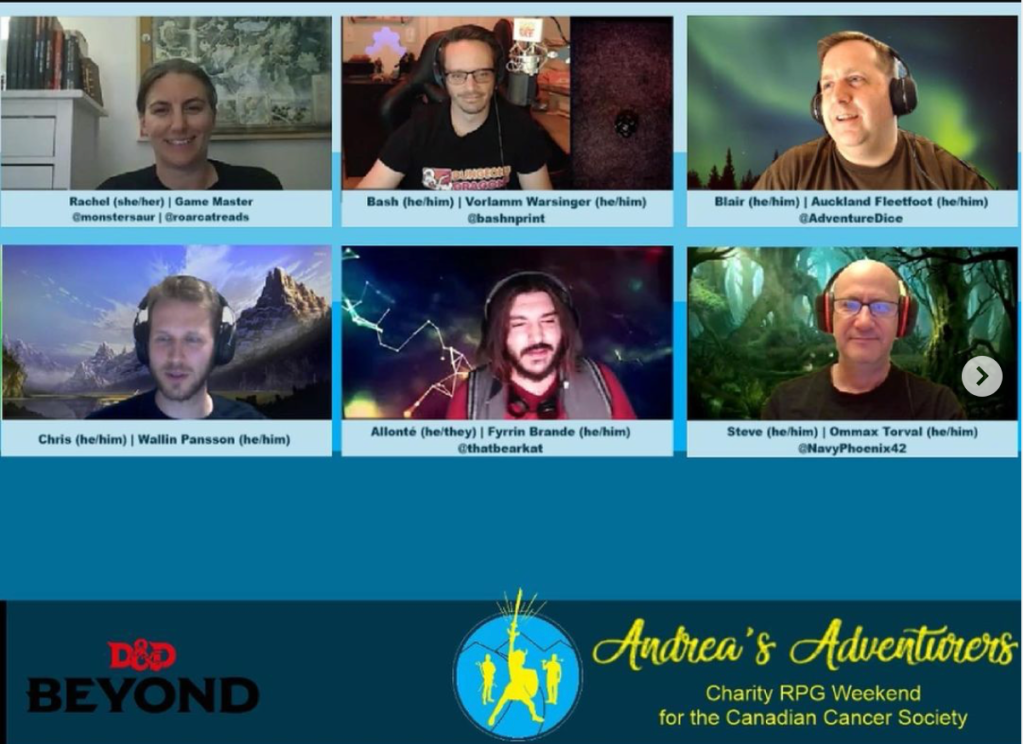
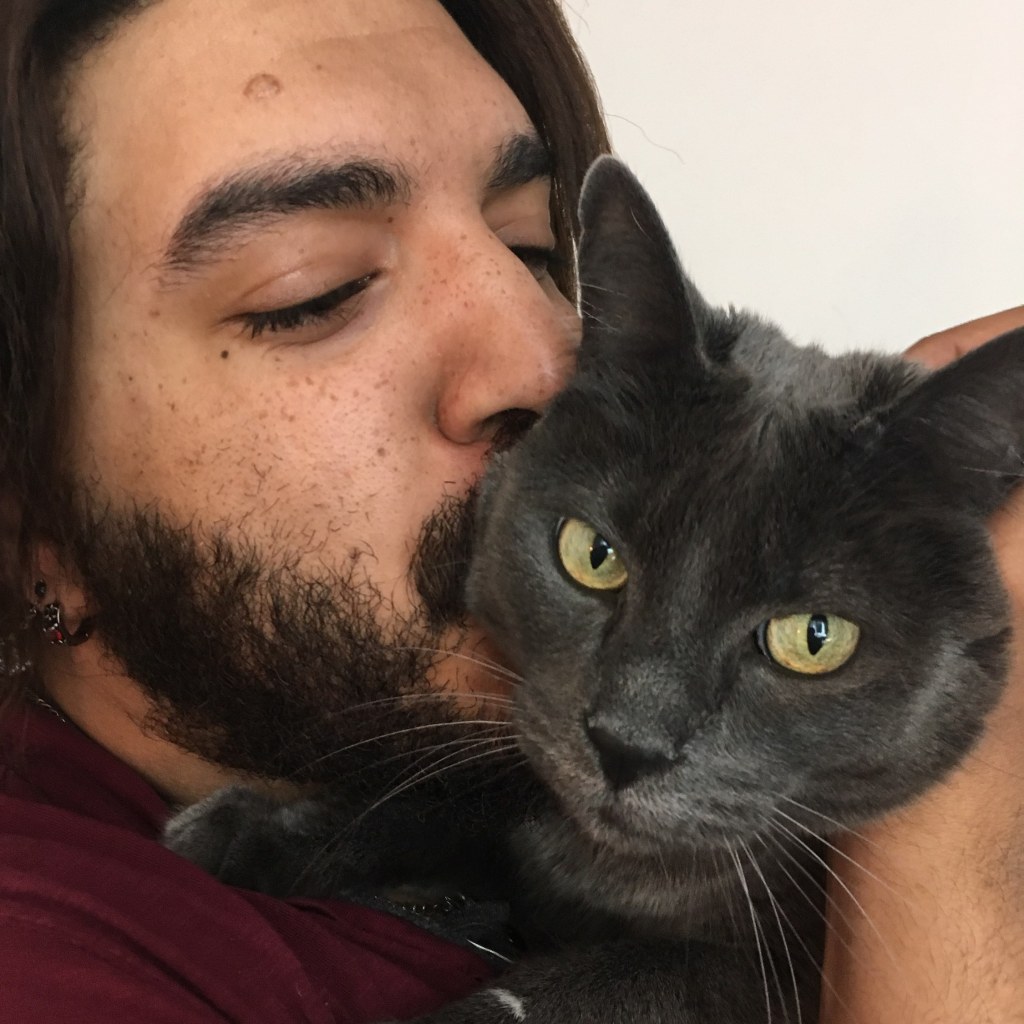
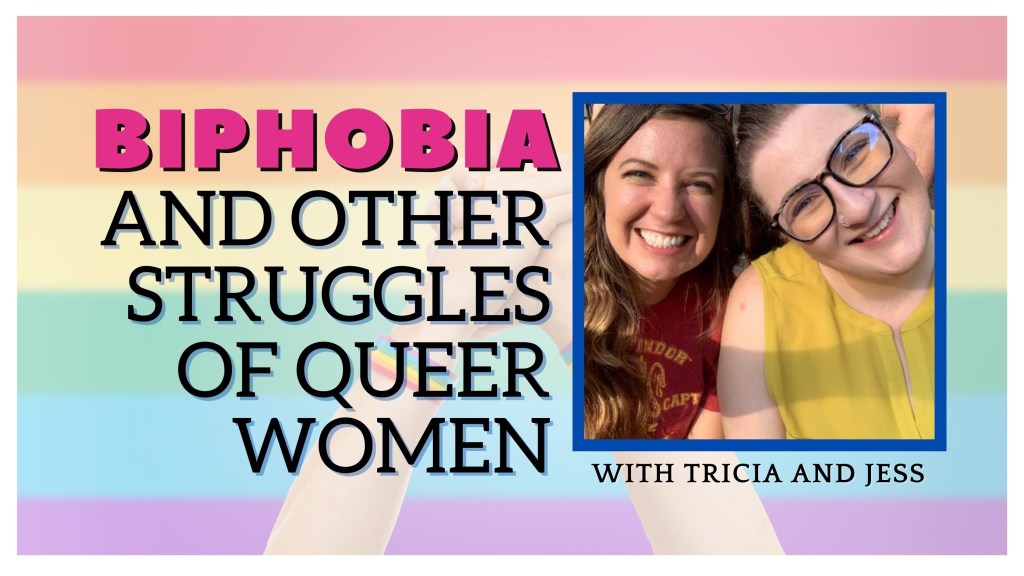







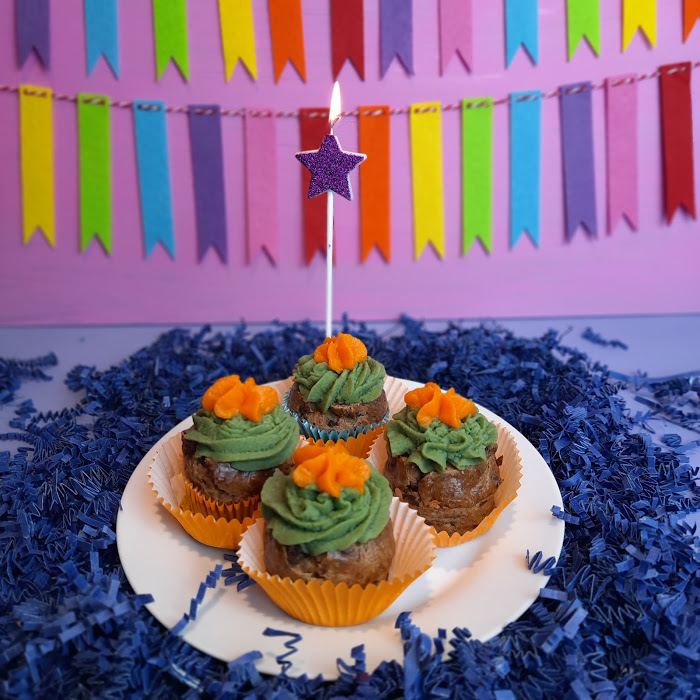
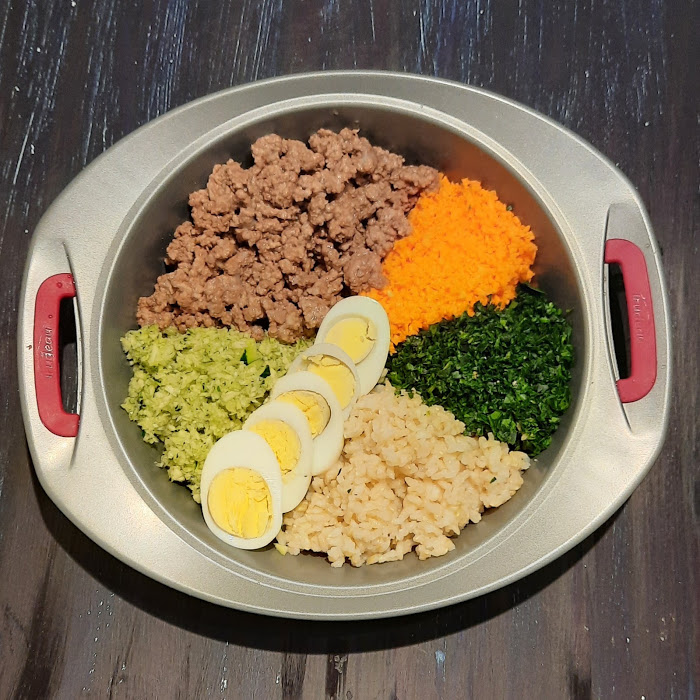

 Roar Cat Reads