Tag: lesbian

  • When Women Were Dragons by Kelly Barnhill

    When Women Were Dragons by Kelly Barnhill

    Genre | Fantasy
    Page #s | 352
    Publishing Date | May 2022

    Alex Green is a young girl in a world much like ours, except for its most seminal event: the Mass Dragoning of 1955, when hundreds of thousands of ordinary wives and mothers sprouted wings, scales, and talons; left a trail of fiery destruction in their path; and took to the skies. Was it their choice? What will become of those left behind? Why did Alex’s beloved aunt Marla transform but her mother did not? Alex doesn’t know. It’s taboo to speak of.

    Forced into silence, Alex nevertheless must face the consequences of this astonishing event: a mother more protective than ever; an absentee father; the upsetting insistence that her aunt never even existed; and watching her beloved cousin Bea become dangerously obsessed with the forbidden.

    In this timely and timeless speculative novel, award-winning author Kelly Barnhill boldly explores rage, memory, and the tyranny of forced limitations. When Women Were Dragonsexposes a world that wants to keep women small—their lives and their prospects—and examines what happens when they rise en masse and take up the space they deserve.

    Goodreads

    This magical realism historical novel was slow-to-start, but stick with it! When Women Were Dragons packs a punch, conveying powerful messages about patriarchy, feminism, and political silencing into a story about a young lesbian woman growing up in a world that refuses to acknowledge that women can dragon.

    Yes, that means women turn into dragons! Here, dragoning represents a woman’s inner rage at being constricted in a patriarchal world as well as her inner joy at being fully herself. It’s beautiful, scary, and complicated, and the book’s setting in the 1950s highlights the limited options for women while also feeling annoyingly timeless. The more things change, etc.

    At first, I could not fathom how this fictional society managed to ignore something as huge as women turning into dragons, but parallels are explicitly drawn between this and other female experiences that we ignore, like menstruation, menopause, and miscarriages. The absurdity of ignoring dragons highlights the absurdity of our own world and the things we do not speak about.

    I read this book for a book club, and it is one of those rare books that was both widely enjoyed AND provided a lot of conversational fodder. (I don’t know about you, but usually enjoyed books fade away after “I liked it” while books that weren’t enjoyed can be talked about endlessly.) I still think about it months after reading it, and I’m eager to read more of Barnhill’s work!

    Small note: I do want to point out something I appreciated in this story, that while it is female-focused, dragoning is not bioessentialist. Hurray for feminist texts that are not trans-exclusionary!

    Who Do I Recommend This Book To?

    If you liked The Power, then When Women Were Dragons is likely going to be right up your alley!

    Check out our Queer Lil Library for more book recommendations and reviews!
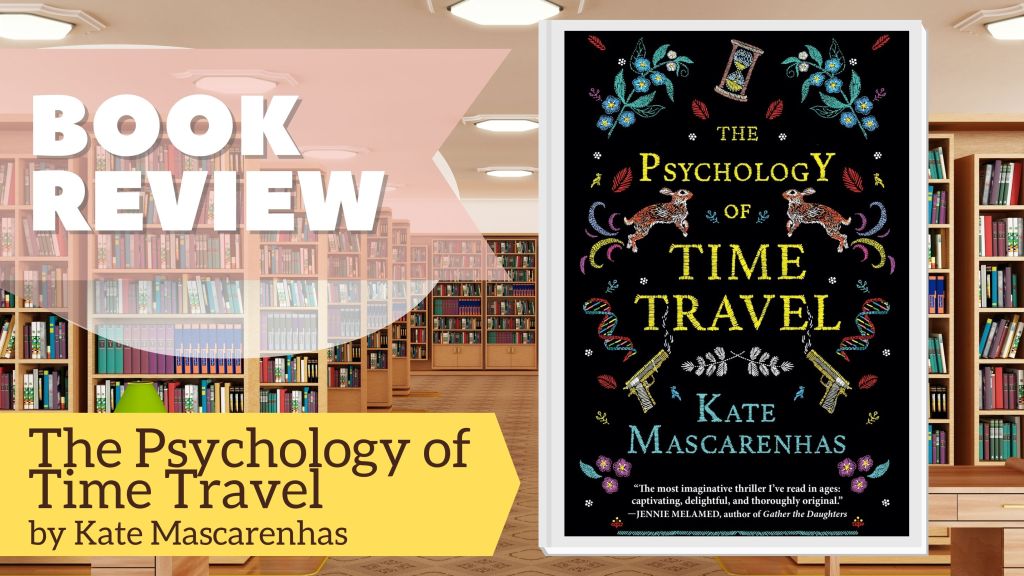
  • The Psychology of Time Travel by Kate Mascarenhas

    The Psychology of Time Travel by Kate Mascarenhas

    Genre | Science Fiction
    Page #s | 336
    Publishing Date | August 2018

    In 1967, four female scientists worked together to build the world’s first time machine. But just as they are about to debut their creation, one of them suffers a breakdown, putting the whole project—and future of time travel—in jeopardy. To protect their invention, one member is exiled from the team—erasing her contributions from history.

    Fifty years later, time travel is a big business. Twenty-something Ruby Rebello knows her beloved grandmother, Granny Bee, was one of the pioneers, though no one will tell her more. But when Bee receives a mysterious newspaper clipping from the future reporting the murder of an unidentified woman, Ruby becomes obsessed: could it be Bee? Who would want her dead? And most importantly of all: can her murder be stopped?

    Traversing the decades and told from alternating perspectives, The Psychology of Time Travelintroduces a fabulous new voice in fiction and a new must-read for fans of speculative fiction and women’s fiction alike.

    Goodreads

    Books about time travel often make my head hurt when they try too hard to explain paradoxes and the limitations of their particular science (give me a Doctor Who shrug at the science any day). Luckily, there were very few instances in which The Psychology of Time Travel did this to me; instead, as the title suggests, this book is far more concerned with how time travel would affect people’s lives, personalities, and relationships.

    The book is told from multiple points of view and from multiple points in time as we slowly put together the pieces of, essentially, a murder mystery. This means it will likely take you awhile to fully sink into the story, as it takes time to care about all of the characters and realize how they interconnect. Once some of those “Oh! She’s that character’s mother!” moments happen, I was hooked and couldn’t stop.

    Undoubtedly the best part of this book is that it is 95% female characters. The people who invented time travel? Four women. The detectives, love interests, and professionals that we meet? Women! There are maybe two men in the whole book that I can think of, and they are given lovely little side roles as the husbands of powerful and interesting women. I live!

    Who Do I Recommend This Book To?

    If you like time travel and favor a book that offers a wide array of complex characters to meet and care for (or not), The Psychology of Time Travel is for you!

    Check out our Queer Lil Library for more book recommendations and reviews!

  • Astrid Parker Doesn’t Fail by Ashley Herring Blake

    Astrid Parker Doesn’t Fail by Ashley Herring Blake

    Genre | Contemporary Fiction Romance
    Page #s | 400
    Publishing Date | November 2022

    For Astrid Parker, failure is unacceptable. Ever since she broke up with her fiancé a year ago, she’s been focused on her career–her friends might say she’s obsessed, but she knows she’s just driven. When Pru Everwood asks her to be the designer for the Everwood Inn’s renovation, which will be featured on a popular HGTV show, Innside America, Astrid is thrilled. Not only will the project distract her from her failed engagement and help her struggling business, but her perpetually displeased mother might finally give her a nod of approval. 

    However, Astrid never planned on Jordan Everwood, Pru’s granddaughter and the lead carpenter for the renovation, who despises every modern design decision Astrid makes. Jordan is determined to preserve the history of her family’s inn, particularly as the rest of her life is in shambles. When that determination turns into some light sabotage to ruffle Astrid’s perfect little feathers, the showrunners ask them to play up the tension. But somewhere along the way, their dislike for each other evolves into something quite different, and Astrid must decide what success truly means. Is she going to pursue the life that she’s expected to lead or the one that she wants?

    Goodreads

    I am so glad that Blake turned her Delilah Green Doesn’t Care success into a romance novel series about a gaggle of queer friends finding love in the Pacific Northwest. Choosing Astrid (Delilah’s seemingly straight, uptight foil) as the protagonist for the second book was, in my opinion, inspired! So much about this book was designed especially for me:

    • A perfectly put together woman who is one bad day away from falling apart…and finding freedom in failure.
    • A late-in-life queer discovery
    • Enemies to lovers trope

    For someone else, the setting being an HGTV-equivalent project would also be on that list. Basically, this is a good time! I loved it!

    Astrid and Jordan have great chemistry throughout, whether they’re arguing about design choices or navigating their budding attraction toward each other. Blake does such a good job of creating fully realized characters, and showing how Astrid and Jordan’s past relationships affected their fears and insecurities going into a new one was handled really well.

    One of my biggest gripes with romance novels is that the Final Twist that attempts to break up the new lovers before Love Saves the Day often feels like a soulless plot device that’s only there because it’s “supposed” to be. Although I felt shades of that in the “villain” of this book, I mostly found the conflict believable and, most importantly, plot relevant! It developed the characters further and led to a reunion that actually felt earned and better than what had existed before.

    Who Do I Recommend This Book To?

    If you’re looking for a fun, light-hearted, spicy romance novel, you MUST put Astrid Parker Doesn’t Fail on your TBR list.

    Check out our Queer Lil Library for more book recommendations and reviews!

  • Lavender House by Lev AC Rosen

    Lavender House by Lev AC Rosen

    Genre | Mystery Historical Fiction
    Page #s | 274
    Publishing Date | October 2022

    A delicious story from a new voice in suspense, Lev AC Rosen’s Lavender House is Knives Outwith a queer historical twist.

    Lavender House, 1952: the family seat of recently deceased matriarch Irene Lamontaine, head of the famous Lamontaine soap empire. Irene’s recipes for her signature scents are a well guarded secret—but it’s not the only one behind these gates. This estate offers a unique freedom, where none of the residents or staff hide who they are. But to keep their secret, they’ve needed to keep others out. And now they’re worried they’re keeping a murderer in. 

    Irene’s widow hires Evander Mills to uncover the truth behind her mysterious death. Andy, recently fired from the San Francisco police after being caught in a raid on a gay bar, is happy to accept—his calendar is wide open. And his secret is the kind of secret the Lamontaines understand. 

    Andy had never imagined a world like Lavender House. He’s seduced by the safety and freedom found behind its gates, where a queer family lives honestly and openly. But that honesty doesn’t extend to everything, and he quickly finds himself a pawn in a family game of old money, subterfuge, and jealousy—and Irene’s death is only the beginning. 

    When your existence is a crime, everything you do is criminal, and the gates of Lavender House can’t lock out the real world forever. Running a soap empire can be a dirty business.

    Goodreads

    Sometimes you don’t even realize a genre needs a queer spin until you suddenly read a book that makes you think, “Oh, this is perfect!” That was Lavender House for me. Telling a murder mystery set in the 1950s from the perspective of a queer cop-turned-private-investigator gave new meaning to many tropes. Why is the PI so jaded? Because he’s a newly outed gay man who lives in a homophobic society and risks daily harassment or worse! Why is the location he’s hired to work in strangely remote and isolated? Because it’s a found family of queer people who do their best to avoid the attention of the outside world! It all makes sense.

    Rosen is a very engaging storyteller. Where the other book of his that I’ve read (Camp) was lighthearted, Lavender House is darker but no less propulsive. I really admired the way he told a story focused on queer people but in a way that felt historically accurate. As for the mystery itself, the hints and twists were fun. Not, to my mind, groundbreaking or entirely surprising, but the story told along the way made up for a so-so reveal.

    As in any murder mystery, the cast of characters makes or breaks the story, and I loved the characters in the Lavender House estate. Whether family or staff, each person on site has a story or secret that could be motivation for murder. I especially liked seeing how gay men, lesbians, and people of varying ages found a way to make peace with their voluntary self-isolation and closeted public existences.

    This is apparently the first of a series, and I cannot wait to see more Evander Mills solving gay crimes. Very fun twist on a classic genre.

    Who Do I Recommend This Book To?

    If you like a quick murder mystery or enjoy reading about queer people surviving in different time periods, check out Lavender House!

    Check out our Queer Lil Library for more book recommendations and reviews!
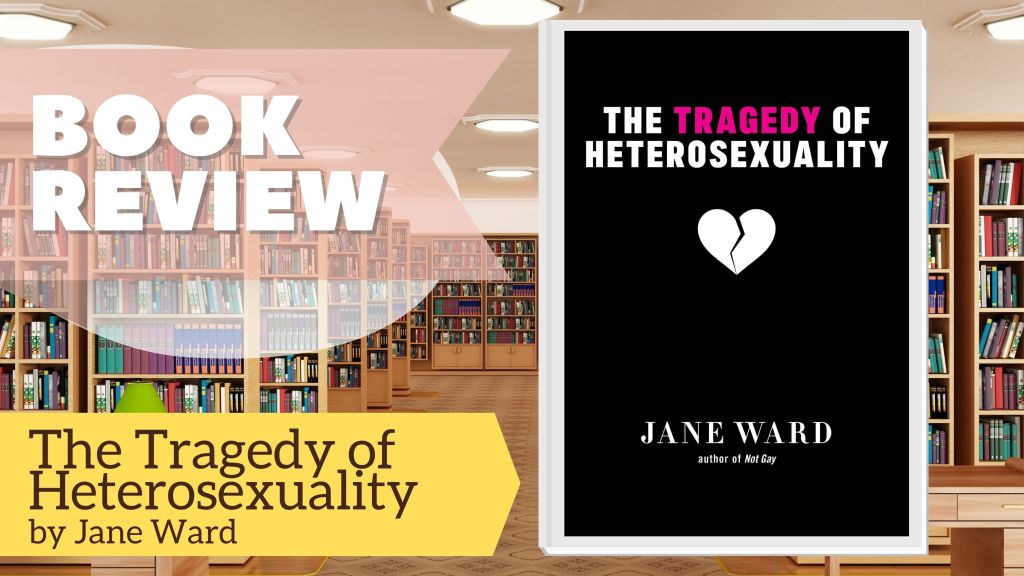
  • The Tragedy of Heterosexuality by Jane Ward

    The Tragedy of Heterosexuality by Jane Ward

    Genre | Nonfiction
    Page #s | 216
    Publishing Date | September 2020

    Heterosexuality is in crisis. Reports of sexual harassment, misconduct, and rape saturate the news in the era of #MeToo. Straight men and women spend thousands of dollars every day on relationship coaches, seduction boot camps, and couple’s therapy in a search for happiness.

    In The Tragedy of Heterosexuality, Jane Ward smartly explores what, exactly, is wrong with heterosexuality in the twenty-first century, and what straight people can do to fix it for good. She shows how straight women, and to a lesser extent straight men, have tried to mend a fraught patriarchal system in which intimacy, sexual fulfillment, and mutual respect are expected to coexist alongside enduring forms of inequality, alienation, and violence in straight relationships.

    Ward also takes an intriguing look at the multi-billion-dollar self-help industry, which markets goods and services to help heterosexual couples without addressing the root of their problems. Ultimately, she encourages straight men and women to take a page out of queer culture, reminding them “about the human capacity to desire, fuck, and show respect at the same time.”

    Goodreads

    With a title like The Tragedy of Heterosexuality, I was expecting a satirical, comedic take on the sad state of straight people. What I got instead was an academic treatise on the historical and social forces at work to create imbalanced and dangerous heterosexual dynamics and a feminist lesbian solution, and I loved it!

    The conditions of patriarchy have long damaged men’s desire for women, and women’s for men, such that heterosexuality, as a sexual orientation, was always already a contradiction. Women were too inferior, too degraded, for men to actually like. Women could be sexually desired, and they could be paternalistically loved; but they could not be engage as autonomous, self-determining humans in the way that men related to other men.

    The Tragedy of Heterosexuality

    The current iteration of heterosexuality (Ward walks readers through the historical shifts in male/female relationships over the past century, as well as the self-help books written to fix inherent problems therein) has a single, enormous flaw at the center of it: the misogyny paradox. Straight men are sexually attracted to women within a culture that belittles and insults them. This is why a guy can go from “You look beautiful today!” to “Learn to take a compliment, you bitch!” when his cat-calling goes unanswered.

    Most of the book is spent digging into all of the ways in which straight men and women have to work against stereotype in order to enjoy each other’s company; it’s grim but compelling. I read this a couple weeks after a friend of mine told me, “I know being gay isn’t a choice because I wouldn’t be straight if I had a choice. In my past relationships, I’ve been abused by more than half of my boyfriends, but I just keep being attracted to men.”

    “I am so lucky to have one of the good ones,” they say. Meanwhile, may of us queers are thinking, “That’s what counts as good?” We also know that the answer is yes, it is what counts as good, because as the folks quoted above explain, many straight men are violent and unpredictable.

    The Tragedy of Heterosexuality

    Although it was only a small portion of the book, I especially enjoyed the end when Ward shares ideas of how straight men can learn from lesbians as both share an attraction to women. Queer women tend to love women, with their weight gains and body hair and uniquenesses. Straight men, or straight male culture if we’re being generous and vague, love women who have waxed, dyed, and altered themselves.

    Of course, queer people and queer relationships are not inherently better than straight relationships, a point which Ward makes frequently. The difference comes from the fact that queer relationships operate outside of the system of tradition and assumptions that hamstring straight couples, even those who want to be progressive and feminist.

    Perhaps queers are doing no better, as many of us also lie, cheat, and engage in no end of painful behavior. But the thing about heterosexual misery that makes it so irreducible to human foible is that straight relationships are rigged from the start. Straight culture, unlike queer culture, naturalizes and often glorifies men’s failures and women’s suffering.

    The Tragedy of Heterosexuality

    I loved this book; it inspired a ton of conversations with my partner (my favorite of the moment is thinking through the difference between objectifying and subjectifying someone). At the heart of my love, I come back to what first drew me to this book. The title makes it clear that we’re flipping the script. Instead of assuming heterosexuality is the good and right default, queer relationships are allowed to take center stage as experiences full of meaning and wisdom that can be shared with our straight friends.

    Who Do I Recommend This Book To?

    If you’re a queer woman and a feminist and you like academic reading, run (don’t walk) to The Tragedy of Heterosexuality! And then talk to me about it!

    Check out our Queer Lil Library for more book recommendations and reviews!
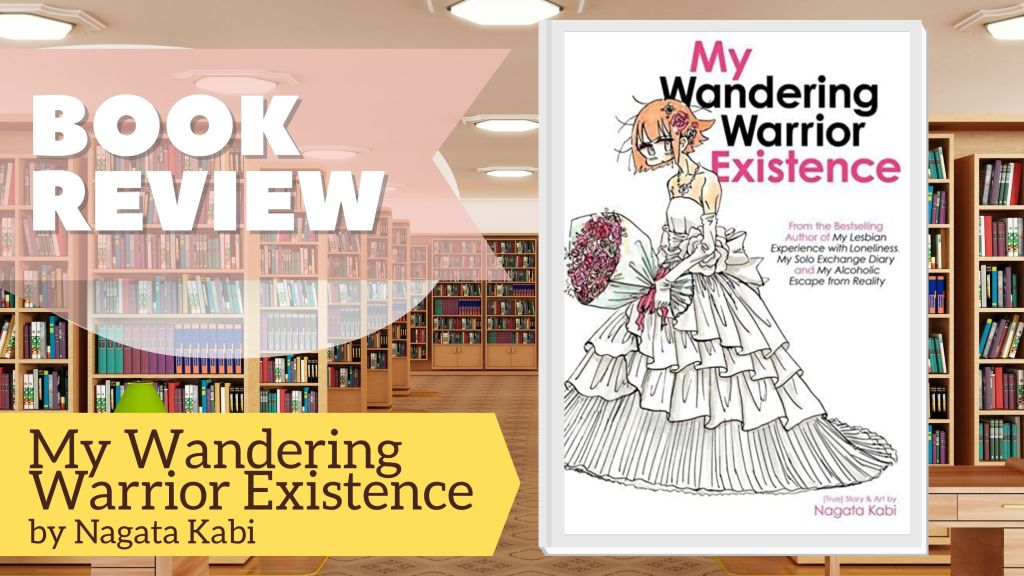
  • My Wandering Warrior Existence by Nagata Kabi

    My Wandering Warrior Existence by Nagata Kabi

    Genre | Graphic Novel Memoir
    Page #s | 128
    Publishing Date | February 2021

    Nagata Kabi, the award-winning creator of My Lesbian Experience with Loneliness, embarks on a search for romance in this brand-new diary comic! 

    Nagata Kabi’s groundbreaking autobiographical work has captivated audiences around the globe, starting with the viral online comic about identity that would become the graphic novel My Lesbian Experience with Loneliness. Readers from all backgrounds have been moved by the author’s ability to capture complex emotions through her art and text, giving insight into feelings they may have struggled to articulate themselves. Nagata Kabi’s memoirs, including the Eisner-nominated My Solo Exchange Diary and new release My Alcoholic Escape From Reality, have explored themes of physical and mental illness, sex and sexuality, family, and independence. Follow the newest installment of this trailblazing series with My Wandering Warrior Existence, Nagata Kabi’s exploration of longing for love and marriage.

    Goodreads

    My Wandering Warrior Existence is an uncomfortably relatable book for anyone who struggles with identity and intimacy while watching the majority of other people happily and easily love each other. Kabi’s self-reflections are honest, poignant, and in medias res – i.e., there are no real answers here.

    Although Kabi’s story begins in her earlier manga memoirs, this particular story begins when a friend’s wedding inspires her to book a wedding dress photo shoot, believing this will fulfill some nebulous core need. Instead, it leaves her feeling worse than ever before and opens up a whole new series of doubts and questions. It isn’t the trappings of a wedding that she craves, but the intimacy and relationship that it represents.

    Unfortunately, like many of us, knowing what she wants doesn’t make it any easier for Kabi to obtain it. As a perpetually single person until I was 30, I related SO HARD to her general bafflement about how people coupled up and why she couldn’t seem to get on the same level. Although there is a general vibe of self-hatred (or more generously, self-discomfort) that sometimes felt uncomfortable to me, I really appreciated the way Kabi is able to dissect her experiences in pictorial form, especially her realization about all of the hurdles that stand between her and a romantic relationship.

    Queerness positively drips from the pages, as Kabi questions her sexual identity, gender identity, and experience of the world in general. This is not a book about labels so much as an embracing of the questions of queerness, and I think that’s a very valuable offering of the queer experience.

    Who Do I Recommend This Book To?

    If you are, or have been, a person who felt outside of traditional relationship structures, you’re likely to find something to relate to in My Wandering Warrior Existence.

    Check out our Queer Lil Library for more book recommendations and reviews!
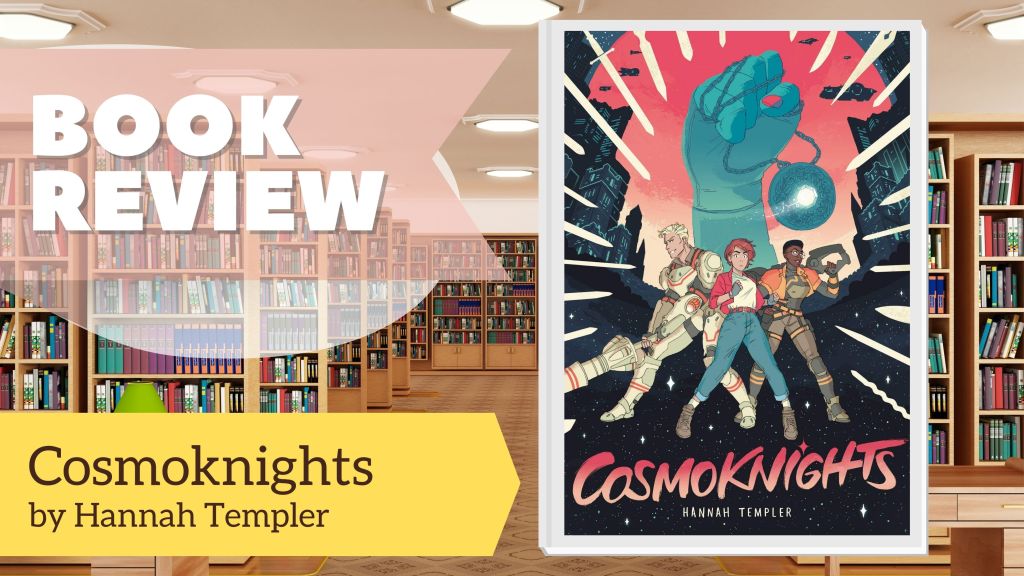
  • Cosmoknights #1 by Hannah Templer

    Cosmoknights #1 by Hannah Templer

    Genre | Science Fiction Graphic Novel
    Page #s | 216
    Publishing Date | September 2019

    For this ragtag band of space gays, liberation means beating the patriarchy at its own game.

    Pan’s life used to be very small. Work in her dad’s body shop, sneak out with her friend Tara to go dancing, and watch the skies for freighter ships. It didn’t even matter that Tara was a princess… until one day it very much did matter, and Pan had to say goodbye forever. Years later, when a charismatic pair of off-world gladiators show up on her doorstep, she finds that life may not be as small as she thought. On the run and off the galactic grid, Pan discovers the astonishing secrets of her neo-medieval world… and the intoxicating possibility of burning it all down.

    Goodreads

    Be gay, do crime…by fighting the patriarchy in space! Cosmoknights is a webcomic turned printed comic that is a bright, beautiful, and fun story that takes old stories of knights jousting for the hand of a princess and turns it into a capitalistic, patriarchic practice that can only be taken down by a band of lesbian athletes, mechanics, and hackers.

    I’ve only read the first book, though there are two printed as of right now, and we primarily get the set up and team unification in this section of the comic. There’s some nice backstory for two of the characters, and I hope we get more information about the rest of the group as we move forward. It’s a familiar enough setting while also being charmingly set amongst varying planets with high-tech Blitzball-esque tournaments.

    The coloring on the pages is bright and alluring, the story is fun with a side of societal critique, and the characters are diverse and interesting. Definitely a go-to for anyone looking for a quick, gay read!

    Check out our Queer Lil Library for more book recommendations and reviews!

  • Book Eaters by Sunyi Dean

    Book Eaters by Sunyi Dean

    Genre | Fantasy Horror
    Page #s | 298
    Publishing Date | August 2022

    Out on the Yorkshire Moors lives a secret line of people for whom books are food, and who retain all of a book’s content after eating it. To them, spy novels are a peppery snack; romance novels are sweet and delicious. Eating a map can help them remember destinations, and children, when they misbehave, are forced to eat dry, musty pages from dictionaries.

    Devon is part of The Family, an old and reclusive clan of book eaters. Her brothers grow up feasting on stories of valor and adventure, and Devon—like all other book eater women—is raised on a carefully curated diet of fairytales and cautionary stories.

    But real life doesn’t always come with happy endings, as Devon learns when her son is born with a rare and darker kind of hunger—not for books, but for human minds.

    Goodreads

    I had a hard time getting into Book Eaters for the first hundred pages until the alternating time lines began to dramatically affect each other; then I couldn’t put it down! Set in a world where otherworldly Families made of book eaters (yup, literally creatures who eat books to survive) maintain their bloodlines through patriarchal bullshit, this book follows Devon, a book eater who will do anything, and double cross anyone, to protect her son, who is a rare and dangerous mind eater.

    The plot itself is propulsive, but the themes are where this book really shone for me. Let’s start with that patriarchal bullshit I mentioned. Book eaters are rare creatures, and female book eaters are the rarest of all. They are therefore treated with extreme care and fed only fairy tales until they are old enough to “marry” into another Family, birth a child, and leave for another “marriage.” It’s horrifying! But I’ve never seen a work of fiction handle that particular patriarchal message of “we control you because you’re special” so well.

    Most importantly, this is a book about monstrous love. Devon commits actual atrocities to protect her son, and the book never lets her wave away the moral or emotional consequences. Instead, she acknowledges that she is in impossible situations, and that she willingly chooses to prioritize the wellbeing of her son over everyone else, including innocent bystanders. I loved that her motherly love was not allowed to be above reproach, which actually led it a weird beauty all its own.

    “Everyone is scared of me, even the other mind eaters here. You’re not scared of me because you’re an even bigger, meaner monster than me… You’d eat the whole world to help me out and I think I’d do that for you, too. You’re my monster and I’m yours.”

    Book Eaters

    What Makes This Book Queer?

    Devon is a queer woman; her role within the Family essentially being a breeder, she doesn’t realize her own preferences matter until she breaks free of the system. It’s an interesting take, since homophobia doesn’t seem to exist amongst the book eaters, but repressing your desires for the sake of duty definitely does.

    Additionally, one of the few people Devon befriends identifies as asexual, and there’s a lovely conversation between the two where she asks what that means. It’s probably a great introduction to readers who aren’t too familiar with the term.

    Who Do I Recommend This Book To?

    If you love moral complexity and a new take on magical realism, Book Eaters is for you!

    Check out our Queer Lil Library for more book recommendations and reviews!
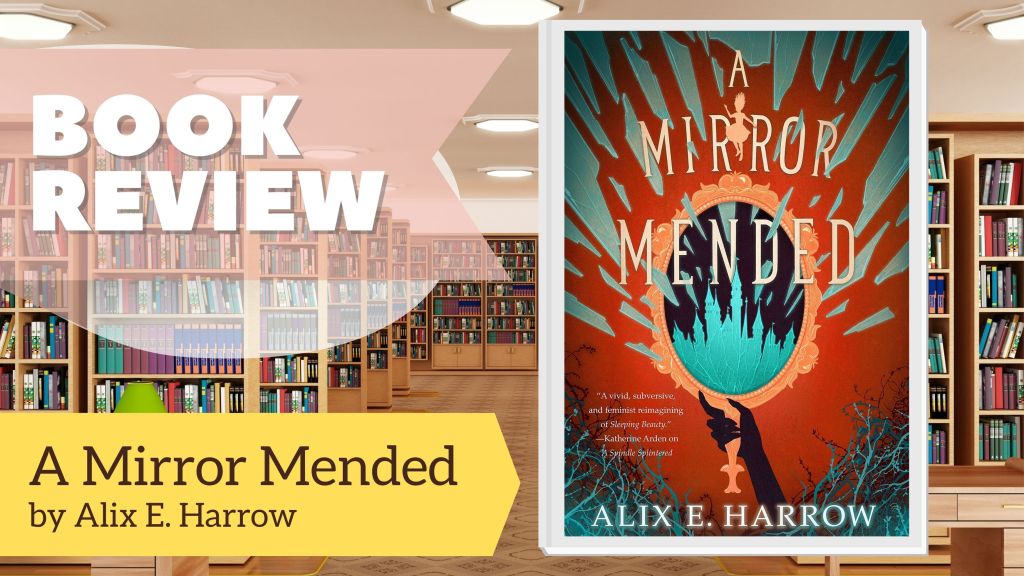
  • A Mirror Mended by Alix E. Harrow

    A Mirror Mended by Alix E. Harrow

    Genre | Fantasy Novella
    Page #s | 130
    Publishing Date | June 2022

    Zinnia Gray, professional fairy-tale fixer and lapsed Sleeping Beauty, is over rescuing snoring princesses. Once you’ve rescued a dozen damsels and burned fifty spindles, once you’ve gotten drunk with twenty good fairies and made out with one too many members of the royal family, you start to wish some of these girls would just get a grip and try solving their own narrative issues.

    Just when Zinnia’s beginning to think she can’t handle one more princess, she glances into a mirror and sees another face looking back at her: the shockingly gorgeous face of evil, asking for her help. Because there’s more than one person trapped in a story they didn’t choose. Snow White’s Evil Queen has found out how her story ends, and she’s desperate for a better ending. She wants Zinnia to help her before it’s too late for everyone. Will Zinnia accept the Queen’s poisonous request and save them both from the hot-iron shoes that wait for them, or will she try another path?

    Goodreads

    A Mirror Mended is a great little novella that is bite-sized in amount but packed full of interesting world-building and relationships. Bringing multiverses to fairy tales, Zinnia can hop between Sleeping Beauty stories easily; it takes the intervention of Snow White’s wicked stepmother for her to make it into another fairy tale entirely. The two are forced to work together to survive, and in the best possible way, sparks fly!

    I love an enemies-to-lovers plot, and this one had an added feminism bonus. Why is the Evil Queen considered to be evil, and are the choices she made to survive understandable, if not forgivable? Adding some grey into the black and white perceptions of fairy tale characters really gave this story something to say.

    I am also a sucker for books that focus on relationships other than the romantic. While Zinnia and the Evil Queen are the stars of the show, it is Zinnia’s friendships that are the real heart even though they are barely on the page. I assume if I had read Harrow’s other novellas, I would have a fuller understanding of their history, but I didn’t feel I was missing out on anything. What I got was a very realistic but seldom-told story of a person who was running away from her friends because their relationship was changing and she didn’t know how to handle that. Avoiding the things we fear just making things worse? #relatable

    The novella plays with fairy tale characters, but it doesn’t have a fairy tale happily ever after. Zinnia is explicitly against this idea in the best way possible, and I found myself delighted by the ending, which felt more satisfying than I expected.

    Who Do I Recommend This Book To?

    A Mirror Mended is the perfect book for someone looking to upend classic stories with queerness, feminism, and a complicated ending.

    Check out our Queer Lil Library for more book recommendations and reviews!
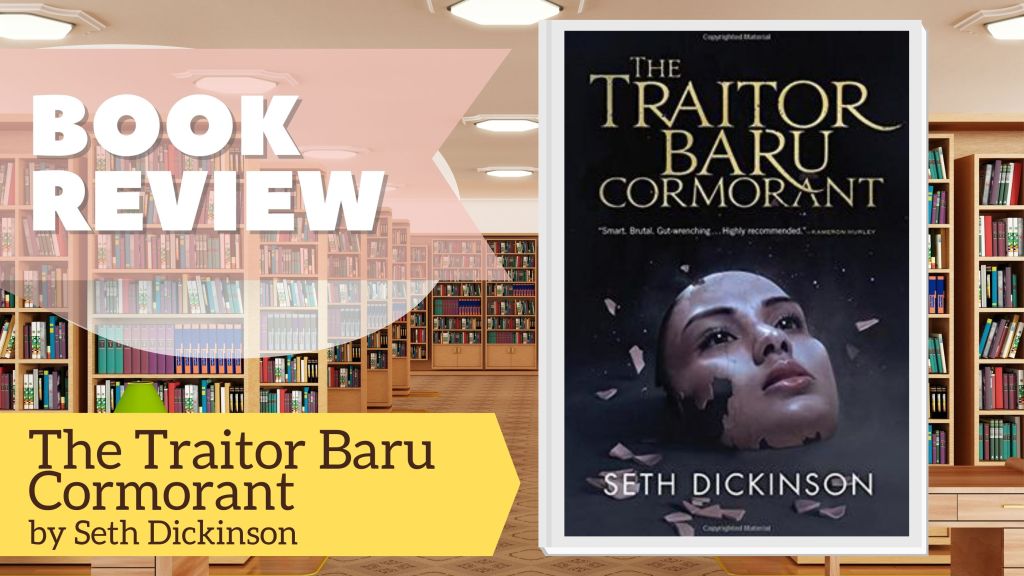
  • The Traitor Baru Cormorant by Seth Dickinson

    The Traitor Baru Cormorant by Seth Dickinson

    Genre | Fantasy
    Page #s | 399
    Publishing Date | September 2015

    Tomorrow, on the beach, Baru Cormorant will look up from the sand of her home and see red sails on the horizon.

    The Empire of Masks is coming, armed with coin and ink, doctrine and compass, soap and lies. They’ll conquer Baru’s island, rewrite her culture, criminalize her customs, and dispose of one of her fathers. But Baru is patient. She’ll swallow her hate, prove her talent, and join the Masquerade. She will learn the secrets of empire. She’ll be exactly what they need. And she’ll claw her way high enough up the rungs of power to set her people free.

    In a final test of her loyalty, the Masquerade will send Baru to bring order to distant Aurdwynn, a snakepit of rebels, informants, and seditious dukes. Aurdwynn kills everyone who tries to rule it. To survive, Baru will need to untangle this land’s intricate web of treachery – and conceal her attraction to the dangerously fascinating Duchess Tain Hu.

    But Baru is a savant in games of power, as ruthless in her tactics as she is fixated on her goals. In the calculus of her schemes, all ledgers must be balanced, and the price of liberation paid in full.

    Goodreads

    The Traitor Baru Cormorant is the first book in a trilogy that explores themes of colonialism, power, and whether you can change a corrupt system without also corrupting yourself. It’s a dark story without a happy ending, and I find myself very torn about reading the second two books because I’m not sure if Baru’s betrayals will “be worth it” in the end. But maybe that’s the point.

    This book is fast paced, covering the first two decades of Baru’s life from childhood to young adulthood. When her country is overtaken by the Empire, we get a succinct and heartbreaking depiction of colonization from the colonized’s point of view. Offering advancement and technology with one hand, the Empire offers restrictive moralism and brutal enforcement with the others. As a precocious child, Baru is taken to school to be indoctrinated; however, she holds on to her goal of gaining power within the Empire so that she can one day…liberate her homeland? Destroy the Empire? Her end goal is not entirely clear, and I hope this plot point tightens up in future novels.

    Baru is ruthless and intelligent, which, while hard to stomach sometimes, is also wonderful to see in a young female protagonist. She manages to gain enormous power and sway the fate of a nation as an accountant, which is a really fun twist on a classic story of revolution. Throughout the years that she spends in Aurdwynn, she becomes adept at telling herself that every decision she makes, every person she betrays, is necessary for her end goal. Whether or not you find the plot satisfying will heavily rely upon whether you think she’s right or not. I’m honestly so torn about this book; it was an incredibly engaging read with some thought-provoking themes, but that ending broke my heart!

    What Makes This Book Queer?

    Queerness is central to this book’s premise. Baru comes from a culture in which a traditional family system includes one mother and two fathers. Same-sex relationships are normalized until the Empire appears and declares it immoral. Baru’s own attraction to women must be kept secret as she works for the Empire, to varying success and varying consequences.

    There is an element here of queer rage fighting against the Empire that is not all that dissimilar from Black Sails, and honestly, that comparison suddenly makes me a LOT more interested in continuing this series.

    Who Do I Recommend This Book To?

    The Traitor Baru Cormorant is a dark fantasy novel about power and corruption that is perfect for anyone who wants a book that gives them all the feels PLUS a lot of things to think about.

    Check out our Queer Lil Library for more book recommendations and reviews!
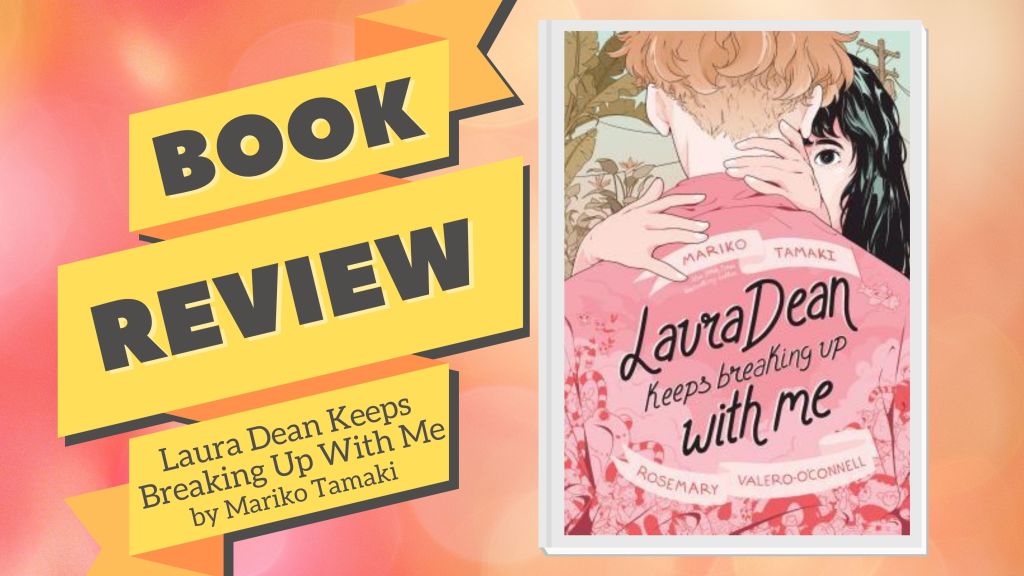
  • Laura Dean Keeps Breaking Up With Me by Mariko Tamaki and Rosemary Valero-O’Connell

    Laura Dean Keeps Breaking Up With Me by Mariko Tamaki and Rosemary Valero-O’Connell

    Genre | YA Contemporary Fiction Graphic Novel
    Page #s | 289
    Publishing Date | May 2019

    All Freddy Riley wants is for Laura Dean to stop breaking up with her.

    The day they got together was the best one of Freddy’s life, but nothing’s made sense since. Laura Dean is popular, funny, and SO CUTE … but she can be really thoughtless, even mean. Their on-again, off-again relationship has Freddy’s head spinning — and Freddy’s friends can’t understand why she keeps going back.

    When Freddy consults the services of a local mystic, the mysterious Seek-Her, she isn’t thrilled with the advice she receives. But something’s got to give: Freddy’s heart is breaking in slow motion, and she may be about to lose her very best friend as well as her last shred of self-respect. Fortunately for Freddy, there are new friends, and the insight of advice columnist Anna Vice, to help her through being a teenager in love.

    Mariko Tamaki and Rosemary Valero-O’Connell bring to life a sweet and spirited tale of young love that asks us to consider what happens when we ditch the toxic relationships we crave to embrace the healthy ones we need.

    Goodreads

    The artwork in Laura Dean Keeps Breaking Up with Me is absolutely gorgeous; that is what kept me reading a story that I’m incredibly glad exists, but definitely feels like the kind of YA meant for high school students. It’s a story of young love, understanding when relationships are toxic, and learning not to neglect your friends even though you’re in love.

    Everything about Freddy is understandable, but Laura Dean’s red flags are so numerous and unthinkingly cruel that I just wanted to shake her until she realized she was better than this relationship of convenience. I was similarly annoyed by the very dramatic “You’re way too young for me; I’m 18 and you’re 17!” that is repeated. What??

    The highlight of this story is undoubtedly the crumbling friendship between Freddy and Doodle. The ways in which they miss each other’s bids for attention and care is heartbreaking and relatable. I was excited for the D&D shout out in this plot thread, but whoops, that turned out not so great.

    I might be underselling this book, because as I’m thinking about it, there is a lot of really wonderful stories here about abortion, queer progress, messy emotions, and no easy answers. And Freddy’s friend group is pretty much all varieties of queer, which is an accuracy that is great to see. You tell me – have you read Laura Dean Keeps Breaking Up with Me? What did you think?

    Who Do I Recommend This Book To?

    Laura Dean Keeps Breaking Up with Me is a great book to give to a queer teenager; bonus points if you use the book to actually discuss the themes within.

    Check out our Queer Lil Library for more book recommendations and reviews!

  • The Oleander Sword by Tasha Suri

    The Oleander Sword by Tasha Suri

    Genre | Fantasy
    Page #s | 512
    Publishing Date | August 2022

    The prophecy of the nameless god—the words that declared Malini the rightful empress of Parijatdvipa—has proven a blessing and curse. She is determined to claim the throne that fate offered her. But even with the strength of the rage in her heart and the army of loyal men by her side, deposing her brother is going to be a brutal and bloody fight.

    The power of the deathless waters flows through Priya’s blood. Thrice born priestess, Elder of Ahiranya, Priya’s dream is to see her country rid of the rot that plagues it: both Parijatdvipa’s poisonous rule, and the blooming sickness that is slowly spreading through all living things. But she doesn’t yet understand the truth of the magic she carries.

    Their chosen paths once pulled them apart. But Malini and Priya’s souls remain as entwined as their destinies. And they soon realize that coming together is the only way to save their kingdom from those who would rather see it burn—even if it will cost them.

    Goodreads

    I’ll cut to the chase: I didn’t think The Oleander Sword lived up to its predecessor, The Jasmine Throne. That’s not to say it’s bad, but I do think it suffers from trying to do too much. Most appalling (in my book, at least), I found the romance between Malini and Priya incredibly lackluster. They are leaders of countries negotiating love and alliances, and that should be positively BOILING with tension. Is it possible to get insta-love vibes from an established relationship?

    What does work in The Oleander Sword is watching Malini’s march toward dethroning her brother and claiming the empire for herself while we the readers slowly realize that her fight is slow potatoes compared to what’s coming. The yaksa and the rot are Suri’s best invention, and every time she made flowers ominous, I shuddered in delighted horror. I can’t wait to see what is coming in the third book.

    I also continue to enjoy the themes of sacrifice that run through this series. Again and again, we’re asked to consider the point at which a sacrifice is no longer worth making, whether it’s obviously appalling (Chandra burning women alive to create living fire) or willing but dangerous (Priya pushing both her magic and her luck). There are no easy answers here, and I love that!

    Although the humans felt a little lacking this time around, we did get a lot more from the deities who all seem to have their own plan for the empire. I am VERY excited to see more of that in the last book of The Burning Kingdoms trilogy.

    Who Do I Recommend This Book To?

    Although not my favorite, The Oleander Sword is still a must-read for anyone who enjoyed The Jasmine Throne!

    Check out our Queer Lil Library for more book recommendations and reviews!

  • A Lady for a Duke by Alexis Hall

    A Lady for a Duke by Alexis Hall

    Genre | Historical Fiction Romance
    Page #s | 480
    Publishing Date | May 2022

    When Viola Caroll was presumed dead at Waterloo she took the opportunity to live, at last, as herself. But freedom does not come without a price, and Viola paid for hers with the loss of her wealth, her title, and her closest companion, Justin de Vere, the Duke of Gracewood.

    Only when their families reconnect, years after the war, does Viola learn how deep that loss truly was. Shattered without her, Gracewood has retreated so far into grief that Viola barely recognises her old friend in the lonely, brooding man he has become.

    As Viola strives to bring Gracewood back to himself, fresh desires give new names to old feelings. Feelings that would have been impossible once and may be impossible still, but which Viola cannot deny. Even if they cost her everything, all over again.

    Goodreads

    I confess that I was confused and intrigued by the idea of a trans romance Regency novel – although I know trans people have always existed, I had no conception for what that might might have looked like before the modern era. A Lady for a Duke, while being delightfully anachronistic in some ways, provided a realistic picture of the path a trans woman might have taken. Namely, using their assumed death in war as an opportunity to present themselves to society as their true gender.

    I loved 90% of this book. The dialogue sparkles, the characters are unique and quirky, and the romance is positively sizzling. I am a huge friends to lovers fan, and adding in the drama of an assumed death made it all the richer. I also appreciated that revelations and “betrayals” were dealt with fairly quickly; I didn’t have to sit around for ages thinking: “Just TALK to each other already!” These were emotionally mature characters, and for that I am grateful. I also loved the diversity of queer characters, and I’m crossing my fingers that there will be a sequel that focuses on one of them.

    What about that 10% that I didn’t enjoy? The end of the book went in a weird direction, to my mind. The book didn’t need a villain, and if it did, having one in the B plot show up at the end in comically evil fashion fell too flat and too late. It killed my buzz as the story was wrapping up, which sucks! But writing this a couple weeks after finishing the novel, I can say that this part has mostly left my mind and the parts that stick out are the sweet and spicy moments that populate the majority of the book.

    Who Do I Recommend This Book To?

    Romance readers, A Lady for a Duke is for you if you like friends to lovers and a bit of anachronistic sparkle to your Regency reads.

    Check out our Queer Lil Library for more book recommendations and reviews!

  • The Lesbiana’s Guide to Catholic School by Sonora Reyes

    The Lesbiana’s Guide to Catholic School by Sonora Reyes

    Genre | YA Contemporary Fiction
    Page #s | 400
    Publishing Date | May 2022

    Sixteen-year-old Yamilet Flores prefers to be known for her killer eyeliner, not for being one of the only Mexican kids at her new, mostly white, very rich Catholic school. But at least here no one knows she’s gay, and Yami intends to keep it that way.

    After being outed by her crush and ex-best friend before transferring to Slayton Catholic, Yami has new priorities: keep her brother out of trouble, make her mom proud, and, most importantly, don’t fall in love. Granted, she’s never been great at any of those things, but that’s a problem for Future Yami.

    The thing is, it’s hard to fake being straight when Bo, the only openly queer girl at school, is so annoyingly perfect. And smart. And talented. And cute. So cute. Either way, Yami isn’t going to make the same mistake again. If word got back to her mom, she could face a lot worse than rejection. So she’ll have to start asking, WWSGD: What would a straight girl do?

    Told in a captivating voice that is by turns hilarious, vulnerable, and searingly honest, The Lesbiana’s Guide to Catholic School explores the joys and heartaches of living your full truth out loud.

    Goodreads

    The Lesbiana’s Guide to Catholic School hit me with my exact preferred mix of YA lightness and drama. Yami is a teen who’s been burned by coming out to her best friend and has the chance to start over at a new school…only there’s a hot girl who’s out and making it really hard for Yami to pretend to be straight. Silly shenanigans! Yami’s brother is bisexual and dating a boy, and she pretends to date him so their parents won’t find out about either of their sexualities. More silly shenanigans!

    But there are also truly deep themes here of religious trauma, mental illness and self-harm, class comparisons, and a family’s homophobic conditional love. Each is handled seriously and deftly, creating a story that is truly multi-faceted and realistic. There are happy endings, but not A Happy Ending in which everything works out in every way for everyone.

    The romance at the center of the book is very good, but the true marker of a good YA book to me is if there are equally important relationships to the main character. This is definitely the case here, as Yami deals with a former best friend, her beloved brother, her overworked mother, her deported father, her new friends at a new school, and Bo, her new crush. Each relationship shapes Yami and has its own resolution. I loved it!

    Who Do I Recommend This Book To?

    The Lesbiana’s Guide to Catholic School is the YA book to give to your friend who says they’re over YA books.

    Check out our Queer Lil Library for more book recommendations and reviews!

  • Snapdragon by Kat Leyh

    Snapdragon by Kat Leyh

    Genre | Fantasy Middle Grade Graphic Novel
    Page #s | 224
    Publishing Date | February 2020

    Kat Leyh’s Snapdragon is a magical realist graphic novel about a young girl who befriends her town’s witch and discovers the strange magic within herself.

    Snap’s town had a witch.

    At least, that’s how the rumor goes. But in reality, Jacks is just a Crocs-wearing, internet-savvy old lady who sells roadkill skeletons online. It’s creepy, sure, but Snap thinks it’s kind of cool, too.

    Snap needs a favor from this old woman, though, so she begins helping Jacks with her strange work. Snap gets to know her and realizes that Jacks may in fact have real magic—and an unlikely connection to Snap’s family’s past.

    Goodreads

    I had the pleasure of seeing Kat Leyh speak at a panel at Emerald City Comic Con, and combined with my love for her graphic novel Thirsty Mermaids, I knew it was time to read more of her work. I picked up Snapdragon, read it in one go, and left it on my girlfriend’s pillow. She also read it in a day, and we agreed that it is an utter delight!

    Snapdragon is a middle grade graphic novel about outcasts, young and old. Snap is a passionate, rambunctious kid who befriends the local witch and helps her care for animals, both living and deceased. I have never cared about possums until this book, and now I am cooing over online videos of possum moms laded with piggyback riding babies.

    As Leyh mentioned in her panel, this is a book about queerness that isn’t about sexuality (because the protagonist is a kid who isn’t thinking about that yet). Snap’s friend comes into confidence as trans throughout the pages, and Snap’s mom is a master class in how to support your kids and their friends. The witch that Snap befriends has a queer history with some sweet twists that I don’t want to spoil for you!

    This is a beautifully drawn story full of characters diverse in gender, sexuality, race, and size. I cannot recommend it enough.

    Who Do I Recommend This Book To?

    Honestly, I can’t imagine who would dislike Snapdragon, but this book is especially for the intense animal lovers in your life. You know, not just those that love kittens and puppies, but who will get weepy over a sea turtle documentary.

    Check out our Queer Lil Library for more book recommendations and reviews!