Tag: LGBTQ

  • The House in the Cerulean Sea by T. J. Klune

    The House in the Cerulean Sea by T. J. Klune

    A magical island. A dangerous task. A burning secret.

    Linus Baker leads a quiet, solitary life. At forty, he lives in a tiny house with a devious cat and his old records. As a Case Worker at the Department in Charge Of Magical Youth, he spends his days overseeing the well-being of children in government-sanctioned orphanages.

    When Linus is unexpectedly summoned by Extremely Upper Management he’s given a curious and highly classified assignment: travel to Marsyas Island Orphanage, where six dangerous children reside: a gnome, a sprite, a wyvern, an unidentifiable green blob, a were-Pomeranian, and the Antichrist. Linus must set aside his fears and determine whether or not they’re likely to bring about the end of days.

    But the children aren’t the only secret the island keeps. Their caretaker is the charming and enigmatic Arthur Parnassus, who will do anything to keep his wards safe. As Arthur and Linus grow closer, long-held secrets are exposed, and Linus must make a choice: destroy a home or watch the world burn.

    An enchanting story, masterfully told, The House in the Cerulean Sea is about the profound experience of discovering an unlikely family in an unexpected place—and realizing that family is yours.

    Goodreads

    Sometimes the hardest reviews to write are the ones for books we love the most. How am I supposed to write about The House in the Cerulean Sea without simply shaking the imagined book in your face and screaming, “READ IT!”

    Book shaking aside, I adored this fantasy novel about a world of rules and regulations that suppresses magical beings “for their own good” while maintaining a status quo of normalcy and “safety.” So many finger quotes! Linus is a man who works as a caseworker to ensure that orphanages for magical children are run properly. He genuinely cares about the safety of the kids, but he fails to question the system in which he works to determine if his actions actually help the children in the long run. After all, he is fond of safety and security and routine.

    It isn’t until Linus is thrust out of his bubble and assigned a month-long work assignment at an orphanage by the ocean that his perspective broadens and his heart expands. And whose heart wouldn’t?? This orphanage is home to some of the cutest lil creatures in the whole world – there’s the actual Antichrist, who enjoys both threatening visitors and singing in the kitchen. There’s Theodore, a wyvern who collects buttons and stole my heart. There are also tentacled beings who dream of being a bellhop when they grow up, and were-Pomeranian who has been shuffled from orphanage to orphanage, a female gnome with a proclivity for threatening people with her garden tools, and a forest sprite who didn’t get enough page time. I am amazed at Klune’s ability to write devilish children who are mischievous and loveable and scared.

    For a book that is centred around a pretty cute plot (stodgy man learns to love children), it has some pretty salient messages about cultural change. It isn’t enough for Linus to change his opinion – he must take his new perspective to the beachside village that fears the children as well as to his workplace, where he must defend the existence of the orphanage to the authority figures who once made him quake with fear. It isn’t enough to change ourselves; we must do our part to change the system, if we can.

    What Makes This Book Queer?

    Most obviously, there is a gay love story! Linus is an out gay man who is annoyed at how attractive he finds the man who runs the orphanage. It isn’t much of a spoiler to say their attraction to each other plays a significant part of the story, and I would be remiss if I didn’t mention how quietly revolutionary it felt to tell a story about young children watching and celebrating two adult men fall in love.

    But more than the love story between two men, the whole plot is a queer analogy. For most of history, queer folx were pushed to the margins (if they were allowed to exist at all) , out of sight of those who might be made uncomfortable by them. This was ostensibly for their safety, whether that meant the safety of their eternal souls or their physical safety (“Don’t kiss in public, someone might attack you” rather than “Don’t attack people for showing affection in public”). Change occurs when people allow themselves to be in a relationship with those who are queer/magical. It takes time to get past the hardened exterior of those who have been shunned by society, but if you take the time, you might be surprised to find a big ol’ softie underneath. That’s what Linus learned, and I hope the readers of his story learn the same.

    Rating: 5 out of 5.

    Check out our Queer Lil Library for more book recommendations and reviews!

    at Reads’ discord!

  • Butter Honey Pig Bread by Francesca Ekwuyasi

    Butter Honey Pig Bread by Francesca Ekwuyasi

    Spanning three continents, Butter Honey Pig Bread tells the interconnected stories of three Nigerian women: Kambirinachi and her twin daughters, Kehinde and Taiye. Kambirinachi believes that she is an Ogbanje, or an Abiku, a non-human spirit that plagues a family with misfortune by being born and then dying in childhood to cause a human mother misery. She has made the unnatural choice of staying alive to love her human family but lives in fear of the consequences of her decision.

    Kambirinachi and her two daughters become estranged from one another because of a trauma that Kehinde experiences in childhood, which leads her to move away and cut off all contact. She ultimately finds her path as an artist and seeks to raise a family of her own, despite her fear that she won’t be a good mother. Meanwhile, Taiye is plagued by guilt for what her sister suffered and also runs away, attempting to fill the void of that lost relationship with casual flings with women. She eventually discovers a way out of her stifling loneliness through a passion for food and cooking.

    But now, after more than a decade of living apart, Taiye and Kehinde have returned home to Lagos. It is here that the three women must face each other and address the wounds of the past if they are to reconcile and move forward.

    For readers of African diasporic authors such as Teju Cole and Chimamanda Ngozi Adichie, Butter Honey Pig Bread is a story of choices and their consequences, of motherhood, of the malleable line between the spirit and the mind, of finding new homes and mending old ones, of voracious appetites, of queer love, of friendship, faith, and above all, family.

    Goodreads

    I adored this compulsively readable story of three women – Kambirinachi and her adult twin daughters Taiye and Kahinde that gives you literary feels with a page-turner drive. Set primarily in their home country of Nigeria but extending to England, France, and Canada, this is a book about the messy relationships we have with ourselves and each other.

    This book is all about loneliness, loss, and connection. Whether through trauma, mental illness, or the passage of time, each woman’s life is permeated with loss. And each of them cope in different ways, though all tend to make things worse for themselves. But this isn’t a hopeless or depressing book. The story begins when our protagonists reunite and begin to feel their way toward understanding, empathy, and a new beginning.

    I am in love with Ekwuyasi’s ability to create fully formed characters with uniquely deep interpersonal relationships. In flashbacks, Taiye in particular is constantly falling into relationships, searching for meaning and connection after being cut off from her twin sister. Each time she meets someone, romantic or otherwise, we learn something new about her, and each person is interesting enough that you’re left wanting to read a book about them as well.

    This is a very sensual book, both in terms of being sexy and literally in its focus on the senses. This book WILL make you hungry; the food descriptions will have you reaching for snacks and then sad that you aren’t eating what is described on the page. The physical parts of life, whether food or sex, are presented as comforts and unifying forces, as external things that can support internal realities or distract from inner work. The title itself is a reference to the four sections of the book; thankfully it is not one single food monstrosity.

    Ekwuyasi’s mastery of the physical realm is matched by her deft touch with an inner landscape. Kambirinachi’s experience hearing the voices of her Kin can be read through a Western medicinal lens (she has schizophrenia) or through magical realism that accepts a world bigger and more spiritual than I am used to. Taiye also sees visions of Our Lady, and we are left questioning how much is imagination? How much is hallucination? How much is real? The book lets us decide for ourselves.

    Butter Honey Pig Bread is making major waves, and it deserves all the praise that it has received. I thoroughly enjoyed reading it, and I cannot wait for Ekwuyasi to write a second novel!

    What Makes This Book Queer?

    I don’t know if this is because I’m a queer lady, but Taiye’s character felt the most developed. She was definitely my favorite! Taiye is a disaster lesbian, winning and breaking hearts all over the world (including her own). This book gets sexy, my friends, but always in a way that feels rooted in honoring characters rather than exploiting sexualities. Although there is definitely the root of a romantic love story that develops over the course of the novel, I especially enjoyed Taiye’s queer friendships, and the various ways queer communities intersected with her journeys. Love of all kinds is celebrated, and that is my absolute favorite thing.

    Rating: 5 out of 5.

    Check out our Queer Lil Library for more book recommendations and reviews!
    Find more books nominated for Lambda Literary Awards reviewed here!

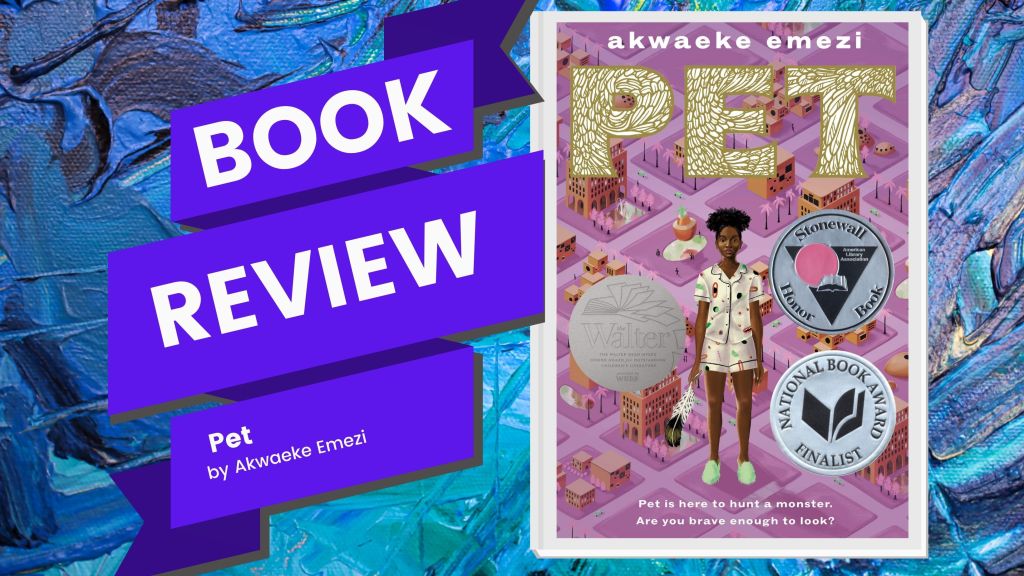
  • Pet by Akwaeke Emezi

    Pet by Akwaeke Emezi

    Pet is here to hunt a monster.
    Are you brave enough to look?

    There are no more monsters anymore, or so the children in the city of Lucille are taught. With doting parents and a best friend named Redemption, Jam has grown up with this lesson all her life. But when she meets Pet, a creature made of horns and colours and claws, who emerges from one of her mother’s paintings and a drop of Jam’s blood, she must reconsider what she’s been told. Pet has come to hunt a monster, and the shadow of something grim lurks in Redemption’s house. Jam must fight not only to protect her best friend, but also to uncover the truth, and the answer to the question — How do you save the world from monsters if no one will admit they exist?

    In their riveting and timely young adult debut, acclaimed novelist Akwaeke Emezi asks difficult questions about what choices a young person can make when the adults around them are in denial. 

    Goodreads

    Wow wow wow! This 200-page YA novel dives into the darkest of topics within one of the brightest worlds I’ve ever seen created. In a utopian society that has eradicated “monsters,” there is no crime and no prejudice. This has led people to believe that there are no more monsters…but this assumption proves to be dangerous.

    This is a story that is all about appearances and heart, and how it is not easy to differentiate a monster from an angel (literally or metaphorically). I got some serious A Wrinkle in Time vibes from Pet when an otherworldly being is simultaneously scary and comforting while offering a young person a hard choice via fantasy philosophy. I hope it goes without saying that this is EXTREMELY MY SHIT, and I was very moved by Jam, Pet, and their interactions.

    The names in this book are very strange (from Jam to Redemption to Whisper to Bitter), but the story is remarkable. Jam accidentally summons a creature from her mother’s painting, a creature who looks monstrous but is built to hunt monsters…one of whom lives in her best friend’s house. Her parents don’t believe it’s possible, and I adored the themes explored around people’s fear of terrible things leading them to ignore the terrible things themselves.

    Although the label of “monster” makes the topics this book addresses a bit more palatable, I think it is only fair of me to acknowledge that there is child physical and sexual abuse in this book; it is not described, but it is known to have occurred.

    Which leads me to my one complaint about Pet. Well, not even the story itself, but the book cover and design. The short length and the bright purple cover with a young girl in pajamas on the front made me assume that this was a middle grade book. When the text said Jam was 15 and she said “shit,” I went online and saw that it is categorized as YA. This makes much more sense considering the dark themes of the story, and I wish this were reflected in its design.

    Pet is one of the best books I read in 2021, and I am very curious to read Emezi’s adult novels!

    What Makes This Book Queer?

    Jam is a 15-year old trans girl. She doesn’t speak often, preferring to sign her words instead. When she does speak aloud, it’s for something truly important. When she was three, the first word she said (yelled, actually), was “Girl! Girl! Girl!” Her parents took her tiny word for it and stopped referring to her as their son. Her knowledge of herself is respected regardless of age, and she is given access to the hormones and surgery that allow her body to develop in more feminine ways during puberty. This is all explained within a page or two as an example of how this utopia differs from our current reality. Other than this section (and I think one mention later in the book), Jam is always referred to entirely as a girl. It feels revolutionary precisely because it’s NOT the focus of the book.

    Non-heteronormative relationships are also displayed in Redemption’s family. He has three parents, one of whom is non-gendered and goes by they/them pronouns. Overall, this world is just blithely accepting of everyone, and it’s beautiful.

    Rating: 5 out of 5.

    Check out our Queer Lil Library for more book recommendations and reviews!
    Find more books nominated for Lambda Literary Awards reviewed here!

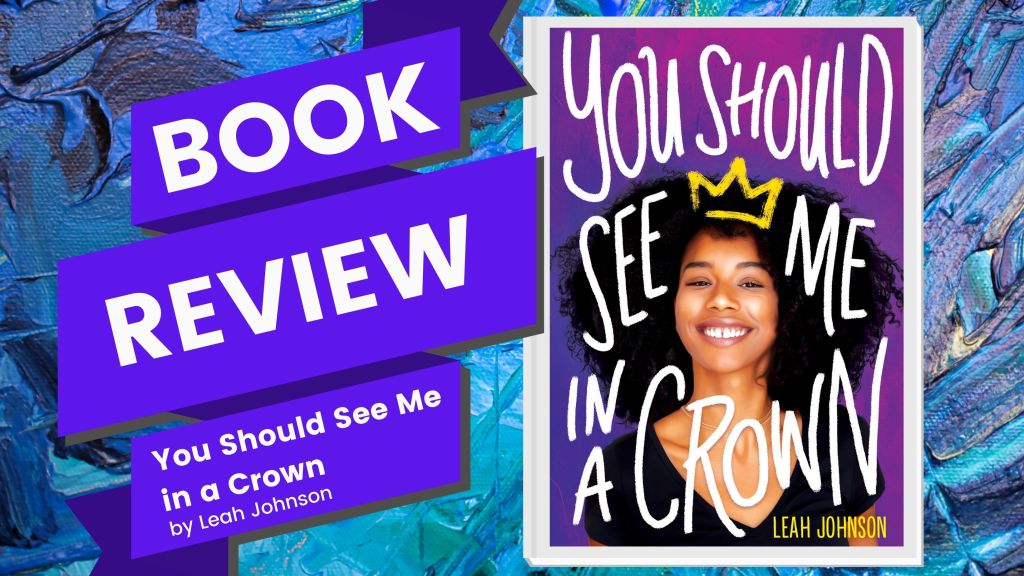
  • You Should See Me in a Crown by Leah Johnson

    You Should See Me in a Crown by Leah Johnson

    Liz Lighty has always believed she’s too black, too poor, too awkward to shine in her small, rich, prom-obsessed midwestern town. But it’s okay — Liz has a plan that will get her out of Campbell, Indiana, forever: attend the uber-elite Pennington College, play in their world-famous orchestra, and become a doctor.

    But when the financial aid she was counting on unexpectedly falls through, Liz’s plans come crashing down . . . until she’s reminded of her school’s scholarship for prom king and queen. There’s nothing Liz wants to do less than endure a gauntlet of social media trolls, catty competitors, and humiliating public events, but despite her devastating fear of the spotlight she’s willing to do whatever it takes to get to Pennington.

    The only thing that makes it halfway bearable is the new girl in school, Mack. She’s smart, funny, and just as much of an outsider as Liz. But Mack is also in the running for queen. Will falling for the competition keep Liz from her dreams . . . or make them come true?

    Goodreads

    You Should See Me in a Crown is a YA novel about prom that captures the high school experience in a way that actually makes me remember high school fondly. Yeah, it’s that good. I think it’s a mix of pop culture, swirling emotions, and combined fear and excitement about the future.

    It’s a little ironic that this book reminded me of my high school experience because I didn’t go to prom, but Lighty’s band geekery (woodwinds, represent!) made me so happy. I also resonated with her realization that although some popular kids are evil, most of them are good people who are fun to be around. I distinctly remember that experience during my senior year, and it made me wonder how different the previous three years might have been if I hadn’t been so committed to the nerd vs. popular crowd cliché.

    This IS a book that’s all about prom, and holy cow, does Lighty have to jump through hoops to try to win the crown. There is entirely too much volunteer work and event participation required, but despite my skepticism as to its basis in reality, it was a good set up for fun moments, from a bake off food fight to a football massacre.

    As much as I love the romance in this book (and we’ll get to it), one of the things I loved most was Lighty’s friendships. She’s got a great girl squad, but it’s her complicated relationships with Jordan and Gabby that show real depth and offer some lovely sentiments about forgiveness. And you know I love a platonic guy/girl friendship!

    What Makes This Book Queer?

    Liz Lighty has already come to terms with her attraction to women before this book begins, and she’s out to her friends and family. However, she keeps her sexuality hidden from the world at large, and I appreciated her hesitancy to come out in a small Midwestern town when she’s so close to escaping to a bigger, less homophobic world.

    This becomes much more difficult when she meets Mack, and omg, their relationship is so cute! Introducing a love interest with her defending the protagonist against a racist comment and casually being all, “I have a rule that I speak up when people do or say racist stuff” is excellent. I am also in love!

    My only complaint is that the drama in their relationship hinges on a lack of communication, and that is my absolute least favorite reason for drama. I get that Lighty is self-conscious about her family’s financial status, but it doesn’t feel that weird for a high school student to need a $10,000 college scholarship.

    Luckily, this is a YA novel, and….spoilers, I guess….but things wind up okay! I really loved every beat of Lighty’s experience of being outed and then supported. It gave me such “the kids will be alright” feelings.

    Oh, last thing: Campbell Confidential sounds terrible – do schools really have their own social media apps now??

    Rating: 5 out of 5.

    Check out our Queer Lil Library for more book recommendations and reviews!
    Find more books nominated for Lambda Literary Awards reviewed here!

  • Realizing You’re Queer When You’re 30

    Realizing You’re Queer When You’re 30

    When I was first starting to realize that I might not be entirely straight, I went to the Internet to find stories that might help me understand what I was feeling. There weren’t many. I hope this blog post will help change that.

    Realizing You’re Queer When You’re 30

    When I was 30, I didn’t know I was queer. I had just moved to Vancouver, and I was in awe of how openly gay and accepting the city was. I sent my brother pictures of church signs that welcomed LGBT people with captions like, “Can you believe it!?” When I came out to him later that year, he said he wasn’t surprised. Among other things, he noted my excitement about a thing that seemingly didn’t affect me.

    Is This a Friend Crush?

    When I put out the call to a Meetup group that I was looking to join a women’s D&D group, Rachel was one of the people who responded. During the first session, there was electricity between us as our creativity and humor bounced back and forth. I have a friend crush! I told several people, entirely unironically. It never crossed my mind that the ex she mentioned was a woman, and my gaydar was so undeveloped that her butch aesthetic never registered to me as gay.

    It was almost a month later that she explicitly labeled the ex as a woman, and I realized she was a lesbian. I did some quick recalculations in my head. Did this change my friendship crush? To my surprise, I asked myself, “What if this isn’t a friendship crush? What if it’s just a crush?” Within a week, I had journaled myself into the ground and come away with the fact I was most comfortable admitting: I was not entirely straight.

    Re-Evaluating the Past

    In hindsight, I was never entirely straight. Despite identifying as a heterosexual for three decades, I have never dated a man. I’ve gone on dates, but I preferred by far the delicious agony of pining after someone unattainable. The few times that physical intimacy was a possibility, my body went rigid. However, that was easily explainable. I grew up in conservative evangelicalism with purity and modesty culture. In fact, I thrived in it, since I have always loved rules and the security of knowing I’ve followed them. There is a part of me that wants to blame all of my repressed sexuality on this: I’ve always been gay, but I was indoctrinated to the point of not realizing! There is truth to this, I think. But I was also a socially anxious, awkward human who both craved and feared intimacy and vulnerability.

    When I parse through the interplay of religion and sexuality in my past, some things do stand out. Perhaps most importantly, I did not know any women who identified as lesbians or as bisexual. My older cousin was gay, and I’m grateful for the courage he showed in coming out to a Midwest God-fearing family. But that wasn’t exactly encouraging to me. Instead, I was witness to family members arguing about where the line between loving a person and hating their sin fell in regards to attending a gay wedding.

    Almost ridiculously, there is one specific moment from my teenage years that might have been the most important tipping point of all. In my senior year, I became friends with a girl who was smart, funny, and super cute. We spent all of our time together and took pictures of us hanging all over each other, although admittedly, this wasn’t unusual for teenage girls. Something about her felt different, though, and in a fit of fear, I brought it up to my mom.

    “I think I have a crush on her,” I said.
    “Oh, that’s just a friendship crush,” my mom said. “Everyone has those.”

    It embarrasses me now, how fully I accepted this. Friendship crushes! Everyone has them, so I have nothing to worry about! I spent the next decade reveling in friendship crushes with women who were fascinating and fun. I was even friends with a woman who told me she was bisexual. She was newly married to a man, and we used to tease him that we were going to get together while he was away. As I type that, I cannot fathom how I had those conversations and never questioned my sexuality. I was old enough to know better, but I wasn’t in a cultural situation that allowed me the space to question my identity.

    Testing the Queer Waters

    Eventually, things began to break down, though never so much that I had to come face to face with any consequences. I took “male” off the “interested in” profile on Facebook, leaving it blank, and I intentionally used vague pronouns when referring to potential future partners. Just for fun! To see what would happen! Literally nothing happened, because no one noticed. I wore slightly queer clothing (which for me was like, a flannel shirt) and wondered if anyone would think I was gay, but again, no one said anything. I realized once that all of the people I followed on Twitter were queer women, and I filed that away as interesting but not pertinent. And at some point, the question, “What if people think you’re gay?” became increasingly louder, though I never allowed myself to ask, “What if YOU think you’re gay?”

    Meeting Rachel was the spark for a fuse that I had been laying out for years, which is why, although initially surprisingly, I very quickly accepted it. It’s been three years since that moment, and although I now feel very comfortable labeling myself as queer, I still have so much confusion about where exactly I land on the sexuality spectrum and how to think about my past from my present understanding.

    One thing the internet has taught me is that no experience is fully unique. I believe that other people have had experiences similar to mine. Maybe some of you have felt similar shame and embarrassment about not realizing something that is supposed to be fundamental to our sense of identity. I hope that by sharing part of my story, you won’t feel alone in those feelings. We can sit in the embarrassment and joy and wonderment together.