Tag: nonfiction

  • 6 Queer Books I Read While Wedding Planning

    6 Queer Books I Read While Wedding Planning

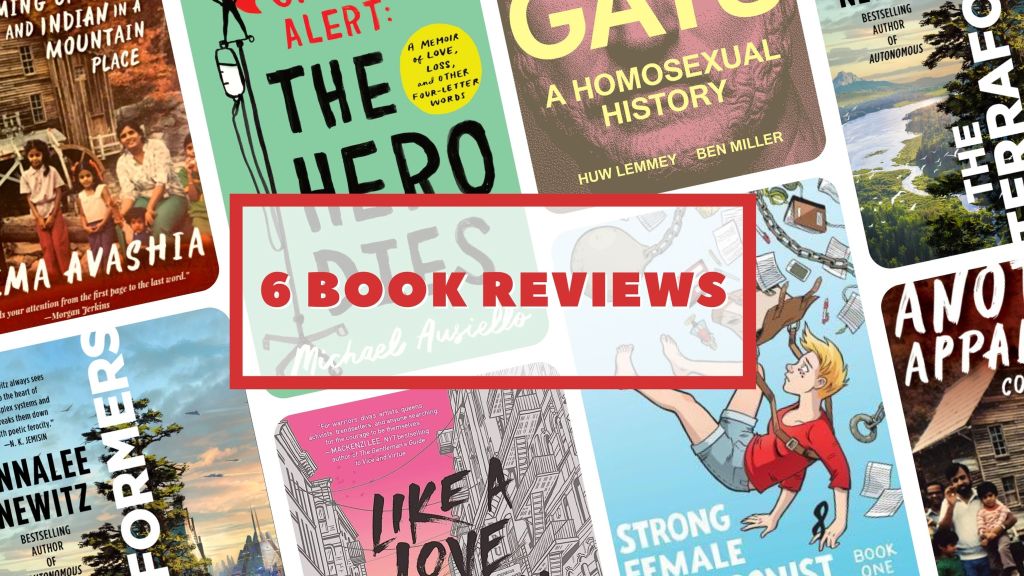
    Wedding planning really took the wind out of my blogging sails, but I’m back, and I want to talk about the queer books that I read during those months that I was MIA. From memoirs to graphic novels to YA to historical nonfiction, I’ve got a book recommendation for you!

    6 Queer Books I Read While Wedding Planning

    Spoiler Alert: The Hero Dies

    by Michael Ausiello

    This is the only book that directly relates to getting married, and WOW was it a good but hard book to read in the run up to committing my life to someone else’s in a world that is chaotic and impossible to control! A memoir about a gay couple’s relationship when one of them develops terminal cancer, I wound up loving it because it avoids trauma porn vibes by including a wicked sense of humor that rang really authentically to me. It’s devastating (look at that title) and uplifting in a “this is the human condition” sort of way.\


    Strong Female Protagonist: Book One

    by Brennan Lee Mulligan and Molly Ostertag

    I have recently fallen down the Dimension 20 hole, and I’m now obsessed with everything that Brennan Lee Mulligan has created. When I learned that he had created a graphic novel with Molly Ostertag, it was the easiest decision in the world to check it out. Although the drawings start out a little rough around the edges, in true webcomic fashion, the style crystalizes as the book progresses. As for the story itself, it’s a great character study on the weight of superheroism and what it means to do good in a morally and systemically complicated world. Why is it reviewed by RCR? Because the best side character is a lesbian!


    Bad Gays: A Homosexual History

    by Huw Lemmey and Ben Miller

    One of the evidences that queerness is becoming more culturally accepted is the growing genre of allowing gay people to be complicated, messy, and bad (see also: Detransition, Baby and The Ultimatum: Queer Love). This historical nonfiction covers the lives of (predominantly) gay men throughout history who have made the world worse, sometimes to a truly enormous extent. At the same time, Lemmey and Miller explore what “gay” has meant throughout history and how an evolving sense of identity has shaped people’s lives and actions.


    The Terraformers

    by Annalee Newitz

    Covering three points in time spanning over a thousand years, Newitz explores themes of personhood and capitalism on a planet being terraformed in the far distant future. It’s very much a theme-heavy book rather than plot-heavy, and my favorite part of the book is how detailed and nuanced her vision of future relationships (familial, friendly, and romantic) might look like. When I tell you that I found myself shipping a train and a cat (yes, you read that right) and feeling like it was the most obvious thing in the world, I hope that conveys the depth of Newitz’s skills. If you like Becky Chambers’ books, there’s a high likelihood that you’ll enjoy this too!
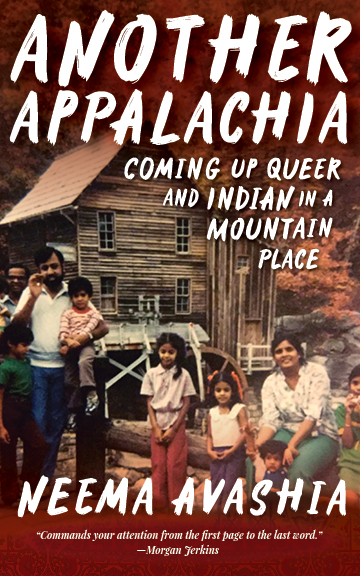

    Another Appalachia: Coming Up Queer and Indian in a Mountain Place

    by Neema Avashia

    Originally a book club pick, I highly recommend this short memoir of essays that reveals universal experiences through extremely specific life events. I loved reading about the intersection between Indian and Appalachian cultures and how the dynamic has shifted in the last couple decades. The author has such a love for her hometown while also feeling desperate to move on from it in a way that I think a lot of queer folks from rural spaces can relate to.


    Like a Love Story

    by Abdi Nazemian

    I put this beside Aristotle and Dante’s Discover the Secrets of the Universe in terms of being one of my favorite queer YA novels. It’s a story of friendship, young love, and community set in late 1980s New York City. That timeline means that the AIDS epidemic is front and center here, and reading this made me realize how rarely I see this time period reflected in YA novels. It’s such a necessary part of queer history to be told and retold, and this book really highlights how hard and scary it would be to explore and understand your sexuality in the midst of the crisis. While the context is necessarily dark, the story itself is uplifting, sweet, and moving.


    Alright, that’s me done playing catch up! From now on I should be able to get back into individual reviews.
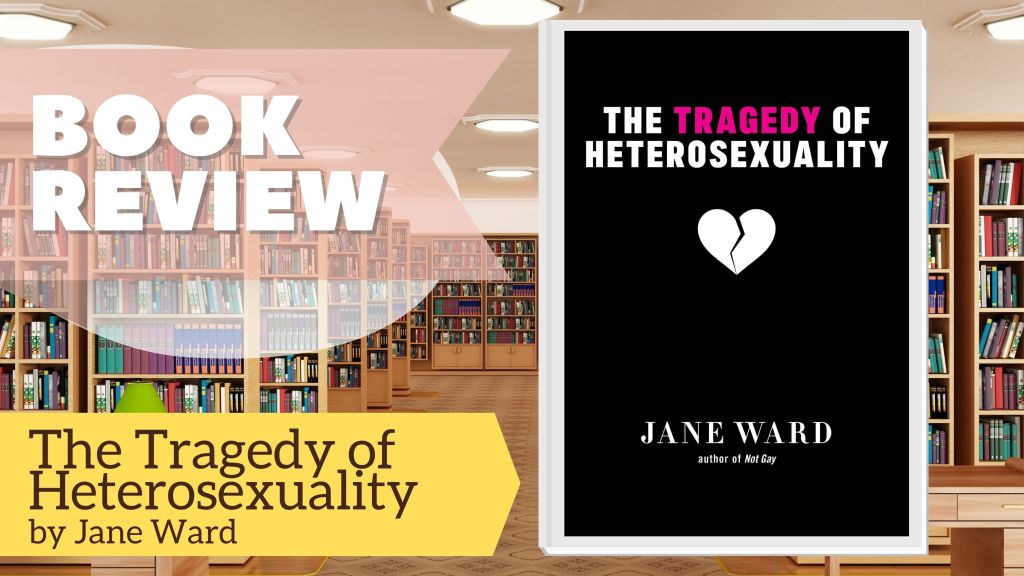

  • The Tragedy of Heterosexuality by Jane Ward

    The Tragedy of Heterosexuality by Jane Ward

    Genre | Nonfiction
    Page #s | 216
    Publishing Date | September 2020

    Heterosexuality is in crisis. Reports of sexual harassment, misconduct, and rape saturate the news in the era of #MeToo. Straight men and women spend thousands of dollars every day on relationship coaches, seduction boot camps, and couple’s therapy in a search for happiness.

    In The Tragedy of Heterosexuality, Jane Ward smartly explores what, exactly, is wrong with heterosexuality in the twenty-first century, and what straight people can do to fix it for good. She shows how straight women, and to a lesser extent straight men, have tried to mend a fraught patriarchal system in which intimacy, sexual fulfillment, and mutual respect are expected to coexist alongside enduring forms of inequality, alienation, and violence in straight relationships.

    Ward also takes an intriguing look at the multi-billion-dollar self-help industry, which markets goods and services to help heterosexual couples without addressing the root of their problems. Ultimately, she encourages straight men and women to take a page out of queer culture, reminding them “about the human capacity to desire, fuck, and show respect at the same time.”

    Goodreads

    With a title like The Tragedy of Heterosexuality, I was expecting a satirical, comedic take on the sad state of straight people. What I got instead was an academic treatise on the historical and social forces at work to create imbalanced and dangerous heterosexual dynamics and a feminist lesbian solution, and I loved it!

    The conditions of patriarchy have long damaged men’s desire for women, and women’s for men, such that heterosexuality, as a sexual orientation, was always already a contradiction. Women were too inferior, too degraded, for men to actually like. Women could be sexually desired, and they could be paternalistically loved; but they could not be engage as autonomous, self-determining humans in the way that men related to other men.

    The Tragedy of Heterosexuality

    The current iteration of heterosexuality (Ward walks readers through the historical shifts in male/female relationships over the past century, as well as the self-help books written to fix inherent problems therein) has a single, enormous flaw at the center of it: the misogyny paradox. Straight men are sexually attracted to women within a culture that belittles and insults them. This is why a guy can go from “You look beautiful today!” to “Learn to take a compliment, you bitch!” when his cat-calling goes unanswered.

    Most of the book is spent digging into all of the ways in which straight men and women have to work against stereotype in order to enjoy each other’s company; it’s grim but compelling. I read this a couple weeks after a friend of mine told me, “I know being gay isn’t a choice because I wouldn’t be straight if I had a choice. In my past relationships, I’ve been abused by more than half of my boyfriends, but I just keep being attracted to men.”

    “I am so lucky to have one of the good ones,” they say. Meanwhile, may of us queers are thinking, “That’s what counts as good?” We also know that the answer is yes, it is what counts as good, because as the folks quoted above explain, many straight men are violent and unpredictable.

    The Tragedy of Heterosexuality

    Although it was only a small portion of the book, I especially enjoyed the end when Ward shares ideas of how straight men can learn from lesbians as both share an attraction to women. Queer women tend to love women, with their weight gains and body hair and uniquenesses. Straight men, or straight male culture if we’re being generous and vague, love women who have waxed, dyed, and altered themselves.

    Of course, queer people and queer relationships are not inherently better than straight relationships, a point which Ward makes frequently. The difference comes from the fact that queer relationships operate outside of the system of tradition and assumptions that hamstring straight couples, even those who want to be progressive and feminist.

    Perhaps queers are doing no better, as many of us also lie, cheat, and engage in no end of painful behavior. But the thing about heterosexual misery that makes it so irreducible to human foible is that straight relationships are rigged from the start. Straight culture, unlike queer culture, naturalizes and often glorifies men’s failures and women’s suffering.

    The Tragedy of Heterosexuality

    I loved this book; it inspired a ton of conversations with my partner (my favorite of the moment is thinking through the difference between objectifying and subjectifying someone). At the heart of my love, I come back to what first drew me to this book. The title makes it clear that we’re flipping the script. Instead of assuming heterosexuality is the good and right default, queer relationships are allowed to take center stage as experiences full of meaning and wisdom that can be shared with our straight friends.

    Who Do I Recommend This Book To?

    If you’re a queer woman and a feminist and you like academic reading, run (don’t walk) to The Tragedy of Heterosexuality! And then talk to me about it!

    Check out our Queer Lil Library for more book recommendations and reviews!

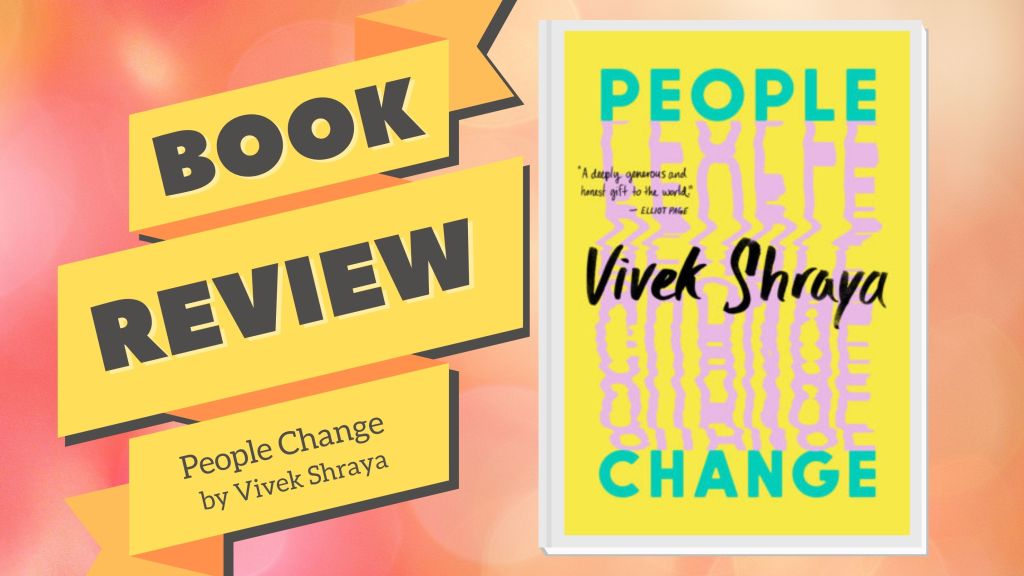
  • People Change by Vivek Shraya

    People Change by Vivek Shraya

    Genre | Nonfiction
    Page #s | 112
    Publishing Date | January 2022

    Vivek Shraya knows this to be true: people change. We change our haircuts and our outfits and our minds. We change names, titles, labels. We attempt to blend in or to stand out. We outgrow relationships, we abandon dreams for new ones, we start fresh. We seize control of our stories. We make resolutions.

    In fact, nobody knows this better than Vivek, who’s made a career of embracing many roles: artist, performer, musician, writer, model, teacher. In People Change, she reflects on the origins of this impulse, tracing it to childhood influences from Hinduism to Madonna. What emerges is a meditation on change itself: why we fear it, why we’re drawn to it, what motivates us to change, and what traps us in place.

    At a time when we’re especially contemplating who we want to be, this slim and stylish handbook is an essential companion–a guide to celebrating our many selves and the inspiration to discover who we’ll become next.

    Goodreads

    You know when you read a book that summarizes your disparate thoughts and feelings into a new life philosophy? People Change was that for me, and I think it’s incredibly useful in this age where we are realizing that identity, personality, and sexual orientation are more fluid than previously recognized.

    “I don’t believe in a single, stable, true self,” Shraya says, and in the distance, you can hear me cheering. This little novella is an emphatic assertion that it is okay to change – creatively, queerly, personally. As someone who has gone through profound shifts in identity in the last five years, I resonated with this so deeply. I see this very often in queer communities specifically; someone comes out, then retroactively finds evidence for being queer all along. This might be true, but often it feels like shoehorning new discoveries where they don’t belong. What if we just allowed ourselves to be capable of growth and change?

    Shraya allows for the confusion that comes with change, but makes a compelling case for embracing it all the same. In fact, she reframes “confusion” and “curiosity” and encourages readers to pursue a life open to change rather than living so “authentically” that we are stuck with outdated labels. Instead of trying to be a single cohesive self, Shraya suggests that we “be yourselves” – across time, across communities, and across experiences. We are complex creatures, and that’s not only okay. It is good.

    Who Do I Recommend This Book To?

    Give People Change to the thoughtful reader who likes for their books to challenge their thinking and promote deep compassion for self.

    Check out our Queer Lil Library for more book recommendations and reviews!

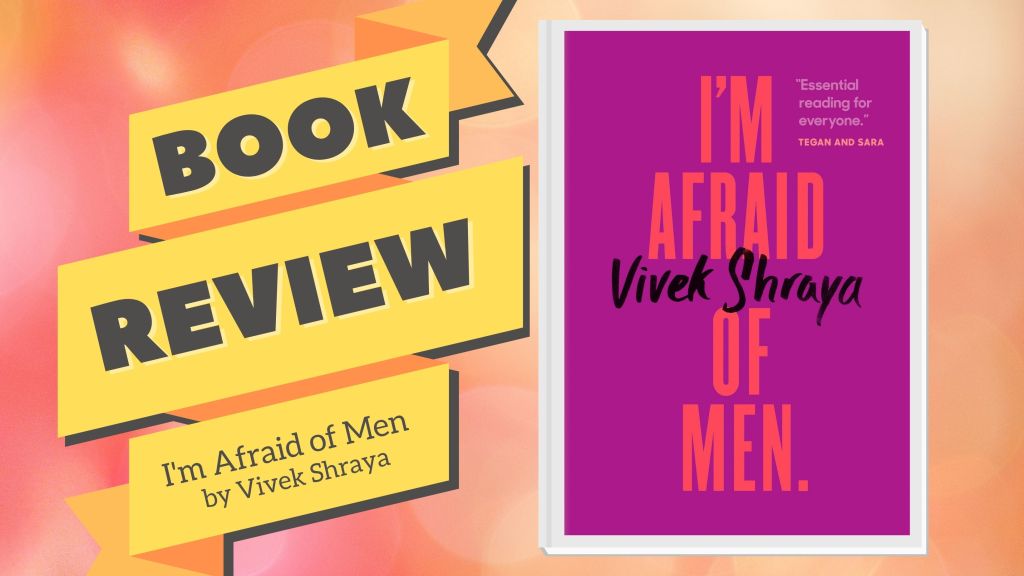
  • I’m Afraid of Men by Vivek Shraya

    I’m Afraid of Men by Vivek Shraya

    Genre | Nonfiction Memoir Novella
    Page #s | 96
    Publishing Date | August 2018

    A trans artist explores how masculinity was imposed on her as a boy and continues to haunt her as a girl–and how we might re-imagine gender for the twenty-first century.

    Vivek Shraya has reason to be afraid. Throughout her life she’s endured acts of cruelty and aggression for being too feminine as a boy and not feminine enough as a girl. In order to survive childhood, she had to learn to convincingly perform masculinity. As an adult, she makes daily compromises to steel herself against everything from verbal attacks to heartbreak.

    With raw honesty, Shraya delivers an important record of the cumulative damage caused by misogyny, homophobia, and transphobia, releasing trauma from a body that has always refused to assimilate. I’m Afraid of Men is a journey from camouflage to a riot of color and a blueprint for how we might cherish all that makes us different and conquer all that makes us afraid.

    Goodreads

    I loved Shraya’s The Subtweet and decided to check out everything she’s ever done! I’m so glad I did, because it led me to this tiny but mighty memoir dissecting toxic masculinity in simple but powerful anecdotes.

    The book is divided into “you” and “me” sections. The “you” second person point of view section forces the reader to take on the abusive, careless roles of men who have bullied, harrassed, and failed Shraya. It is such a smart move on her part to place readers outside of the victim’s perspective, since the ultimate point of the book is that we all exhibit toxic traits, whether male, female, cis or trans.

    Shraya’s perspective as a trans woman is especially meaningful, since she describes how toxic masculinity affected her differently when she presented as a man vs. as a woman. Spoilers! It was bad in either case! It is truly impressive how she manages to show the universally terrible impacts of toxic masculinity in under 100 pages.

    Although this isn’t necessarily the point of the book, I was really drawn to small hopes for gender expansion toward the end of the book. After transitioning, Shraya finds herself enjoying the freedom to indulge in femininity, but also mentions missing the ability to rock a beard or work toward bulging biceps. I share her hope that someday people will be able to present themselves to the world with any combination of masculine, feminine, or androgynous qualities, for as long as they want.

    Who Do I Recommend This Book To?

    This is the book to give to your friend who just learned the term “toxic masculinity” if you really want to help them achieve Galaxy Brain.

    Check out our Queer Lil Library for more book recommendations and reviews!

  • Ace: What Asexuality Reveals About Desire, Society and the Meaning of Sex by Angela Chen

    Ace: What Asexuality Reveals About Desire, Society and the Meaning of Sex by Angela Chen

    Genre | Non-fiction
    Page #s | 210
    Publishing Date | September 2020

    An engaging exploration of what it means to be asexual in a world that’s obsessed with sexual attraction, and what we can all learn about desire and identity by using an ace lens to see the world

    What exactly is sexual attraction and what is it like to go through the world not experiencing it? What does asexuality reveal about consent, about compromise, about the structures of society? This exceedingly accessible guide to asexuality shows that the issues that aces face—confusion around sexual activity, the intersection of sexuality and identity, navigating different needs in relationships—are conflicts that all of us need to address as we move through the world.

    Through interviews, cultural criticism, and memoir, ACE invites all readers to consider big-picture issues through the lens of asexuality, because every place that sexuality touches our world, asexuality does too.

    Journalist Angela Chen uses her own journey of self-discovery as an asexual person to unpretentiously educate and vulnerably connect with readers, effortlessly weaving analysis of sexuality and societally imposed norms with interviews of ace people. Among those included are the woman who had blood tests done because she was convinced that “not wanting sex” was a sign of serious illness, and the man who grew up in an evangelical household and did everything “right,” only to realize after marriage that his experience of sexuality had never been the same as that of others. Also represented are disabled aces, aces of color, non-gender-conforming aces questioning whether their asexuality is a reaction against stereotypes, and aces who don’t want romantic relationships asking how our society can make room for them.

    Goodreads

    The Roar Cat Reads community includes many people who identify as asexual, and I’ve long felt like the term demisexual could be a good fit for me. Despite this, I was eager to read Chen’s book to further educate myself and dispel cultural stereotypes about asexuality. I was not disappointed! This is a phenomenal book that is equally useful for those within and without the asexual community.

    For those who identify as asexual (or who might after learning more about the term), this book offers validation and inclusion. Asexuality is a spectrum with many lived experiences. Although the thing that binds asexuals is a lack of desire for sex, there is still a huge variety within the community of those who are sex-repelled, those who enjoy sex, and those who are somewhere in between. Additionally, the book covers aromanticism and the way that this interacts with asexuality. “If you think you belong, then you belong” seems to be the message of this book.

    For those who are not asexual, Ace does a great job providing frames of reference to allow anyone a brief glimpse from an asexual perspective (the anecdote about the game show Naked Attraction was very effective). Chen also calmly takes apart common stereotypes that exist about sexuality with compassion and an utter lack of judgment.

    My favorite chapters were those that dealt with the intersection between asexuality and race and/or disability. There are cultural stereotypes about Asian men and disabled people that cause asexuals within these groups to feel like they are letting down the cause by seemingly supporting the stereotype. Desire is a nebulous concept impacted by multiple factors, and Chen allows for all of this, ultimately insisting that the label of asexuality applies if you want it to apply.

    As soon as I finished this book, I wanted to read it again. It’s so educational and inspiring, and I want its messages to sink even deeper into my brain! Definitely a book worth buying.

    Who Do I Recommend This Book To?

    This book is great for everyone, but for different reasons. If you are asexual, or think you might be, this book will validate your experience. If you’re not asexual, this book will educate and enlighten.

    Check out our Queer Lil Library for more book recommendations and reviews!

  • We Have Always Been Here: A Queer Muslim Memoir by Samra Habib

    We Have Always Been Here: A Queer Muslim Memoir by Samra Habib

    How do you find yourself when the world tells you that you don’t exist?

    Samra Habib has spent most of her life searching for the safety to be herself. As an Ahmadi Muslim growing up in Pakistan, she faced regular threats from Islamic extremists who believed the small, dynamic sect to be blasphemous. From her parents, she internalized the lesson that revealing her identity could put her in grave danger.

    When her family came to Canada as refugees, Samra encountered a whole new host of challenges: bullies, racism, the threat of poverty, and an arranged marriage. Backed into a corner, her need for a safe space–in which to grow and nurture her creative, feminist spirit–became dire. The men in her life wanted to police her, the women in her life had only shown her the example of pious obedience, and her body was a problem to be solved.

    So begins an exploration of faith, art, love, and queer sexuality, a journey that takes her to the far reaches of the globe to uncover a truth that was within her all along. A triumphant memoir of forgiveness and family, both chosen and not, We Have Always Been Here is a rallying cry for anyone who has ever felt out of place and a testament to the power of fearlessly inhabiting one’s truest self.

    Goodreads

    An excellent memoir about the intersectionality of being Muslim and queer, written with honesty and directness. Habib’s story is one of restriction to freedom, including the freedom to return to the religion that imposed the original restrictions. After growing up in Pakistan, Habib and her family fled to Canada to escape religious persecution. She was married twice by the time she was 20, first in an arranged marriage to her cousin, and second to a friend who agreed to marry her primarily to provide her social security. As an adult, she began to accept her queerness, dating women, trans women, and gender non-binary folx. Having come to terms with her queer identity, she returned to Islam. She came out to her parents, who were also changed by their time in Canada, and discovered a mosque for LGBTQ+ Muslims. She developed a passion for sharing photographs of queer Muslims, giving a face to a population few realize exist.

    I think Habib is a remarkable woman, and I enjoyed this short memoir very much. However, it does suffer slightly from a common memoir issue: The stories of her childhood are fluid and concise. The nearer she gets to her current age, the more details are included, sometimes unnecessarily.

    The section that resonated with me most deeply was Habib’s description of traveling when she was newly out. She talks about the freedom of self-expression while traveling, of trying out a new identity in a place where no one knows the older versions of you. I have experienced that many times myself, and she expressed the joy and relief very well.

    I have to admit that before reading this book, I was one of those people who didn’t know much about queer Muslims. I knew that it was statistically likely that just as many people were queer in Muslim countries as in others, but I couldn’t point to any stories or people that I knew. I would love for Habib to write a book highlighting all of the queer Muslim folx that she interviewed – it would be hugely beneficial to me, and I assume to many others as well.

    Rating: 4 out of 5.

    Check out our Queer Lil Library for more book recommendations and reviews!