Genre | Fantasy Graphic Novel Page #s | 272 Publishing Date | July 2021
Based on the blockbuster podcast where the McElroy brothers and their dad play a tabletop RPG and illustrated by cartooning powerhouse Carey Pietsch, The Adventure Zone: The Crystal Kingdom takes this #1 New York Times bestselling series to haunting new heights.
A desperate call for help interrupts holiday celebrations at the Bureau of Balance, and sends Taako, Magnus and Merle on a high-stakes mission to find and Reclaim a fourth deadly relic: a powerful transmutation stone, hidden somewhere in the depths of a floating arcane laboratory that’s home to the Doctors Maureen and Lucas Miller. An unknown menace has seized control of the stone, and is using it to transform the lab into a virulent pink crystal that spreads to everything it touches.
It’s only a matter of time before this sparkling disaster crash-lands, but in order to find the stone and save the whole planet from being King Midased, our heroes will have to fight their way through a gauntlet of rowdy robots and crystal golems, decide whether they can trust the evasive Lucas Miller, and solve the mystery of what—or who—has put them all in peril, before there’s no world left to save.
Goodreads
Although this is the fourth installment in the graphic novelization of the McElroy’s D&D actual play podcast The Adventure Zone, the story stands on its own as an entertaining romp with the McElroy’s characteristic charm, side jokes, and zany creativity.
This time, Magnus, Merle, and Taako are saving a scientific research station that is slowing turning into pink crystal from crashing in the planet and crystallizing / killing everything. It’s a fun arc with beautiful artwork and a mix of fantasy and sci-fi tropes. This is what The Adventure Zone does best – throwing fun things at you, regardless of whether or not it makes complete sense.
In addition to a great plot and fun worldbuilding, this story has excellent characters. I love an ambiguous villain, and Lucas’s motivations remain clouded for much of the book, which is great! The work that he and his mom did on planar mirrors is super cool, and a focus on familial love rather than romantic love is always welcome in my opinion.
We get a lot of cameos and recurring characters in this section of the overarching Balance arc, which made Merle’s confused, “Who is that?” very rewarding as I was often wondering the same thing. This tongue in cheek acknowledgment of the sprawling story (as well as Clint McElroy’s hilarious inability to remember details) allows this story to stand alone while also moving the larger story forward.
Speaking of Merle! I adored his character growth in this book as his faith in Pan is tested pretty significantly. The pay off was epic, and I loved it.
I can’t wait for the next book to continue enjoying this story and the McElroy’s joyous humor. Until then – Happy Candlenights!
What Makes This Book Queer?
Taako flirts with death…literally. When the Grim Reaper appears and turns out to be a handsome man, Taako and death flirt fairly fantastically. I’m not sure if this is the first acknowledgement that Taako is gay, but it’s definitely the first time he openly has a crush (that is reciprocated). I ship them!
We also get some side queer action in the characters of Killian and Carey, and COME ON. An orc/dragonborn lesbian romance? Yes, please!
Who Do I Recommend This Book To?
If your preferred flavour of D&D is silly with a side of dramatic story beats, you probably already know about The Adventure Zone. Do yourself a favour and read the book in addition to listening to the podcast – it’s a great adapation!
Check out our Queer Lil Library for more book recommendations and reviews!
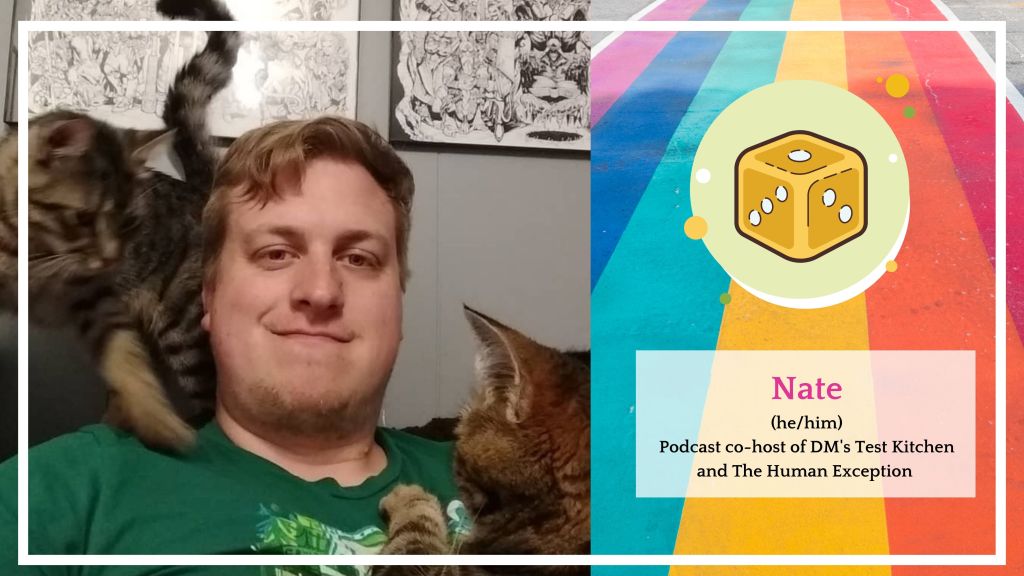
Nate, how long have you been playing D&D? What has your experience in the TTRPG world been like?
It wasn’t that long ago; I got into my first D&D game at the end of August 2017. A close friend of ours (Nate’s partner is Cayla) started a game online. It was a learning curve figure out both Roll20 and the rules of D&D at the same time. In fact, we spent the first two sessions just figuring out our characters and Roll20. I really enjoyed the social aspect of it, but I didn’t really connect with the characters until the DM stepped down. I don’t want the game to go away, so I stepped in to DM – that was Christmas of 2017.
When I started DMing, I spent a month going through the DM’s Guide to learn about the barbarian, rogue, and ranger classes so I could flesh out the game to make my players feel like they were using their characters in a way that was meaningful to them. I think the hardest thing when I started was that at that point, we were running with three players and I was DMPCing. I can separate what my character does from me telling the story, but I’ve found that it’s hard as a DM to play a really fleshed out PC and DM at same time.
My favorite part of DMing is the ridiculous shenanigans that people throw at you. You have an idea of where you think the story might go, but it never happens. The plan never survives the first encounter. Now I am about 95% No Plan when it comes to DMing; I just have story beats that I want to hit to give them lore and get them involved in the world. I lay those out a bit in advance, but how they get there is up to them. Sometimes I will make up encounters for different scenarios, but most of the time I’ll make up encounters on the fly. If players show special interest in a particular aspect of the world, then I’ll plan ahead to give them the lore dump and a scenario for a certain area.
I understand that you have recently come out as bisexual. Have roleplaying games helped you explore or express your queer identity?
I don’t know. Honestly, probably not a whole lot. For a long time, I wasn’t verbally out, but I was never shy about my actions or how I treated my friends or what I said. A lot of people were like, “Yeah, that tracks” when I came out. A lot of the characters that I play are more fluid in what they’re open to. My first character was a bard, but there was no idea that they could have a romantic interest in the world. The character was ostracized from his family and trying to figure out where they fit into the world in general rather than pursuing a romance.
I tend to play females more often in games that give me the opportunity. In video games like Dragon Age, where the option to romance men and women is there, I’ll figure out which character is most interesting to me and I’ll romance them.
Who did you romance in Dragon Age?
I’ve only played Dragon Age: Inquisition, and I romanced Sera. At first, I couldn’t stand her character, but the more characters you add to your party, the more interesting her interactions become. Her character is similar to my D&D characters – pretty chaotic. When I realized that, I thought I’d give it a try to romance her! A lot of it is “What can we do to prank these people all of the time.” She’s not what you stereotypically expect an elf to be, which I like, and she had a fun story. She hides things because she feels like she doesn’t fit in anywhere; her attitude is “If I’m having fun, I don’t have to think about anything else!” Being able to draw that out of her was really satisfying.
You have told me a little about some creative and detailed worlds that you are building for D&D. What interests you most about the worldbuilding process? What part is the hardest?
When I build a world, it’s usually built around an event of some kind. The game that we’re playing now for DMTK, I built in 2018. It all started around a plague… Before that, everything in the Overworld was prosperous. There was peace, technology, and all sorts of things. Then a plague ravaged everything and everyone went underground. In the campaign, all of the players start in the Underdark, where there are huge mountains in a massively cavernous space, including an ocean with multiple coasts. The whole idea was that it’s been 200 years since everyone went Under. I want the characters to figure out what has happened to the Overworld, and will it be safe to go up and check it out?
I have a really hard time with continuity and figuring out what’s going on in the world when the players are doing one thing but there’s stuff happening elsewhere. I always have things going on in the back of my head about what’s going on on the other side of the continent, but I struggle with figuring out how do those move forward when players aren’t interacting with them.
I’ve recently tried to finish campaign 2 of Critical Role – I’m on episode 120. One of the really interesting things I’ve been trying to glean from Matt’s DMing (spoilers) happened when they all ended up back where Sam’s character lived with her husband and kid. The town was ravaged, and they were like “Oh, what happened?” and Matt responded, “If you decided to come back two weeks earlier, you might have been able to stop it.” Whoa!
Once, I had a group that talked their way out of a whole dungeon. The idea was that there was a sleeping dragon under the mountain that had been sleeping long enough that it was covered in rock. The kobolds who worshipped it built a temple around the dragon. My group went to the temple, got some lore, and said, “No, we don’t want to deal with this.” They handed over a bunch of really expensive spell components and magic items to the kobolds in return for the thing they were looking for in the temple. Instead of waking the dragon by taking the stone like I planned, the kobold shaman finished his ritual, absorbed the dragon, and turned into a giant kaiju. But the group just took off in their airship and said “Nope! Goodbye!”
What advice do you have for GMs who want to get better at worldbuilding?
The biggest thing is focus on a city or a place that is important to your world first, then figure out how that place interacts with other things. Think about how cities interact with each other. What does each city look like? Are there specific regions that people live within? Is it all just one area with self-governing cities? Then figure out the land around the cities and how the cities impact the land around them. How does trade work between cities that are more advanced with smaller communities that are less advanced?
What nerdy interests are you most excited about right now?
Up until a month ago, I was playing a lot of FF14, and I feel like I need to get back in, especially because a new expansion in November. I’m part of a ridiculous guild with a bunch of anime nerds that are on all of the time. They do a lot of events, like playing hide and seek every night.
I also really like anime; it’s my weekend guilty pleasure. I’m watching My Hero Academia right now, and one of my favorite shows is Restaurant to Another World. It’s about a Japanese café where every Saturday, a door shows up in the fantasy world side and wizards and dragon folk show up to this regular guy’s restaurant to eat.
Do you have any recommendations of queer nerdy content that you would like people to know about?
Ice Cream Dice – Marc is an absolute gem. He does great work, and has a lot of fun with his unique dice brand. Bonus points: he is Canadian and from Edmonton.
If people are interested in the weird shit people do – Cayla, Halli and I are going hard on The Human Exception podcast. This project has been a lot of fun, and we get into some really weird stuff. In one episode, we talk about Mount Rushmore and how behind Lincoln’s head there is a time capsule with a tunnel and everything. We also cover the weird conspiracy theories that people have about the place. Our second episode might be more interesting to Roar Cat Reads readers – we talk about the origins of the word “homosexual” in the Bible. Eventually, there will be episodes coming about how I was raised, so stay tuned!
Thank you, Nate!
Are you an Adventure Queer? Do you love to play D&D? Email us at roarcatreads@gmail.com to let us know you would like to be interviewed!
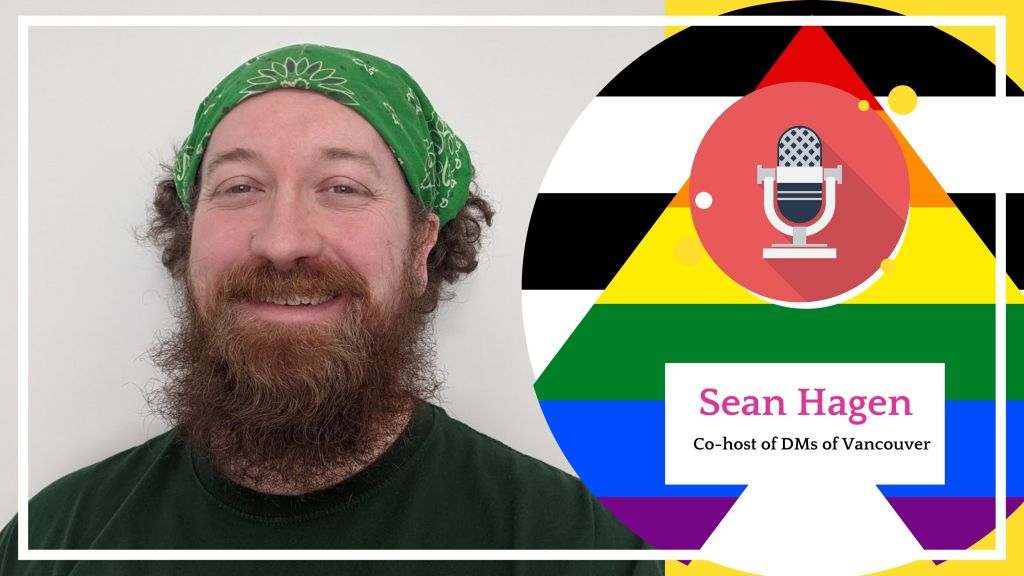
My name is Sean Hagen (he/him), co-host of DMs of Vancouver with Jessy Boros (he/him). I’ve been playing video games almost my entire life, and only somewhat recently got into tabletop RPGs via D&D 5th Edition. Since then I’ve played a whole bunch of games and have plans to play a whole bunch more. You can find me online on Twitter at @seanphagen, Instagram at @seanpatrickhagen, or on my website https://seanhagen.ca !
As one of the hosts of the podcast DMs of Vancouver, you have interviewed a lot of D&D players and DMs. How has your experience of D&D changed as a result of the podcast?
It’s been eye-opening for sure. I think the biggest thing has been realizing that everyone comes to the table for a different reason, and that as a DM you’ve got to be open to that. Some players are there to be social with friends, some are there for story, one of a thousand other reasons, or even a mix of reasons! I think that’s definitely part of the anxiety new DMs feel, wondering how they could possibly run a game that makes all their players happy. What I’ve learned while doing the podcast is that all you can do is be open and honest with your players about what kind of game you want to run, and to ask for honest feedback that you incorporate into your game. There are things you can do ( like running a session zero and using the safety toolkit ) to ensure that everyone is on the same page and having as much of a good time as possible.
Everyone coming to the table with a different set of purposes and experiences is great, because you can run a really fun game that is utterly unique to your table, and that’s mind blowingly awesome to me. Getting to tell an epic story of a group of adventurers facing down death & danger as they go about saving folks sounds like an awesome way to spend time with friends. The downside is that sometimes trying to relate stories of your awesome game to friends or family feels like trying to explain a dream, but that’s a price worth paying, I think!
Also, as a DM I’ve learned that not only is it okay to have parts of the game that excite you more than others, that’s great! For example, the recommended wisdom for new DMs is to start small, maybe only build a town or small province to run a homebrew game in. When building the world for my first homebrew game I went down a rabbit hole of map making and history building. I surfaced after a week with a binder of maps and tables and a calendar with major celestial events to use when running the game. I put, honestly, probably too much work into that binder.
I felt kind of foolish after putting in all that work into building this world, but soon realized that it had an awesome side benefit: I could ad-lib bits of history and art with total confidence, because I had already sketched out so much that I had a whole world inside my head I could draw upon. I ad-libbed all the descriptions for the statues and mosaics in a dwarven tomb because I knew their history and major events (and how dwarves in that world tended to hugely exaggerate their stories, good and bad parts alike). I was able to foreshadow an upcoming plot point as part of a mosaic because I had all that info in my head, waiting to be put to use. I don’t think I’d go that in-depth again in the future, but if I do I know not to worry about it.
We’ve talked to so many DMs with different jobs and experiences and views on D&D – each of their games is going to be unique to that DM. So for any new DMs (or folks thinking of taking the plunge): don’t worry that your game is going to be different from what you’ve seen online or read about; that difference and uniqueness is why your players are going to love YOUR game!
You are a straight man, but you have included many LGBTQ+ people in your podcast and intentionally create safe and welcoming spaces. How did you cultivate this attitude and awareness?
Honestly it’s been on my mind since we started the podcast. In tabletop games, the voices of straight white dudes are kind of predominant. We’re assumed to be the default consumer for tabletop games in most circles. I’d bet that for the majority of people, if you asked them to picture a D&D player they’d probably imagine someone who looks something like me.
If there’s one thing I know from my day job as a programmer it’s this: having a diverse set of folks contributing to the thing you’re making can only make it better. As a straight white dude, I can do all of the reading, come up with checklists, and do my best to make something inclusive – but I’m going to mess up at some point. I’m going to forget something, or not notice something problematic simply because it’s not something I have to deal with as a straight white dude.
I see it all the time in programming; features that should have either never made it to market or been seriously re-worked got released because there were no women, BIPOC, queer, indigenous, or other marginalized voices on the team. There was nobody to point out that this feature would make it easier for an abuser to track someone down, or that feature would make it easier to out someone before they’re ready, and so on.
And the same thing goes for tabletop games. How long has D&D been able to get by with all of the racism baked in simply because they assumed the audience was straight white dudes who didn’t care?
So since we started the podcast, I’ve been doing what I can to educate myself. I keep an eye out for articles about problems like racial coding in D&D to learn about the problematic bits of the hobby and learn how to do better. I’ve also been looking for non-straight, non-white, non-male folks in the tabletop space on Twitter to follow so I can learn from them. I’m also just taking the time to analyze stuff I’m thinking about putting into a game to try and make sure I’m not leaning on problematic tropes.
It’s an ongoing process that requires ongoing work on my part. But it’s worth it! There are so many experiences and viewpoints out there, making the games we play more inclusive will only make them better. Also, there’s more than enough Western fantasy-inspired stuff out there, so getting more diverse folks creating in the tabletop space means more awesome stuff for me to check out. I’ve had more than enough of that in my life.
Give me more of the Afrofuturism from Black Panther. Show me a fantasy world built on the myths and traditions of an Asian culture, written by someone from that culture and not a white dude. Amaze me with a sci-fi world built by folks from South America. What does an urban fantasy game built by someone from India look like? There are so many rich myths and fantastic folklore traditions in the world — time to give them their chance to shine in the spotlight. And we’re starting to see some of that stuff coming out, too. I’ve got my eye on Thirsty Sword Lesbians, because that looks like a super fun game.
What advice do you have for other DMs about how to create safe spaces for queer players at their tables?
Whether you’re trying to make a space fun or safe, it all comes back to one thing: communication. Regardless of what system you’re running, the biggest piece of advice I can give is this: RUN A SESSION ZERO. Your first session should always be a Session Zero, no questions asked. Whether it’s your 500th game of D&D or your first game in a new system, running a session zero has so many benefits.
There’s all the basics of a session zero you’re probably aware of: agreeing on what kind of campaign you’re going to run, what kind of tone, how the party all know each other, and stuff the players would like to achieve ( “I want to earn the trust of a gryphon and learn to ride it!” ). It’s also a chance to go over more mundane stuff, like any house rules for critical successes or failures.
But beyond that, session zero is also where you lay the groundwork for creating a safe space for your players, queer or otherwise.
Lay out all the bits of the safety toolkit, and explain how they’ll be used. Go over stuff like the X card, lines & veils, and decide as a group on what kind of film rating you’re aiming for ( it’s a zany PG-13 adventure with swearing” VS “it’s an R rated horror film with vivid descriptions of body horror” ).
Let players know that if there are topics that should absolutely be avoided that they can say so now or send you an email or text. They don’t need to provide any kind of reason – and don’t ask for one, either. Also, their issue doesn’t have to be related to queerness or otherness. It’s a time for anybody to speak up about stuff you can do to make their experience at your table better.
For example, maybe you’ve got an arachnophobe in your group — so replace the giant spiders with giant snakes. Maybe you’ve got a player with auditory processing issues, so they’d prefer no loud music during battles. Another player might have PTSD from being in a war zone, so you know to try not to make any sudden loud noises without warning them. Anybody might have something that if encountered at the table will lead to a bad experience, and the session zero is your chance to become aware of all of those things so you can avoid them.
You shouldn’t be planning to jump into the campaign during session zero, so you’ve got time to make any tweaks or adjustments.
And yeah, it might take some work, especially if you’re running a module; but it’s worth doing because then you know you’re running a game where everybody at your table is having a fun time. I don’t know about you, but it’s hard to feel good about running a game when someone isn’t having any fun.
And when it comes to running games that deal directly with stuff like racism or sexism, or games where those play a major part? My suggestion is that unless a group of players come to you specifically wanting to play in a game that deals with that kind of stuff, maybe just leave that stuff out entirely.
Okay, so you want to know the best part about doing all this stuff, and doing it right? You don’t have to even know that one or more of your players is queer!
It’s kind of like having someone with undisclosed trauma or PTSD – someone can have something that will trigger them and lead to a real bad time, and it’s pretty easy to avoid those things if you put in literally the tiniest amount of effort.
I think that’s what I find so bizzare about the people who complain about safety tools and running a safe table for everyone. It’s not that much effort, and you get to know you’re running a game that everyone actually is enjoying! I don’t know about you, but I want folks to have a good time when they play at my table. It’d absolutely crush me to find out someone has been spending the last few sessions miserable because of something I said or did without thinking. So to know what stuff to avoid ahead of time means I’m more confident that I’m creating an experience everyone can enjoy.
Because I want to have fun when playing tabletop games, and for me to have fun everyone has to have fun.
Lastly: if you’re a straight white dude and this all sounds annoying, or like a lot of work, or wah wah I’m thin skinned and don’t like new things – either do the work or go back to your cave. I’ll be over here running awesome games with fantastic people and having the time of my life.
In general, what are some of your favorite tips and tricks that you use while DMing, either in the creation stage or while playing?
I think I fall more on the “improv” side of the DM spectrum, so my tips and tricks definitely revolve around prep.
Donjon is indispensable, whether you’re running D&D or not. It’s got generators for all sorts of things, including generating world maps.
Another great system-agnostic tool is RPG Cards. I used this to generate cards for any magic items I was planning to give out, as well as generating a bunch of cards for stuff like potions, scrolls, and whatnot. The Gale Force 9 spell & monster cards are great as well — I’ve got a full set of the base spell cards, which I hand out to my players so they’ve got an easier time referencing their spells than flipping through the Player’s Guide. The only downside is that the Gale Force 9 cards are not exactly cheap. Maybe suggest to your players a deck as a thank you gift after you run a great campaign for them?
Another great tool is RPG Tinker. I use it to generate “captain” NPCs – NPCs that have special abilities so that I can mix up combat a bit. Useful for friendly or enemy NPCs, or if you just need something more than a regular human as the boss of a gang or something.
Lastly, I think something that’s more advice than tip or trick: be aware of when you’re getting burnt out! As a DM, you’re going to have a lot on your plate; not to mention all the stuff from your life away from the table. If you find yourself not looking forward to playing, or find it impossible to get psyched about game night: take some time and examine why you’re feeling that way.
I got burnt out after switching to playing online (which happened before the pandemic, funnily enough). The reason was that due to a quirk of my brain, the maps that I would draw on the battle mat when we were all around the table just weren’t good enough and so I ended up spending hours trying to make maps to use in Roll20. All the extra effort ended up burning me out and I ended the campaign early. They beat the big bad, but rather than having to chase down the lich to find and destroy the phylactery, I just ended the campaign after the boss fight.
Now I know that if I’m going to run a game online it has to be entirely theatre of the mind, otherwise I’ll just get burnt out trying to produce assets for virtual tabletops like Roll20.
So keep an eye on how you’re feeling when you sit down to prep (or if you’re unable to even sit down to do prep!). Your players should be okay with you taking a week or two to recharge so that you can come back to the table full of vim and vigour. And to be frank, if you’re not happy running a game your players aren’t going to have fun playing in it.
I care about you, reader, and want you to enjoy running games; so take care of yourself! It’s important.
What can we expect from DMs of Vancouver in the future?
Good question!
I’m hoping to run a contest or two in the future. I’ve got some goodies from backing Kickstarters at a level where I’d get duplicates, specifically with the idea of giving them away to our listeners.
I’m also hoping that we can continue to showcase non-D&D games. At the start of 2021 we started doing reviews of non-D&D games, and it’s been a blast. I love getting to talk about other systems, and not because I’m bored of D&D. There are so many systems out there that are much better suited to different themes and play styles, so getting to explore those and tell our listeners about them has been a blast. I also have a bad habit of buying rule books before I even know if I’m going to run a game in that system, so I’ve now got an excuse to buy a few more rule books!
We’re also going to continue to do our best to lift up and showcase non-white, non-straight, non-male voices. Whenever I think about this topic, I keep coming back to the Issac Newton quote “If I have seen further it is by standing on the shoulders of Giants”. I think it’s time for white folks (especially white dudes) to realize we’re the giants.
We need to lift up and champion the voices of folks not like ourselves – otherwise the hobby will just stagnate or regress. There’s so many folks out there with awesome ideas. Making the hobby more inclusive doesn’t mean less for us, it means more awesome for everyone! And the more diverse voices who engage with the hobby, the better and stronger our hobby will get.
Thanks so much for giving me some space on your site to blather on! And to you reader, I can’t think of any way to close this out than to do it the same way we close out our episodes of DMs of Vancouver: Hope to see you out there at the gaming table!
Thank you Sean! Everyone should give DMs of Vancouver a listen today.
As a co-host of the podcast DMs of Vancouver, you have interviewed a lot of D&D players and DMs. Has your experience of D&D changed as a result of the podcast?
Yes, and for multiple reasons. Making the show and talking to people is a really valuable experience because you get to hear people talk about how they run a game. I always try to approach each episode with the perspective that there are very few wrong ways to run a game, other than “Don’t be terrible to your players” and “Don’t abuse your players.” I try to come in with an open mind. It helps that when we started the show, I really wanted to learn from people, both how to play and how to DM.
Of course, sometimes I learn useful skills from our guests that I would never want to put into practice. One of our guests (Jane Perella, episode here) is a school teacher who runs a D&D Club for fifteen children! I never want to do that exactly, but I still learned a lot from her. In fact, that’s one of my favorite episodes, and she is going to be on a follow up episode soon!
The other reason my experience of D&D has changed is because I’m on social media so much for the podcast. I keep track of the TTRPG Twitter sphere, and I see a lot of different generational differences. I once saw someone say, “If your DM ever says no to you, that’s bad.” I don’t agree with that, but I also tried to look at it, consider it, and figure out where they were coming from.
Are there any specific examples of things you’ve changed in your D&D style over time?
I learned to use online tools from Sean. Honestly, it’s hard to know how I’ve changed, because I don’t notice when it’s happening. I’m starting a new campaign after a long pandemic pause, so maybe I’ll notice that I’m a completely different DM because it’s been a while.
I do still think about something that Milo Applejohn said about representing neurodivergent characters in your games. They said to include those characters but don’t make that characteristic the whole character. Especially if you’re not a part of that group, make it a detail, but don’t play it a stereotype. Always keep in mind that people are much more than just being neurodivergent, LGBTQ+, etc.
You are a straight white cis man, but you have included many LGBTQ+ guests on DMs of Vancouver. I have been very impressed with how you intentionally create safe and welcoming spaces for queer people. How did you cultivate this attitude and awareness?
Honestly, when Sean and I interviewed our friends for early episodes, we sometimes didn’t know they were queer. As people come out as trans, I try to go back and change their dead names in the episode titles. I also became friends with people who are openly queer as my wife Haley and I became involved with the Vancouver comics community.
When it comes to creating a safe space, we really just want the podcast to be welcoming to everyone who isn’t a raging asshole. We are constantly trying to do better. For instance, during the Black Lives Matter movement, we took a look through our list of guests and realized that we don’t have many POC guests. We want to change that moving forward. It’s funny, when we mentioned this in an episode, someone messaged and asked if we were called out. We weren’t! I’m just on Twitter in leftist spaces, and I paid attention to the conversations people were having. It’s a joke that the old guard of D&D are all straight white cis guys. We are straight white cis men, but we always want to be improving.
What advice do you have for other DMs about how to create safe spaces for queer players at their tables?
I never want to do anything homophobic or transphobic anyway, and most of my regular players are queer. If I do something shitty, I hope that they’ll tell me, “That sucked. Don’t do that.” I think DMs should listen to their players, both verbally and nonverbally. Pay attention if they’re obviously uncomfortable. And if you’re a straight white cis guy, do your research! Find trans or queer creators and read and watch their stuff. People think it’s harder than it is. Just listen, learn, and try.
Specifically, I recommend Kienna Shaw and Lauren Bryant-Monk’s TTRPG Safety Toolkit.
In general, what are some of your favorite DM tips and tricks?
Like I mentioned earlier, I’m starting a new campaign. For the first time, I sat down with my players beforehand to create the world together. I gave them some general details and big picture stuff, but we made the setting as a group. That won’t work for everybody, but if you’re open, I think you should give it a try! You get some really interesting ideas.
Our campaign will be in a post-apocalyptic setting where magic faded with the advancement of technology, but that fell apart and now magic is re-emerging. It’s mostly a desert, but there is a single snowy mountain in the middle of it all. They really helped me put together a complex interesting world. Because it’s the desert, we decided most people would live underground, and someone had the idea that people would live in abandoned parking garages, with property divvied up by the lines there.
When we were creating together, there were a lot of moments when I was thinking, “I’m mad I didn’t think of that; that’s amazing!” I would have come up with something more like a stock fantasy town, and now it’s going to be way more interesting. Of course, I still have a lot of work to do to tie together some disparate ideas, but now my players are already invested in the campaign.
DM Advice from Jessy:
Talk to your players and ask if they’re enjoying the game. If no one is having fun, it’s okay to just stop the campaign! It sucks, but it’s better than dragging on too long. My first campaign ended with me being super burnt out and not wanting to play or DM again. That feeling ended pretty quickly, but there’s no need for it to get to that point.
If you hear an idea that everyone seems to use or love, but you don’t like it, don’t feel like you ought to. I don’t like critical fumble/hit tables, so I don’t use them.
If you are going to use homebrew rules, let your players know before you begin the session or campaign. If you make something up on the spot while playing, talk to the players to agree and then give everyone a grace period to get used to the new rule.
What can we expect from DMs of Vancouver in the future?
Our 100th episode will air in late October. We’re still deciding how we want to celebrate, so stay tuned!
As we move forward, one of the things we want to focus on is playing more games and reviewing them. It’s been a lot of fun when we’ve done it in the past, but they take a lot of work.
Recommendations:
Rolling with Rainbows is an actual play podcast by GM Sophie (Curio on YouTube) where they play a Call of Cthulhu TTRPG, and their episodes are only about an hour long.
Thank you for taking the time to share your stories with Roar Cat Reads, Jessy! Everyone should head over to DMs of Vancouver and check out their nearly 100 episodes.
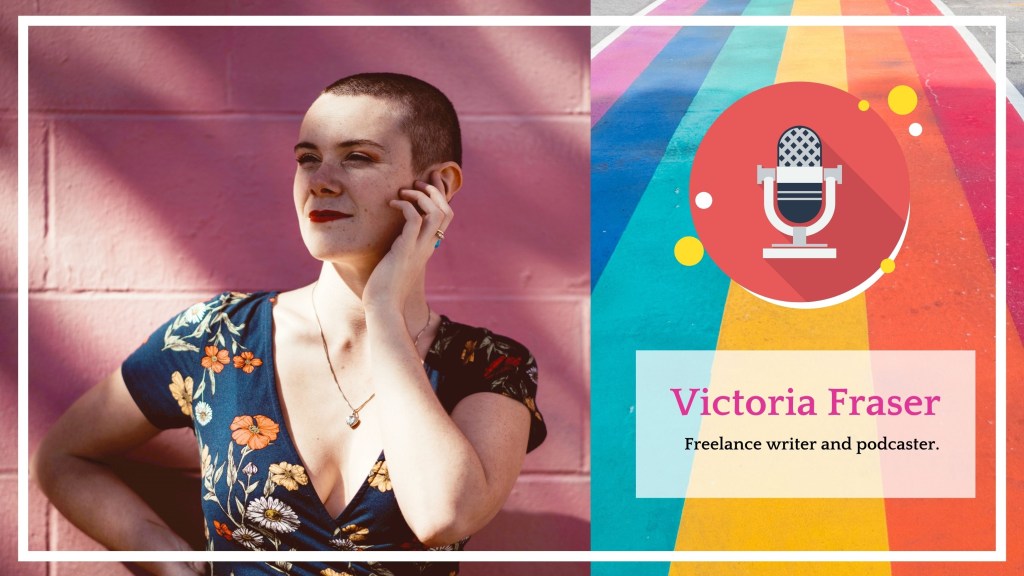
Victoria Fraser (she/her) is a freelance writer and podcaster. She has worked on several podcasts, most notably Boardgame B*tch where she reviews board games and has all sorts of fun board game badassery.
I recently had the privilege to be a guest on Boardgame B*tch to discuss one of my favorite table top games: Wingspan! Check out the episode now on the Podcast delivery site of your choice: Apple | Spotify | Google Podcast.I wanted to get to know Victoria a little more, and she kindly agreed to chat with me about her history playing games and some recommendations of board games that I’m eager to try out!
Victoria, you host the podcast Boardgame B*tch where you discuss the rules and playability of table top board games. What prompted you to create Boardgame B*tch?
I got into podcasting during university through the UBC Creative Writing program. We had to focus on three different genres; although I mostly took classes in children’s writing, comics, and poetry, during the last semester I took a podcasting class. Honestly, I hadn’t really listened to a podcast before that class! I knew about radio plays and radio dramas, though, so I thought it would be fun.
That class made me fall in love with podcasts! My classmates recommended some of their favorites, like “Spirits,” “Serial,” and “The Adventure Zone.” We had to make practice podcasts for school, which made me want to start a podcast of my own. From the very beginning, I wanted to host a podcast about board games because they’re one of my favorite things to talk about. But it wasn’t the right timing at that point. Instead, two years ago, my friend Allie and I startedI Like Your Dress where we reviewed Vancouver-based restaurants, festivals, and other things. That’s how I became connected to the Cave Goblin Network.
A year ago I started freelancing and focusing on my business, and that left less time for our podcast. I stepped away, but couldn’t stop dreaming about that original idea of a board game podcast. When my life felt a little more balanced, I decided to give it a try. Boardgame B*tch was on Patreon for a few months before going fully live in April 2021, and I’ve just started my second season!
It sounds like board games have been important to you for a long time. What is your history with board games?
I like to say I’m a third generation gamer! My grandmother played bridge, and my mom loves playing games. In fact, she bought a bunch of D&D books in the 80s but couldn’t find anyone to play with. I taught her how to play a couple years ago as a Mother’s Day present! I grew up playing cards, poker, board games, and Euro games with my family all the time. I have a picture of myself when I’m 2 or 3, and I’m rolling dice, looking super fucking pumped; I still play “Dice” (a simplified version of Yahtzee) with my family. Every Christmas we all get board games as gifts and then we spend Boxing Day playing them.
That’s amazing! And what would you say is your favorite board game currently?
I’m glad you said “currently”! It changes all the time, but right now I would say Tokaido. It’s this great game set in Japan where players are tourists traveling the Tokaido road taking pictures and buying souvenirs. It’s a very peaceful board game that is artistically very lovely and has cool mechanics and movements.
I also love party games! Even if they’re mechanically simple, they’re so much fun socially. Rules are great, and I love a complicated game, but sometime you just want some quick fun with your friends. I especially loveSuperfight, a game where you create fighters in a ring with weird traits and Cult Following, where you’re all cult leaders trying to start a cult. You have to create a story and recruit more players to join your cult than someone else’s.
I have not heard of any of those, but I’m definitely going to check them out! If someone wants to get into the world of board games and table top games, what are 2-3 options you would suggest as starter games?
I think it’s important to introduce people to games with something simple and fun. You want a little bit of complexity, but not too much!
Citadels. It’s an easily transportable card game that only takes about an hour to finish, and it doesn’t take up much space. It’s a game with a lot of player interaction, and it’s set in a Medieval setting, so people can easily latch on to that. It’s not new, but it holds up!
Betrayal at the House on the Hill. This is a game that is good for storytelling. It’s one of the best co-op games, so it’s great for people who are learning and want to work together. It’s a good middle game – not so complex that it’s impossible, but it’s not so easy that it’s boring.
King of Tokyo. This is a dice game that is pretty simple but gets more complicated with expansions, which makes it great to slowly build up for people.
I love all of your recommendations! If someone wants to hear more of your thoughts on board games, which podcast episode would you suggest people start with if they want to start listening to Boardgame B*tch (other than my episode on Wingspan, obviously)?
I really love the “Hive” episode. It’s a two player game, and my guest and I had a really fun conversation goofing off and talking about bugs. Otherwise, scroll through the options and choose the one that resonates with you!
What can we expect to see from Boardgame B*tch in the future?
When I first launched my podcast, it was a solo show. Now I am focusing on board game interviews and board game conversations with guests. I’m branching out a beyond just reviews to have episode about things like board game design and D&D etiquette. I would also like to someday do episodes about conventions outside of Vancouver!
One last question: Roar Cat Reads is a blog for queer, nerdy content. What’s your favorite nerdy book of the moment?
Welcome to Mina’s: A Diner Comic Anthology by Cloudscape Comics. It’s a Kickstarter project that I backed because I know Haley Boros, one of the creators, and the premise sounds really cool. It takes place over time but always centered on the same diner in Vancouver. A couple of the chapters focus on queer couples!
I also really like Sidequesting, a fantasy podcast about avoiding the main plot. It’s not queer, I don’t think, but it is very nerdy and fun.
Thank you so much for talking board games with me, Victoria!
If you would like to see more of what Victoria is up to, check out her Bio and her Podcast. Listen, subscribe, and share it with a friend!
A podcast hosted by queer, cosmically-destined BFFs Thomas Leblanc and Tranna Wintour. Join the Montreal comedians every other week for deep and spontaneous conversations featuring renowned artists and and up-and-coming creators.
BFF Kathy Tu and Tobin Low are super queer, super fun and ready to take over your podcast feed. Join them for provocative stories and frank conversations about the LGBTQ experience today. Because everyone’s a little bit gay. [NOTE: Nancy is no longer airing new episodes.]
How might we live better as queer people of faith and allies? Matthias brings together theologians, psychologists, poets, thinkers, and change makers for conversations around belief and being.
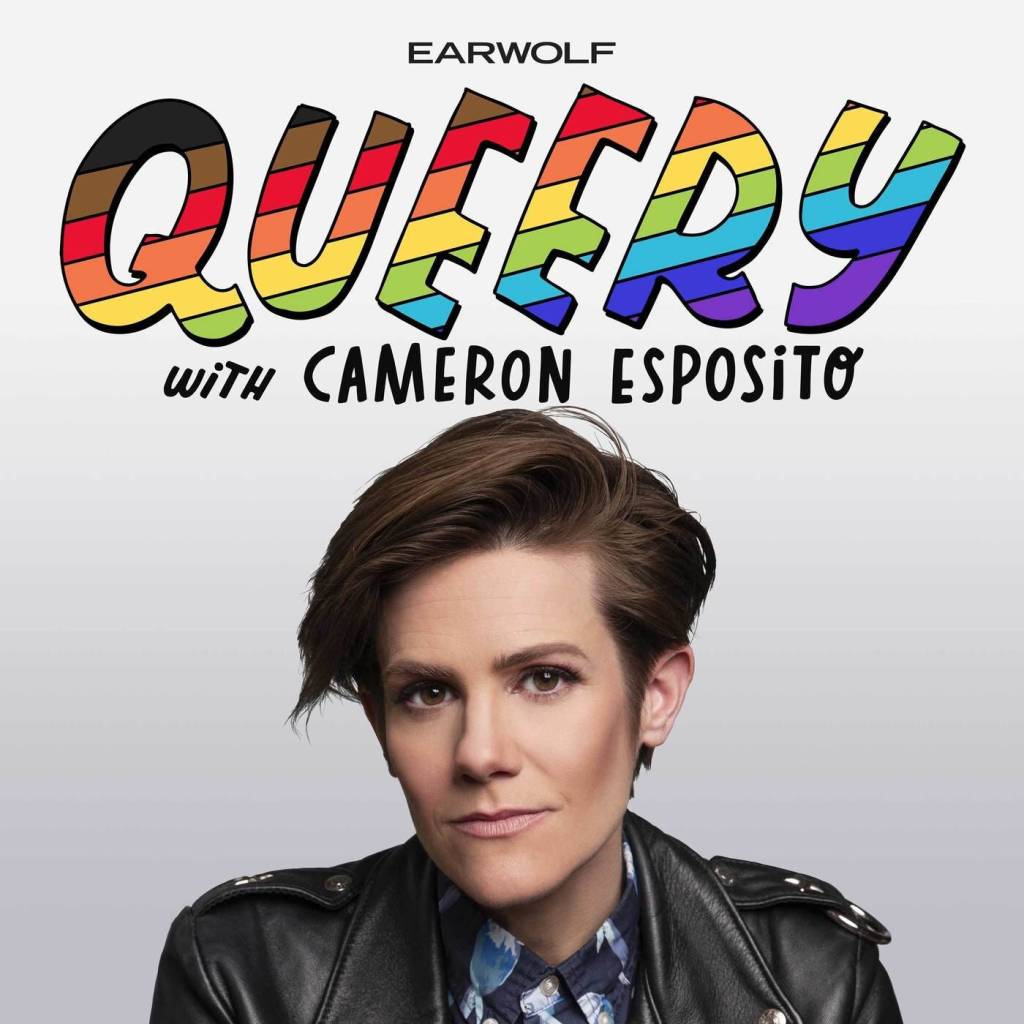
Sit in on an hour long-conversation between host and standup comic, Cameron Esposito, and some of the brightest luminaries in the LGBTQ+ family. QUEERY explores individual stories of identity, personality and the shifting cultural matrix around gender, sexuality and civil rights.
A Northern Belle and a Southern Gentleman Discuss Bible Texts and Other Texts. Gay Bible scholar Peterson Toscano and Trans Bible Scholar Liam Hooper present queer readings of the Bible.
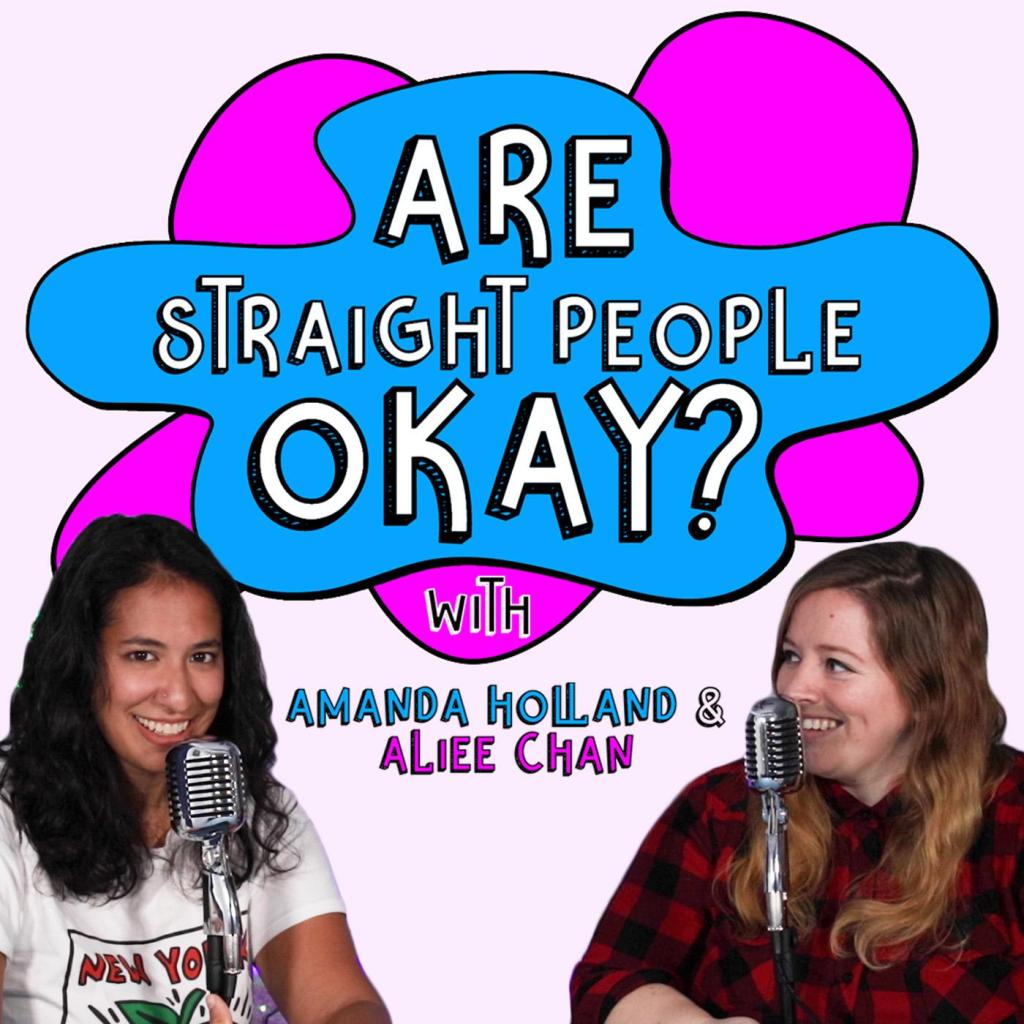
A podcast where hosts Amanda Holland & Aliee Chan analyze straight culture and figure out how it relates to queer people all while checking in on the majority to make sure… you doing okay?









 Roar Cat Reads