Tag: queer

  • 22 Horror TTRPGs for the Spooky Season

    22 Horror TTRPGs for the Spooky Season

    This fall, confront the horror within and without with these horror and/or spooky TTRPGs! Alex V. compiled this list of 22 TTRPGs, most by queer creators or with queer themes. Let us know in the comments which ones you love, and tell us about any that we missed!

    General TTRPGs


    GMless


    Two People


    Solo


  • ABC – Deconstructing Gender by Ashley Molesso and Chess Needham

    ABC – Deconstructing Gender by Ashley Molesso and Chess Needham

    Genre | Picture Book
    Publishing Date | May 2023

    Be affectionate, beautiful, courageous, and more in this gender-bending ABC book.

    Daryl is so affectionate. Alex is gentle with the family cat. Sage and Kaylin are super strong. And Ira yearns to do ballet like their older brother. Demystify gender stereotypes while learning your ABCs in this bright, celebratory debut picture book by stationery company Ash + Chess, who bring not only their quirky artistic flavor but also their personal perspectives as a queer couple to this empowering book for younger kids. This hardcover picture book is rendered in bright, bold colors and patterns and uses neon pink hues throughout. As a bonus, remove the book’s jacket to reveal a cool ABC poster on the opposite side that can be displayed at home, in schools, at libraries, or anywhere!

    Goodreads

    I was honored to receive a copy of Deconstructing Gender from Running Press Kids. I don’t often review picture books on Roar Cat Reads, but I used to be a children’s librarian and this book makes me think I should do more of these!

    Highlighter bright, this book is joyous in colour as well as in message. Each page represents a letter of the alphabet by describing how kids can care for others. For example, one page says, “Alex is always so GENTLE with their family cat.” Another says, “Raheme comforts Tarin. He’s very UNDERSTANDING.” These are great affirmations to instill into little (and big) hearts.

    What makes this book truly special is the intersectional diversity within its pages. Kids of all genders, races, sizes, and abilities are depicted with no additional commentary. Whether you’re wearing a hearing aid, have a green mullet, wear cornrows, or dress in drag, you can learn how to care for the pets, family, and friends around you.

    Effortlessly inclusive and brightly enticing, ABC – Deconstructing Gender is the picture book I wish I could read at story time!

    Who Do I Recommend This Book To?

    Get ABC-Deconstructing Gender for the next baby shower you attend!

    Check out our Queer Lil Library for more book recommendations and reviews!

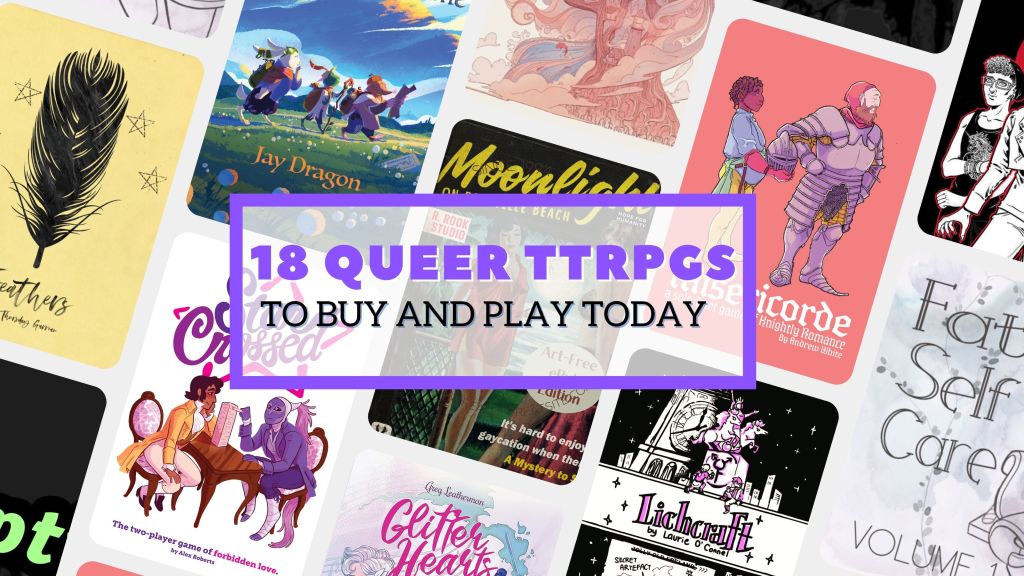
  • 18 Queer TTRPGs to Buy and Play Today

    18 Queer TTRPGs to Buy and Play Today

    Pride month may have concluded, but you know what hasn’t? Our love of queer creators and the TTRPGs that they make! Alex V. and Robyn Choi compiled this list of 18 TTRPGs by queer creators or with queer themes. Let us know in the comments which ones you love, and tell us about any that we missed!

    General TTRPGs


    GMless


    Two People


    Solo


    Bonus: Coming Soon!

    At the time of posting, the following games had been funded but not published. They look amazing, though, so keep them on your radar!

  • The Tragedy of Heterosexuality by Jane Ward

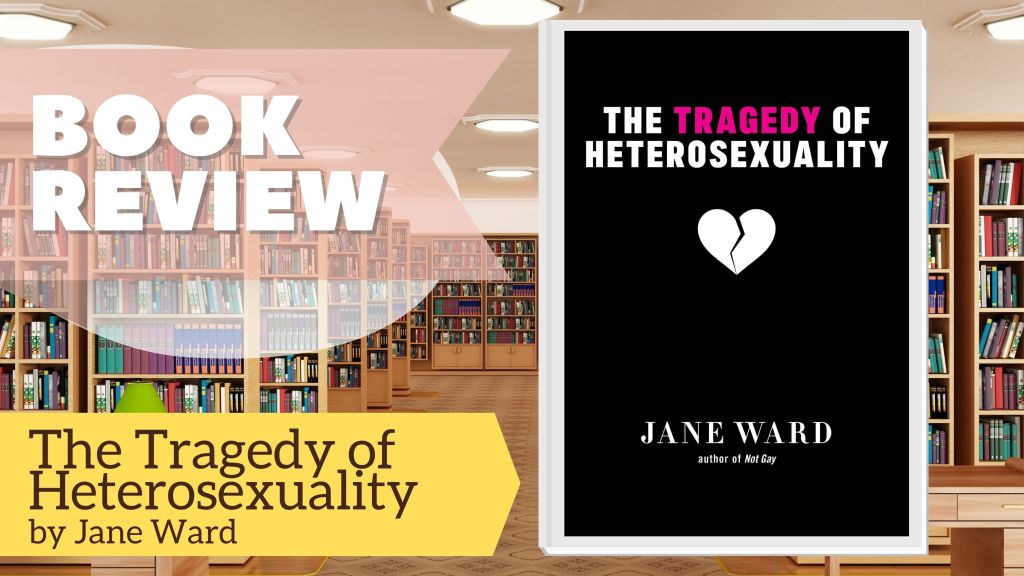
    The Tragedy of Heterosexuality by Jane Ward

    Genre | Nonfiction
    Page #s | 216
    Publishing Date | September 2020

    Heterosexuality is in crisis. Reports of sexual harassment, misconduct, and rape saturate the news in the era of #MeToo. Straight men and women spend thousands of dollars every day on relationship coaches, seduction boot camps, and couple’s therapy in a search for happiness.

    In The Tragedy of Heterosexuality, Jane Ward smartly explores what, exactly, is wrong with heterosexuality in the twenty-first century, and what straight people can do to fix it for good. She shows how straight women, and to a lesser extent straight men, have tried to mend a fraught patriarchal system in which intimacy, sexual fulfillment, and mutual respect are expected to coexist alongside enduring forms of inequality, alienation, and violence in straight relationships.

    Ward also takes an intriguing look at the multi-billion-dollar self-help industry, which markets goods and services to help heterosexual couples without addressing the root of their problems. Ultimately, she encourages straight men and women to take a page out of queer culture, reminding them “about the human capacity to desire, fuck, and show respect at the same time.”

    Goodreads

    With a title like The Tragedy of Heterosexuality, I was expecting a satirical, comedic take on the sad state of straight people. What I got instead was an academic treatise on the historical and social forces at work to create imbalanced and dangerous heterosexual dynamics and a feminist lesbian solution, and I loved it!

    The conditions of patriarchy have long damaged men’s desire for women, and women’s for men, such that heterosexuality, as a sexual orientation, was always already a contradiction. Women were too inferior, too degraded, for men to actually like. Women could be sexually desired, and they could be paternalistically loved; but they could not be engage as autonomous, self-determining humans in the way that men related to other men.

    The Tragedy of Heterosexuality

    The current iteration of heterosexuality (Ward walks readers through the historical shifts in male/female relationships over the past century, as well as the self-help books written to fix inherent problems therein) has a single, enormous flaw at the center of it: the misogyny paradox. Straight men are sexually attracted to women within a culture that belittles and insults them. This is why a guy can go from “You look beautiful today!” to “Learn to take a compliment, you bitch!” when his cat-calling goes unanswered.

    Most of the book is spent digging into all of the ways in which straight men and women have to work against stereotype in order to enjoy each other’s company; it’s grim but compelling. I read this a couple weeks after a friend of mine told me, “I know being gay isn’t a choice because I wouldn’t be straight if I had a choice. In my past relationships, I’ve been abused by more than half of my boyfriends, but I just keep being attracted to men.”

    “I am so lucky to have one of the good ones,” they say. Meanwhile, may of us queers are thinking, “That’s what counts as good?” We also know that the answer is yes, it is what counts as good, because as the folks quoted above explain, many straight men are violent and unpredictable.

    The Tragedy of Heterosexuality

    Although it was only a small portion of the book, I especially enjoyed the end when Ward shares ideas of how straight men can learn from lesbians as both share an attraction to women. Queer women tend to love women, with their weight gains and body hair and uniquenesses. Straight men, or straight male culture if we’re being generous and vague, love women who have waxed, dyed, and altered themselves.

    Of course, queer people and queer relationships are not inherently better than straight relationships, a point which Ward makes frequently. The difference comes from the fact that queer relationships operate outside of the system of tradition and assumptions that hamstring straight couples, even those who want to be progressive and feminist.

    Perhaps queers are doing no better, as many of us also lie, cheat, and engage in no end of painful behavior. But the thing about heterosexual misery that makes it so irreducible to human foible is that straight relationships are rigged from the start. Straight culture, unlike queer culture, naturalizes and often glorifies men’s failures and women’s suffering.

    The Tragedy of Heterosexuality

    I loved this book; it inspired a ton of conversations with my partner (my favorite of the moment is thinking through the difference between objectifying and subjectifying someone). At the heart of my love, I come back to what first drew me to this book. The title makes it clear that we’re flipping the script. Instead of assuming heterosexuality is the good and right default, queer relationships are allowed to take center stage as experiences full of meaning and wisdom that can be shared with our straight friends.

    Who Do I Recommend This Book To?

    If you’re a queer woman and a feminist and you like academic reading, run (don’t walk) to The Tragedy of Heterosexuality! And then talk to me about it!

    Check out our Queer Lil Library for more book recommendations and reviews!

  • Twelfth Moon by Halli Starling

    Twelfth Moon by Halli Starling

    Genre |Romance Novella
    Page #s | 134
    Publishing Date | December 2021

    Elsie’s a small town with a lot of heart. Isn’t that how most small town romance stories begin? But this isn’t any love story. These five stories cross paths and connections, age, gender, sexuality, and different kinds of relationships. Stories like that of Harriet, the owner of Twelfth Moon perfumery and adopted mother to her nephew, Nu. Harriet always figured she’d be single for the rest of her life, but Dela Atwater appearing in her shop one blustery autumn day sparks something within her. A bit of romance and longing she’d long thought buried. 

    And what about Nu, Harriet’s nephew? He’s quickly falling for Miles, who works in the coffee shop next door to Twelfth Moon. The shop is owned by Miles’s brother, Jones, who has his own ideas about sex and lust and romance (or lack thereof). Across town, Maeve is learning how to exist as a widower but when they meet Evie, a spark is lit. And Yuri, Nu’s best friend, is anxiously awaiting the holidays so he can see his girlfriend, Beckett, once more. 

    It’s about hope and joy and queer love in so many shapes and forms, from the author of the dark fantasy/romance novel Wilderwood (“…will shatter readers’ expectations with its bewitching complexities…” – The BookLife Prize).

    Goodreads

    Twelfth Moon is a novella of five intersecting romances set in a small town queer utopia. It is a quintessential comfort read with a handy table of contents that informs readers what pairings to expect as well as where a story falls on a “sweet to smut” scale. Starling shines in her diverse characters and diverse relationships, and I especially loved how often the romantic stars were older women.

    Every shade of the rainbow is represented here! I was most surprised to see a polyamorous non-monogomous pairing celebrated; because this is a romance novel, I was cringing, half expecting them to realize their love for each other would make them want to be only with each other. No! They stay true to their values and preferences while having a great time together.

    Undoubtedly my favorite story was of a widow grieving her dead partner and connecting with someone and feeling romantic sparks for the first time in years. It is a sweet story that acknowledges the importance of honoring relationships while also being open to something new. It also doesn’t push characters into situations that wouldn’t make sense outside of a romance novel. Instead, we get to see a connection form and be happy for her to have found someone else that GETS her in the same way her partner once did.

    Basically, we should all be so lucky as to live in Elsie. Starling has said we might get more from this setting, and I am ready for it!

    Who Do I Recommend This Book To?

    Gift Twelfth Moon to your friend who wants a queer pick-me-up that can be read during their commute.

    Check out our Queer Lil Library for more book recommendations and reviews!

  • Biphobia and Other Struggles of Queer Women

    Biphobia and Other Struggles of Queer Women

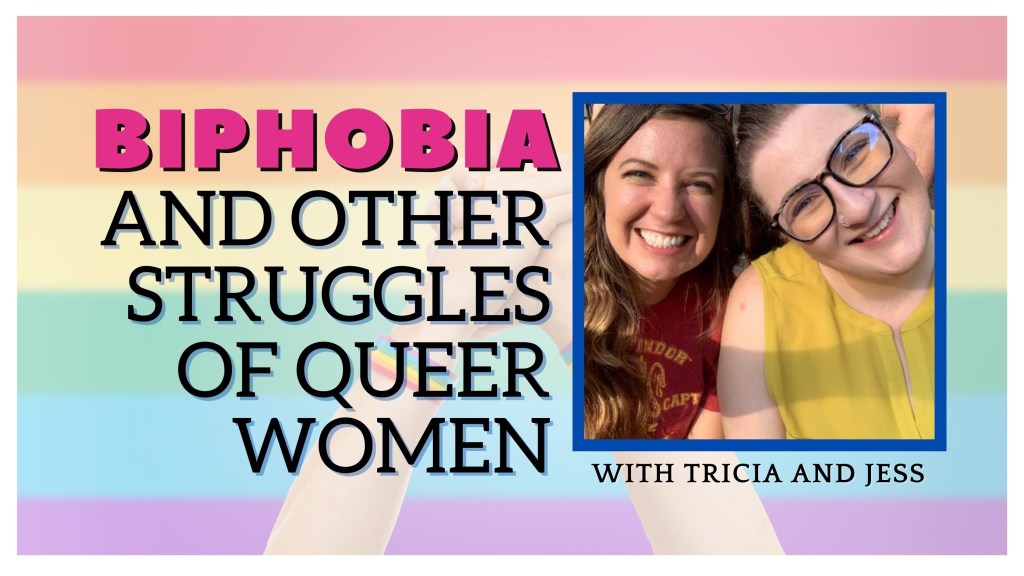
    It’s Pride Month!  To celebrate, Jess and Tricia talk about their experiences as women who identify as bisexual and/or queer.  Having come out later in life, they find themselves dealing with very similar issues of internalized biphobia despite the fact that Tricia is dating a woman and Jess is dating a man.

    Biphobia and Other Struggles of Queer Women

    Realizing We Were Queer

    Jess:

    I came out as bi when I was 28 (which I would later change to queer because the fluidity and nuance of sexuality fit in much better with my idea of being queer rather than being bi) and also wrote a blog about it. I didn’t begin to seriously think about my sexuality being something other than straight until I met Tricia, who had just begun her questioning.  Everything she said felt familiar and something that had been running through my head. I even remember the first time we met over pizza and listening to her story I literally thought “… Am I bi?” As this revelation came on the heels of my deconstruction from Christianity, I didn’t want to invest too much energy and thought process into a new change in my life and so I moved on with the occasional nagging thought at the back of my head reminding me that I had to eventually dive into this. I remember experiencing sexual attraction to women but chalked it up to just noticing their beauty and since I never had a crush on a girl (as we later talk about sexual vs. romantic attraction) I was hesitant to take this label on, letting it further feed into my internalized biphobia. 

    Tricia:  

    I came out as queer when I was 30 (I wrote an entire post about it here).  Although I had had “friendship crushes” on women since childhood, it wasn’t until I was drawn to a lesbian – someone who might feel something romantic back – that I stopped to think, “What if these are just plain crushes?” It was both a shocking revelation and a comfortable one, as so many of my past decisions now made sense (That’s why I felt so strongly about not using pronouns to describe potential partners!).  My coming out was tied specifically to one person – the woman I had fallen in love with.  This made things easier in some ways, as I had a concrete person to point to and say, “I’m queer because I’m with her!” but it also made it hard to understand and explore the more nuanced parts of my sexuality.  Am I gay? Bisexual? Queer?  Does it even matter?

    Sexual Attraction vs. Romantic Attraction

    Jess:

    Something that I had not been prepared for when coming out was making a distinction between sexual and romantic attraction. Looking back, this should have been pretty obvious as there have always been men that I may have been sexually attracted to but not romantically. I have considered the idea of dating a woman or a AFAB non-binary person and have been having a hard time imagining what it would be like. I have to ask myself whether that may be because of a lack of romantic attraction or yet another example of internalized bi-phobia. I have never had an actual crush on anyone other than a man but is that because it genuinely didn’t happen or because I have always been told that this wouldn’t even be a possibility? 

    Tricia:  

    So much cultural emphasis is placed on sexual attraction that it was easy for me to ignore the romantic attractions I have felt toward women my whole life.  However, even my “sexual attraction” to men throughout my life was mostly reserved for fictional characters (Loki!) or gay men (sigh). For a while I thought I was asexual, incapable of the kind of fiery lust that other people described.  I was also a deeply satisfied rules follower in a Christian tradition that placed lust at the top of the sins list, so I was good at pushing down anything that felt vaguely sexual.  When I was first considering whether I was bisexual or queer, I would stare at people’s butts with scientific focus to determine if the person’s sex affected the level of attraction that I felt.  My anxious overthinking still means that I’m not entirely comfortable as a sexual being, so apart from my actual relationship, the way I feel about everyone else is largely a giant question mark.  In a lot of ways, I think the label “demisexual” fits me pretty well.  If I’m emotionally and romantically attracted to someone, they then become sexually attractive to me.

    Attraction or Admiration? 

    Jess:

    Do I want to be with her or do I just want to be her? There are many times I have wished I was someone else and it’s easy, as a woman, to compare yourself to other women as we have been taught to do since we were little. There will always be someone who is smarter, funnier, cuter, hotter, more talented, more outgoing, etc. For someone who is bi it gets infinitely harder to figure out, however, if you just want the person’s traits as your own or if you can see yourself being intimate with them, especially if it’s a person whose gender presentation is the same as yours. Are you maybe actually just envious? Do you wish you could trade lives with them? Or is there a part of you that wants to explore things with them together? Of course this has a lot to do with your own self-esteem. The more secure you are with yourself I imagine the easier it is to figure out the distinction. 

    Tricia:

    I second everything Jess said!  It makes me laugh now, the number of times I looked at a woman with metaphorical heart eyes and thought, “She is so cool” with no queer awareness.  Maybe straight women do this?  But there is truly such a fine line between admiring a woman, wanting to be around her all the time, wanting to know her thoughts, feelings, opinions, desires, and…hey, that’s a straight up crush!  Compulsory heteronormativity is a powerful drug.

    Queer vs. Straight Aesthetic 

    Jess:

    Another way biphobia shows up, especially in today’s media, is the pressure to conform your aesthetic to your sexuality. You’ve heard the stereotypes of bisexuals: the cuffed jeans, the flannels, the coloured hair, the septum piercings, the weird way we supposedly sit in chairs, etc. Some of that I genuinely enjoy (especially contorting my body on a chair) but, at the same time, I wonder if any of this is actually me and not a version that is begging to be accepted by the queer community and desperately wanting to fit in instead, particularly as I am femme presenting. Especially as someone who is in a straight passing relationship with a man, I have found it important to “flaunt my queerness” so as to not get swallowed up in heteronormativity. “I don’t want to look like just another straight woman” is an awful thought I’ve had before. But what if my partner doesn’t want me to look “too queer”? Am I still going to be attractive? Which pressure do I give in to? Looking more straight or looking more queer? But then again, is it necessarily wrong to adopt a cultural aesthetic for the purpose of identifying yourself to the community? Is it virtue signalling? I mean, just like styles, sexuality is also fluid, on the spectrum, and ever changing, so is it actually an issue of biphobia? I don’t have an answer but I certainly think it’s a question worth asking. 

    Tricia:  

    I am also femme presenting; although I love a good bulky boot, I would ideally pair them with a flowy dress.  When I started dating a woman and becoming a part of the queer community in Vancouver, I felt a lot of internal pressure to dress more “queer.”  What did that mean?  Cutting my nails (practical and queer-signaling!), mostly.  I went without makeup for a while, but I hated it and quickly went back to my trusty eyeliner.  The combination of queer freedom and COVID freedom meant I finally got around to dying my hair varying shades of pink and purple.  But mostly, I look the same as I always did.  Do I want an undercut?  Yes!  And cutoff jeans and flannel shirts and all the rest, but every time I dress a little more butch, it feels like a costume.  No one has ever pressured me to “look more gay,” so I know this is my own issue.  I do think I’d like to find spaces to explore a more queer aesthetic, but ultimately, I’ve always been me, and dating a woman doesn’t change that.


    Language – How Do We Define Ourselves? 

    Jess:

    I find the discourse on labels especially the difference between bi, pan, and queer exhausting. I have come to my own conclusion that there isn’t one universal definition of these sexualities and the fact that there is infighting within the queer community about this makes it a lot more difficult to find actual roots in this community. My own evolution of language has taken me from bi-curious to bisexual to queer because I refuse to pinpoint my incredibly fluid sexuality and find that the umbrella term “queer” fits best. I have used “gay” before but that seems to be another sore point in the LGBTQIA group especially when used by bisexuals. 

    Tricia:  

    I prefer to go by queer or bisexual, though I also don’t often correct people who label me a lesbian.  I don’t know if I’ll ever FULLY know where I fall on the Kinsey scale since I don’t plan on having sex with a man (or woman) while in a relationship with my girlfriend.  There are definitely times when I wish I had the team solidarity of choosing one definitive label – think of all the merch I could buy if I knew my specific pride flag colours!  But mostly I’m just anything that is “not straight,” and that’s good enough.


    Bisexual Gatekeeping

    Jess:

    There is the age-old question of: Can you call yourself bisexual if you haven’t actually had certain experiences? This one has haunted me the most as I was in the beginning stages of figuring out my sexuality. I had casually kissed girls before but nothing ever went beyond that so how could I know that I was into them? I felt invalidated every time I saw discourse about “straight passing” relationships and how you’re not actually queer if you’re dating someone who is not the same gender as you. “You have no right to call yourself part of this community.” I am certainly privileged due to the fact that I can still explore my bisexuality because my straight, male partner and I are non-monogamous, but what about those individuals who, for whatever reason, are not able to explore that for themselves? Does that invalidate their queerness? Absolutely not. If someone who is straight takes a vow of celibacy we wouldn’t necessarily call them ace, would we? They might still have sexual desires towards the opposite gender, but simply choose to not act on it. Bisexuals without experiences are still bisexuals and I wish this discourse would end already. 

    Tricia:

    I am in the exact opposite camp as Jess.  I am technically a “gold star lesbian,” though I do not identify as a lesbian.  I had intense crushes on guys throughout my life; does the fact that I almost always chose men who were unattainable mean I was subconsciously saving myself from having to actually be sexual with a man?  I will never know for sure, and it ultimately doesn’t matter.  I still think those experiences were meaningful and valid, and I remember them with much fondness and angst.  If I never had sex with a man, and I don’t plan to in the future, why label myself bisexual or queer rather than lesbian?  For me, it simply comes down to the fact that “lesbian” just doesn’t feel like it fully fits me.  Honestly, the whole conversation of labels exhausts me, and I can only assume other people who find themselves outside of the binary often feel the same.  I think that we are moving towards a space that allows for nuance and even conflicting feelings/experiences, and I hope that this continues.  Sexuality is a complicated beast; I’m all for trying to understand it, but we should respect that we will probably never know all of its contours and iterations and be kind to people who experience sexuality differently than we do!


    Want to read more? Start with Realizing You’re Queer When You’re 30.
  • Realizing You’re Queer When You’re 30

    Realizing You’re Queer When You’re 30

    When I was first starting to realize that I might not be entirely straight, I went to the Internet to find stories that might help me understand what I was feeling. There weren’t many. I hope this blog post will help change that.

    Realizing You’re Queer When You’re 30

    When I was 30, I didn’t know I was queer. I had just moved to Vancouver, and I was in awe of how openly gay and accepting the city was. I sent my brother pictures of church signs that welcomed LGBT people with captions like, “Can you believe it!?” When I came out to him later that year, he said he wasn’t surprised. Among other things, he noted my excitement about a thing that seemingly didn’t affect me.

    Is This a Friend Crush?

    When I put out the call to a Meetup group that I was looking to join a women’s D&D group, Rachel was one of the people who responded. During the first session, there was electricity between us as our creativity and humor bounced back and forth. I have a friend crush! I told several people, entirely unironically. It never crossed my mind that the ex she mentioned was a woman, and my gaydar was so undeveloped that her butch aesthetic never registered to me as gay.

    It was almost a month later that she explicitly labeled the ex as a woman, and I realized she was a lesbian. I did some quick recalculations in my head. Did this change my friendship crush? To my surprise, I asked myself, “What if this isn’t a friendship crush? What if it’s just a crush?” Within a week, I had journaled myself into the ground and come away with the fact I was most comfortable admitting: I was not entirely straight.

    Re-Evaluating the Past

    In hindsight, I was never entirely straight. Despite identifying as a heterosexual for three decades, I have never dated a man. I’ve gone on dates, but I preferred by far the delicious agony of pining after someone unattainable. The few times that physical intimacy was a possibility, my body went rigid. However, that was easily explainable. I grew up in conservative evangelicalism with purity and modesty culture. In fact, I thrived in it, since I have always loved rules and the security of knowing I’ve followed them. There is a part of me that wants to blame all of my repressed sexuality on this: I’ve always been gay, but I was indoctrinated to the point of not realizing! There is truth to this, I think. But I was also a socially anxious, awkward human who both craved and feared intimacy and vulnerability.

    When I parse through the interplay of religion and sexuality in my past, some things do stand out. Perhaps most importantly, I did not know any women who identified as lesbians or as bisexual. My older cousin was gay, and I’m grateful for the courage he showed in coming out to a Midwest God-fearing family. But that wasn’t exactly encouraging to me. Instead, I was witness to family members arguing about where the line between loving a person and hating their sin fell in regards to attending a gay wedding.

    Almost ridiculously, there is one specific moment from my teenage years that might have been the most important tipping point of all. In my senior year, I became friends with a girl who was smart, funny, and super cute. We spent all of our time together and took pictures of us hanging all over each other, although admittedly, this wasn’t unusual for teenage girls. Something about her felt different, though, and in a fit of fear, I brought it up to my mom.

    “I think I have a crush on her,” I said.
    “Oh, that’s just a friendship crush,” my mom said. “Everyone has those.”

    It embarrasses me now, how fully I accepted this. Friendship crushes! Everyone has them, so I have nothing to worry about! I spent the next decade reveling in friendship crushes with women who were fascinating and fun. I was even friends with a woman who told me she was bisexual. She was newly married to a man, and we used to tease him that we were going to get together while he was away. As I type that, I cannot fathom how I had those conversations and never questioned my sexuality. I was old enough to know better, but I wasn’t in a cultural situation that allowed me the space to question my identity.

    Testing the Queer Waters

    Eventually, things began to break down, though never so much that I had to come face to face with any consequences. I took “male” off the “interested in” profile on Facebook, leaving it blank, and I intentionally used vague pronouns when referring to potential future partners. Just for fun! To see what would happen! Literally nothing happened, because no one noticed. I wore slightly queer clothing (which for me was like, a flannel shirt) and wondered if anyone would think I was gay, but again, no one said anything. I realized once that all of the people I followed on Twitter were queer women, and I filed that away as interesting but not pertinent. And at some point, the question, “What if people think you’re gay?” became increasingly louder, though I never allowed myself to ask, “What if YOU think you’re gay?”

    Meeting Rachel was the spark for a fuse that I had been laying out for years, which is why, although initially surprisingly, I very quickly accepted it. It’s been three years since that moment, and although I now feel very comfortable labeling myself as queer, I still have so much confusion about where exactly I land on the sexuality spectrum and how to think about my past from my present understanding.

    One thing the internet has taught me is that no experience is fully unique. I believe that other people have had experiences similar to mine. Maybe some of you have felt similar shame and embarrassment about not realizing something that is supposed to be fundamental to our sense of identity. I hope that by sharing part of my story, you won’t feel alone in those feelings. We can sit in the embarrassment and joy and wonderment together.