Tag: TTRPGs

  • Adventure Queers: Meet Nate!

    Adventure Queers: Meet Nate!

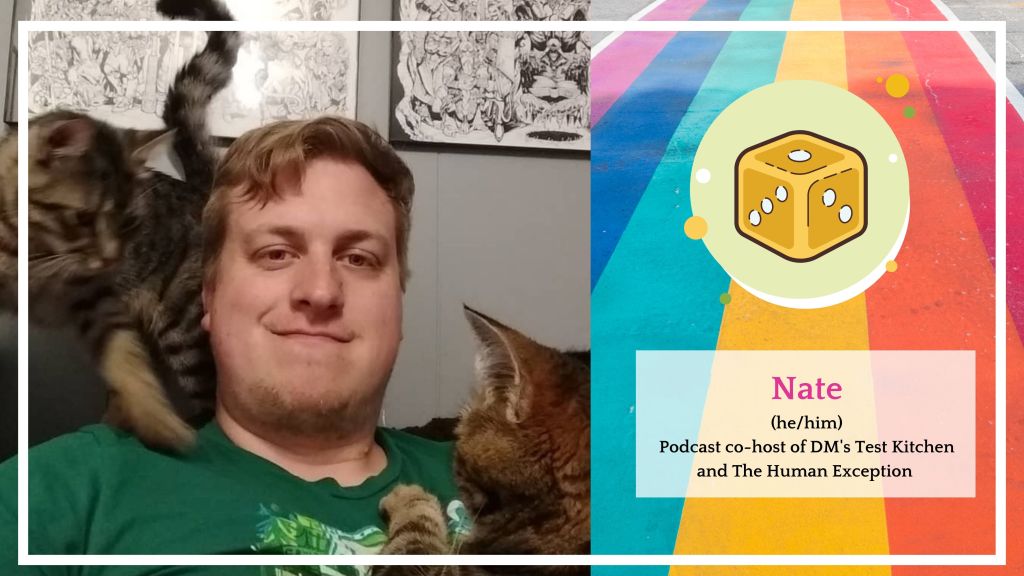
    Nate (he/him) is a co-host of the podcasts The Human Exception and DM’s Test Kitchen. You can find him on Twitter @legionofmoose.

    Nate, how long have you been playing D&D?  What has your experience in the TTRPG world been like?

    It wasn’t that long ago; I got into my first D&D game at the end of August 2017. A close friend of ours (Nate’s partner is Cayla) started a game online. It was a learning curve figure out both Roll20 and the rules of D&D at the same time. In fact, we spent the first two sessions just figuring out our characters and Roll20. I really enjoyed the social aspect of it, but I didn’t really connect with the characters until the DM stepped down. I don’t want the game to go away, so I stepped in to DM – that was Christmas of 2017.

    When I started DMing, I spent a month going through the DM’s Guide to learn about the barbarian, rogue, and ranger classes so I could flesh out the game to make my players feel like they were using their characters in a way that was meaningful to them. I think the hardest thing when I started was that at that point, we were running with three players and I was DMPCing. I can separate what my character does from me telling the story, but I’ve found that it’s hard as a DM to play a really fleshed out PC and DM at same time.

    My favorite part of DMing is the ridiculous shenanigans that people throw at you. You have an idea of where you think the story might go, but it never happens. The plan never survives the first encounter. Now I am about 95% No Plan when it comes to DMing; I just have story beats that I want to hit to give them lore and get them involved in the world. I lay those out a bit in advance, but how they get there is up to them. Sometimes I will make up encounters for different scenarios, but most of the time I’ll make up encounters on the fly. If players show special interest in a particular aspect of the world, then I’ll plan ahead to give them the lore dump and a scenario for a certain area.

    I understand that you have recently come out as bisexual. Have roleplaying games helped you explore or express your queer identity?

    I don’t know. Honestly, probably not a whole lot. For a long time, I wasn’t verbally out, but I was never shy about my actions or how I treated my friends or what I said. A lot of people were like, “Yeah, that tracks” when I came out. A lot of the characters that I play are more fluid in what they’re open to. My first character was a bard, but there was no idea that they could have a romantic interest in the world. The character was ostracized from his family and trying to figure out where they fit into the world in general rather than pursuing a romance.

    I tend to play females more often in games that give me the opportunity. In video games like Dragon Age, where the option to romance men and women is there, I’ll figure out which character is most interesting to me and I’ll romance them.

    Who did you romance in Dragon Age?

    I’ve only played Dragon Age: Inquisition, and I romanced Sera. At first, I couldn’t stand her character, but the more characters you add to your party, the more interesting her interactions become. Her character is similar to my D&D characters – pretty chaotic. When I realized that, I thought I’d give it a try to romance her! A lot of it is “What can we do to prank these people all of the time.” She’s not what you stereotypically expect an elf to be, which I like, and she had a fun story. She hides things because she feels like she doesn’t fit in anywhere; her attitude is “If I’m having fun, I don’t have to think about anything else!” Being able to draw that out of her was really satisfying.

    You have told me a little about some creative and detailed worlds that you are building for D&D.  What interests you most about the worldbuilding process?  What part is the hardest?

    When I build a world, it’s usually built around an event of some kind. The game that we’re playing now for DMTK, I built in 2018. It all started around a plague… Before that, everything in the Overworld was prosperous. There was peace, technology, and all sorts of things. Then a plague ravaged everything and everyone went underground. In the campaign, all of the players start in the Underdark, where there are huge mountains in a massively cavernous space, including an ocean with multiple coasts. The whole idea was that it’s been 200 years since everyone went Under. I want the characters to figure out what has happened to the Overworld, and will it be safe to go up and check it out?

    I have a really hard time with continuity and figuring out what’s going on in the world when the players are doing one thing but there’s stuff happening elsewhere. I always have things going on in the back of my head about what’s going on on the other side of the continent, but I struggle with figuring out how do those move forward when players aren’t interacting with them.

    I’ve recently tried to finish campaign 2 of Critical Role – I’m on episode 120. One of the really interesting things I’ve been trying to glean from Matt’s DMing (spoilers) happened when they all ended up back where Sam’s character lived with her husband and kid. The town was ravaged, and they were like “Oh, what happened?” and Matt responded, “If you decided to come back two weeks earlier, you might have been able to stop it.” Whoa!

    Once, I had a group that talked their way out of a whole dungeon. The idea was that there was a sleeping dragon under the mountain that had been sleeping long enough that it was covered in rock. The kobolds who worshipped it built a temple around the dragon. My group went to the temple, got some lore, and said, “No, we don’t want to deal with this.” They handed over a bunch of really expensive spell components and magic items to the kobolds in return for the thing they were looking for in the temple. Instead of waking the dragon by taking the stone like I planned, the kobold shaman finished his ritual, absorbed the dragon, and turned into a giant kaiju. But the group just took off in their airship and said “Nope! Goodbye!”

    What advice do you have for GMs who want to get better at worldbuilding?

    The biggest thing is focus on a city or a place that is important to your world first, then figure out how that place interacts with other things. Think about how cities interact with each other. What does each city look like? Are there specific regions that people live within? Is it all just one area with self-governing cities? Then figure out the land around the cities and how the cities impact the land around them. How does trade work between cities that are more advanced with smaller communities that are less advanced?

    What nerdy interests are you most excited about right now?

    Up until a month ago, I was playing a lot of FF14, and I feel like I need to get back in, especially because a new expansion in November. I’m part of a ridiculous guild with a bunch of anime nerds that are on all of the time. They do a lot of events, like playing hide and seek every night.

    I also really like anime; it’s my weekend guilty pleasure. I’m watching My Hero Academia right now, and one of my favorite shows is Restaurant to Another World. It’s about a Japanese café where every Saturday, a door shows up in the fantasy world side and wizards and dragon folk show up to this regular guy’s restaurant to eat.

    Do you have any recommendations of queer nerdy content that you would like people to know about?

    • Ice Cream Dice – Marc is an absolute gem. He does great work, and has a lot of fun with his unique dice brand. Bonus points: he is Canadian and from Edmonton. 
    • Bee and Crow, authors of World of Wyldrvir – Bee also DMs the Frost Walkers Podcast.
    • If people are interested in the weird shit people do – Cayla, Halli and I are going hard on The Human Exception podcast. This project has been a lot of fun, and we get into some really weird stuff. In one episode, we talk about Mount Rushmore and how behind Lincoln’s head there is a time capsule with a tunnel and everything. We also cover the weird conspiracy theories that people have about the place. Our second episode might be more interesting to Roar Cat Reads readers – we talk about the origins of the word “homosexual” in the Bible. Eventually, there will be episodes coming about how I was raised, so stay tuned!

    Thank you, Nate!

    Are you an Adventure Queer? Do you love to play D&D? Email us at roarcatreads@gmail.com to let us know you would like to be interviewed!
  • Nerdy Allies: Meet Sean Hagen!

    Nerdy Allies: Meet Sean Hagen!

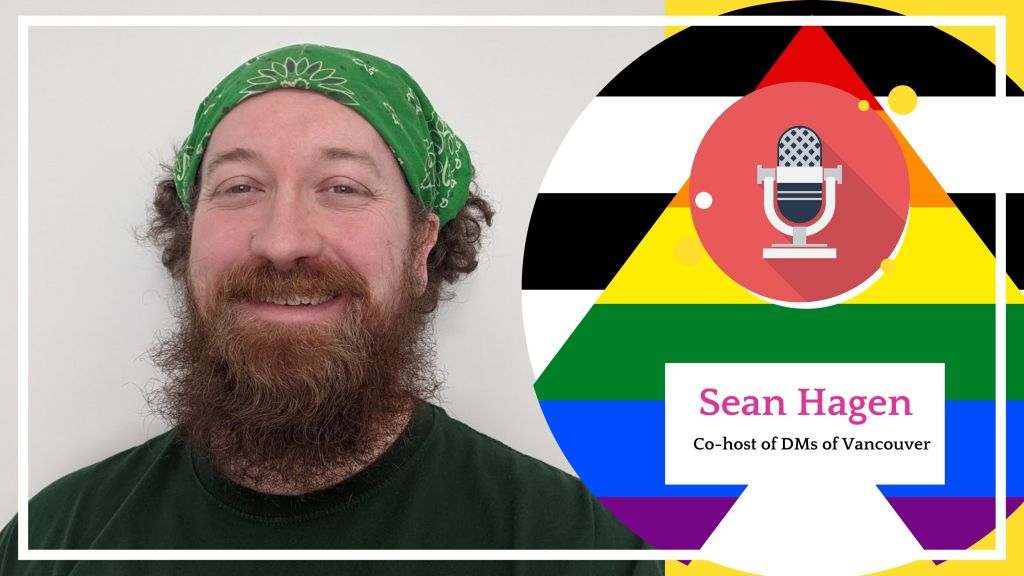
    My name is Sean Hagen (he/him), co-host of DMs of Vancouver with Jessy Boros (he/him). I’ve been playing video games almost my entire life, and only somewhat recently got into tabletop RPGs via D&D 5th Edition. Since then I’ve played a whole bunch of games and have plans to play a whole bunch more. You can find me online on Twitter at @seanphagen, Instagram at @seanpatrickhagen, or on my website https://seanhagen.ca !

    As one of the hosts of the podcast DMs of Vancouver, you have interviewed a lot of D&D players and DMs.  How has your experience of D&D changed as a result of the podcast?

    It’s been eye-opening for sure. I think the biggest thing has been realizing that everyone comes to the table for a different reason, and that as a DM you’ve got to be open to that. Some players are there to be social with friends, some are there for story, one of a thousand other reasons, or even a mix of reasons! 
    I think that’s definitely part of the anxiety new DMs feel, wondering how they could possibly run a game that makes all their players happy. What I’ve learned while doing the podcast is that all you can do is be open and honest with your players about what kind of game you want to run, and to ask for honest feedback that you incorporate into your game. There are things you can do ( like running a session zero and using the safety toolkit ) to ensure that everyone is on the same page and having as much of a good time as possible.

    Everyone coming to the table with a different set of purposes and experiences is great, because you can run a really fun game that is utterly unique to your table, and that’s mind blowingly awesome to me. Getting to tell an epic story of a group of adventurers facing down death & danger as they go about saving folks sounds like an awesome way to spend time with friends. The downside is that sometimes trying to relate stories of your awesome game to friends or family feels like trying to explain a dream, but that’s a price worth paying, I think!

    Also, as a DM I’ve learned that not only is it okay to have parts of the game that excite you more than others, that’s great! For example, the recommended wisdom for new DMs is to start small, maybe only build a town or small province to run a homebrew game in. When building the world for my first homebrew game I went down a rabbit hole of map making and history building. I surfaced after a week with a binder of maps and tables and a calendar with major celestial events to use when running the game. I put, honestly, probably too much work into that binder. 

    I felt kind of foolish after putting in all that work into building this world, but soon realized that it had an awesome side benefit: I could ad-lib bits of history and art with total confidence, because I had already sketched out so much that I had a whole world inside my head I could draw upon. I ad-libbed all the descriptions for the statues and mosaics in a dwarven tomb because I knew their history and major events (and how dwarves in that world tended to hugely exaggerate their stories, good and bad parts alike). I was able to foreshadow an upcoming plot point as part of a mosaic because I had all that info in my head, waiting to be put to use. I don’t think I’d go that in-depth again in the future, but if I do I know not to worry about it.

    We’ve talked to so many DMs with different jobs and experiences and views on D&D – each of their games is going to be unique to that DM. So for any new DMs (or folks thinking of taking the plunge): don’t worry that your game is going to be different from what you’ve seen online or read about; that difference and uniqueness is why your players are going to love YOUR game!

    You are a straight man, but you have included many LGBTQ+ people in your podcast and intentionally create safe and welcoming spaces.  How did you cultivate this attitude and awareness?

    Honestly it’s been on my mind since we started the podcast. In tabletop games, the voices of straight white dudes are kind of predominant. We’re assumed to be the default consumer for tabletop games in most circles. I’d bet that for the majority of people, if you asked them to picture a D&D player they’d probably imagine someone who looks something like me.

    If there’s one thing I know from my day job as a programmer it’s this: having a diverse set of folks contributing to the thing you’re making can only make it better. As a straight white dude, I can do all of the reading, come up with checklists, and do my best to make something inclusive – but I’m going to mess up at some point. I’m going to forget something, or not notice something problematic simply because it’s not something I have to deal with as a straight white dude.

    I see it all the time in programming; features that should have either never made it to market or been seriously re-worked got released because there were no women, BIPOC, queer, indigenous, or other marginalized voices on the team. There was nobody to point out that this feature would make it easier for an abuser to track someone down, or that feature would make it easier to out someone before they’re ready, and so on.

    And the same thing goes for tabletop games. How long has D&D been able to get by with all of the racism baked in simply because they assumed the audience was straight white dudes who didn’t care?

    So since we started the podcast, I’ve been doing what I can to educate myself. I keep an eye out for articles about problems like racial coding in D&D to learn about the problematic bits of the hobby and learn how to do better. I’ve also been looking for non-straight, non-white, non-male folks in the tabletop space on Twitter to follow so I can learn from them. I’m also just taking the time to analyze stuff I’m thinking about putting into a game to try and make sure I’m not leaning on problematic tropes.

    It’s an ongoing process that requires ongoing work on my part. But it’s worth it! There are so many experiences and viewpoints out there, making the games we play more inclusive will only make them better. Also, there’s more than enough Western fantasy-inspired stuff out there, so getting more diverse folks creating in the tabletop space means more awesome stuff for me to check out. I’ve had more than enough of that in my life. 

    Give me more of the Afrofuturism from Black Panther. Show me a fantasy world built on the myths and traditions of an Asian culture, written by someone from that culture and not a white dude. Amaze me with a sci-fi world built by folks from South America. What does an urban fantasy game built by someone from India look like? There are so many rich myths and fantastic folklore traditions in the world — time to give them their chance to shine in the spotlight.
    And we’re starting to see some of that stuff coming out, too. I’ve got my eye on Thirsty Sword Lesbians, because that looks like a super fun game.  

    What advice do you have for other DMs about how to create safe spaces for queer players at their tables?

    Whether you’re trying to make a space fun or safe, it all comes back to one thing: communication.  Regardless of what system you’re running, the biggest piece of advice I can give is this: RUN A SESSION ZERO. Your first session should always be a Session Zero, no questions asked. Whether it’s your 500th game of D&D or your first game in a new system, running a session zero has so many benefits.

    There’s all the basics of a session zero you’re probably aware of: agreeing on what kind of campaign you’re going to run, what kind of tone, how the party all know each other, and stuff the players would like to achieve ( “I want to earn the trust of a gryphon and learn to ride it!” ). It’s also a chance to go over more mundane stuff, like any house rules for critical successes or failures.

    But beyond that, session zero is also where you lay the groundwork for creating a safe space for your players, queer or otherwise.

    Lay out all the bits of the safety toolkit, and explain how they’ll be used. Go over stuff like the X card, lines & veils, and decide as a group on what kind of film rating you’re aiming for ( it’s a zany PG-13 adventure with swearing” VS “it’s an R rated horror film with vivid descriptions of body horror” ). 

    Let players know that if there are topics that should absolutely be avoided that they can say so now or send you an email or text. They don’t need to provide any kind of reason – and don’t ask for one, either. Also, their issue doesn’t have to be related to queerness or otherness. It’s a time for anybody to speak up about stuff you can do to make their experience at your table better.

    For example, maybe you’ve got an arachnophobe in your group — so replace the giant spiders with giant snakes. Maybe you’ve got a player with auditory processing issues, so they’d prefer no loud music during battles. Another player might have PTSD from being in a war zone, so you know to try not to make any sudden loud noises without warning them. Anybody might have something that if encountered at the table will lead to a bad experience, and the session zero is your chance to become aware of all of those things so you can avoid them.

    You shouldn’t be planning to jump into the campaign during session zero, so you’ve got time to make any tweaks or adjustments.

    And yeah, it might take some work, especially if you’re running a module; but it’s worth doing because then you know you’re running a game where everybody at your table is having a fun time. I don’t know about you, but it’s hard to feel good about running a game when someone isn’t having any fun.

    And when it comes to running games that deal directly with stuff like racism or sexism, or games where those play a major part? My suggestion is that unless a group of players come to you specifically wanting to play in a game that deals with that kind of stuff, maybe just leave that stuff out entirely.

    Okay, so you want to know the best part about doing all this stuff, and doing it right?  You don’t have to even know that one or more of your players is queer!

    It’s kind of like having someone with undisclosed trauma or PTSD – someone can have something that will trigger them and lead to a real bad time, and it’s pretty easy to avoid those things if you put in literally the tiniest amount of effort.

    I think that’s what I find so bizzare about the people who complain about safety tools and running a safe table for everyone. It’s not that much effort, and you get to know you’re running a game that everyone actually is enjoying! I don’t know about you, but I want folks to have a good time when they play at my table. It’d absolutely crush me to find out someone has been spending the last few sessions miserable because of something I said or did without thinking. So to know what stuff to avoid ahead of time means I’m more confident that I’m creating an experience everyone can enjoy.

    Because I want to have fun when playing tabletop games, and for me to have fun everyone has to have fun.

    Lastly: if you’re a straight white dude and this all sounds annoying, or like a lot of work, or wah wah I’m thin skinned and don’t like new things – either do the work or go back to your cave. I’ll be over here running awesome games with fantastic people and having the time of my life.

    In general, what are some of your favorite tips and tricks that you use while DMing, either in the creation stage or while playing? 

    I think I fall more on the “improv” side of the DM spectrum, so my tips and tricks definitely revolve around prep.

    Donjon is indispensable, whether you’re running D&D or not. It’s got generators for all sorts of things, including generating world maps.

    Another great system-agnostic tool is RPG Cards. I used this to generate cards for any magic items I was planning to give out, as well as generating a bunch of cards for stuff like potions, scrolls, and whatnot. The Gale Force 9 spell & monster cards are great as well — I’ve got a full set of the base spell cards, which I hand out to my players so they’ve got an easier time referencing their spells than flipping through the Player’s Guide. The only downside is that the Gale Force 9 cards are not exactly cheap. Maybe suggest to your players a deck as a thank you gift after you run a great campaign for them?

    Another great tool is RPG Tinker. I use it to generate “captain” NPCs – NPCs that have special abilities so that I can mix up combat a bit. Useful for friendly or enemy NPCs, or if you just need something more than a regular human as the boss of a gang or something.

    Lastly, I think something that’s more advice than tip or trick: be aware of when you’re getting burnt out! As a DM, you’re going to have a lot on your plate; not to mention all the stuff from your life away from the table. If you find yourself not looking forward to playing, or find it impossible to get psyched about game night: take some time and examine why you’re feeling that way.

    I got burnt out after switching to playing online (which happened before the pandemic, funnily enough). The reason was that due to a quirk of my brain, the maps that I would draw on the battle mat when we were all around the table just weren’t good enough and so I ended up spending hours trying to make maps to use in Roll20. All the extra effort ended up burning me out and I ended the campaign early. They beat the big bad, but rather than having to chase down the lich to find and destroy the phylactery, I just ended the campaign after the boss fight.

    Now I know that if I’m going to run a game online it has to be entirely theatre of the mind, otherwise I’ll just get burnt out trying to produce assets for virtual tabletops like Roll20.

    So keep an eye on how you’re feeling when you sit down to prep (or if you’re unable to even sit down to do prep!). Your players should be okay with you taking a week or two to recharge so that you can come back to the table full of vim and vigour. And to be frank, if you’re not happy running a game your players aren’t going to have fun playing in it.

    I care about you, reader, and want you to enjoy running games; so take care of yourself! It’s important.

    What can we expect from DMs of Vancouver in the future?

    Good question!

    I’m hoping to run a contest or two in the future. I’ve got some goodies from backing Kickstarters at a level where I’d get duplicates, specifically with the idea of giving them away to our listeners.

    I’m also hoping that we can continue to showcase non-D&D games. At the start of 2021 we started doing reviews of non-D&D games, and it’s been a blast. I love getting to talk about other systems, and not because I’m bored of D&D. There are so many systems out there that are much better suited to different themes and play styles, so getting to explore those and tell our listeners about them has been a blast. I also have a bad habit of buying rule books before I even know if I’m going to run a game in that system, so I’ve now got an excuse to buy a few more rule books!

    We’re also going to continue to do our best to lift up and showcase non-white, non-straight, non-male voices. Whenever I think about this topic, I keep coming back to the Issac Newton quote “If I have seen further it is by standing on the shoulders of Giants”. I think it’s time for white folks (especially white dudes) to realize we’re the giants

    We need to lift up and champion the voices of folks not like ourselves – otherwise the hobby will just stagnate or regress. There’s so many folks out there with awesome ideas. Making the hobby more inclusive doesn’t mean less for us, it means more awesome for everyone! And the more diverse voices who engage with the hobby, the better and stronger our hobby will get.

    Thanks so much for giving me some space on your site to blather on!
    And to you reader, I can’t think of any way to close this out than to do it the same way we close out our episodes of DMs of Vancouver:
    Hope to see you out there at the gaming table!

    Thank you Sean! Everyone should give DMs of Vancouver a listen today.

  • Adventure Queers: Meet Cayla!

    Adventure Queers: Meet Cayla!

    Cayla (she/her) is a nerd of every flavor, including western comics, manga, video games and table top with a passion for cosplay, writing, world building and drawing.

    Today she is a host, player and producer of multiple TTRPG podcasts and in involved in more games than she can count. You can find her on Twitter @veranox, read her webcomic Blackburn, and listen to The Human Exception podcast, where Nathan, Halli, and Cayla go on wild trips down the rabbit hole that is human history and the Internet.

    Cayla, how long have you been playing D&D?  What has your experience in the TTRPG world been like? 

    I started in my early teens, but it wasn’t something that really took over my life until the last five years when we began DM’s Test Kitchen. With the goal to try and play as many different TTRPGs as possible, it has really opened up the TTRPG world! We have met some truly amazing people (like Jessy!) because of this and for the most part my personal interactions have been very positive. 

    As a pansexual woman, have roleplaying games helped you explore or express your queer identity?: 

    I have always felt pretty comfortable being myself while gaming, but I think the thing that has made a difference for me is the community. There is a really large and compassionate community of queer folk that made me feel a lot more comfortable finding my place there. Being pan in a “hetero” relationship, it’s easy to not really feel like you’re part of the LGBT world or like an “imposter”. But the community is incredibly positive and encouraging of bi and pan individuals, and it really gave me more confidence as a queer.

    From our conversations, it seems like you are intense in your love for nerdy hobbies.  What does it take for a project to hook (and keep) your attention? 

    Well, I think a big part of my intense and multi-faceted nerdom can be traced back to my ADHD. I don’t know how to dip my toe in, I just go headfirst into pretty much anything that catches my passion. I think the thing at the core of all my projects/hobbies comes back to stories and storytelling. 

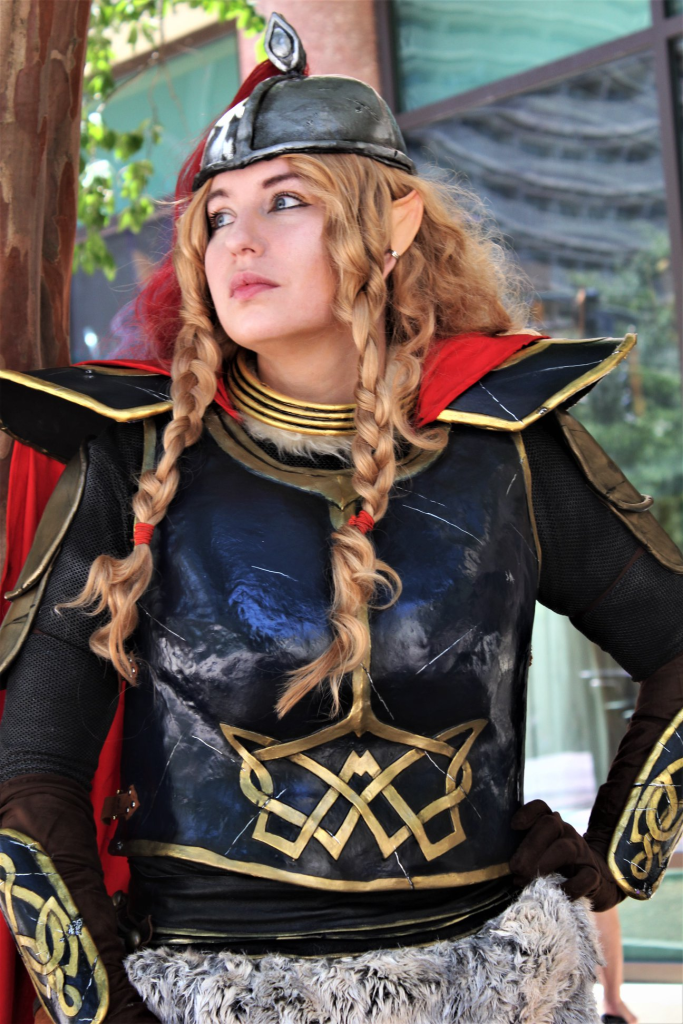
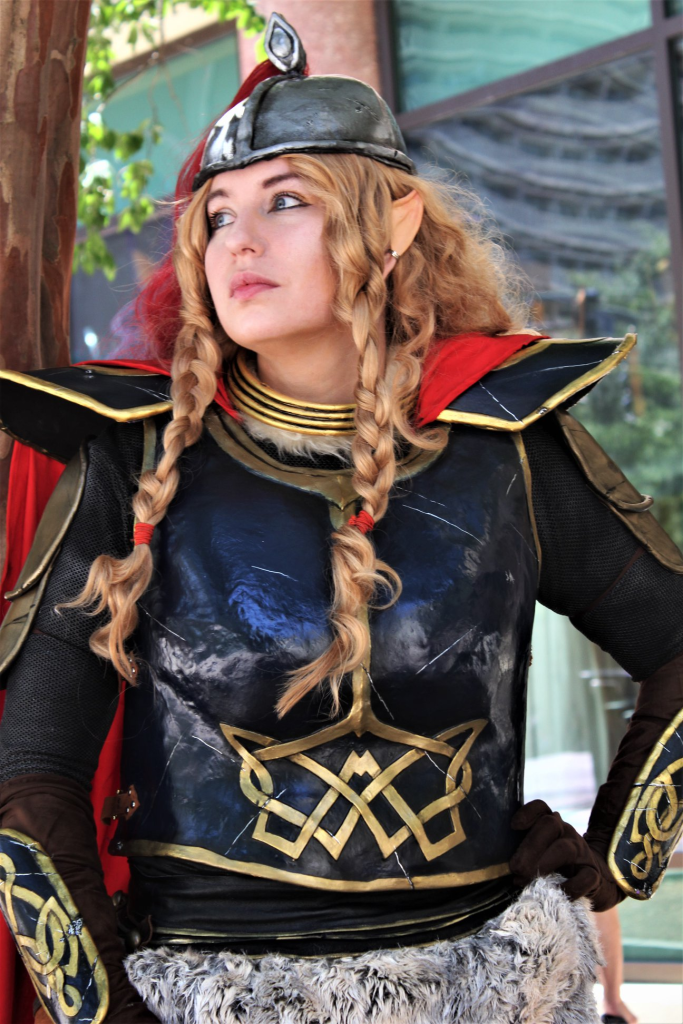
    When it comes to cosplay, I pick characters that I identify with or really love the stories of. “Recently” (aka the last costume I worked on pre-Covid) I made a costume that I have wanted to do for decades: Laurana from the novels and TTRPG setting Dragonlance. I grew up on those books and the story meant a lot to me. So yeah, my love for Dragonlance led me to do a 100+ hr cosplay build. 

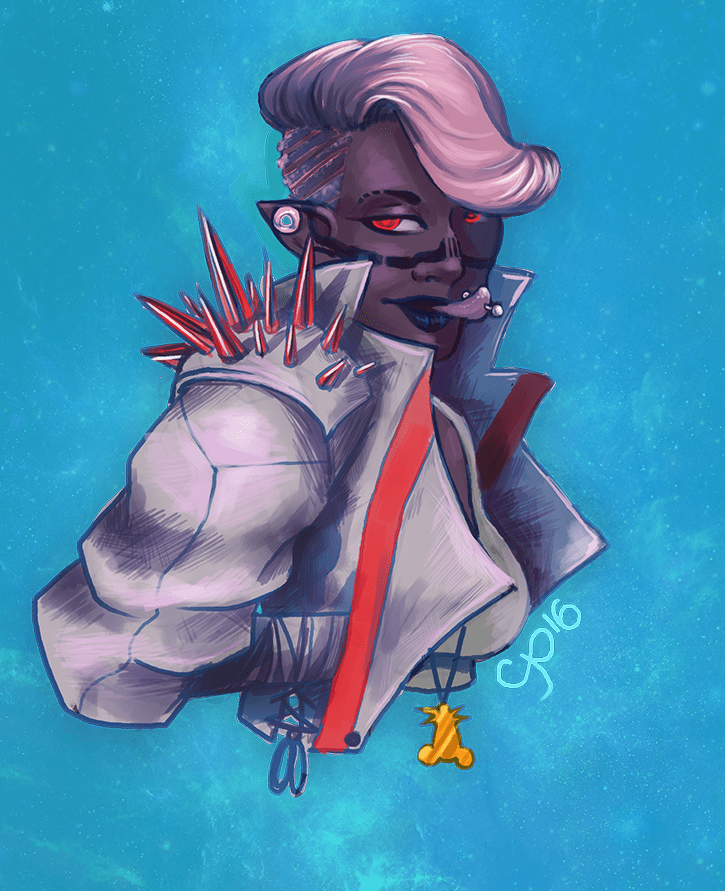
    Even my comic Blackburn which I have been working on for 3 years now started with a single drawing. Whenever I draw I am telling a story to myself the entire time, and I decided to draw this punk drow character. As I was drawing, I asked myself why she was the way she was, what led her to be that way and what kind of world she lived in. In the end I wanted to find these answers out and that’s ultimately what led to Blackburn. 

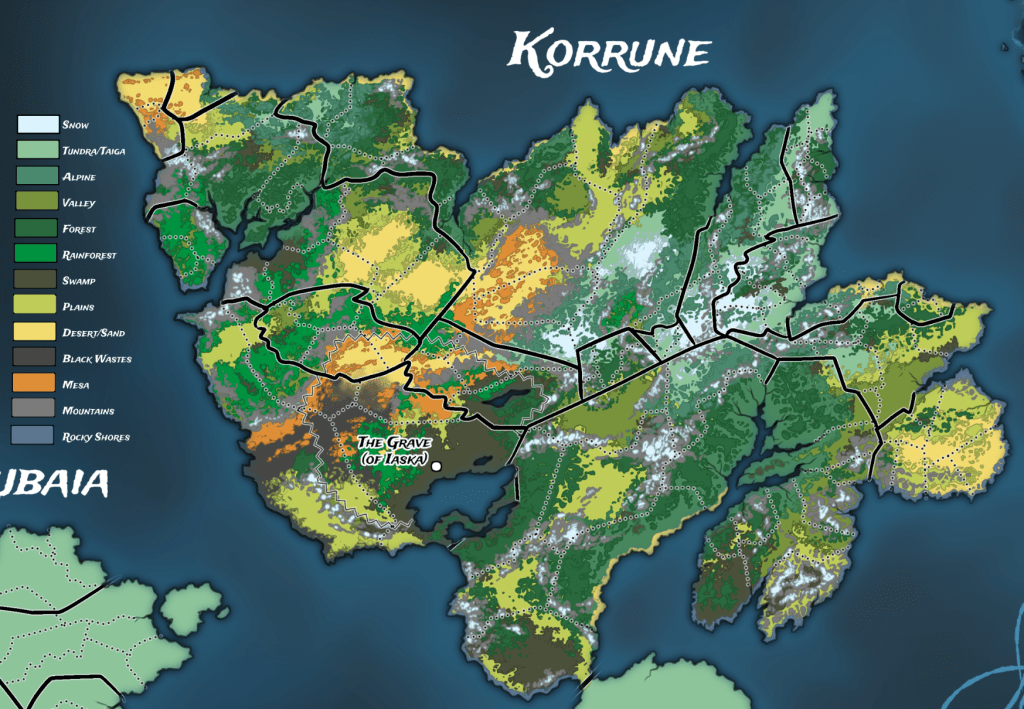
    The main game I am running now, that I started like 2 years ago? Is a completely custom setting built from the ground up that all spawned from the phrase “feast or famine”. I was actually planning a one-shot for something else, when the phrase popped into my head and I couldn’t let it go and immediately wrote up an outline where I explored the idea of what a world controlled by this concept of feast or famine would look like. I came back with this idea of a world with only two seasons. Feast: Where everything was lush and grew wild, threatening to consume villages and Famine: where nothing grows and disease and monsters become a major threat. How do people live in a world like that? What does that look like? Why is it that way?

    That’s pretty much a summary of how all my passions start, with a single idea that gets lodged in my ADHD-riddled brain that I can’t let go of. Just a spark for a story that I want to share or tell.

    What nerdy interests are you most excited about right now? 

    My biggest focuses right now are my giant Pokémon cross-stitch that I showed you. The final canvas is probably going to be like 4’x7′ and will consist of all the sprites from Pokémon gen 1-5. I love Pokémon, have ever since I was a child. And ever since I learned to cross stitch as a child I entertained this idea of making a giant Pokémon tapestry, but never knew how I would do it. The idea showed up again a month or so ago when I saw an ad on Facebook where you could submit an image to a website and they would make you a custom cross stitch kit. I looked at all the options and wasn’t really satisfied with the services that were out there. I stumbled across a free online pattern generator that allows you to upload an image and it will make a pattern for you and provide you with a list of all the colors you would need. Well obviously I needed to do that, and pretty much ordered everything the same day. 

    I also kickstarted a Horizon Zero Dawn board a while back, and the last of the assets finally arrived, meaning I have dozens of minis to paint and I am so excited!

    My other big project right now (that I guess isn’t really that nerdy?) has to do with our podcast HEX. Last year, Halli, one of our hosts did a story on Teal Swan, the online self-help guru and cult leader (and overall horrible person. This story and many of the attributes of Teal reminded me of a story I had read on reddit, known as the Final Fantasy 7 house. A harrowing tale of Icarus, a young trans man in college, who was struggling to figure out his identity and ended up meeting some people online that seemed to accept and love him for who he was and they bonded over a shared love of Final Fantasy 7. He would go to live with them over the summer only for him to realize he had joined a cult and he was forced to live in horrid conditions and serve their every whim. 

    So I put together my story and shared it on the podcast, but it drew me back in, and I began to dig deeper. Not only did I find out that this internet legend was actually a fairly accurate account of real events, I found that Icarus was far from the only survivor. I’ve talked to nearly a dozen survivors now, having tracked them down on the internet even having many come on the show (we have another interview coming out this week) giving them a chance to tell their story of survival and be more than just a victim of the woman that has been running this abusive scam since 2001 and may even be still active today.

    It’s become a whole thing and a huge passion project for me, to find these survivors and give them a platform to speak out about what happened and a safe environment to do so, all with the hope that their story could maybe help someone else. All of the survivors I have spoken to are queer and the grand majority of them fall into the trans spectrum. They were targeted specifically because they were questioning and feeling alienated and unsure of themselves. It’s been absolutely inspiring to hear their stories and how they escaped and have grown into such amazing people (not that they weren’t to begin with). Being someone that is also an abuse survivor, it has been very healing for me. 

    Other than that, I continue to work on my Feast or Famine campaign and world building. We hope to make the campaign available as an actual play podcast in the future, and I look forward to sharing that world with the rest of the world.

    What advice do you have for GMs who want to get better at worldbuilding? 

    It all comes back to stories. Everything you make should tell some sort of story: Do all your elves live under the ocean? Why? Have they always lived there? How do they live there? What do they eat? Sometimes the most seemingly boring questions can lead to some of the most delightful “discoveries.” One thing we had to consider for Feast or Famine is, how do you live 6 months when you can’t grow new food or breed livestock? Pickling and canning seemed like the obvious solution, but what if you wanted fresh meat? That’s how rock chickens were born. 

    I had this idea for chickens that came from the fireplane, whose eggs were like rocks, and wouldn’t hatch until they were put in fire, after which they would grow to maturity in a very short period. Meaning that you could have a store of rock chicken eggs that you can hatch at any time. When we were doing our session zero, I kind of threw the idea of rock chickens out there, and my players loved it, and now we’ve developed a whole thing around rock chickens. Like they taste like Louisiana hot chicken and different varieties have different flavors (even a cool ranch variety). 

    Which, on that note, don’t forget to bring your players in on some of the world building! It helps get them excited about the world, and bouncing ideas off each other helps develop them or come up with something you never would’ve thought of on your own! World building isn’t just about the DM. It’s easy to think of it as a solitary activity done in isolation, but a DM is only a narrator. The players are the characters, the ones that actually do things and shape the world. 

    There are also a ton of world building games that you can play as a group to help further develop your world. One thing we did was play a game of the Quiet Year (made by queer creator Avery Alder) to develop the town the players would start in. This led to the discovery of an underground city, a salt plague, a murder mystery and shadowy monsters that live on the edge of town. This also created a whole host of NPCs and a functional town, as the game asks you questions about how the town survives, what the dynamics are and challenges you to make decisions about the world functions. 

    Do you have any recommendations of queer nerdy content that you would like people to know about? 

    Oh man, do I! Halli (from HEX and a player in DMTK) just released her first book: Wilderwood. It follows three characters as they try to protect the small town of Wilderwood from mysterious forces. They are Octavia, the vampire baroness, who has watched over the town for centuries, Bellemy, the non-binary hunter and lover of Octavia that disappeared into the faelands 2 years ago and has suddenly returned mysteriously and Roderick, another hunter that has been drawn to town on a hunt avenge his fallen partner. 

    And I can’t mention Halli without mentioning her TTRPG stream Terrible Party where she and her queer cast play games, host charity streams and much more! 

    Thank you, Cayla!

    Are you an Adventure Queer? Do you love to play D&D? Email us at roarcatreads@gmail.com to let us know you would like to be interviewed!

  • Adventure Queers: Meet Chad Charest!

    Adventure Queers: Meet Chad Charest!

    Please welcome Chad Charest (he/him)! He is a geek of all types, master of none, and he is in the running to become World’s Coolest Uncle. You can hear more from him in his podcast interview with DMs of Vancouver, and stay tuned! He is writing an urban fantasy series; it will hopefully be on your bookshelf in the future.

    Chad, when did you first play Dungeons and Dragons?  What was the experience like?

    My experience with roleplaying games actually started with MSN role play chat with friends. We made stuff up with no material or oversight, just one person acting as gamemaster and the rest of us reacting. When I was 12-13 years old, I would go to a local Chilliwack game store (now Bastion Games) to play Yu-Gi-Oh!. Another teenager invited me to play D&D, and actually, we still play together! For years, I was mostly playing with people older that me, usually with straight cis men. I would love to play with a more diverse group, but queer female nerds tend to live outside of Chilliwack.

    Nowadays, I usually split my time between DMing and playing 50/50. DMing is more work, but I like trying to force people to role play. A normal group is very hack and slash based, so I will give them prompts during character creation to expand a little. The one I usually use is the prompt “You are lost, either physically, mentally, or emotionally. Why?” Then in a twelve-session campaign, each character gets three sessions of focus to find the thing that is lost.

    As a player, my characters have changed a lot over time. I used to like paladins a lot, then I went through a charisma character phase. Right now I’m obsessed with intelligence based characters like wizards and artificers. I recently played gnome wizard inspector, and it was really fun.

    I hear that you’ve introduced your nephews to D&D. How did that go?

    Yeah, I recently taught my two nephews (aged 11) how to play D&D! The system allows for people to play at any age. Some handholding is necessary at first, and having an experienced player other than the DM at the table is helpful. But let them do what they want, and don’t guide them or be too helpful. Make suggestions and remind them what they’re capable of, but let them make decisions on their own.

    When I was starting with my nephews, I gave them a walkthrough of every class and where they typically end up focusing, but I also gave them flexibility if they changed their minds. I think it’s also important to base the game on things they’re already interested in, like Minecraft. And sometimes it’s important to change how to play to fit their style. I usually play D&D with theater of the mind, but I bought them miniatures because I knew they’d love it. Now they’re playing by themselves, and they give me regular updates. I’m usually like, “That’s definitely not following the rules, but you’re having fun!” It feels so good to have passed this on to them.

    How do you bring your asexual identity into D&D and roleplaying games?  Has D&D played a part in exploring or understanding your sexuality?

    Honestly, not really. I only figured out that I am asexual when I was 27 – about seven years ago. My D&D characters have just never been sexual, and usually I was playing with cis dudes who weren’t going to role play flirting with each other, and if they did romance an NPC, the scene would fade to back.

    I love playing bards, but contrary to popular stereotypes, they don’t flirt. Instead, they’re cocky and fun, and they make great friendships with other characters.

    What makes a D&D table a queer-friendly atmosphere to you?

    I haven’t had much trouble with that. When I came out as asexual, my friends were accepting and it was fine – not a big deal. I do like to play with queer people; when I have it’s awesome. You get a lot less of the hack and slash role play, and you get diverse characters who care about more things and have more in-depth identities (though of course cis people sometimes do too). Izzy introduced non-binary characters into their campaign, and that was awesome. I want more of that! For now I seek out that representation and community in literature or TV shows.

    What would you like to see done differently in D&D (either the culture surrounding the game or the mechanics of the game itself)?

    Wizards of the Coast have made some good steps recently; Tasha’s Cauldron of Everything no longer forces stats based on race. We need more things like that! We should also moving away from stories based in imperialism and be more creative by telling different kinds of stories. I try to bring that into my campaigns when I can.

    Are there TTRPG systems that you enjoy other other D&D?  What are they, and what do you like about them?

    I love Warhammer RPGs. It’s a well-established world. Even though it is very imperialistic, they’re fun! There is a wealth of history and lore that gives you a lot to work with, so you can lean away from imperialism and play from other alien species perspectives to get into more interesting content. Orcs grow from mushrooms, so let’s have asexual orcs!

    I also like Clockwork and Chivalry. In fact, my queerest experience happened in that game…with non-queer people. There is a table you can roll to determine how you know the other characters. The one woman in the group was in love with my character, and everyone else was in love with another character. It led to this great scene where everyone spent the night sneaking to someone else’s tent, only to find it empty because the other person was sneaking off to someone else’s empty tent!

    Of all the TTRPGs I’ve played, though, I think Rolemaster is my favorite. It is a little bit like D&D but it’s complex; there are 270 skills. In D&D, your characters are badasses too easily. In Rolemaster, you have to be really careful in combat situations. A group of goblins can take out a level 10 character if you aren’t strategic about your location or defenses.

    Do you have any recommendations of asexual representation done well in a nerdy property (TV show, podcast, book)?

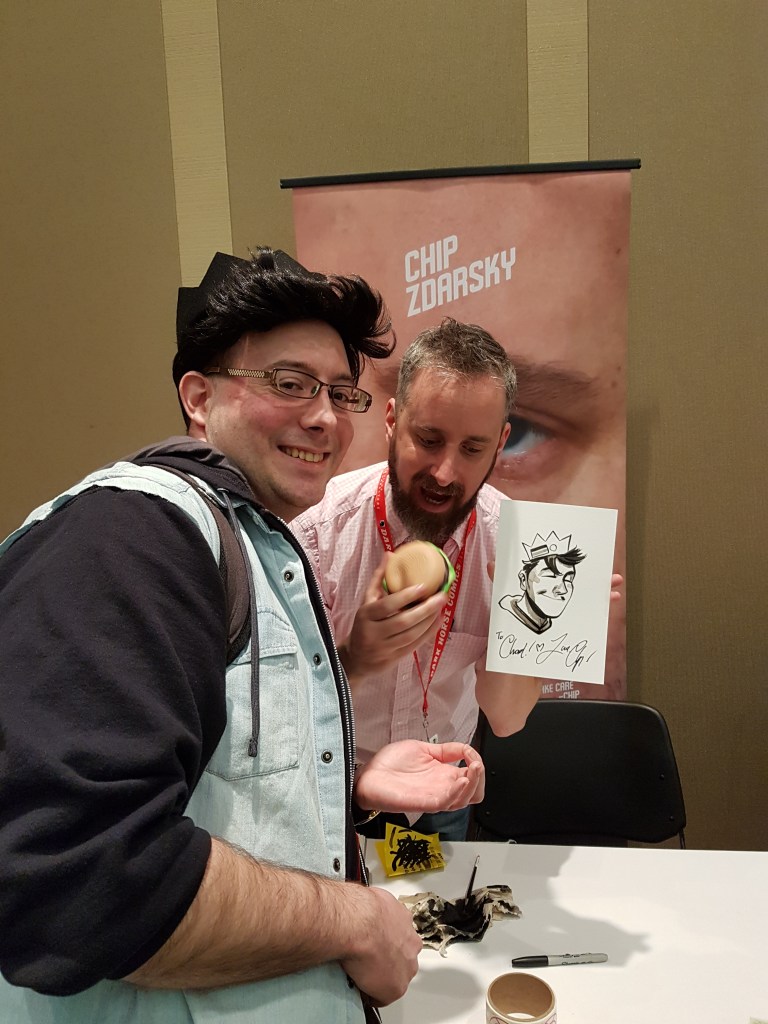
    I actually got to sit on a panel at Emerald City Comic Con about asexual representation in media. We talked about Todd Chavez in Bojack Horseman and Jughead from Archie comics. Often in media, male representation of asexuality leads to characters that are infantilized and treated like children. On the other hand, there is a lot of amazing female representation. There is a drama podcast called ARS Paradoxica with a lead who is asexual, and it’s the best time travel anything that I’ve ever experienced. Elizabeth Moon’s fantasy novel The Deed of Paksenarrion has a main character who doesn’t use the word “asexual” to describe herself, but she does talk about not being interested in sex or romance.

    Thank you for coming on Roar Cat Reads to share your experience with us, Chad!

    Are you an Adventure Queer? Do you love to play D&D? Email us at roarcatreads@gmail.com to let us know you would like to be interviewed!
  • Adventure Queers: Meet Izzy Braumberger!

    Adventure Queers: Meet Izzy Braumberger!

    Izzy Braumberger (they/them) is an armchair historian and philosopher as well as an avid player of TTRPG games and a developing system designer.

    Izzy, you’ve been playing D&D for over 15 years, and during that time you’ve seen some of its limitations, like the way its mechanics and history create a colonialist focus on combat and looting.  What keeps you playing the game despite this, and what kind of changes would you like to see to the system?

    D&D is a very popular system with wide-spread appeal. I think that’s mostly because it has the crunchy mechanical stuff that people enjoy while also being loose enough to leave room for people to make it their own.

    I find D&D to be very transactional and video game-like. The default is a system model that rewards the story “go out, find a problem, kill the problem, loot the room.” This model makes it easy to track people’s success and determine when and how they level up, but it’s also limiting and celebrates a particular kind of playing. Even in parties that try to value equality, the distribution of wealth and power still tends to be dependent upon who killed the most enemies.

    I would like to see the system emphasize rewards based on nonviolent participation. I have seen other systems like Exalted create mechanics to track political and social relationships; it would be as if the bonds and relationships in D&D were put to mechanical use. Instead of always rewarding players with treasure, parties can be rewarded with allies and stronger relationships. This would create room for more kinds of stories and characters.

    In a previous conversation, you mentioned that you’re a history nerd.  Roleplaying games often take place in a liminal space between history and fantasy that is often defaults Eurocentric.  What historical facts would you like to see acknowledged in D&D campaigns?  What is your dream setting for a campaign?

    When I GM, I like to throw in historical facts that have no societal baggage. I don’t want to bring up real world struggles, consciously or unconsciously, but adding little known details to the adventure can make the world feel richer. For instance, let’s say your party is traveling by wagon pulled by a team of oxen. I would include the fact that the one on the right has a two syllable name and the one on the left has a one syllable name – that way the oxen know which one is being talked to.

    My dream campaign would be one that is so grounded in actual history that it seems alien to players. I would like to see a game set in pre-Enclosure England, when the structure of land use was centered on families, and there was no concept of “going to work” because you worked where you lived.

    D&D isn’t very accurate, really. The typical tavern/inn that parties go to would have looked very different historically! There weren’t rooms or subdivided spaces, because there was no way to heat everything. There also weren’t roaring fires, because fireplaces didn’t exist until much later than most people think. Privacy was not a thing until very recently. Even royal houses were just a line of rooms that people had to walk through; hallways weren’t common for most of history. Industrialization changed everything worldwide, so setting an adventure before then would be my preference.

    Roleplaying in D&D provides the opportunity to explore your identity in myriad ways.  For queer people, this can be a really liberating experience.  How have you been able to explore your identity through D&D?

    I have found that role playing games are a wonderful mirror to hold up so that you can figure out what sort of person you would be if you could be anyone. You get to be any kind of person you want and experience how it feels when people react to you in this different way. Self-exploration is expected in these spaces. You can be the manliest man who plays a 4’2″ elf with a high-pitched voice who flirts with guys. No one automatically assumes that’s what you’re into in real life – it’s play. And play is a valuable teaching space.

    For the longest time, I thought it was just play, and I didn’t really take to heart what I was experiencing. I knew I felt free, happy, and more myself, but I didn’t quite get what was going on. It took me time to piece together disparate behaviors and thoughts to figure out what made me feel happy and comfortable. Really, embracing my trans identity was about finding comfort. There were both disphoric and euphoric elements to finding out what I do and don’t like – all together it paints a picture to your route toward happiness. I asked myself a lot of questions: Can I live with this? What do I need to change or give up? What is the fluctuating baseline that I want to rest at?

    The valuable thing about role playing games is that you don’t have to wrestle with all of these variable judgments all the time. I don’t actually play non-binary characters very often. I lean into masculine characters because I don’t get to be that in real life. It’s an interplay of wish fulfillment and that mirror to see who you could be. I’ll be honest, I’ve used some DMs as therapists over the years – it’s always a bad idea, but we do it anyway!

    Self-exploration is a vulnerable process.  In your experience, what makes a D&D group safe to explore or live out your queerness?  

    When you play a roleplaying game with people, you enter a social contract to be cool with whoever your party members are. A good DM will stop people from imposing their will or view of your character on you. If someone says, “Why are you flirting with that girl? You said your character was gay,” a DM should guard and support nuance. Don’t let people police people’s expressions of sexuality or gender identity.

    I think it’s most important to show enthusiasm for people who are exploring new things. Show active positivity, ask questions with the desire to know more rather than judge. Focus on understanding people, not being disappointed or uninterested in what they’re doing.

    When DMing a game, it can sometimes be hard to fight the cisheteronormative culture in which we were raised and populate the world with diverse NPCs.  How do you prioritize representation of trans people in D&D?  What tips do you have to convey the complications of gender identity in role playing games?

    Exploring gender identity is an in depth, nuanced process, and this doesn’t translate to D&D very well if NPCs aren’t given the space or time to explore that nuance (and most of the time NPCs are one and done). When introducing characters, it’s easy to rely on shorthand descriptions to indicate trans people, and that usually means perpetuating potentially harmful stereotypes. The easiest thing to do is to make these NPCs central characters that are returned to throughout the campaign. You can have more meaningful representation when players are emotionally invested in characters and want to learn more about them. That’s when you can have those more nuanced conversations and experiences over multiple interactions.

    Introducing MtF or FtM characters into your campaign can be tricky. How do you alert characters to the NPC’s trans identity without some kind of gross skill check that amounts to “You can tell this character is trans”? In a campaign that I’m playing in, the DM took us into an NPC’s memories, where we saw her experiencing abuse as a child for being trans. It was such a smart way to reveal this fact about an NPC we all really cared about!

    I personally have no problem with straight cis GMs role playing trans characters, so long as they aren’t fetishizing anyone or perpetuating harmful stereotypes. At the stage we’re in culturally, visibility is really important, and it’s a great opportunity to practice they/them pronouns and get in the headspace of people who have had different experiences from you. Having diverse characters can also help communities surrounding property more inclusive.

    Are there any resources you recommend for players or GMs who want to work to create a safer, more inclusive gaming table?

    In general, I recommend you look into TTRPG horror games. Horror has a unique contract regarding the creation of a safe space at the table. You have to lay everything on the table beforehand – your fears, your expectations, your limits – so that you can create a safety system, and you’re expected to check in after the session to make sure people are okay. There is an overlap with the BDSM community, actually. Playing horror games helped me learn how to engage with other people more sensitively, which I think transfers to all kinds of games.

    Specifically, I want to recommend the podcast DMs of Vancouver. They intentionally interview diverse guests and value showcasing a variety of perspectives. [Note: Izzy was a guest on DMs of Vancouver. Check out their episode here!]

    Roar Cat Reads is a blog for queer nerdy content.  What is something queer and nerdy that you would like readers to know about?

    • League of Ultimate Questing – an amazing podcast with a pretty diverse cast of characters. They do a great job of normalizing inclusivity.
    • Chilling Adventures of Sabrina – the mechanics of the world support the gender identity of the character Theo in some really cool ways.
    • Philosophy Tube – the trans host of this YouTube channel has one of the best coming out videos I’ve seen.
    • Inn Between – another podcast with great representation AND one of the most interesting handlings of a body swap episode I’ve ever encountered! 

    Thank you for spending some time with us at Roar Cat Reads, Izzy! If anyone would like engage in more of their content, you can check out their episode on DMs of Vancouver. And stay posted! They’re in the early stages of an actual play project that we can’t wait to learn more about.