Black Sails is a television show about queer wrath, and if you weren’t already aware of this fact, I can only assume you haven’t watched it yet. Beware: this post will include spoilers for all four seasons of the best television show ever made (in my entirely correct opinion).
Evangelicals and Captain Flint’s “Dragons” Speech in Black Sails
“They took everything from us, and then they call ME a monster?”
So, queer wrath. We are introduced to our protagonist, Captain James Flint, as a man set against England and civilization. He wants to establish a self-sustaining pirate community in Nassau, and he will hunt ships and steal gold to make his vision a reality. It’s all very stereotypically pirate until season two reveals his motivation. James McGraw (his name before he became an infamous pirate) was in love with an English nobleman. When their relationship was discovered, James was exiled and his lover Thomas was sent to an asylum, where he died(ish – unbury your gays!). To avenge his loss and to rage against this supposed “civilized” decision, Captain Flint became the terror we initially met in season one.
I think it is appropriate to stop for a second and think about how incredible it is that we were given a prestige television show about a queer man (fans read him as either bisexual or gay) who is powerful, angry, and righteous. Black Sails, man. Watch it!
“There is freedom in the dark.”
By season 4, Flint has tempered his personal injustice with a broader awareness of the oppression that “civilized” England forces upon multiple oppressed groups, including the African men and women who have escaped slavery and have now joined his fight against English rule. He has lost more loved ones, gained new allies, and dare I say, become wise. In the final episode of the show, he describes the problem with civilization and the freedom that comes from stepping away from its rules. It is a beautiful speech, and it changed my life.
“They paint the world full of shadows and then tell their children to stay close to the light. Their light, their reason, their judgements, because in the darkness there be dragons. But it isn’t true. We can prove that it isn’t true. In the dark, there is discovery, there is possibility, there is freedom in the dark when someone has illuminated it. And who has been so close as we are right now?”
Captain James Flint, Black Sails season 4 episode 10 XXXVIII
“Their light, their reason, their judgements, because in the darkness there be dragons.”
Every time I watch this scene or read these words, they hit a little deeper. I have shared my story on this blog before, but the important thing to know is that I grew up evangelical and happy to follow all of its rules. The imagery Flint uses is especially poignant, since Christians are fond of using “light” metaphors to describe being close to God and therefore “safe.” Anything beyond the behavioural limits described in the Bible was considered not only sinful but dangerous. Outside of God’s protection, there be dragons! I was constantly told that non-Christians were to be pitied because their lives were empty (oh man, admitting this is causing me so much embarrassment); they were all seeking corrupted pleasures to fill the void that was the lack of God in their life.
One of the most significant light/dark dichotomies was, obviously, sexuality. Christians approved of lifelong monogamous heterosexuality within the context of marriage, and…nothing else. But practically, this strict boundary was made flexible for several culturally accepted sins like remarriage or sex before marriage (as long as you felt bad about it). The things that were truly sinful were any sexual act that wasn’t heterosexual or monogamous. I was warned against these my entire life, or as Flint says, “They paint the world full of shadows and then tell their children to stay close to the light. Their light, their reason, their judgements, because in the darkness there be dragons.“
It is easy to maintain this worldview if you stay inside the evangelical bubble. Although I pushed against my upbringing in many ways, it wasn’t until I moved to Vancouver and became a part of friend groups who were not Christians that I truly experienced stepping into the “darkness”…and realizing it wasn’t dark at all. I found people who created community, who thought deeply about the world and who cared about helping those who needed help.
“In the dark, there is discovery, there is possibility, there is freedom in the dark when someone has illuminated it.”
I was surrounded by queer couples who were married, partnered, and dating. I found myself in a queer relationship, and the thing I noticed was that they were fundamentally the same as the monogamous heterosexual couples I’d grown up with. Yes, there were couples who struggled in a variety of ways, but there were those in the church that raised me too. Overall, though, I found the same love, the same care, the same devotion. In fact, in many ways, queer couples seemed healthier than the ones I grew up around – the mutual submission I defended in seminary against complementarians was suddenly expected. When gender roles cannot be assumed, conversations about family roles, desires, and strengths become the norm. As Flint says, “In the darkness there be dragons. But it isn’t true. We can prove that it isn’t true. In the dark, there is discovery, there is possibility, there is freedom in the dark when someone has illuminated it.“
This is my small attempt to illuminate the darkness. To tell those who create their own stories of light and dark that the things they fear so much are not actually scary. In fact, I think evangelicals could learn a lot from the queer community! And honestly, I think the queer community can also learn from evangelicals. When we create lines that separate, we lose the ability to learn from those who see things differently from ourselves and can offer a perspective that reveals something new and important for our own lives.
Let’s follow Flint’s lead and illuminate the dark spaces that people create out of fear, hate, and ignorance. It’s Pride Month, baby, so let’s be proud of the dragons we are!
Do you love Black Sails? Check out our in-depth reviews of each episode.
Given the open-ended prompt of “can you write and/or talk about greatest show of all time Black Sails”—an ask I’ve been lucky enough to receive a few times since I fell for the show and started evangelizing for it five years ago—it’s hard for me to pick just one area of focus.
If I don’t start by zeroing in on a specific character (Thomas Hamilton!), I usually jump first to Black Sails as a post-colonial text, refashioning the historical record as a political act, and centering the marginalized to reclaim those histories from their oppressors. But that leaves me wanting to talk about the broader themes of narrative manipulation, the meta-ness threaded throughout the show: characters in the story repeatedly talking about how they’re characters in a story, the way they deliberately play with the idea of “character” as they reinvent themselves.
Of course that then leaves me wanting to talk about pirates—narrative was what Golden Age piracy was all about! Real pirates didn’t actually do a ton of fighting: garner a fearsome enough reputation, and crews of the ships you’re raiding will surrender without spilling a drop of blood. But real pirate history just leads me to a wider history of the period, the actual rabbit hole I tumbled down when I was at the height of my Black Sails fandom: English history around the turn of the 18th century, imagining how the politics and social conditions of the late Restoration would have fundamentally shaped these characters’ lives.
But when this particular “can you write something about Black Sails” ask came in, I was falling hard for another show—one that, on its surface, doesn’t have very much to do with 18th-century pirates. AMC’s Halt and Catch Fire is a drama about technologists at the dawn of personal computing who are always on the cusp of the next big thing; it begins in Dallas, Texas in 1983, and follows the characters over the course of the next decade. Coincidentally, HACF aired at the same time as Black Sails—2014-2017—and also like Black Sails, its fourth and final season brought the story to an intentional (very satisfying!) conclusion.
Those are surfacey coincidences, of course. But digging a little deeper, parallel elements and themes run through them both: their ideas about reinvention, or the way they handle their protagonists’ queerness, or the way they show a broader spectrum of human relationships than a lot of media I’ve encountered, particularly the idea of partnership as romance. So when I was asked to write about Black Sails and half-joked, “As much as I love Black Sails, it’ll be hard for me to think about another show right now,” I was delighted when I was encouraged to actually write about them both: a letter of recommendation for HACF for people who love Black Sails.
Halt and Catch Fire was pitched as “Mad Men but computers in the 1980s,” and its first few episodes carry the clunkiness of that premise—the main characters are attempting to reverse-engineer an IBM PC, and critics were quick to draw on that conceptually as they accused the show’s writers of trying to reverse-engineer Mad Men, which was still on the air and was, of course, one of AMC’s biggest hits of all time. But halfway through the first season, it starts to shuck off that premise and free its characters from the archetypes that initially bound them—and by the second season, it starts to truly come into its own, shifting from a show about computers to a show about the people working on those computers.
Though it becomes a true ensemble show, the ostensible protagonist of HACF isJoe MacMillan, played by Lee Pace (if I wrote a “letter of recommendation for HACF for people who love Lee Pace,” it’d simply read, “Seriously you haven’t watched this yet??”). Joe is the aforementioned queer protagonist—he’s bisexual, written and portrayed in a beautifully nuanced way, especially with one particular storyline in the final season that’s my favorite of the entire show. A slick-talking salesman with grand visions for the future of technology, Joe initially brings together hardware engineer Gordon Clark (Scoot McNairy), a sort of sadsack failed-genius type, and software engineer Cameron Howe (Mackenzie Davis): a young, brash gamer who’s able to write such beautiful code that she never feels like she has to compromise on anything.
The early trio eventually breaks apart, and in the second season, Gordon’s wife, Donna (Kerry Bishé) is elevated from her season one role of “Gordon’s wife” to an equal fourth slot in the ensemble—also a hardware engineer, she enters into a working partnership with Cameron at an early online gaming start-up called Mutiny. Their partnership—and the enduring one between Gordon and Joe—are the heart of the show, even more than the characters’ configurations in traditional romantic relationships (in addition to the Clarks’ marriage, Joe and Cameron’s on-again, off-again relationship is a beautifully entertaining train wreck).
HACF leans into the theme of work-as-romance; it partly feels fueled by the technology industry itself and the mythos around start-up co-founders, but it’s partly about the specific way the show privileges the emotional depth of these working partnerships: what it means to love the person you’re collaborating with, and how the fracturing of a partnership can be as emotionally scarring as any romantic breakup. And because they’re all working around the same technologies and the same ideas, their romantic relationships complicate their work, too: it all leaves you beautifully frustrated by how much potential they could have, the things they could create, if only they could actually manage to work together.
Black Sails plays with similar configurations of overlapping platonic and romantic partnerships: where HACF leans into duos, Black Sails loves a trio, from Flint and the Hamiltons to Flint, Silver, and Madi, or the original Ranger trio followed by Max, Anne, and Jack. The murky spaces of these triangles offer some of the greatest pleasures of Black Sails: sorting out interpersonal desires from actual shared ideals and goals, and the sort of push-and-pull between them, as each side of the triangle brings traits that balance out the others.
The shows’ shared themes of reinvention feel both parallel to each other as well as contextually specific—where Black Sails plays with reinvention in its meta-exploration of narrative, HACF is working within the overarching ethos of the tech industry, where the cycle of failure, pivot, and reinvention are so elevated and romanticized that they’re essentially a Silicon Valley cliché. All the characters shift a great deal over the course of the decade-long timeline of the show, but none so much as Joe: there is a wholly new Joe MacMillan every season, each 180 a pleasure to try and untangle, as you sort the artifice from the genuine. On the surface, these shows feel somewhat distant, audience-wise: my friends who love Black Sails tend to like genre fare, and my friends who love HACF like, well, other AMC dramas. But I think that the complexities of each of these shows—and the ways they overlap thematically—create plenty of space between the two. If you love Black Sails and you’re looking for a show that portrays a full and complicated array of intimacies between characters, I highly recommend Halt and Catch Fire. (Plus, a reminder: Lee Pace!)
Elizabeth Minkel (she/her) is a writer, editor, and consultant who focuses on digital technologies and fan culture. I’ve written about fandom (and other topics) for the New Statesman,The Millions, The Guardian, The New Yorker, and more. (See “clips” for a full(er) list.) I co-host a podcast about fandom called “Fansplaining” with Flourish Klink, and I collaborate with Gavia Baker-Whitelaw on “The Rec Center,” a weekly newsletter featuring fandom articles, fanart, and fic recs, which was a finalist for a Hugo Award in 2020.
Sign up for our queer nerdy newsletter!
Processing…
Success! You're on the list.
Whoops! There was an error and we couldn't process your subscription. Please reload the page and try again.
For those fans who become interested in historical pirate history because of Black Sails, The Republic of Pirates by Colin Woodard is generally agreed to be the best place to start your research. It’s an excellent work of non-fiction on its own: chaptered in roughly year-long periods within which we focus on the stories of four or so men, its very readable and easy to follow. But for fans of Black Sails, this is a treasure trove of “Oh my gosh, that was REAL?”
The Republic of Pirates focuses primarily upon pirates Bellamy, Hornigold, Blackbeard, and pirate hunter Woodes Rogers. We also get a substantial amount of Charles Vane, and the tiniest, but delightfulest, of tastes of Calico Jack Rackham and Anne Bonny. Of these, Bellamy is the only historical pirate that does not make an appearance in Black Sails, although his Robin Hood-esque anti-England mentality lives on in our main man, James Flint.
Although the timelines shift and the events are obviously not exact, I was impressed by how much the show’s characters mirror reality. For example, Hornigold really was an old-school pirate who was one of the first to accept an English pardon, and he did in fact become a pirate hunter as a result. Blackbeard is larger than life both in history and in Black Sails, even down to his famous bandolier of pistols. I was just as distraught by his death in this book as I was in the show, and though the manner in which it happens was not the same, it is equally as epic. Woodes Rogers is almost entirely the man we know from the show, a privateer governor (though historically he was also a slave trader) who scrambles to establish his authority and is eventually bankrupted by his efforts.
Charles Vane is just as much of a “proper pirate” in history as in the show, refusing to accept a pardon and taking down former brothers who abandon the cause. He’s also presented as the most ruthless of the pirates (most of the pirates killed very few men on captured ships), which brought to mind Eleanor’s comment about the crew of the Ranger being animals. Although they are not in the book very long, I loved the historical story of Jack Rackham and Anne Bonny. When they ask governmental permission for Anne to annul her marriage so that she can marry Jack, Woodes Rogers refuses, saying that if they move forward with this, he will jail Anne and force Jack to whip her. In answer, they renege on their pardons and turn pirate again!
I was also delighted to learn that the Urca de Lima was a real Spanish ship that was wrecked, along with her massive defense ships, littering beaches with gold for the taking. It is not quite the story presented in Black Sails, but the same desperate scramble for gold is there.
All of this is excellent, but by far my favorite part of this book was the description of what life in England was like during the early 1700s, especially for sailors. The gross pay disparities, the forced work, the violent punishments for small infractions – it really made me understand why piracy was so appealing to so many “normal” men. It wasn’t a desire for hedonism so much as an escape from tyrannical rule. My empathy grew even greater once I understood the historical context for their actions.
The one downside to this book is the appalling lack of women, which I suppose isn’t surprising given that history largely ignored the roles women played. One more reason why Black Sails is excellent for intentionally giving women a place and a voice!
I highly recommend lovers of pirates or Black Sails read The Republic of Pirates by Colin Woodard. Enjoy!
There are a multitude of reasons to love Black Sails and to proclaim it “the best show of all time,” as the fans so often do, and one of those reasons is that it rewards analysis. Black Sails is many things: a manifesto demonstrating the power of solidarity between the oppressed in the fight against white supremacy; a commentary on how the history of the marginalized is a narrative manipulated by those in power; and a story about stories–to name only a few. But its open awareness of all of its themes is partially what makes it so powerful, self-referential, and multifaceted. That is especially true when it comes to analyzing the depth and complexity of the dynamics between its main cast of characters, nearly all of whom are explicitly or subtextually queer.
The need for more queer representation in media is an ongoing and popular conversation topic. More recently, many of the public discussions tend to revolve around people’s opinions that surely there must be One Superior Way to depict queer relationships and identities. For most, that superior way is considered to be “explicit representation,” often defined more or less as “queer content so obvious and loud that even cisgender heterosexual people can’t argue against its validity.” Interestingly, different people have different ideas of what, by this metric, constitutes as “good enough.” As a result, the goalposts seem to always be moving, and are based on the shifting sands of personal opinions. No single person has the authority to decide what “counts,” but that doesn’t stop many people from trying anyway. It is a debate fundamentally doomed to failure, because its basic premise is a flawed one: the value of queer representation should not and cannot be measured by the thoughts of those who misunderstand it at best, or act as queer oppressors at worst. To futilely attempt to measure it in such a way is to try to bend queer content to honor the impossibility of cisheteronormative standards or requirements, while seeking unwinnable, universal cisheteronormative approval.
So truly, what does it mean to be “queer enough,” either personally or narratively? Is it using a specific label to describe oneself? Proclaiming romantic love openly, in so many words? Visibly being in a romantic relationship with someone of the same sex, and defining it as such? Holding hands? Kissing? Having sex? The point is that there is no single or correct answer, and queerness as an umbrella concept is somewhat less about what one is specifically, and rather more about what one is not (namely, cisgender and/or heterosexual). Queer identities, relationships, and experiences are as diverse as every visible and invisible color in the wavelengths that make up a rainbow. Having enough variety in media to even scratch the surface of portraying that diversity should be the ultimate goal.
Black Sails is the rare piece of media that understands this concept, and embodies it to a groundbreaking and incomparable level. Because the writers built its narrative on central queer themes, Black Sails exists in an extraordinarily unique space: it includes explicit textual representation that meets the most popular mainstream standards, but it also includes subtext and queercoding to inform and enrich the story’s layers. Having the former meant the writers had the hard-won luxury of not feeling an obligation to sacrifice the latter, as well as the brilliance to recognize that there is value in and a need for both forms of representation to coexist.
The writers did not give into the false dichotomy that drags down so much of the common circular debates, as people argue that surely there must be only one correct way to depict queerness properly. Instead, by choosing to show a myriad of queer relationships both explicitly and subtextually–with no pressure to openly define all or even most of them by cisheteronormative standards–the show not only did right by its characters and what was best for its narrative, but it also exemplifies the very principles the story is about. The characters live and love diversely, while simultaneously acting as mirrors of one another in the literary sense. As they reflect and reveal each other’s traits, the resulting parallels between the more openly queer and the more subtly queer relationships highlight what the deliberate similarities can tell you about both. Underlining those similarities through these methods also effectively emphasizes how many of the characters are alike in more ways than they differ–or at least, in the ways that count the most.
As Charles Vane says to Billy Bones, “They can’t tell the difference between you and I.” The pirates are all defined in the same way by their oppressors, labeled as uncivilized monsters because they dare to fight for freedom, and love, and freedom to love without restraint. It demonstrates why solidarity amongst the oppressed is both valuable and essential. The various undefined examples of queerness that the show sets also take it a step further: true freedom is arguably being allowed to coexist authentically, beyond the constraints of expectation or the requirements of definitions. The diversity of such portrayals, depending on context, can even act as a commentary on the variety of real life queer experiences. Queer love, identities, and relationships are no less valid or impactful–or, in the case of fiction, no less canonical–for sometimes remaining somewhat undefined or understated. Simultaneously, when care is taken to define them, there is power in acknowledging such specificity without losing sight of how it does not or should not compromise the solidarity found in the community.
This is the value in subtext and queercoding as deliberate media languages. Such tools of the trade were invented to and are still used to navigate around imposed restriction and censorship of stories. If one knows or learns to stop seeing heterosexuality as the default, a whole world of depth comes to light, particularly when and where one can factor in precious knowledge of authorial intent. There should be no standard these media languages must be beholden to, or no requirements that they must adhere to, in order to be “good enough”; they can be placed with intention to be seen and understood, and if we see and understand them, then that is inherently enough in its own way. This remains true even when overt restriction and censorship are not present, such as was presumably the case in regards to Black Sails. These media languages are originally by us, for us, and there is beauty and power in their subtlety and complexities, as well as the shared community of understanding that they encourage. While explicit representation is undeniably important, overemphasizing it as the only valid way of canonically conveying queerness runs the risk of devaluing the inherent, inarguable canonicity of other methods–or losing acknowledgment of what makes them beautiful and valuable to include at all.
Including subtext and queercoding in stories encourages mutual conversations rather than passivity–conversations between a piece of media and its audience members, between one audience member and others, between one audience member and their internal self, and so on. Black Sails’ creators understood that intimately, and used it to inform and enrich their story, while also doing justice to their characters’ situations and dynamics with realistic–and thus, sometimes understated and complicated–portrayals. The result is some of the truest, most profound, and most nuanced depictions of queerness in a fictional narrative of all time. How apt it is that such a narrative was created by people who clearly both understand and revere how stories work.
This show is many things, but ultimately, it is an invitation and a challenge to look deeper. But like any invitation or challenge, the choice is left in the hands of the viewers. Black Sails is, of course, an entertaining piece of media even from a surface level perspective, and how deeply a person examines the media they consume is always optional. This show’s explicit queer representation also means that looking deeper is not a requirement for queer recognition, yet its creators still understood and exemplified the value of multifaceted queer portrayals. To consciously oversimplify this show and its varied subtext–or, worse yet, disregard those who highlight its complexities–does its creators, their work, and the points that this story is carefully conveying a disservice.
While the show mirrors its characters and relationships, it also holds up a mirror to viewers in a variety of ways. This topic is only one, and it connects to how the show makes us repeatedly aware of the power that stories hold, as it reminds us that the show itself is a story too. It asks us questions: This is a story, and stories have power, so what do you see in this? What do you take from it? What do your experiences tell you about its characters, and in turn, what do its characters reveal to you about yourself?
In the eternally applicable words of Jack Rackham, “It’s the art that leaves the mark. But to leave it, it must transcend. It must speak for itself. It must be true.” As a body of work, Black Sails speaks for itself quite clearly in multiple avenues. It has a lot to say, explicitly and subtextually alike, and demonstrates the power in and necessity of both.
It’s simply up to us how much we choose to listen.
Char Q (they/she) identifies as multiple passionate interests stacked in a human shape, often says they don’t know how to casually like things, and believes that storytelling is part of what it means to be human. Graphic designer by trade and writer by hobby, you may find them inadvisably writing character-counted media analysis as Twitter threads like it’s an extreme sport. Very occasionally, they write a longer piece elsewhere, as a treat.
Little known fact about me: I went to seminary! I love thinking about the theological messages that are implicit and explicit in the media I love, and Black Sails has some VERY interesting things to say about religion in general and Christianity in particular. In the following four discussions, we’ll dig into what the characters of Pastor Lambrick and Thomas Hamilton reveal about the Black Sails theological framework.
Season 1, Episode 3: Miranda Barlow and Pastor Lambrick
Pastor Lambrick: I’m afraid I’ve become a burden. Miranda: Far from it. I look forward to our conversations. This week’s sermon? PL: Your thoughts are always enlightening.
From their first lines together, we see that Pastor Lambrick frequently visits Miranda and asks her opinion on his sermon notes. Taken charitably, this shows his willingness to accept a woman’s spiritual leading. This is something that is fought about today and perhaps shows the spiritual freedom of 1715 Nassau away from “civilization’s” influence. Cynically, this is Pastor Lambrick’s excuse for spending time with a beautiful woman or a desire for external validation. Since one of Black Sails‘ theological themes is the concurrent sinfulness and saintliness of every man and woman, I like to think that his motivations include all three.
Miranda: Easter. Is it Easter already? ‘It is Christ’s love of sinners that gave him the strength to endure agony. This, the truest form of love, love through suffering.’ Do you believe this? Pastor Lambrick: It’s not to be believed or disbelieved. It’s God’s gospel truth, is it not? M: ‘Thy navel is like a round goblet which wanteth not liquor. Thy belly is like a heap of wheat set about with lilies. Thy breasts are like two fawns, twins of a gazelle. Thy stature is like that of a palm tree and thy breasts like clusters of grapes. I will go up the palm tree and take hold of its fruits.’ God wrote that, too. True love shouldn’t require suffering. And you don’t have to take my word for it.
Over and over again, we will see that Lambrick’s faith is simplistic. When Miranda asks him if he believes what he has written about Christ’s love and suffering, his reaction is one of confusion. It is truth, and not to be questioned. Interestingly, Miranda’s argument is not so much about the statement’s truth, but about its totality.
In quoting the erotic love poetry of Song of Solomon, she reminds Lambrick that love, as explained by God, has many forms. Christ’s suffering is one form, but it is not the only way that love exists, and we should not exalt it as such. In effect, she calls Lambrick out on picking and choosing Scripture to suit his message. She is here, I believe, a wonderful example of a systematic theologian.
Pastor Lambrick: I must confess there is an ulterior motive for my visit today beyond the content of my sermon. Miranda: Is that so? PL: There are whispers among my flock that a ship of the Royal Navy docked in Harbour Island recently. The Scarborough. They say the king means to reassert colonial rule here. Perhaps soon. Judgment in this world, not the next. For those who are a part of my flock when that judgment arrives, their righteousness will almost certainly go beyond doubt. M: It’s not quite that simple for me. PL: Is he keeping you here? M: Good day, Pastor.
In the final part of their exchange, Lambrick further reveals the motivations for his visit. Before I discuss the negative implications of what he says, I do want to give credit for his asking if Captain Flint is keeping Miranda in the house against her will. More faith leaders would do well to look for and address potential instances of domestic violence among their parishioners. But let’s delve into his assertion that his church will be spared when the British arrive to reassert their dominance.
To begin, his words have an air of paternalistic protection that Miranda clearly has no interest in. It’s telling that she just demonstrated a greater understanding of Scripture than he has, so his sudden switch to “I’ll protect you” contains hints of reasserting power over her.
Far more damning is the way his words bely an exclusionary view of Nassau, one in which his “righteous” flock will be spared. The implication, of course, is that the heathen pirates will not. Although we do not yet know Miranda’s full story, or her opinion of the pirates of Nassau, her disinterest in his proposition is our first hint that she might not see the world so divided.
Ultimately, Lambrick is pretending to be a leader, though one whose leadership is granted through capitulation to England and “civilization.” This is a theme that has yet to be fully fleshed out in the show, but it is important to note going forward.
In our first scene that explicitly discusses theology, we are treated to two drastically different theologians. One is primarily concerned with upholding the status quo, both spiritually and culturally. The other questions what is “obvious,” thinks deeply, and refuses to benefit from the advantages of living under the status quo. It remains to be seen which of these theologians we are meant to admire and imitate.
Season 1, Episode 7: Pastor Lambrick Preaches to an Empty Field
The seventh episode begins with Pastor Lambrick practicing his Easter sermon to an empty field before he is interrupted by a messenger on horseback tearing through his oration.
“Easter is upon us, an opportunity for renewal and rebirth both in spirit and the flesh. And yet we may also ask ourselves, ‘When the spirit is renewed and the body resurrected, what becomes of the sin?’ Will not a trace of it linger to mock and torment us, to remind us of the roiling pit of despair that awaits the unrepentant beyond this life? And yet does it not often feel as if life itself is the pit?”
It’s a short bit of preaching, but it’s fitting in an episode focused on Captain Flint’s plan for Nassau and the partners who fail to support his vision.
For what is Flint’s plan if not one of renewal and rebirth, one in which a wealthy Nassau can allow pirates to become soldiers and farmers? But Lambrick’s sermon asks us to consider this rebirth – can pirates-turned-farmers truly leave behind their old ways? Is a renewed Nassau possible, or will it forever be marred with the sins of corruption, greed, and violence?
Flint believes that, in the words of Lambrick, Nassau can be reborn without sin. But he is very much caught in the “roiling pit of despair” that Lambrick worries is a hellish current existence. Flint tells Miranda that he has made enormous sacrifices for his cause, some of which he is experiencing in this episode as Gates and Miranda abandon his vision. We later learn that James McGraw created the persona of Flint to accomplish Thomas’s plan, and that he hated this persona (aka himself) a little more every day. For ten years. In pursuit of the dream of a renewed Nassau, he lost Thomas and then Miranda. He murdered Gates, his closest friend. He endured mutinies and sent his crew to their deaths on innumerable occasions. He partnered with men he despised and attacked innocent men. His life truly is a hell on earth, but astonishingly, he continues to hope for a hell-free future.
Season 3, Episode 9: Pastor Lambrick and Charles Vane
When Lambrick visits Vane before his execution, his attempt to offer peace and repentance is rejected.
Lambrick enters and offers Vane bread, which coming from a clergyman seems pretty obviously to symbolize Communion. But bread is only one half of the grace of Communion, just as the peace Lambrick is about to offer is not complete. He wants Vane to feel fear for what is coming so that the mighty pirate will need a pastor’s solace.
Lambrick: Men who’ve never experienced fear are said to know it for the first time. But in this moment, there is quiet. An opportunity to find some measure of peace. Vane: Get many takers, do you? For the kind of peace you’re offering? Lambrick: It is a different experience to what you may imagine it being. Surely a man like you has faced death before, but never so nakedly.
Lambrick’s pretense is revealed when Vane shows zero interest in accepting what he offers.
“I can help you do that. To repent.” “I have nothing to repent for with you.”
Tellingly, Vane does not say he has nothing to repent for. He just doesn’t want to repent to Lambrick, later insisting that “whatever I have to say to God, I’ll tell him myself or not at all.” We know that Vane has begun to see the wider ramifications of his kill-or-be-killed worldview. When fighting the Spaniard in 305, Vane realized that everyone isn’t fighting for the glory of fighting. Some fight simply so that their dead bodies will be evidence enough to provide their families with food.
But whatever sins Vane believes he has committed, he has no interest in sharing them with someone like Lambrick, who will use them as evidence to distance himself, a “good” man, from “monsters” like Vane.
“Don’t you? I understand you believe your violence is justified in the name of a defiance of tyranny, but there are mothers who buried their sons because of you. Wives widowed because of you. Children awoken in their sleep to be told their father was never coming home because of you. What kind of man can experience no remorse from this?”
“What kind of man” reveals that Lambrick shares civilization’s instinct to make pirates inhuman. Vane clearly sees Lambrick as representative of the people he hates, those who would willingly enslave themselves to England, and an English worldview, for a bit of comfort and security.
Lambrick: I am a shepherd sent to help you find a path to God’s forgiveness. Vane: A shepherd? You are the sheep.
Sheep are consumed by fear, and a shepherd leads them into a new world of freedom and hope. Vane sees Lambrick’s hypocrisy and therefore wants nothing from this man of God who is blind to his own failings.
Ironically, although Lambrick did not get what he wanted, Vane does leave their conversation with peace. He has seen himself as a shepherd capable of leading people into freedom, and as such he delivers one hell of a last speech. It probably wasn’t quite what Lambrick intended.
Pastor Lambrick and Thomas Hamilton
There are two main characters in Black Sails whose actions are explicitly motivated by Christianity: Pastor Lambrick and Thomas Hamilton. Together they represent the best and worst of their religion, with one embodying its privilege and the other its sacrifice. This duality is perfectly expressed in the metaphor of a shepherd and the sheep. A shepherd leads people and challenges the status quo for the betterment of their flock, even at personal risk. The sheep follow people and fearfully accept the status quo out of a desire to maintain their privilege.
Pastor Lambrick believes he is a shepherd, but his conversations with Miranda and Vane reveal his inner sheep. As I mentioned earlier, Lambrick has an exclusionary view of Nassau that separates his “righteous” flock from the heathen pirates. This becomes even more obvious in his conversation with Vane, which ends with him implying that Vane is inhuman. He sees his connection with civilization as something that elevates him above others. We have never seen him try to create a better life for the men and women of Nassau in the present, and when forced to interact with a pirate, the only hope he offers is a fear-based call to repentance in hope of a better life to come. One imagines Vane might have been more open to repenting to Lambrick if he had seen the man fight against slavery and injustice rather than enjoy a comfortable life in the island’s interior. Lambrick’s power is entirely based upon capitulation to England. He believes he is a shepherd when in reality, he is a sheep.
Miranda: In some ways he [Thomas] was like you, a shepherd to his flock.
-Episode 106
Unofficially, Thomas Hamilton established himself as a shepherd to men and women in England by hosting salon conversations with the goal of seeing “the yoke of shame lifted from your shoulders,” a habit that seems to be grace incarnate. Both in word and in deed, Thomas believes that his social and political privilege is something to be sacrificed, not clung to. In episode 201, he gives money to the poor, which seems to be a regular occurrence. His plan to offer pardons to the pirates of Nassau is done out of a desire to inspire England to live up to its Christian ideals (204) despite the possibility, and eventual reality, of it costing him everything. Thomas passionately lives out his ideals, leading others into freedom as their shepherd.
Lambrick, the sheep, sees monsters where there are men, and he wants people to change in order to better serve England. Thomas, the shepherd, sees men where others see monsters, and he wants England to change in order to better serve people. There is no question as to who is more fully living out Christ’s belief in inherent human dignity and His willingness to sacrifice privilege for others’ gain. The fact that Black Sails chose to show Christ embodied in a rich white queer polyamorous man opens spiritual doors that some churches currently keep closed, and I personally find that incredibly beautiful.
Literally EVERYTHING. This is Top Flint, from his insistence upon healing his relationship with Silver, to fighting giant Billy and winning, to seeing through Jack and Silver’s betrayal, to THAT SPEECH THOUGH. And then, either in truth or in fiction, his absolutely beautiful reunion with Thomas. God. This rewatch has only confirmed without question that I love Captain James Flint beyond anything.
TODAY’S RUNNER UP
Madi! She outsmarts a man who would murder her, she is thrilled to see that the revolution she risked death for has survived and even defeated the man who kept her captive, and then…she dresses up like a pirate when her lover betrays her and tries to tell her a story to make it all better. MY LIFE FOR A STORY WHERE MADI RE-STARTS A REVOLUTION.
LOL MOMENT
Max, about to lockdown a deal with Grandma Guthrie, interrupted by:
Jack: Just one more thing. Max: *eyeroll*
WELL-FORMED THOUGHTS
I love this show for presenting two endings and letting its viewers decide which is true, while at the same time telling us that they are both true, though in different ways. It is my personal reading that Silver killed Flint, but it is my personal belief that Silver sent Flint to reunite with Thomas (and my favorite fanfiction involves James and Thomas either escaping or reforming the prison farm together). Obviously, both events cannot exist simultaneously…but in story, they can. That is the beauty of art, that it can create and sustain paradoxes that are somehow bigger and more beautiful in their contradictions than in either version told separately.
FRAGMENTED THOUGHTS
The opening at the Nice Farm Prison opens up SO MANY things to think about, especially that civilization defines itself by the things it excludes, but that it is JUDGED by how it treats those that are excluded.
It’s incredibly sad that their idea of “protection” is that a man “must cease to be in order to find peace.” Silver bought this line of reasoning in his attempt to unmake Captain Flint. Season 2 Flint would have agreed. Now, at the end of all things, do we?
Billy sees Flint trying to save someone, and shoots the Someone. Honorable Billy would have shot Flint regardless of the consequences from Woodes Rogers.
Sulky Featherstone, pissed that Jack’s drive might be compromised, is so cute.
In telling a version of the story to Jack, Flint is protecting Silver (by not saying that Silver was willing to give up the cache) and Madi (by not saying where the cache is until she’s safe).
Flint refuses to use the ship’s guns because it puts Madi’s life at greater risk, and only NOW does Silver realize Flint was never betraying him. The difference between them is that Silver cannot stop being a pirate – betraying and assuming betrayal. The irony is that Captain Flint, Pirate of Pirates, really means his offer of friendship to people that he has decided to love and trust.
After twelves minutes of silence, Silver’s first sullen words are, “He’s right, and you know it.” That’s the show!
“Please know I was so conflicted about all this when it began. I knew it would be difficult to separate them, Flint and Silver. They’d grown so close, it was hard to know where one ended and the other began. I worried that the act of separating them might destroy them both when what I wanted was to remove Flint. And I saw no other way. But the things I’ve done in the pursuit of it were intended to honor my oath. But somehow, here I am now. What I’ve just done, there’s no coming back from that.“
Poor Billy. He got caught up in something much bigger than himself, and he wasn’t emotionally strong enough to either fully adapt or to keep himself away from it all.
Madi’s dead stare as she is forced to listen to her would-be murderer monologue about his problems is haunting. But in the midst of it, she’s thinking faster than he is.
“I do not wish to board her. I wish to cause confusion and terror amongst her men. I wish to shatter their spirits. I wish to break them. And then I wish to board her.”
Just in case we needed one last reminder of how evil civilization can be when it decides to use its power against its enemies!
Flint using the mast and sails as cover and giving just enough information to others to prove how brilliant he is EXCELLENT.
Flint knowing ships so intimately that he can cut one rope and change the battle entirely is EXCELLENT.
Flint fighting giant Billy after four seasons of build up and kicking him off the bottom of his shoe like an nuisance is EXCELLENT.
I loved seeing Silver use his crutch as both shield and weapon.
When Silver is confronted with his past self/persona in the form of a cowardly cook, he chooses NOT to kill the man. That feels important.
MADI’S ALIVE, and the twist in the music from tragic to romantic is stunning!
I love Jack, but I’m glad Flint had to help him defeat Woodes Rogers. There’s no way it would have been realistic otherwise, and anyway, Jack’s strength has never been in his physicality.
Madi comes out of the hold and immediately sees Flint. Silver sees Madi’s helpless smile at Flint’s victory.
Jack and Silver are partnering against Flint, and watching Flint’s sad expressions is heartbreaking. He knows, but he goes along with them.
“This war. Your war. Her war…As long as you and she stand for it, as long as the treasure powers it, nothing can stop it from beginning now…This is what it would be. Time after time after time. Endlessly. The measuring of lives and loves and spirits so that they may be wagered in a grand game. How much ransom can be afforded for the cause? How many casualties can be tolerated for the cause? How much loss? That isn’t a war. That is a fucking nightmare.”
Silver is tired, of this version of himself he’s created, of this life of pain and struggle. But he’s tired because he’s seen this as a “grand game” rather than a life or death situation in which the only hope for a better future where black or queer men and women can live without shame and without abuse is by fighting this war.
The thing is, Silver CHOSE to align himself with revolutionaries, he is clearly drawn to friends and lovers who are passionate and dangerous. He could have avoided all this long ago and let them have their war without him. But he inserted himself into their narrative and then took it apart around them. I love that he is not made villainous in this moment, but he IS made complex and pitiable and small.
“This is how they survive. They paint the world full of shadows, and then tell their children to stay close to the light. Their light. Their reasons, their judgments. Because in the darkness, there be dragons. But it isn’t true. We can prove that it isn’t true. In the dark, there is discovery, there is possibility. There is freedom in the dark once someone has illuminated it. And who has been so close to doing it as we are right now?”
GOD, THIS SPEECH. Everyone (rightfully) loves it, but I am continually struck by the beauty of Flint’s hope. He has now fully abandoned his shame, confident that the worst of him, whether that be the love society condemned or the rage inspired by their punishment, is all part of a greater story that can illuminate the darkness. Stunning.
Both Flint and Silver had no real vision of a better world, but they both fell in love with people who were Visionaries. James was changed by Thomas, but Silver was not changed by Madi. Another fundamental difference between the two men.
“All this will have been for nothing. We will have been for nothing. Defined by their histories, distorted to fit into their narratives until all that is left of us are the monsters in the stories they tell their children.”
Is there a more tragic moment in this episode than when Mrs. Hudson reads “General History of Pirates” to her children, thus confirming Flint’s greatest fear?
Framing Treasure Island Long John Silver as a man haunted by regret is masterful. “Someday, you will [care]. The comfort will grow stale, and casting about in the dark for some proof that you mattered and finding none, you’ll know that you gave it away in this moment on this island.”
Jack says, “Captain Flint is gone,” as a candle is extinguished. WOW THE METAPHOR, because Flint was a light to illuminate civilization’s created darknesses, but no more. It is very hard not to see Jack and Silver as the bad guys here!!
The show makes it explicit that it is the former slaves who would have been emboldened to fight for freedom by a story of Flint’s death, and Jack and Silver took even that away from them. They are…super selfish.
And then Madi is reduced to being “a few scattered objections” to the treaty with England that she repeatedly felt was worth dying to oppose, and UGH. I’m very unhappy with Jack and Silver (and to a lesser extent, though it’s very much in her characterization to do so, Max) taking the easy way out.
After the emotional devastation of the showdown between Flint and Silver, it is such a palate cleanser to experience uninhibited joy at Anne and Jack’s reunion.
And it is lovely to see that Jack’s victory comes by writing Woodes Roger’s story.
How much of Silver’s story about Flint’s fate for Madi, and how much is him trying to make himself feel better?
You can see Madi want to believe him, and hating herself for wanting to believe him.
However you see the ending, as truth or fiction, watching James realize he is seeing Thomas is So Fucking Beautiful.
AGGGHGHHHHH. I always cry at their reunion. It’s just stunning.
“You didn’t just betray my trust. You have planned to betray it all that time. Get out.”
Silver’s final story is ineffective. The show ends with the unmaking of both Flint and Silver.
Madi returning to Silver, albeit at a significant distance, says a lot about love overcoming pain and betrayal. But clearly their relationship can never be what it might have been, and I like to think this is also the regret that motivates Silver to return to his past in Treasure Island.
Jack, interviewing a new pirate: And that’s my whole life story! Wait, what did you ask?
The fact that the pirates are allowed to continue because their existence lines the pockets of civilization is…super disappointing. They’ve given up their power and their honor. Can’t help thinking Charles Vane would be super disappointed in Jack…
Anne’s look from “Mark” to Jack is 100% “Are you shitting me? You don’t realize you just invited another woman on our ship?”
“What’s it all for if it goes unremembered? It’s the art that leaves the mark. But to leave it, it must transcend.”
Black Sails definitely transcended. I’m so grateful for the True stories it tells, and I can’t wait to rewatch it a third time.
Not done reliving the episode? Listen to Daphne and Liz’s podcast at Fathoms Deep!
I don’t WANT to be the sort of person who is aroused by Flint singlehandedly murdering three people at once, but. Here we are.
The man is unstoppable.
TODAY’S RUNNER UP
Madi! She isn’t given a lot of screen time, but what she has is incandescent. She refuses to play Woodes Rogers’s game, confident that her fight for her people is more important than any personal desire she might have. And just so he’s very clear, she refuses to play the bad guy, insisting that he alone is responsible for his wife’s death, not her, not Flint, not the war. I LOVE HER.
LOL MOMENT
“He just dropped.” “Mmhm.” *foot nudge* “Mmhm.” “Should we…” “Mmhm.”
LOL, poor Jack. He was so close to living in a drama, but life keeps insisting that he’s in a comedy.
WELL-FORMED THOUGHTS
I am far less invested in Flint and Silver’s relationship during this rewatch than I was the first time through, but WOW did this episode bring all the feelings back. Their flashbacks remind us of their early season 4 friendship while simultaneously framing their central conflict of the season (“What are you looking at?” “Nassau. Can’t you see it?”)
Throughout the series, we have built their partnership into something supernatural, something that, when united, can accomplish anything. The crew members of the Walrus also believe in this supernatural relationship, assuming that Silver can intuitively divine which way Flint went in the forest. But theirs is a relationship as human as any other, and these flashbacks reveal the cracks that will eventually split their trust in each other. Not all of the supernaturalism is removed, however, since the breaking of their partnership really does have catastrophic effects upon their world (RIP Walrus).
Flint can never fully trust Silver’s lack of a backstory. Not only is he saddened that Silver would continue to lie to him, he realizes that Silver sees the world in a fundamentally different way than he does. Silver wants to remake himself as though the past has no influence, and for Flint, the future he is trying to will into existence is entirely influenced by the past. They are both storytellers, but only one believes in the power of story.
Silver can never fully trust that Flint will see beyond his war. He is the more subtly emotional man, desperate for attention and affection. His greatest betrayal by Flint is from his captain’s “arrogance” and “indifference” when he thought they’d been equals. He, more than Flint, values individual relationships, and while he mostly talks about his fear of losing Madi, it is clear that some part of him is hurt that Flint will always choose the war over him, too.
No matter how close they were, no matter what they accomplished together, Flint and Silver’s partnership was always doomed to falter at some point. Their complementary skills (visionary/practical, idealist/realist) are what made them so powerful together, but under the strain of war and lost lives, these differences prove to create mistrust between them.
Despite how dark this is, there is hope. Flint still believes in reconciling with Silver, seeing in Silver’s grief and desperation an echo of his own season 3 rage. He knows it can pass, and he believes that if Madi is saved, his partnership with Silver can be restored. In fact, he believes this so strongly that he kills Dooley, a man wholly committed to Flint, so as not to lose Silver, who is actively trying to kill him. One side of the partnership is committed – we have one final episode to determine if this feeling will be reciprocated.
FRAGMENTED THOUGHTS
FLASHBACK #1
These are filmed surreally, both in lighting and music. It’s almost dreamlike, but everything in the episode encourages us to read them as true memories.
“The men, I have to manage how they see me. I understand that’s part of my job. But for pride to be an issue between you and I, well, I think we’re plain past that by now, don’t you?”
Silver shows more vulnerability in front of Flint (by taking off his artificial leg) than anyone else, but future flashbacks will force him to take that vulnerability to uncomfortable levels.
Flint’s enemies talking about how unkillable he is is very erotic.
Rogers: Which one of them is going to prevail? Billy: Silver has the men, and Flint is on his own out there and disadvantaged. That said, Flint’s been on his own and disadvantaged countless times since I’ve known him. And here we are.
Silver knowingly sends three men to their deaths solely to discover Flint’s whereabouts. The apprentice has truly matched the master, huh?
FLASHBACK #2
Flint trusts Silver so much that he forgot he doesn’t know Silver’s past!! And the annoyance and heartbreak that flashes across his face when he realizes that Silver is STILL lying to him!!
In the midst of this emotionalism, I have to admire Flint’s ability to subtly throw shade by saying, “I assumed if you ever became someone worth knowing…” But isn’t that the whole thing? Silver tried so desperately to be a person worth catching Flint’s attention. Now that he has it, he doesn’t want to risk it by revealing anything Flint might dislike.
Flint takes down the first three men in a scene that VERY MUCH sets up the ominous Flint Ghost of Treasure Island.
I have to imagine that Flint was rolling his eyes and muttering, “oh, come ON” at having to pretend not to hear these bungling idiots snap tree branches as they sneak up on him.
Madi, a captive, utterly showing up Woodes Rogers, a governor, is BEAUTIFUL. She is unimpressed by his White Man Pain, giving one of the best speeches of the series that is, tellingly, audibly punctuated by Eleanor’s ghost.
“But I hear other voices, a chorus of voices. Multitudes. They reach back centuries. Men and women and children who lost their lives to men like you. Men and women and children forced to wear your chains. I must answer to them, and this war, their war, Flint’s war, my war – it will not be bargained away to avoid a fight, to save John Silver’s life or his men’s or mine. And you believe what you will, but it was neither Flint nor the Spanish raider who killed your wife. That, you did.”
Madi is put in the exact same situation Silver was in, but her decision is the exact opposite. She has a vision of a world that is worth fighting for, even at the cost of the person she most loves. Silver has only followed that vision because the people he loved believed in it; once they are threatened, his true loyalty to individuals rather than a hoped-for future is revealed. Just as this difference between Flint and Silver is exposed in this episode, we are led to question how Madi and Silver’s relationship can survive such differing values.
FLASHBACK #3
“”The truth is there is no story to tell.” “No one’s past is that unremarkable.” “Not unremarkable, just without relevance. A long time ago, I absolved myself from the obligation of finding any. No need to account for all my life’s events in the context of a story that somehow defines me. Events, some of which no one could divine any meaning from other than that the world is a place of unending horrors. I’ve come to peace with the knowledge that there is no storyteller imposing any coherence, nor sense, nor grace upon those events. Therefore, there’s no duty on my part to search for it. You know of me all I can bear to be known. All that is relevant to be known. That is to say, you know my genuine friendship and loyalty. Can that be enough and there still be trust between us?”
Silver believes that his past is “without relevance,” which just sounds to me like the hope of a hurting man. Much has been made of his comment about the world being full of “unending horrors,” and I lean toward the camp that believes he perpetuated many of those horrors (remember his 105 comment to Eleanor: “Guilt is natural. It also goes away if you let it.”). As much as he wants to be who he is right now without acknowledging the past, Flint and I agree that the past will exert its influence, with or without his consent.
Jack is SO CLOSE to having everything he’s ever wanted, a “true victory, freedom in every sense of the word.” But because he is our only bastion of comic relief in a very emotional episode, his beautiful speech is cut short by the death of the only man who can get him his victory.
Ben Gunn looks at his future island prison. Mr. DeGroot gets a really beautiful line before all hell breaks loose: the Walrus is set on fire, he calls for the men to abandon ship, and then he’s shot in the head while trying to escape. Dangers in the dark, indeed.
“There are no monsters in the dark, though there are dangers. Let’s take care to tell the difference.”
Nooooooo Joji!! Flint’s facial twitches reveal that he too is saddened by the fact that he has to kill him. I love that their fight is so close, and then Israel Hands comes in, and Flint takes him down with very little effort. RIP Joji. You were amazing.
Flint is so confident that if Silver will just trust him, they can both save Madi and continue the war. Silver is still annoyed with the same thing that frustrated him in 201, that “right now it matters far less to you whether she lives or dies than it happens your way, on your terms.” They’re both right, and that is why this can only get worse.
“Even if you could kill me, even if that somehow helped you see her alive again, how are you going to explain it to her? She believes in this as much as I do. You know this. If it costs the war to save her, you’ll have lost her anyway. Even you cannot construct a story to make her forgive you that.”
If this were another show, Silver would have immediately replied, “Challenge accepted!”
But it’s a horribly depressing show, because instead Flint kills Dooley to prevent his loyal crew member from killing the partner who is trying to murder him!! AHHHH, why can’t Silver see that Flint really values him??
And oh shit, DOOLEY IS THE SIXTH MAN. We know from Treasure Island that Flint killed six men, but in the last episode Israel Hands was one of the six going ashore. We know he has to live because he’s in the book, and I thought it was just a little hand-wavey, but NO, IT’S DOOLEY!!! Agh, this is so sad.
Flint and Silver fight, and the Walrus explodes! And DeGroot dies!! And Billy spares Ben Gunn but shoots another former brother. THIS IS TOO MUCH.
FLASHBACK #4
Silver tries to convince Madi to trust Flint, and it’s so crazy to remember how skeptical she used to be of the pirate alliance. Now the triumvirate has switched, and no matter how much Silver believes he’s helping Madi, we know she is very much on Flint’s side.
“Can’t you see it? It isn’t utility that’s behind his investment in me nor necessity, nor dependency. I understand you fear a false motive. But this much is clear to me now: I have earn his respect. And after all the tragedies that man has suffered, the loss of Thomas, the events of Charles Town, I have earned his trust. I have his true friendship, and so he’s going to have mine. As long as that is true, I cannot imagine what is possible.”
Not done reliving the episode? Listen to Daphne and Liz’s podcast at Fathoms Deep!
A rescue plan threatens to divide Flint and Silver. Max learns the true price of freedom. Rackham seeks his prey. The Walrus enters uncharted territory.
Oh MAN is it rewarding to get back to basics – Flint telling a story and earning himself an ally. It’s fitting that here at the end of the show, Flint gets explicit about his storytelling habit. By spinning a story, fictional or true, the storyteller can control a situation while being above the influence of the story itself. This is Flint at his best, controlling the narrative and getting shit done!
TODAY’S RUNNER UP
Max! She gets everything she has wanted – a partnership with a powerful woman that guarantees her control of Nassau. But she rejects it, realizing that it isn’t, in fact, everything that she wants. Power without love turns out to be more hollow than she expected, and she gives up the most powerful position in her world on the off chance that she might someday reconnect with Anne. I can’t think of anything more romantic, and it’s no wonder that Anne extends her hand to Max, both symbolically and physically.
LOL MOMENT
Grandma Guthrie asks Max, “How well did you know my granddaughter?” and you can literally see the panic cross Max’s face as she imagines their more elicit activities being made known to Eleanor’s grandmother.
WELL-FORMED THOUGHTS
Israel Hands explicitly tells Silver that “the crown cannot be shared.” Although Silver initially denies this, the episode itself seems to support this claim. We’ve been led to believe that Flint and Silver are equal partners, but until this point, they’ve never really disagreed. Now that their goals are diametrically opposed to each other, it seems that their partnership was just another iteration of Flint as captain and Silver as quartermaster.
The deeper question is this: does the show want us to believe that this is inevitable? Can any partnership truly be equal? To be sure, the most reliable relational characteristic of this show is that partners will betray one another. There is, however, one glaring exception to this pattern: Jack and Anne. Every time one of them “betrays” the other (Anne sleeping with Max, Jack accepting a captaincy without Anne on the crew), they forgive each other, accept their new reality, and recommit themselves to the other. But this kind of partnership is extremely rare, both in Black Sailsand in real life.
FRAGMENTED THOUGHTS
Billy told Woodes Rogers that he would find Avery’s journals in Flint’s cellar. How in the world did Billy know they were there? Never mind, I can imagine that the MOMENT Billy had control of Flint’s house as a home base, he scoured through every single one of his possessions.
I do admire Rogers for making his ambivalent feelings for Billy very clear by almost shooting him in the head.
Silver asks Flint what lies beyond the war, afraid that, “What if the result of this war isn’t beyond the horror? What if it is the horror itself?” The answer Flint gives is one of the most beautiful lines in the show.
“If we are to truly reach a moment where we might be finished with England, cleared away to make room for something else, there most certainly lies a dark moment between here and there. A moment of terror where everything appears to be without hope. I know this. But I cannot believe that that is all there is. I cannot believe we are so poorly made as that, incapable of surviving in the state to which we are born, grown so used to the yoke that there can be no progress without it.”
Flint is, at heart, an optimist. This is why he is so compelling a protagonist. Even when he’s doing horrible things, even when he loses his hope, we know that it’s there – a belief that something better than what currently exists can be attained. God, I love him.
Flint has no aspirations to be king, making explicit his apparent lack of concern about Silver’s new title. He sees Silver and Madi as leaders of the New Nassau, leaving us to understand that perhaps he is once more dreaming of walking inland to a place in which oars are mistaken for shovels…or dying in the process of getting them their power.
Which, okay. Is Silver the best of them? Really? I’ve never really been a huge Silver stan, so…am I missing something? The Madi love I entirely agree with (“She’s as wise as her father, she’s as strong as her mother”), but this statement about Silver seems hyperbolic.
“Why are you doing this? Talking about us like it’s a thing? A future? I don’t know who broke it first, but it broke. And there ain’t no putting it back together again.”
I love Anne’s honesty, and later we learn that Max does too!
“The defense of civilization is not your responsibility, sir!” shouts government lackey, which made me realize that Woodes Rogers and Flint are fighting a war of ideals, while people like this dude and Max are all, “Okay, but what about making money and just staying alive?”
I love Flint’s eye twitches as he evaluates Billy’s survival and what this means for him.
By openly defying Flint’s orders, Silver is testing whether or not Flint actually trusts Silver the way Silver has trusted Flint. Based upon Flint’s infinitesimal head shake and body scan of disgust, things don’t look good. Kudos to Silver, I guess, for really believing that Flint will eventually come to see his side of things because of their partnership and friendship.
The minor characters are getting some extra time! We’ve got Mrs. Mapleton, Mrs. Hudson, Ben Gunn, Mr. DeGroot, Idelle, and even a mention of Charlotte!
Anne being unable to slice bread on her own is such a perfect scene of a powerful person made weak.
“Despite the world reminding her every day of her life that she’s undeserving of being given anything by it, that she was unworthy of what little she’d managed to take from it – despite all that, she never believed a word of it. That woman has been fighting the whole goddamn world since the day she was born. She’s a breath away from winning that fight. For whatever reason, she wants to share the spoils with you, and you’d walk away.”
Idelle puts her hatred of Anne away because of her love of Max.
Grandma Guthrie and Max have the same conversation James and Thomas once did about civilization needing the pirates.
Max has officially replaced Eleanor, even if this is “the wrong river, the wrong woman.” She has everything Eleanor fought for. How lovely that later, Max doesn’t boast of this to Anne, but admits that Eleanor tried to teach her one final lesson – that all the power in the world isn’t worth anything if there is no love.
Grandma Guthrie lays out the profound limitations of a woman’s power in this world, that even the most intelligent woman has to hide herself behind a man in order to wield it. But being reminded of all “the humiliations and the sacrifices and the defeats and the illusions maintained at so great a cost to your sense of self” inspires Max to make a bold decision – she says no, because she doesn’t want to risk being unable to be with Anne.
“You are the bravest person I have ever known. The truest person I have ever known. And I betrayed you, and it sickens me. I am so sorry for working so hard to protect the wrong things, for failing to see that there is nothing important that does not include you.”
Now THAT is an apology. Every episode makes me like Max more and more!
When Anne extends her brutalized hand toward Max, she is offering her the most vulnerable part of herself. Reminds me of season 2, when she bares her scarred back to both Max and Jack when asking them to join in a new relationship with her. She leads with vulnerability, which is amazing for such a taciturn, gruff woman.
TREASURE ISLAND!! It’s getting piratey up in here!
I love that Silver tells Israel Hands that there is no hidden message about not killing Flint – he learned his lesson from season 2 when he accidentally ordered his fellow plotters to murder someone.
And Israel Hands obeys, even saving Flint and Dooley when they steal the cache, because he wants Silver to see Flint for what he is. What he is is a mastermind, WHY DOES ANYONE STILL QUESTION HIM? He’s made it clear that he will save both the cache and Madi, and why does Silver feels this is so unlikely? C’mon, keep up your blind trust!
I’ll give Silver this, though. He’s brave to offer himself to Woodes Rogers in order to protect Madi. Even if I hate that his admission that he’s sent men to kill Flint must make Billy feel so smug.
Flint the storyteller is back, and I’m shrieking with delight at my laptop again!
Not done reliving the episode? Listen to Daphne and Liz’s podcast at Fathoms Deep!
When Silver finds out Madi is alive and emotionally believes that he can give up the cache for her without undoing the revolution, Flint steps in and confidently claims that they will get everything that they want. And like, I GET why Silver has trust issues where Flint is concerned, but I trust him 100%!!
TODAY’S RUNNER UP
Jack! He is so good in this episode! He’s caring and tender with Anne, proud and then disappointed about the reality of the pirate legacy he has so long pursued, respectful of Grandma Guthrie, and humble and smart enough to invite Max back into the game. He really shines when paired with women, huh?
LOL MOMENT
Every time Jack tries to fill in awkward silences and Grandma Guthrie calmly puts him in his place is an utter joy to watch.
WELL-FORMED THOUGHTS
We’ve made an emotional turn in the show. Although it has always included both of these themes, we seem to be distancing ourselves from the cycle of violence (although it is explicitly referenced in this episode) and instead, my attention is focusing on the theme of Short Term vs. Long Term planning.
This is seen most easily in two scenes, one between the Maroon Queen and Julius, and later it is mirrored in a conversation between Madi and Woodes Rogers. In the first, both the Queen and Julius have security as their goal. But whereas Julius is satisfied with months or years, the Queen is willing to sacrifice personal happiness if it ensures long term security for her people and their descendants. Similarly, Woodes Rogers offers freedom to the current escaped slaves if Madi promises that any future refugees to their island are returned “to the law.” She refuses this offer, knowing it will likely lead to her death, because she will not accept short term freedom at the expense of broader, long term freedom.
It is fitting then, that with the philosophical divide thus established, our leading men are beginning to have the same conversation. Silver is willing to give up the cache to save Madi, whereas Flint admits he is willing to give up her life to pursue a greater victory. As the episode ends, we see they have created an uneasy and untruthful compromise, but where it will go from here remains to be seen.
FRAGMENTED THOUGHTS
For an episode all about grief, it is a refreshingly light episode after six hours of dark material.
The scene between Silver and the Queen is so lovely. They are both grieving Madi, and her mother knows she can trust this boy who claimed to love her because he describes her as, “curious and strong, not made to be hidden away from the world.”
Flint is so tender with Silver! “How is she?” “Breathing.” “How are you?” It is continually astounding to realize that the rage that drove Flint through the first two seasons and especially the third has vanished. He has a purpose now, has allies, and this has freed him to care for and trust the people around him.
When Julius balks at the idea of their Caribbean revolution expanding to include all of the New World, Silver is the one to go Bad Cop. This is the exact opposite of the Quartermaster we used to know who could make Flint’s crazy plans palatable to the crew by selling it with a smile.
Part of me is annoyed that the only female pirate is the one who can’t seem to recover from her wounds, but it also gives us Jack the Nursemaid, so I can’t be mad for long.
Anne is pissed that Max wouldn’t apologize, but also admires her for not pretending.
“You have plenty of time to murder her another day, but right now you need to rest.”
Woodes Rogers is interrupted in blaming Mrs. Hudson for Eleanor’s decision by realizing that Eleanor was pregnant. I would be sad for him, but he remains an asshole.
Jack mimicking Max’s French accent is A+ delightful.
Featherstone claims that Max hasn’t crossed anyone who didn’t cross her first. Is this true? Did Jack and Anne cross her? Can someone rewatch the whole series real quick and validate this statement?
The Queen: I once thought like you. That because I had reason to mistrust the pirates, that it necessarily followed that I must mistrust them. But it is not so. For there is also reason to see common interest with them. I have fought alongside these men. Julius: I have fought alongside these men, but I did it so that I might find security. What they are now arguing for does not sound like security to me. There is no lasting security to be had here. Q: We’ll fight to change that. J: Nothing is lasting. But months, years, that is meaningful, and it can be had here. … Q: No one has ever been this close, this near a chance to change the world. J: No one changes the world. Not like this. Not all at once.
I love this conversation between the Queen and Julius! They both make good points, but I have always been, and still remain, Team Long Term Planning. And the Queen is sounding quite a bit like Flint at the end there, huh?
Silver is emotionally where Flint was last season, and it’s beautiful to see their roles reversed. Flint is such a good partner to Silver, laying out their past and their present, warning him that his emotions will cloud his judgment (is he remembering a certain storm?) but that Flint will be there beside him, guiding him. And when Silver regrets his harsh words to Julian, Flint calmly reassures him that it’s alright. There’s obviously going to be a significant turn in their relationship by episode’s end, but this moment is really beautiful.
Flint says multiple times, “Trust me.” Is it crazy that I do? He’s ambitious, determined, and unafraid to change allies at the drop of a hat. And yet, if you believe in the same thing that he does, he is hard to resist trusting.
Jack enjoys the notoriety of being identified as a pirate in Philadelphia by a wide-eyed teenager, especially when his name is listed right after Edward Teach. But his mood quickly sours when he realizes the world wants to sensationalize their stories rather than seeing them as human beings.
“Charles Vane was my closest friend in the world. He was the bravest man I ever knew. Not without fear, just unwilling to let it diminish him. And loyal to a fault. And in a world where honesty is so regularly and casually disregarded–” “I heard he cut off a man’s head and left it as a marker in the sand to anyone who would cross him.” “It was a little more complicated than that.” “I heard he sometimes butchered his enemies for amusement, made stew of their flesh. He was truly an animal.” “Stew? For what possible–I beg your pardon, but do you believe this?” “I read it in a newspaper.” “Charles Vane was a good man. What I told you was the truth. Put down the newspapers and read a book.”
This is the whole points of Black Sails, adding layers of depth to the hype of a Pirate Show.
Grandpa Guthrie is dismissive of Jack’s plan, BUT GRANDMA GUTHRIE. She and Jack immediately bond because they both know what it’s like to be underestimated and to use that to their advantages.
Eleanor fought to create space for her family, but Woodes Rogers destroyed it because he didn’t trust her. Even if it feels a little out of place for this show, I’m glad Eleanor’s corpse is supernaturally judging him and crying because of him. It is Very Effective, and he deserves it.
Billy is alive and a defector. It made me think of Baby Billy who was tortured by the British and swore to fight against them as a result. I suppose it must be very painful that his own allies wound up doing the very same thing to him.
Jack bought a fancy new coat while in Philadelphia.
Although Jack shows a lot of respect for Max by bringing her to meet Grandma Guthrie, GG demands more when interrupting his introduction with, “Does she speak?” I cannot believe that this television show about pirates thought, “You know what we should do now that we only have four episodes left? Let’s introduce another awesome female character!”
I have thoughts about the Cat Cycle at the end under spoiler warnings.
Max: In Nassau, slaves have seen too many of their own find freedom amongst the crews. It costs less to pay wages than to replace defectors, or worse yet, to pay guards to watch my door as I sleep. Grandma Guthrie: That isn’t the only reason, though, is it? Max: No, it is not. In my life, I have been bought and sold. And as I would be no slave again, nor would I be a master.
Max shows both logic and emotion in her decision to pay former slaves wages. She’s also learning that there is value in vulnerability, and I like her more than ever before. (Relearning? It’s possible that she stomped down her vulnerability after asking Eleanor to flee with her in the series beginning and being refused.)
We learned earlier in the episode that the cache no longer matters to Spain, yet Rogers demands its return in order for Madi’s release. Why? Out of spite? Oh wait, he super needs the money. It’s personal now.
Silver is blinded by his emotion, but the Queen can see through hers. Both she, Flint, and Madi agree that one life, however beloved, is not worth forfeiting the cache and their revolution, but Silver…he just wants her back. Hmm.
Woodes Rogers goes to Madi for comfort, which is gross. He tries to convince her to sign the agreement by being monstrous, which is ineffective. Dude is flailing.
“Eleanor died fighting. As will I.”
YEESSSSS, Madi!!
Jack and Anne’s separation is so sweet. In exchange for her alliance, Grandma Guthrie has demanded that Jack kill Flint. When Anne asks how he’ll do it, he lays out a litany of physical obstacles. But she presses him, asking, “How could you be someone who would do that?” Anne has been the secret heart of this show! And this is so sweet, but Jack answers her concerns with the equally sweet, “I do it for us. That’s how it started. That’s how it’s going to end.” I LOVE THEM.
Silver says, “He’s confident in his plan, as am I.” He’s got a backup, because of course he does, and what’s going to happen next???
We had almost seven episodes of these two being an unstoppable and surprisingly caring partnership. Too short!!
FINALE SPOILER WARNING
While I love the connection that the Cat Cycle story creates between Grandma Guthrie and Max, it strikes me as odd that their solution to the cycle of violence is…one final act of violence. And if we fast forward to the finale, it seems to be that the dual ending engages with this problem. The easiest solution to stopping everything is undoubtedly to kill Flint, and that is one way to read what happens. But what if someone were to catch the cat and send it somewhere else where love would heal the wound it’s trying to heal via violence? That’s the other way to read the finale, and I like that we are offered one final philosophical question: Which value do we want to believe in most? Ending the cycle of violence with violence or with love?
Not done reliving the episode? Listen to Daphne and Liz’s podcast at Fathoms Deep!
Flint’s last moments with Eleanor is one of my favorite Flint scenes in the entire show. Despite earlier trying to convince Eleanor that Woodes Rogers was likely responsible for the Spanish invasion, he lies and tells her it isn’t true. Flint is not one to lie in order to provide comfort, and that he does so here shows just how much he loved Eleanor.
TODAY’S RUNNER UP
Eleanor! She became one of my favorite characters during this rewatch, and if she had to die, I’m so glad it was a death like this that perfectly showcased her desperation, quick thinking, and resourcefulness. She is a messy character, but she tries so hard, and I love her for it. RIP, Eleanor.
WELL-FORMED THOUGHTS
I’ve been going on about the cycle of vengeance in all its iterations this season, and in this episode I find that they’ve tricked me! Silver gives Billy to the slaves to be beaten within an inch of his life in repayment for Billy’s betrayal of their partnership with the slaves. And…I love it? I’m so GLAD that Billy is paying for his sins. This is why vengeance always endures. No matter how right we may think forgiveness is, there is something so entirely appealing about making someone suffer for their crimes.
I really love that this show dives into emotional and moral complications, insisting that the cycle of vengeance is inherently unhelpful while also reminding us why it is so attractive.
FRAGMENTED THOUGHTS
Slaves being freed from their shackles is a needed bright spot in a very dark season.
Another show would make the relationship between Eleanor and Madi a simplisticly happy reunion. Black Sailsforces us to consider how privilege and inequality impacted their relationship in profoundly deep ways.
“My father didn’t mistrust Flint. My father mistrusted all of you.”
Jack threatens to kill Eleanor and/or Flint, but Eleanor cannot be bothered to take him seriously and just walks away. I feel like this perfectly summarizes the entirety of their relationship.
Silver giving Billy to the slaves to be tortured is…super dark. Like, darker than anything Flint has done, right?
Silver: I did not want this. Flint is my friend, but I know what he is. I have no illusions about it. But for all the dangers he presents, for all his offenses, the one thing he’s never done is force me to choose between him and you. That, you did.
Billy responding to Silver’s patronizing speech of ‘forgiveness’ with “You chose. Live with it” makes me like him more than I have in a long time.
I would love to see this episode from Julius’s POV.
I continue to be fascinated by Max and Jack’s relationship. They are business partners, sometime lovers, partners to the same woman. Their reunion is gut-wrenching because Jack is all emotion, and Max is all logic. Still, he rescues her (for the first of two times this episode).
Flint and Eleanor talking about their former partnership is my everything!!!
“You know, there was a time not so long ago when you shared their concern, when you saw what I saw. The benefits of being free of British rule. To make the new world something more than just an extension of the old. Is it so unthinkable that that might happen again? You were a pirate once. Stranger things have happened.”
Although Flint has been betrayed by Eleanor just as much as Jack has been betrayed by Max, their reunion has had SUCH a different tone. They are still civil, and they seem to still respect each other. Why is this? Because they always knew who the other was – someone ambitious and cunning and not above changing sides for a better outcome. Flint and Eleanor knew each other so well that their relationship could survive betrayal.
Speaking of changing sides, in an instant pirates and British soldiers must work together to defeat the new Spanish enemy.
Silver needs to learn to read a room: sitting in a throne in ominous lighting is not a great way to propose partnership with newly freed slaves.
Woodes Rogers gets on land, sees destruction, murder, and rape all around him…but it’s not until he learns that Eleanor is at risk that he actually begins to care. What an asshole.
I will forever love Jack for deciding to wait for his former partners despite recently learning that they were willing to give up his cache without his knowledge or assent.
Max reunites with Anne. Max is so defensive, but when she sees Anne’s brutalized face, she sees the full ramifications of her decision.
Max: I loved you, and I betrayed you. But I cannot apologize for it. I did what anyone would have done when confronted with the same impossible choices. If I apologize, you will know it is a lie, and I do not wish to lie to you ever again. Anne: Leave. Max: No. I am going to stay with you. I want to take care of you. Anne: Get the fuck out.
No, Max, you didn’t do what anyone else would have done. PLENTY of people did the exact opposite, in fact.
Eleanor: One can be happy that way, can’t they? A life of isolation and uncertainty, as long as it is lived with someone you love and who loves you back. It is possible, isn’t it? Madi: It is.
Who is Madi talking about here? Her mother, and the life they had on Maroon Island? Or Silver, and the life they might have in the future? If it’s Silver, that seems to contradict her earlier silence when he asked if he was enough for her.
Silver hears the Spanish coming around the back over the din of battle? Um, okay.
Madi and Eleanor share a smile, which is so great but FUCK FUCK FUCK you can see the Spanish soldier standing in the background flexing his hands and it’s so creepy!!!
Eleanor’s final fight is so desperate and beautiful. She survives so much, and if that isn’t a symbol of her entire life, I don’t know what is. I also really admire the show for how sexual assault is depicted: we keep the female POV and never disempower her.
When she kills the Spanish soldier, she immediately goes to Madi, MY HEART.
Flint sees Miranda’s house on fire and Eleanor’s body. The two most important women in his life. 😦
Eleanor: Was he with them? My husband? Flint: No, he isn’t.
MY HEART. Flint cradles Eleanor’s face as she dies, and his own face is just utter devastation and hopelessness.
Eleanor’s last words are: “Madi. I tried to save her.” But it doesn’t look like Madi made it out of the burning house.
In the wake of Madi’s death, Silver says of the rebellion, “It’s over.” But Flint orchestrates a tactical retreat, insisting upon saving everyone. They’re acting as good partners here, even if they are not in emotional agreement.
“It wasn’t supposed to end like this. How can we all have sacrificed so much and none of us has anything to show for it?”
Finally, some emotion from Max. I think her fierce adherence to calm logic is why I have felt so disconnected from her. Now that she’s drowning, I like her a little bit.
Continuing with the theme of “emotional investment changes everything,” Max finally sees civilization’s true face and wants revenge. But…by going to a different version of civilization. What makes her think this time will be any different?
Honestly, I understand and almost agree with Max’s “fight civilization from the inside” philosophy. But…it didn’t work. Not that fighting from the outside worked either. The moral of the story? Changing society for the better is messy and complicated, and it takes all kinds of people fighting all kinds of battles.
Woodes Rogers finds Eleanor’s corpse. By bringing Spain to Nassau, he murdered his wife, and none of his enemies were killed. YOU IDIOT.
Silver is absolutely gutted and is grieving for Madi. Flint puts his hand on Silver’s shoulder. I can’t read whether or not Silver’s “It wasn’t your fault” is truthful or just a means to get Flint out of the room. My poor babies!
BUT THEN. The pirate revolution has grown enormously on Maroon Island!! The first time I watched the series I was SUUUUPER depressed by this point, and seeing all these pirates determined to join the cause gave me hope so intense it felt physical.
“They came from other islands, the colonies, maroons from camps like this one, pirates from as far away as Massachusetts. They heard that Nassau had fallen, and they came to join us. The revolution you promised has begun!”
Not done reliving the episode? Listen to Daphne and Liz’s podcast at Fathoms Deep!
What does Flint do while locked up in prison? Read! The fact that he keeps his finger in his place while talking with Eleanor proves that he is a true Reader, and my love for him therefore increases immeasurably.
TODAY’S RUNNER UP
Eleanor! She is losing everything she worked so hard to achieve, and here at the end of all things, she’s acting more like a leader than ever before. She’s level-headed, self-aware, and confident in a way that is truly beautiful to see.
WELL-FORMED THOUGHTS
FINALLY we get a break from the relentlessly gruesome violence of the last two episodes. But our meditations on revenge continue, seen especially in Woodes Rogers’ meeting with Governor Raja in Havana.
In previous episodes, we learned Rogers’ tragic backstory about his brother dying, and this is the fuel that enflames his bloodlust. But without all the drama Rogers demanded for his big reveal, Raja admits that he shares the exact same story, but worse – Rogers personally killed his brother under a flag of surrender. Yet instead of becoming a blood thirsty maniac, Raja makes a calm decision for the good of his country.
Everyone has trauma in this story. It’s what they allow that trauma to drive them to that really matters. The fact that Rogers is wallowing in his is why he’s stuck in this desperate cycle of vengeance that actually leads to his betrayal of his own country, partnering with an enemy empire out of a misshapen pursuit of justice.
FRAGMENTED THOUGHTS
Silver is pissed after Flint made a deal with Eleanor in 404, and this entire episode is one huge question: How will Silver react to Flint making a decision without him?
Eleanor refuses to allow Mrs. Hudson to tell Rogers about their baby. She doesn’t want to use it as a pawn in this power struggle, which seriously shows how much she’s grown.
Billy: Guaranteed? When is anything ever–? And you agreed to this? Silver: I didn’t agree to anything. The offer was put to Captain Flint. He had little time to decide. I trust his judgment.
The crux of everyone’s relationship with Flint is whether or not they trust his judgment, but my favorite example of this is not with Silver. It’s when Eleanor asks Flint how to fire warning shots at her husband’s, his enemy’s, ship. Now THAT is trust.
“She says she knows that you will be angry, and that this will be hard for you to understand. But she said…she said you should trust that her commitment to you remains inviolable and that this is no betrayal but an act of love.”
It seems as though Rogers stops his mania when reminded of Eleanor’s love for him. It almost makes me like him, but then it’s revealed that he didn’t stop his attack but instead went for the kind of backup that literally haunts his wife’s nightmares. What an asshole. His arrogance and desperation have made him dangerously reckless.
I love how Silver talks to Billy carefully, but when relating everything that’s happened to Madi, he allows himself to be emotional.
Madi: You know as well as I Billy cannot exist alongside Captain Flint for long. Sooner or lager, one or the other must go. Silver: If we win Nassau even through surrender, we are still going to have to control it. Without the resources afforded by the cache or the force supplied by Billy and his men, how the fuck do you imagine we’re going to do that? Madi: We will struggle through it, train men, gain strength through numbers, hunt for that which we need. It will be difficult, but since when did we expect this would be anything else? Silver: Jesus. You sound exactly like him.
#TriumverateWatch: MADI SIDES WITH FLINT, MADI SIDES WITH FLINT, I’M IN LOVE WITH THEM BOTH BECAUSE THEY ARE THE SAME PERSON.
Silver also loves them both because they are the same person, but unlike me, he is just now realizing that he’s fallen in love with a female Flint.
Actually, Madi is better than Flint. She’s able to bring empathy and emotional connection to her cold-blooded tactical decisions, and this is what makes Silver trust her.
“If this goes away, Flint’s war, if it all ended and we had to walk away from it, would I be enough for you? … You know what? You don’t have to answer that.”
Silver wants to be someone’s everything, but he keeps being drawn to people with big ambitions and ironclad wills to pursue them.
My love for Eleanor skyrockets when the first thing she asks Flint is to tell her about Mr. Scott. And then I’m devastated as she realizes her father figure was using her. And then I’m even more emotionally destroyed when Flint calmly reaffirms her. And then I love Eleanor for her new self-awareness, and then Flint challenges her to look even harder, and GUYS THIS IS SUCH A GOOD SCENE.
Eleanor: For so long, I thought I knew what I was. A daughter who usurped her father. A woman who had taken control of a wild place. Scott was proof of that, the one who saw me that way too, who substantiated it. And all that time, all he saw was a girl so ambitious she would never doubt his story. Flint: You did do all those things. Eleanor: I know I did. But always with a man behind me doing his damnedest to bend it all to his benefit. My father, Scott, Charles you. So many goddamned men here. Too many goddamned men here. Flint: Woodes Rogers. He’s really so different from the rest of us?
Billy appeals to Silver’s self-importance by claiming he is a “rational man to lead Nassau.” What? I would never think that “rational” is Silver’s primary characteristic. Billy doesn’t know Silver, which, uh, is going to be made even more evident very soon.
Silver sees through this, however, and calls him on it. Everybody wants Silver on their side because while he’s still not a very good leader, he’s an incredible quartermaster.
Israel Hands is out to make him a better leader, though, taking a much more Tough Love approach than Flint ever did. “I don’t give a shit what you choose, but fucking choose! And don’t make me suffer the thinking,” is SUCH a great line. Poor Silver, though. He’s so conflicted. He just doesn’t see what Flint and Madi see. (“The road they intend to travel is one I’m losing the ability to understand.”)
Rogers keeps talking about disorder in Nassau, as though that is its primary sin. But I suppose that makes sense, because it clearly isn’t the murder or greed that offends him. He knows civilization is built upon murder and greed, but disorder is one step too far. I mean, he’d never do something so disordered as ask his country’s enemy to raze his citizen’s land to the ground, right? UGH, you fucking hypocrite, Rogers.
“Flint will just keep pushing for these things, costly things that we pay for with our own suffering, with our own lives. You know this. You’ve always known this. Sooner or later, it has to end.”
Billy isn’t exactly wrong, but what he doesn’t see is that Flint entirely believes in his vision to the point of suffering and offering his life along with his men. He wants them to share in his dream and willingly give up their lives too. In season 1, he hid his true motivation from his crew. But now he’s a (mostly) open book. He wants to lead an army of pirates and slaves to rebel against a corrupt empire that they all hate. Billy is a few seasons behind.
But Silver isn’t. He just doesn’t know if he hates England the way Flint does. And I honestly wasn’t sure what was going to happen the first time I watched this.
BUT IT’S MADI WHO GREETS FLINT!!! And it’s Billy who is betrayed! This was all so well done, wow, A+.
Billy created “Long John Silver” and this was his own undoing. Poor Billy only has one (1) supporter. After Israel Hands is done, Billy has zero (0) supporters.
Jack’s on the beach instead of the cache, which is confusing for everyone involved. Max appears in the fort and I realize that I completely forgot about Jack, Anne, and Max.
Flint: It’s already agreed to. Jack: She agreed to it. Her people agreed. You’ve agreed. But it’s all meaningless until he agrees. Woodes Rogers. Flint: He left the island for Port Royal, as she asked, to await her arrival with the money. Jack: No, he hasn’t. I watched him defeat Edward Teach in battle outnumbered and through sheer force of will. I saw his bloodlust with my own eyes. That man will never surrender his position here. He will never allow himself to be defeated by you or I. Not because we bribed him, not because Eleanor Guthrie told him so. He simply will not allow it to happen. I don’t know where that man went or what designs drew him there, but this I know. Woodes Rogers will be returning and this fight isn’t nearly over.
Flint trusted in civilization AGAIN, and once more it fucked him over. Even when he gives it a cache of money and simply asks, “Go away,” civilization refuses to compromise.
THAT SPANISH FLEET THOUGH. *covers eyes*
Not done reliving the episode? Listen to Daphne and Liz’s podcast at Fathoms Deep!
This episode gives us two of my favorite Flints: Grumpy Flint (“Is there a point you’re trying to make?” to Israel Hands) and Enigmatic Flint (“Trust me.”) I continue to love him, even when the episode is not focused upon him.
TODAY’S RUNNER UP
Silver! Poor guy is feeling the burden of leadership, playing the growly pirate theater and throwing his weight around. But everywhere he goes there is complication, and he does not seem comfortable with it in the way that Flint is. This is also the episode that reveals most fully Silver’s emotionalism. Until now he’s been very rational, choosing partners based upon what is best for him. With the recent events threatening Flint and especially Madi, Silver’s logic is unraveling fast. At this point, he’s secure enough to see it for the liability that it is, but should something more drastic occur…who knows what he will do?
LOL MOMENT
Billy, after being chastised for his very bad actions: “Is everyone feeling better?”
WELL-FORMED THOUGHTS
If ever there were an episode that wanted to drive home the theme about the futility of a cycle of vengeance, this would be it. The fact that this show is not interested in glorying in revenge is most obviously shown in how we see the retaking of Nassau. Instead of something glorious, it is a violent and chaotic scene, shot in such a way that we as viewers are emotionally distanced from it.
From there we get example after example of how futile revenge is. We open on a horrific scene of a plantation owner beating a slave woman for the actions of slaves on another plantation…but his actions are soon answered by Julius’s slave revolt. The guy Rogers leaves in charge of Rackham’s crew has one job: to deliver the captured pirates to Port Royal. Unable to resist the allure of revenge, he instead makes them fight to the death, a choice that ultimately leads to his death and the death of his remaining men.
Billy wants to make a public example of Max in the same way that public examples were made of Charles Vane and other pirates. He fails to see that this act will fail in the same way that their acts failed: vengeance (even coded as “justice”) only leads to more violence. Silver highlights the limitations of this idea by pointing out that there is no definitive action that can end the totality of what has been done.
Billy: One would think we could go a long way towards soothing all that chaos out there, and the anger driving it, if we could draw everyone together to see justice done to the one responsible for all of it. Silver: All of it? Billy: Enough of it.
It’s fitting that they are discussing Max, since she is the one who has so often spoken against the cycle of vengeance. And it seems as though Eleanor is beginning to see things in a similar light, especially now that she is pregnant and must reconcile her life with what is best for a new generation. She knows she is drawn to Nassau and its unending power struggle, but for the first time, she sees how her actions might place her child in the same position she was in as a child: “amongst all this brutality.”
In a bid to end the cycle of vengeance and leave all parties satisfied, Eleanor summons Flint and Silver to discuss an exchange: the pirates can have Nassau, and she will leave with the British and the cache. Future episodes will reveal if she will be successful.
FRAGMENTED THOUGHTS
Listening to a white man verbally chastise kneeling slaves while a woman shrieks in pain behind him is suuuuuuper disgusting. In a show that asks us to sympathize with multiple viewpoints, I’m very glad that we are meant to see this as a completely evil act.
Eleanor’s escape to the fort is very badass. I especially love that she is leaning over the other passengers to protect them, immediately followed by her barging up to a crowd of men and telling them what to do. She is regaining a lot of her agency, and I am reminded of why I love her so much!
Flint reforms a system of land-based pirate crews, which is a stroke of brilliance that shows how flexible his strategies are.
“The more they realize there is no daylight between you and I, the more they will learn to accept our shared authority.”
I love so much Flint and Silver’s unified public front (“You heard him.”) that still allows space for Silver to privately challenge Flint.
Flint is very confused about why Eleanor wants Max, and it made me wonder: does he know about their former relationship? Was he too busy pursuing the Urca gold to keep track of his partner’s love life? I kind of love the idea that he notices everything except for this.
#TriumverateWatch: Flint and Silver fawn over Madi. “A wise woman recently told me…” “Sounds like good advice.” SHE DESERVES ALL THE COMPLIMENTS.
The standoff between our #Triumverate and Billy is VERY satisfying. It feels very much like three parents chastising an errant child, and Billy only regains a sliver of power because he knows he has something they want.
“Of course Billy would never violate the trust I place in him as a brother, as a friend, to allow harm to come to those closest to me. For if Billy were to do something as disloyal as that, he knows I’d stop at nothing to see that offense repaid against him.”
Wow, does Silver know exactly what to say to shame Billy.
Of course, Billy knows exactly what to say to push Silver’s buttons too. When appealing to their former fear of Flint upon them doesn’t work, he shifts the object of Flint’s consumption to Madi, and Silver is shook.
“How long ago was it that the two of us agreed that Flint threatened to be the end of us all? That he would find ways of driving us over and over again into that storm till there was nothing left of us? We survived him, you and I. And now you want to follow him into what? A massive slave revolt? A war against the British Empire? How is this not just the next storm in a very long line of them?”
The Awful British Guy forces Jack to pick who will fight to the death, which echoes how the plantation owner forced slave women to hold down the woman being beaten. As if violence weren’t enough, Civilization makes things even worse by forcing the oppressed to feel responsible for the violence themselves.
Israel Hands says he knows Flint was at the previous rebellion, though he was British Navy at the time. Does…everyone know Flint’s past?
“I am right back where I started. Every fight I have ever won, every death I have escaped, every sacrifice I have had bled out of me, it will all have to be repeated just to get things back to where they were a few hours ago.”
I cannot help but imagine Flint, ten years ago fleeing London, thinking the exact same thing. He rebuilt himself into something even more formidable. Eleanor, on the other hand, seems to want to take this opportunity to get out. What’s the difference? Eleanor still has a husband and future child to cling to. Flint lost the lover/partner that made getting out seem possible.
Mrs. Hudson says she is fond of Eleanor and wants to protect her, and my heart is dead!! Has anyone ever truly wanted to take care of Eleanor in a way that was this unselfish? I think this is the closest Eleanor has ever been to a mother’s love.
Anne’s fight!!! Oh my God, it’s awful to watch, but wow, is she the very epitome of tenacity. There is no way she should win this fight, but she’s smart and determined and holy shit. Honorable mention goes to Jack who fears very much for her but chooses to trust that she is capable.
Max brings up “a reform-minded man” who takes prisoners from wealthy families in England and puts them to comfortable work out of sight, out of mind. Silver perks up, and SO DO I.
The whole scene between Flint and Silver watching the prisoner exchange is SO GOOD. Silver, against all my assumptions, confesses to Flint what Billy said about Madi. Their emotional honesty with each other is truly beautiful.
Silver: If we assume that we are on the verge of some impossible victory here, a truly significant thing, if we assume that is real and here for the taking, wouldn’t you trade it all to have Thomas Hamilton back again? Flint: I think it he knew how close we were to the victory he gave his life to achieve he wouldn’t want me to. Silver: I see. Though, that wasn’t really what I asked, was it? Assume his father was just as dark as you say, but was unable to murder his own son. Assume he found a way to secret Thomas away from London – Flint: He didn’t. Silver: Would you trade this war to make it so? It is some kind of hell to be forced to choose one irreplaceable thing over another.
Flint’s eyes and mouth get all twitchy talking about Thomas, and I AM DEAD.
I love Partners Flint and Silver a lot, but I love a little bit of manipulation between them even more. I can’t help but feel like Silver is bringing Thomas up mostly as a way to even the emotional playing field between them. He feels weakened by the revelation of Madi being his vulnerability, and he wants to remind Flint that he has a vulnerability too.
Love the eye contact between Flint and Eleanor, and her deep nod as the fort’s door closes.
“Reprisals were visited upon our loved ones on the Edwards estate. Reprisals of the cruelest kind intended to instill fear, break spirits, reassert control. It did not have the intended effect.”
We learn that Julius’s plantation revolt was successful! I really love that we got to see slaves fighting back on their own, instead of always relying upon the help of predominantly white pirates (although I think I’ve already made my love for this partnership clear).
Madi is advised by the former slave from the Underhill estate (anyone know her name??) to “find a place you can protect, build a wall, and save who you can” like her mother. Everyone’s motivations and desires are becoming muddier! I both love it and hate it.
Max is pissed because everything she feared would happen HAS happened. When apologizing, Eleanor goes all the way back to episode two, apologizing for not leaving with Max when she offered. I love that she knows that this is the apology Max needs to hear most.
Woodes Rogers returns on The Revenge (thematic much?), and I feel nothing for his and Eleanor’s distant reunion.
Eleanor comes faces to face with Flint, and I feel EVERYTHING for their reunion.
Silver has come a long way in this show, but in this final scene, he is desperate and flailing where Flint and Eleanor are powerful and calm. As much as he wants to be a big dog, he has still not yet matched the major players of Nassau.
Flint says, “Trust me” to Silver. Will their partnership survive this disagreement?
Flint: Trust me. Me: OKAY.
Not done reliving the episode? Listen to Daphne and Liz’s podcast at Fathoms Deep!
Season Four, while incredibly dark and depressing, gifted us with Toby Stephens frequently saying “Yep,” and we get two of them in this episode in quick succession.
Teach! It is fitting that this pirate of pirates is only taken down once surrounded by 5+ men with guns. It is excruciating to see the pain on his face when he realizes that Jack has ruined his reputation by surrendering, but um, he more than makes up for his badass-ness by refusing to let his death bolster an Englishman’s ego.
RIP, Edward Teach.
LOL MOMENT
Teach: Ever captained a ship of this size before? Jack: God, no. Teach: Have you captained a ship this size before? Jack: …Sure.
WELL-FORMED THOUGHTS
I love this show for refusing to allow viewers to make monsters out of any of our characters, despite HOW MUCH I want to villainize Berringer. First we get him looking at pictures of his wife and child, and honestly, that doesn’t move me. He could be reunited with them if he wanted. He’s only stayed in Nassau to pursue a course of revenge, committing treason even to do so.
What DOES bother me is his speech about dark men doing dark deeds, and how easily I can imagine the same words coming from Flint’s mouth.
“You’ve given me good men to lead. I’ll do my best by them.” “There isn’t a good man among them. Not anymore. Some of them may have been, before all this. Some of them may be again on the other side of it. But right now, good men are not what the moment requires. Right now, the time calls for dark men to do dark things. Do not be afraid to lead them to it.”
When Flint uses theater and leads his men into horrific atrocities, I support him because I support his end goal – overturning a corrupt empire and establishing a free world. But when Berringer uses theater and leads HIS men into horrific atrocities, I am livid. Granted, this is because he’s supporting that corrupt empire. And in some ways, the ends definitely do justify the means. But if we look beneath their political worldviews, in actuality they keep fighting because the world keeps fighting them. It’s the cycle of vengeance I’ve been talking about. The truth is, I support Flint because I like him, because I’m invested in his story. If we’d had three seasons of Berringer’s story, would I emotionally support him in this moment? Probably.
I do think the show wants us to support Flint, and I do think that Flint’s motivations are deepening beyond revenge to a more genuine desire to create something new. BUT it is unquestionable that the showrunners want us to remember the power of narrative in shaping our allegiances, and to question why we see some people as good and others as bad, when really, they might not be so different.
FRAGMENTED THOUGHTS
Berringer basically tells Woodes Rogers that darkness is inevitable, and we shouldn’t be afraid to use it. It is SO hard not to think Flint would agree with him.
Mrs. Hudson asks to go home after they’re done in Philadelphia. Eleanor says yes and they’re both super happy before IMMEDIATELY finding out they aren’t going to Philadelphia. This is about how everyone’s happiness goes in this show, huh?
Max is losing her power, exemplified by how men can burst into her room while she’s lounging naked in bed.
Maroon: Whatever slaves are still alive on this island will never fight alongside a pirate again. Not after last night. Madi: Last night, there were also pirates who fought alongside us, against terrible odds and at great cost. Billy and his men are our enemies now, but these men are not.
#TriumverateWatch: Madi defends Flint!! And as if the show doesn’t realize that my heart has already burst, the two proceed to have an inspiring conversation as equals and I loooooove them!!!
Madi: You truly believe it is possible? That as disadvantaged and disabled as we are, that anything we do here is going to make the least bit of difference to the men in London? Flint: Well, that’s the trick, isn’t it? If no one remembers a time before there was an England, then no one can imagine a time after it. The empire survives in part because we believe its survival to be inevitable. But it isn’t, and they know that. That’s why they’re so terrified of you and I. If we are able to take Nassau, if we are able to expose the illusion that England is not inevitable, if we are able to incite a revolt that spreads across the New World then, yeah, I imagine people are gonna notice. Madi: “Too much sanity may be madness, and the maddest of all, to see life as it is and not as it should be.”
Madi just used Don Quixote to describe Flint, AND THAT IS THE BOOK MIRANDA USED TO DESCRIBE THOMAS, byyyyyyye.
It is impossible to be reminded of the amazing partnership between James and Thomas and not see Flint and Madi having equally amazing potential.
Poor Anne. She just wants to get away from all of this and have a boring life, but she’s chosen to partner herself to a man who can’t stop following giants in hopes of influencing them and thus feeling meaningful.
I love Idelle being the level-headed one to Featherstone’s panic. She trusts in Max’s loyalty and stubbornness before saying they have to help her from the outside. Eleanor then bursts in to help Max – are we to assume that Idelle told Eleanor what was going on?
THAT REUNION THOUGH. Silver is about to die, but Flint comes to the rescue!! There is so much contained emotion going on in these two men, and I can’t even.
Jack has to watch Teach and Anne lead the vanguard onto a spookily “empty” ship. Why did no one notice that everyone hid themselves? I’m so upset about everything here, I hate it, stop please.
Max: You think you can control him. And by the time you realize he has been controlling you, it is going to be too late.
Max is talking to Eleanor about Berringer, but it’s hard not to imagine she’s also talking about Woodes Rogers.
We know Eleanor is cultured now, because she says, “I beg your pardon, but what the fuck have you got to lose?”
THAT OTHER REUNION THOUGH. Silver and Madi running to each other, kissing, staring into each other’s eyes!!
Flint is happy for them, but there’s a definite flicker of sadness in his expression. Whether he’s sad because he loves Silver or because he wishes he had someone like they have each other, I honestly don’t care. It’s compelling either way!
Eleanor now agrees with Max that the theater of power only exacerbates problems. I like this questioning whether power exists to uphold order or to boost someone’s ego.
Berringer’s power play of reading the black spot aloud is actually VERY good, and I love how he becomes an interesting villain just before dying. Because he’s too obvious. The REAL villain is revealed in this episode to be: Nice Guy Rogers.
Reader, I HATE HIM.
In flashback, he reveals his dark side to Berringer, telling the story he didn’t share in his book because he didn’t want the world to know what he is capable of.
The real evil here is not what he did in the past, because as despicable as it is, I can forgive a lot that is done in grief (see: my enduring love of James Flint). What is horrible is that he is committed, rationally, a day before it happens, to doing the exact same thing to Teach and his crew, simply to prove a point. I HATE HIM.
An admission: I’ve never actually watched the keelhauling. The first time I saw this episode, Rogers’ creepy voiceover and the music cued me in that something truly horrible was about to go down, so I Googled what happened to Teach and promptly skipped ahead. Having listened to other people’s reactions to the scene, I’m super glad I did, and so I did the same again. I’m so glad Teach stuck it to Rogers by refusing to die, but I do not need to let those images exist in my brain, thanks ever so much.
Berringer refuses to use Eleanor as an ally. He ignores her suggestion to ambush Silver, thus ensuring his own death!! What an idiot!
But also thank God.
BECAUSE HERE COME SILVER AND FLINT. I love the look Flint gives Silver when the guns come out. This is Silver’s first time fighting on the front line, and as a target, and Flint is concerned.
They seem alone in a small group, but suddenly slaves and maroons and pirates join them! And there’s a fight! And soldiers appear on the roofs but they are killed by Billy’s men! I temporarily forgive Billy, but I’m glad Flint gives him a look during the battle because this isn’t over yet!!
Israel Hands takes out Berringer, which is fitting because he doesn’t deserve a death by one of our heroes. What purpose does Hands’ long look at Silver/Flint serve? Is it like, look at me, see my value?
Our last shot is of Berringer’s wife and child, and while I don’t have empathy for HIM, I do for those two. It’s a good reminder that in all the passion and righteous anger that creates and perpetuates violence, the real victims are civilians. But…I don’t want the fighting to stop until Flint and Madi’s vision of a free Nassau is realized.
I have a type and it is: Intellectual Revolutionaries!
Not done reliving the episode? Listen to Daphne and Liz’s podcast at Fathoms Deep!
If I thought it was fun to see Flint scream at Giant Billy in the last episode, WOW it is great to see him defeat a man seemingly three times his size in one-on-one combat.
TODAY’S RUNNER UP
Billy! I don’t actually like him in this episode, but he deserves some credit for FINALLY standing up to Flint after 30 episodes of doubt and distrust.
“I’m through following you down a path only you seem able to see towards a victory only you seem able to define.”
LOL MOMENT
Israel Hands: You talk too much. Silver: *keeps talking*
WELL-FORMED THOUGHTS
Anne once again shows us a way out of the cycle of revenge, and this time Jack listens and passes her wisdom on to Teach. What is especially interesting is that she articulates why choosing not to pursue vengeance is for her own good.
“I go looking for Eleanor Guthrie, you know I’m gonna find her too. Max. Said if I turned over the cache, you’d be safe. And it ain’t just the lie. She tried to take you away from me. When I left that island all I could think about was having a chance to make her pay for what she done. Now that we’re here it would be so easy. And I don’t wanna do it. Don’t wanna live with it after. The sight of her hurt in that way. Just don’t want it.”
Anne has every reason to wish pain on Max, even more than Teach or Jack with Eleanor, because her reasons are personal. But she is able to think beyond the anger to what will come after: the regret, the images she can’t forget, the knowledge of what she’s capable of.
FRAGMENTED THOUGHTS
The Wrecks look a million times better than in season 1.
Israel Hands’ character is a fascinating glimpse of a possible future for Silver. He is also smart and opportunistic, but as a result of being passed over by a captain he admired, he has turned bitter, hardened, and ruthless.
When Max confronts Featherstone and Idelle with their treachery, she is SO calm and powerful. Unfortunately, we just learned that she is the reason the amazing s4 opening attack failed, so I have no positive feelings for her. She is merciful to her people, but she doesn’t care about the bigger picture. I don’t find an attitude of “This will all pass soon enough if we let it” admirable at all.
Eleanor straight up says that the only difference between pirates and powerful men of civilization is time.
Holy shit, Teach’s ship of hanged men is a very effective scare tactic.
I like that in the pirate world, Eleanor is held accountable for killing Vane, when civilization’s story is that Woodes Rogers is responsible despite being unconscious.
#TriumverateWatch: Flint calls Madi out on her claiming to know the location of the cache. Madi calls Flint out on his tendency to overlook Billy. They are clearly equals at this chess match, and I love them.
Max is saddened that everyone else in Nassau won’t roll over and submit to English rule like her. Oops, is my bias showing?
Max: When you condemn a dozen men in as many hours, perhaps remorse is a bit much to ask. Berringer: You object to these trials. Max: I do not object to trials, I do not object to hangings. What I do object to, however, is spectacle, certain to increase defiance and anger rather than sooth it. We should be moving past this, not wallowing in it.
I can see the appeal of her strategy, though it is steeped in privilege. With England in control, she maintains power and influence. But people JUST LIKE HER remain slaves, and that disconnect feels awful to me.
Eleanor: We are so very close to winning this war and finally bringing Nassau out of the dark.
THIS LINE. First of all, it directly compares to Flint’s similar line in 401 about being so close. This puts the two of them as the true opposing strategists here, which I have been screaming about ever since I realized every one of Rogers’ good ideas was actually Eleanor’s. But the thing about bringing Nassau out of the dark? I’m trying to make these spoiler free, but those who have finished the series know why I am flailing with emotion.
Eleanor thinks that Nassau needs someone to be in terror of (Berringer). It strikes me that this has always been her strategy, using men like Flint and especially Vane to be big enough and bad enough to defend her plans.
Silver is so smart for figuring out who Israel Hands is, and for telling his story in such a way as to get what he wants.
Hands: Who are you that I ought to pay you any mind? Silver: I’m no one from nowhere belonging to nothing. I’m a wretch like you. And yet mountains of gold have changed hands because I chose it. Thousands of men in Nassau are living in fear of my return because I decreed it. Hundreds of dead redcoats in a forest not far from here because I made it so. I’m the reason grown men lie awake at night. I am a new beginning for Nassau.
This is a very good self-promotion, much like Flint’s “I survived everything in the world” speech in 310. But I’m struck by how many of the things he lists as his accomplishments are actually the result of Billy and Flint’s work. Silver’s tragedy is that he’s struggling to live up to the fiction other people have created for him.
I like that we see the plantation owners being tender and humorous while also very much relying upon slave labor, even in the same scene. They are humanized, which reminds us that in this show, there are no cartoonish villains.
Flint spares the mother and child, which is in direct contrast to his actions in 301. He is no longer a broken man. He’s found a purpose, and with it, his moral compass.
Woodes Rogers looking at his own book, contemplating the story he told about himself, about who he wants to be, would be really moving to a viewer who is not adamantly opposed to him. Ditto for his goodbye with Eleanor.
Although…is that the first time we’ve seen Eleanor cry? Surely not, but I can’t think of another moment.
“That fucking island. Makes you do shit you don’t wanna do.”
What is it about Nassau that makes people do “shit they don’t wanna do”? I think the stakes are so much higher there, the possibility of so much available. Whether it’s a life of freedom or a prosperous trade route, Nassau is valuable, and people will do terrible things to capture or keep something they value.
If anyone was in doubt as to the goodness of civilization, now we know that slave families have been torn apart and threatened should anyone help the revolt. Gross.
Billy wants to take the plantation despite the implications for slave families and against Madi’s wishes, which shows he values the rebellion over the partnership with the Maroons. Which is understandable, I guess, since he wasn’t there for most of the partnering. But still, it’s not a good look for him.
#TriumverateWatch: Madi is the one to call men to Flint’s defense, and I’m DYINGGGG. She thought Silver and then Billy was the one to trust, but Flint has proven that his values align with hers: this actually is a revolution to free oppressed people, and she is here for it.
Billy is not playing around when he fights Flint, even aiming a shot directly at his face. I mentioned this above, but I LOVE watching Flint take down Billy the Giant. And notably, he doesn’t kill Billy even though he could.
Love the comparison between Anne and Vane who share a “mistrust of sentimentality” to Jack and Teach, who could sit and talk about symbols and memories for days.
“He and I were somehow fated to matter to each other” is an absolutely LOVELY statement.
Jack and Teach bonding over Vane’s memory is a far healthier grieving tactic than vengeance. It’s fitting that, having let go of their anger for a moment, they are both able to see that killing Eleanor is the exact last thing Vane would have actually wanted.
Max watching Eleanor be in love with someone else is a little bit heartbreaking. I really like their relationship dynamic – I never get the feeling that they’ll wind up back together, but their past is layered into everything they do together.
Then Max slips away to meet up with Silver, and their simultaneous familiarity and unfamiliarity is gorgeous to watch. They’ve both grown so powerful since last they worked together.
God, I wish Max would join the pirate revolution and be a voice of reason for them rather than for England. She is SO great when she interrupts Silver’s intimidation tactics with a firm “no.”
Silver: No? Max: I am tired of this. This thing that perpetuates itself with anger and bluster and blood. I do not want to be your friend. What I want is for all of this to end. For it to end, you must end.
Why am I so enamored with Anne’s desire to stop the cycle of vengeance, but I can’t stand Max’s similar desire? I think it’s because Anne wants peace by escaping from the chaos, while Max wants peace by getting rid of people.
Silver and Hands make a formidable team, and Max flees from the massacre with a look of “oh shit, I just made it worse.”
Not done reliving the episode? Listen to Daphne and Liz’s podcast at Fathoms Deep!
Flint prepares for battle by ruminating on Scripture and the nature of man. Reader, I LOVE HIM.
TODAY’S RUNNER UP
Anne! She is the voice of reason in an increasingly emotional cast, standing up to both Teach and Jack when she thinks they’re acting irrationally. She is just astoundingly grounded in this episode, confident in who she is and what she should do, and she seems flabbergasted that no one else is as evolved as she is.
LOL MOMENT
There are two excellent moments at the beginning of the episode before all hell breaks loose, and I refuse to choose just one.
Flint: Here I sit at the head of an army of men, each of whom, present company included, has probably at some point considered killing the man he now fights alongside. Each of whom, present company included, has certainly considered killing me. Silver: If it makes you feel any better, I haven’t considered killing you in months. Flint: A little bit.
AND the tiny moment after Jack goes on and on when Teach looks back at Anne and says, “It’s no wonder you don’t say much.”
WILL WE EVER LAUGH AGAIN??
WELL-FORMED THOUGHTS
If season three was about leadership and darkness, season four is about friendship and revenge.
Flint and Silver (and Madi) will be the main friendship pairing to watch this season, as already a lot happened that we didn’t see. Post-coitus, Madi tries to remind Silver that he once feared being close to Flint, but Silver is unconcerned now, insisting things are different. They are now secure in their friendship and the power they wield together, no matter Madi’s warning, “When a man first needs you and thereafter calls you a friend, a little suspicion is a healthy thing.”
Silver is presumed dead, but we must wait and see whether or not the “loss” of their friendship will compel Flint toward revenge, which is what we see literally everyone else doing.
Jack and Teach are making rash decisions (personally, for Jack, and communally, for Teach) to seek vengeance for Vane’s death. Berringer commits treason to stay in Nassau and kill pirates to seek vengeance for the death of his comrades at arms. It would seem that intimate relationships would equal a thirst for vengeance…were it not for Anne, who calls bullshit on the whole thing.
“Fuck Charles Vane. I know how you felt about him. I felt the same way, and you know it. But he’s dead, and I can’t see what fucking sense it makes to keep trying to make him happy. All it’s actually gonna lead to is you joining him.”
She sees past the cycle of vengeance, giving us a glimpse of a friendship that can end with grief but not violence.
FRAGMENTED THOUGHTS
Flint quoting the Genesis passage about warring twins, the younger of which will defeat the older, seems to be about his hope of a new pirate nation conquering the English empire. But he’s talking to Silver, and it’s hard not to remember Silver’s speech about successors from the season 3 finale.
Flint: We’re so close. So very close. If we can just hold this alliance together just a little longer, if we can just will it forward just a little more… Silver: Nothing will ever be the same for anyone ever again. You and I have willed our men through unthinkable things to get this far. Why not one more? To call Nassau home again.
Silver saying, “our men” is ruining my heart.
Silver has convinced Flint and, more importantly, himselfthat they share the same goal. But when has Silver ever called Nassau home?
Jack understands the power of speeches: “We are emotional beings, after all, and rhetoric is the fuel that feeds the fire.”
Flint has A+ instincts, but the glorious assault ends before it can begin. I seriously hate England being smart, but I love Flint being smarter. When he orders the sails moved so that the ship can tilt at just the right angle to fire at the fort, providing enough cover for some of them to escape?? SO GOOD.
#TriumverateWatch: It is no coincidence that when Silver falls in the water, we cut between Madi and Flint’s horrified faces and helpless reactions.
Eleanor: The world is changing so rapidly and we with it. Max: We are who we are. Nothing so important changes so quickly.
Eleanor is moving up in the world now that she’s married to Woodes Rogers, but “moving up” means that she’s hidden from battle, embroidering. When she reunites with Rogers, I got the feeling that the underwater barricade was her idea, but she is willing to give up her power and status in order to boost Rogers’. It is VERY disheartening, but she says “fuck” a couple times, so I know her ferocity is still in there somewhere.
Flint: Here I must be careful. I have well over two hundred men unaccounted for. Those who remain, it will be very hard to explain to them why, with all I have to attend to, I choose to stand here hanging onto the fate of just one of them. I know that you and he had been working closely together of late, become friends even. I don’t know what I’m trying to say. Perhaps just that he is my friend, too.
#TriumverateWatch: Flint and Madi bond, both over their love for Silver and, more importantly, over their shared understanding of the heavy crowns they wear that prevent them from mourning the man they love in the way they would prefer.
The RAGE with which Flint greets Billy is 100% more vicious because he thinks Silver is dead.
Billy has spent his time on New Providence Island perfecting a wardrobe that shows off his arms to best effect.
Now that Billy must wrestle with the fact that the pirate king he created to supplant Flint is seemingly dead, we flashback to Silver learning of his new role, worrying how it will affect his relationship with Flint.
Despite that, Silver is VERY turned on by Madi calling him a pirate king.
Anne: It ain’t fear to want to do a hard thing smart.
Even though we later find out Jack’s motivation, in the moment of his fighting and looking to Teach for guidance/approval, it definitely feels like he’s just discovered a male role model and realized that men can be good fighters too.
A small hope: no one in Nassau is willing to help England any more.
Rogers understands that this is a war against civilization itself. He will later insist that civilization is courts and fair trials, but right now, civilization is a ruthless monster who, when its power is threatened, will abandon all morals and values. Rogers won’t directly approve of Berringer cutting off DeGroot’s ear (RIP DeGroot’s ear), but he’s definitely not stopping it. THE TWO WORST SIDES OF CIVILIZATION, I see you, overwhelming force and silent complicity.
Flint seems perturbed by Billy going dark and hanging traitors, and honestly, if you make FLINT uncomfortable? Yikes.
Miranda’s house is a war room, and my heart is soooooo sad.
Flint started his journey hoping for domesticity for all where shovels replace oars. As he picks up a shattered teacup, you can see him wondering if he has destroyed the thing he sought in a vain effort to attain it.
Max is both pissed and scared when she realizes that the English are just as ruthless as the pirates. I would feel bad except I’m still mad that she sided with them in the first place. (I GET IT, but I’m still mad.)
In Silver’s absence, Billy is making a play for power. Madi is having none of his pissing contest with Flint, insisting that there will be no pirate king (without Silver).
Flint is not power hungry. He doesn’t care about power in its own right. But he IS control hungry. He doesn’t trust anyone else to accomplish his goal.
Anne: I came here cause we all agreed we had a chance to take Nassau back, have a place of our own. I ain’t here to prove anything! I ain’t here to figure out who I am. And I sure as shit ain’t here to pretend a dead man might think better of me for it.
Anne is on another level from literally every other character. Flint almost matches her in those first two assertions, but he is DEFINITELY trying to get a dead man’s approval. Anne is the queen, all hail the queen. Speaking of queens, maybe Madi matches her? No, even if it’s healthy, Madi is trying to prove she can be the leader her people need.
IN VERY MUCH CONTRAST:
Eleanor: I did all of it, contorted myself into the role, mutilated myself so that it would fit because I believed as long as you believed I was your partner, it didn’t matter what anyone else believed.
Um, Eleanor? I’m worried about you.
“You are not a compromise to me.” UGH, please stop making me like Eleanor/Rogers. I DON’T WANT TO.
Poor Silver. He escapes the ladder and finds air in the ship. Then the ship sinks and he has to struggle to find another pocket of air. Then he crawls onto shore only to find someone rummaging through the bodies to kill any survivors! A literal nightmare.
Not done reliving the episode? Listen to Daphne and Liz’s podcast at Fathoms Deep!
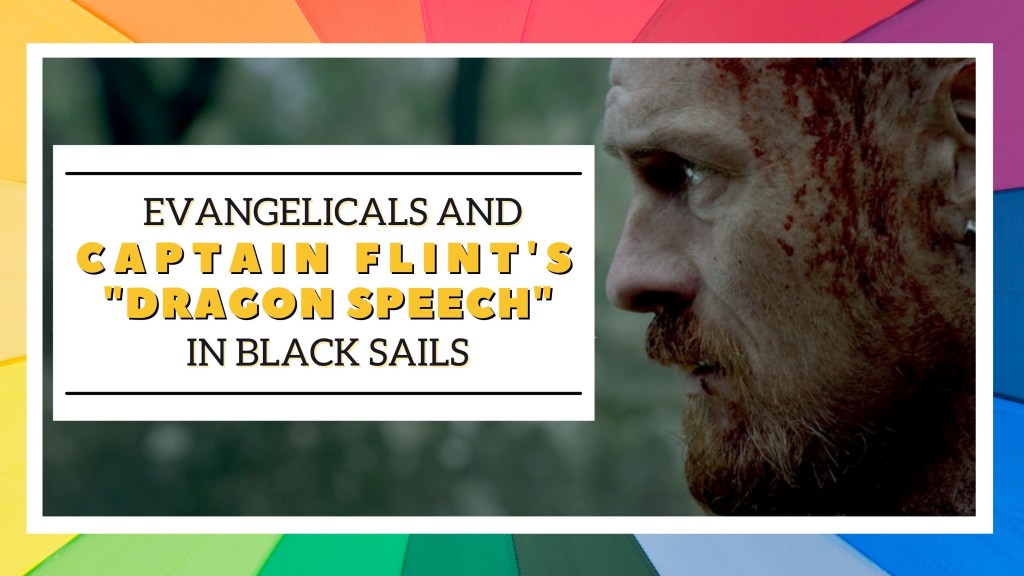

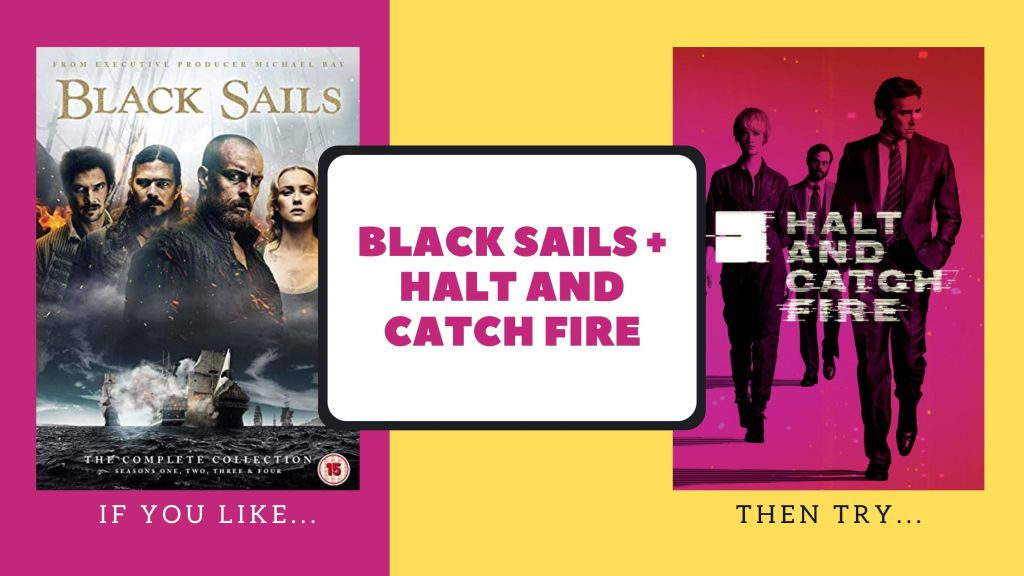


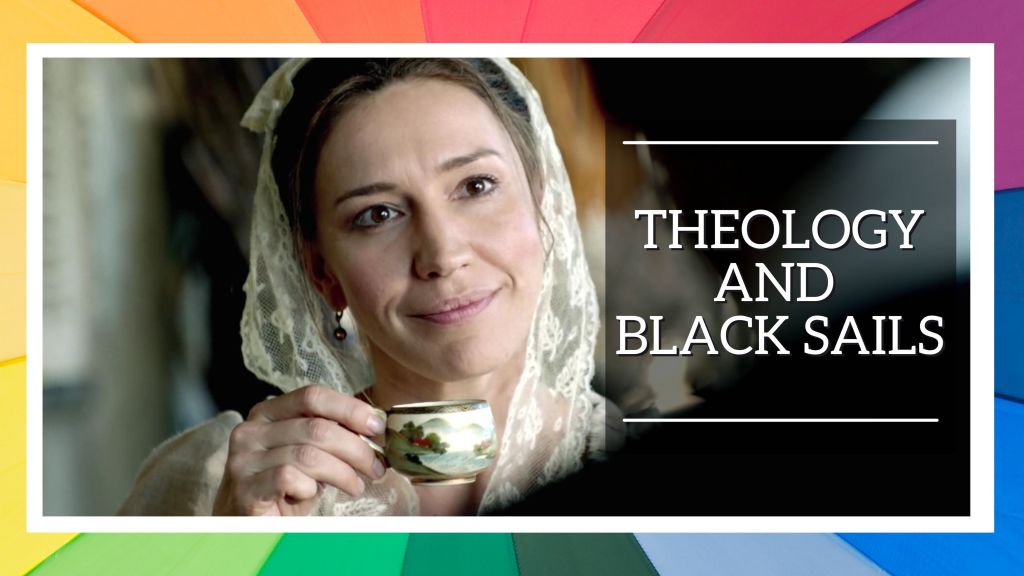










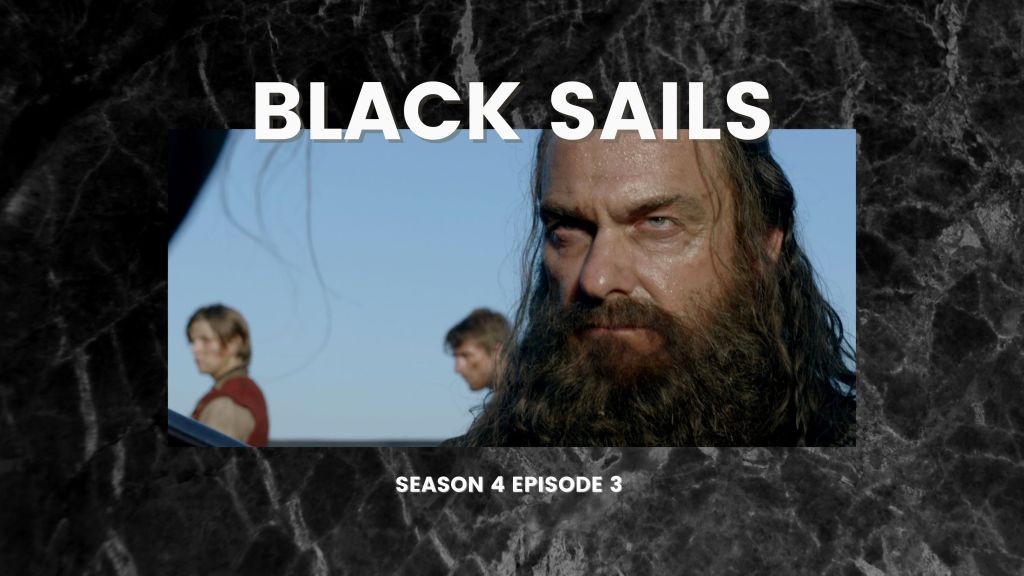


 If season three was about leadership and darkness, season four is about friendship and revenge.
 Roar Cat Reads