Tag: D&D

  • Curse of Strahd Review

    Curse of Strahd Review

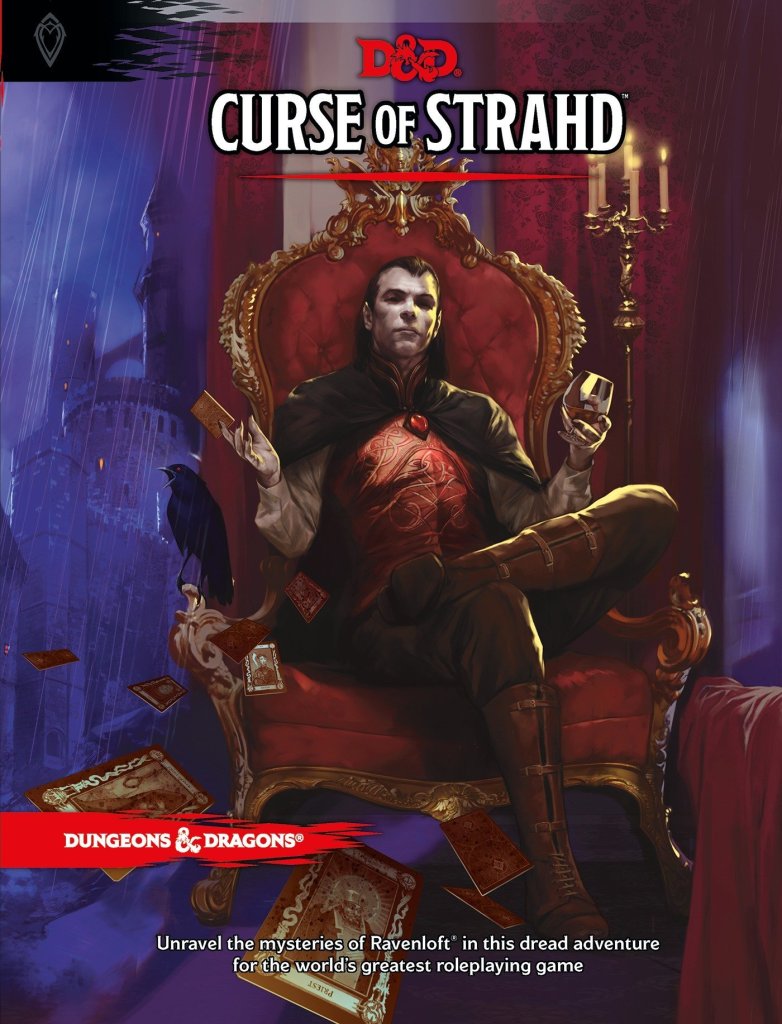
    Under raging storm clouds, the vampire Count Strahd von Zarovich stands silhouetted against the ancient walls of Castle Ravenloft. Rumbling thunder pounds the castle spires. The wind’s howling increases as he turns his gaze down toward the village of Barovia. Far below, yet not beyond his keen eyesight, a party of adventurers has just entered his domain. Strahd’s face forms the barest hint of a smile as his dark plan unfolds. The master of Castle Ravenloft is having guests for dinner. And you are invited.

    Curse of Strand is a D&D 5e horror adventure released in March 2016. This popular adventure is a fun journey with a lot of amazing bonus content and progressive updates to the original material available online.

    Rating: 5 out of 5.

    Our Curse of Strahd Campaign

    I DMed Curse of Strahd from September 19, 2020 – October 30, 2022 (yes, we angled to finish on Halloween weekend). This campaign was one of the primary social activities I had during COVID, and during our two years playing together, our group met in person, outside in the park, or online depending upon what was safest at any given point. It was my first time running a campaign, but I had such a fun time combining the original material with bonus content I found online (listed at the end of this blog post).

    We started with four players and ended with three, which I think is pretty good for a two-year campaign! Meet the players and their characters:

    • Tricia (DM). Although I had experience running one-shots, this was my first campaign to manage. I especially loved roleplaying the following NPCs: Strahd, Szoldar (who took on an outsized role in our campaign), and Arabella.
    • Rachel (Ireena, human). Normally an NPC, Rachel infused Ireena’s character with trickster cleric energy, a passion for small business, and an intense hatred of Strahd.
    • Frank (Seraphina, half elf). As a Paladin to Athena, Seraphina was a righteous voice for good in a morally complex world.
    • Nick (Beldhur, elf). Strahd’s not the only one wrestling with a Dark Power, and Beldhur’s inner evil was a game changer in our final session.

    Curse of Strahd is an adventure designed to take players through traditional horror tropes like vampires, werewolves, and witches. We took a more “dark fantasy” approach full of quests and high emotions with a side of Buffy the Vampire Slayer-esque humor. The characters found themselves in the locked land of Barovia, ruled over by the vampire lord Strahd von Zarovich. He is obsessed with the local woman Ireena, and the players are tasked with keeping her safe from him and, along the way, saving the world from his evil rule! The playable world is a predefined valley with three main towns and a few dungeons, it has a lot of depth that allows locations to feel different when explored with new information. The small world also allows players to feel the impact of their actions, as decisions made in Vallaki have a spill over effect for other NPCs in other locations.

    Although the book is designed to take characters from level 1-10, my players got to level 12 because I included the Fanes additional content (described below), and each time the group reconsecrated a Fane location, they leveled up. Actually, Nick ended up level 14, because I offered him additional power if he pledged himself to his Dark Power. During the final battle when all seemed helpless, he accepted the deal!

    What Did I Do Differently?

    • Ireena was a PC. Making Ireena a playable character rather than an NPC allowed the initial adventure hook to feel impactful throughout the entire adventure. It also raised the emotional impact of revelations regarding Ireena’s surfacing memories as Tatyana, since it was directly related to one of my players rather than an NPC. I highly recommend this change; because Ireena has led a sheltered life in only one town, she doesn’t need to have much pre-knowledge of the world.

      If you would like to flesh out Ireena’s backstory and give your player something to base her performance on, Rachel and I created the Tome of Ireena to describe her childhood and pre-story interactions with Strahd.
    • The Three Fanes. Using Mandy Mod’s bonus content (related below), I added the Three Fanes into Barovian mythology. This gave the history of the world more weight, further vilified Strahd, and gave the players a concrete way to start changing the world by reconsecrating their shrines.
    • Making the Vistani less problematic. Curse of Strahd is famous for its thoughtless portrayal of the Vistani as thinly veiled Romani, and they’re coded as fairly evil, no less! There are a lot of resources online to guide you in changing this dynamic. I kept the group as ostracized for their historical support of Strahd, but took out the cursing and Gypsy descriptions. I also made their support of Strahd much more understandable and sympathetic, to the point that the group made it their mission to reconcile the Vistani with the other Barovians.
    • Szoldar became a main character. Szoldar is a wolf hunter in Vallaki with a throwaway description in the original adventure. There is always one NPC in caampaigns like these that capture the players’ attention, and Szoldar was that NPC! Rachel’s Ireena fell in love with him, and they even got engaged in an epic one-shot that Rachel DMed to elaborately propose.
    • No Argynvostholt or Dinner at Ravenloft. My players were suspicious of Strahd from the beginning, so they never accepted his multiple invitations to dinner (this may be a consequence of having Ireena as a PC). This meant that when they stormed Ravenloft in the finale, they had never been there before; luckily, they found the castle blueprints in the Amber Temple and could therefore make a plan of attack.

      They also never got around to visiting Argynvostholt, which is too bad! I kept reminding them of its existence, but they chose other adventures that wound up leading to Strahd’s increasing wrath, and eventually it became clear that they needed to kill him or risk all of Barovia being wiped out. I think the Argynvostholt dungeon could still work as a post-finale mini adventure if the group wants to get back together to finish clearing out the valley’s last dark spots.

    Additional Resources

    • Mandy Mod’s Fleshing Out Curse of Strahd (free). This is the material I used as religiously as the actual adventure book. Mandy Mod has created an immense “Fleshing Out Curse of Strand” chapters on Reddit that adds NPC personalities and motivations as well as large scale changes such as the addition of the Fanes into the world of Barovia. 100% recommend this should be treated as essential.
    • The Interactive Tome of Strand ($14.99). The Tome of Strand is an item in the original book that offers one page of information; this bonus content revolutionizes the item into a book that PCs can enter and live through 14 of Strahd’s memories that really opens up his character and the world.
    • Countess von Zarovich ($9.99). This 62-page PDF reimagines Strahd as a woman. This isn’t a surface gender swap; the creators explain in depth how Strahd’s female gender would have shaped her upbringing and motivations. I found this too late for my campaign but will definitely use it if I run it again!
    • Landmarks on the Svalich Road (free). DragnaCarta’s CoS expansions on Reddit are often used in place of, or alongside, Mandy Mod’s content. I didn’t find his style as much to my taste, but I did love this Google Doc that adds a lot more flavor to traveling the main road throughout Barovia.
    • Visions of the Vestiges ($8.95). One of my favorite parts of CoS is tempting my PCs with Dark Power deals so that they will hopefully unleash one at the Amber Temple and set themselves up as the next Dark Lord of Barovia. This PDF expands on this idea by fleshing out the Vestiges and including artifacts throughout Barovia to bind PCs to their will.


    Have you played Curse of Strahd? Leave a comment and tell me about your character and favorite memory!

  • Adventure Queers:  Dana Ebert with TPK Brewing Co.

    Adventure Queers: Dana Ebert with TPK Brewing Co.

    Dana Ebert (she/her) is an openly bisexual and transgender author, game designer, and voice actor, best known for her contributions to Pathfinder 2e and Starfinder. Dana created Pathfinder’s first canonical in-world gender affirmation clinic (also boutique and day spa!), and some of her other works include OGL 5e-compatible content. You can find more information and links to her website, social media, and upcoming projects on her LinkTree.


    Dana, when did you first start playing D&D and TTRPGs?  What do you enjoy the most about the game?

    My first TTRPG was the Tom Moldvay edition of Basic D&D, which I played for the first time with my older brother and his friends when I was ten. That was a huge turning point for me, because I instantly fell in love with the medium. The part I enjoy most is the shared storytelling—those moments of surprise and triumph that lead to stories that get re-told around the table for years to come. As a player, I also enjoy the catharsis that comes from fully inhabiting another character for a few hours.

    As a queer person, have roleplaying games helped you explore or express your queer identity and/or sexual orientation?

    Oh, jeez. Let’s just say that the character I played nearly every week in high school was named Mavis. She was 6′ tall, with olive-green hair and shoulders for days. But the best part about playing her, the part I wouldn’t admit back then, was that during our sessions, everyone at the table referred to me in-character and used she/her pronouns. As Mavis, I also explored in other ways, such as near the end of the campaign when she married one of the party NPCs (a goblin who polymorphed himself into an excruciatingly handsome human to get her attention). So yes, that was very much my experience, even if I didn’t realize it at the time.

    You are a professional DM. What is your style of DMing and what kinds of players would most enjoy playing with you?

    My style can be very writerly, and I almost exclusively run original content. Past players have told me that the things they enjoyed most were my worldbuilding, my willingness to improvise and take their story in unexpected directions, and how I let them alter and impact my campaign settings. The “rule of cool” and roleplay-heavy scenes are two things that I enjoy utilizing immensely, and while I can also adhere to other styles of play, I think the players who strongly prefer my style tend to like those same things.

    You are bringing your love of TTRPGs into an exciting new project.  What can you tell readers about TPK Brewing Co., a TTRPG-themed brewery in Portland, Oregon?

    TPK Brewing Co. is a craft brewery where, in addition to world-class food and original brews, our guests will be able to book games with full-time Game Masters. We’re going to offer a variety of titles, but our flagship experience will be an OGL 5e-compatible campaign called the “Leyfarer’s Chronicle.” It takes place in an original post-cataclysmic fantasy world called Val’Ruvina, which groups of player characters will simultaneously explore while contending with broken magical fields, warped creatures, and regular storyline events. I explain much more in our upcoming promos, so please sign up for our newsletter at tpkbrewing.com!

    TPK Brewing Co. is majority-owned by queer women of color. In what ways do you anticipate that this ownership model will be an asset to the company and to future visitors and guests?

    Part of our company’s mission is to create space for marginalized groups in the craft beer and gaming communities, and that begins with ensuring that our own spaces are as safe and inclusive as possible. On the gaming side, this means that safety tools will be part of our culture, we’ll always strive to keep our content inclusive and anti-racist, and we won’t hesitate to remove guests who can’t adhere to our community guidelines. In this way, we hope to build a durable and welcoming community for ourselves and our guests.

    When should people (myself included!) plan to come to TPK Brewing Co.?

    We plan to open our doors in the spring of 2023! We would love to see you there!

    Finally, do you have any recommendations of queer nerdy content that you would like to share with readers?

    I’ve had the pleasure lately of getting to work with several Portland-based artists, and I’d love to highlight a couple of them from the LGBTQ community!

    • Spyder Dee is simply a phenomenal creature artist—they always manage to exceed my expectations with their wonderfully terrifying blend of the fantastical and the grotesque.
    • Alejandra Gutiérrez is a powerhouse. At Image Comics she has contributed to titles including Twisted Romance and SFSX, and was the one who created our promotional splash page featured above.
    • Brie Golden has been up-and-coming for some time, producing stunning battle maps for AP podcasts and livestreams. We should all expect to hear her name more in the future.
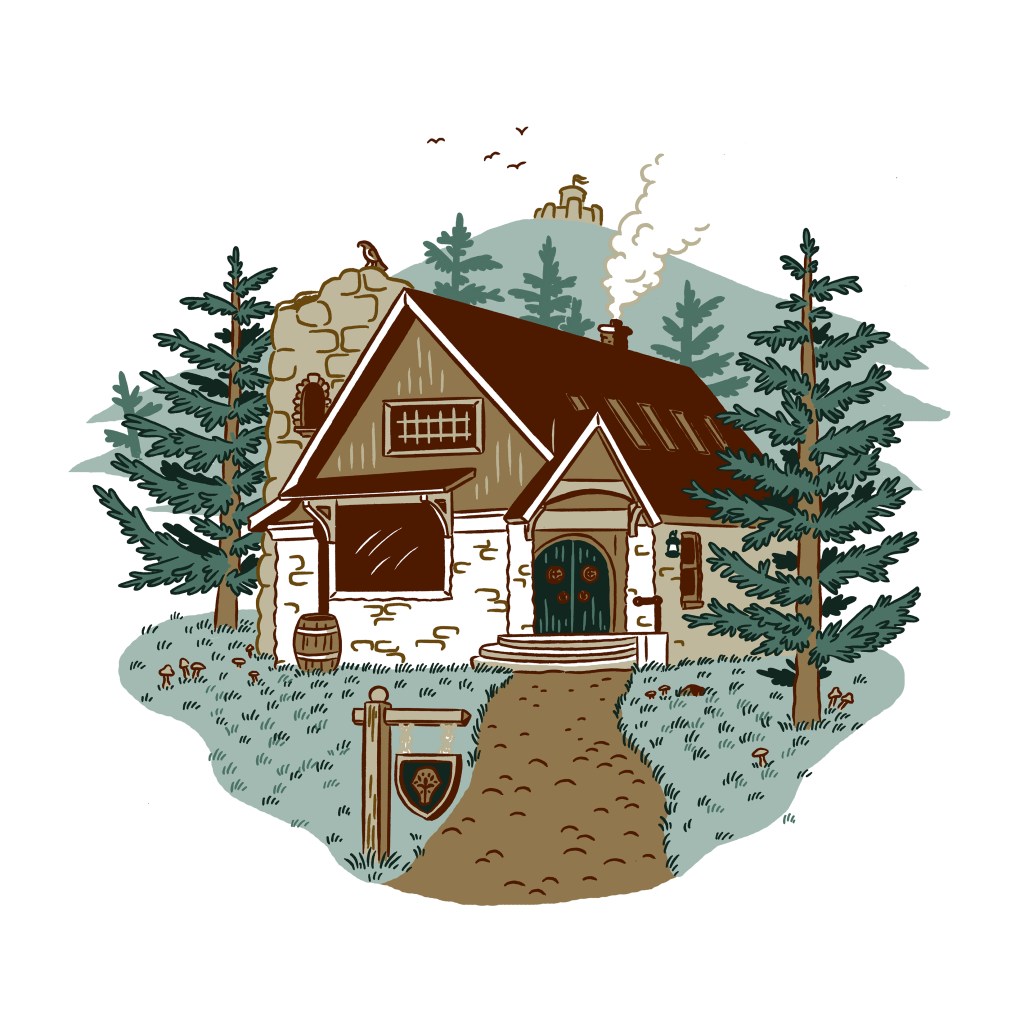
    • Elodie Kahler has a whimsical illustration style that never fails to make me smile. She recently finished an illustration of our building that we all absolutely adore.

    For more from Dana, check out her LinkTree!


    Sign up for Roar Cat Reads’ Monthly Newsletter

    Processing…
    Success! You're on the list.

    By clicking submit, you agree to share your email address with the site owner and Mailchimp to receive marketing, updates, and other emails from the site owner. Use the unsubscribe link in those emails to opt out at any time.

  • DM’s Pocket Guide Ep 20: Gibbering Mouther

    DM’s Pocket Guide Ep 20: Gibbering Mouther

    Gibbering Mouther DM’s Pocket Guide

    In our last episode of season 1, we're covering one of the creepiest monsters you can throw at your players:  the Gibbering Mouther.  This alien aberration will make your players Fight, Flight or Freeze when they hear the voices of absorbed victims and has the potential to kill a player with no hope of coming back.  Sounds fun! Please like, review, and share to support DM’s Pocket Guide! We’re Tricia and Rachel from Roar Cat Reads.  If you would like to learn about a specific D&D rule or spell, send us a request at roarcatreads@gmail.com.  Transcripts of every episode are available!   If you want more rules, buy a copy of the Player’s Handbook! Follow us on Twitter and Instagram  Artwork by Haley Boros DM’s Pocket Guide is unofficial Fan Content permitted under the Fan Content Policy. Not approved/endorsed by Wizards. Portions of the materials used are property of Wizards of the Coast. ©Wizards of the Coast LLC.

    Transcription

    Welcome to DM’s Pocket Guide, where we discuss the rules, spells, and monsters of Dungeons and Dragons, 5th edition.

    Tricia: Today we are going to talk about the Gibbering Mouther.

    Rachel: *gibbering mouth sounds*

    T:  They are on page 157 of the Monster Manual. And I just recently had to fight one of these that you ran. 

    R: Yes, you did. 

    T: It was terrible. I hated it.

    R: I think you enjoyed the challenge.

    T: I did. It was a very good monster. These things are terrifying. 

    R: Oh yes. 

    T: They are aberrations, which means they are come from aliens. It is an amorphous amoeba, medium size, just horror, full of mouths and eyes of its prey, and it’s coming to add you to its form.

    R: Yeah. So it’s in the book, it refers to it being created by foul sorcery, like a collection of everything that it’s consumed before and these things are terrifying. I’ve used them twice in games and loved it both times. These things are surprisingly tough and such a great visceral monster to throw at your players. Everybody remembers an encounter with a Gibbering Mouther for sure. 

    T: Yes. Also can we just pause: Gibbering Mouther is a great name.

    R: It’s very descriptive, it’s exactly what it does. For me, it gives me like an idea of like how this thing sounds as it’s coming towards you and kind of what it looks like.

    T: Yeah definitely. So as we look at its stat block, I think the thing that stands out to me, first of all, is that it looks kind of easy on the surface. It’s only got 9 armor class, so you’re pretty much gonna hit it no matter what. It’s got 67 hit points and it’s got a speed of 10 feet. So it’s moving very slowly. 

    R: Oh yeah, this thing doesn’t look terrifying. But with 67 hit points, you won’t kill this thing in one go, and that’s really where this thing gets its foot in the door. If it had feet.

    T: Gets its slobbering, massive appendage through the door.

    R: I think somewhere is this: it uses the mouths on the bottom to move. 

    T: That is horrifying. Imagine being the person who was absorbed and your job is to like scrape your teeth along the ground to move it. So, yeah, this thing operates by driving you insane, and I can tell it’s going to do that to us just describing what it does. 

    R: Yeah, for sure.

    T: So some other very basic things. You can’t knock it prone. It does have dark vision. It does have pretty bad passive perception of 10, so if you happen to see it before it saw you, you might be able to sneak past. And then we get into some of its very, very interesting descriptions. 

    R: Yes, speaking of sneaking past this thing, one of the things that stands out to me when I was reading through this is the mouths of madness or the gibbering effects that it has. It babbles incoherently when it can see any creature that isn’t incapacitated. So if one of my players triggers this thing, I like to, to start with, just like a little, *quiet gibbering sound ending in a low growl*. Wait, that wasn’t me. That was Pepe, the dog we’re looking after right now. Yeah, so starting off with these very small sounds and then joining in with all of the other voices. The way these are described like deep or shrill voices or wailing or undulating or crying out in agony, like imagine the last moments of all of these people who have been absorbed into this thing – what they might be yelling, what they might be thinking about in those last final moments and all those coming out. 

    T: That’s terrifying. That’s a good way to kickstart initiative, and that would be using the gibbering… it’s not an action, that’s just a thing it can do and it’s fabulous. I love that so much.

    R: Yeah. And so the action is the Mouther babbles incoherently when it can see any creature that isn’t incapacitated. Each creature that starts its turn within 20 feet of the Mouther and can hear it – so if you’ve been affected by the deafened condition, you’re immune to this, or if you can’t hear for some reason, you’d be okay – but if you can hear, you have to succeed on a wisdom saving throw. And if you fail, there’s a number of things that can happen to you, and you can’t take reactions until the start of your next turn. And when it is your turn, you’re gonna roll the D8 to decide what happens.

    T: Well, when it is your turn is when this is happening, all of this takes place on your turn. 

    R: Yes, that’s right. It’s an effect that happens to you on your turn. 

    T: Yeah.

    R: I like to use this as like a surprise round for the Gibbering Mouther as you start to hear these voices, and then any player within 20 feet makes this save and then we get into the initiative. Usually with at least one or two of them having been affected by this. 

    T: Yeah.

    R: So the the effect of the Gibbering is either a fight, flight or freeze response. So on a 1-4, you’re going to freeze. You’re just not going to do anything. 

    T: Yeah. 

    R: On a 5 or 6, the creature takes no action or bonus action and uses all of its movement to move in a randomly determined direction. So you might even end up running straight into this thing. 

    T: So this is the flight. 

    R: Exactly. Yeah. And then on a 7 or 8, you make a melee attack against a randomly determined creature within reach or do nothing if you can’t reach anyone. 

    T: So, if you are next to your compatriots and you suddenly hear these voices of madness, you’re either gonna fight, which could mean just lashing out wildly and hitting the Gibbering Mouther or you’re going to flight and just try to get away from it but just totally randomly or you’re going to freeze and just do nothing, yeah, love it. 

    R: And this feeds quite nicely into Aberrant Ground, particularly that one about moving closer to the Mouther. If you’re within 10 foot of this creature, the terrain around it becomes a dough-like difficult terrain and each creature that starts its turn in that area must succeed on a strength saving throw or have its speed reduced to zero at the start of its next turn. So on your first turn this thing might have driven you insane and made you run towards it, and then on your next turn, you are now in this Aberrant Ground and you fail that strength saving throw, you are stuck there and then it’s gonna be the creature’s turn.

    T: Yeah. 

    R: And well, it can move 10 feet.

    T: It’s gonna get you.

    R: It can then start to use its actions we haven’t even talked about – the actions that this thing can do on its turn. 

    T: So it makes a multi-attack. It can do both one bite and one blinding spittle. On a bite, it’s just +2 to hit but it does massive damage if it does hit: 17 piercing damage. But additionally, the creature that its biting has to make a strength saving throw or be knocked prone. If this happens to kill a creature, it is absorbed into the Mouther which is basically, you’re just dead. You’re just dead dead. 

    R: Mmm, I’ll read this lovely passage: a Gibbering Mouther leaves nothing of its prey behind. However, even as the last of its victim’s body is consumed, its eyes and mouth boil to the surface, ready to join the chorus of tormented gibbering that welcomes the monster’s next meal.

    T: Cool, cool. And if that’s not bad enough, it has blinding spittle, which it can glob at a point 15 feet away from it or within 15 feet. And this explodes in a blinding flash of light which is weird, but I like that. And then anything that has been hit by this within five feet of the blinding flash has to make a dexterity saving throw or be blinded until the end of the Mouther’s next turn.

    R: Okay, so if you are okay with potentially permakilling one of your players, go look at Gibbering Mouther on page 157 of the Monster Manual.

    Thanks for listening!  If you have something you’d like us to cover, email it to roarcatreads@gmail.com or find us on Twitter and Instagram @roarcatreads.  

  • DM’s Pocket Guide Ep 19: Moonbeam

    DM’s Pocket Guide Ep 19: Moonbeam

    Today we're here to talk about Moonbeam, an atmospheric and powerful spell that Tricia absolutely did not use effectively for the longest time.  Save yourself the heartache and learn with us! Please like, review, and share to support DM’s Pocket Guide! We’re Tricia and Rachel from Roar Cat Reads.  If you would like to learn about a specific D&D rule or spell, send us a request at roarcatreads@gmail.com.  Transcripts of every episode are available!   If you want more rules, buy a copy of the Player’s Handbook! Follow us on Twitter and Instagram  Artwork by Haley Boros DM’s Pocket Guide is unofficial Fan Content permitted under the Fan Content Policy. Not approved/endorsed by Wizards. Portions of the materials used are property of Wizards of the Coast. ©Wizards of the Coast LLC.

    Transcription

    Welcome to DM’s Pocket Guide, where we discuss the rules, spells, and monsters of Dungeons and Dragons, 5th edition.

    Rachel: Okay, today we’re gonna talk about the spell Moonbeam, which is on page 261 of the Player’s Handbook. 

    Tricia: Excellent!

    R: So this is a second level evocation spell  –

    T: Evocation! We’ve done an episode on the Schools of Magic.  Did anything stick?

    R: Err, I think it’s the one where it, like, makes something out of magical energy. 

    T: Yes.

    R: Like it manipulates magical energy.

    T: Honestly, I still don’t understand the Schools of Magic so well.  I’ll have to go and re-listen to our episode

    R: Yeah. I think evocation was one of those catch all ones… anyway, back to Moonbeam. It is an evocation spell. Its casting time is one action, so this is the thing you’re gonna do on your turn. Its range is 120 feet which is pretty big, so you have a good area you can cast this in. It has verbal, somatic, and material components. So in order to cast this spell, the player will need to have on them several seeds of any moonseed plant and a piece of opalescent feldspar.

    T: Sure, because those are things you usually have in your pocket

    R: Yeah. I don’t usually adhere to that rule exactly, but I’m sure there’s a group out there that probably would. 

    T:  Yeah. Material components in general is not something that we often play with, and I have never missed it. However, we’ve had one player who’s kind of interested in picking up things along the way and figuring it out, and extremely high level spells that require something that costs a lot of money, it does prevent you from over-using.  So, there’s pros and cons–

    R:  To whether or not you want to include it, yeah, for sure.  Okay, so you’ve gotta be able to speak, you’ve gotta be able to move, you’ve gotta have this stuff on you, and it lasts for up to a minute and it requires you to concentrate on it.

    T:  So you could break concentration on the caster and end this spell before that minute. 

    R:  Yeah. Okay. So the spell text reads, a silvery beam of pale light shines down in a five foot radius, and it’s a 40 foot high cylinder centered on a point within range.  So this five foot radius tall thing within 120 feet of you.

    T:  You’re probably only going to get one person basically. 

    R:  Yeah. Right. If you think of most squares on a battle map are five feet or ten feet. It’s pretty narrow. Until the spell ends, a dim light fills this cylinder, so it gets lit up.

    T:  Like a moonbeam!

    R:  Yeah. So I guess if it was in a dark place that would be shedding light.  When a creature enters the spell’s area for the first time on a turn or starts its turn there, it is engulfed in ghostly flames that cause searing pain. It’s not like a nice pleasant Moonbeam. This is a burning torch of death. 

    T:  Yeah!  The name Moonbeam to me implies something like, gentle and nice.  And in fact, in a recent session that I ran, a character cast this spell, and we did all the things for it, but I was playing it very mildly. Not at all like my NPC’s were encased in flame and in searing pain! I’ll do that better next time.

    R:  You definitely should have tried to move away from this thing. And yeah, it does sound pretty painful. It has to make a constitution saving throw. If it fails, it’s gonna take  2D10 radiant damage, so it’s pretty hefty.

    T:  Yeah. And especially if it’s like, turn after turn. 

    R:  Yeah, exactly. And half as much on a failed save. So it’s one of those ones where you’re always gonna be doing at least some damage.

    T: That’s great. 

    R: Yeah, I love this stuff. Another thing to note about this is, if it’s a shape changer – the creature that this spell is cast on – they’re going to make that saving throw with disadvantage. So that’s…hags I think have that?

    T:  Mmhm.  I could be somebody who would be under an illusion of any sort:  invisibility, disguise self? Would that count?

    R:  I don’t know. It says shape changers. 

    T:  Oh, oh, oh. Okay. So werewolves.  Ooo, yeah!  I bet that’s how it’s designed: the moon is shining on you and so you’re forced to struggle against this and perhaps transform.

    R: Huh, yeah, that would be an interesting way to play it for sure. Okay. So they’re rolling it at disadvantage to make that saving throw, and also if it fails, it instantly reverts to its original form and can’t assume a different form until it leaves the spell’s light. 

    T:  Nice! Revealed by moonlight!  Oh man, I wish I’d run this so much differently.

    R:  So when your turn’s… after you cast this spell, provided it’s still going, you can use an action to move the beam up to 60 feet in any direction. It’s interesting it says an action there, because I think I would have assumed it was a bonus action to move the spell, but it’s actually a whole turn.

    T:  It’s almost like recasting it.  

    R:  Uh, yeah, I guess it would be. Huh. Oh, well, I guess other than spending the spell slot. 

    T:  Yeah, good point. 

    R:  And then at higher levels, this spell changes a little bit. For every spell slot above the third level, you can add an extra 1d10.

    T:  It’s real powerful. That moonlight’s burning. 

    R:  Mm-hmm. 

    T:  Okay.  That’s a really powerful spell!  It’s guaranteed to cause damage, it can reveal shape changers, and it is probably going to force someone to move to get out of that space. Like, it’s doing a lot of stuff.

    R:  Yeah, and with the range of 120 feet, you don’t even have to be close to be able to do any of this stuff. 

    T:  Yeah. 

    R:  That’s the spell Moonbeam on page 261 of the Player’s Handbook.

    Thanks for listening!  If you have something you’d like us to cover, email it to roarcatreads@gmail.com or find us on Twitter and Instagram @roarcatreads.  

  • DM’s Pocket Guide Ep 18:  Resistances and Vulnerabilities

    DM’s Pocket Guide Ep 18: Resistances and Vulnerabilities

    Resistances and Vulnerabilities DM’s Pocket Guide

    Step up your combat game by learning what resistances, vulnerabilities, and immunities are and how to use them.  They'll turn a simple monster into an intense battle with players working to figure out how to damage them. Please like, review, and share to support DM’s Pocket Guide! We’re Tricia and Rachel from Roar Cat Reads.  If you would like to learn about a specific D&D rule or spell, send us a request at roarcatreads@gmail.com.  Transcripts of every episode are available!   If you want more rules, buy a copy of the Player’s Handbook! Follow us on Twitter and Instagram  Artwork by Haley Boros DM’s Pocket Guide is unofficial Fan Content permitted under the Fan Content Policy. Not approved/endorsed by Wizards. Portions of the materials used are property of Wizards of the Coast. ©Wizards of the Coast LLC.

    Transcription

    Welcome to DM’s Pocket Guide, where we discuss the rules, spells, and monsters of Dungeons and Dragons, 5th edition.

    Rachel:  All right. So today we’re going to talk about Damage Resistance and Vulnerability, which is in the Player’s Handbook on page 197. 

    Tricia:  Excellent, very excited about this one. 

    R: Oh yeah?

    T: Yeah. It’s something that I didn’t fully understand when I had first started DMing, and so all of my monsters were very one note because I just looked at hit points and armor class. A lot of creatures that were supposed to be very difficult ended up not being very difficult because I wasn’t looking at all of the information and didn’t really understand it very well.

    R:  Yeah, it’s just one of those things you can add in to monsters or it’s easy to miss on the stat block sometimes – that it’s there or even remember to ask.

    T: Yes. And it makes a big difference.

    R: Okay, so the the rule itself, as it reads in the book: some creatures and objects are exceedingly difficult or unusually easy to hurt with certain types of damage. If a creature or object has resistance to damage, damage of that type is halved against it. 

    T: Okay!  So if you are resistant to fire damage, I attack you with fire but it only does half as much. 

    R: But if you attack me with your sword, your not-on-fire sword, that’s going to do the regular amount of damage. And then similarly, if a creature or object has vulnerability to damage, damage of that type is doubled against it. 

    T: That makes sense. 

    R: Yeah, so this also gives the DM a little bit of flavor to play with as you’re describing what happens to the creatures as it’s being attacked. You can hint at whether something is resistant or more vulnerable to some type of damage or something.

    T: I like that, because I am often – when I am harried and flustered as a DM, I’ll just be like, “Oh that does half damage,” or I just don’t say anything at all, and adding that flavor of like, “Oh, you know your storage should have sliced much deeper than that, but it didn’t do quite as much as you expect.”

    R: Yeah, or I like the enemy just sort of turning around and doing that super intimidating thing of like, “That didn’t even hurt.” 

    T: Or conversely, if they’re vulnerable that, like, you start forming fireball and they just rear back in terror. 

    R: Mhm. Yeah, that’s fantastic. So resistance and vulnerability – these things are applied after other modifiers to the damage. So for instance, if you were to attack me, and I have resistance to the type of damage that you’re attacking with. You do 25 points of damage, but I’m within a magical aura that reduces all types of damage by five. So when I’m calculating resistance, I take the 25 points that you did to me, I deduct the 5 from my magical aura to 20 points of damage, and I will take half of that again. So an extra 10 points of damage. 

    T: Okay. So modifiers are still effective?

    R: Your attack modifiers, yes, and damage modifier. 

    T: Yeah. Okay. 

    R: So another thing to know about resistance and vulnerabilities, it does not stack. There’s some spells that impose a vulnerability or a resistance to a certain type of damage, but you can’t make something doubly vulnerable. It can only be one kind of vulnerable.

    T: So it’s like, oh, you’re vulnerable to fire. Now, you’re twice as vulnerable to fire!! –

    R: Nope.

    T: Awww. Okay, that’s fair. And so I think the key to this is, what does this look like when you’re actually looking at a stack block?

    R: Yeah, sure. Tell me about some creatures that have resistances and vulnerabilities.

    T: Well, one that makes a lot of intuitive sense are scarecrows. If you had to guess what they were vulnerable to, what would you guess? 

    R: Fire.

    T: Fire! All that straw making up their bodies, that’s gonna go up in flames. So if you do any fire damage against scarecrows, it will do twice as much damage as normal. But they are also resistant to bludgeoning, piercing, and slashing from non-magical attacks. So that also makes sense. They’re just made of straw. If you stab it, big woop. Like, there’s no vital organs in there. 

    R: Yeah. It’s just a little animated straw and creature. Uh, there’s no creature in there, that’s the point.

    T: Yes, exactly. Conversely, shadows, which are on the very next page of the Monster Manual – this is page 268 and 269 of the Monster Manual – shadows are vulnerable to radiant damage. 

    R: Oh, that makes sense. Like, that’s the spells that cast light and things like that. 

    T: Yeah, they don’t like it, and they are resistant to a lot of stuff. They’re resistant to acid, cold, fire, lightning and thunder damage as well as bludgeoning, piercing and slashing from non-magical attacks. 

    R: Oh wow, you pretty much named everything there.

    T: Yes. So these are great creatures that like, their armor class is 12 and they have 16 hit points, so they look like they’re very easy. But in actuality, everything you do to try to hit them is just gonna do like minimal damage. 

    R: It’s only going to be half as effective. That’s the whole thing, the players trying to find out the thing that is effective. It’s nice, it’s kind of intuitive that it’s light damage that is the thing that really does… 

    T: Yeah. Yeah. And so, I think that playing with vulnerabilities and resistances makes fights more interesting, more creative. It allows for players to pull out different skills and different attacks that maybe they don’t normally use, but it’s going to be very effective depending on who you’re fighting.

    R: Yeah. 

    T: One other thing that is not listed in the Player’s Handbook, but is a part of this conversation is immunities. 

    R: Yes. That’s right. That’s the one other thing that a bad guy or a monster from the Monster Manual would have. 

    T: Yeah, so if you are resistant to something, you take half the damage.  If you are immune to something, you take zero damage. Which is my favorite, as a DM, to be like…that’s that terrifying, look of, “I didn’t even feel that at all!” 

    R: Yeah, wait until your player describes dealing 46 points of damage and like, well yeah, you think that would happen, but actually, nothing!

    T: So shadows are additionally immune to necrotic and poison damage. 

    R: That makes sense.

    T: It does. So these things are very hard to hit, basically, unless you have a magical weapon or deal radiant damage. So that is vulnerabilities, resistances, and immunities.

    R: And that’s on page 197 of the Player’s Handbook.

    Thanks for listening!  If you have something you’d like us to cover, email it to roarcatreads@gmail.com or find us on Twitter and Instagram @roarcatreads.  

  • DM’s Pocket Guide Ep 17: Guards

    DM’s Pocket Guide Ep 17: Guards

    Welcome to DM’s Pocket Guide DM’s Pocket Guide

    Welcome to DM’s Pocket Guide, a podcast where we take one rule, spell, or monster from D&D 5e and discuss it in nine minutes or less.   If you would like to learn about a specific D&D rule or spell, send us a request at roarcatreads@gmail.com.  We’re Tricia and Rachel from Roar Cat Reads where we make queer and nerdy content based out of Vancouver, BC. Please like, review, and share to support DM’s Pocket Guide! Follow us on Twitter and Instagram  Artwork by Haley Boros  

    Transcription

    Welcome to DM’s Pocket Guide, where we discuss the rules, spells, and monsters of Dungeons and Dragons, 5th edition.

    Tricia: Okay, today we are going to talk about Guards

    Rachel: Guards. 

    T: They are on page 347 of the Monster Manual, and I like to think of them as the human equivalent of goblins.

    R: Yeah, yeah. They actually kind of are. They have the same challenge rating of 1/8? 

    T: Yeah, they’re easy. They’re often like, a faceless horde of creatures – they are just a bunch of guards. But they do have a lot of possibility to make them more interesting and more diverse and like, individualize them in the same way as goblins – like, there’s always gonna be that one goblin your group wants to adopt. There’s always going to be that one guard that you’re like, “Oh, Ted has a wife and kids.”

    R: Yeah exactly. It is that area where you – in any town or any settlement, you’re probably gonna have guards at some point, and it’s your opportunity as a DM, this is the place where you can show your diversity. Guards are going to be a group that your players interact with. So that’s where you can introduce…

    T: Yeah, because they don’t have any official alignment, and no official race –

    R: It just says any race, medium humanoid, any alignment. So you can have good guards, you can have evil guards, you can have neutral guards, lawful guards, chaos guards!

    T: Dragonborn guards.

    R: Halfling guards. 

    T: Yeah, anything. So, don’t just default to, oh, these are probably all human men, 

    R: That’s the easy thing to do, but challenge yourself and make your guards a little bit more diverse than that. 

    T: Yeah. So whats the stat block?

    R: Armour class of 16. They are armored with chain shirts and a shield, so that’s why it’s a little bit higher, makes sense. And hit points are 11. So yeah, pretty…

    T: If you can get past that armour class, they’re squishy.

    R: And have a speed of 30 feet, so pretty standard. Their ability scores are pretty low across the board, just +1 in strength, dexterity, and constitution, +2 for perception. I suppose they are on the look out for trouble. And and then passive perception of 12, and they can speak any one language. 

    T: Sure, whatever race you’re choosing, they can speak that.

    R: Right. And yes, that’s most of the numbers in the statblock and then their one action, which is spear.

    T: All guards have spears.

    R: Apparently. But I’m sure you can change it up to swords as well. But the start block has only seen fit to give a spear. +3 to hit so just pretty low. And then they’re going to do 1d6 +1 piercing damage, and or 1d8 +1 if they use two hands to stab.

    T: So these guys are not a big bad. They’re the minions for human or humanoid settlements. And I think the other thing to talk about with guards is there’s another book called The Monsters Know What They’re Doing that I highly recommend by Keith Ammann. I don’t know how to say his last name, but it talks about actually giving your monsters and creatures motivation. Guards are one of those that like – they’re humanoid creatures, they are intelligent creatures. That can make their own decisions. This is one of those fights that if you are fighting with the guard, there’s a good chance they don’t want to die.

    R: No, they’re just on the payroll. 

    T: Yeah, this isn’t worth dying for. 

    R: Yeah, they want to spend that money that they are earning on something, you have to be alive to do that. So, well, if I’m gonna die then I can’t spend the money I make from this. Oh, I see. No, I’m just gonna go over here now. 

    T: Yeah, yeah. So this is also kind of a way to establish world building through your combat with guards. If they do fight to the death, this is probably a pretty authoritarian place where they’re gonna die if they don’t die keeping you from doing the thing.

    R: Yeah. Or there’s something that they’re being rewarded with other than money, 

    T: Right, yes. So there’s a lot you can do with guards actually to establish your world and what that looks like.

    R: Yeah man. I’m thinking differently about Guards all of a sudden.

    T: Right? They seem so simple. And I do also recommend giving the guards stat block a look because of the number of times that my players walk into a village and there are guards. I’m thinking they are not going to be attacked because this is a good village and my players wouldn’t do anything. But of course they’re murderhobos, and they’re gonna kill somebody. And then the guards have to get in there and fight, and I’m scrambling to be like, “I didn’t expect this, what is a guards stat block?”

    R: Yeah, it’s also a nice base stat block. There’s nothing too complex in there. You could add some resistances or vulnerabilities in there to make really tough guards, or make ones that have just come out of a battle or something. You know? 

    T: Yeah, I like that. If you are looking to personalize some sort of combat feature and you’re not sure where to start, this is a really good one to start with.

    R: So that’s Guards on page 347 of the Monster Manual.

    Thanks for listening!  If you have something you’d like us to cover, email it to roarcatreads@gmail.com or find us on Twitter and Instagram @roarcatreads.  

  • DM’s Pocket Guide Ep 16: Scrying

    DM’s Pocket Guide Ep 16: Scrying

    If you want to run a Curse of Strahd campaign, do yourself a favor and listen to this episode about the spell Scrying to save yourself a retroactive headache! Please like, review, and share to support DM’s Pocket Guide! We’re Tricia and Rachel from Roar Cat Reads.  If you would like to learn about a specific D&D rule or spell, send us a request at roarcatreads@gmail.com.  Transcripts of every episode are available!   If you want more rules, buy a copy of the Player’s Handbook! Follow us on Twitter and Instagram  Artwork by Haley Boros DM’s Pocket Guide is unofficial Fan Content permitted under the Fan Content Policy. Not approved/endorsed by Wizards. Portions of the materials used are property of Wizards of the Coast. ©Wizards of the Coast LLC.

    Transcription

    Welcome to DM’s Pocket Guide, where we discuss the rules, spells, and monsters of Dungeons and Dragons, 5th edition.

    Rachel: Okay, so today we are going to talk about Scrying, which is on page 273 of the Player’s Handbook.

    Tricia: Ahhh scrying. The spell I didn’t know I should have known much more about when I started my Curse of Strahd campaign.

    R: Yeah, that’s right. If you want to spy on other people, scrying is the spell that you want to use. 

    T: Yeah, and I do.

    R: Frequently. So this is a fifth level divination spell. So your player characters aren’t gonna get to use this for a little while, but your bad guys, this is one they can probably start out a campaign with.

    T: Yes. 

    R: Divination magic – just as a reminder for the Schools of Magic – reveal information. 

    T: Oh yeah. 

    R: Which totally makes sense in this context about scrying. The casting time is 10 minutes. You do have to have a bit of time to be able to cast this one, and you cast it on yourself. It has verbal, somatic, and material components. You’ve got to be able to speak. You’ve got to be able to move and you need to have stuff.

    T: Stuff! 

    R: The stuff you need is a focus worth at least a thousand gold pieces, such as a crystal ball, silver mirror, or a fount filled with holy water or (as my character has) a bejeweled skull with a crown on it.

    T: Yes, whatever works. But that is another reason why probably a villain starting a campaign will be able to do this early but as players you’ve got to save up a bunch of treasure. And luckily it’s not like the spell burns through your bejeweled skull with a crown. Once you have it, it will continue to work as a scrying device. 

    R: Yeah, you just have to have it with you and keep it and don’t let it be stolen.

    T: Ooh, I’m taking notes.

    R: Hey! Don’t do that! And then it’s a concentration spell up to 10 minutes. So if something happens that breaks concentration, that spell’s going to cut off early.

    T: Somebody knocks on the door while you’re trying to scry. Oh Gerald.

    R: It’s got to cause damage.

    T: Oh right. This is why I need to go back and listen to our Concentration episode.

    R: Yes. And then the words of the spell read as: You see and hear a particular creature you choose that is on the same plane of existence as you.

    T: Okay.

    R: The target must make a wisdom saving throw, which is modified by how well you know the target and the sort of physical connection you have to it.

    T: I like that. So scrying is easier or harder based on how well you know the thing or person you are scrying on. 

    R: That’s right. So if you’ve only heard of them like secondhand, when they are making that savings throw, they’re gonna add an extra five to whatever it is that they roll. And if you’ve met them before, it will just be flat with no modifier for personal knowledge. And if you are familiar with them you get a little bonus. It’s a minus five to the saving throw so it’s easier for that spell to succeed if you know the target.

    Roar Cat: *small mew*

    T: Okay. 

    R: Similarly, with the connection – that’s the physical object that you have – if it’s a picture, it’s going to get you minus two to the saving throws, so that’s good. A possession or garment is better. That’s going to get you a minus four. A body part (lock of hair, bit of nail) is minus ten to that saving throw.

    T: Yeah, so like hypothetically if Strahd von Zarovich had a lock of Ireena’s hair and he knew her very well…what would that do?

    R: If he was trying to scry on her, she would be rolling with a minus fifteen wisdom saving throw.

    T: No wonder Strahd, hypothetically, always knows what you’re up to. 

    R: Damn it! Okay. Yeah. So on a failed save, assuming that she fails which she probably will with all of that negativity going against her, the spell creates an invisible sensor within 10 feet of the target. You can see and hear through the sensor as if you were there in the room. The sensor moves with the target, remaining within 10 feet of it for the duration. 

    T: That’s cool. 

    R: Yeah, and if you are a creature that can see invisible objects, you see the sensor as a luminous thing about the size of your fist.

    T: So if you have true sight, you will be able to see there’s a bloop. This thing pops into existence. 

    R: Yeah, true sight is a trait for some monsters and some creatures. So, maybe your bad guy keeps somebody around with true sight…or I think it’s also a spell.

    T: That’s great. 

    R: Yeah, that’s one way to use it. But if you’re successful on that save, the target isn’t affected and you can’t use this spell again in 24 hours. 

    T: Ah, so you are trying to make – trying to get that good Wi-Fi connection and you can’t. And you’re like, “I give up for the next 24 hours.”

    R: Yeah pretty much. And additionally, if a target knows that you’re casting the spell, it could fail the saving throw voluntarily if it wants to be observed. 

    T: So, there’s a lot of different things you could do with that. Like, you could cast that on your teammate. And be like, “I go in there and I’ll cast Scry on you!” and they’ll voluntarily fail, so it automatically succeeds and then you can kind of see what they’re doing on their reconnaissance mission. 

    R: Yeah, exactly. It’ll follow them for 10 minutes, so you can see everything they’re doing. You’ll know if they get into trouble. 

    T: Also, maybe not to give you ideas, but now that your group knows that Strahd is scrying on you, you could choose to voluntarily fail, just kind of constantly and set up like, little tricksy scenes.

    R: That’s true. And we would know because you would be asking us to make a wisdom saving throw.

    T: Gahh. 

    R: Which brings us to the possible difficult points of using this spell, because any time you ask your players to make a mystery wisdom saving throw, they’re gonna know something is up, and that’s gonna change their behavior. Even if they fail the the save.

    T: Yeah.

    R: How do you get around that? 

    T: I think you’ve got to either just make them roll random saving throws all the time, some of which are just nonsense. 

    R: Man, this is explains so much about why your players are so paranoid in your campaigns.

    T: Never mind that, they were all real. But you have to do that, or I guess it’s like a reward. They would be trying to figure out why they are making wisdom saving throws. And like, it took you guys a long time to figure out that Strahd had the ability to scry on you. And I guess it’s a reward to know it’s happening. 

    R: Would you consider having a player’s stats in front of you and making that roll for them? 

    T: Mmm, maybe. 

    R: Yeah. I mean it does put another piece of something to manage on the DMs plate. You’re now, you know, rolling something for your players as well. It depends on how secret I guess you want to keep it if you want to inspire that feeling of creepiness. Yeah I make them make that mystery roll. 

    T: Yeah. 

    R: But otherwise, yeah up to you of the feeling you want to generate in your campaign. 

    T: Yeah. If you use scrying in a particular way let us know. I would be very curious. 

    R: Yeah for sure. OK so there’s a little bit more to cover on this one. So all of this is relevant if you’re casting it on a creature, which usually you are, but you can opt to cast it in a place. You can choose a location that you’ve seen before as the target of this spell. When you do, the sensor appears at that location and doesn’t move. 

    T: So if I’m like, oh, I want to know what Rachel’s up to when she’s working from home, totally not creepily, instead of trying to cast it on you, I could just cast it on our living room.

    R: Yeah, somewhere in our apartment. Well this didn’t get creepy at all. Excellent. Well, that is all of Scrying on page 273 of the Player’s Handbook.

    Thanks for listening!  If you have something you’d like us to cover, email it to roarcatreads@gmail.com or find us on Twitter and Instagram @roarcatreads.  

  • DM’s Pocket Guide Ep 15:  Meets or Beats

    DM’s Pocket Guide Ep 15: Meets or Beats

    Meets or Beats DM’s Pocket Guide

    It took us years to keep this rule straight, despite it being in the first few pages of the Player's Handbook!  It took this catchy phrase to nail it down:  "Meets or beats."  Listen today and make sure you're managing dice rolls correctly and consistently! Please like, review, and share to support DM’s Pocket Guide! We’re Tricia and Rachel from Roar Cat Reads.  If you would like to learn about a specific D&D rule or spell, send us a request at roarcatreads@gmail.com.  Transcripts of every episode are available!   If you want more rules, buy a copy of the Player’s Handbook! Follow us on Twitter and Instagram  Artwork by Haley Boros DM’s Pocket Guide is unofficial Fan Content permitted under the Fan Content Policy. Not approved/endorsed by Wizards. Portions of the materials used are property of Wizards of the Coast. ©Wizards of the Coast LLC.

    Transcription

    Welcome to DM’s Pocket Guide, where we discuss the rules, spells, and monsters of Dungeons and Dragons, 5th edition.

    Tricia: Today, we’re going to talk about the rule Meets or Beats

    Rachel: The AC/DC rule.

    T: This is one that tripped us up for a long time, which is kind of embarrassing now, because it’s so basic.

    R: Yeah, once you’ve had it explained to you in a way that you can remember it, it is quite easy. So what we’re talking about is when you are rolling an ability check or an attack roll or trying to make a saving throw, if your roll meets the armor class or the difficulty class that’s set out – what happens in that circumstance.

    T: So, we are looking at page seven of the Player’s Handbook, which we just found now, we didn’t know it’s very early in the book. And so, I just tend to assume, oh, that stuff is all obvious, I don’t need to look at it very often. It turns out pretty helpful.

    R: Yeah. I mean it’s under a section called the D20. So me and my flippant way was just like, I had to roll the d20. I don’t need to know this. Well, yeah, actually there was something in there that took me two and a half, three years to fully get my head around and yeah, okay. So what is the rule? 

    T: Well, the rule is if you roll and the number meets or beats the person’s armor class or difficulty class then it succeeds. 

    R: Yeah, that’s correct. 

    T: It’s very simple actually. 

    R: It’s yeah, it’s super simple but it’s one of those moments where as a DM, your player rolls and if you don’t have this firmly in your mind, your player will roll and meet the armor class or the difficulty class and you will have this moment of what happens? And the player is going to look at you expectantly and say what happens and if you don’t have this rule in your mind, the way I always used to treat it was, oh if I don’t know, I’ll just roll in favor of my player and then they’re happy. Okay. Well there’s a motivation for me to change that behavior. 

    T: Yeah, but the reason that became a problem was ruling in the player’s favor meant that in different situations we were doing different things which kind of just became this weird conglomeration of players, just being like, sure, whatever you say in this moment is true and there was no consistency. And so then how did you end up hearing the term meets or beats?

    R: I think just from talking to more people about it and playing with experienced players, that knew the rule or playing in more games as a player. And sort of how coming into contact with it and then having this lovely phrase meets or beats. That is much easier to remember than the actual rule as it’s written. 

    T: Yeah, that has been a nice thing that when we started playing D&D we were in this very lovely little group of people who had never played D&D before. And so in that way it led to a lot of really fun like role playing and like the sense of anything’s possible, but we did kind of miss some very basic fundamental rules. And so if that is the case for you, that’s why we’re sharing this one. And so what are some examples of how this would play out? 

    R: Okay, so if I am a player and I am rolling to attack your monster, and I roll a 15.

    T: Oh my armour class is 15. 

    R: Do I succeed. 

    T: You do because you meet or beat it. 

    R: Okay, I roll 14. One less than the armour class. I would fail. If I rolled over I’m going to hit. If I meet it I succeed.

    T: Yeah. What about an ability check?

    R: Similar kind of thing. If I’m trying to scale my way up a mountain and I roll a 17 on my ability check, it’s a very steep mountain.

    T: Yes, your athletics check of it was a 17 ability check to climb this mountain. You rolled a 17, you meet or beat it. So, you succeed to me, and the last is with saving throws. This is kind of where we would get tripped up. Mmm. But so in this case, if I as a monster am casting a spell at you that requires a wisdom saving throw roll of 14, and you roll a 14–

    R: Then I would meet the saving throw and therefore succeed.

    T: Yes. 

    R:Yeah.

    T: So I mean, it’s, it’s actually so simple.  

    R: It’s the person that’s rolling the dice that has to meet. Because with that last example of the saving throw, ok well if it meets your monster saving throw so does that mean it’s succeeded or not? Maybe that’s where we got tripped up a lot? 

    T: Yeah, I think so. 

    R: If you’re rolling the dice, you are the one that has to meet in order to succeed.

    T: Yes. 

    R: That’s maybe a key point there.

    T: Yes, owner of the dice rolls meets or beats, you succeed. And that is the meet or beat rule on page seven of the Player’s Handbook.

    Thanks for listening!  If you have something you’d like us to cover, email it to roarcatreads@gmail.com or find us on Twitter and Instagram @roarcatreads.  

  • DM’s Pocket Guide Ep 14: Concentration

    DM’s Pocket Guide Ep 14: Concentration

    Concentration DM’s Pocket Guide

    "I hate this. This is my brain just literally turns off, reading the Player's Handbook." Can you relate?  The rules for maintaining spell concentration can be tedious, but we break it down for you in this week's episode of DM's Pocket Guide!  Please like, review, and share to support DM’s Pocket Guide! We’re Tricia and Rachel from Roar Cat Reads.  If you would like to learn about a specific D&D rule or spell, send us a request at roarcatreads@gmail.com.  Transcripts of every episode are available!   If you want more rules, buy a copy of the Player’s Handbook! Follow us on Twitter and Instagram  Artwork by Haley Boros DM’s Pocket Guide is unofficial Fan Content permitted under the Fan Content Policy. Not approved/endorsed by Wizards. Portions of the materials used are property of Wizards of the Coast. ©Wizards of the Coast LLC.

    Transcription

    Welcome to DM’s Pocket Guide, where we discuss the rules, spells, and monsters of Dungeons and Dragons, 5th edition.

    Tricia: Hello. Today, we are going to talk about Concentration.

    Rachel: *straining to concentrate noise*

    T: Specifically, concentrating on spells that require concentration. 

    R: So, this rule is on page 203 of the Player’s Handbook. And it says that some spells require you to maintain concentration in order to keep their magic active, if you lose concentration, that spell will end. If a spell must be maintained with concentration, that fact appears in its duration entry. So on your spell description it’s going to say whether or not it’s a concentration spell and the spell specifies how long you can concentrate on it. You can end the concentration that any time it doesn’t require an action and and normal activity such as moving or attacking doesn’t appear interfere with concentration.

    T: So as we go through this, let’s think about Call Lightning. It’s a spell that a druid in a game that we play together uses often and we have only realized that it’s a concentration spell that would have significant effect upon the use of this spell because he was extremely powerful at a very low level calling lightning, which is basically just like calling lightning from above but it’s a concentration cell up to 10 minutes that was just like boom more lightning, boom, more lightning, boom more lightning and not losing any spells slots and I was so pissed about it, but didn’t bother to look in to what concentration was. So let’s keep that in mind 

    R: There’s a couple of things that could have ended that spell.

    T: Great. 

    R: The first one is casting another spell that requires concentration. Something that this player certainly did. So you lose concentration on spell if you cast another spell that requires concentration. You can’t concentrate on two spells once, 

    T: Right? I try so hard in daily life to concentrate on multiple things at once and I can’t. And if I can, they’re not, they’re not good enough to make magic 

    R: The Player’s Handbook agrees, it’s impossible to do two things at once.

    T: Excellent. 

    R: The next thing that will break your concentration is taking damage but it’s not a you take damage and it’s done. 

    T: Yeah. So the one time I thought I understood concentration I thought it was just once you take damage then it’s done. 

    R: No. No. If you take damage and while you’re concentrating on a spell you must make a constitution saving throw to maintain your concentration. Similar words that I stumble over all of the time. 

    T: You did great, baby, 

    R: The DC equals 10 or half the damage that you take. 

    T: I hate this. This is my brain just literally turns off, reading the Player’s Handbook. 

    R: Yeah, which one is depends on which one is higher. So it’s always 10. Remember 10 is your good baseline and unless you dealt a bunch of damage, like, the anytime it’s gonna be more than 10 is if you’ve dealt over 20 points of damage. So if you deal 30 points of damage to a player, the save DC now becomes 15 because that’s the higher. 

    T: Because you’ve taken a lot of damage you have concentrate even harder. 

    R: Yeah. 

    T: Okay. 

    R: So a big, if you really want to end a players concentration like drop a mountain them, that’ll do it. 

    T: Yeah, well it has the 40 points of damage. assuming that they don’t have a bonus. To their constitution.

    R: I mean you might as well just do 60 just to be sure.

    *Laughter* 

    R: I mean she’s only trying to break your concentration but oh, she seems to broken your spine. 

    T: Yeah,

    R: So way that you might try and do this as well is by having multiple attacks going in at the player to break their concentration, which means they make individual roles for each attack. You can’t like cumulative the damage and then have them try and meet half that amount of damage. 

    T: Yeah, that makes sense to if a bunch of things are coming at me. I have to individually be able to be like I’m not bothered by you,  I’m not bothered by you, I’m not bothered by you. 

    R: And I push my glasses at my nose and say, well technically speaking, it’s not to the players advantage to be making multiple roles one mega success would be better. 

    T: More statistically advantageous. 

    R: Yes. And oh, you get to push your glasses up you nose too now. Excellent. And the last condition that can break your concentration is being incapacitated or killed. You can’t concentrate, if you’re dead. 

    T: You know what? I agree with that. Actually, you know what? We don’t know. I guess D&D does.

    R: yeah D&D has called it on this one. And the last part of the entry in the players handbook, and just simply says that the DM might decide that other things break your concentration. And the example, it gives is a wave crashing over the side of a ship and knocking you flat. You know, it’s, it’s that kind of thing. Like, if it’s conceivable that it would break your concentration, then the DM might ask you to roll for it. 

    T: Yeah. Doesn’t have to do damage but it cold glass of water to the face is hard to concentrate through 

    R: Why do I feel like next time we play my character’s gonna get cold glasses of water thrown

    T: Oh, I thought you meant in real life. I was like yeah, let’s show how hard it is. 

    R: Oh yeah, I think that would work. 

    T: That is concentration specifically with spell casting on players handbook, what page?

    R: 283 and slightly 284. 

    Thanks for listening!  If you have something you’d like us to cover, email it to roarcatreads@gmail.com or find us on Twitter and Instagram @roarcatreads. 

  • DM’s Pocket Guide Ep 13: Perytons

    DM’s Pocket Guide Ep 13: Perytons

    Perytons are the perfect low-level monster to throw at your party and genuinely freak them out!  A bird with a humanoid shadow and a skull face with antlers, this creature will pursue a chosen victim until they've eaten their heart.  Learn more about this monstrosity in today's episode! Please like, review, and share to support DM’s Pocket Guide! We’re Tricia and Rachel from Roar Cat Reads.  If you would like to learn about a specific D&D rule or spell, send us a request at roarcatreads@gmail.com.  Transcripts of every episode are available!   If you want more rules, buy a copy of the Player’s Handbook! Follow us on Twitter and Instagram  Artwork by Haley Boros DM’s Pocket Guide is unofficial Fan Content permitted under the Fan Content Policy. Not approved/endorsed by Wizards. Portions of the materials used are property of Wizards of the Coast. ©Wizards of the Coast LLC.

    Transcription

    Welcome to DM’s Pocket Guide, where we discuss the rules, spells, and monsters of Dungeons and Dragons, 5th edition.

    Tricia:  Today we are going to talk about the creature Perytons… or peritons, paratons?

    Rachel:  I think you were right the first time: Perytons. 

    T:  These are found on page 251 of the Monster Manual and they’re truly terrifying.  I suggest that you look at the book for this one. It is like a giant bird with a stag’s head and antlers, but also like a bonehead with giant teeth. 

    R:  Yeah, I mean, that’s not a stag’s head. That’s a terrifying Halloween version of a stag’s head. 

    T:  Yes, yes, it is.  It is awful. But these are actually kind of like lower level monsters. It’s only a CR2.  They’ve got an armor class of 13 and only 33 hit points. So, these are a great creepy thing to throw at a level 3 group of adventurers.

    R: Can my druid become a peryton?

    T:  It cannot, because these are monstrosities.  Chaotic evil monstrosities, not beasts.  

    R:  Hah hah!  No perytons for you, Druid.

    T: These have a speed of 20 on the ground and a fly speed of 60, so –

    R:  That makes sense.  Faster in the air, they sort of waddle around on the ground. 

    T:  Yeah, it’s a bird.

    R: When you’re playing this monster, it’s probably gonna be in the air most of the battle. 

    T:  Yes. And as far as different attributes, it’s strong, but not very intelligent and it particularly has a really good perception skill of +5.

    R:  Like when it’s rolling to try and see you?

    T:  Yes. And additionally, with its Keen Sight and Smell, it has advantage on perception checks that rely on sight or smell. 

    R:  Oh, wait. So it’s gonna roll twice, it’s gonna add five–

    T:  Yeah. It’s gonna find you!

    R:  Oh man, I feel hunted already. 

    T:  Good!  As far as the damage resistances go, it is resistant to all bludgeoning, piercing and slashing damage from non-magical weapons.

    R:  Oh okay, so your regular village folk aren’t gonna have the means to drive a peryton – or not as effective at driving a peryton away. 

    T:  Exactly.  And some of the flavor text actually mentions that.  That this is a good way for adventures to be summoned, that perytons will be attacking villages and oh no, these villagers don’t have magical weapons.  So they’re gonna hire you!

    R: Yeah, of course, because they also have an unnatural hunger for humanoid flesh – elves, half elves, humans. 

    T:  So yeah, I can’t get enough of them.

    R:  Particularly enjoys the heart part of the human as I understand. 

    T:  Yes, yes. We’ll get there.  It does speak – nope, just kidding. It understands common and elvish, but it cannot speak it. So it will listen in on what you’re saying– 

    R:  And understand it. 

    T:  Yeah. Yeah. But it won’t speak back. 

    R:  No. No, with that mouth it won’t.

    T:  Some of its special attacks: It has a Dive attack which is a bit like hooves with your horses,  if it is flying and dives at least 30 feet in order to make its melee attacks on you, it can deal an extra 9 damage or 2d8. 

    R:  Oh, okay. Like charging with a horse. 

    T:  Yeah. 

    R:  Okay cool. 

    T:  Also, this one is a really good one. It has Flyby. This is when the peryton does not provoke an opportunity attack when it flies out of an enemy’s reach.

    R:  Oh, that’s so cool. Yes, I can imagine myself in a combat that I swooped by with this thing, and then one of my players would be like, “Wait, don’t I get enough opportunity attack?” and I will be like, “Ah ah ah maybe. Yeah, sure, go ahead.”  But no, because this creature has the feature Flyby.

    T:  Yeah, that’s great. And when it does attack you, it has a multi-attack. It can both gore you and talon you. So beak and the claws!!  To reference our owlbears. 

    R:  Oh, maybe the horns? Gore you with the horns? 

    T:  Yeah, that’s great. I think you should gore with whatever you got. 

    R:  Yeah.  We’re all about gore positivity on this podcast. 

    T:  When it does gore you, it will do 1d8 +3 piercing damage and when it talons you, it will do 2d4+3 piercing damage.

    R:  Okay, that’s not the most damage ever. 

    T:  No.  What really makes this monster creepy is what you referenced earlier. It loves hearts.

    R:  Oh that’s cute. Valentine’s Day is its favorite? 

    T:  Oh my gosh. We should definitely make a Valentine’s Day peryton adventure because it requires hearts in order to reproduce. 

    R:  Oh, cool. 

    T:  So female perytons literally cannot reproduce unless they have ingested a humanoid heart. And once they like, latch on to the heart that they want, they will not stop until they get it. 

    R:  Adorable!  I mean, horrifying.

    T:  Horrifying and adorable, the D&D sweet spot. And so yeah, it’s going to pursue creatures until either it dies or the creature dies. But I do think this is a good monster to use at like circling back around.  Make it leave before it dies the first time and pursue you.

    R:  Yeah, it does say if the peryton is driven away, it’ll wait for its opportunity to come back, which I love that. I think these guys’ terrain is like mountain, like high mountain ridges. So if you’re doing a big travel episode, just having this peryton just come back again and again and again– 

    T:  Yes!

    R:  Just choose one player in the party, and it’s like, “That. I want that one.” It just keeps coming after them. 

    T:  Yes. So creepy. What also is creepy is the very weird fact that its shadow does not look like a bird. It looks humanoid. 

    R:  Oh, interesting.  So like if they were, if the players were seeing the shadow, the pictures like up above–

    T:  Oh, there’s someone up there?  Oh, it’s a bird!  It’s gonna eat you!  Except for when it has just ingested a heart.  It’s shadow will appear in its true form.

    R:  Oh, cool. 

    T:  So really weird stuff that would be fun to play with.

    R:  Yeah, I can imagine trying to work that into a session. 


    T:  Yeah. So one last creepy thing is about its origin story of how perytons were created. Yeah there’s the boring version which is just, oh maybe humans were transformed by a hideous curse or magical experiment. 

    R:  Gah!! Not a hideous curse!

    T:  Yeah.  Or the bards tell a different story, a different story that is a little bit sexist and a lot stereotypical.  In which a woman finds out her husband has been cheating on her and cuts out the heart of the younger, more beautiful lady. 

    R:  Oh, is that in there?

    T:  Yes it’s literally in there.  The ritual succeeded, but the woman was exposed and hung for her villainy and then all of the little like, carrion birds nipped at her, and turned into perytons.

    R:  The story leading up to that is terrible, but the idea of creatures being transformed by the thing that they feed on, I could really see working out into a session. 

    T:  Yeah, well, I mean, I honestly just, I just think it’s lazy storytelling of like, oh, women’s vanity!  Women’s blah blah, you know?  But if you genderswap it and turn it into a man who thinks that his wife is cheating on him and so he cuts out the heart of the younger, more beautiful man, I’m way more into that. 

    R:  I mean I guess so!  Any kind of any kind of crime of passion, I think.

    T:  Yeah. 

    R:  Anything that involves the heart is the food for a potential peryton. 

    T:  Yeah, yeah. It’s a very good story. I just get a little tired of older women being jealous of younger women. 

    R:  Oh yeah. It’s always about, you know, oh you’re more beautiful and like, that’s not the only thing that matters.

    T:  Yeah. What if it was a younger woman being like “Oh, that older woman is so experienced and majestic. I’m so jealous.” 

    R:  I think that’s how you get zombies.  Brains!  Brains!

    T:  We’ll look at that a different time. For now, this has been Perytons on page 251 of the Monster Manual.

    Thanks for listening!  If you have something you’d like us to cover, email it to roarcatreads@gmail.com or find us on Twitter and Instagram @roarcatreads. 

  • DM’s Pocket Guide Ep 12:  Other Combat Actions Pt. 2

    DM’s Pocket Guide Ep 12: Other Combat Actions Pt. 2

    Other Combat Actions Pt. 2 DM’s Pocket Guide

    We finished up our conversation on combat actions other than attacking and casting by discussing Ready, Search, and Use Object. Roar Cat makes a brief appearance in this episode.  Roll a DC12 Perception check to see if you can find him! Please like, review, and share to support DM’s Pocket Guide! We’re Tricia and Rachel from Roar Cat Reads.  If you would like to learn about a specific D&D rule or spell, send us a request at roarcatreads@gmail.com.  Transcripts of every episode are available!   If you want more rules, buy a copy of the Player’s Handbook! Follow us on Twitter and Instagram  Artwork by Haley Boros DM’s Pocket Guide is unofficial Fan Content permitted under the Fan Content Policy. Not approved/endorsed by Wizards. Portions of the materials used are property of Wizards of the Coast. ©Wizards of the Coast LLC.

    Transcription

    Welcome to DM’s Pocket Guide, where we discuss the rules, spells, and monsters of Dungeons and Dragons, 5th edition.

    Tricia:  Hello, we are going to continue our previous conversation on Other Combat Actions

    Rachel:  Yeah! So next up is the Ready action. Sometimes you want to get the jump on a foe or wait for a particular circumstance before you act.  To do so, you can take the Ready action on your turn, which lets you act using your reaction before the start of your next turn. That’s a lot of –

    T:  Action, reaction, ready, turn? 

    R:  Yes, say well this is essentially doing is saying that the thing that you would usually do in your turn is to say, “Wait!  When this thing happens, I’m going to do a thing.” The thing that you get to do is a reaction, which is like a limited form of action.  Some things, some players will have a reaction ready to go, like there is a spell that I’m thinking of that puts like a barrier up between.

    T:  Oh yeah. Like Shield of Faith or something. 

    R:  Yeah. So you use that as a reaction to something that’s happening. So this whole ready action is designed for those circumstances where… “I want to wait until the goblin appears that back out from behind that pillar again, and then I’m gonna do blah.”

    T:  Yeah. But you do have to specifically say what you’re going to do and under what circumstances, which is the thing that we have not done. When we learned, oh you can like ready your action, we had just been giving a full turn whenever they wanted basically. 

    R:  Yeah, I had allowed people to just literally take their two attacks and use their movement and yeah, do whatever it was they wanted to do in that time. That’s not the purpose here. 

    T:  Yeah, because we would also use it of just like, when players were taking too long to figure out what they wanted to do,we’d be like, “You want to just hold your action and do it later?”  

    R:  I mean, that’s a good time management piece. If you want to use that, like, feel free to do that.  But the proper use of the ready action is to specifically specify what it is you want to do and then take a limited turn when it is your turn.  So, the examples it gives in the book is things like using your movement. So usually in a turn, you would get to use your movement and make an attack or do another action. Well, you can’t do that if you ready your action.  If you ready your action to move then you just move.

    T:  Yeah. Which you would use in a case for like, “Well, if that guy gets any closer to me, I’ll back up.” 

    R:  Exactly. Yeah. 

    T:  So another thing you can do with the ready action is ready a spell. Perhaps you don’t want to use it during your turn for whatever reason – perhaps the monster you want to attack isn’t actually in your line of sight yet, but you’re hoping it will move and you can – and so you cast it as normal during your turn, but you hold its energy to release during your turn.  I think the thing to remember with this is that if you are attacked while you are holding this energy waiting for your reaction to use it, then you still have to do the typical…Your concentration is broken, you have to roll to see if you can maintain concentration. So, there is a lot there with the spells. You can’t just be like, well, no matter what I cast this spell when I want to. 

    R:  I think it might also be interesting in that you use this spell slot on your turn, and if your concentration is broken, you know, the spell slot is still used.  The energy is–

    T:  Yeah, you’ve already siphoned it out.  

    R:  You’ve mustered it or gathered it together. Yeah, just making sure that’s the thing. And yeah, I think that’s the Ready action. 

    T:  Yeah.  Next up is Search. When you take the search action, you devote your attention to finding something. Depending on the nature of  the search, the DM might have you make a perception check or an investigation check.  This is pretty obvious.  I honestly don’t really understand why it’s listed here with combat actions. 

    R:  I mean, I guess, just so it’s written down. And I mean, I didn’t think to do it until I actually read through, saw it, and needed to use it.  It was in the game that we played together that you DM, and I asked that one of my characters who was familiar with fighting monsters if they could tell a certain characteristic about that monster.  I wanted to find out if it was undead and then relay that information to the rest of the party because I knew that there were spells they had that targeted specifically undead and you let me I think roll one of these two… I still had to roll for it to work out if my character knew this information, but that was one way to use it. Another way would be like, looking for a weakness in a rock wall to try and bring it down. 

    T: Yeah, you want to shoot an arrow and have it collapse right on the encroaching hoard!

    R:  Or just put a wall between you and yeah, encroaching hoard, I think is what I might do. So searching for it and allowing and – I think it’s an opportunity as a player, and as a DM, to allow your players to resolve combat in maybe different ways. And that might be a use of the Search action.  And then the last one is Use an Object.  You normally interact with an object while doing something else, such as when you draw a sword as part of an attack. When an object requires your action for its use, you take the Use Object  action.  This action is also useful when you want to interact with more than one object on your turn. 

    T:  So for instance, this would be useful if you’re fighting this encroaching horde and you’re like, “Aw man, there’s no way we can do this alone. We must ring the bells to summon our companions!”  So your action would be to use an object, pick up a bell hammer and strike a bell. 

    R:  Yeah, I mean, this is one that feels obvious to me of like, yeah, you could always, you know, use your turn to turn away and do another thing. But this is a specific thing.  There might also be items that require an action to use.  I think I’ve seen that written on some magical items. 

    T:  Yeah, that’s true. I think kind of what we’re saying with both search and use an object is covered in this little added bit to the book that’s called Improvise an Action. Which basically is just, your character can do things not covered by the actions in this chapter such as breaking down doors, intimidating enemies, sensing weaknesses, etc, etc.  And I think that that is the key point.  Even though we were kind of locked into this attack, cast a spell and we’re like, wow, there’s so much more you could do. There’s so much more beyond that. D&D is fundamentally a game about imagination and as long as you can justify doing a thing within six seconds, it could be a combat action. 

    R:  Yeah, it’s really good to consider the other things that you can do. And it’s always trying to say yes, whatever it is that the player’s wanting to try and just encouraging that creativity.

    Thanks for listening!  If you have something you’d like us to cover, email it to roarcatreads@gmail.com or find us on Twitter and Instagram @roarcatreads. 

  • Adventure Queers:  Meet Bonnie Hammond of Bits & Keys

    Adventure Queers: Meet Bonnie Hammond of Bits & Keys

    Bonnie Hammond (she/her) is the queer, disabled, neurodivergent feminist your parents warned you about. Not quite nerdy and not quite popular growing up, Battlestar Galactica was the series that saw her transition from sleeping with geeks to actually being one. She went to school for math and tourism, spent a while as a labour activist, and then accidentally started making jewellery for a living. She started with keys and now collects flatware, keychains, old watch bits, tiny teacups, broken jewellery, and dice (drilling holes through the 1 out of spite). She’s a Whovian, a Browncoat, a Supernatural fangirl, and the most extroverted nerd you will find. Bonnie thinks consent is sexy (when it’s clearly and freely communicated), has been twice hired to sit in the back at comedy shows due to the volume and infectious nature of her laugh, and is probably allergic to whatever you’re eating right now.


    Bits & Keys makes jewellery from bits and pieces of upcycled and recycled other stuff. Old keys, single earrings, gaming dice, pocket watches, and flatware (for example) are brought back to life in new and creative ways. We carry a variety of unique, interesting, often nerdy, wearable art which we can customize to match the pieces to the person.

    Bonnie, you are the owner of Bits & Keys where you sell upcycled bits and pieces of things that you’ve transformed into beautiful and unique jewellery. What was your inspiration to start this business?

    In 2012 I visited San Francisco for Pride, and while I was there I happened upon a little farmers market/craft fair. I fell in love with a necklace that featured some chain maille and an antique key. When I got back, I was working with a group of people who were fundraising to send a bunch of us to a socialist convention in Ecuador. We decided to hold a craft fair of our own, and I realised I could perhaps do something inspired by my new favourite piece. So I ran off to a flea market, spent WAY too much money, and stayed awake for many days. I sold out of pieces at the event, and six months later it was my full-time job.

    You work alongside a community of diverse creatives. What is the benefit of being connected to other crafters?  

    Honestly, the benefits are so enormous it’s actually a little hard to accurately qualify. My community supports me, inspires me, and drives me by sharing their struggles. They pull me through when times are tough, they give me space to unapologetically be me, and they teach me new things. Practical making techniques are shared, and also what it’s like to be a crafter with different life circumstances, in different bodies, with different identities. Crafting (for a living) is often a solo activity, especially during these unprecedented times, so it’s really important to me to stay connected and rooted in a non-homogeneous community. If I only talk to people who look like and live life like me, I’m not going to be able to align my business and my life with my moral choices. Forming a community and support systems underpins a lot of my values and motivations, as it does for many struggling millennials. For me, it’s less about building business contacts and networking, and more about establishing vulnerable, trusting, symbiotic relationships.

    You identify as both queer and disabled. Have these identities affected the way you create? The way you do business?

    Absolutely! Creating a physical space that is as safe and as accessible to as broad a base of people as possible is really important to me. A few other creators and I have a soft-running competition to see who can make their booth and their products the most visibly queer. There is nothing I love better than attending an event that is NOT particularly or intentionally inclusive and by the end having all the lgbtq+ people feel welcome in my space. I want my booth and products to be a way for people to challenge gender norms, or explore personal identity. 

    As for accessibility, I actively work to accommodate a variety of needs. For instance, having the booth be wheelchair accessible sounds basic, but it’s unfortunately uncommon. I’m mindful when accommodating for allergies, sensitivities, and tactile sensory issues. Especially at events that are large or multiple days (like music festivals), I try to incorporate a space away from most of the people, that has a variety of seating options if people need to rest, or need less stimulation to make choices. I am personally really loud and have what’s politely referred to as A LOT of personality, so if I notice people are having trouble with eye contact or are struggling to communicate, my goal is to hold space for those needs and meet people where they’re at. Much of my jewellery is designed with different physical needs in mind. I can offer counter-weighted necklace attachments to move the weight of things off the back of the neck to the shoulders. Many pieces are actually compartments for water or pills for people who struggle with purses or whose clothes don’t have pockets. I also try really hard to accommodate different body shapes, I alter necklace lengths for no charge (within some reason) so everyone can have it sit where their body finds it the most comfortable. Designing jewellery for people with larger necks, longer torsos, or larger busts is something I’m happy to work around in a judgement-free environment.

    The personal is political, and I would add that business is political as well. Tell me about your motivation to sell crafted items made by marginalized people.

    The truth is that I and many of my closest friends live in abject poverty simply because we are disabled or intersectionality marginalized. The only real power I have is to continue to try to help my community to sell their wares. I worked for a long time attempting to influence policy change politically, and while I still participate in many of those circles, the truth is I no longer have the physical ability to BE there. So this is a small way I can help. It’s mutually beneficial to have different products in the booth. When possible, I hire people at a fair and livable wage; this way I can give back a little bit and it creates a space where my friends and I can survive late-stage capitalism without letting it eat our morals. There are a lot of organizations and businesses out there who frame their whole objective through a lens of top-down charity. What I personally want to foster with my business comes from a place of mutual support and equality.

    Your support extends beyond artists to your customers. What sort of experience do you hope people have when they work with you?

    It sort of rolls back into the same philosophy. I have a business, I sell things, and I participate in capitalism (because I have too). Because of the nature of my products, I am often selling to people who have lower than ‘average’ privilege, so it’s important to make that experience as least exploitative as possible. I want people to fall in love with the pieces they buy from me. I offer discounts or trade situations when I can with a variety of payment options, and I work with people virtually if that’s easier. Consent isn’t just about intimate or personal situations for me, I want to communicate fully with my customers to make sure that people feel valued. Some of my closest friendships started as customers. I never want my business to feel purely transactional. There is also a dollop of self-interest worked into this: nothing beats down my self-doubt or imposter syndrome down like people being genuinely excited to interact about my pieces. Having them send photos, remember me at later events, or share the happy moments of their loved ones receiving the perfect gift that I made is the best feeling I’ve ever had. I couldn’t give it up for anything and building a strong community with my customers makes that possible.

    I’ve heard that you try to have the “gayest, nerdiest booth at every event.” That’s catnip for us at Roar Cat Reads (pun intended). What does that look like?

    Many many rainbows. Like absurd amounts of rainbows. It means when I make things with representation in mind, I’m mindful to include as many different flags as possible and that I will work on requests for new flags as I can. It means having visible pronouns on my business cards and making name tags with pronouns on them, especially in spaces where that’s not considered. Music festivals, Christmas markets, nerd events; I want people to know that my space is a safer space. It also means being the biggest nerd I can be, embracing lots of different fandoms, listening to people get excited about stuff they’re excited about. Researching new cosplay requests and pieces, and exploring fandoms that usually don’t peak my personal interest, but that others are excited about. It also means making sure our nerdy fandoms don’t make space for racist, sexist, ableist, and anti-lgbtq+ themes. Acknowledging that we sometimes have to let books, shows, and fandoms go because the actors, directors, writers, or creators’ behaviour no longer aligns with our morals and they’ve refused to change. It always breaks my heart, but you have to be intolerant of intolerance or the space is no longer a safer space.

    Business aside, what queer and nerdy content would you like to recommend to readers?

    Well, if I’m putting My business aside, one of my favourite crafters is Miss Stitched (Facebook or Instagram). She has an amazing line of sassy and nerdy cross-stitch wall art and catnip pillows and transforms an ancient feminine art medium into a modern feminist nerd platform.  

    In non-businessy recommendations, I always highly recommend any and all books by Terry Pratchett, who of course is a super popular writer, but is unparalleled in mixing fantasy with social justice themes (don’t start with the first Discworld novel, start somewhere in the middle and work your way out).

    I also unabashedly love Wil Wheaton, The Good Place, The She-ra reboot, @dez.thelez (tiktok), @mercurystardust (tiktok), and @thatb1tchkarma (tiktok)


    Sign up for Roar Cat Reads’ Monthly Newsletter

    Every month one subscriber wins a prize!

    Processing…
    Success! You're on the list.

    By clicking submit, you agree to share your email address with the site owner and Mailchimp to receive marketing, updates, and other emails from the site owner. Use the unsubscribe link in those emails to opt out at any time.

  • DM’s Pocket Guide Ep 11: Hide Action

    DM’s Pocket Guide Ep 11: Hide Action

    Hide Action DM’s Pocket Guide

    In today's episode, we pull information from two different locations in the Player's Handbook to learn about all the advantages and rules involved in the Hide Action.  Now I want to play a stealthy rogue and put them all to use! Please like, review, and share to support DM’s Pocket Guide! We’re Tricia and Rachel from Roar Cat Reads.  If you would like to learn about a specific D&D rule or spell, send us a request at roarcatreads@gmail.com.  Transcripts of every episode are available!   If you want more rules, buy a copy of the Player’s Handbook! Follow us on Twitter and Instagram  Artwork by Haley Boros DM’s Pocket Guide is unofficial Fan Content permitted under the Fan Content Policy. Not approved/endorsed by Wizards. Portions of the materials used are property of Wizards of the Coast. ©Wizards of the Coast LLC.

    Transcription

    Welcome to DM’s Pocket Guide, where we discuss the rules, spells, and monsters of Dungeons and Dragons, 5th edition.

    Tricia:  Hello!  Today we are going to talk about Hide.  We did not include it when we went over “Other Combat Actions” because it references two other parts of the Player’s Handbook.  We’re going to dive into all of that today.

    Rachel:  So the DM decides when the circumstances are appropriate.  When you’re trying to hide, you make a Dexterity Stealth check.

    T:  That makes sense.

    R:  For sure.  –Until you are discovered, or you stop hiding.  So you roll to sneak away, and you stay hidden until you decide not to or someone finds you.

    T:  Yeah, so you can’t be like, “Naw, but I’m hidden!” as the monster stands over you.

    R:  In order to do that, any creature that’s actively searching for you will be making a Perception check to look for signs of your presence, and I assume it’s going to be contesting the Stealth check that you use to hide.  That’s how I would certainly do it.

    T:  Yeah, that makes sense.


    R:  You can’t hide from a creature that can see you clearly.  This one is really important.  People will try and pull the hide action all the time, like “It’s an action I can do.”  Well, you can’t do it if the thing can see you.

    T:  “But I ducked down!”

    R:  Ducked down behind what?  I’ve certainly had players sneak behind other players, other characters, particularly if they’re a size class larger or you know, just out of the way, to try and hide.  If you give away your position or make a noise, you can also stop from hiding.  An invisible creature can always try to hide, so if you can make yourself invisible, you can take this action literally whenever you like.  It does note here in the book, actually, that signs of its passage might still be noticed – it does have to stay quiet, still.  There are ways that even an invisible could give away–

    T:  Footprints in the sand!

    R:  Exactly, yup.  In combat, most creatures stay alert for signs of danger all around, so if you come out of hiding and approach a creature, it usually sees you.  I know that there are a lot of rogues that like to use the stealth…

    T:  Sneak attack.

    R:  Yeah, sneak attack.  So this is an interesting one for that.  If they are hiding, and they come out of hiding and rush 20 feet toward an enemy that is looking right at them…

    T:  Not so sneaky anymore.

    R:  No, that’s right.  But if that creature were distracted in some way, you could allow that to succeed.

    T:  Which, hey!  Maybe another player uses the Help action to distract them so that the other person can sneak up and maintain their Hide.

    R:  Yeah, exactly.  So actually, any creature that is coming out of hiding will get advantage on an attack if the other creature that it’s attacking doesn’t know it’s there.  Then we’ve got some notes on passive perception.  So when you hide, there’s a chance someone will notice you, even if no one is actively searching for you.  To determine if such a creature notices you, the DM compares your Stealth check with the creature’s passive perception, which is actually a static score on most monster sheets.  You can work it out yourself, because it’s 10 + the creature’s wisdom modifier and any bonuses that might apply.

    T:  Nice.  And that is also what you had said earlier about contrasting perception with stealth, so you were right about that.

    R:  Yeah, those are the two things that oppose each other.  One of the main factors in determining whether you can find a hidden creature or object is how well you can see the area, as being lightly or heavily obscured, which is explained in chapter 8: Adventuring.

    T:  I think that makes sense.  If a place is dark, and other things don’t have darkvision, it’s going to be easier for you to hide.  If it’s bright sunlight, it’s going to be harder for you to hide.  If there’s fog, if there’s dust in the air; those things make it easier to hide.

    R:  Yeah, so I think as a DM, that’s probably going to influence the DC check, like how to make the check for Hide.  Players will get bonuses if they describe the area around them, why it’s obscured.  If you mention about dust or something like that.

    T:  So another piece to the Hide action is that it links you to Unseen Attackers and Targets to know what bonuses hiding gives you.  This section of the Player’s Handbook also mentions that, in addition to hiding, you could gain these bonuses through the invisibility spell or by lurking in darkness.

    R:  I don’t know any player that would like to lurk in darkness!


    T:  When you attack a target that you can’t see, you have disadvantage on the attack roll.  So if you as the DM are playing the monsters, and a player is hiding, you’re going to have disadvantage when you try to attack them.  This is true whether you’re guessing the target’s location or you’re targeting a creature you can hear but can’t see.  So if you’re not 100% sure of their visible location, you’ll be attacking at disadvantage.

    R:  Oh, that’s interesting, actually, because I had this circumstance come up in a game I was running where I wanted to – my monster was blinded and I wanted to just kind of wildly lash out, and we got into a discussion of like, “Oh, well if they attack is targeting this square, it automatically fails,” which I’m sure is a rule.  But my monster should be able to lash out with its sword and have a chance of hitting something.

    T:  At disadvantage, but yeah.  If the target isn’t in the location you targeted, you do automatically miss, but the DM doesn’t have to say if you guessed the location correctly or not.  So like, if you are blindly shooting at something and you are correct for where they are but you miss the attack roll vs. you blindly shoot in an area and they’re not even there at all and you miss…the DM just says, “You miss,” and you have no idea if you were close or not.

    R:  Oh, that’s good to know.  As a DM, I would feel obligated to say, “Yes, that hits…”

    T:  Well, if it hits you have to say, but if it misses, it doesn’t matter how near or far you are from missing it.

    R:  So it would be the case of wording it in such a way that it doesn’t give away that.  Which I would be terrible at remembering in the moment.

    T:  Yes, yes, that’s good.  Um, when a creature can’t see you, you have advantage on attack rolls against it, so if you are hiding, you are able to attack at advantage.  However, if you are hidden, both unseen and unheard, and you make an attack, you give away your location whether your attack hits or misses.  So you get it at advantage, but basically once, and then you have to hide again.

    R:  Once you come out of hiding to stab something in the ankle, it knows you’re there.

    T:   Yes.  So that is Hide!

    Thanks for listening!  If you have something you’d like us to cover, email it to roarcatreads@gmail.com or find us on Twitter and Instagram @roarcatreads. 

  • DM’s Pocket Guide Ep 10: Other Combat Actions Pt. 1

    DM’s Pocket Guide Ep 10: Other Combat Actions Pt. 1

    Welcome to DM’s Pocket Guide DM’s Pocket Guide

    Welcome to DM’s Pocket Guide, a podcast where we take one rule, spell, or monster from D&D 5e and discuss it in nine minutes or less.   If you would like to learn about a specific D&D rule or spell, send us a request at roarcatreads@gmail.com.  We’re Tricia and Rachel from Roar Cat Reads where we make queer and nerdy content based out of Vancouver, BC. Please like, review, and share to support DM’s Pocket Guide! Follow us on Twitter and Instagram  Artwork by Haley Boros  

    Transcription

    Welcome to DM’s Pocket Guide, where we discuss the rules, spells, and monsters of Dungeons and Dragons, 5th edition.

    Tricia:  Hello!  Today we are going to be talking about Other Combat Options, and this is on page 192 and 193 of the Player’s Handbook.

    Rachel:  So as well as attacking and casting a spell, which is what most people do on their turn, there are a bunch of other things that you can do.

    T:  Yeah!  Which we often don’t use.

    R:  I didn’t use it for the longest time.  I was super surprised the first time one of my players pulled one of these on me.

    T:  “You mean you can do something other than hack and slash??”

    R:  Yeah!  You can Dash!

    T:  Why don’t you get us started?

    R:  Dashing!  So what it allows you to do is double your movement speed and use that.  So if your speed was 30 feet, for example, you could move up to 60 feet on your turn.  So any increase or decrease to your speed changes this by the same amount.  So if you have swim speed, that’s going to be affected in the same proportion; it just doubles your speed.  It’s not adding a specific number.  An interesting thing that we had noted about this is, if you’re moving over difficult terrain, which typically halves your speed, if you choose to Dash over it, those two things should counteract each other.  You would be able to move over that difficult terrain at your regular speed.  Like a spider monkey.

    T:  Yeah, you’re going over hot coals, and you’re like, hup hup hup hup hup!  You’re not really going that fast, but it’s a lot faster than you would normally go.  I think it would also be worth noting that you can move UP TO 60 feet or whatever your double is.  You could also just Dash to 35 feet.  Like, say, you’re 35 feet away from the monster and you want to get right up close to it, you can’t get there in one normal movement.  You don’t have to Dash past it.  I feel like that’s obvious, but just to say.

    R:  Yeah, you don’t have to use it all, just like with any movement.  You can use up to a certain amount.

    T:  The second other combat action is Disengage.  If you take the Disengage action, your movement doesn’t provoke opportunity attacks for the rest of the turn.  This is one that I feel like an utter fool, because often when I get stuck in combat, I’m just like, “Well, I’m not going to give them an attack of opportunity, so I’m just here until I maybe die.”

    R:  You were just a big damage spunge?

    T:  Yeah!  And so, knowing that this is an option, which also can be used not just to get away from dying, but just feels like a useful skill to have to be like, “Oh, I Disengage and run away so that someone else can get in close” or something like that.

    R:  The next one on the list is the Dodge action.  To take the Dodge action, you focus entirely on avoiding attacks until the start of your next turn.  Any attack made against you has disadvantage if you can see the attacker.  So you can’t Dodge an invisible creature.  You’ve got to know where it is if you’re going to try to get out of the way of its – 

    T:  You can’t Dodge if you’re hiding behind a pillar with your back to the monster.

    R:  Yeah, because I guess you wouldn’t see the attack or where it’s coming…You also make dexterity saving throws at advantage; so you’re at such a heightened state of readiness that you get advantage on those saving throws.  You do lose that benefit if you are incapacitated.  So if you take the Dodge action, but then your enemy takes an action that imposes this condition on you, like Grapple or a spell I suppose, that incapacitates you…your Dodge will no longer be useful if you can’t move.

    T:  One of my players used this recently in a way that I was like, “Ohhh, that’s useful.”  It was kind of a tight combat situation.  His character wouldn’t move forward to attack, so he took the Dodge action.  He was stuck waiting for the chance to be able to move closer, but he was like, “In the meantime I’ll make sure it is unlikely that any of their damage hits me.”

    R:  That’s super smart.

    T:  Yeah.  The next one is Help. You can lend your aid to another creature in the completion of a task.  When you take the Help action, the creature you aid gains advantage on the next ability check it makes to perform the task you are helping with, provided that it makes the check before the start of your next turn.  I don’t know if this is the case for you, but that sentence was hard to parse out.

    R:  Yeah, there is kind of a lot here.  Essentially, I don’t think I’ve ever seen this used in combat for this purpose of an ability check, but I definitely see players using it outside of combat.  They want to lend their aid to another player on an ability check.  So that’s where I see this most commonly.  Because its an action in combat, why wouldn’t you have it as an action out of combat?

    T:  Yeah, that’s true.  It’s kind of nice, players working together.  The second part of the Help action is in combat.  Alternatively, you can aid a friendly creature in attacking a creature within five feet of you.  You feint, distract the target, or in some other way team up to make your ally’s attack more effective.  If your ally attacks your opponent before your next turn, the first attack roll is made with advantage.

    R:  Yeah, so this one – the key thing to know on this one is your…YOU have to be within five feet.  You’re up in the monster’s face, waving your arms and drawing its attention.  The attacker – the person you’re trying to aid – doesn’t have to be within five feet.  They can be across the room shooting an arrow.  It’s your act of interference, essentially, is the thing there.

    T:  I picture this, even though it’s probably not the five feet rule, I picture this as Merry and Pippin distracting the orcs so that Frodo and Sam can get away – or Frodo, I guess, at that point.  So the orcs are like, hunting Frodo down, but Merry and Pippin Help and distract the orcs so that Frodo – I guess it kinda falls apart pretty quickly.  But it’s that general idea.

    R:  Yeah, you’ve got the right sort of idea with the drawing attention piece.  Okay, the next action is Hide, and Hide has a lot of caveats to it.  It actually has so many caveats to it that it deserves to be its own episode.

    T:  Almost like it’s hiding from this episode?

    R:  Pretty much, yeah.  It’s passed its dexterity stealth check in an attempt to Hide from us.  It follows the rules of chapter 7 for hiding – 

    T:  Which we haven’t read yet, so let’s do that.

    R:  We’ll read chapter 7 and get back to you on how to Hide in D&D.

    Thanks for listening!  If you have something you’d like us to cover, email it to roarcatreads@gmail.com or find us on Twitter and Instagram @roarcatreads. 

  • DM’s Pocket Guide Ep 9: Sleep Spell

    DM’s Pocket Guide Ep 9: Sleep Spell

    Sleep Spell DM’s Pocket Guide

    The D&D 5e Sleep Spell has some unusual mechanics and has to be used carefully if you want to it to be effective.  We go through the spell description and give helpful examples so you'll never forget how to use this spell! We’re Tricia and Rachel from Roar Cat Reads.  If you would like to learn about a specific D&D rule or spell, send us a request at roarcatreads@gmail.com.  Please like, review, and share to support DM’s Pocket Guide! Transcripts of every episode are available!   If you want more rules, buy a copy of the Player’s Handbook! Follow us on Twitter and Instagram  Artwork by Haley Boros DM’s Pocket Guide is unofficial Fan Content permitted under the Fan Content Policy. Not approved/endorsed by Wizards. Portions of the materials used are property of Wizards of the Coast. ©Wizards of the Coast LLC.

    Transcription

    Welcome to DM’s Pocket Guide, where we discuss the rules, spells, and monsters of Dungeons and Dragons, 5th edition.

    Tricia: Today, we are going to talk about the spell Sleep.

    Rachel: This spell is on page 276 of the Player’s Handbook, and it’s one that does have a couple of intricacies about how it’s used.

    T: This is one of those spells that if you’re not familiar with it, and a player uses it in a fight, you’re hurriedly trying to skim through it and will likely miss something…I might be speaking from experience.

    R: Yeah, for sure. Okay, so the casting time for this one is one action. It’s going to take up a player’s full turn to try and cast this. The range is 90 feet, so it’s got a good amount of range. It’s probably going to cover most of your battlefield that you’re using. And it does require all three spell components. And this isn’t something we use a huge amount. But it does mean it has a verbal component, a somatic component and a material component. If your players can’t speak – if they’ve been silenced – they aren’t able to cast this spell. If they can’t move – if they’ve been restrained – then they wouldn’t be able to cast this spell. And if they didn’t have the right ingredients, which is a pinch of fine sand, rose petals, or a cricket, then they can’t cast this spell. I usually don’t hold my players accountable to having all their spell components. 

    T: Yeah, I don’t either. But I do like – there’s a specific kind of group that would be very into that. And I’ve had one player who was kind of interested in like, “Oh, I’m in this area, are there any crickets around?” And it can lead to some fun, some fun little role-playing bits. But that’s up to you how much you want to follow this or not.

    R: For sure. And then the duration for this spell is one minute. So anything that falls subject to this will fall asleep for one minute.

    T: That’s 10 rounds of combat.

    R: Excellent. So the spell itself reads, “This spell sends creatures into a magical slumber. Roll 5d8s; the total is how many hit points of creatures this spell can affect. Creatures within 20 feet of a point that you choose within range are affected in ascending order of their current hit points.” That ignores unconscious creatures. And there’s an important point here about ascending weights. 

    T: Yeah, so if you are casting this against a group of four goblins, say, and they’re all within that 20 feet, then if they’re all at their full seven hit points, I think it would just be randomly chosen. But if some of them have already taken damage, the ones that are most damaged will be put to sleep first.

    R: So if you’ve taken damage, you are more vulnerable to this spell is maybe the way to remember it. Okay, so starting with the creature that has the lowest current hit points, each creature affected by this spell falls unconscious until the spell ends, the sleeper takes damage or someone uses an action to slap or shake the sleeper awake. It’s up to one minute is the duration of the spell, don’t forget, so these guys aren’t going to be asleep forever. And it will be a long time in six second rounds of combat, but there are some things that can happen to end the spell. Taking damage, I think is probably the most likely one in a battle situation. 

    T: Remember not to attack the sleeping creatures.

    R: Or if you’re the DM, remember to have damage, maybe full on some of those sleeping creatures if you need to get them up, especially if the players are throwing around area of effect spells, like yeah, that’s a good consequence for just randomly throwing that around. So you subtract each creatures’ hit points from the total before moving on, and that’s the total of those 5d8s. And then you move on to the creature with the next lowest hit point. Creatures’ hit points must be equal to or less than the remaining total for that creature to be affected.

    T: So let’s play that out. We have 5d8 here, go ahead and roll them. 

    R: Okay. I have a total of 18.

    T: So if we are fighting those four goblins, they typically have seven hit points each. If they were full health, how many would you get?

    R: So 7, 14, 21. So I’ll get two of those goblins with my 18 points to spend. The two of them will be totally covered, and then I would have four points of Sleep left. I would try to use that on this goblin, and it would be ineffective because I don’t have enough to cover the amount of hit points that the goblin has. Because I’m rolling the dice, I have to meet or beat the hit points.

    T: Yep. And there’s no like, oh, they fall half asleep or anything. Those points just go away.

    R: It’s all or nothing. Yeah.

    T: What about if you were attacking a troll, which is a much more difficult creature? They have 84 hit points.

    R: Yeah. So a player might come into this encounter and be like, “I’m gonna just make that troll fall asleep!” Well, even if you roll the maximum amount of 5d8s, you are not going to equal 84 hit points. But if that troll was taking damage, then you are much more likely be able to, to Sleep a damaged troll than you would a fully functional troll.

    T: Yeah, so this is a strategic spell you want to use when you’re pretty sure they have lower hit points than 5d8.

    R: Not something that should be used at the beginning of the combat. Although it would be quite useful towards the end, like let’s see, if it’s a really pitched battle, a few of your players have taken damage, and you need to recuperate pulling out a first level – like, you probably got a lot of first level spell slots – it would be probably quite effective to do it at that point. That’s where I see myself using the spell.

    T: Yep.

    R: There are some immunities. So undead creatures cannot be put to sleep. So no vampires, no zombies.

    T: Those things don’t sleep. They’re just shambling around.

    R: That’s fair. And there are some creatures that are also immune to being Charmed. So make sure you check the immunities on your, on your creatures. Stone golems are a good example of that. They’re immune to being Charmed, so that doesn’t work.

    T: Yeah, that’s the thing to remember that I don’t know that I would necessarily until we read through this, that putting something to sleep is being Charmed. So that’s useful.

    R: You’re lulling them to sleep. Singing them a lullaby. 

    T: Yup. 

    R: And then the last part that’s in the Player’s Handbook is at higher levels. So when you’re casting this above first level, you had 2d8s for every spell slot. And so yeah, maybe you could take on that troll if you were, you know, casting it at fifth level and rolling at – Oh, my goodness, how many even is that? That’s 10 plus the original 5. 15d8s might get you there!

    T: That would be awesome. 

    R: Yeah. Excellent. Yeah, I think that’s Sleep

    T: That’s Sleep. And that is on what page?

    R: Page 276 of the Player’s Handbook.

    Thanks for listening!  If you have something you’d like us to cover, email it to roarcatreads@gmail.com or find us on Twitter and Instagram @roarcatreads.