Tag: TV

  • Meet Amy Fox, Showrunner of Synthesis!

    Meet Amy Fox, Showrunner of Synthesis!

    Amy Fox (she/her) is a creative producer and tax witch who figures out how to create (and pay for) film projects. She also does bicycle commuting, diversity strategizing, tabletop gaming, and stuff with lasers. She lives in collective housing in Vancouver in the terribly-named province of “British Columbia” on Coast Salish lands that are both unceded and underhoused. She has a side gig in the Naval Reserves. She loves the future, because that’s where the possible becomes the real, and looks forward to seeing y’all there.


    Hello Amy! You are the showrunner of Synthesis, an “optimistic science fiction” television show about an underfunded mutual aid organization in space. What can you tell us about the show?

    Synthesis is an optimistic science fiction story that shows us multiple, differing utopias and asks, “How do we build a better world when we don’t agree on what that looks like?” Some utopian science fiction TV series (ahem) default to a bland office building future where we have all the materials that we need all of the time and use heavily armed “science” vessels to fix social problems, all within a naval hierarchy. Which is no good. 

    Our show is about an underfunded interstellar non-profit/mutual aid organization trying to help a huge variety of extrasolar habitats, all of which have pursued radically different kinds of utopia and aren’t sure how to work together. For example, Earth has dug into deep green politics while pursuing Indigenous sovereignty while Rumah loves tech entrepreneurship as mediated by Sharia-based financial laws. Verdant believes in pastoral family life, while Chandrasekhar is an anarcho-syndicalist moon. The show itself has a procedural space adventure format with characters from each world exploring unfamiliar settings and dealing with hard questions about society. Because they work for an underfunded aid organization, the group has to cut corners, which leads to some…socially responsible heists.

    In what ways does Synthesis address gaps that are often found in traditional sci-fi stories?

    Synthesis demonstrates that we can create radically different utopias and disagree with each other, because in our differences, we will find strength. That’s new. I like talking about characters who aren’t all powerful and don’t have all the resources they need. It’s going to be hard to solve problems – so what can you do? And why is that meaningful? All this is a radical and necessary thing to say about a better society. 

    That sounds truly amazing, and I want to watch it immediately. What stage of “in development” is Synthesis in?

    We have shot a trailer that we’re using as a proof of concept, and we are putting together a pitch package.

    When we took the idea to a large streamer, they told us to dial back the scope of our sci-fi vision for practical reasons. As an alternative response, we are using virtual production, which involves a 20-foot cube that can track where the camera is and render backgrounds accordingly. With it, we can shoot fourteen locations in four days – thus bringing a series of this scope in reach for Canadian indie production. To our knowledge, this will be the world’s largest independent virtual production.

    Synthesis is “cozy science fiction” that focuses on characters first. A lot of the time, science fiction relies on story and spectacle first, but when a show obeys its budget and makes a bottle episode just about the people, those often turn out to be a better story. If you have good characters, you’ll have good stories. That isn’t to say we won’t have spectacle! It’s really amazing what we are able to do with virtual production.

    If everything goes as planned, we hope to begin shooting in 2022.

    Amy, you are passionate about living up to the utopian ideals of your stories. What does that mean for you?

    One of my goals is to change the unhealthy power structures at the center of how television gets made. A show about a brighter future that is made in a shitty way undercuts its own point. The message shouldn’t stop when the credits roll. We’re moving into an age of greater literacy of the production process, beyond just box office stats. As a society, we are learning about the social effects of production – how people are treated on set – and that affects what it means for a project to be a success.

    For example, we all know how weird it feels to watch a Woody Allen film. The badness creeps into his film; his actions affect the finished product. Conversely, the creators of Jessica Jones and other recent series intentionally hire more female directors, production designers of colour, and this approach means that even if you as a viewer don’t know who is making the art, you can tell that the art is better. Our first show “The Switch” was made by and for gender diverse people. You can see this at work there. If we had made an uplifting story about human rights for marginalized peoples who will not be appearing in it…that really undercuts what we’d have done.

    With Synthesis, I worked with the lead producer of our previous show The Switch to reinvent how we created a team. Did our writers reflect the intersectional diversity in our show? Often people worry that this value will jam their creative freedom, but we find that collaboration makes for better art. Likewise, were we providing both leadership and introductory opportunities to a range of people? We tested out this approach on our trailer and it worked. We also shortened our camera days to 10 to 12 hours instead of the film standard of 12 to 16. All this worked.

    Which science fiction stories have most influenced you as a creator?

    • Star Trek. I love that people take different things away from the show. Some people love the special effects; I loved the idea of knowing what clothes I’m going to wear with people I like doing work that matters to us.
    • John Varley writes queer sci-fi books.
    • Octavia Butler. She is not afraid to talk about real issues and real complications.
    • Ursula Le Guin. She followed her parents as they moved from culture to culture, and that is reflected in her writing.
    • Star Wars. The production design and world building is inspirational.
    • Babylon 5. It is an incredibly ambitious show with early serialized storytelling in the 90s.

    In early 2022, we will be shooting the pilot episode for a spin off from The Switch called Doom Ball. It’s about queer nerd sports and will star Nyla Rose as well as Nathania Bernabe and Jackie Hanlin from Affair of Honour.

    You’re also developing a tabletop game called Burn about social hierarchies, burnout and solidarity. What can you tell us about it?

    Burn asks the question, “How much stress, damage, and complications are you willing to inflict on yourself, the people in your community, and the people you have power over in order to accomplish your goals?” It’s about deciding to get hurt and who gets hurt. And I don’t just mean being bitten or stabbed – but social and economic harm. And it’s about making change.

    Right now we’re two rounds into the play testing phase.

    What is your history with TTRPGS?

    I started by reading the Choose Your Own Adventure stories and Fighting Fantasy. When I was eleven and had pneumonia, my mum accidentally gave me a tabletop RPG setting version of the latter. I started playing at my twelfth birthday so I’ve been able to see the hobby change in so many ways. Online communication and access to digital tools for writing, design, and editing has opened RPG creation to more people. This has also led to large designers realizing that they need to look at intersectionality and design. 

    Is there a commonality of theme across the projects you work on?

    Narratively and practically, both of these projects are about the wise use of resources to create change in a community.

    We live in a society that is not interested in the wise use of resources; we want to think everything is unlimited. We also don’t believe in community. So I think exploring these themes is very necessary.

    Do you have any recommendations of queer nerdy content?

    • Any RPG by Avery Alder. Monster Hearts is her most famous, but you should also check out the others that she has made.
    • Porpentine is a surreal trans game designer and flash creator. I should give a trigger warning for their work – not for anything in particular, but it will make you uncomfortable.
    • Behold Her is a tabletop podcast about femme gamers.
    Do you want to stay up to date on Roar Cat Reads events and announcements? Sign up for our monthly newsletter, and enter for a chance to win a prize!

    Processing…
    Success! You're on the list.
  • Black Sails Season 1 Episode 1 – I

    Black Sails Season 1 Episode 1 – I

    The once powerful Captain Flint faces mutiny by his own pirate crew.  John Silver joins Flint, hiding something of great value.  On New Providence, Eleanor Guthrie keeps order in the face of a resurgent Royal Navy.

    (Summary provided by starz.com)


    REWATCH Q&A

    Q:  When is the exact moment that I fell in love with Captain James Flint?
    A:  Other Captain:  “I won’t give you the satisfaction of crying out.”
    Flint, walking away:  “Good for you.”
    Me:  Oh, he’s SASSY. 

    BEST FLINT MOMENT

    I’ve got to go with Flint’s first real power speech, given only to Billy, nicely outlining the thematic plot of this show.

    Flint:  There’s a war coming, Billy.
    Billy:  One ship isn’t a war.
    Flint:  One ship isn’t what’s coming.  That man Hume, captain of the Scarborough, told you as much.  When the king brands us pirates, he doesn’t mean to make us adversaries.  He doesn’t mean to make us criminals.  He means to make us monsters. ‘Cause that’s the only way his God-fearing tax-paying subjects can make sense of men who keep what is theirs and fear no one.  When I say there’s a war coming, I don’t mean with the Scarborough.  I don’t mean with King George or England.  Civilization is coming, and it means to exterminate us.

    (Side note, this is VERY fun to read in light of what we later learn of Flint.  If only he had kept what was his and feared no one.  *sob*)

    TODAY’S RUNNER UP

    Max!  From the very beginning she’s presented as intelligent, which is something considering her first appearance is in the middle of an orgy. *eye roll*  Even there she is noticing where Silver’s attention is, and after that she is everywhere, talking to everyone,  holding her own and making sure people know she knows what’s up.

    LOL MOMENT

    When Joshua, the fearsome pirate with terrifying jagged teeth, jumps out at Gates to scare him, then giggles and takes his teeth out.

    FRAGMENTED THOUGHTS

    • WATER!  SHIPS!!  I’m so excited to re-watch all of this!
    • The Other Captain IS urged to surrender, but refuses.  I’m glad that is established early on, though I missed its significance the first time through.
    • We meet Silver before Flint – interesting.
    • “So you’re a coward, then.”  “Yeah, and you?”  LOL Silver, you’re so delightfully selfish.
    • Me in a pirate fight = the guy sitting in the corner with his arms wrapped around his legs, screaming.
    • In our first sighting of Flint (“It’s done”), he’s showing mercy.  INTERESTING.
    • Shirtless Billy does not want to be Silver’s friend, lol.
    • Why are they torturing the Other Captain?  This is not something that ever happens again and it only makes our pirates look like the monsters Flint later says they aren’t.
    •  Flint’s earrings,  Flint’s sleeves!
    •  Randall and his cat!
    • Flint definitely thinks he’s better than everyone, and usually he’s right.
    • NASSAU!
    • Ugh, except this is not the Nassau that I’m actually in love with.  This is Edgy Nassau where boobs are everywhere and all anyone talks about is sex and Eleanor LOVES saying the word fuck while being sexually inappropriate toward her subordinates.  WE GET IT, this is an adult show.  I wonder when exactly they stopped this nonsense and let the story’s awesomeness stand on its own?
    • Mr. Scott, already establishing himself as the knowledgable one!
    • The first thing we see inside of a “civilized” home is a painting of Judith beheading Holofornes.  SALIENT.
    • Flint does know who Billy is (says he’s the bosun), so the whole “who’s Billy?” thing was just to fuck with him?  I like this even more than arrogant, distracted Flint.
    • Once Flint knows that his crew thinks he’s weak, the devastating beatdown is inevitable.
    • Love seeing Billy realize that Flint has a method to his madness, but still not sure if it’s enough to justify the madness.
    • “Gossip is what holds civilization together.  It reinforces shame, and without shame, well, the world is a very dangerous place.”  IMPORTANT QUOTE ALERT.
    • Jack, Anne, and Vane, how did you become three of my favorite people?  I don’t like you here.
    • “I am your king.”  LOL, okay, Tyrant Flint.
    • I still don’t get the feather thing.
    • “The most important thing in a ship is trust between captain and crew,” says Flint as he lies to his crew.
    • If I have a type, it’s people getting beat down and then raging back to a win.
    • But also, ewwww.
    • I LOVE the power play of Flint putting Billy on the spot like that.
    • Flint sounds craaaaazy, but let’s see where this story of a Spaniard named Vasquez leads us next!
    BlackSails-101_3443
    Mother, Father, this is the man I have chosen to love.

    WELL-FORMED THOUGHTS

    Everything makes so much more sense, from the pirate codes (valuing freedom, democracy, loyalty, and equality) and roles (captain, quartermaster, bosun) to the politics of trade in Nassau.  I was so confused the first time through!  However, none of the characters really feel settled into who they are yet.  I enjoy them, but I don’t quite feel like I know these pilot-versions of people I love.  I know I soon will, though!

    Other than that, I don’t have a lot of thoughts about this episode, because it’s mostly introductions and setups and not nearly as rich as the ones that are coming.

    ACCUMULATING QUESTIONS

    • Who is Flint’s spy in Port Royal who first heard about the Urca gold?

    Not done reliving the episode?  Listen to Daphne and Liz’s podcast at Fathoms Deep!

  • WandaVision

    WandaVision

    Wow, that finale!! Here’s your warning – go no further if you want to avoid spoilers for the entire season of WandaVision on Disney+.

    I have to admit, I stopped watching WandaVision after it’s first two episodes. I admired the 50s TV pastiche, but it wasn’t exactly gripping despite hints that more was happening. Of course, it was immediately after that point that the show got interesting, with color and twins and characters being forcibly thrown into the real world. The internet lured me back, and by episode 5 I was watching each week, desperate to know more.

    Can I add a brief aside to say how much fun it’s been to watch a show that comes out weekly? It took me awhile to set aside my binge-watching tendencies, but I found I really loved the agony of waiting, getting to read theories and reviews online, and letting each episode settle before heading into the next one.

    I have pretty much loved everything about this show. Watching their lives cycle through tv decades became more enjoyable as they hit on eras I was more familiar with, and I screamed, “That IS how shows used to be!” more than once. The different introductions and theme songs alone should win them an Emmy.

    I also loved all of the interesting, fully developed female characters, from Wanda to Monica to Agnes to Darcy. I do wish we had gotten a little more from Monica in the end, since it felt like she was being set up to participate in the finale a bit more. But I will forgive them if she gets the role she deserves in the upcoming Captain Marvel film. Agnes was delightful, and obviously the whole internet loves Kathryn Hahn, so I don’t think I have more to add here.

    The person I really want to talk about is Wanda. I always liked her because she was a woman in a Marvel movie, but I can’t say I ever truly connected to her. My heart broke during the scene where she must kill Vision only to see him brought back and killed again, but it was more because of the drama than because of an attachment to their relationship. But now! This show gave us everything that Wanda deserved, and I loved getting inside of her head.

    Wanda’s moral complexity really shone here, and I loved watching her struggle with the realization that not everyone wanted to be forced into a sitcom dreamland the way she did. She’s not a hero and not a villain; she’s just a woman/supernatural cosmic entity who wants a quiet life with her husband and children.

    Also, Wanda and Vision are so cute together?? I loved their conversations, their flirtations, their fights. They felt so effortlessly coupled that I couldn’t believe it took this show to get me to ship them. And the kids were pretty great, getting just enough air time and no more. I was truly shocked when all three of her constructed family members faded with the Hex; I knew from the internet that these kids of hers are true Marvel characters…will we see them again?

    My god, that ending between her and Vision.

    “We have said goodbye before, so it stands to reason–“
    “We’ll say hello again.”

    I didn’t cry, but I didn’t NOT cry, you know what I mean? I can’t wait to see her meet White Vision again and start their love story all over again.

    I think the only other thing I need to say right now in the aftermath of it all is:

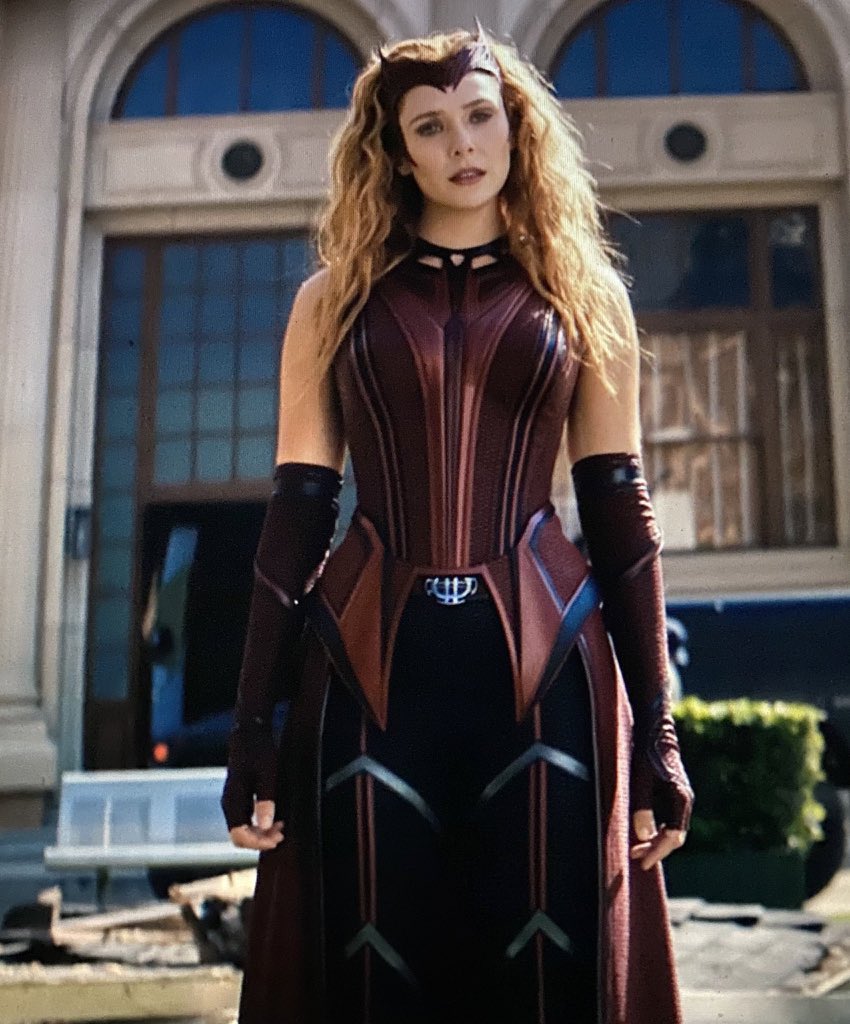
    How hot is Scarlet Witch’s look??? She’s so gorgeous, and her outfit is the perfect example of sexy but not sexualized.

  • Why You Should Watch Black Sails

    Why You Should Watch Black Sails

    Two years ago, I was a normal woman with a variety of interests.  Ever since I watched Black Sails for the first time, my life has been consumed by thoughts about this impossibly compelling Starz production that demands rewatch upon rewatch.

    Over the course of four seasons and thirty-eight episodes, viewers are introduced to a world that combines pre-Treasure Island characters with historical pirates from the Golden Age of Piracy in 1715.  What seems like the premise of a rollicking pirate adventure is exactly that…with the addition of challenging political themes and philosophical debates.  If you’re looking for a television show that is equal parts entertaining and thought-provoking, then Black Sails is the show for you!

    Do You Need More Proof?

    1. Captain James Flint is one of the most complex characters I’ve ever seen represented on popular television.  Despite knowing little of his motivations until halfway through season 2, he is dramatically intriguing from the very first episode. Phenomenally performed by Toby Stephens, Flint is a ruthless idealist whose pursuit of a free Nassau destroys almost every relationship he values, and I love him.

    Flint_end

    2.  One of Black Sails‘ central themes is that oppressed people are easily villainized because the only options they have to claim their freedom are so often villainous.  Intentionally choosing diversity, Black Sails showcases main characters who are enslaved, queer, disabled, and poor.  It is, actually, a history told from the perspective of the oppressed.

    f71febca570663846609477668e2db3b

    3.  Queer relationships are respectfully represented throughout the series.  Lesbian, gay, and bisexual relationships are represented amongst the main characters of Black Sails, and multiple relationships are shown as polyamorous.  The show does an impressive job of normalizing these relationships while also portraying historically accurate consequences.

    BSmain

    4. In a television world that is traditionally male-dominated, Black Sails intentionally puts women in leading roles of various kinds.  One review I read (that I unfortunately cannot remember and therefore cannot credit) said that this show “demonstrates that it’s possible to depict a world that devalues women without constructing the show itself that way too.”  As such, we have female pirates, prostitutes, business leaders, and princesses, all of whom reveal a part of what it meant to be a woman in the early 1700s.

    eleanor-max-anne-or-miranda

    5. All of the characters are both flawed and lovely (with one exception for me personally).  Everyone is selfish and desperate, which naturally leads to shifting alliances and betrayals on a regular basis.  Despite this, the show constantly asks us to see from their perspective and have understanding.  We are refused the baser joy of loving to hate a character, and instead are shown how to do the better thing: love a hateful character.

    Here’s an Hour+ Video by Rowan Ellis