Author: Trish

  • Gender Queer: A Memoir by Maia Kobabe

    Gender Queer: A Memoir by Maia Kobabe

    Genre | Graphic Novel Memoir
    Page #s | 240
    Publishing Date | May 2019

    In 2014, Maia Kobabe, who uses e/em/eir pronouns, thought that a comic of reading statistics would be the last autobiographical comic e would ever write. At the time, it was the only thing e felt comfortable with strangers knowing about em. Now, Gender Queer is here. Maia’s intensely cathartic autobiography charts eir journey of self-identity, which includes the mortification and confusion of adolescent crushes, grappling with how to come out to family and society, bonding with friends over erotic gay fanfiction, and facing the trauma of pap smears. Started as a way to explain to eir family what it means to be nonbinary and asexual, Gender Queer is more than a personal story: it is a useful and touching guide on gender identity—what it means and how to think about it—for advocates, friends, and humans everywhere.

    Goodreads

    Graphic novel memoirs are one of my favorite genres (see also: Spinning by Tillie Walden, Flamer by Mike Curato, and The Fire Never Goes Out by Nate Stevenson), and Gender Queer is one of the best. Kobabe chronicles eir winding gender journey with poignant honesty and an attention to detail that highlights the fact that it’s often the small moments in life that shape our understanding of ourselves.

    For anyone outside of the binary, this book is a breath of fresh air. In a world made for labels and boxes, it is incredibly disorienting to find oneself outside of the prescribed spaces. Tellingly, Kobabe points out that in avoiding societal boxes, e made eir own, which were sometimes equally unhelpful. One of my favorite stories was the realization that, because e is AFAB, e gravitated toward masculine outfits and hair styles. But when e dressed up as a man for Halloween, it gave em an allowance to lean into sequins and sparkles. It was a joy to watch Kobabe find eir fashion at the end that is a unique embrace of masculine and feminine styles.

    Within the book, Kobabe makes clear that some of the most impactful moments for eir self-esteem was when e had access to education and representation that normalized what e experienced. E has passed that gift on to queer readers, who will find themselves reflected on these pages, and to cis readers, who will have a personal story to lead them toward empathy and understanding.

    Who Do I Recommend This Book To?

    Gender Queer is a quick, deep read that is perfect for anyone who values honest reflections and well-told memories.

    Check out our Queer Lil Library for more book recommendations and reviews!

  • Caradhras Milestone Reached!

    Caradhras Milestone Reached!

    Tricia walked 19 miles this week | 1033 miles to Mordor

    Walking Across Middle-Earth

    Week 32: I Made it to Caradhras!

    When I made Walking Across Middle-Earth, I intentionally included some short journeys between milestones to counterbalance some of these massive distances (250 miles between Rivendell and Hollin!!). This was one of those short jaunts, because the poor Fellowship started up a mountain and then decided it was too hard. Relatable.

    I had originally thought that I would hike the Grouse Grind during this section of the walk, but it’s cold and dreary here in Vancouver, so while that actually makes it perfect, I just couldn’t muster the energy or interest. The closest I got to representing Caradhras was accidentally being in Victoria when it snowed, which is, maybe, kind of treacherous.

    Now I’m on working on 68 miles to Moria…will I treat myself by visiting a mine?


    Join the Fellowship

    Download maps and spreadsheets for free at our Ko-Fi shop!

    If you want to join our Fellowship, let me know by emailing roarcatreads@gmail.com and I’ll add you to our What’s App group. It’s never too late to join in – we want there to be walkers at every stage of the journey!

    Tag your social media photos and stories with

    #rcrhobbitjourney!

  • Always Changing: How the Art of Cosplay Helped Me Understand Myself

    Always Changing: How the Art of Cosplay Helped Me Understand Myself


    Always Changing: How the Art of Cosplay Helped Me Understand Myself

    An essay written by Daze

    Cosplaying, Cross-playing, and Gender-playing

    I was 14 or 15, fresh after a lot of traumatic experiences in middle school and some “ambivalent friendships” I still find hard to define – pure and simple bullying.

    Why am I telling you all of this? Firstly, I’m fine now – as fine as someone can feel, I guess; secondly, I want to give you a clear idea of what I was experiencing not long before going to my first comic-con.

    As strange as it sounds, high school was a sort of promised land to me: a place where I could finally find people with the same interests, open minded and intellectually stimulating. I was right to some extent, but living with the same people for five years in a very stressful environment is not easy. People come and go.

    I remember quite clearly that one of my friends suggested we go to this small convention, and that we should dress up for the occasion. Cosplayers weren’t so popular at that time and the main reason to wear a costume was the discount ticket. My friend chose to dress up as a character from Hetalia, while I decided to bring a sort of original character that was a mix between Jareth the Goblin King (Labyrinth) and a leather dressed elf that was the protagonist of a famous YA fantasy.

    The result was not that good, honestly, and I’m happy all the pictures were lost between one memory card and another. 

    My second cosplay is the one I consider my official entry into this crazy, beautiful world and my first step towards a late realization – one of those moments when you see everything in retrospect and think, “Wow, now it actually makes sense.”

    I attended my second CC dressed as Undertaker (Black Butler) – a tall, lean shinigami (“god of death”)  with penetrating green-yellow eyes, bringing a Death Scythe I’d love to build now that I have the skills.

    The thing is, despite his androgynous appearance, Undertaker is a male character. Explaining this now sounds so silly, but there’s a huge part of the Italian cosplay/fandom community that doesn’t appreciate Cross-playing (dressing as character belonging to another gender, usually women dressing up as male characters) and Gender-playing (changing a character to make them fit into another gender, usually a feminization/masculinization of a character). 

    Many purists think changing a character’s gender or hiding the cosplayer’s real gender is a deviation from the original reference. Which is true. 

    So what?

    The reason why I started cross-playing and gender-playing (which I consider just two of the many ways to cosplay) is because many anime/manga, videogames and tv shows had poorly written female characters. I usually don’t cosplay a character I don’t feel like is mine, and I prefer bending the limits of canon to make them fit my point of view. 

    Another reason for this choice was that I’ve felt uncomfortable with my body for a long time, so almost naked, sensual female characters were totally out of the question. 

    I’m working on this still and things are going quite fine now, but I was barely a teenager when I started cosplaying. The perception I had of my body and the impossible beauty standards portrayed in the media were a huge limitation for me – still are, sometimes.

    Despite all my insecurities, cosplaying became a safe space where I could understand myself and open up to new experiences. I think I never bothered to define myself as a cosplayer or to find a “cosplay style” – which is really a social media thing now. To me, cosplaying is still about feeling good and sharing this fun activity with my friends. Likes and visibility come after.

    It was in this space and the related fandom life that I had my first encounters with the LGBTQ+ reality (in canon, fanon and real life).

    I know there’s a toxic side in every fandom and a lot of “Oh no, they are just friends” people out there, but I had the luck to stay away from that since the beginning. The people I usually meet at cons might have weird tastes in ships, characters and fan contents, but they were always quite respectful – or at least discreet in criticizing others

    I’ve always admired people who are open about who they are and what they like, and I think cons are the perfect place to express your true self. No one will judge you for going full goth mode, wearing too many colors, or just being proud. 

    They might not know it, but I really owe them a lot of who I am today.

    Gender Expression Exploration and Self-Confidence

    A huge part of my gender expression has been shaped by fictional characters and people I’ve met at comic cons through the years. Seeing them being so comfortable with themselves encouraged me to step out of my shell. 

    As a glam rock fan (especially David Bowie’s music) since I can remember, I was very young when I understood that there are so many ways to express femininity and masculinity – and they are not related to a person’s gender! Writing it down now, it sounds obvious. But growing up in a small town, I never had the chance to experience queerness until recently.

    In many ways, comic cons were the only place where I really could.

    Seeing people dressing up the way they wanted, characters or not, even just for a day, is one of the things that pushes me to continue this activity. 

    Have you ever seen someone wearing a costume outside the social realm? I think it’s refreshing. 

    There’s something special in the way cosplayers hold themselves, the way they act and speak in and out of characters, that made me understand why this hobby is so important.

    We all need to evade reality sometimes and to feel in contact with our true self. It might sound trite, but the real mask is the one I have worn every day for a long time, not the wig and heavy makeup.

    After attending a few cons, I felt the need to take that sense of pride, of comfort, and experience it in my everyday life. Self-confidence is highly addictive – especially when you have no self-esteem. That’s how my adventure in discovering gender expression started, way before I could even label it with this term.

    Cosplaying as different characters is a challenge to me, a way to push my deepest sense of self outside the limits of “who I should be” according to others. It’s not really about the makeup and clothes and haircut – even though it’s probably the first thing people notice, it’s about not caring about all the voices telling you what is proper and what is not; it’s about choosing the way to express yourself that really suits you. And the thing I love is that you don’t have to be coherent! Trying to fit in the box is so exhausting and people will always have their opinions. So why should we try at all?

    Sexual Orientation and Labels

    During the first lockdown in 2020, I had time to think. Too much time, actually. I’m one of those people that needs a constant noise in their head because when everything stops, they have to face reality. Which I think is the reason why I’m a huge media consumer.

    It’s in this context that I came to terms with my sexual orientation. At some point, I felt the need to ask myself some questions and put a label on that specific part of myself. I don’t think labels are a necessity to understand yourself, but in my case I found it really comforting – it means that I’m a complete mess of a human being, but at least I’ve got something figured out.

    So, how does bisexuality relate to cosplaying?

    Honestly, I don’t know. It just does! I don’t think there’s a linear explanation for this connection, but I’ll do my best.

    The only thing that I know is that in the moment I accepted myself for who I am, my heart became lighter and I felt the exact same sense of freedom I feel wearing a costume. Something in my mind clicked and I realized that maybe I didn’t need to overthink the whole thing: I was already living as my true self even when I didn’t have a name for it.

    Being surrounded by cosplayers who play with their appearance so much, I understood that to me attraction is something fickle that can’t be limited to a person’s gender/gender identity. There’s so much more cosplayers can express and their gender – or the gender of the character – become completely superfluous.

    Support and follow Daze:

    Daze’s Linktree: https://linktr.ee/DazedAndInked
    Ko-Fi: https://ko-fi.com/dazedandinked

    Sign up for Roar Cat Reads’ Monthly Newsletter

    Processing…
    Success! You're on the list.

    By clicking submit, you agree to share your email address with the site owner and Mailchimp to receive marketing, updates, and other emails from the site owner. Use the unsubscribe link in those emails to opt out at any time.


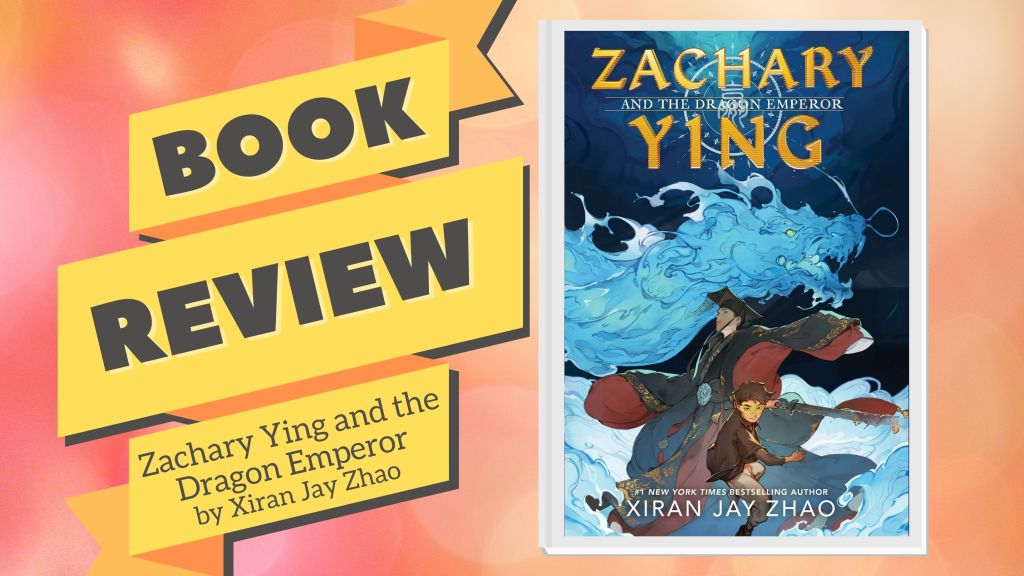
  • Zachary Ying and the Dragon Emperor by Xiran Jay Zhao

    Zachary Ying and the Dragon Emperor by Xiran Jay Zhao

    Genre | Middle Grade Fantasy
    Page #s | 340
    Publishing Date | May 2022

    Zachary Ying never had many opportunities to learn about his Chinese heritage. His single mom was busy enough making sure they got by, and his schools never taught anything except Western history and myths. So Zack is woefully unprepared when he discovers he was born to host the spirit of the First Emperor of China for a vital mission: sealing the leaking portal to the Chinese underworld before the upcoming Ghost Month blows it wide open.

    The mission takes an immediate wrong turn when the First Emperor botches his attempt to possess Zack’s body and binds to Zack’s AR gaming headset instead, leading to a battle where Zack’s mom’s soul gets taken by demons. Now, with one of history’s most infamous tyrants yapping in his headset, Zack must journey across China to heist magical artifacts and defeat figures from history and myth, all while learning to wield the emperor’s incredible water dragon powers.

    And if Zack can’t finish the mission in time, the spirits of the underworld will flood into the mortal realm, and he could lose his mom forever.

    Goodreads

    I will forever compare middle grade mythology adventures to the Percy Jackson series (which I love), and I’m happy to say that Zachary Ying and the Dragon Emperor captures the same energetically educational vibes while also introducing some very compelling moral ambiguity into the story.

    Using Augmented Reality goggles as the gateway to introducing and interacting with the powerful spirits of Chinese emperors who offer 12-year-olds enormous powers was ingenious, as was the Pokemon GO-style game that is mimicked in the book. It’s very fun and feels written in a very forward-facing, technology-driven mindset while exposing readers to legends and stories from thousands of years ago.

    For me, there were two real highlights to the book. First, Zachary is a Chinese-American who was raised to assimilate into American culture, so he wrestles with his cultural identity throughout the book as he has to interact with people, places, and languages that he is totally unfamiliar with. He is the perfect way for readers with little to know background knowledge of Chinese lore to catch up alongside him, but it’s also a very poignant story about embracing your culture, no matter what age or “how late.”

    Second, this novel plays around with moral ambiguity in a way that is pure catnip to me! Zachary and his friends have inherited the power of emperors, and emperors have historically gained their power through violent, paranoid, and oppressive means. This book embraces this fact and forces Zachary to wrestle with the nature of power and figuring out whether the people he is working with are the heroes…or the villains. It’s very compelling, and I can’t wait for the sequel for more!

    What Make This Book Queer?

    This is a middle grade adventure book, so Zachary’s sexuality is not the focus by any stretch of the imagination. However, he mentions being attracted to boys, and he’s disappointed when a cute boy shows interest in a girl. It’s all very innocent and sweet, and I think representing gay or queer kids at this age is so important!

    Also, there’s a throwaway comment about Zachary being very pretty. He says that’s not a good thing in American culture, and his new Chinese friend assures him he would be very popular in China because of it. It was a brief but powerful statement about the cultural construct that is gender!

    Who Do I Recommend This Book To?

    Zachary Ying and the Dragon Emperor is a fast, fun read that brings Chinese mythology to life in a dramatic and accessible adventure. A definite recommendation to anyone in Percy Jackson withdrawal.

    Check out our Queer Lil Library for more book recommendations and reviews!

  • Queer Books, Queer Readers:  Alex Recommends The Traitor Baru Cormorant

    Queer Books, Queer Readers: Alex Recommends The Traitor Baru Cormorant

    Alex (he/him) is a bisexual bilingual Britalian currently living on xʷməθkʷəy̓əm, Sḵwx̱wú7mesh, and səlilwətaɬ land. He is a literary translator from Italian into English, though he also dabbles with French and RPGs, and is co-editor of The Norwich Radical. His work has been published in NYT Magazine, The Massachusetts Review, The Short Story Project, and PEN Transmissions. You can find him around the internet at alexv.fyi or alexvalente.fyi.

    What queer book have you chosen to share with our readers today?

    Seth Dickinson’s The Traitor Baru Cormorant was the first book featuring queer women by a male writer that did not make me want to scratch my eyes out in frustration. It is also an intricate, detailed, historically accurate while being ahistorical, fantasy dissection of the powers of empire, colonialism, oppression and, most of all, assimilation. Baru is a young savant from the latest colony of the Masquerade, who decides to rise through the ranks and destroy the empire from within. Of course, at every step of her silent revolution, there are temptations (the women who work with, for, or against her tend to be most of them, especially Tain Hu, her field general) and limitations to what her imperial power can do, and Dickinson makes sure to wring every ounce of gut-churning tears and screams of frustration up to the very last page. It’s brutal, it’s visceral, it’s like nothing I had ever read before, and I will never forgive him for the ending. 

    Why is this book one of your favorites?

    I am very, very wary of books written by men about women, especially queer women. Dickinson came with some very good recommendations, and it still took me over a year to try the first book – in fact, it was his blog post about the world of Baru Cormorant that finally gave me the last push (and a good friend of mine reading ahead of me to vet it). I have been disappointed too many times, but this one managed to get so many things just right, while also not holding back on several punches and horrible twists, in a way that built a world instead of placidly and tacitly becoming complicit with the homophobia, transphobia, xenophobia and layers of oppression that the Masquerade enforces upon its subjects and colonies. It sits in the same general area as The Poppy Wars, She Who Became the Sun, The Unbroken as part of a new canon of queer explorations and subversion of colonial fantasy. It’s the one book I would recommend to anyone trying to write fantasy or any form of world-building. It’s just that good.

    How would you describe yourself as a reader?

    I am a very focused reader, both by professional deformation (translation: not even once) and by choice. I have very specific criteria on what books to choose to read because I have to dabble in so many I might not usually want to read for work. So I rarely choose litfic for pleasure, and tend to not read a lot of recent YA, for example, and try to steer clear of anything with law enforcement as main characters. But as I said above, I also avoid male writers unless they come from a marginalised background or identity, unless they come incredibly highly recommended, or their work is online as short stories or poems or novelettes. And even then, I have so much catching up to do with so many good really imaginative fiction (horror, fantasy, scifi, all of the above) writers I never even knew existed from my first decades of reading mostly male authors. I’m sure The Men won’t be missing me as a reader!

    As a queer person, have books helped you explore or express your queer identity?

    This might not be the answer you’re looking for but: I’m not sure it has. Or at least, not exactly. I do remember being shaken to the core when I first read Jeanette Winterson’s Written on the Body, but it was a similar reaction to Patrick Ness’ A Monster Calls or watching A Single Man – I’m not sure if queer stories are what I needed, but now that I look at it, there is a pattern of queer authors and creators that have had a recognisable impact on my own development and discovery, yes. 

    Other than reading, are there any queer nerdy recommendations that you would like to leave with our readers?

    There are many many many TTRPGs that are off the beaten track (i.e. D&D and its siblings) which deal with issues of identity, sexuality, marginalisation, class awareness, and subversion of violence as conflict resolution. Narrative games like Wanderhome and A Quiet Year, social games like Monsterhearts 2 or Big Gay Orcs, solo games like A Thousand Year Old Vampire or The Magus or Plot Armor, and even a few two people games, like Enticement, or Things, Eldritch and Terrifying. Go take a look at itch.io, try a few, and let them change how you look at stories, at games, and yourself.

    Thank you, Alex!

    Check out our Queer Lil Library for more book recommendations and reviews!

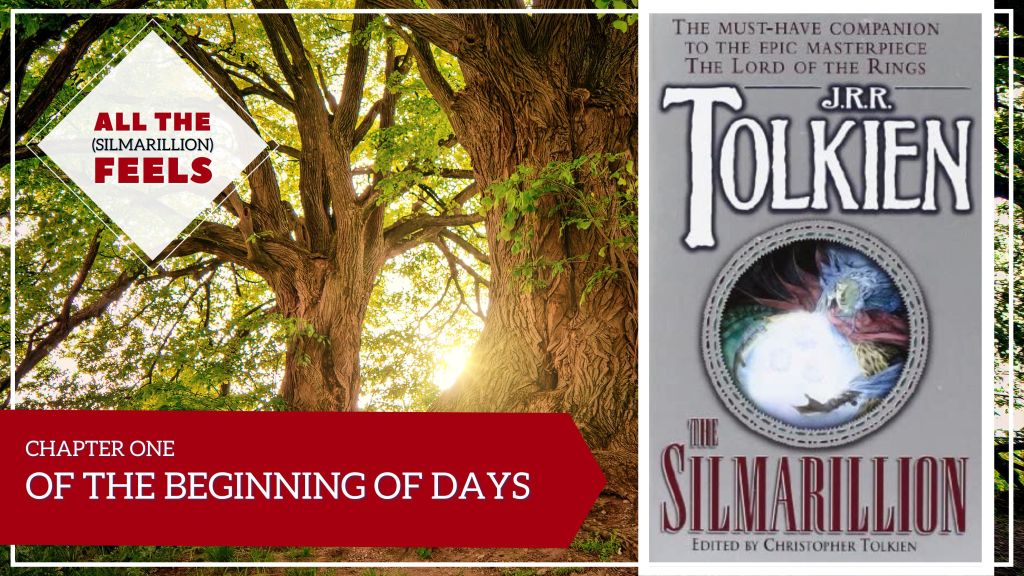
  • All the (Silmarillion) Feels | Chapter 1: Of the Beginning of Days

    All the (Silmarillion) Feels | Chapter 1: Of the Beginning of Days

    All the (Silmarillion) Feels is an emotion- and story-focused summary of The Silmarillion. You’ll get facts, but that’s not the point here. Let’s talk themes, meaningful quotes, and moments that made us go “WHOA.” I started this project after falling in love with The Rings of Power television show, so expect me to focus on things to do with Galadriel and Sauron.


    Chapter 1: Of the Beginning of Days

    The Two Lamps

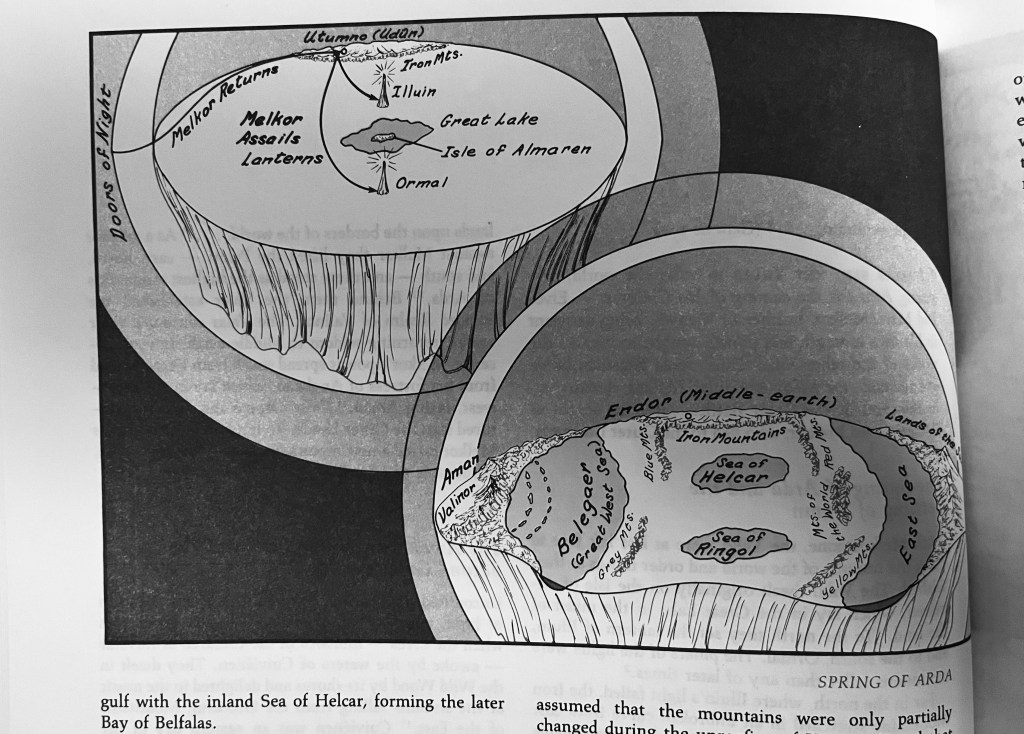
    It’s the beginning of the world, and the world is flat! The creative song of the Valar that we heard about in the Ainulindalë comes to fruition; Yavanna is the star here, planting trees and making the new world beautiful and lush. One of the things that sets the good guys apart in Tolkien’s world is their ability to work together (in a fellowship, if I may), and it is through the combined craft of Aulë, Yavanna, Varda, and Manwë that the two great lamps of Middle-earth give first light to the land, though this is technically set before Middle-earth looks anything like we’re used to. Karen Wynn Fonstad’s The Atlas of Middle-earth is a really fun resource for uber-nerds, and she’s drawn what this version of the world looked like in the top left image.

    To celebrate winning the First War against Melkor (about which little is said other than Tulkas having some Rohirrim-like battle joy) and the greenness of the land, the Valar party! In their distracted rest, Melkor sneaks back into the north of Middle-earth and builds his stronghold Utumno. No one realizes he’s there, but the lush land that Yavanna created begins to rot and grow poisonous. When he deems that he’s strong enough, he launches an attack on the two lamps, destroying them, casting the world into darkness, and literally throwing the earth into tumult.

    Valinor

    The Valar retreat far across the sea to the west, where they build a new home and name it Valinor – yes, the Valinor that the Elves in Lord of the Rings always talk about!

    “Valinor became more beautiful even than Middle-earth in the Spring of Area; and it was blessed, for the Deathless dwelt there, and there naught faded nor withered, neither was there any stain upon flower or leaf in that land, nor any corruption or sickness in anything that lived; for the very stones and waters were hallowed.”

    The Silmarillion, page 30.

    Valinor is very much a physical place, and a lot of action is going to happen here in future chapters, but as you can see from the quote above, it’s also got a lot of Heaven Vibes that are strongly leaned on in later books, like this gorgeous conversation between Pippin and Gandalf:

    PIPPIN: I didn’t think it would end this way.

    GANDALF: End? No, the journey doesn’t end here. Death is just another path, one that we all must take. The grey rain-curtain of this world rolls back, and all turns to silver glass, and then you see it.

    PIPPIN: What? Gandalf? See what?

    GANDALF: White shores, and beyond, a far green country under a swift sunrise.

    The Valar settle in, building a mountain range along the edge of the sea to keep Melkor out, and generally creating and singing together like the world’s original commune.

    All of this was done in darkness, since you’ll remember that Melkor destroyed the two lamps. Yavanna takes the lamp idea and makes them her own by singing into existence two trees to light the land: Telperion with silvery dark green leaves and Laurelin with golden light green leaves. Their light waxes and wanes and overlaps in 12-hour cycles, and time now exists in Valinor!

    The rest of the Valar keep on about their business, and we get some little hints about the relationships they will have with the Elves in the future, including the first name drop of the gems referenced in this book’s title: “Aulë it is who is named the Friend of the Noldor, for of him they learned much in the after days, and they are the most skilled of the Elves…The Noldor also it was who first achieved the making of gems; and the fairest of all gems were the Silmarils, and they are lost” (pg. 33). Spoilers!

    Middle-earth

    While the Valar are having a great time in Valinor, Melkor skulks around Middle-earth in cold and fire. He’s a Valar of extremes, which is a Tolkienian sign of unhealthiness! Although the focus in on Valinor, a few of the Valar keep a bit of attention on the lands where they once lived. Manwë gets regular information from his eagle and hawk friends; Ulmo never went to Valinor at all but continued to chill in the oceans; Yavanna returns to Middle-earth occasionally to heal the land’s hurts; and Oromë rides out to push Melkor’s dark forces back to Utumno. But those forces are never fully defeated, and one can’t help but think the Valar should focus their efforts and take care of him before anything gets out of hand! But then we wouldn’t have much of a story… and that seems to be something of Ilúvatar’s plan.

    Elves and Men

    The first chapter ends with a broad introduction to the Children of Ilúvatar, aka Elves and Men (Men here means humankind, though to be honest, Tolkien also mostly focuses on men!). If you watched The Rings of Power and thought the border elves were kind of harsh on the Southlanders (or heck, remember the disgust on Elrond’s face when he spits, “Men? Men are weak”), well, this is a very common thought amongst the early denizens of Middle-earth. Ilúvatar loves Men, but everyone else is a little skeptical. From the beginning, it’s said that they would “stray often, and would not use their gifts in harmony.” In fact, “the Elves believe that Men are often a grief to Manwë…for it seems to the Elves that Men resemble Melkor most of all” (pg. 36). Harsh.

    In contrast, listen to the Elves’ introduction:

    “The Quendi [Elves] shall be the fairest of all early creatures, and they shall have and shall conceive and bring forth more beauty than all my Children; and they shall have the greater bliss in this world.”

    The Silmarillion, page 35.

    What I find especially interesting about this is Tolkien’s reason for the great difference between the two. Men are given the gift of death, “which as Time wears even the Powers shall envy.” It seems that because of the short amount of time given to Men, it brings out the best and the worst in them, especially because Melkor “confounded it with darkness, and brought forth evil out of good, and fear out of hope.”

    Death as a gift is a theme that is revisited throughout Tolkien’s works, though it is never fully explained, because how could it be? I wrestle with this idea a lot, but in a society that glorifies youth and spends a lot of time and money resisting the inevitable, I find it helpful to sometimes think about death not as something to be feared, but as a reminder to live fully while I can. Memento mori.


    We end this chapter with Elves and Men, and in the next chapter we get one of my favorite stories: the creation of Dwarves! See you then.

  • Hollin Milestone Reached!

    Hollin Milestone Reached!

    Tricia walked 21 miles this week | 1092 miles to Mordor
    Rachel walked 21 miles this week | 1005 miles to Mordor

    Walking Across Middle-Earth

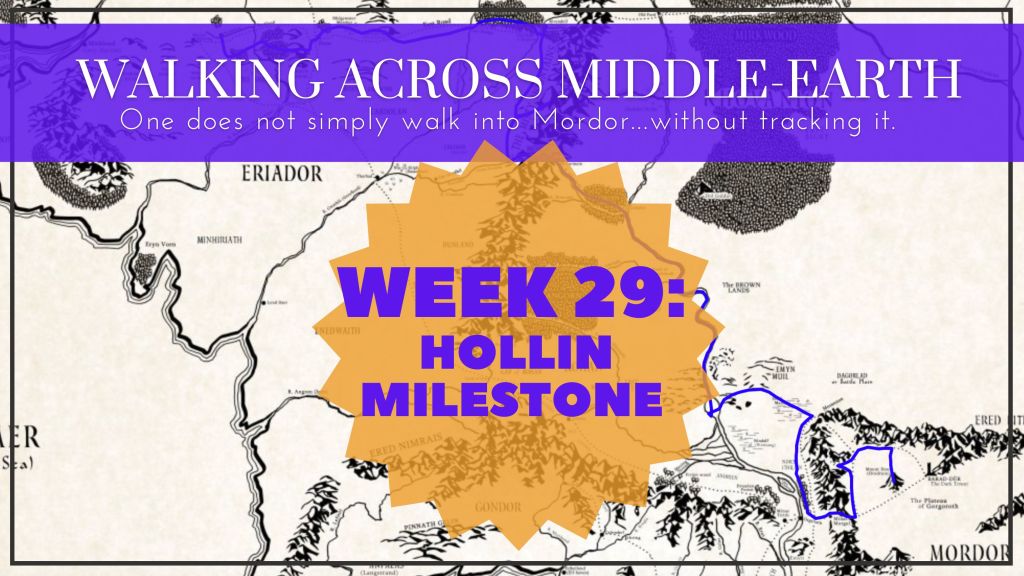
    Week 29: I Made it to Hollin!

    Whew, what a slog! It was 250 miles from Rivendell to Hollin, and it took me TWO AND A HALF MONTHS to walk it.


    ‘Yes, and where then?’ asked Merry.

    ‘To the end of the journey — in the end,’ said Gandalf. ‘We cannot look too far ahead. Let us be glad that the first stage is safely over. I think we will rest here, not only today but tonight as well. There is a wholesome air about Hollin. Much evil must befall a country before it wholly forgets the Elves, if once they dwelt there.’

    The Fellowship of the Ring, LoTR Book 2, Ch 3, The Ring Goes South

    During this part of my journey, I was able to start working from home full-time. While this was great for my personal life, it meant I did not get transit steps every workday. For a while, my weekly miles were abysmally low, but a couple weeks ago I made a push to go outside more often. The real key to getting steps, however? Walking the circuit from kitchen to living room and back…for up to four miles, some days! I may have bruises from bumping against the table while trying to read and walk at the same time, but I made it to Hollin, and now all that stands before me is… Caradhras the Cruel.

    Join the Fellowship

    Download maps and spreadsheets for free at our Ko-Fi shop!

    If you want to join our Fellowship, let me know by emailing roarcatreads@gmail.com and I’ll add you to our What’s App group. It’s never too late to join in – we want there to be walkers at every stage of the journey!

    Tag your social media photos and stories with

    #rcrhobbitjourney!

  • All the (Silmarillion) Feels | Valaquenta: The Gods and Goddesses of Middle-earth

    All the (Silmarillion) Feels | Valaquenta: The Gods and Goddesses of Middle-earth

    All the (Silmarillion) Feels is an emotion- and story-focused summary of The Silmarillion. You’ll get facts, but that’s not the point here. Let’s talk themes, meaningful quotes, and moments that made us go “WHOA.” I started this project after falling in love with The Rings of Power television show, so expect me to focus on things to do with Galadriel and Sauron.


    Where are my Greek mythology girlies at? This is the chapter for you! Tolkien’s cisheteronormative pantheon includes seven gods and seven goddesses (aka Valar, six of which are paired off, and this section of The Silmarillion introduces us to each one (plus some lesser gods with VERY familiar names).

    Valaquenta: aka the Gods and Goddesses of Middle-earth

    Manwë, Lord of Arda

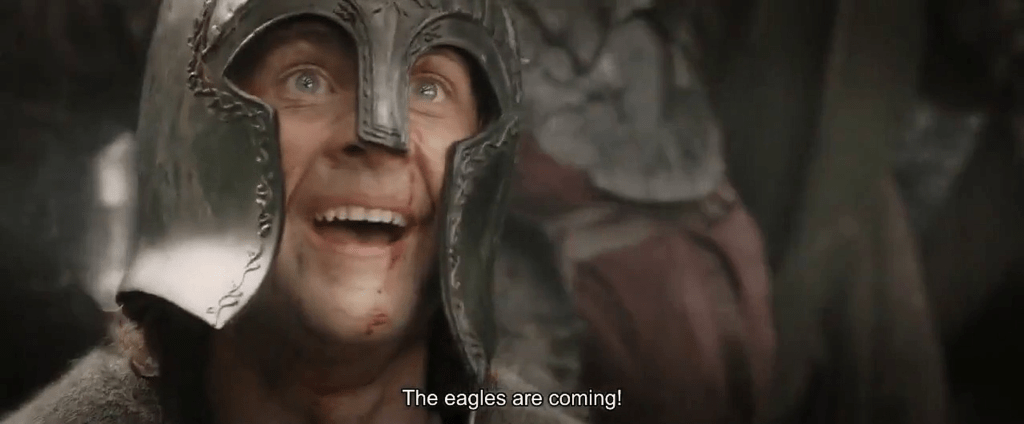
    Manwë rules the skies, which gives me serious Zeus vibes. However, he has none of the Greek gods’ licentiousness, because one of Tolkien’s favorite things is monogamy. He’s also less about lightning and more about birds, and yes, the Eagles are Coming was Manwë’s doing.

    Varda, Lady of the Stars

    Varda is the Valier who is most feared by Melkor because the light of Ilúvatar is in her face. The elves love her best of all the Valar, and she’s basically the personification of hope, so in the world of Tolkien, that makes her the best.

    RELATIONSHIP ALERT: Varda + Manwë

    The first couple in list and in power, I adore the fact that Tolkien mentions that their powers are greater when they are together. Varda helps Manwë see further, and Manwë helps Varda hear more clearly. I’m a big believer that couples should support and enhance each others’ strengths, so this note is right up my alley.

    Ulmo, Lord of Waters

    A solitary Valar with the heavy influence of Poseidon, Ulmo symbolizes freedom. He doesn’t go to meetings, he doesn’t rest, he doesn’t like to appear to elves or men, though he will help out if necessary. He just wants to hang out in the deeps of the sea, making him the patron saint of introverts.

    Aulë, Master of All Crafts

    Aulë is the good Morgoth, and maps onto Hephaestus pretty well. They both love making original content, but while Morgoth does it for his own glory, Aulë shared what he made and was open to direction by Ilúvatar. The Dwarves love Aulë because he’s all about gems and gold, and SPOILER, but Aulë is actually their daddy.

    Yavanna, Giver of Fruits

    As the lover of all things that grow, Yavanna is the Demeter of Middle-earth. There’s a great image of her as a giant woman robed in green, with roots stretching to Ulmo’s waters and branches high in Manwë’s sky…kind of like if the Norse tree of life, Yggdrasil, was a lady, which I am very into.

    RELATIONSHIP ALERT: Yavanna and Aulë

    Relationships in mythology are used to show the interrelationship of natural things. In this case, the two Valar are a celebration of the earth, above and below, as well as the creative capacity of natural substances. Yavanna gives me serious elvish vibes while Aulë is strongly connected to the dwarves; the fact that these two races are so often at odds is extra tragic when we’re told here that the two are best when working together.

    Námo/Mandos, Keeper of the Houses of the Dead

    It’s Hades! Mandos is the place which essentially becomes Námo’s name, and he’s the keeper of knowledge and souls, the pronouncer of Doom upon the world. But like, in a heavy but not evil way?

    Vairë, the Weaver

    Vairë is the three Fates as one being, and she weaves the webs of Time in ever-widening halls. Pretty badass, if you ask me, though she does sound a bit like a spider.

    RELATIONSHIP ALERT: Mandos and Vairë

    These two are the gothic couple that everyone respects but doesn’t invite round for tea.

    Irmo/Lórien, Master of Visions and Dreams

    Can’t read Lórien without thinking Lothlórien, am I right? Galadriel will rule over Lothlórien someday, and her Mirror gives visions…COINCIDENCE?

    Estë, Healer of Hurts and Weariness

    What a useful, lovely goddess! The equivalent deity that springs to mind is Becky Chambers’ Allalae, the god of small comforts. Estë seems to sleep all the time, and she gifts rest to those who need it. Love a sleepy girl.

    RELATIONSHIP ALERT: Lórien and Estë

    Do you have friends who, when you go to their place, you know you’ll feel cozy and cared for? Honestly, I aspire to be that friend, and now I know who to emulate. Tolkien says that the Valar head to Lórien and Estë’s house when they need to ease their burdens; sounds nice.

    Nienna, Lamenter of Grief

    Nienna is a downer at first glance since she is melancholy personified, and I LOVE that Tolkien made this emotion a deity. She is “acquainted with grief” and her mourning was woven into the song of creation. But she isn’t morbid. Her grief enables others to “learn pity, and endurance in hope.” She’s a single lady, and like a wise guru, people come to her to so that their sorrow can be turned to wisdom.

    NOTE: One of the Maiar (lesser gods) who spent a lot of time with Nienna is Olórin. The name he’s better known by? GANDALF.

    Tulkas the Valiant

    Tulkas is Thor, the broiest of the Valar. He loves fighting and proving his physical prowess. You can just imagine him bouncing around asking people to dare him to jump over a mountain or wrestle a bear.

    Nessa the Fleetfooted

    Nessa is Artemis if Artemis also loved dancing. She likes deer? This is pretty much all we know about her.

    RELATIONSHIP ALERT: Tulkas and Nessa

    What does their relationship reveal? They both have an air of wildness about them, though in possibly the most heteronormative way possible. Tulkas is all manly brawls, while Nessa is nimble and quick. A classic barbarian/rogue team up?

    Oromë, Lord of Forests

    This guy loves Middle-earth the most (as opposed to Valinor, the heavenly land where the Valar live and the elves sail to), and Oromë is the original horse boy, in whose footsteps Aragorn and his ancestors will someday tread.

    Vána, Ever-young

    The younger sister of Yavanna (see tree goddess above), this Valier is all about flowers and birdsong. She’s basically the template for a 20th century Disney princess.

    RELATIONSHIP ALERT: Oromë and Vána

    The feeling I get with these two is a May-December romance that feels kinda skeezy from the outside, but they’re genuinely happy on their ranch, where they garden and hunt to their hearts content.

    Melkor aka Morgoth

    This guy is counted among “The Enemies,” though he was once the mightiest of the Valar. He’s a classic case of hubris, desiring things he couldn’t have and ruining (and being ruined) in the process of pursuing them.

    “Melkor spent his spirit in envy and hate, until at last he could make nothing save in mockery of the thought of others, and all their works he destroyed if he could.”

    Page 18

    He is especially tied to darkness, which is likely why he’s so afraid of Varda and her light. He’s power drew a lot of people to his side among the Maiar (lesser gods), including Ossë, who rules the coasts, the Balrogs, and SAURON. Tellingly, Tolkien points out that Sauron was not as evil as Morgoth because he served another rather than himself. It’s when Morgoth is gone and he claims total power to rule for himself alone that he’s truly beyond redemption.

    (If you’ve got feels about how this relates to his offer to share power with Galadriel in episode 8 of Rings of Power, then WOW, let’s please talk in the comments.)


    With the Ainulindalë and Valaquenta done, we move into The Silmarillion proper! It’s time to focus on the original piece of jewelry that threw all of Middle-earth into a tizzy.

  • The Oleander Sword by Tasha Suri

    The Oleander Sword by Tasha Suri

    Genre | Fantasy
    Page #s | 512
    Publishing Date | August 2022

    The prophecy of the nameless god—the words that declared Malini the rightful empress of Parijatdvipa—has proven a blessing and curse. She is determined to claim the throne that fate offered her. But even with the strength of the rage in her heart and the army of loyal men by her side, deposing her brother is going to be a brutal and bloody fight.

    The power of the deathless waters flows through Priya’s blood. Thrice born priestess, Elder of Ahiranya, Priya’s dream is to see her country rid of the rot that plagues it: both Parijatdvipa’s poisonous rule, and the blooming sickness that is slowly spreading through all living things. But she doesn’t yet understand the truth of the magic she carries.

    Their chosen paths once pulled them apart. But Malini and Priya’s souls remain as entwined as their destinies. And they soon realize that coming together is the only way to save their kingdom from those who would rather see it burn—even if it will cost them.

    Goodreads

    I’ll cut to the chase: I didn’t think The Oleander Sword lived up to its predecessor, The Jasmine Throne. That’s not to say it’s bad, but I do think it suffers from trying to do too much. Most appalling (in my book, at least), I found the romance between Malini and Priya incredibly lackluster. They are leaders of countries negotiating love and alliances, and that should be positively BOILING with tension. Is it possible to get insta-love vibes from an established relationship?

    What does work in The Oleander Sword is watching Malini’s march toward dethroning her brother and claiming the empire for herself while we the readers slowly realize that her fight is slow potatoes compared to what’s coming. The yaksa and the rot are Suri’s best invention, and every time she made flowers ominous, I shuddered in delighted horror. I can’t wait to see what is coming in the third book.

    I also continue to enjoy the themes of sacrifice that run through this series. Again and again, we’re asked to consider the point at which a sacrifice is no longer worth making, whether it’s obviously appalling (Chandra burning women alive to create living fire) or willing but dangerous (Priya pushing both her magic and her luck). There are no easy answers here, and I love that!

    Although the humans felt a little lacking this time around, we did get a lot more from the deities who all seem to have their own plan for the empire. I am VERY excited to see more of that in the last book of The Burning Kingdoms trilogy.

    Who Do I Recommend This Book To?

    Although not my favorite, The Oleander Sword is still a must-read for anyone who enjoyed The Jasmine Throne!

    Check out our Queer Lil Library for more book recommendations and reviews!

  • Queer Book Recommendations from Authors, Librarians, Book Sellers, and Bloggers

    Queer Book Recommendations from Authors, Librarians, Book Sellers, and Bloggers

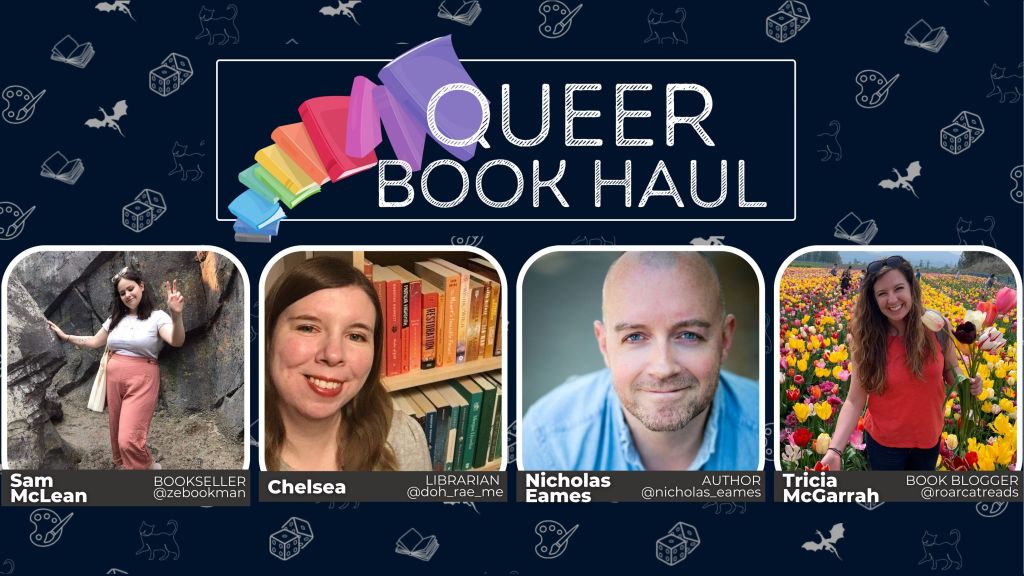
    On October 29th, 2022, we streamed a Queer Book Haul with guests Nicholas Eames, Chelsea, Sam McClean, and Tricia McGarrah to share our favorite LGBTQ+ book recommendations and raise money for Rainbow Refugee. The full video can be watched below.

    Click on each title to be taken to its Goodreads page; if the book has been reviewed by Roar Cat Reads, it is marked and linked as such.


    Nicholas Eames

    Author

    Chelsea

    Librarian

    Sam McClean

    Book Seller

    Tricia McGarrah

    Book Blogger

  • All the (Silmarillion) Feels | Ainulindalë

    All the (Silmarillion) Feels | Ainulindalë

    Watching season one of The Rings of Power brought my deep and abiding love of J.R.R. Tolkien’s stories of Middle-earth back to forefront of my interests, and when it ended I knew I wanted to reread The Silmarillion to continue living in pre-Lord of the Rings history. This is a startlingly beautiful book that is, nevertheless, very dense and intimidating. There are a plethora of deep dives and fact battles out there for the reader who wants to focus on timelines and details. But if you’re like me, you would much prefer a guided walk through the stories prioritizing emotions and relationships. Hence, All the (Silmarillion) Feels.


    Some people consider The Silmarillion to be the bible of The Lord of the Rings, so it’s fitting that we begin in the same place: with the god(s), before the world was made, in a story that is more poem than prose.

    Ainulindalë: aka The Creation Myth of Middle-earth

    In just nine pages, Tolkien rolls out an awe-inspiring creation story based in music, conflict, and hope. I’ll be honest, it’s hard for me to read this bit without going deep into my religious feels, but I already wrote that essay in my personal blog in 2015: “Theodicy and The Silmarillion.” For our purposes here, I’ll stick to themes and values that go beyond any particular religion.

    Main Characters

    • Ilúvatar: God, basically
    • Melkor (soon to be known as Morgoth): Satan, basically
    • Ainur/Valar: gods in the vein of Zeus, Poseidon, etc.

    Middle-Earth’s HR Policies

    Middle-earth is created by music sung by the gods, which such a great emotional image. I can just imagine that a river is a song given physical form, you know? Ilúvatar is the manager of our dreams, laying out a clear picture of what he expects to see and then rewarding the tentative attempts of his workers until they are confident in their ability to sing beauty into existence. When one worker (Melkor) gets ideas of grandeur into his head and begins to sing his own song, Ilúvatar weaves the songs together into something greater than before. There’s even a bit that reads like a progressive discipline manual, with Ilúvatar reacting to Melkor’s initial shenanigans with a smile, then with sternness, and finally with a face “terrible to behold.” It’s a poetic glimpse of the story we’re going to read in The Silmarillion, The Hobbit, and The Lord of the Rings: beautiful, patient, melancholy, tragic, and ultimately: cathartic. The good and the bad feel worth it, and maybe even necessary.

    Where Are the Ladies?

    It’s worth noting here that Tolkien’s Catholicism shows in his fantasy religious hierarchy of male-defaulted deities. The three Valar that are named (plus Melkor) are all male, though the equivalent of goddesses will exist in future chapters. There’s also some old-fashioned gender essentialism in Tolkien’s description of the Valar taking on physical form. He does a lot of things really well, my favorite cis white fantasy author, but nuanced depictions of gender and sexuality are not among his talents.

    Don’t Play D&D with Melkor

    Easily the most emotional part of this introduction is the fact that over and over again, good is made out of evil. Exactly how that evil is portrayed (pride, impatience, envy) can be accepted or not, but the key thing here is that every time Melkor tries to wrest control of creation through violence, the end result is something beautiful. Creation is meant to be a group project, one in which personal flourishes are applauded but expected to work alongside everyone else’s flourishes. It’s like in D&D when you tell the players not to hog the spotlight but instead draw out those who are quieter or more timid. Melkor would be a disaster to play D&D with.

    Luckily, Ilúvatar is a great GM. When the Valar complain about Melkor ruining their campaign, he basically says, “Yeah, I know it sucks that he made bitter frost and fire without restraint, and it’s ruining the setting you’re trying to create. But hey, I took his ideas of extreme temperature, and they’re actually going to cause mist, clouds, and rain. And those are really great.”

    Beauty isn’t the only thing made out of discord; connection is too. The god of the air (Manwë) and the god of the sea (Ulmo) are the ones complaining about Melkor’s shitty behaviour, and his actions allow the two of them to work together more closely.

    “Then Ulmo answered: ‘Truly, Water is become now fairer than my heart imagined, neither had my secret thought conceived the snowflake, nor in all my music was contained the falling of the rain. I will seek Manwë, that he and I may make melodies for ever to thy delight!’ And Manwë and Ulmo have from the beginning been allied, and in all things have served most faithfully the purpose of Ilúvatar.”

    Page 9

    Today’s Emotion is: Trust

    There’s a lot of lore and a lot of values packed into the Ainulindalë; we’re going to see them play out over and over again in the remaining 354 pages. As a truly talented storyteller, Tolkien is confident enough in his story that he gives away the ending right at the beginning: It’s going to be alright.

    I love reading Tolkien’s work because it is religion, therapy, and entertainment wrapped up in one. “Things are going to be terrible,” I see him saying, “but that isn’t all there is. Find the beauty in the pain, and trust that in the end, it will all be okay.”

    And you know what? I trust him.

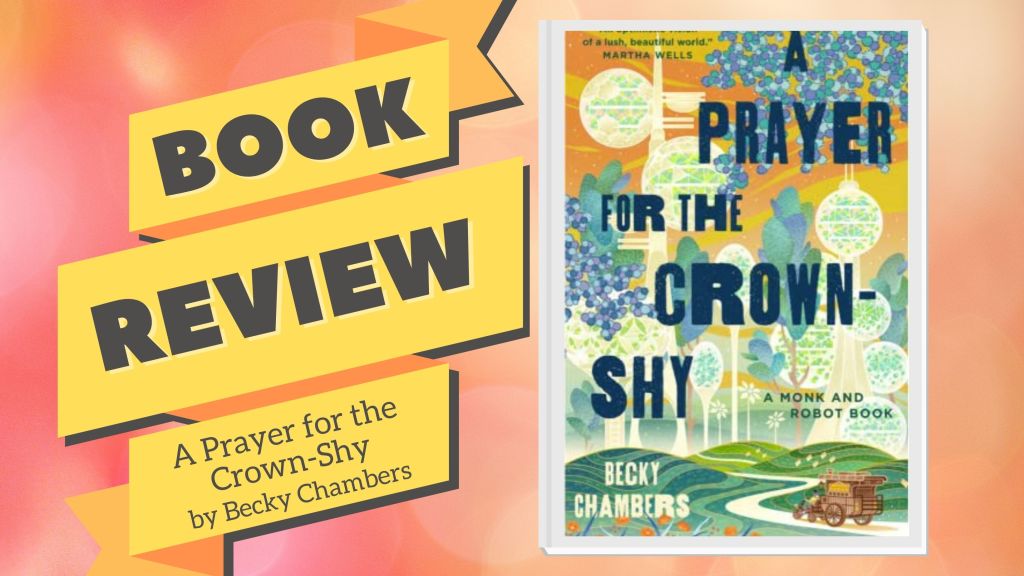
  • A Prayer for the Crown-Shy by Becky Chambers

    A Prayer for the Crown-Shy by Becky Chambers

    Genre | Science Fiction Novella
    Page #s | 152
    Publishing Date | July 2022

    After touring the rural areas of Panga, Sibling Dex (a Tea Monk of some renown) and Mosscap (a robot sent on a quest to determine what humanity really needs) turn their attention to the villages and cities of the little moon they call home.

    They hope to find the answers they seek, while making new friends, learning new concepts, and experiencing the entropic nature of the universe.

    Becky Chambers’s new series continues to ask: in a world where people have what they want, does having more even matter?

    They’re going to need to ask it a lot.

    Goodreads

    I adored the first Monk & Robot book, A Psalm for the Wild-Built, so I was surprised to find that I liked A Prayer for the Crown-Shy even more! Where the first book allowed us to meet our two protagonists, this time we get to see them interact with people and towns, which brings out new observations and interactions that are, as always, delightful. If you’re not familiar with Becky Chambers’ work, “delightful” is the watchword. Never has an author so consistently written the literary version of a mental hug.

    As Dex takes Mosscap from settlement to settlement, we have the pleasure of seeing a cozy utopia from an outsider’s perspective, from socialist currencies to next generation 3D printers to polyamorous family systems to the simply joy of a satchel. Along the way, the pair continue to have thoughtful philosophical questions, most notably about the ethical limits of medical care.

    I am unsure whether or not there will be more novellas in this series, but I desperately hope so. Now that we’ve seen the two meet then visit human civilization, I am crossing all my fingers hoping that Mosscap will take Dex to meet some of the other robots. I’m not ready for this lovely story to be over!

    Who Do I Recommend This Book To?

    A Prayer for the Crown-Shy is the perfect book for someone who wants to sink into a well thought-out futuristic sci-fi story that provides hope and appreciation for our own world.

    Check out our Queer Lil Library for more book recommendations and reviews!

  • A Lady for a Duke by Alexis Hall

    A Lady for a Duke by Alexis Hall

    Genre | Historical Fiction Romance
    Page #s | 480
    Publishing Date | May 2022

    When Viola Caroll was presumed dead at Waterloo she took the opportunity to live, at last, as herself. But freedom does not come without a price, and Viola paid for hers with the loss of her wealth, her title, and her closest companion, Justin de Vere, the Duke of Gracewood.

    Only when their families reconnect, years after the war, does Viola learn how deep that loss truly was. Shattered without her, Gracewood has retreated so far into grief that Viola barely recognises her old friend in the lonely, brooding man he has become.

    As Viola strives to bring Gracewood back to himself, fresh desires give new names to old feelings. Feelings that would have been impossible once and may be impossible still, but which Viola cannot deny. Even if they cost her everything, all over again.

    Goodreads

    I confess that I was confused and intrigued by the idea of a trans romance Regency novel – although I know trans people have always existed, I had no conception for what that might might have looked like before the modern era. A Lady for a Duke, while being delightfully anachronistic in some ways, provided a realistic picture of the path a trans woman might have taken. Namely, using their assumed death in war as an opportunity to present themselves to society as their true gender.

    I loved 90% of this book. The dialogue sparkles, the characters are unique and quirky, and the romance is positively sizzling. I am a huge friends to lovers fan, and adding in the drama of an assumed death made it all the richer. I also appreciated that revelations and “betrayals” were dealt with fairly quickly; I didn’t have to sit around for ages thinking: “Just TALK to each other already!” These were emotionally mature characters, and for that I am grateful. I also loved the diversity of queer characters, and I’m crossing my fingers that there will be a sequel that focuses on one of them.

    What about that 10% that I didn’t enjoy? The end of the book went in a weird direction, to my mind. The book didn’t need a villain, and if it did, having one in the B plot show up at the end in comically evil fashion fell too flat and too late. It killed my buzz as the story was wrapping up, which sucks! But writing this a couple weeks after finishing the novel, I can say that this part has mostly left my mind and the parts that stick out are the sweet and spicy moments that populate the majority of the book.

    Who Do I Recommend This Book To?

    Romance readers, A Lady for a Duke is for you if you like friends to lovers and a bit of anachronistic sparkle to your Regency reads.

    Check out our Queer Lil Library for more book recommendations and reviews!

  • Rivendell Milestone Reached!

    Rivendell Milestone Reached!

    Tricia walked 20 miles this week | 1330 miles to Mordor
    Rachel walked 30 miles this week | 1315 miles to Mordor

    Walking Across Middle-Earth

    Week 18: I Made it to Rivendell!

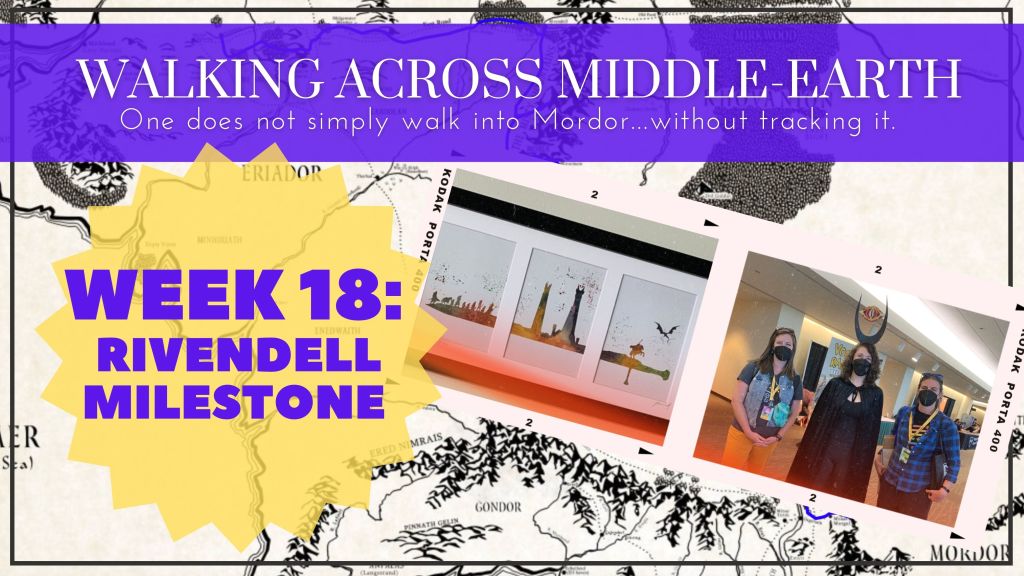
    This post is a little late. I got to Rivendell in mid-August, just in time to daydream about how I could incorporate Emerald City Comic Con into my celebration. Rachel had reached Rivendell in early July (she flies!) and we spent the majority of our ECCC experience wandering the Exhibitors and Artists Alley for the perfect LotR merch.

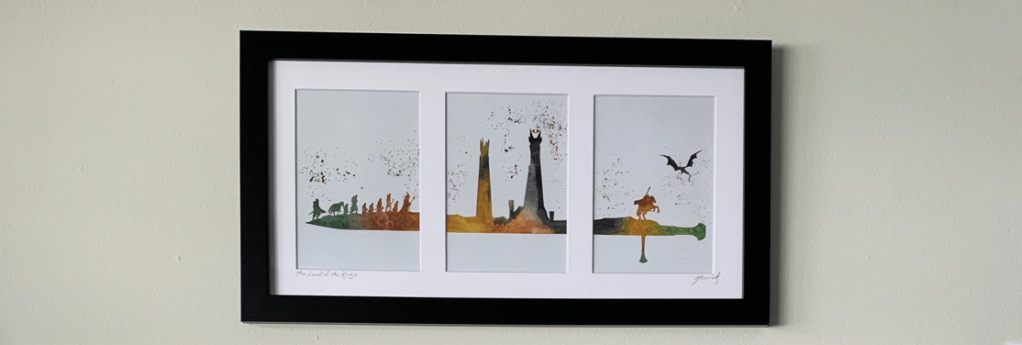
    There were a lot of great options, and I ended up choosing a watercolour triptych with scenes from each movie in the trilogy balanced on a sword. Rachel got a bottle opener shaped like the shards of Narsil. Why the sword theme? Well, it’s in Rivendell that Bilbo gives Sting to Frodo, and in the books, Aragorn leaves the elven city equipped with Narsil’s shards reforged. Initially, Rachel wanted to get an actual sword, but ECCC only sold foam swords (probably smart), and in the end a real sword felt more like an End of the Journey reward.

    We also ran into the Eye of Sauron at ECCC. We saw her from afar twice, and when we passed near her a third time, we knew we had to ask for a photo. As we thanked her and turned away, she said, “I have something for you,” and handed us each a plastic gold ring. “Don’t worry if you experience any side effects.”

    AMAZING.

    Tricia’s Tracker

    Rachel’s Tracker


    Join the Fellowship

    If you want to join our Fellowship, let me know by emailing roarcatreads@gmail.com and I’ll add you to our What’s App group. It’s never too late to join in – we want there to be walkers at every stage of the journey!

    Tag your social media photos and stories with

    #rcrhobbitjourney!

  • The Lesbiana’s Guide to Catholic School by Sonora Reyes

    The Lesbiana’s Guide to Catholic School by Sonora Reyes

    Genre | YA Contemporary Fiction
    Page #s | 400
    Publishing Date | May 2022

    Sixteen-year-old Yamilet Flores prefers to be known for her killer eyeliner, not for being one of the only Mexican kids at her new, mostly white, very rich Catholic school. But at least here no one knows she’s gay, and Yami intends to keep it that way.

    After being outed by her crush and ex-best friend before transferring to Slayton Catholic, Yami has new priorities: keep her brother out of trouble, make her mom proud, and, most importantly, don’t fall in love. Granted, she’s never been great at any of those things, but that’s a problem for Future Yami.

    The thing is, it’s hard to fake being straight when Bo, the only openly queer girl at school, is so annoyingly perfect. And smart. And talented. And cute. So cute. Either way, Yami isn’t going to make the same mistake again. If word got back to her mom, she could face a lot worse than rejection. So she’ll have to start asking, WWSGD: What would a straight girl do?

    Told in a captivating voice that is by turns hilarious, vulnerable, and searingly honest, The Lesbiana’s Guide to Catholic School explores the joys and heartaches of living your full truth out loud.

    Goodreads

    The Lesbiana’s Guide to Catholic School hit me with my exact preferred mix of YA lightness and drama. Yami is a teen who’s been burned by coming out to her best friend and has the chance to start over at a new school…only there’s a hot girl who’s out and making it really hard for Yami to pretend to be straight. Silly shenanigans! Yami’s brother is bisexual and dating a boy, and she pretends to date him so their parents won’t find out about either of their sexualities. More silly shenanigans!

    But there are also truly deep themes here of religious trauma, mental illness and self-harm, class comparisons, and a family’s homophobic conditional love. Each is handled seriously and deftly, creating a story that is truly multi-faceted and realistic. There are happy endings, but not A Happy Ending in which everything works out in every way for everyone.

    The romance at the center of the book is very good, but the true marker of a good YA book to me is if there are equally important relationships to the main character. This is definitely the case here, as Yami deals with a former best friend, her beloved brother, her overworked mother, her deported father, her new friends at a new school, and Bo, her new crush. Each relationship shapes Yami and has its own resolution. I loved it!

    Who Do I Recommend This Book To?

    The Lesbiana’s Guide to Catholic School is the YA book to give to your friend who says they’re over YA books.

    Check out our Queer Lil Library for more book recommendations and reviews!