This fall, confront the horror within and without with these horror and/or spooky TTRPGs! Alex V. compiled this list of 22 TTRPGs, most by queer creators or with queer themes. Let us know in the comments which ones you love, and tell us about any that we missed!
Pride month may have concluded, but you know what hasn’t? Our love of queer creators and the TTRPGs that they make! Alex V. and Robyn Choi compiled this list of 18 TTRPGs by queer creators or with queer themes. Let us know in the comments which ones you love, and tell us about any that we missed!
“Under raging storm clouds, the vampire Count Strahd von Zarovich stands silhouetted against the ancient walls of Castle Ravenloft. Rumbling thunder pounds the castle spires. The wind’s howling increases as he turns his gaze down toward the village of Barovia. Far below, yet not beyond his keen eyesight, a party of adventurers has just entered his domain. Strahd’s face forms the barest hint of a smile as his dark plan unfolds. The master of Castle Ravenloft is having guests for dinner. And you are invited.“
Curse of Strand is a D&D 5e horror adventure released in March 2016. This popular adventure is a fun journey with a lot of amazing bonus content and progressive updates to the original material available online.
I DMed Curse of Strahd from September 19, 2020 – October 30, 2022 (yes, we angled to finish on Halloween weekend). This campaign was one of the primary social activities I had during COVID, and during our two years playing together, our group met in person, outside in the park, or online depending upon what was safest at any given point. It was my first time running a campaign, but I had such a fun time combining the original material with bonus content I found online (listed at the end of this blog post).
We started with four players and ended with three, which I think is pretty good for a two-year campaign! Meet the players and their characters:
Tricia (DM). Although I had experience running one-shots, this was my first campaign to manage. I especially loved roleplaying the following NPCs: Strahd, Szoldar (who took on an outsized role in our campaign), and Arabella.
Rachel (Ireena, human). Normally an NPC, Rachel infused Ireena’s character with trickster cleric energy, a passion for small business, and an intense hatred of Strahd.
Frank (Seraphina, half elf). As a Paladin to Athena, Seraphina was a righteous voice for good in a morally complex world.
Nick (Beldhur, elf). Strahd’s not the only one wrestling with a Dark Power, and Beldhur’s inner evil was a game changer in our final session.
Curse of Strahd is an adventure designed to take players through traditional horror tropes like vampires, werewolves, and witches. We took a more “dark fantasy” approach full of quests and high emotions with a side of Buffy the Vampire Slayer-esque humor. The characters found themselves in the locked land of Barovia, ruled over by the vampire lord Strahd von Zarovich. He is obsessed with the local woman Ireena, and the players are tasked with keeping her safe from him and, along the way, saving the world from his evil rule! The playable world is a predefined valley with three main towns and a few dungeons, it has a lot of depth that allows locations to feel different when explored with new information. The small world also allows players to feel the impact of their actions, as decisions made in Vallaki have a spill over effect for other NPCs in other locations.
Although the book is designed to take characters from level 1-10, my players got to level 12 because I included the Fanes additional content (described below), and each time the group reconsecrated a Fane location, they leveled up. Actually, Nick ended up level 14, because I offered him additional power if he pledged himself to his Dark Power. During the final battle when all seemed helpless, he accepted the deal!
What Did I Do Differently?
Ireena was a PC. Making Ireena a playable character rather than an NPC allowed the initial adventure hook to feel impactful throughout the entire adventure. It also raised the emotional impact of revelations regarding Ireena’s surfacing memories as Tatyana, since it was directly related to one of my players rather than an NPC. I highly recommend this change; because Ireena has led a sheltered life in only one town, she doesn’t need to have much pre-knowledge of the world.
If you would like to flesh out Ireena’s backstory and give your player something to base her performance on, Rachel and I created the Tome of Ireena to describe her childhood and pre-story interactions with Strahd.
The Three Fanes. Using Mandy Mod’s bonus content (related below), I added the Three Fanes into Barovian mythology. This gave the history of the world more weight, further vilified Strahd, and gave the players a concrete way to start changing the world by reconsecrating their shrines.
Making the Vistani less problematic. Curse of Strahd is famous for its thoughtless portrayal of the Vistani as thinly veiled Romani, and they’re coded as fairly evil, no less! There are a lot of resources online to guide you in changing this dynamic. I kept the group as ostracized for their historical support of Strahd, but took out the cursing and Gypsy descriptions. I also made their support of Strahd much more understandable and sympathetic, to the point that the group made it their mission to reconcile the Vistani with the other Barovians.
Szoldar became a main character. Szoldar is a wolf hunter in Vallaki with a throwaway description in the original adventure. There is always one NPC in caampaigns like these that capture the players’ attention, and Szoldar was that NPC! Rachel’s Ireena fell in love with him, and they even got engaged in an epic one-shot that Rachel DMed to elaborately propose.
No Argynvostholt or Dinner at Ravenloft. My players were suspicious of Strahd from the beginning, so they never accepted his multiple invitations to dinner (this may be a consequence of having Ireena as a PC). This meant that when they stormed Ravenloft in the finale, they had never been there before; luckily, they found the castle blueprints in the Amber Temple and could therefore make a plan of attack.
They also never got around to visiting Argynvostholt, which is too bad! I kept reminding them of its existence, but they chose other adventures that wound up leading to Strahd’s increasing wrath, and eventually it became clear that they needed to kill him or risk all of Barovia being wiped out. I think the Argynvostholt dungeon could still work as a post-finale mini adventure if the group wants to get back together to finish clearing out the valley’s last dark spots.
Additional Resources
Mandy Mod’s Fleshing Out Curse of Strahd (free). This is the material I used as religiously as the actual adventure book. Mandy Mod has created an immense “Fleshing Out Curse of Strand” chapters on Reddit that adds NPC personalities and motivations as well as large scale changes such as the addition of the Fanes into the world of Barovia. 100% recommend this should be treated as essential.
The Interactive Tome of Strand ($14.99). The Tome of Strand is an item in the original book that offers one page of information; this bonus content revolutionizes the item into a book that PCs can enter and live through 14 of Strahd’s memories that really opens up his character and the world.
Countess von Zarovich ($9.99). This 62-page PDF reimagines Strahd as a woman. This isn’t a surface gender swap; the creators explain in depth how Strahd’s female gender would have shaped her upbringing and motivations. I found this too late for my campaign but will definitely use it if I run it again!
Landmarks on the Svalich Road (free). DragnaCarta’s CoS expansions on Reddit are often used in place of, or alongside, Mandy Mod’s content. I didn’t find his style as much to my taste, but I did love this Google Doc that adds a lot more flavor to traveling the main road throughout Barovia.
Visions of the Vestiges ($8.95). One of my favorite parts of CoS is tempting my PCs with Dark Power deals so that they will hopefully unleash one at the Amber Temple and set themselves up as the next Dark Lord of Barovia. This PDF expands on this idea by fleshing out the Vestiges and including artifacts throughout Barovia to bind PCs to their will.
Have you played Curse of Strahd? Leave a comment and tell me about your character and favorite memory!
A slice-of-life legacy tabletop role-playing game about a found family and their magical home.
Created by Mercedes Acosta, Jay Dragon, M Veselak, and Lillie Harris with Possum Creek Games, Yazeba’s Bed & Breakfast was funded on Indiegogo with over $420,000 pledged. You can downloada free Playkit here while you wait for the book to be published!
Mercedes Acosta
Jay Dragon
M Veselak
Lillie Harris
⭐⭐⭐⭐⭐
Rating: 5 out of 5.
The Set Up
Yazeba’s Bed & Breakfast is a legacy RPG with 48 chapters that reveal new worlds, new secrets, and new character depth that can be played in any order with any friends at any time! This is the flexible and fun game that is perfect for the busy nerd who has a hard time coordinating schedules with everyone on a regular basis (*raises hand*).
When the final edition is released, the book will serve as your personal version of the magical B&B, to be written in, covered in stickers, and opened slowly. As the owner of the book, you are the Concierge (think DM, but with way less responsibility). You need to be familiar with the cast as well as the flow of play, but all players can basically start with zero knowledge and jump into the game easily.
Let’s see what works and what doesn’t in Yazeba’s Bed & Breakfast!
Highlights
The chapters. Each chapter of the book serves as a traditional RPG session and generally lasts around 1-2 hours. The chapters each focus on specific characters while leaving room for others to join as desired, and there are bespoke mechanics for each chapter that are rules-lite and easy to catch on to.
The characters. There is a cast of 7 core residents and up to 50 guests that can participate in a session, and they range from robots to witches to sentient bunny warren. Players choose a character for one session, but are encouraged to switch often, with the lovely note that in this way, different players can reveal different aspects of a character’s personality. Each character balances uniqueness with archetypes, and it is easy to find yourself in everyone.
The character sheets. When you begin the game, some chapters and characters are inaccessible; you unlock them by completing characters’ growth journeys, each of which is specific to the character. I especially love Amelie’s sheet; as a robot, you can rewrite her code as she progresses, and when every line has changed, you unlock “Glitch in the System.”
The inclusion. As with Wanderhome, my favorite game from Possum Creek Games, queer themes abound in Yazeba’s Bed & Breakfast. Aside from creating trans characters to play with and focusing on stories about hurting people finding loving community, I think this is also expressed in the soft, inviting language throughout the book and its emphasis on player health and enjoyment over gameplay. For instance, players are explicitly encouraged to use take-backsies if you have a better idea later or don’t like what someone says.
The easy access. The book is designed to open up slowly, which means you don’t have to read the whole thing and memorize loads of rules before starting the game. You could very easily sit down with your friends, open it for the first time, and get through the intro and one session in a comfortable evening.
Challenges
Mark up the book. I’m torn on this one, and I won’t fully know until I use the actual book. I love the idea of marking up character sheets and filling in bookcases with stickers to mark achievements, but also…what if I make a mistake and it is immortalized forever!? I will be strongly tempted to try to print off pages so that the book remains pristine, which absolutely defeats its purpose. Time will tell what path I choose…
Less character creativity. This is an RPG with established characters rather than one in which you can create your own. There is a lot of good to this (see above), but some people are going to miss the freedom to play their own creation.
My friends Jessy, Rachel, and Allonté played “Chapter 5: Another Rainy Day” and “Chapter 10: Wash Cycle” with me to help with this review. Find out what they thought about Yazeba’s Bed & Breakfast below!
Jessy (he/him) says…
“I had a great time playing Yazeba’s. It was a constant delight! The unique rules that each chapter introduces help to underpin the mood and feel for those chapters, both that we played mostly included elements of slapstick chaos as we attempted to keep Hey Kid entertained so they wouldn’t explode or attempted to rush through a mountain of laundry so Sal could get to his show on time. The chapters we played also tied multiple characters into the game, making sure that every chapter has characters that are invested in events. And what characters they are! On top of the central 7 characters who live or work at the B&B, there are 50 additional guests who you can also play. These characters include a group of rabbits who wear outfits, a sentient glob of grim, or, my personal favourite, the evil skeleton who wants to end the world but is rather ineffectual. All the characters have traits called Bingos and Whoopsies that are used for differing effect in each chapter but always reinforce a characters personality and reward the player for embracing those traits. It’s an elegant way to keep aspects of each character consistent even between different players while also giving players room to make each character their own while they play them. I love that the game encourages players to switch between characters for different chapters, giving everyone a chance to play their favourites.
Due to the nature of the test play kit there are some aspects of the game I’m still a bit muddy on, mostly pertaining to its legacy nature. Each character has a track that gets filled up at the end of chapters but we didn’t have much opportunity to see what effects that can have due to the limited nature of our play test. There are also some aspects like collectables that I’m a bit unclear on. My hope is that these mechanics will be a lot of fun, but currently I find them a bit unclear. However, I expect once I have the opportunity to play more chapters and experience more of the legacy mechanics I will enjoy them.
Overall, the game is really great! I had a load of fun playing with my friends and look forward to the full released.”
Rachel (she/her) says…
I had a really great time playing Yazeba’s Bed & Breakfast. Being given a character with just enough guidance in the form of Bingos and Whoopsies was a new experience but very easy to get into.
For the first game, I played Gertrude trying in vain to keep Hey Kid occupied on a rainy day with the help of a weird skeleton and a bored desk clerk. Gertrude is not the kind of character I gravitate towards normally, so I relied on the guidance of the character sheet and soon got the hang of it. I came out feeling like I knew Gertrude a little better by the end.
The second session I played The Bunnies in the Garden Who Wear Little Outfits; yes, that is their full name. They were super fun to play, making a new warren in the over-flowing laundry room that the other players were trying to tidy up. They are the vessel for any voice/accent you have wanted to try out as they have so many voices, and for me at least one or two of the bunnies stood out as favorites. The sheet for these guys has a little less on it but that lends to so much room for creativity, I love them.
Allonté (he/they) says…
Yazeba’s Bed & Breakfast (YBB) is another great creation from Possum Creek Games. Not only does it have a great cast of diverse characters, it also offers plenty of (re)playability in its almost choose-your-own-adventure style of scenes. YBB is super easy to begin and requires very little prep. It feels like the perfect game to play when everyone wants to relax, has limited time, wants to play something that is DMless, or wants to see the character’s story blossom like a novel but through play. In Wanderhome, the creation I know Possum Creek Games from, the creativity is front-loaded in the place you make at the table, but here in YBB that is more focused to one’s interpretation of the character’s Bingos, Whoopsies, and goal track.
I had the pleasure of playing Sal and Monday. I think I had the most fun with the goal tracks – it is the thing that can carry over from game-to-game and is easily affected by the choice made at the table. Another unique thing this game offers is seeing how other folk interpret characters that have already been played. It was very cool to see how my Sal and Tricia’s Sal felt different and the same; that there is a degree of headcanon that keeps the story of the scenes feel so unique. While Sal feels like some odd multiverse version of my soul, Monday was a lot of fun to play. If you want to play something that is some amalgam of fairy-god-person and/or crossroads demon, give Monday a try!
You may enjoy this game if you are the type of player who:
Needs more structure
Likes to embody a character outline
Likes minimal mechanics
Is an (aspiring) actor
Is secretly a demon child who will literally explode if the inn goes less than 40 mph…or something to that effect.
You may NOT enjoy this if you are the type of player who:
Needs loose structure of goals
Does not enjoy being a character that is somewhat pre-made
Needs conflict that is outside the group/party
Is an (aspiring) director
Is a slime princess turned into a tall humanoid by a pact made with a glittering entity all in the name of the quest to do the umpteenth load of laundry so that they won’t get cursed, kicked out, be forced to walk the long winding road to some weird under-colony of Too Many Rabbits where they must make a new life as a side-show alien…or something to that effect.
If you want to try Yazeba’s Bed & Breakfast, you can download the Ashcan PDF here.
Their Indigogo campaign raised over $420,000 in March 2022.
Follow Possum Creek Games to stay up to date on the game’s official release!
Want more creative TTRPGs? Check out Common Sense and Sensibility, a game designed by Rachel and Tricia of Roar Cat Reads!
Common Sense and Sensibility: A Regency Lady TTRPG
“It is exceedingly well known that the life of a lady is far from easy. Death raises its grisly visage at every turn: whether from shawl insufficiency or too many novels, a Regency-era lady can never be too cautious.”
In Roar Cat Reads’ original TTRPG character funnel, Regency ladies will test their delicate mettle and try to stay alive. This handbook lays out the game’s core rules, character creation instructions, and a list of the surprisingly mundane events that can test a lady’s constitution.
Wanderhome is a pastoral fantasy role-playing game about traveling animal-folk, the world they inhabit, and the way the seasons change. It is a game filled with grassy fields, mossy shrines, herds of chubby bumblebees, opossums in sundresses, salamanders with suspenders, starry night skies, and the most beautiful sunsets you can imagine. (Possum Creek Games)
Created by Jay Dragon, Wanderhome was a hugely successful Kickstarter campaign, raising over $300,000. It has since won Polygon’s Best Indie Tabletop Games of 2021 and is available for digital or physical purchase here.
⭐⭐⭐⭐⭐
Rating: 5 out of 5.
The Set Up
Wanderhome is the TTRPG for anyone who wishes D&D had less combat and more animal handling checks. In our Roar Cat Reads’ Discord, those people were easy to find! We each prepared by reading through the book, which is full of gorgeous artwork, and then six of us met online to try the game for the first time.
It was, dare I say, magical. I have never played a game that included so many people saying, “Awww!” on repeat, and meaning it sincerely every time. For two and half hours, we created characters, settings, and storylines as a group. As an overworked DM, I found this collaborative element hugely enjoyable. The system provides just enough structure to guide creation and keep things moving while allowing an enormous amount of creativity. We spent nearly an hour creating our characters, choosing from 15 different playbooks that are full of delightful flavor that creates a much more nuanced character than traditional systems like D&D. When we had finished, we unanimously agreed that we could happily sit around creating characters for hours, and that this would be entirely satisfying.
We did move on, however, to creating our first destination. Wanderhome‘s conceit is that your group of travelers arrives at a new destination every session. When played as a GM-less game, this means you can use roll tables and prompts to create the next location as a group. We wound up creating a monastery that overlooked a lake of spirit koi where big cats wove tapestries from whiskers. I never would have created a setting that fun on my own!
I was most nervous about actually playing the game. After all, how does anything happen if there is no established plot? What do we do if there isn’t someone pulling the strings? I was delightfully surprised to find that we created a fun little scene together that had actual emotional impact. Granted, there were a couple little-too-long moments when we described how we entered the monastery and didn’t quite know what was happening. But those small, purposeless moments feel different in Wanderhome. This is a game that comes to life in the pauses, when you can develop your character by putting your bumblebees to bed or build relationships by asking the squirrel to haul the aged owl onto the roof. It was on that roof that we noticed a spirit ship approaching, and after fifteen minutes of creative role play that culminated with a beach party, we took a contented sigh and realized we had reached the end of our day’s journey.
Highlights
My absolute favorite part was the end of character creation when you ask a pre-written relational question of the characters on your right and left. They were surprisingly deep and truly effective at establishing quick bonds among the party.
When everyone is the GM, everyone gets to play the NPCs (“kith” in Wanderhome), which allows for even more diversity and creativity.
The vibes! This is a game feels slow, purposeful, and cozy. You could probably include drama and intense action, but I think you would lose some of the magic. Wanderhome is a celebration of the mundane in the absolute best possible way.
Challenges
You need the right group for this with at least a couple very creative people, as the story will only be as good as you make it.
Conversely, you also need to make sure your group’s more vocal participants don’t take up the spotlight and prevent the quieter, slower creatives from contributing.
Most importantly, make sure your group enters this game with a yes/and mentality! Anything is possible, so say yes to the idea you don’t particularly like, see where it goes, and build on it!
Other Players’ Reviews!
Chad (he/him)
Wanderhome harkens back to the days of my childhood when roleplaying was just some friends sitting in a circle or going over MSN Messenger and making stuff up, but with just enough of a world and guidelines to keep anyone from being put on the spot or having to spend hours planning. It’s almost more of a collaborative story-building event than it is a roleplaying game, though I mean that as the highest of compliments and not to diminish it’s place as a roleplaying game.
We played roles. We played multiple roles. I was the Owl Teacher I came with, the Hillock we came to along the way, and the misunderstood Warthog Captain of a lake-faring vessel that formed the ‘conflict’ of the session. I say conflict in that the stakes were never much higher than ‘how fun and interesting can we make this’ as opposed to life or death. Wanderhome is painting pictures with words, creating personalities for everything, and being inventive with friends – both old and new. A welcome departure from the typical and a leap into the fantastical.
Jessy (he/him)
Playing Wanderhome for the first time was a thoroughly enjoyable experience. It’s very fun! And that fun doesn’t come just from going on adventures as woodland creatures, though that certainly is a lot of fun. For me a big part of the fun was making our characters and location together. This was the only time I’ve played a game where I would have been excited to just keep making characters with everyone.
The mechanics elegantly facilitate bouncing ideas off of your fellow players while still moving at a brisk pace for those who may want to rush into adventure. Cooperatively creating a location like it is a character of its own was exciting and getting to use the locations’ actions to form a narrative works smoothly once you get the hang of it. After all that creation, playing the characters and locations we built was an absolute blast. I would recommend it to anyone.
Have you played Wanderhome? Tell us what you thought!
Common Sense and Sensibility: A Regency Lady TTRPG
“It is exceedingly well known that the life of a lady is far from easy. Death raises its grisly visage at every turn: whether from shawl insufficiency or too many novels, a Regency-era lady can never be too cautious.”
In Roar Cat Reads’ original TTRPG character funnel, Regency ladies will test their delicate mettle and try to stay alive. This handbook lays out the game’s core rules, character creation instructions, and a list of the surprisingly mundane events that can test a lady’s constitution.
This week Roar Cat answers a question by a Dungeons and Dragons player who wants to GM but is intimidated by all the rules. Roar Cat offers advice on how to jump into GMing in the midst of learning the rules.
Dear Roar Cat,
I want to GM, but there are SO MANY rules in D&D, and if I’m honest, they really intimidate me. How closely do I need to stick to the rules, or can I just tell a fun story and make things up as I go?
Sincerely,
Overwhelmed by Rulebooks
Dear Overwhelmed by Rulebooks,
You are not the only person who has looked at the 320-page Player’s Handbook and 320-page Dungeon Master’s Guide with fear and trembling. The rules are there for a reason; after all, without them there would be no game! However, that doesn’t mean they are all equally important. When you are GMing, we recommend that you start with a knowledge of core rules and build from there as you play the game. Get a good sense of the following as a foundation:
How to Build a Character
Basic Combat Rules
Ability Checks
Here at Roar Cat Reads, we also believe that the rules of D&D are flexible, meant to be read as guidelines to foster ideas and create game cohesion. When you are creating a game, take the rules that work for you and leave others behind. If you later realize that some of those rules that you ignored would have been useful, that’s totally okay! Use them in your next session. Many of us want our D&D sessions to be perfectly smooth from the jump, but the reality is often messy. A key GM trait is the flexibility to react to new information – both from players in-game and from your expanding knowledge.
While you learn the rules and adapt them to your group’s style, keep the following in mind:
Accept corrections with humility and gratitude. You might GM for players who know more of the rules than you do. This can be uncomfortable, but keep in mind that D&D is a collaborative game. Any information shared at the table is useful for everyone, and it doesn’t all have to come from you as the GM.
If you’ve homebrewed a rule (accidentally or on purpose) and someone corrects you, make the decision as to whether you’re going to go with the established rulebook or homebrew as a group. While you have the final call as the GM, asking for a vote can keep players feeling like they have a voice at the table.
Similarly, if you get into a situation where a rule is not obvious or doesn’t exist, try to avoid breaking out of the story to spend several minutes Googling the scenario. Instead, let your players know that you are making your best call. Then note the question, look it up after the session, and let players know how that scenario will be played out in the future.
Explain your thought process as much as possible to your players, balancing the impact upon the session (“If I let this player do this thing, is it going to derail the story so completely that I won’t be able to recover?”) with the rule of cool.
Have confidence in your decision!
D&D is fundamentally a game about creativity, and that includes rules. Do your best to learn, but in the end, all that matters is that you and your players are having fun. I recently ran a game where a player wanted to be a wood elf the size of a sprite. Instead of saying no or checking how this request would affect weapon attacks, I simply agreed and let the chaos roll. Everyone had a good time, which is what ultimately matters.
I’ve loved video games ever since I was in elementary school, offering suggestions to my older brother about how to combine items as we worked together to beat King’s Quest V. At the time, I didn’t realize that video games were primarily aimed at telling cishet white male stories for cishet white men because honestly…everything I liked was designed that way (the joys and struggles of being a female Tolkien fan). Sometimes I was lucky enough to play a game with a female protagonist like King’s Quest VII or Final Fantasy XIII, but those were rare. Even rarer? Queer characters.
That’s not to say that video game fandoms weren’t queer. On the contrary! I was reading Cloud/Sephiroth fanfic at a very young age, and don’t get me started on how obsessed Seifer is with Squall (oh wait, I did that in my recentplaythrough). But these queer relationships weren’t affirmed in canon – they were something that you had to find in private, in the secret, shameful parts of the Internet.
Today, queer people can choose to see themselves represented in games like The Sims (which let you move in with someone of the same sex and adopt a child together in 2000), Dragon Age, and Assassin’s Creed. In fact, if you are playing Cassandra from Assassin’s Creed: Odyssey as a straight woman, I must ask you to explain yourself. I love romancing literally everyone in the Dragon Age series and Inquisition casually includes a trans NPC. If you’re anything like me, your queer corner of the Internet might lead you to believe that we are in a rainbow era of overwhelming queerness in our video games, because everyone you see chooses to make these games hella queer. Unfortunately, this is not mainstream, since many of these games are only as queer as you make them.
Dragon Age attempts to solve this problem by forcing some characters to be unambiguously queer. Krem is always going to tell you how he joined the Chargers after the prejudiced world of Tevinter refused to let him live as a man. Dorian will never romance you if you’re a woman, and his homosexuality is a key piece of his character arc. I know some people find this frustrating, but I admire it. When you can romance everyone, it allows for people to play through a game with nary a queer character in sight.
What I find myself really craving, though, are gloriously queer games that are made to blast rainbows in your face. We had Dream Daddies, of course, a dating sim that presents you, a dad with a teenager, with a neighborhood full of dads to date. And I’ve got my eye on Boyfriend Dungeon, a phenomenally ridiculous dating sim about dating your weapons, who are also queer people. Listen, I don’t really understand it yet, but I’m into it. I would also be remiss if I didn’t mention Hades, though I have to say that after 20+ hours of playtime, it is far less queer than I was promised (I want to ship Zagreus / Thanatos, but he rarely shows up!).
It is undeniably a better time to play video games as a queer person than ever before, but I want more! The queerest games out there are dating sims. That’s fun, but where are queer adventurers? Where is my queer Final Fantasy relationship? (FF7: Remake offered some amazingly flirty Tifa/Aeris interactions, but they belong in the world of queerbaiting rather than actual queer content.) I would love to see a classic RPG with queer love as an integral part of the story.
Perhaps something like that already exists. I’d love to have missed something spectacular! Is there a super queer, super amazing video game that can eat up my free time?
If you know of one, please leave a comment and let me know!
For the first time ever, I tried to acquire all the GFs during this break before the finale, and I mostly succeeded! I leveled up on the Island Closest to Hell (Squall to 100, Rinoa and Quistis to upper 80s), then crashed through finding and acquiring Tonberry, Odin, Doomtrain, Bahamut, and Cactuar. The one that I didn’t manage to get (until drawing it from a boss in Ultimecia’s Castle) was Eden. I spent over an hour making my way through the descending levels of the Underwater Research Lab to fight Ultima Weapon. I drew Eden…and then died. It was so infuriating that I refused to try again.
Lunatic Pandora
It had been awhile since I had interacted with the plot by the time I rammed into Lunatic Pandora, so I was SO HAPPY to see Raijin and Fujin, even though they were demanding that I hand over Rinoa.
When Squall refuses to do so, Rinoa does a little happy dance in the back, and it is so cute.
Biggs and Wedge are canonically gay (say I!) They quit their jobs and say, “Let’s go home and have a drink.” I love this for them.
When we finally find Seifer, he’s holding Ellone hostage with the help of Raijin and Fujin. But his buddies have had enough! Their storyline is really fulfilling; watching them grow from mindless cronies to doubting his path to rejecting it. Fujin even speaks in full sentences for the first time, which opens up SO MANY questions about why she was screaming single words for most of her life.
“You’re being manipulated. You’ve lost yourself and your dream. You’re just eating out of someone’s hand. We want the old you back.”
Seifer is the most teenager-y of everyone, insisting he’s a revolutionary. It’s sad to see him at this point as he desperately insists, “I don’t wanna stop. I’m gonna keep running!”
The boss fight with Seifer was incredibly confusing to me. Odin appeared, but Seifer cut the GF in half. This was alarming! But Odin’s sword flew into the sky and was caught by another being, who later appeared and said, “You gave me the fourth one. Dodge this,” and attacked Seifer. I looked this up later and found out it was Gilgamesh, apparently popping over from FFV. All of that is very cool, but SO RANDOM and mostly unexplained.
After being defeated, Seifer leaps to his feet very strangely, and yells, “It’s not over yet, Squall!!!” Yes, with three exclamation points. The boy is dramatic. He kidnaps Rinoa, which causes me stress because all of my other characters are horrifically under-leveled.
Seifer takes Rinoa to Adel, and this whole scene broke my heart. She insists this isn’t like him, and when he continues, she says, “Seifer. No more….please?” OUCH. They used to date!
Seifer almost gives in to Rinoa’s plea, but Squall shows up, and Seifer can’t not perform for Squall. Adel takes Rinoa and…grafts her onto her torso?? It’s incredibly creepy looking.
After defeating Adel, Laguna and Ellone appear. She magicks Rinoa back to her non-sorceress-controlled self, and at this point I just don’t understand the scope of Ellone’s powers at all.
“Time compression is about to begin. ‘Love, friendship and courage.’ Show em what you got!”
Time Compression
This whole series of scenes is done VERY well. The group falls through a sky of memory bubbles into an ocean into a sunset into a space tunnel. It is all very cool and vaguely creepy. They wind up in the Commencement Room where Rinoa once confronted Edea (remember the good old days when the plot made sense!?), and when you try to save your game, the Save Point multiples. This more than anything gave me the willies. There was something about a game mechanic being brought into the plot of the game and twisted that hit me hardest in the “ooo, this is all wrong!” feels.
The group is thrown into a series of fights against generic “Sorceresses.” The fight itself isn’t important. What is cool is that with each defeated sorceress, the scenery changes. We get to relive old locations in a nice sign off as we head into the finale.
At the end of the battle montage, the group winds up at the orphanage. It seemed very much like Rinoa was not with them, which makes sense because she was scared of being left behind, but she reappears in a later scene with no explanation. Okay.
I don’t know what’s going on. But since we’re still here, I think we still have some time to finish our job.”
Ultimecia’s Castle
Full disclosure: I did not even attempt to figure out how to get through Ultimecia’s Castle on my own. I used a walkthrough; I hate wandering through places like this and having to backtrack a million times!
Being so leveled up meant that most of the boss fights at the end were not a problem. Getting Squall’s best sword with the Lion Heart limit break was also a game changer – it’s SO powerful.
The castle itself is really cool looking, and I can’t help wondering why Ultimecia went to so much trouble to design/take over such a cool space only to want to collapse all of time and space. You clearly have an appreciation for the finer things – go out and experience more of them!
Ultimecia herself speaks with Ks instead of Cs, like, “Kurse all SeeDs!” Is it to imply a vaguely Russian accent?
It took me three times to defeat Ultimecia/Griever, and when it was done, time went wonky and Squall is thrown back into his past. It’s a nice moment to acknowledge his character arc, with Baby Squall thinking he’s alone and Adult Squall insisting he isn’t.
BUT it seems as though he IS alone, wandering through a space desert until he collapses on a space island. A feather appears, and it’s Rinoa! But he can’t hold on to her memory in one of the most genuinely emotional and distressing cut scenes of the whole game. Of course, Rinoa does end up finding Squall, and she cries over him while the song that her mom wrote about his dad is playing. This is kind of weird, but I chose to see it as a hopeful message about generational experiences.
Where did everyone end up?
Seifer is fishing, which is very weird! But he’s with Raijin and Fujin, and he’s still an asshole, so I guess it checks out.
Laguna visits Raine’s tombstone and flashes back to the moment when he gave her an engagement ring before revealing his own. It is HELLA romantic and sad. This game is the most romantic Final Fantasy game, prove me wrong!
Over the credits, we get a home video recording of Selphie filming Irvine and Quistis at a school dance/celebration. Cid is there with Edea, wearing her clothes from 15 years ago for some reason. Selphie takes Irvine’s hat in the cutest teenager move of the game. Zell is eating hot dogs like an absolute maniac, shoving them in this mouth to the point of choking…c’mon dude. Get a new gimmick!
Angelo runs by, and we see Rinoa on the balcony, pointing at the sky in the same pose as the dance where she first meets Squall. But he doesn’t seem to be here as the credits take over, and I literally yelled, “WHERE THE HELL IS SQUALL?” fearful of his having been lost to time. But no, this actually is a romantic game, and we get one last cut scene of Squall on the balcony with Rinoa as she once again points toward the sky.
Hello! I’m Haley Boros, my pronouns are she/her, and I’m an award winning graphic designer, illustrator, and published cartoonist. Outside of my career in the label printing and flexible packaging industry, my creative practice focuses on whimsy and fantastical creatures – think dogs doing fantasy jobs! I’ve contributed to several comic and art anthologies since 2017, most of which can be found on my website at haleyboros.com. You can also become a patron of mine at patreon.com/hihaleyboros, or follow along at @hihaleyboros on twitter and instagram!
How did you begin playing/DMing D&D? What is your favorite aspect of the game?
My first experience playing in a roleplaying game like D&D was when I was in high school and hanging out at the local game shop (Bastion Games). Chad Charest and I grew up together and we would go there on Wednesdays to hang out. We were invited to play in the attic of the store and, while that campaign didn’t last for me, I went on to play in many different groups over the years.
During my time playing tabletop games, I’ve been a player more than a DM. I have had the opportunity to run three one shot campaigns, two of which were modules and one was written by myself! That one was particularly wonderful: picture a cozy comic convention on the east coast of the US, in Bethesda, Maryland – and in a hotel room, 4 cartoonists got together to storm a library as their respective characters. Dust mephits! Lots of flying books! It was quite the adventure I planned (with help from my husband Jessy, of course!).
I’d have to say the best part about playing is getting to know my characters and their backstories. I feel like I’ve always created fun characters, most with interesting parts about themselves (I’m partial to skin and eye pigment distinguishing features like heterochromia and vitiligo)!
As a bisexual woman, have roleplaying games helped you explore or express your queer identity?
Unfortunately, I can’t say that playing roleplay games has! I’m a late queero, coming out after I married my husband in 2016, but knowing who I’ve been my whole life and kind of affirming it, I haven’t seen a shift in exploration of who I am through roleplaying games…yet! I’ve played with a few of my friends that have introduced a whole spectrum of sex and gender identities, but I’m itching for more!
You have contributed as a cartoonist and illustrator to several projects, including Faerie Fire, a 5e supplemental Anthology and Welcome to Mina’s: A Diner Comic Anthology. You are currently promoting Fantastic Frights, a comic anthology coming to Kickstarter in October 2021. How do you decide what projects you would like to participate in?
Great question! With so many things in my creative career, I’m drawn to projects that I could really see my skills lending well to. With those specific projects – I reached out to Shan Campbell, the editor of Astrolago Press and publisher of Faerie Fire, to see if they needed more artists since their stretch goals kept climbing and climbing on the kickstarter.
With Cloudscape comics, I’ve always wanted to be involved with this local society! I met a few of the collective back in 2012 at the very first VanCAF and have been following their projects ever since. Welcome to Mina’s is the first comic I’ve contributed to Cloudscape, creating the art to Dino Caruso’s lovely story about two women that fall in love over the years, connected by the warmth and atmosphere that is Mina’s diner. I’m drawn to stories with heart at their core. With Mina’s, it’s the shared love between two strangers turned friends turned partners throughout the decades. Ultimately, I leave a lot of my projects up to the decisions of editors, as many anthology projects are submission based, and their decisions are what fills my plate with projects. I just love creating stories with other people and I don’t think I’ll ever stop.
Can you tell us a little about Fantastic Frights as a whole as well as what you contributed to the anthology?
For sure! Fantastic Frights is an all-ages fantasy/horror comics anthology that will feature stories in order by least to most spooky. I’ve been told it’s a modern day love letter to those pulp horror stories of the 90s and early 2000s – but with a fantasy twist! When it comes to fantasy and horror comics, those two genres blended together have become one of my favourites.
My story is with Amy Chase, whom I’ve worked with on a couple other past comics projects (see: They Have Issues: Tales from comic book stores), and it’s about a little girl that has a plush canada goose that watches over her as she sleeps. Only, at night, our good knight goose comes to life to fend off unsightly dust bunnies and other bumps in the night. I imagine this story to be at the very beginning of the anthology, although the editors haven’t said where it will be – but given the subject matter, if it’s right at the beginning, I bet it will give this anthology a really great opener.
I have seen you selling pet portraits on Twitter – they are so cute! How did this start, and how do you capture the spirit of someone’s pet?
Thank you! I’ve been doing commissions for quite some time, but my pet portraits started at the first VanCAF I exhibited at, in 2017. It was also my first year on the board for VanCAF too, and I was excited to show off my work. It really just took off from there. Often when I’m in artist alley’s at comic conventions, I’ll offer pet portraits for a base price and scale up from there based on size, colour, that sort of thing. When I’m drawing a pet, I like to focus on areas that draw me in and I also ask the client what is one word to describe their pet. Like a little bit of tuft fur that always seems to stick up in that specific way, an ear that flops back, or even a sassy pose!
What makes my portraits stand out is that I like to mix them up with D&D classes too. You might get a roguish lizard or a lovebird that’s a wizard! Once I show the client the finished portrait and I get to see the look on their face seeing their loved one – especially if the portrait is for a pet that’s passed on…just pure happiness on their faces. I love it.
What art prompt challenges can we expect to see you participate in in the coming months?
Well, this month I’ve combined Doggust (August) and Swordtember (September) prompts! I don’t have a completed title for the series yet, I’ve been calling it Dogs with Swords (very original), but if anyone comes up with a better one, I’ll give you a copy of the completed, printed collection, on me! I may do a third volume of Three-Legged Tales in October? I have yet to decide and in typical me fashion, I leave my decisions down to the last few days before the month’s challenge starts.
Other than D&D or comics, what nerdy interests are you most excited about right now?
Two come to mind immediately: Astronomy and Video games! I’ve always said that if I wasn’t an artist, I would probably be a scientist studying astrophysics. There is always some amazing news coming out of the field of Astronomy and I just love doing science research. In regards to video games, I have my own Nintendo Switch that I pour hours of play into. Games like Animal Crossing, Cozy Grove, Spiritfarer, Zelda: Breath of the Wild, Pokemon – all of the great chill or open world RPGs. And yes, I do have the limited edition Animal Crossing switch, ha!
Do you have any recommendations of queer nerdy content that you would like people to know about?
Oh you bet I do! I’m currently reading Tillie Walden’s On A Sunbeam, a queer space graphic novel set in a world with mystical space creatures and there are even some fun little LARPing happening in panels too. It’s been on my to-read list for awhile and I’m just adoring it. Also set in space is Becky Chamber’s A Long Way To A Small Angry Planet, another sci fi story that has queer characters and just lovely character building. I wish I could say I’ve been watching more TV and movies than I am, but Jessy and I LOVE watching The Circle (a new season just dropped) and that show is one great human experiment, mixing different identities, politics, gender, all sorts of human interactions – without ever seeing the person on the other side of the screen. It’s just so fun.
Thank you again for having me as part of Roar Cat Reads!
Milo Applejohn (he/him, they/them) is a Métis graphic medicine and fiction illustrator. He is the author of graphic novel Fox on the Table: Broken Sun and novella Fox on the Table: The Princess and the Plague King, and he was most recently a story contributor to the North American Indigenous storytelling novel Cautionary Fables, now on Kickstarter. You can follow him on Twitter @bonmotmilo.
Milo, how did you get into playing D&D and when did it hook your interest?
I started playing in 2007 when I was invited to join a party. I thought it would be an actual party, but when I arrived, I realized it was a D&D party. I stayed anyway and played; I actually met my husband there! I had always been a nerd, but initially I wasn’t very interested in the game. That first group was very rules based, and I was pretty checked out. When the group fell apart, I didn’t play for a long time.
After I had my first baby, I really needed human interaction. My husband and I were friends with another pair of couples who had kids. We were this great mom/dad/nonbinary parenting group, and we all started playing D&D together at parent-convenient times. Unfortunately, that group dissolved when one of the couples divorced, but I joined other groups because by then, I was much more into the game. Most recently, I’ve been playing for a couple years with Jessy and Haley Boros and others.
It wasn’t until I tried DMing that I was really hooked. That’s when I could see D&D from a narrative experience rather than a mechanical experience. I introduced romance into the games, which was really fun and gave us opportunities to learn consent and boundaries.
I have had such great friends in my D&D groups, and what I love most about it all is giving my DMing to my friends. I’m a creative, academic person, and I can create a story and experience as a gift to the people I really care about.
Have roleplaying games helped you explore or express your queer identity?
I wish they had! Honestly, I’ve been struggling to play characters since coming out. I usually play masculine female characters, and I spent so long building my identity around female characters that I don’t know how to move forward. I will often play elves because they’re androgynous. There’s this idea in D&D that you should be playing an idealized version of yourself, like, “This is the man I ought to be.” But I don’t know who that is, and I always feel like I have to fight to present as masculine. I do want to play a trans character someday, but I feel like they would become a Mary Sue.
Getting deeply involved in a character feels too weird and personal right now, so I prefer to DM. That way I can play a lot of different characters, which feels more comfortable. It also lets me feel like I’m creating for others rather than for myself.
The most important thing D&D has helped me with was giving me a supportive community. When I came out two years ago, I lost the people who raised me to transphobia, which I wasn’t expecting. But my D&D community was right there, so happy for me, celebrating me. A little while before that, I was diagnosed with autism, and again, my group accepted me. That’s why I love creating things for them, whether that’s campaigns, graphic novels, or character drawings.
What kind of stories do you like to tell when you’re DMing?
I like to create stories that are in the grey space. There is so much there to be explored. I think D&D and tarot have a lot in common: I think of tarot as a psychological tool that shows you what you’re looking for. D&D can do the same thing.
I’ve always been a fan of complicating D&D stereotypes – give me a Drow charity worker! My villains aren’t evil, and my good guys aren’t perfect. In my stories, I always want my players to get past the automatic knee-jerk reaction of killing the character who betrays them. I’ve tried to lead them in that direction by dropping backstory about someone that they killed that leaves them thinking, “Oh, they were cool as heck!” Hopefully that makes them stop and think before killing the next NPC.
It’s not always easy telling stories in the grey space. We played a year long campaign where it began with your traditional behind the scenes quest giver, but because of the way this character was read in a setting where we were asking these questions about intent, the party ultimately changed sides! I hadn’t planned it this way, and it was fascinating to see the traditional ‘mysterious quest giver’ archetype processed through this lens where in the end, they found him manipulative.
What makes a D&D table feel safe to you? How do you create safe spaces for people playing with you?
I always do veils and lines with my players to establish boundaries: Something is a “veil” if it’s okay to happen in the story but not to my character, and a “line” is something they don’t want in the story at all. I also make sure they know that these are changeable at any time, and that we can have open communication. A horror campaign is challenging because it should be uncomfortable, but it shouldn’t negatively influence a person’s mental health.
Other than those boundaries, I think the most important thing is having safe players. I don’t want any gay jokes, no way. No racist comments. In the world we create, I never want someone’s identity to be a problem (“Everyone in this town hates elves”) unless they specifically write it into their character’s backstory.
However, I don’t think that “safe” means “not dangerous.” Danger can be a part of safety. I am definitely willing to explore messy themes with my players; if they have a dark, twisted backstory and we’re both comfortable working with it, we will. I’m not The Great DM Therapist, but there should be space for the uncomfortable, yucky things in D&D. We need that. A lot of female and queer authors write a lot of really messed up stuff because they’ve been denied expressing it for so long. So many people have traumatic histories that they feel they can’t present to the world. If we bring some of that into D&D, maybe people can see that the trauma can be ugly, but that doesn’t mean that you’re ugly.
You have written a graphic novel called Fox on the Table: Broken Sun that became quite a hit. What did you learn from that experience?
I wanted to make something for the first group that I DMed for. I was in a really low place, and this was something I could latch on and escape to. Drawing it for them… their joy gave me joy. I made it for fun, but it was received voraciously; I went to shows and toured the US with it.
At those shows, I got to meet the community. There was a lot of queer trauma there, and people who were drawing that. The indie community is a really safe space for disability and queer people. It’s becoming weaponized, though. These safe spaces started as an escape, but now we’re being confined to those spaces, like we’re not allowed to ask for more. When you leave indie spaces, you’re shocked by how little safety is out there.
I don’t think the answer is to stay in safe spaces, though. They can be addictive and dangerous in their own right. A lot of the time, expectations in queer spaces are unreasonable. People want things to be unproblematic, but that isn’t possible. It’s like rules lawyering real life. Like we talked about before, we have to be more comfortable in the grey space.
Do you have any recommendations of queer nerdy content that you would like people to know about?
RCR Charity Event – I love that you’re supporting Rainbow Refugee. (RCR note: This feels self-serving to include, but we’re grateful for the shoutout!)
Thank you Milo! If anyone would like to check out his biomedical portfolio, look here.
Nate, how long have you been playing D&D? What has your experience in the TTRPG world been like?
It wasn’t that long ago; I got into my first D&D game at the end of August 2017. A close friend of ours (Nate’s partner is Cayla) started a game online. It was a learning curve figure out both Roll20 and the rules of D&D at the same time. In fact, we spent the first two sessions just figuring out our characters and Roll20. I really enjoyed the social aspect of it, but I didn’t really connect with the characters until the DM stepped down. I don’t want the game to go away, so I stepped in to DM – that was Christmas of 2017.
When I started DMing, I spent a month going through the DM’s Guide to learn about the barbarian, rogue, and ranger classes so I could flesh out the game to make my players feel like they were using their characters in a way that was meaningful to them. I think the hardest thing when I started was that at that point, we were running with three players and I was DMPCing. I can separate what my character does from me telling the story, but I’ve found that it’s hard as a DM to play a really fleshed out PC and DM at same time.
My favorite part of DMing is the ridiculous shenanigans that people throw at you. You have an idea of where you think the story might go, but it never happens. The plan never survives the first encounter. Now I am about 95% No Plan when it comes to DMing; I just have story beats that I want to hit to give them lore and get them involved in the world. I lay those out a bit in advance, but how they get there is up to them. Sometimes I will make up encounters for different scenarios, but most of the time I’ll make up encounters on the fly. If players show special interest in a particular aspect of the world, then I’ll plan ahead to give them the lore dump and a scenario for a certain area.
I understand that you have recently come out as bisexual. Have roleplaying games helped you explore or express your queer identity?
I don’t know. Honestly, probably not a whole lot. For a long time, I wasn’t verbally out, but I was never shy about my actions or how I treated my friends or what I said. A lot of people were like, “Yeah, that tracks” when I came out. A lot of the characters that I play are more fluid in what they’re open to. My first character was a bard, but there was no idea that they could have a romantic interest in the world. The character was ostracized from his family and trying to figure out where they fit into the world in general rather than pursuing a romance.
I tend to play females more often in games that give me the opportunity. In video games like Dragon Age, where the option to romance men and women is there, I’ll figure out which character is most interesting to me and I’ll romance them.
Who did you romance in Dragon Age?
I’ve only played Dragon Age: Inquisition, and I romanced Sera. At first, I couldn’t stand her character, but the more characters you add to your party, the more interesting her interactions become. Her character is similar to my D&D characters – pretty chaotic. When I realized that, I thought I’d give it a try to romance her! A lot of it is “What can we do to prank these people all of the time.” She’s not what you stereotypically expect an elf to be, which I like, and she had a fun story. She hides things because she feels like she doesn’t fit in anywhere; her attitude is “If I’m having fun, I don’t have to think about anything else!” Being able to draw that out of her was really satisfying.
You have told me a little about some creative and detailed worlds that you are building for D&D. What interests you most about the worldbuilding process? What part is the hardest?
When I build a world, it’s usually built around an event of some kind. The game that we’re playing now for DMTK, I built in 2018. It all started around a plague… Before that, everything in the Overworld was prosperous. There was peace, technology, and all sorts of things. Then a plague ravaged everything and everyone went underground. In the campaign, all of the players start in the Underdark, where there are huge mountains in a massively cavernous space, including an ocean with multiple coasts. The whole idea was that it’s been 200 years since everyone went Under. I want the characters to figure out what has happened to the Overworld, and will it be safe to go up and check it out?
I have a really hard time with continuity and figuring out what’s going on in the world when the players are doing one thing but there’s stuff happening elsewhere. I always have things going on in the back of my head about what’s going on on the other side of the continent, but I struggle with figuring out how do those move forward when players aren’t interacting with them.
I’ve recently tried to finish campaign 2 of Critical Role – I’m on episode 120. One of the really interesting things I’ve been trying to glean from Matt’s DMing (spoilers) happened when they all ended up back where Sam’s character lived with her husband and kid. The town was ravaged, and they were like “Oh, what happened?” and Matt responded, “If you decided to come back two weeks earlier, you might have been able to stop it.” Whoa!
Once, I had a group that talked their way out of a whole dungeon. The idea was that there was a sleeping dragon under the mountain that had been sleeping long enough that it was covered in rock. The kobolds who worshipped it built a temple around the dragon. My group went to the temple, got some lore, and said, “No, we don’t want to deal with this.” They handed over a bunch of really expensive spell components and magic items to the kobolds in return for the thing they were looking for in the temple. Instead of waking the dragon by taking the stone like I planned, the kobold shaman finished his ritual, absorbed the dragon, and turned into a giant kaiju. But the group just took off in their airship and said “Nope! Goodbye!”
What advice do you have for GMs who want to get better at worldbuilding?
The biggest thing is focus on a city or a place that is important to your world first, then figure out how that place interacts with other things. Think about how cities interact with each other. What does each city look like? Are there specific regions that people live within? Is it all just one area with self-governing cities? Then figure out the land around the cities and how the cities impact the land around them. How does trade work between cities that are more advanced with smaller communities that are less advanced?
What nerdy interests are you most excited about right now?
Up until a month ago, I was playing a lot of FF14, and I feel like I need to get back in, especially because a new expansion in November. I’m part of a ridiculous guild with a bunch of anime nerds that are on all of the time. They do a lot of events, like playing hide and seek every night.
I also really like anime; it’s my weekend guilty pleasure. I’m watching My Hero Academia right now, and one of my favorite shows is Restaurant to Another World. It’s about a Japanese café where every Saturday, a door shows up in the fantasy world side and wizards and dragon folk show up to this regular guy’s restaurant to eat.
Do you have any recommendations of queer nerdy content that you would like people to know about?
Ice Cream Dice – Marc is an absolute gem. He does great work, and has a lot of fun with his unique dice brand. Bonus points: he is Canadian and from Edmonton.
If people are interested in the weird shit people do – Cayla, Halli and I are going hard on The Human Exception podcast. This project has been a lot of fun, and we get into some really weird stuff. In one episode, we talk about Mount Rushmore and how behind Lincoln’s head there is a time capsule with a tunnel and everything. We also cover the weird conspiracy theories that people have about the place. Our second episode might be more interesting to Roar Cat Reads readers – we talk about the origins of the word “homosexual” in the Bible. Eventually, there will be episodes coming about how I was raised, so stay tuned!
Thank you, Nate!
Are you an Adventure Queer? Do you love to play D&D? Email us at roarcatreads@gmail.com to let us know you would like to be interviewed!
“Two star-crossed lovers from feuding noble families have decided to get married. It won’t go smoothly.”
⭐⭐⭐⭐⭐
Rating: 5 out of 5.
A DM’s Perspective
Highlight
This is one of my favorite one-shots to run; it is silly and romantic, which is me in a nutshell. In fact, I have run this adventure four times now! It’s a mark of how good the adventure is that with one page of information, I have had four very different experiences with different groups of people.
The story is simple: A group of characters has been hired to run interference for a wedding between two feuding families. The wedding takes place in the enclosed grounds of a fancy estate and has a schedule that is recognizable to anyone who has been to a wedding before. As the day (and the adventure) progresses, the players must try and thwart various attempts to keep the happy couple apart.
My favorite thing about this adventure is that it allows room for a lot of creativity and social interaction. I find this to be a perfect adventure to run for people new to D&D, since weddings are a familiar setting and they only have to worry about creating a character and some basic skill rolls. It’s also a lot of fun with experienced players. I just played through Feudal Attraction with a group (some of whom wrote their thoughts below) who brought a lot of roleplaying and creative character skills to the event. It was an absolute blast as they prevented kids from throwing eggs, found the lost ring and vows, and exchanged a rigged dowry with the correct chest of gems.
Changes Made
Other than the first time I ran this campaign, I never include the combat at the end (there is a demon in the wine barrels that can break out and cause a fight). All of the other mishaps are more petty than dangerous, so it feels out of sync with the rest of the experience. More than that, I just really like running an adventure that challenges the assumption that all D&D adventures must have a fight to be fun.
The other significant change is in how the wedded couple is decided. Sometimes I let the players decide the race/gender/names of the couple (most recently, a female tabaxi named Bella married a nonbinary dwarf named Chives). If I know the group needs something familiar to latch on to, I will run it as the wedding of Legolas and Gimli. This leads to some excellent comedy (Frodo the cursed ring bearer, Gandalf the “a wizard is never late, nor is he early” missing officiant, and Aragorn as the grieving ex) that works if your players are big LotR nerds.
What I Would Do Differently
One thing I always forget to mention at the beginning of the session is a warning along the lines of “I don’t know what you might find, so it’s best not to wander alone!” The wedding estate is pretty spacious, and players tend to spread out in 1s and 2s at the beginning. They do inevitably start to work together a bit more as the session goes on, and I’ve gotten better at shifting scenes more smoothly, but setting that expectation early might allow for more player interaction from the beginning.
Dungeons and Dragons is not normally a game that is built to reward completely non-combat related conflict. With the level system designed to dole out largely combat related abilities the natural progression is an almost natural shounen anime-like curve… But even in shounen anime sometimes you just need an episode where your characters go to the beach to relax.
Having a number of challenges social and mental this one shot gave a chance for cantrips, racial abilities and skills to shine. Keeping the players at level one was an incredibly savvy move as most of the flavour of a character is intact at the beginning of their arc and there is no backlog of non-combat skills that never see the light of day. It is also my belief that this particular one shot keeps the DM engaged with a lot of topical variability as at the outset we were given the choice to pick the families of the two persons getting married (We chose a Dwarf and Tabaxi) and their officiant was a party member who chose a cult of the apocalypse which stained upwards to colour the entire tale with the vibrant hues of a calico heat death of the universe which still managed to be endearing and romantic somehow.
Every character got a chance to shine and teamwork and colorful NPCs tugged at heartstrings and kept us laughing. After a solid three hours of lighthearted comedy, weird facts about doves/bees and bardic inspiration that seemed to affect the players more than the characters themselves I experienced a roleplaying high of the sort that refreshed me like a long rest. Solid 10/10.
Listen to two players relieve their experiences in character!
Allonté AKA Maester Diehart (Nihilist Cultist Cleric of Peace, Extoller of the Saint Mediggo’s teaching)
This the kind of adventure for those who either thirst for roleplay or perhaps may not know how. From the onset, our wonderful DM/GM asked us, the players, to decide whom shall be wed. I am glad our group was on board for the most unlikely of pairings as well as having the ability to remind each other that in a fantasy world, why cling to convention or norms? In that, it is easier to find the heartbeat of this adventure, giving two who love one another the best day possible.
Now this is an adventure of course, so there will be many obstacles in the way. If you are a completionist like me, you might miss a few things in the pursuit of a mini-quest and that’s….. Great! This is a hallmark of an adventure that you may want to experience again and again to see all the things you missed or to have differing experiences with different characters.
Be forewarned, this is an adventure made without combat. With that knowledge, if you have some murder hobo tendencies, think of the social interactions or obstacles as a form of combat and choose your spells and abilities somewhat wisely. Or just have fun justifying why or how something should work. If you are a GM/DM looking for something to get your experienced roleplayers on a high or getting those without much experience engaged, I would run this adventure! Moreover, this will test your DM/GM skills in switching between scenes. For once, this is a great time to split the party! 12/10 would play again!
Chad AKA Albert Corrian (Half-Elf Bard)
As an experienced and long time player, it was an excellent change of pace to play something that was pure roleplay. There’s more than enough hack and slash to go around so a session with zero combat and all skills and talking was engaging. It’s important to note this was a known element coming in. Had we not been told there would be zero combat, our character choices would likely have been considerably different. I could see a meat-and-potatoes Fighter not having a lot of fun.
Everyone got to do something, and everyone was involved. Playing a Bard, I focused more on my performing than my bevy of Charisma skills as our Warlock officiant had those in spades. I was ready to back him up but he handled everything well and rolled like a champ (once with a bit of help from Bardic Inspiration). I didn’t even have to sling any of the non-combat spells I selected, like Charm Person or Sleep, as ‘oh hell’ buttons. The atmosphere was calm and enjoyable, and we were able to inject some excellent comedy. Everyone left feeling energized and accomplished.
10/10 would recommend running this session as a nice break, especially to try and crack some non-roleplayers out of their shells.
My name is Sean Hagen (he/him), co-host of DMs of Vancouver with Jessy Boros (he/him). I’ve been playing video games almost my entire life, and only somewhat recently got into tabletop RPGs via D&D 5th Edition. Since then I’ve played a whole bunch of games and have plans to play a whole bunch more. You can find me online on Twitter at @seanphagen, Instagram at @seanpatrickhagen, or on my website https://seanhagen.ca !
As one of the hosts of the podcast DMs of Vancouver, you have interviewed a lot of D&D players and DMs. How has your experience of D&D changed as a result of the podcast?
It’s been eye-opening for sure. I think the biggest thing has been realizing that everyone comes to the table for a different reason, and that as a DM you’ve got to be open to that. Some players are there to be social with friends, some are there for story, one of a thousand other reasons, or even a mix of reasons! I think that’s definitely part of the anxiety new DMs feel, wondering how they could possibly run a game that makes all their players happy. What I’ve learned while doing the podcast is that all you can do is be open and honest with your players about what kind of game you want to run, and to ask for honest feedback that you incorporate into your game. There are things you can do ( like running a session zero and using the safety toolkit ) to ensure that everyone is on the same page and having as much of a good time as possible.
Everyone coming to the table with a different set of purposes and experiences is great, because you can run a really fun game that is utterly unique to your table, and that’s mind blowingly awesome to me. Getting to tell an epic story of a group of adventurers facing down death & danger as they go about saving folks sounds like an awesome way to spend time with friends. The downside is that sometimes trying to relate stories of your awesome game to friends or family feels like trying to explain a dream, but that’s a price worth paying, I think!
Also, as a DM I’ve learned that not only is it okay to have parts of the game that excite you more than others, that’s great! For example, the recommended wisdom for new DMs is to start small, maybe only build a town or small province to run a homebrew game in. When building the world for my first homebrew game I went down a rabbit hole of map making and history building. I surfaced after a week with a binder of maps and tables and a calendar with major celestial events to use when running the game. I put, honestly, probably too much work into that binder.
I felt kind of foolish after putting in all that work into building this world, but soon realized that it had an awesome side benefit: I could ad-lib bits of history and art with total confidence, because I had already sketched out so much that I had a whole world inside my head I could draw upon. I ad-libbed all the descriptions for the statues and mosaics in a dwarven tomb because I knew their history and major events (and how dwarves in that world tended to hugely exaggerate their stories, good and bad parts alike). I was able to foreshadow an upcoming plot point as part of a mosaic because I had all that info in my head, waiting to be put to use. I don’t think I’d go that in-depth again in the future, but if I do I know not to worry about it.
We’ve talked to so many DMs with different jobs and experiences and views on D&D – each of their games is going to be unique to that DM. So for any new DMs (or folks thinking of taking the plunge): don’t worry that your game is going to be different from what you’ve seen online or read about; that difference and uniqueness is why your players are going to love YOUR game!
You are a straight man, but you have included many LGBTQ+ people in your podcast and intentionally create safe and welcoming spaces. How did you cultivate this attitude and awareness?
Honestly it’s been on my mind since we started the podcast. In tabletop games, the voices of straight white dudes are kind of predominant. We’re assumed to be the default consumer for tabletop games in most circles. I’d bet that for the majority of people, if you asked them to picture a D&D player they’d probably imagine someone who looks something like me.
If there’s one thing I know from my day job as a programmer it’s this: having a diverse set of folks contributing to the thing you’re making can only make it better. As a straight white dude, I can do all of the reading, come up with checklists, and do my best to make something inclusive – but I’m going to mess up at some point. I’m going to forget something, or not notice something problematic simply because it’s not something I have to deal with as a straight white dude.
I see it all the time in programming; features that should have either never made it to market or been seriously re-worked got released because there were no women, BIPOC, queer, indigenous, or other marginalized voices on the team. There was nobody to point out that this feature would make it easier for an abuser to track someone down, or that feature would make it easier to out someone before they’re ready, and so on.
And the same thing goes for tabletop games. How long has D&D been able to get by with all of the racism baked in simply because they assumed the audience was straight white dudes who didn’t care?
So since we started the podcast, I’ve been doing what I can to educate myself. I keep an eye out for articles about problems like racial coding in D&D to learn about the problematic bits of the hobby and learn how to do better. I’ve also been looking for non-straight, non-white, non-male folks in the tabletop space on Twitter to follow so I can learn from them. I’m also just taking the time to analyze stuff I’m thinking about putting into a game to try and make sure I’m not leaning on problematic tropes.
It’s an ongoing process that requires ongoing work on my part. But it’s worth it! There are so many experiences and viewpoints out there, making the games we play more inclusive will only make them better. Also, there’s more than enough Western fantasy-inspired stuff out there, so getting more diverse folks creating in the tabletop space means more awesome stuff for me to check out. I’ve had more than enough of that in my life.
Give me more of the Afrofuturism from Black Panther. Show me a fantasy world built on the myths and traditions of an Asian culture, written by someone from that culture and not a white dude. Amaze me with a sci-fi world built by folks from South America. What does an urban fantasy game built by someone from India look like? There are so many rich myths and fantastic folklore traditions in the world — time to give them their chance to shine in the spotlight. And we’re starting to see some of that stuff coming out, too. I’ve got my eye on Thirsty Sword Lesbians, because that looks like a super fun game.
What advice do you have for other DMs about how to create safe spaces for queer players at their tables?
Whether you’re trying to make a space fun or safe, it all comes back to one thing: communication. Regardless of what system you’re running, the biggest piece of advice I can give is this: RUN A SESSION ZERO. Your first session should always be a Session Zero, no questions asked. Whether it’s your 500th game of D&D or your first game in a new system, running a session zero has so many benefits.
There’s all the basics of a session zero you’re probably aware of: agreeing on what kind of campaign you’re going to run, what kind of tone, how the party all know each other, and stuff the players would like to achieve ( “I want to earn the trust of a gryphon and learn to ride it!” ). It’s also a chance to go over more mundane stuff, like any house rules for critical successes or failures.
But beyond that, session zero is also where you lay the groundwork for creating a safe space for your players, queer or otherwise.
Lay out all the bits of the safety toolkit, and explain how they’ll be used. Go over stuff like the X card, lines & veils, and decide as a group on what kind of film rating you’re aiming for ( it’s a zany PG-13 adventure with swearing” VS “it’s an R rated horror film with vivid descriptions of body horror” ).
Let players know that if there are topics that should absolutely be avoided that they can say so now or send you an email or text. They don’t need to provide any kind of reason – and don’t ask for one, either. Also, their issue doesn’t have to be related to queerness or otherness. It’s a time for anybody to speak up about stuff you can do to make their experience at your table better.
For example, maybe you’ve got an arachnophobe in your group — so replace the giant spiders with giant snakes. Maybe you’ve got a player with auditory processing issues, so they’d prefer no loud music during battles. Another player might have PTSD from being in a war zone, so you know to try not to make any sudden loud noises without warning them. Anybody might have something that if encountered at the table will lead to a bad experience, and the session zero is your chance to become aware of all of those things so you can avoid them.
You shouldn’t be planning to jump into the campaign during session zero, so you’ve got time to make any tweaks or adjustments.
And yeah, it might take some work, especially if you’re running a module; but it’s worth doing because then you know you’re running a game where everybody at your table is having a fun time. I don’t know about you, but it’s hard to feel good about running a game when someone isn’t having any fun.
And when it comes to running games that deal directly with stuff like racism or sexism, or games where those play a major part? My suggestion is that unless a group of players come to you specifically wanting to play in a game that deals with that kind of stuff, maybe just leave that stuff out entirely.
Okay, so you want to know the best part about doing all this stuff, and doing it right? You don’t have to even know that one or more of your players is queer!
It’s kind of like having someone with undisclosed trauma or PTSD – someone can have something that will trigger them and lead to a real bad time, and it’s pretty easy to avoid those things if you put in literally the tiniest amount of effort.
I think that’s what I find so bizzare about the people who complain about safety tools and running a safe table for everyone. It’s not that much effort, and you get to know you’re running a game that everyone actually is enjoying! I don’t know about you, but I want folks to have a good time when they play at my table. It’d absolutely crush me to find out someone has been spending the last few sessions miserable because of something I said or did without thinking. So to know what stuff to avoid ahead of time means I’m more confident that I’m creating an experience everyone can enjoy.
Because I want to have fun when playing tabletop games, and for me to have fun everyone has to have fun.
Lastly: if you’re a straight white dude and this all sounds annoying, or like a lot of work, or wah wah I’m thin skinned and don’t like new things – either do the work or go back to your cave. I’ll be over here running awesome games with fantastic people and having the time of my life.
In general, what are some of your favorite tips and tricks that you use while DMing, either in the creation stage or while playing?
I think I fall more on the “improv” side of the DM spectrum, so my tips and tricks definitely revolve around prep.
Donjon is indispensable, whether you’re running D&D or not. It’s got generators for all sorts of things, including generating world maps.
Another great system-agnostic tool is RPG Cards. I used this to generate cards for any magic items I was planning to give out, as well as generating a bunch of cards for stuff like potions, scrolls, and whatnot. The Gale Force 9 spell & monster cards are great as well — I’ve got a full set of the base spell cards, which I hand out to my players so they’ve got an easier time referencing their spells than flipping through the Player’s Guide. The only downside is that the Gale Force 9 cards are not exactly cheap. Maybe suggest to your players a deck as a thank you gift after you run a great campaign for them?
Another great tool is RPG Tinker. I use it to generate “captain” NPCs – NPCs that have special abilities so that I can mix up combat a bit. Useful for friendly or enemy NPCs, or if you just need something more than a regular human as the boss of a gang or something.
Lastly, I think something that’s more advice than tip or trick: be aware of when you’re getting burnt out! As a DM, you’re going to have a lot on your plate; not to mention all the stuff from your life away from the table. If you find yourself not looking forward to playing, or find it impossible to get psyched about game night: take some time and examine why you’re feeling that way.
I got burnt out after switching to playing online (which happened before the pandemic, funnily enough). The reason was that due to a quirk of my brain, the maps that I would draw on the battle mat when we were all around the table just weren’t good enough and so I ended up spending hours trying to make maps to use in Roll20. All the extra effort ended up burning me out and I ended the campaign early. They beat the big bad, but rather than having to chase down the lich to find and destroy the phylactery, I just ended the campaign after the boss fight.
Now I know that if I’m going to run a game online it has to be entirely theatre of the mind, otherwise I’ll just get burnt out trying to produce assets for virtual tabletops like Roll20.
So keep an eye on how you’re feeling when you sit down to prep (or if you’re unable to even sit down to do prep!). Your players should be okay with you taking a week or two to recharge so that you can come back to the table full of vim and vigour. And to be frank, if you’re not happy running a game your players aren’t going to have fun playing in it.
I care about you, reader, and want you to enjoy running games; so take care of yourself! It’s important.
What can we expect from DMs of Vancouver in the future?
Good question!
I’m hoping to run a contest or two in the future. I’ve got some goodies from backing Kickstarters at a level where I’d get duplicates, specifically with the idea of giving them away to our listeners.
I’m also hoping that we can continue to showcase non-D&D games. At the start of 2021 we started doing reviews of non-D&D games, and it’s been a blast. I love getting to talk about other systems, and not because I’m bored of D&D. There are so many systems out there that are much better suited to different themes and play styles, so getting to explore those and tell our listeners about them has been a blast. I also have a bad habit of buying rule books before I even know if I’m going to run a game in that system, so I’ve now got an excuse to buy a few more rule books!
We’re also going to continue to do our best to lift up and showcase non-white, non-straight, non-male voices. Whenever I think about this topic, I keep coming back to the Issac Newton quote “If I have seen further it is by standing on the shoulders of Giants”. I think it’s time for white folks (especially white dudes) to realize we’re the giants.
We need to lift up and champion the voices of folks not like ourselves – otherwise the hobby will just stagnate or regress. There’s so many folks out there with awesome ideas. Making the hobby more inclusive doesn’t mean less for us, it means more awesome for everyone! And the more diverse voices who engage with the hobby, the better and stronger our hobby will get.
Thanks so much for giving me some space on your site to blather on! And to you reader, I can’t think of any way to close this out than to do it the same way we close out our episodes of DMs of Vancouver: Hope to see you out there at the gaming table!
Thank you Sean! Everyone should give DMs of Vancouver a listen today.
In July, Rachel wrote a blog post about her creative process in making a One Page Dungeon for the annual contest of the same name. She has finished the dungeon and is back with some final thoughts on the process and end product!
Rachel’s 2021 One Page Dungeon: Medusa’s Prison!
Dungeon complete! Start to finish, I probably spent about 12 hours on this dungeon, and I’m happy with how it turned out. I could have spent more time on it tidying up the maps, title text and background detail but at some point you just have to call it done (and that can be hard).
Looking at my finished dungeon, I could have been a bit more creative with the shape of my maps. They definitely feel like they needed another draft, but they fit with the Greek theme. I liked how I was able to organise the information on the page and bring it together with the architecture. I remember while I was playing Assassin’s Creed: Odyssey I learned that the tympanum (triangular area over the door) is the best place to have a big sculpture that tells a story, so it felt very fitting to have my adventure’s introduction in that spot.
I haven’t run this adventure yet. That would have helped me with the text and finding any plot holes, but I didn’t have time to do this before the contest closed. I will definitely be running it soon though, so join the Roar Cat Reads Discord if you would like to play it with us.
Overall, this was a great experience for me. Having the deadline really helped me pull my finger out and get it done, and it’s always great to have a project to practise drawing skills. I am excited to see the other entries for this year’s contest, and I can’t wait to enter again next year!
Cayla (she/her) is a nerd of every flavor, including western comics, manga, video games and table top with a passion for cosplay, writing, world building and drawing.
Today she is a host, player and producer of multiple TTRPG podcasts and in involved in more games than she can count. You can find her on Twitter @veranox, read her webcomic Blackburn, and listen to The Human Exception podcast, where Nathan, Halli, and Cayla go on wild trips down the rabbit hole that is human history and the Internet.
Cayla, how long have you been playing D&D? What has your experience in the TTRPG world been like?
I started in my early teens, but it wasn’t something that really took over my life until the last five years when we began DM’s Test Kitchen. With the goal to try and play as many different TTRPGs as possible, it has really opened up the TTRPG world! We have met some truly amazing people (like Jessy!) because of this and for the most part my personal interactions have been very positive.
As a pansexual woman, have roleplaying games helped you explore or express your queer identity?:
I have always felt pretty comfortable being myself while gaming, but I think the thing that has made a difference for me is the community. There is a really large and compassionate community of queer folk that made me feel a lot more comfortable finding my place there. Being pan in a “hetero” relationship, it’s easy to not really feel like you’re part of the LGBT world or like an “imposter”. But the community is incredibly positive and encouraging of bi and pan individuals, and it really gave me more confidence as a queer.
From our conversations, it seems like you are intense in your love for nerdy hobbies. What does it take for a project to hook (and keep) your attention?
Well, I think a big part of my intense and multi-faceted nerdom can be traced back to my ADHD. I don’t know how to dip my toe in, I just go headfirst into pretty much anything that catches my passion. I think the thing at the core of all my projects/hobbies comes back to stories and storytelling.
When it comes to cosplay, I pick characters that I identify with or really love the stories of. “Recently” (aka the last costume I worked on pre-Covid) I made a costume that I have wanted to do for decades: Laurana from the novels and TTRPG setting Dragonlance. I grew up on those books and the story meant a lot to me. So yeah, my love for Dragonlance led me to do a 100+ hr cosplay build.
Even my comic Blackburn which I have been working on for 3 years now started with a single drawing. Whenever I draw I am telling a story to myself the entire time, and I decided to draw this punk drow character. As I was drawing, I asked myself why she was the way she was, what led her to be that way and what kind of world she lived in. In the end I wanted to find these answers out and that’s ultimately what led to Blackburn.
The main game I am running now, that I started like 2 years ago? Is a completely custom setting built from the ground up that all spawned from the phrase “feast or famine”. I was actually planning a one-shot for something else, when the phrase popped into my head and I couldn’t let it go and immediately wrote up an outline where I explored the idea of what a world controlled by this concept of feast or famine would look like. I came back with this idea of a world with only two seasons. Feast: Where everything was lush and grew wild, threatening to consume villages and Famine: where nothing grows and disease and monsters become a major threat. How do people live in a world like that? What does that look like? Why is it that way?
That’s pretty much a summary of how all my passions start, with a single idea that gets lodged in my ADHD-riddled brain that I can’t let go of. Just a spark for a story that I want to share or tell.
What nerdy interests are you most excited about right now?
My biggest focuses right now are my giant Pokémon cross-stitch that I showed you. The final canvas is probably going to be like 4’x7′ and will consist of all the sprites from Pokémon gen 1-5. I love Pokémon, have ever since I was a child. And ever since I learned to cross stitch as a child I entertained this idea of making a giant Pokémon tapestry, but never knew how I would do it. The idea showed up again a month or so ago when I saw an ad on Facebook where you could submit an image to a website and they would make you a custom cross stitch kit. I looked at all the options and wasn’t really satisfied with the services that were out there. I stumbled across a free online pattern generator that allows you to upload an image and it will make a pattern for you and provide you with a list of all the colors you would need. Well obviously I needed to do that, and pretty much ordered everything the same day.
I also kickstarted a Horizon Zero Dawn board a while back, and the last of the assets finally arrived, meaning I have dozens of minis to paint and I am so excited!
My other big project right now (that I guess isn’t really that nerdy?) has to do with our podcast HEX. Last year, Halli, one of our hosts did a story on Teal Swan, the online self-help guru and cult leader (and overall horrible person. This story and many of the attributes of Teal reminded me of a story I had read on reddit, known as the Final Fantasy 7 house. A harrowing tale of Icarus, a young trans man in college, who was struggling to figure out his identity and ended up meeting some people online that seemed to accept and love him for who he was and they bonded over a shared love of Final Fantasy 7. He would go to live with them over the summer only for him to realize he had joined a cult and he was forced to live in horrid conditions and serve their every whim.
So I put together my story and shared it on the podcast, but it drew me back in, and I began to dig deeper. Not only did I find out that this internet legend was actually a fairly accurate account of real events, I found that Icarus was far from the only survivor. I’ve talked to nearly a dozen survivors now, having tracked them down on the internet even having many come on the show (we have another interview coming out this week) giving them a chance to tell their story of survival and be more than just a victim of the woman that has been running this abusive scam since 2001 and may even be still active today.
It’s become a whole thing and a huge passion project for me, to find these survivors and give them a platform to speak out about what happened and a safe environment to do so, all with the hope that their story could maybe help someone else. All of the survivors I have spoken to are queer and the grand majority of them fall into the trans spectrum. They were targeted specifically because they were questioning and feeling alienated and unsure of themselves. It’s been absolutely inspiring to hear their stories and how they escaped and have grown into such amazing people (not that they weren’t to begin with). Being someone that is also an abuse survivor, it has been very healing for me.
Other than that, I continue to work on my Feast or Famine campaign and world building. We hope to make the campaign available as an actual play podcast in the future, and I look forward to sharing that world with the rest of the world.
What advice do you have for GMs who want to get better at worldbuilding?
It all comes back to stories. Everything you make should tell some sort of story: Do all your elves live under the ocean? Why? Have they always lived there? How do they live there? What do they eat? Sometimes the most seemingly boring questions can lead to some of the most delightful “discoveries.” One thing we had to consider for Feast or Famine is, how do you live 6 months when you can’t grow new food or breed livestock? Pickling and canning seemed like the obvious solution, but what if you wanted fresh meat? That’s how rock chickens were born.
I had this idea for chickens that came from the fireplane, whose eggs were like rocks, and wouldn’t hatch until they were put in fire, after which they would grow to maturity in a very short period. Meaning that you could have a store of rock chicken eggs that you can hatch at any time. When we were doing our session zero, I kind of threw the idea of rock chickens out there, and my players loved it, and now we’ve developed a whole thing around rock chickens. Like they taste like Louisiana hot chicken and different varieties have different flavors (even a cool ranch variety).
Which, on that note, don’t forget to bring your players in on some of the world building! It helps get them excited about the world, and bouncing ideas off each other helps develop them or come up with something you never would’ve thought of on your own! World building isn’t just about the DM. It’s easy to think of it as a solitary activity done in isolation, but a DM is only a narrator. The players are the characters, the ones that actually do things and shape the world.
There are also a ton of world building games that you can play as a group to help further develop your world. One thing we did was play a game of the Quiet Year (made by queer creator Avery Alder) to develop the town the players would start in. This led to the discovery of an underground city, a salt plague, a murder mystery and shadowy monsters that live on the edge of town. This also created a whole host of NPCs and a functional town, as the game asks you questions about how the town survives, what the dynamics are and challenges you to make decisions about the world functions.
Do you have any recommendations of queer nerdy content that you would like people to know about?
Oh man, do I! Halli (from HEX and a player in DMTK) just released her first book: Wilderwood. It follows three characters as they try to protect the small town of Wilderwood from mysterious forces. They are Octavia, the vampire baroness, who has watched over the town for centuries, Bellemy, the non-binary hunter and lover of Octavia that disappeared into the faelands 2 years ago and has suddenly returned mysteriously and Roderick, another hunter that has been drawn to town on a hunt avenge his fallen partner.
And I can’t mention Halli without mentioning her TTRPG stream Terrible Party where she and her queer cast play games, host charity streams and much more!
Thank you, Cayla!
Are you an Adventure Queer? Do you love to play D&D? Email us at roarcatreads@gmail.com to let us know you would like to be interviewed!
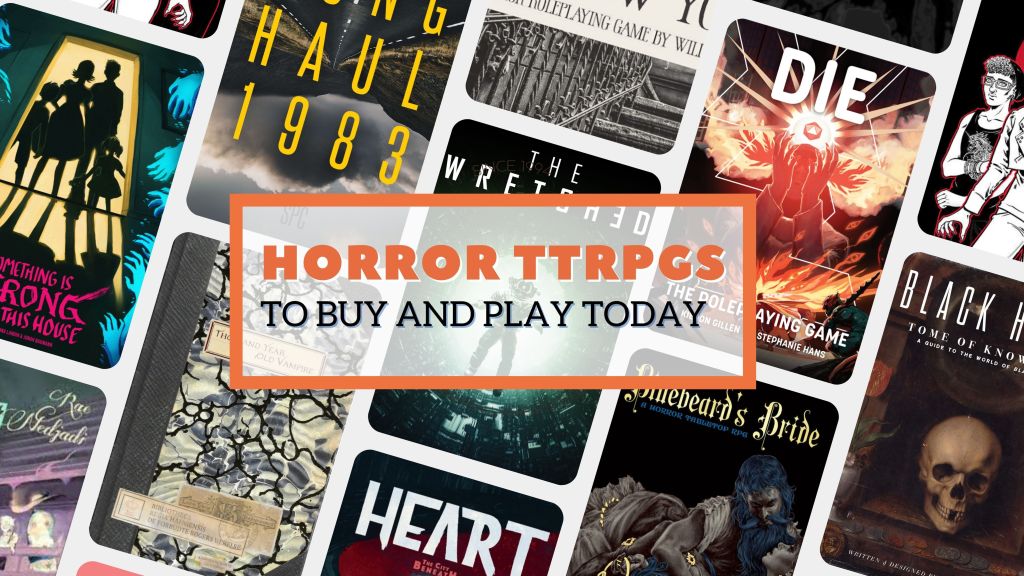


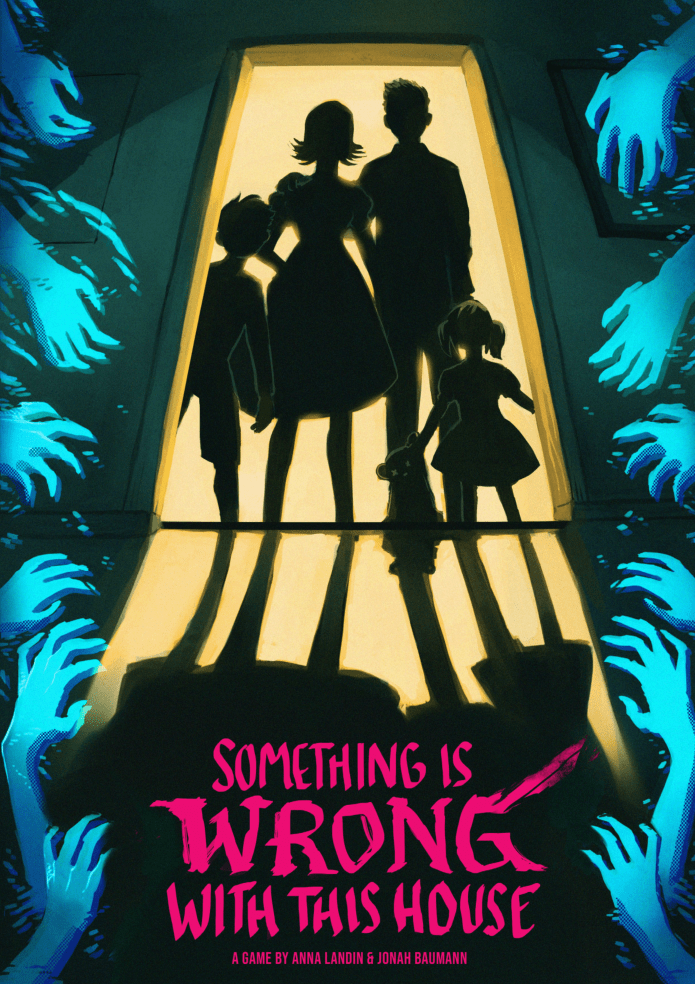
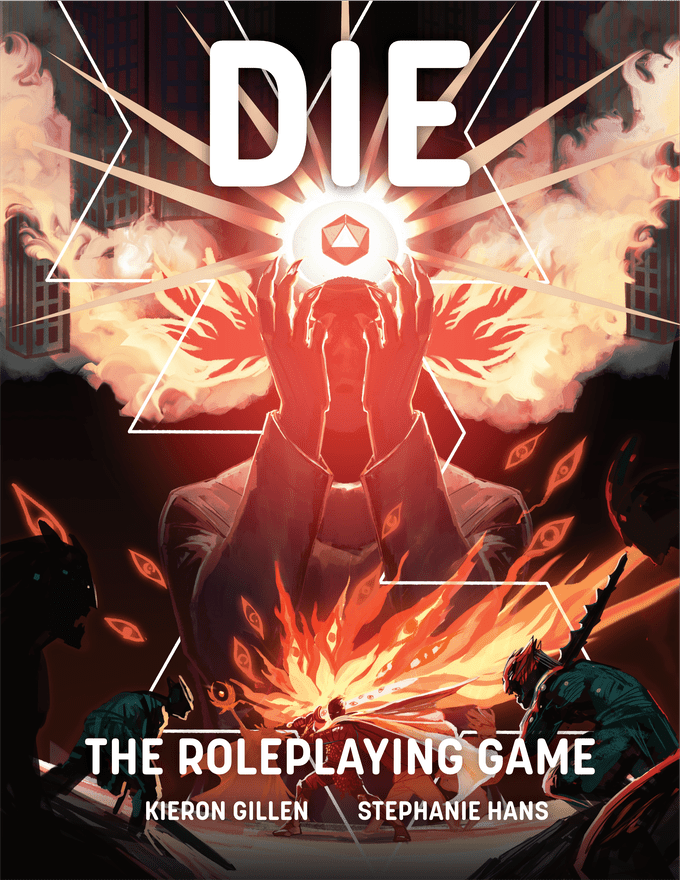









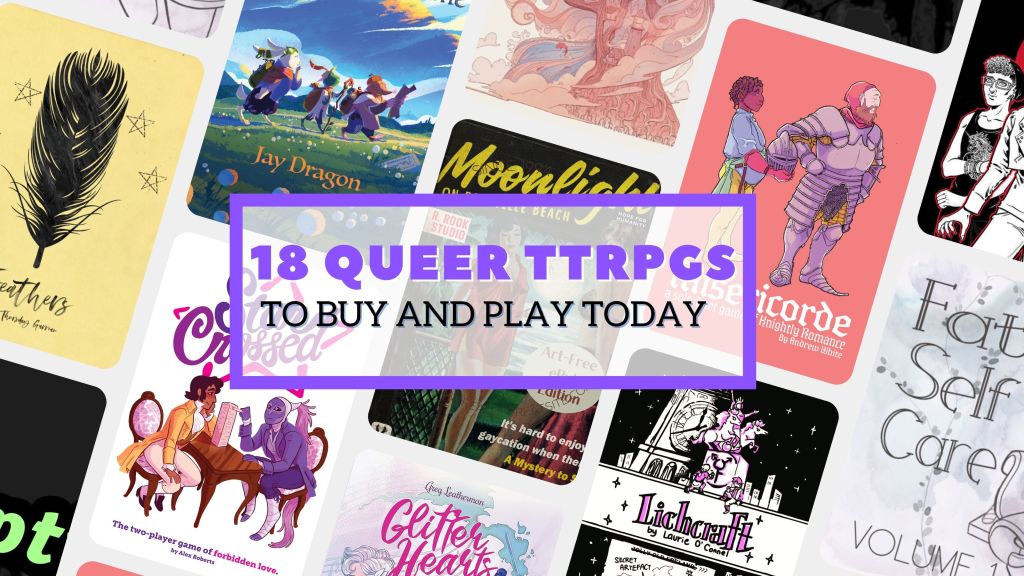
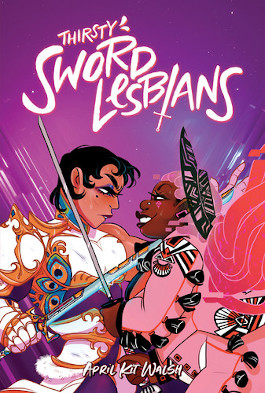
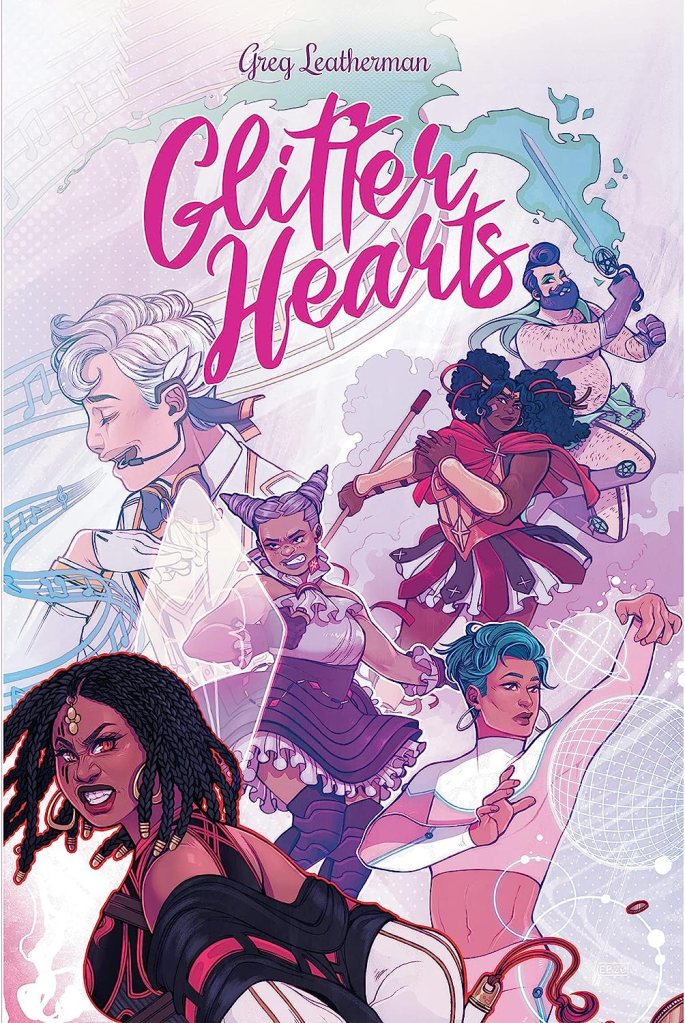
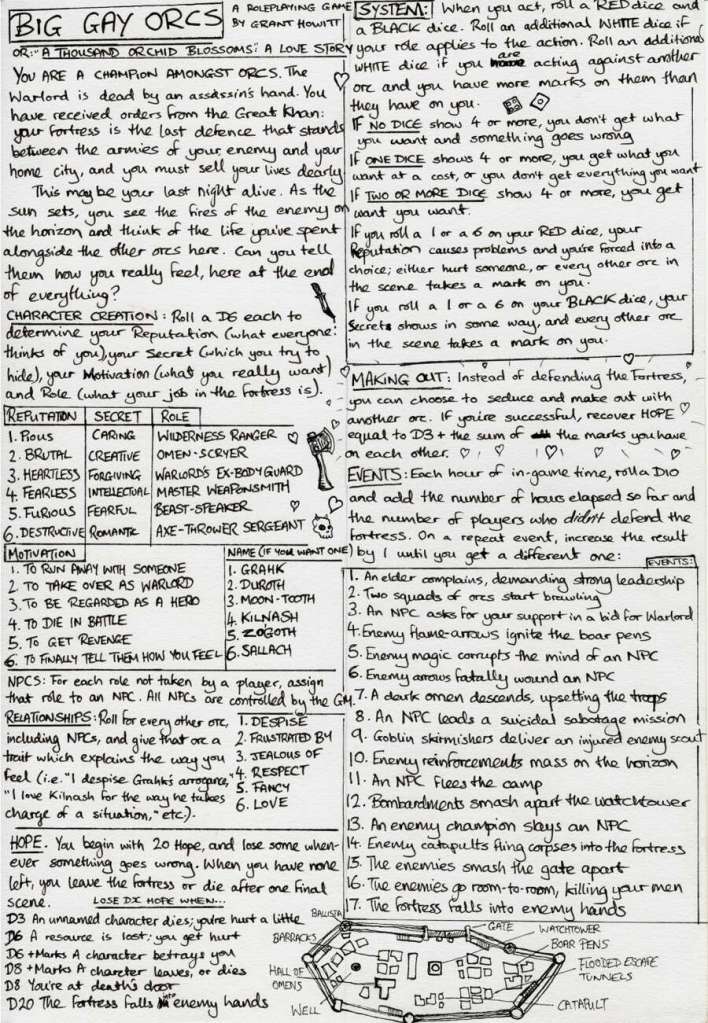


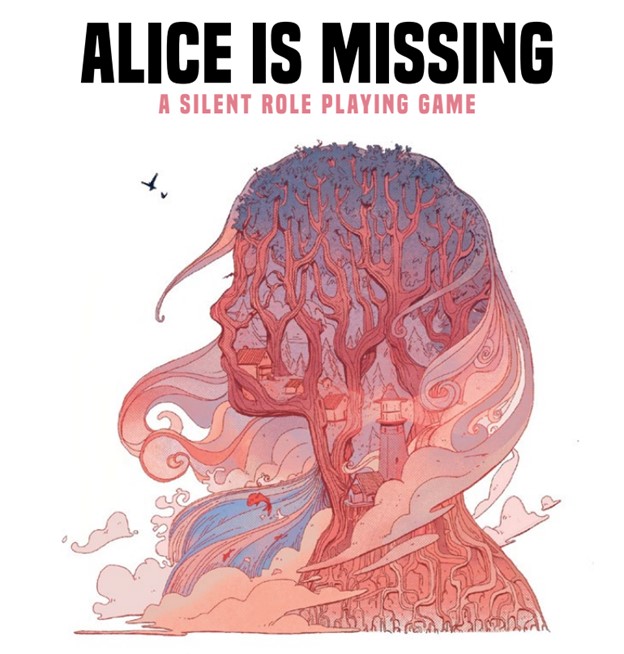

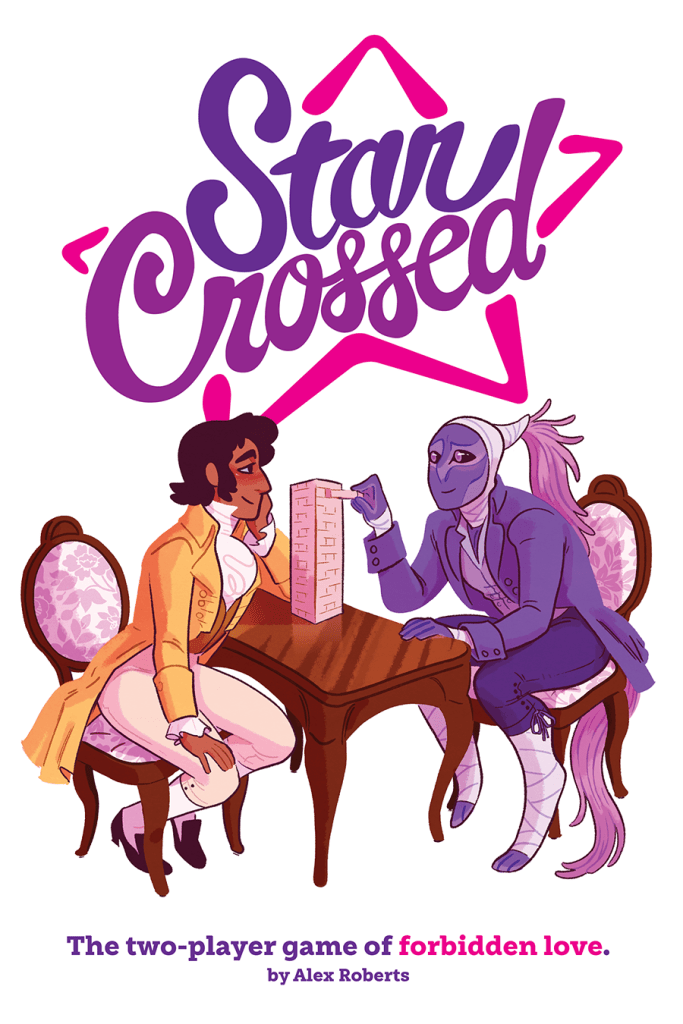


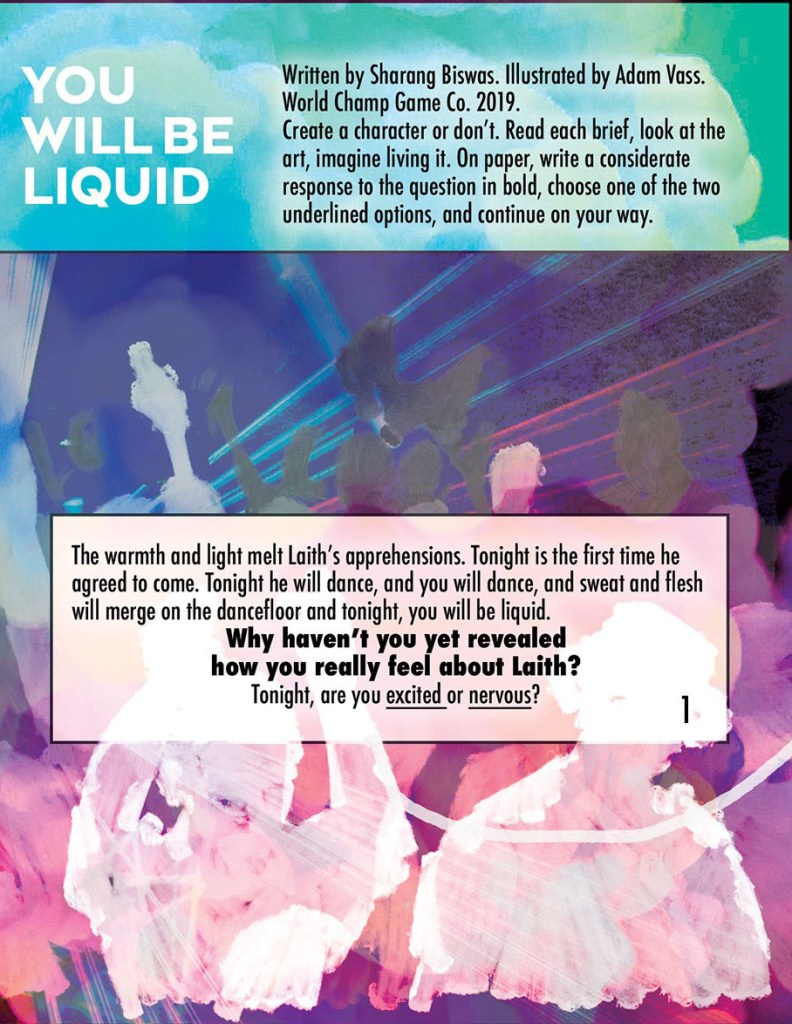



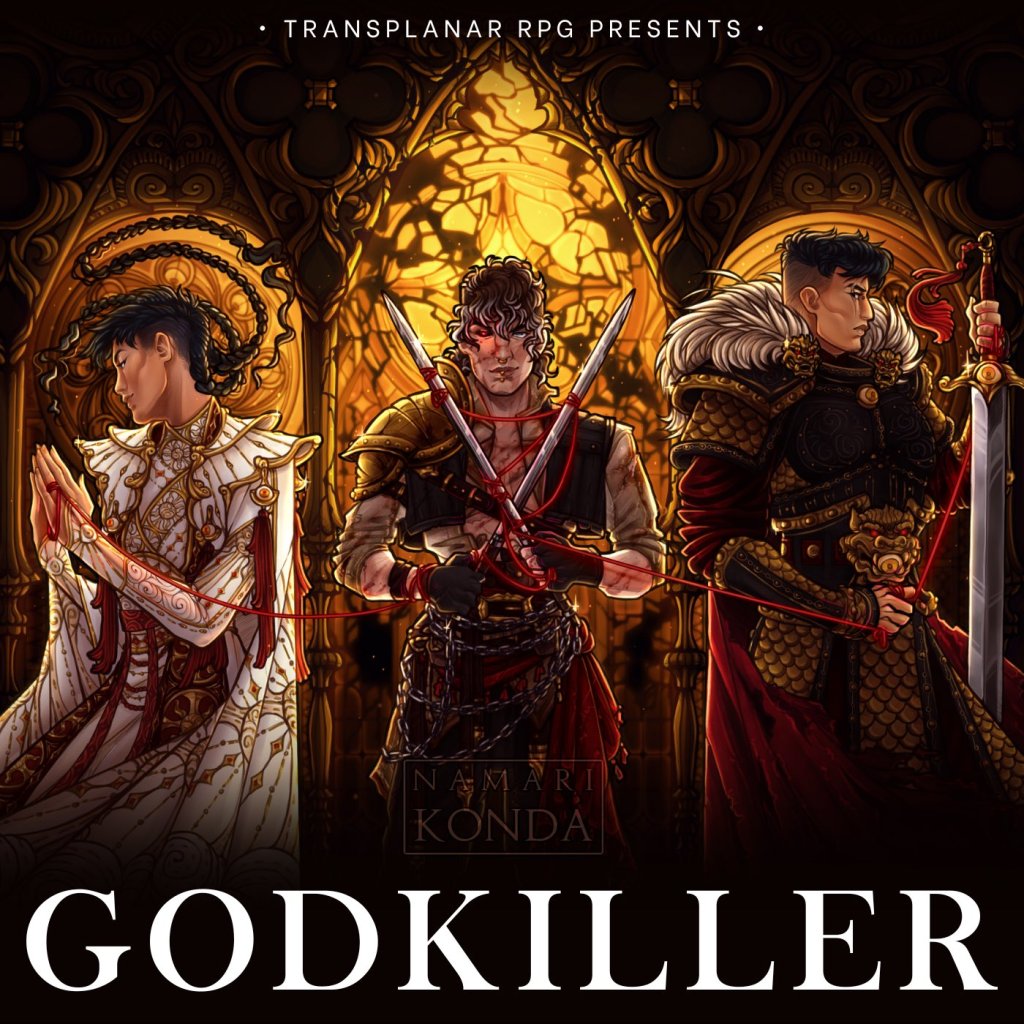
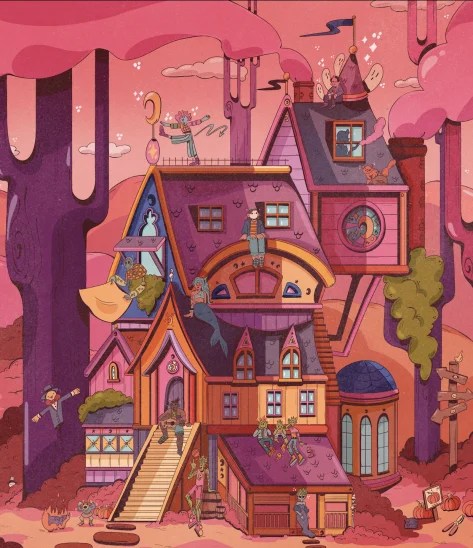

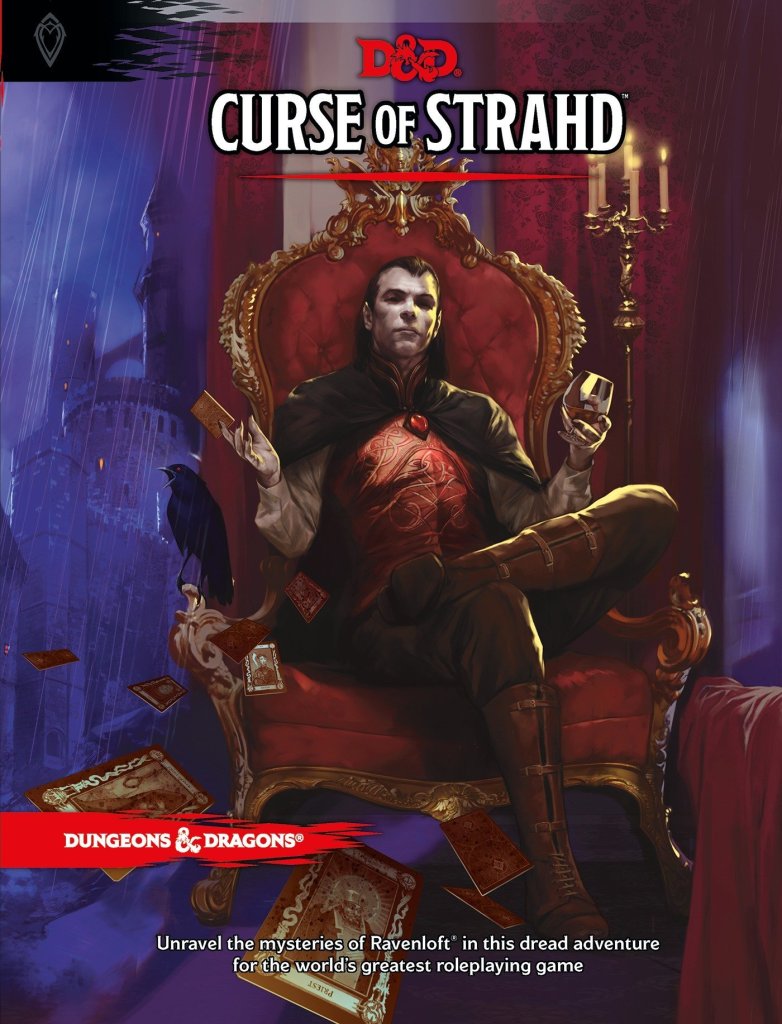





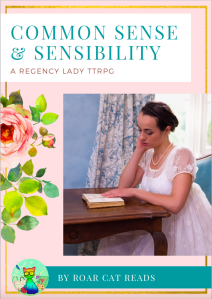


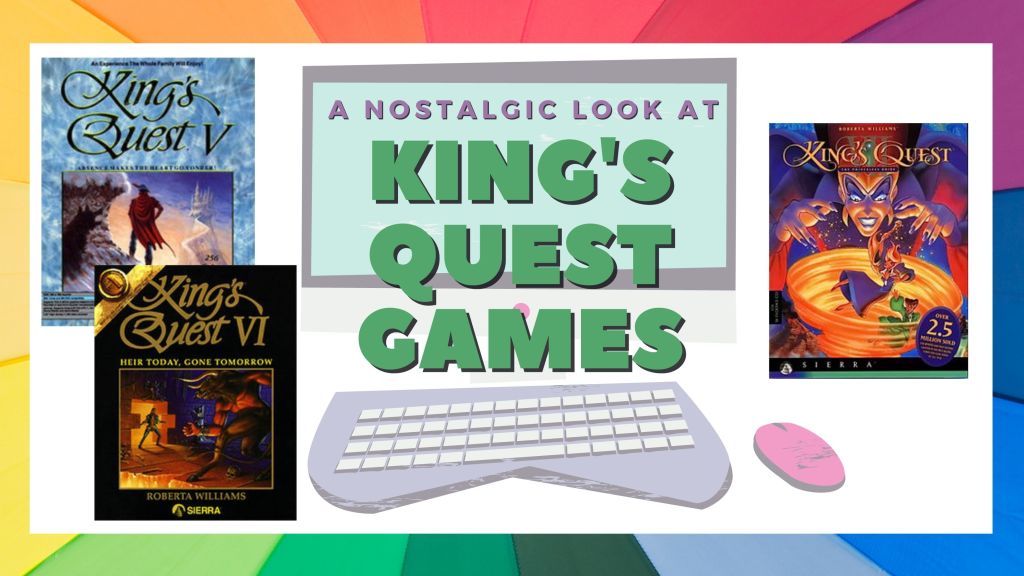

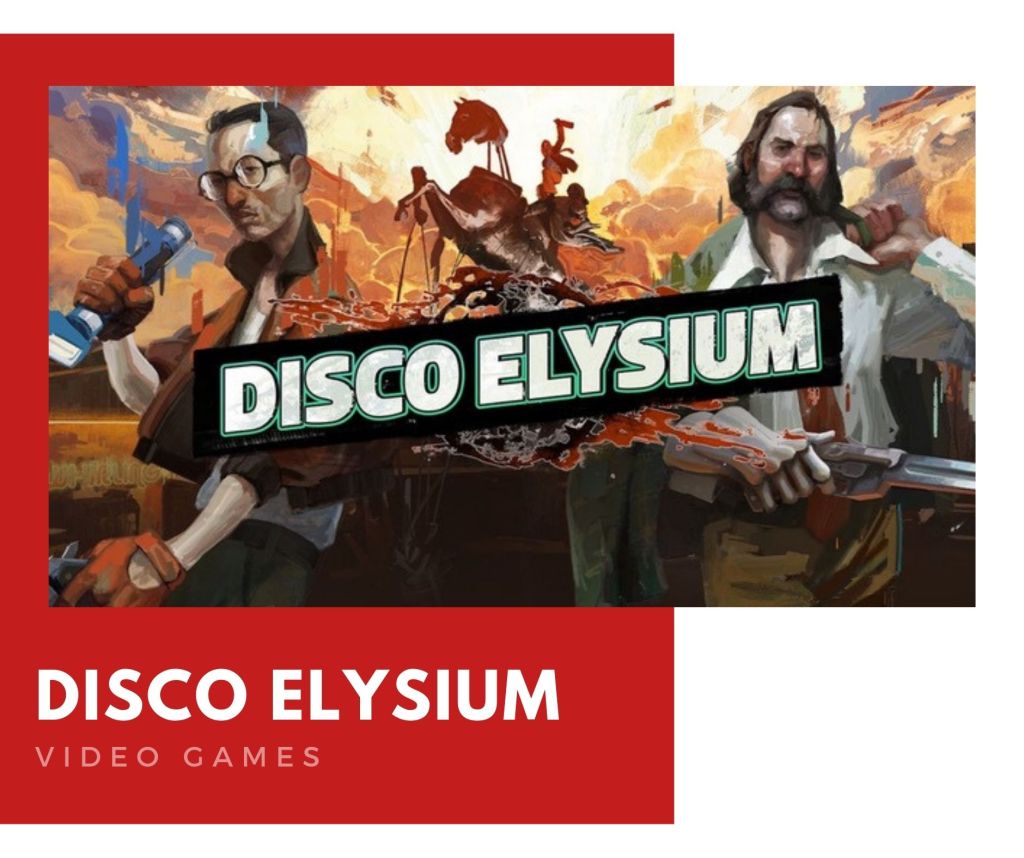
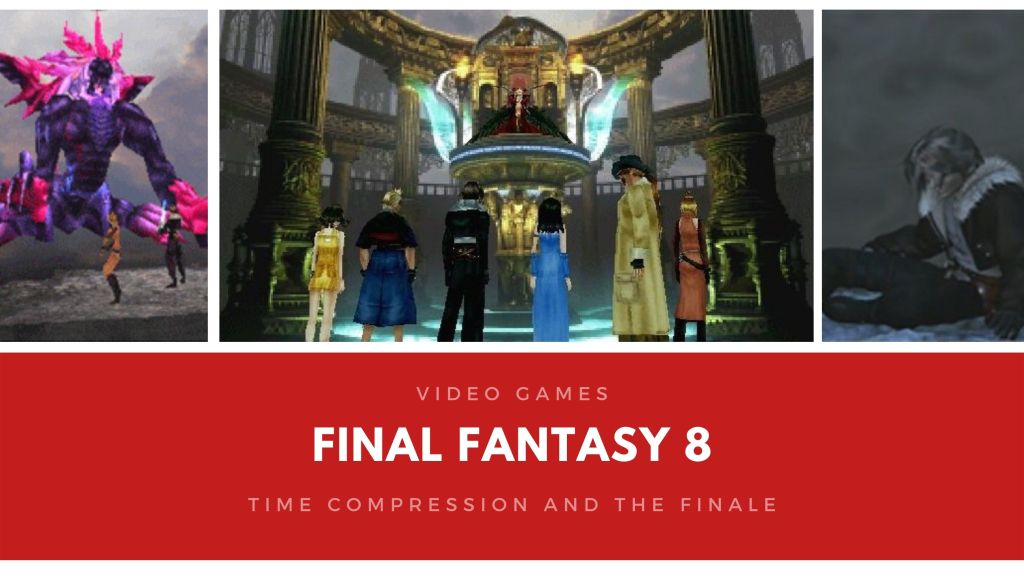

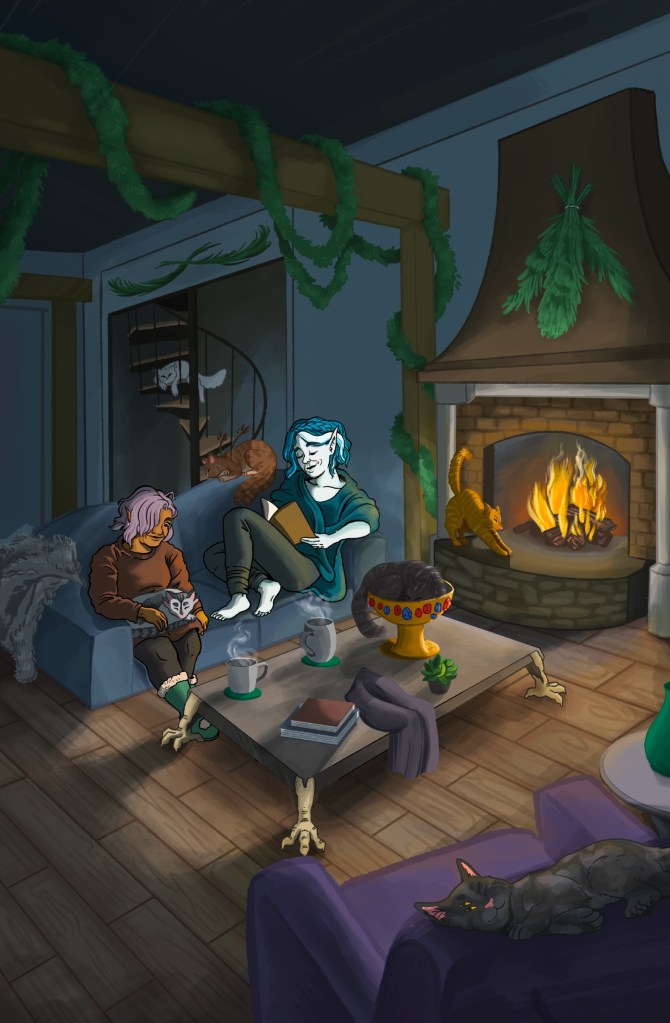
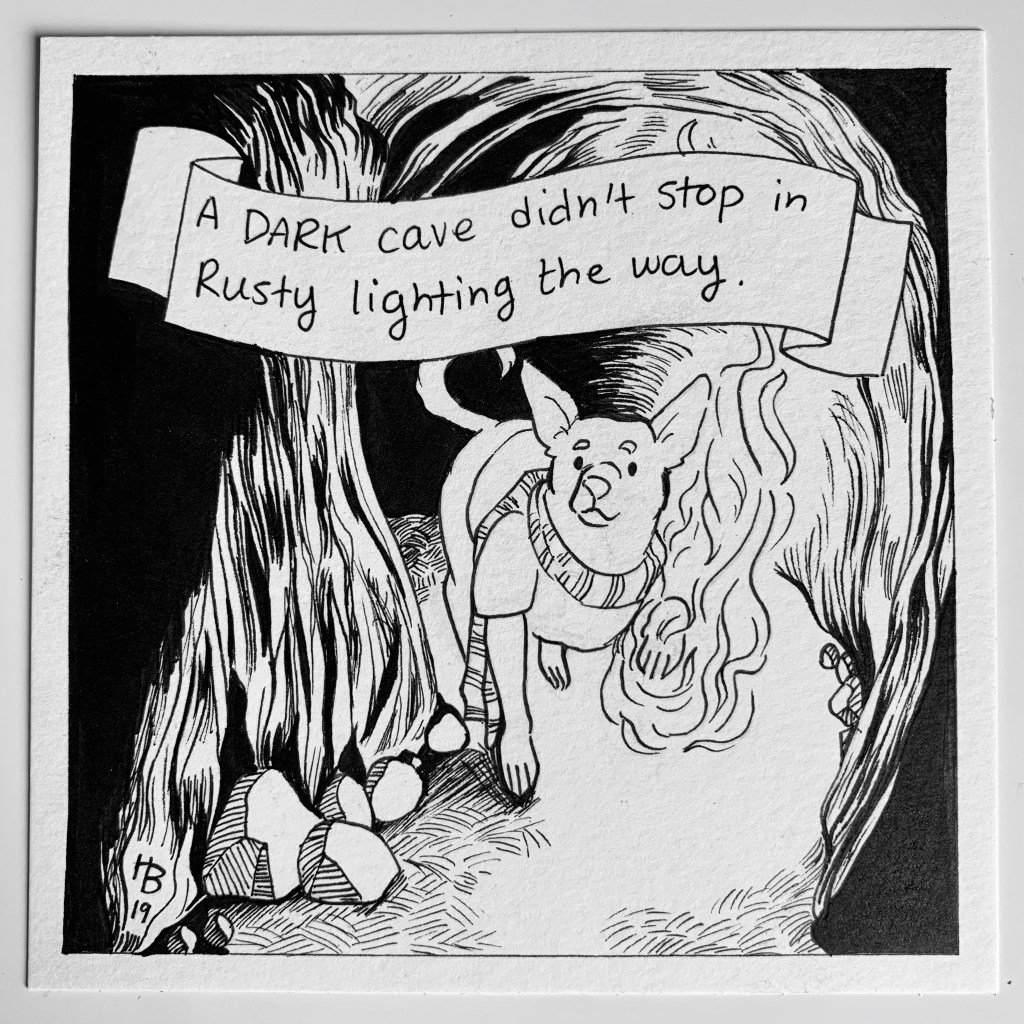
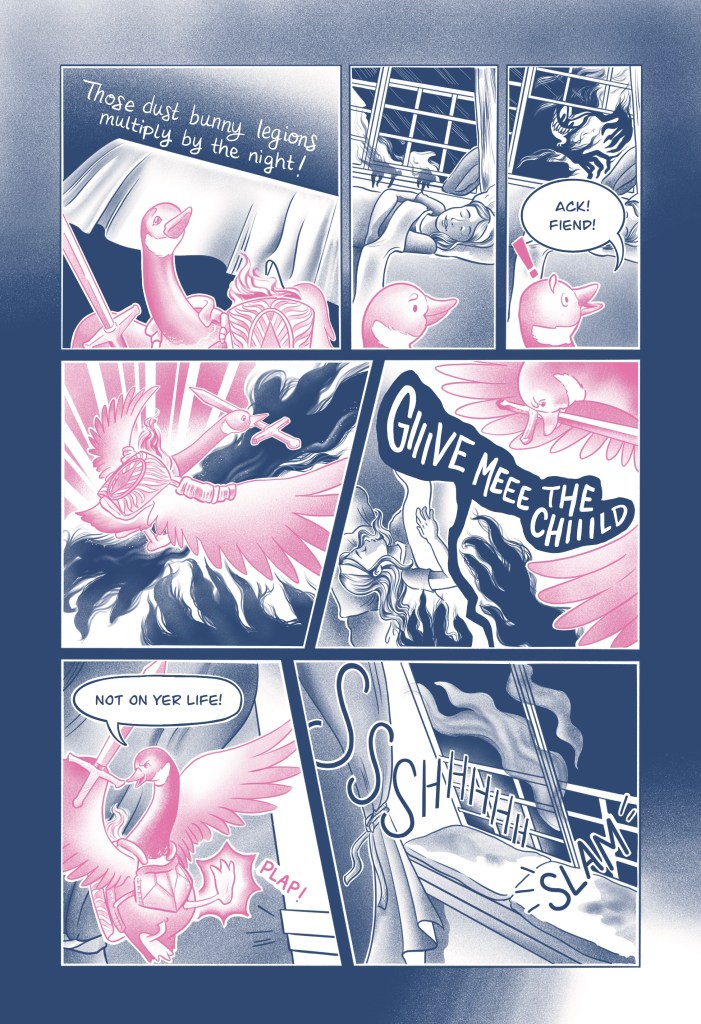

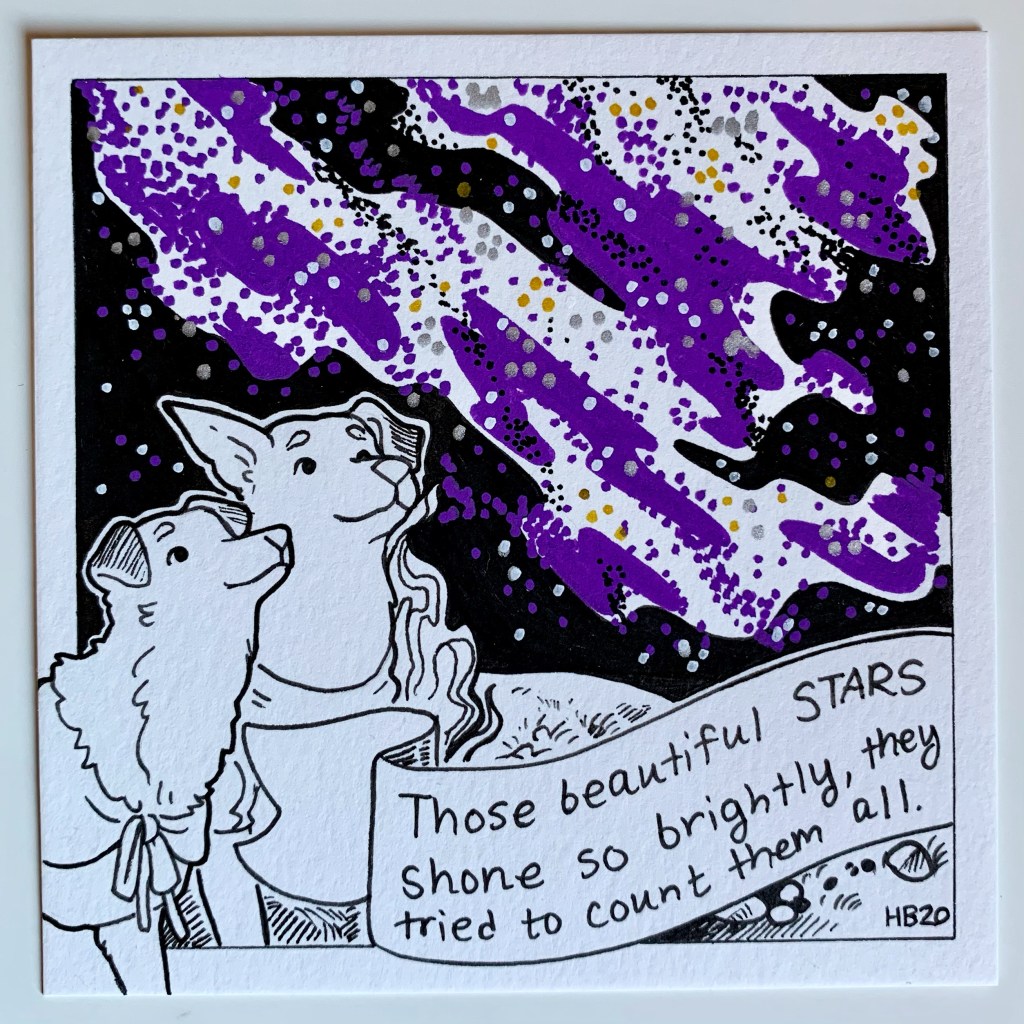
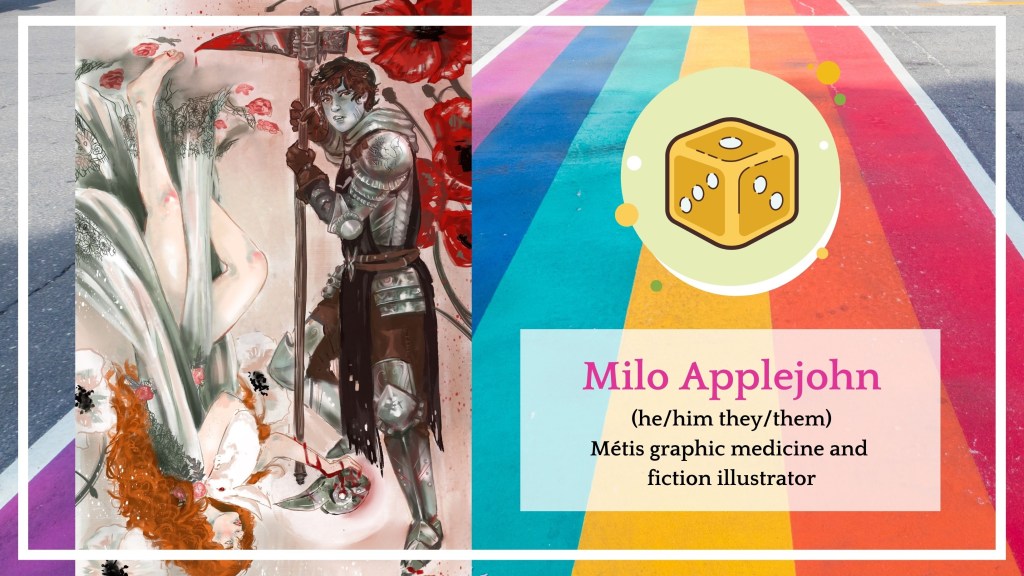
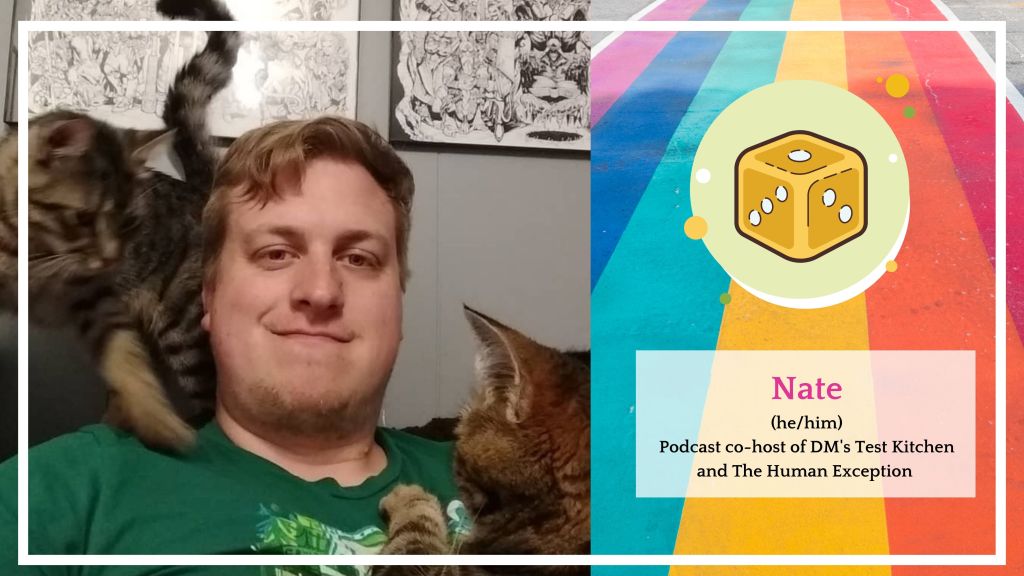

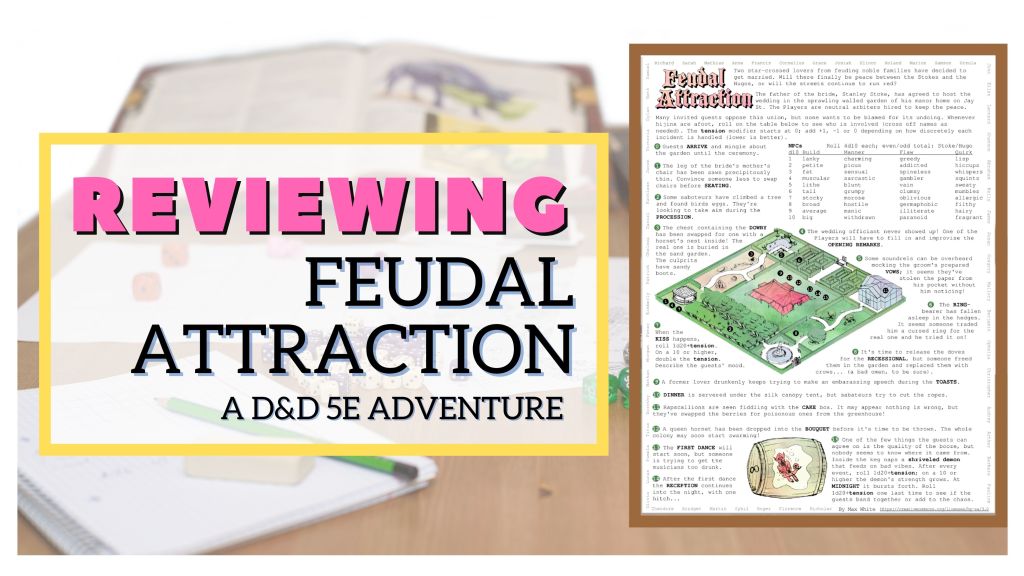
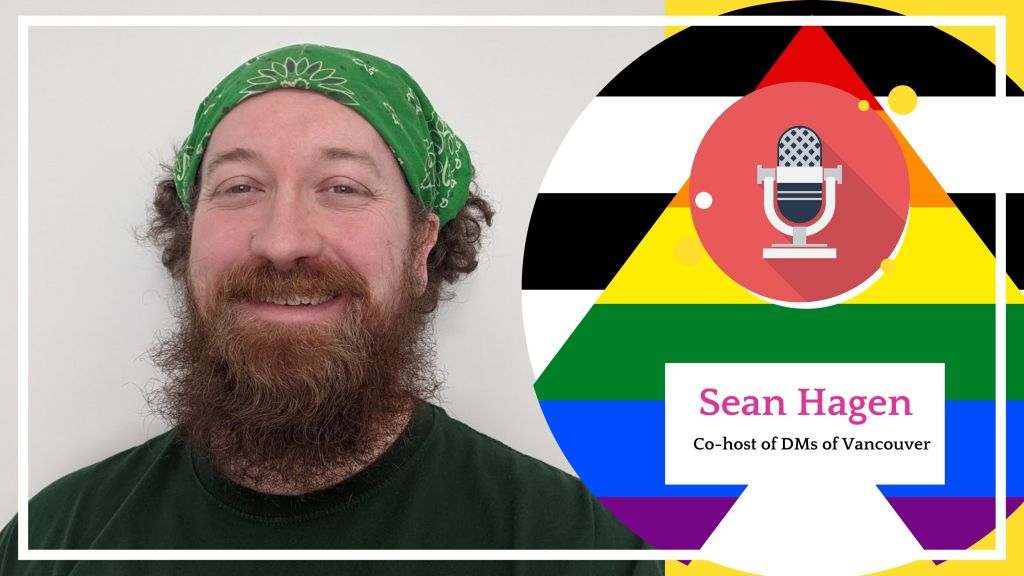

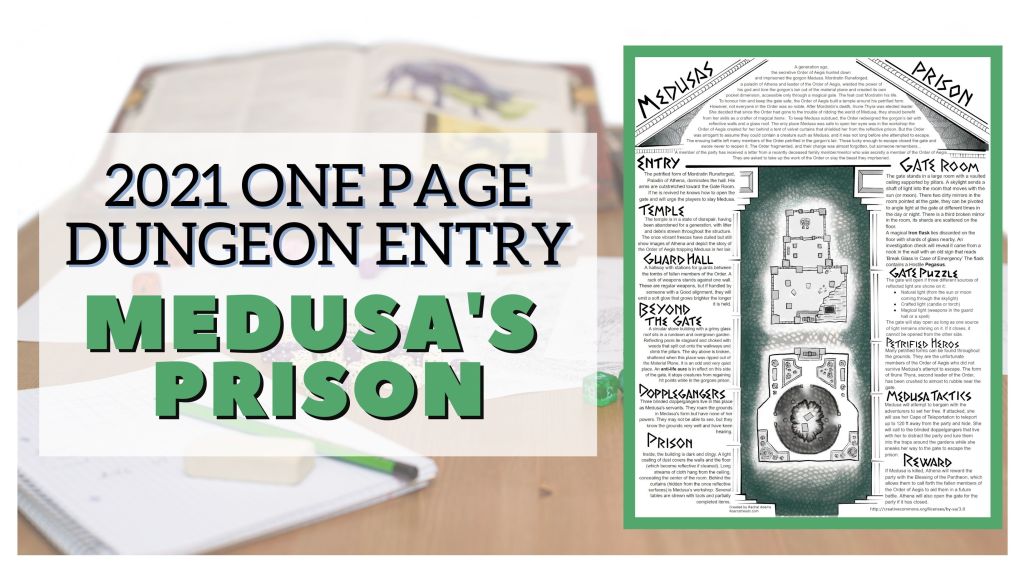


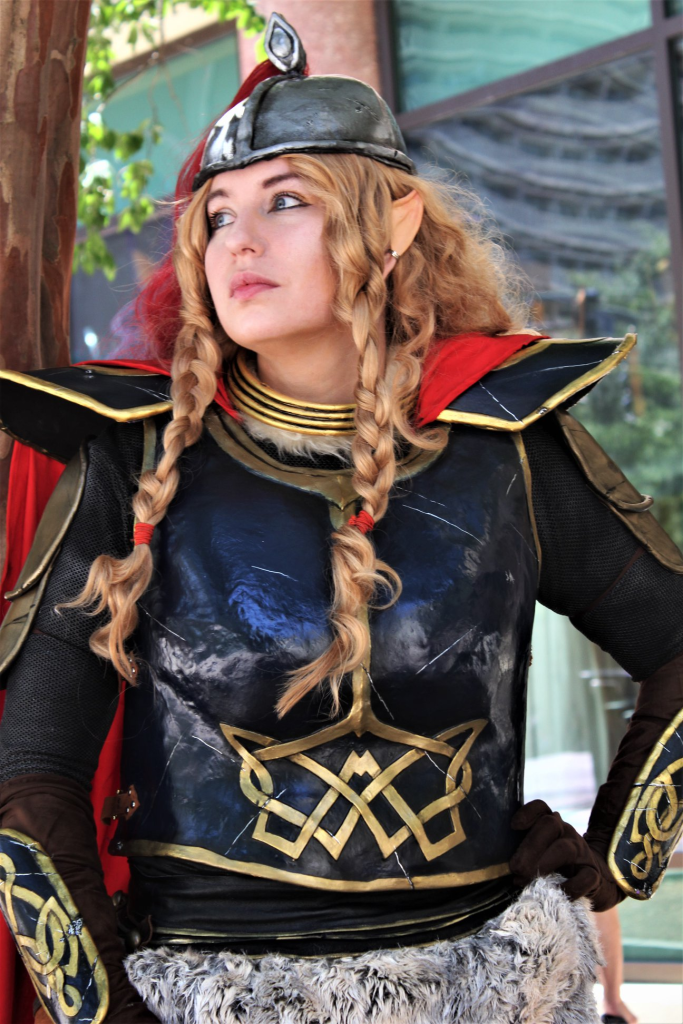

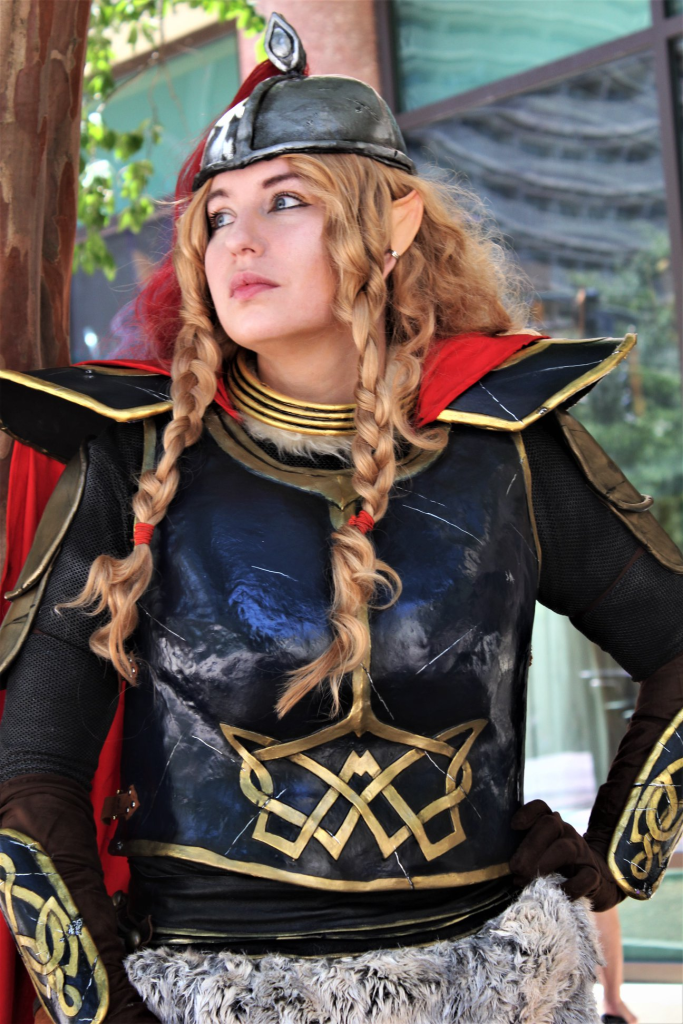
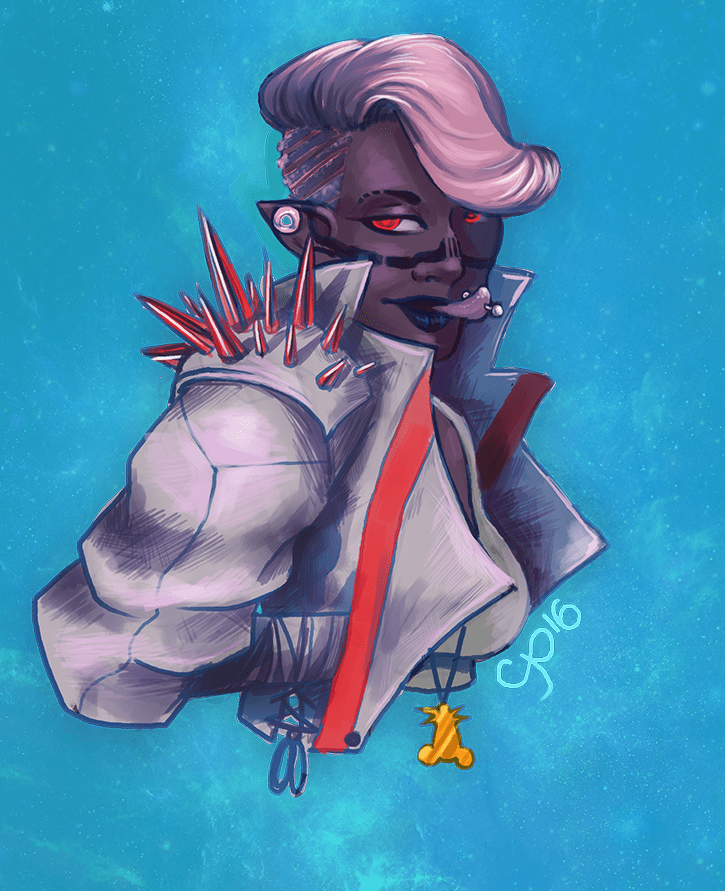
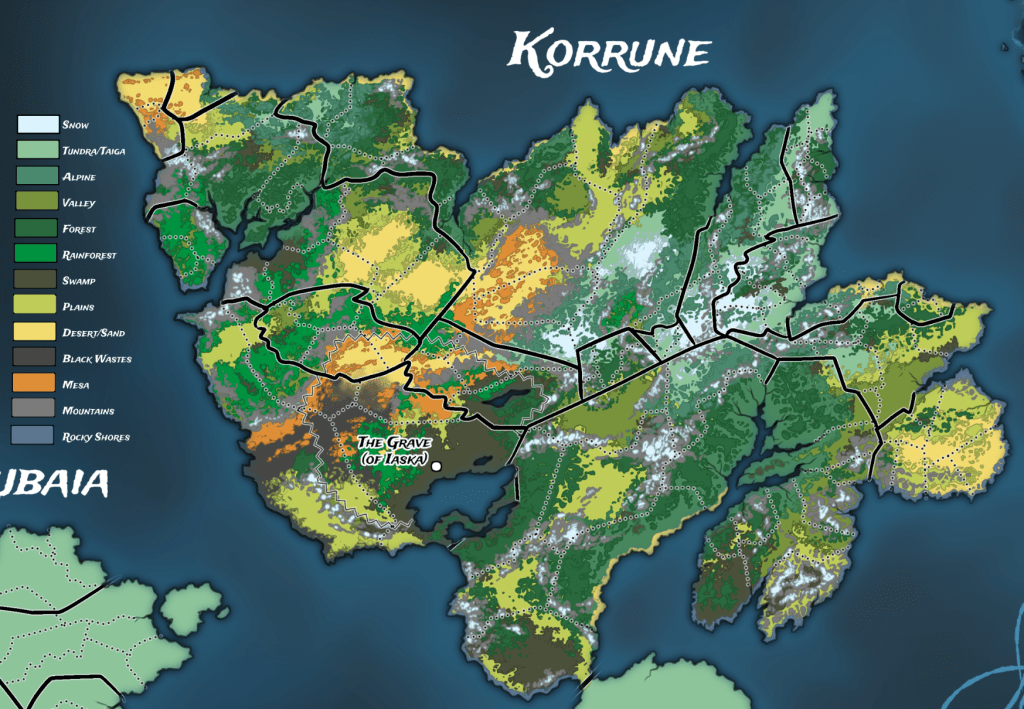

 Roar Cat Reads