Tag: memoir

  • 6 Queer Books I Read While Wedding Planning

    6 Queer Books I Read While Wedding Planning

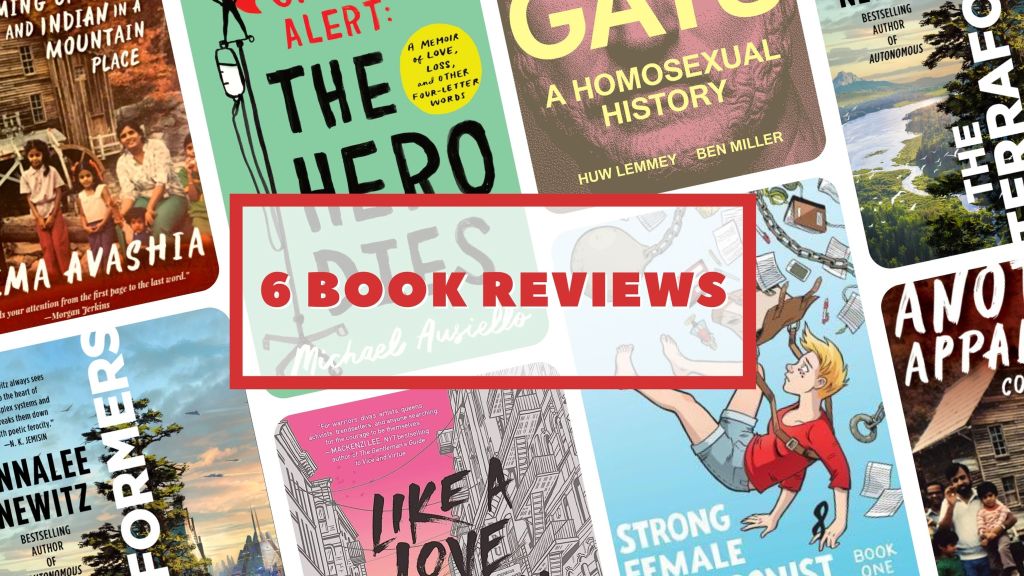
    Wedding planning really took the wind out of my blogging sails, but I’m back, and I want to talk about the queer books that I read during those months that I was MIA. From memoirs to graphic novels to YA to historical nonfiction, I’ve got a book recommendation for you!

    6 Queer Books I Read While Wedding Planning

    Spoiler Alert: The Hero Dies

    by Michael Ausiello

    This is the only book that directly relates to getting married, and WOW was it a good but hard book to read in the run up to committing my life to someone else’s in a world that is chaotic and impossible to control! A memoir about a gay couple’s relationship when one of them develops terminal cancer, I wound up loving it because it avoids trauma porn vibes by including a wicked sense of humor that rang really authentically to me. It’s devastating (look at that title) and uplifting in a “this is the human condition” sort of way.\


    Strong Female Protagonist: Book One

    by Brennan Lee Mulligan and Molly Ostertag

    I have recently fallen down the Dimension 20 hole, and I’m now obsessed with everything that Brennan Lee Mulligan has created. When I learned that he had created a graphic novel with Molly Ostertag, it was the easiest decision in the world to check it out. Although the drawings start out a little rough around the edges, in true webcomic fashion, the style crystalizes as the book progresses. As for the story itself, it’s a great character study on the weight of superheroism and what it means to do good in a morally and systemically complicated world. Why is it reviewed by RCR? Because the best side character is a lesbian!


    Bad Gays: A Homosexual History

    by Huw Lemmey and Ben Miller

    One of the evidences that queerness is becoming more culturally accepted is the growing genre of allowing gay people to be complicated, messy, and bad (see also: Detransition, Baby and The Ultimatum: Queer Love). This historical nonfiction covers the lives of (predominantly) gay men throughout history who have made the world worse, sometimes to a truly enormous extent. At the same time, Lemmey and Miller explore what “gay” has meant throughout history and how an evolving sense of identity has shaped people’s lives and actions.


    The Terraformers

    by Annalee Newitz

    Covering three points in time spanning over a thousand years, Newitz explores themes of personhood and capitalism on a planet being terraformed in the far distant future. It’s very much a theme-heavy book rather than plot-heavy, and my favorite part of the book is how detailed and nuanced her vision of future relationships (familial, friendly, and romantic) might look like. When I tell you that I found myself shipping a train and a cat (yes, you read that right) and feeling like it was the most obvious thing in the world, I hope that conveys the depth of Newitz’s skills. If you like Becky Chambers’ books, there’s a high likelihood that you’ll enjoy this too!
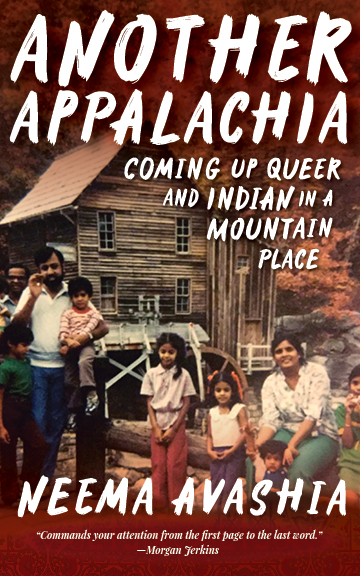

    Another Appalachia: Coming Up Queer and Indian in a Mountain Place

    by Neema Avashia

    Originally a book club pick, I highly recommend this short memoir of essays that reveals universal experiences through extremely specific life events. I loved reading about the intersection between Indian and Appalachian cultures and how the dynamic has shifted in the last couple decades. The author has such a love for her hometown while also feeling desperate to move on from it in a way that I think a lot of queer folks from rural spaces can relate to.


    Like a Love Story

    by Abdi Nazemian

    I put this beside Aristotle and Dante’s Discover the Secrets of the Universe in terms of being one of my favorite queer YA novels. It’s a story of friendship, young love, and community set in late 1980s New York City. That timeline means that the AIDS epidemic is front and center here, and reading this made me realize how rarely I see this time period reflected in YA novels. It’s such a necessary part of queer history to be told and retold, and this book really highlights how hard and scary it would be to explore and understand your sexuality in the midst of the crisis. While the context is necessarily dark, the story itself is uplifting, sweet, and moving.


    Alright, that’s me done playing catch up! From now on I should be able to get back into individual reviews.

  • My Wandering Warrior Existence by Nagata Kabi

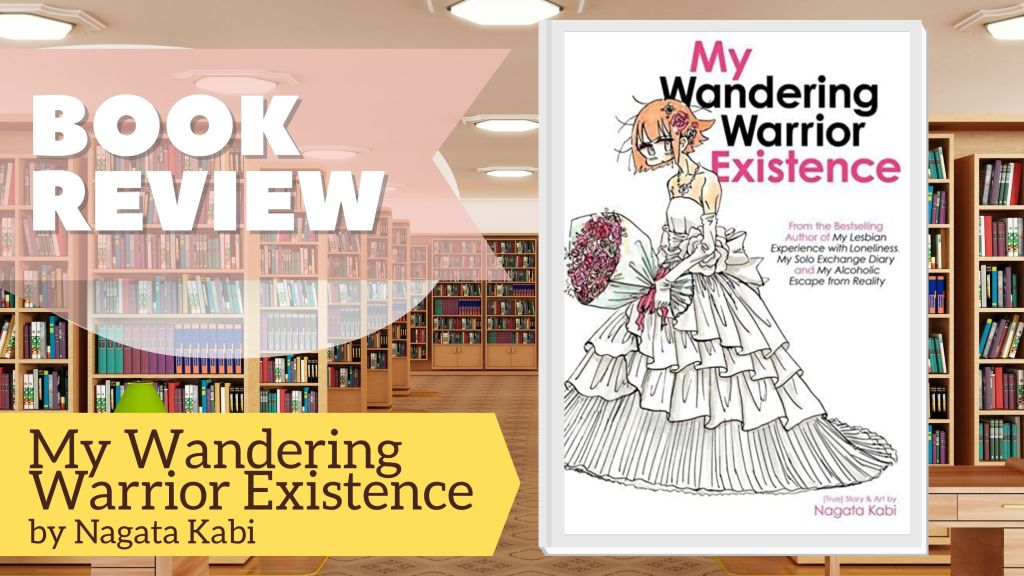
    My Wandering Warrior Existence by Nagata Kabi

    Genre | Graphic Novel Memoir
    Page #s | 128
    Publishing Date | February 2021

    Nagata Kabi, the award-winning creator of My Lesbian Experience with Loneliness, embarks on a search for romance in this brand-new diary comic! 

    Nagata Kabi’s groundbreaking autobiographical work has captivated audiences around the globe, starting with the viral online comic about identity that would become the graphic novel My Lesbian Experience with Loneliness. Readers from all backgrounds have been moved by the author’s ability to capture complex emotions through her art and text, giving insight into feelings they may have struggled to articulate themselves. Nagata Kabi’s memoirs, including the Eisner-nominated My Solo Exchange Diary and new release My Alcoholic Escape From Reality, have explored themes of physical and mental illness, sex and sexuality, family, and independence. Follow the newest installment of this trailblazing series with My Wandering Warrior Existence, Nagata Kabi’s exploration of longing for love and marriage.

    Goodreads

    My Wandering Warrior Existence is an uncomfortably relatable book for anyone who struggles with identity and intimacy while watching the majority of other people happily and easily love each other. Kabi’s self-reflections are honest, poignant, and in medias res – i.e., there are no real answers here.

    Although Kabi’s story begins in her earlier manga memoirs, this particular story begins when a friend’s wedding inspires her to book a wedding dress photo shoot, believing this will fulfill some nebulous core need. Instead, it leaves her feeling worse than ever before and opens up a whole new series of doubts and questions. It isn’t the trappings of a wedding that she craves, but the intimacy and relationship that it represents.

    Unfortunately, like many of us, knowing what she wants doesn’t make it any easier for Kabi to obtain it. As a perpetually single person until I was 30, I related SO HARD to her general bafflement about how people coupled up and why she couldn’t seem to get on the same level. Although there is a general vibe of self-hatred (or more generously, self-discomfort) that sometimes felt uncomfortable to me, I really appreciated the way Kabi is able to dissect her experiences in pictorial form, especially her realization about all of the hurdles that stand between her and a romantic relationship.

    Queerness positively drips from the pages, as Kabi questions her sexual identity, gender identity, and experience of the world in general. This is not a book about labels so much as an embracing of the questions of queerness, and I think that’s a very valuable offering of the queer experience.

    Who Do I Recommend This Book To?

    If you are, or have been, a person who felt outside of traditional relationship structures, you’re likely to find something to relate to in My Wandering Warrior Existence.

    Check out our Queer Lil Library for more book recommendations and reviews!

  • Ten Steps to Nanette by Hannah Gadsby

    Ten Steps to Nanette by Hannah Gadsby

    Genre | Memoir
    Page #s | 400
    Publishing Date | March 2022

    Multi-awardwinning Hannah Gadsby transformed comedy with her show Nanette, even as she declared that she was quitting stand-up. Now, she takes us through the defining moments in her life that led to the creation of Nanette and her powerful decision to tell the truth-no matter the cost.

    ‘There is nothing stronger than a broken woman who has rebuilt herself.’ -Hannah Gadsby, Nanette

    Gadsby’s unique stand-up special Nanette was a viral success that left audiences captivated by her blistering honesty and her ability to create both tension and laughter in a single moment. But while her worldwide fame might have looked like an overnight sensation, her path from open mic to the global stage was hard-fought and anything but linear.

    Ten Steps to Nanette traces Gadsby’s growth as a queer person from Tasmania-where homosexuality was illegal until 1997-to her ever-evolving relationship with comedy, to her struggle with late-in-life diagnoses of autism and ADHD, and finally to the backbone of Nanette – the renouncement of self-deprecation, the rejection of misogyny, and the moral significance of truth-telling.

    Equal parts harrowing and hilarious, Ten Steps to Nanette continues Gadsby’s tradition of confounding expectations and norms, properly introducing us to one of the most explosive, formative voices of our time. 

    Goodreads

    If you’re interested in reading Hannah Gadsby’s memoir, you’ve probably already seen and loved her stand up special(s) on Netflix: Nanette and Douglas. She wowed me with her humor, yes, but especially with her honest reflections on trauma and autism. All three of these qualities are very much in play in her memoir, which shares stories from each year of her life up to the release of the show that made her famous.

    She doesn’t share all of her stories, though. Much like the way Nanette dissected the art of comedy while being comedy, this memoir dissects the experience of trauma through its form. She explicitly states that a biographer would want to highlight those moments of abuse, violence, and trauma; as the person who lived through them, however, she emphatically does not. Instead, we learn about her trauma only when another story necessarily brings up feelings or people that were involved. It’s brought up almost against her will, and is not dwelt upon longer than necessary. It’s just like a real trigger; it’s a brilliant choice, and also really nice to read someone’s memoir who is not willing to share her trauma for an audience’s “entertainment.”

    I also loved her decision to share her personal history alongside Tasmania’s homophobic history. Even when she is too young to remember the specific events, they inform the world in which she grows up. It’s also an incredible reminder of just how openly and violently homophobic governments and people were just a decade or two ago. We shouldn’t take our current experience for granted; nor should we assume it will always be this way (as is all too obvious in anti-trans laws and opinions today).

    All of this sounds quite dour! Just like her comedy shows, it’s hard to describe how something so affecting and heavy can also be funny and charming. But it is! Hannah is a master of comedy, knowing how to guide her audience (whether audience or reader) through a story with a deft touch. You’re in good hands here, folks.

    Who Do I Recommend This Book To?

    Ten Steps to Nanette is essential reading for lovers of memoirs, and it’s especially valuable as an honest reflection on life as a queer autistic person.

    Check out our Queer Lil Library for more book recommendations and reviews!

  • Dear Senthuran: A Black Spirit Memoir by Akwaeke Emezi

    Dear Senthuran: A Black Spirit Memoir by Akwaeke Emezi

    Genre | Memoir
    Page #s | 240
    Publishing Date | June 2021

    In three critically acclaimed novels, Akwaeke Emezi has introduced readers to a landscape marked by familial tensions, Igbo belief systems, and a boundless search for what it means to be free. Now, in this extraordinary memoir, the bestselling author of The Death of Vivek Oji reveals the harrowing yet resolute truths of their own life. Through candid, intimate correspondence with friends, lovers, and family, Emezi traces the unfolding of a self and the unforgettable journey of a creative spirit stepping into power in the human world. Their story weaves through transformative decisions about their gender and body, their precipitous path to success as a writer, and the turmoil of relationships on an emotional, romantic, and spiritual plane, culminating in a book that is as tender as it is brutal.

    Electrifying and inspiring, animated by the same voracious intelligence that distinguishes their fiction, Dear Senthuran is a revelatory account of storytelling, self, and survival.

    Goodreads

    I found Dear Senthuran to be a challenging, beautiful reading experience. Emezi is an astonishingly good writer; their prose is by turns beautiful, haunting, visceral, and unapologetic. Emezi’s book Pet quickly became one of my favorites, so I was eager to read this memoir that largely focuses on their literary career. It was a fascinating peek behind the publishing curtain, but it doesn’t stop there. We also get raw reflections on Emezi’s gender, relationships, and mental health. It is a powerhouse of a book; one I found genuinely difficult to read sometimes, but one that I can’t stop thinking about.

    There are two themes that have stuck with me the most: Emezi’s conversation about their spirithood (as opposed to personhood) and their honest journey of ambition, loneliness, and confidence as a Black writer. I admit that I am still wrestling with Emezi’s identification as an ogbanje, “an Igbo spirit that’s born into a human body, a kind of malevolent trickster, whose goal is to torment the human mother by dying unexpectedly only to return in the next child and do it all over again. They come and go.” This identification reflects Emezi’s suicidality as well as their lack of identification with any human gender. My American brain constantly wants to interpret this as a metaphor, yet Emezi directly challenges that response by asking readers why Western thoughts should be valued more highly than Nigerian worldviews. Touché!

    I also appreciated Emezi’s honesty about their authorial ambitions. Their confidence borders on arrogance, but in the best way possible. They are sure of their talent and refuse to ask for less than what they think they deserve. While this leads to financial success and recognition, it also isolates Emezi. I so admire them for sharing all sides of the situation; ambition is complicated, and it’s worth portraying the positive and negative consequences of its pursuit.

    This is such a rich book, and I really want more people to read it and share their thoughts! It would be an excellent book club choice!

    Who Do I Recommend This Book To?

    Dear Senthuran is for the literary reader who appreciates Good Writing™ as well as for anyone who appreciates a raw memoir that holds nothing back.

    Check out our Queer Lil Library for more book recommendations and reviews!

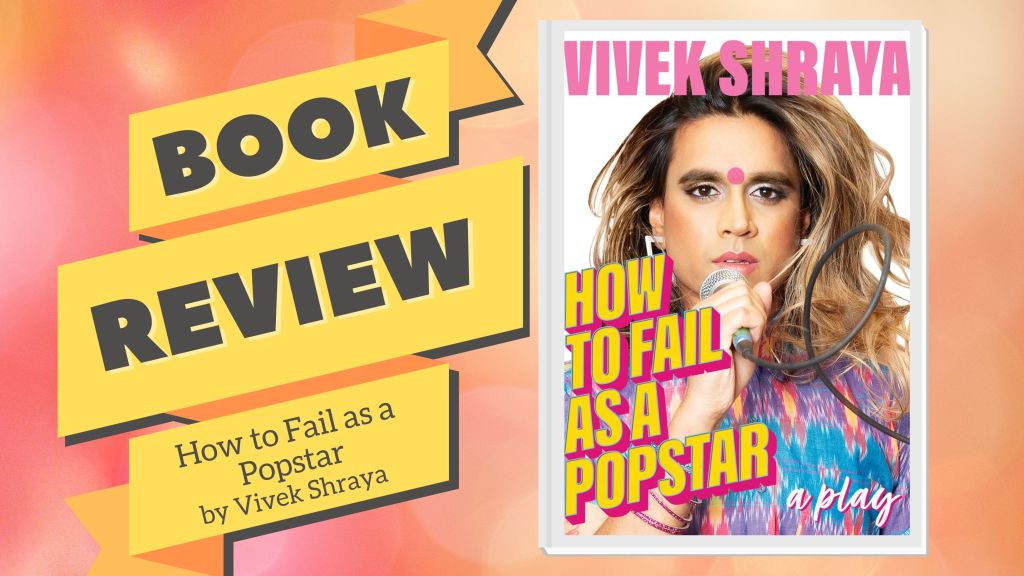
  • How to Fail as a Popstar by Vivek Shraya

    How to Fail as a Popstar by Vivek Shraya

    Genre | Theatrical Memoir
    Page #s | 72
    Publishing Date | April 2021

    Described as “cultural rocket fuel” by Vanity Fair, Vivek Shraya is a multi-media artist whose art, music, novels, and poetry and children’s books explore the beauty and the power of personal and cultural transformation. How to Fail as a Popstar is Vivek’s debut theatrical work, a one-person show that chronicles her journey from singing in shopping malls to “not quite” pop music superstardom with beguiling humor and insight. A reflection on the power of pop culture, dreams, disappointments, and self-determination, this astonishing work is a raw, honest, and hopeful depiction of the search to find one’s authentic voice.

    The book includes color photographs from the show’s 2020 production in Toronto, and a foreword by its director Brendan Healy.

    Goodreads

    Vivek Shraya is on my list of “Read Everything They Write” authors (see my reviews of The Subtweet and I’m Afraid of Men), and How to Fail as a Popstar did not disappoint! Originally released as a theatrical memoir, you can read the play in novella form, which is what I did, and still enjoy all the jokes and emotions.

    From the title to the prologue, we are reminded that this is a story about failure. And not the pretty kind that revealed a deeper truth…the kind that hurts. The kind you carry with you, and that’s okay. Shraya’s story ends fairly abruptly, but that’s the nature of failure; you work and work and work until suddenly, it’s over. The anti-climactic ending is the point.

    This kind of story is so important to tell! In media, we only tend to see examples of people pursuing dreams and succeeding against all odds, but I’d wager nearly all of us have had a dream that didn’t go anywhere. And that experience deserves to be honoured too. Doing so creates the very important distinction between experiencing failure and being a failure. Shraya isn’t a failure – she’s an award-winning author. But she wasn’t successful at the thing she really wanted to do, and boy, is that a reality a lot of us can understand!

    With her customary honesty, wit, and sly humor, Shraya rocks it again. I can’t wait to read whatever she comes up with next!

    Who Do I Recommend This Book To?

    How to Fail as a Popstar is a book for anyone who has failed because of systemic oppression, bad timing, unhelpful mentors, or bad luck.

    Check out our Queer Lil Library for more book recommendations and reviews!

  • Spinning by Tillie Walden

    Spinning by Tillie Walden

    Genre | Contemporary Fiction Graphic Novel
    Page #s | 400
    Publishing Date | September 2017

    Poignant and captivating, Ignatz Award winner Tillie Walden’s powerful graphic memoir, Spinning, captures what it’s like to come of age, come out, and come to terms with leaving behind everything you used to know.

    It was the same every morning. Wake up, grab the ice skates, and head to the rink while the world was still dark.

    Weekends were spent in glitter and tights at competitions. Perform. Smile. And do it again.

    She was good. She won. And she hated it.

    For ten years, figure skating was Tillie Walden’s life. She woke before dawn for morning lessons, went straight to group practice after school, and spent weekends competing at ice rinks across the state. It was a central piece of her identity, her safe haven from the stress of school, bullies, and family. But over time, as she switched schools, got into art, and fell in love with her first girlfriend, she began to question how the close-minded world of figure skating fit in with the rest of her life, and whether all the work was worth it given the reality: that she, and her friends on the figure skating team, were nowhere close to Olympic hopefuls. It all led to one question: What was the point? The more Tillie thought about it, the more Tillie realized she’d outgrown her passion–and she finally needed to find her own voice.

    Goodreads

    I fell in love with Tillie Waldon’s art style and storytelling ability when I read On a Sunbeam. Spinning is an entirely different story, but it retains the same self-reflective, honest heart. In this graphic novel, Waldon shares the story of her childhood; it centers on her experiences as an ice skater but includes much more.

    Walden was an anxious, perfectionistic kid, so this story is incredibly relatable! She is harder on herself than anyone else is (excluding the odd coach here and there), and she doggedly continues her ice skating career even though she doesn’t actually enjoy it very much. It’s heartbreaking, and such an accurate portrayal of the powerlessness and confusion of being a kid.

    In addition to ice skating, the major theme is Walden’s acceptance of her attraction to women, and the reactions of those around her. Her various comings out are drawn in a series of panels that capture the gamut of reactions you can expect, from positive to negative to those comments that you tell yourself are positive but still contain a kernel of judgment.

    Although it isn’t a dramatic book, necessarily, there is a slow empowerment that builds in Walden that is far more realistic than is portrayed in most books. It is the small moments when she stands up for herself and makes her own choices that resonate.

    Who Do I Recommend This Book To?

    Spinning is the book to give to your friend who doesn’t think graphic novels are books in order to prove them wrong.

    Check out our Queer Lil Library for more book recommendations and reviews!

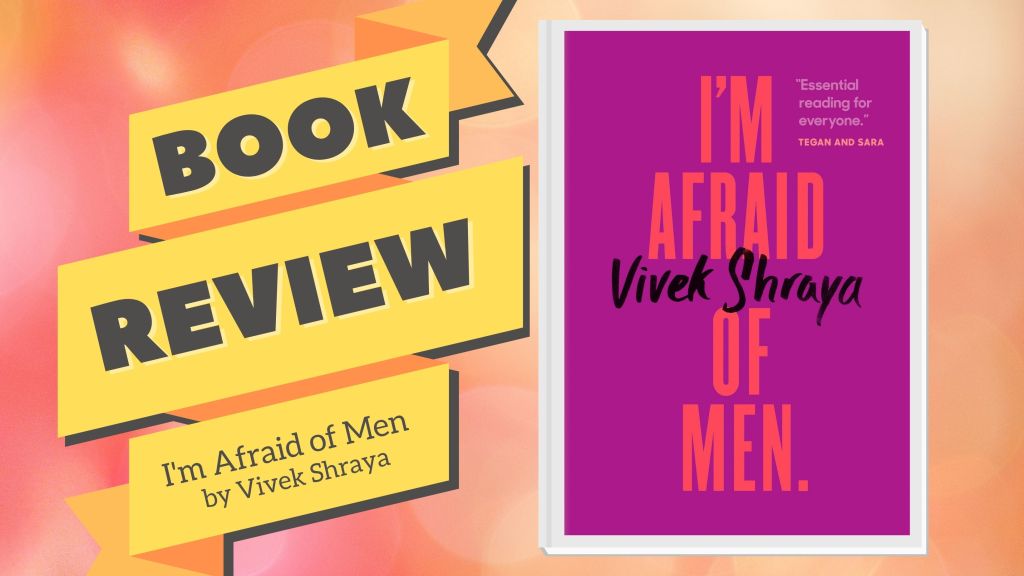
  • I’m Afraid of Men by Vivek Shraya

    I’m Afraid of Men by Vivek Shraya

    Genre | Nonfiction Memoir Novella
    Page #s | 96
    Publishing Date | August 2018

    A trans artist explores how masculinity was imposed on her as a boy and continues to haunt her as a girl–and how we might re-imagine gender for the twenty-first century.

    Vivek Shraya has reason to be afraid. Throughout her life she’s endured acts of cruelty and aggression for being too feminine as a boy and not feminine enough as a girl. In order to survive childhood, she had to learn to convincingly perform masculinity. As an adult, she makes daily compromises to steel herself against everything from verbal attacks to heartbreak.

    With raw honesty, Shraya delivers an important record of the cumulative damage caused by misogyny, homophobia, and transphobia, releasing trauma from a body that has always refused to assimilate. I’m Afraid of Men is a journey from camouflage to a riot of color and a blueprint for how we might cherish all that makes us different and conquer all that makes us afraid.

    Goodreads

    I loved Shraya’s The Subtweet and decided to check out everything she’s ever done! I’m so glad I did, because it led me to this tiny but mighty memoir dissecting toxic masculinity in simple but powerful anecdotes.

    The book is divided into “you” and “me” sections. The “you” second person point of view section forces the reader to take on the abusive, careless roles of men who have bullied, harrassed, and failed Shraya. It is such a smart move on her part to place readers outside of the victim’s perspective, since the ultimate point of the book is that we all exhibit toxic traits, whether male, female, cis or trans.

    Shraya’s perspective as a trans woman is especially meaningful, since she describes how toxic masculinity affected her differently when she presented as a man vs. as a woman. Spoilers! It was bad in either case! It is truly impressive how she manages to show the universally terrible impacts of toxic masculinity in under 100 pages.

    Although this isn’t necessarily the point of the book, I was really drawn to small hopes for gender expansion toward the end of the book. After transitioning, Shraya finds herself enjoying the freedom to indulge in femininity, but also mentions missing the ability to rock a beard or work toward bulging biceps. I share her hope that someday people will be able to present themselves to the world with any combination of masculine, feminine, or androgynous qualities, for as long as they want.

    Who Do I Recommend This Book To?

    This is the book to give to your friend who just learned the term “toxic masculinity” if you really want to help them achieve Galaxy Brain.

    Check out our Queer Lil Library for more book recommendations and reviews!

  • An Introduction to Fandom and Queerness

    An Introduction to Fandom and Queerness

    by Halli Starling

    Before I understood my own queerness, I wrote it.

    As in, I wrote fanfic of it. I took what I saw on the screen and changed it.

    Fan writing (and fan art and creating in general) gives fans of a particular piece of entertainment the space in which to operate outside the canon. Maybe that all sounds like gibberish, but as a fifteen year old blossoming queer girl growing up in a terribly homogenous small town in Ohio, it was an outlet. A way to express the strange, forbidden desires I wanted to see on screen. The things that bound me up inside and made me breathless, imagining those possibilities.

    This was 1999, so outside of shows like Will & Grace, anything “gay” on TV was damn limited. The first iteration of Queer Eye for the Straight Guy didn’t come around until 2003, for example.

    The first fanfic I ever wrote was Buffy/Faith. It is long lost to the vast graveyard of the internet, where cats with cheezeburgers and terribly creepy dancing babies go to die and make room for new memes and fascinations. I saw these two strong young women standing up to evils and horrors, vampires and scheming plots, and yes, men, and I saw lust and attraction between them. Who else could better understand the particular die with which their fate was cast than the other person in that situation?

    Of course, this is not a canon ship, sadly, but I remain, to this day, a fan of it. Because they both deserved better. Because they were perfect for the enemies-to-lovers trope. And they were both hot as fuck.

    (We will not be visiting Joss Whedon in this essay cause fuck that dude with a rusty rake.)

    After my love of Buffy ran its course, I was still trying to figure out me. My mother had a strange kind of fascination with gay people, seeing them as sideshow attractions while constantly telling me all the time I spent with my female friends was going to turn me into a “lezzy”. Those kinds of extremely mixed signals didn’t help my already confused mind, and combined with growing up in an abusive household, I had to put it all aside lest I get ousted from the only home I had. I was headed to college while living at home (not the best for my individual growth in hindsight), I was meeting new people. Surely the door would open to finding out who I was, right?

    One person I met, a gay man only a year or two younger than I, was a doorway into a world I didn’t know of. My internet was dial-up, my phone barely could text, and finding any kind of gay or queer literature or entertainment was seemingly impossible. But this new friend opened a door. Suddenly I was allowed into spaces where gay men and women and anyone else who wanted in could show up and hang out. I discovered Rocky Horror and went to campy costume parties. I had beer and martinis spilled on me on crowded dance floors full of anyone and everyone who wanted to simply exist with like-minded people. I was given a gift. It was like queerdar, and with my eyes open, I could start to find myself again.

    But I never left fandom and its queerness.

    Class and work during the week was the boring, unsure me. I was too scared to ask the pretty girl in my English class on a date (she later became a good friend and never teased me for thinking she was gorgeous). I was too stuck in my own head about how other people would see me in that little town. I didn’t want to be an outcast or a “lezzy”, sneered at because I was gay. I grew up in a time when sayings like, “That’s so gay,” were hurled around school halls and soccer fields, wielded like a weapon to demean and degrade. To cast the insultee as lesser. So finding a home in fandom made a lot of sense to me, and it let me start to question myself, to figure things out.

    I came back to fandom in college, diving into a very tiny group of people who shipped two characters who lived to antagonize each other. Good ol’ enemies-to-lovers trope. I had no idea how gay sex worked and I still cringe-laugh at how I thought the word was prostrate. It’s not like there was a gay Merriam-Webster’s I could use, and I was so goddamn sure of myself. Nothing like a questioning queer cis woman writing gay men incorrectly to make you want to jump out a window.

    But I loved the little community around this fandom and the creators I met were all so passionate and vibrant and interesting. There was one person, someone who claimed to be a woman in her fifties, I really connected with. She was alone after years in a relationship with a woman; when the relationship fell apart, she turned to fandom on the internet. She’d been a writer in the Star Trek and Star Wars communities for decades, and was thrilled at how the internet age had brought more people together in fandom. She talked to me about queer love and attraction, we swapped our fanfics and beta read for each other. She was there for me at a time when my head still swirled with words like bisexual.

    Real life eventually took over. I finished college, got a job, fell in love, got married. I never doubted who I was, not completely, but I had recognized the layers of my identity through exploring queerness online, in fandoms. I truly don’t know if I would have the understanding I do today without it. And at 36 years old, I still write fanfics. I write stories of love and lust and imbue them with lore and humor. I turn some into fairy tales, others modern AUs (alternative universes) focused on the joy of queer love and attraction. I’m not interested in writing yet another tragedy porn story meant to show how tough our lives are on the outside. Sure, you say, but there’s Pride and all these shows with queer characters and queer romance books and…and…!

    Yes, there are. But a lot, if not most, of that didn’t exist even 20 years ago. And if you read stories of those from Stonewall, if you learn about people like Marsha P. Johnson and Harvey Milk, if you read Oscar Wilde and Kit Marlowe and James Baldwin and Audre Lorde, you can see the history, the struggle, the triumph, the secret longing, the intense passion. Fandom started me on a path to figuring out my queerness, a path that led me to those very real people and so many others. The world is a full picture, dark and bright and queer and vibrant and very very real.

    I might have started with a Buffy/Faith fanfic so bad I refuse to even try to find it, but those young women taught me an awful lot about myself in the process. Now I just write about mages and vampires and monster hunters and bards and some of it is in fandom, some of it is of my own creation. But I understand myself a lot better now and sure as hell am grateful for a much more open, brighter world. Fascination became acceptance, and then morphed into belonging.

    There is nothing quite as brilliant or special as that feeling. Knowing where you fit, if you fit, and how to make your way through a rather unforgiving world. Fandom is a bright spot for me. It taught me how to write, how to compose story and plot. It taught me dialogue and characterization, how to turn a phrase and make a reader fall in love or fall out of their seat. Fandom taught me about myself, but it didn’t stand there with the door wide open. It gave me a key and a series of doors to travel through, and like the gayest closet-cum-magical gateway, I got to waltz through once I understood the dance.


    Halli Starling (she/they) writes fantasy worlds, vampires, and romance, focusing on stories with deep emotional investment. And the occasional bloody bit of violence.

    Website | Twitter

  • ¡Hola Papi!: How to Come Out in a Walmart Parking Lot and Other Life Lessons by John Paul Brammer

    ¡Hola Papi!: How to Come Out in a Walmart Parking Lot and Other Life Lessons by John Paul Brammer

    Genre | Memoir
    Page #s | 224
    Publishing Date | June 2021

    From popular LGBTQ advice columnist and writer John Paul Brammer comes a hilarious, heartwarming memoir-in-essays chronicling his journey growing up as a queer, mixed-race kid in America’s heartland to becoming the “Chicano Carrie Bradshaw” of his generation.

    The first time someone called John Paul (JP) Brammer “Papi” was on the popular gay hookup app Grindr. At first, it was flattering; JP took this as white-guy speak for “hey, handsome.” Who doesn’t want to be called handsome? But then it happened again and again…and again, leaving JP wondering: Who the hell is Papi?

    What started as a racialized moniker given to him on a hookup app soon became the inspiration for his now wildly popular advice column “¡Hola Papi!,” launching his career as the Cheryl Strayed for young queer people everywhere—and some straight people too. JP had his doubts at first—what advice could he really offer while he himself stumbled through his early 20s? Sometimes the best advice to dole outcomes from looking within, which is what JP has done in his column and book—and readers have flocked to him for honest, heartfelt wisdom, and of course, a few laughs.

    Goodreads

    Although I’ve followed Brammer on Twitter for years, I have to admit that I’ve never read the advice column that inspired this book! I will be rectifying this oversight, since Brammer is an incredible author who combines personal anecdotes with universal guidance with ease.

    This book is short and sweet, marching through significant portions of his life in chapters prefaced by a hypothetical advice question. It’s lovely to think of this book as a love letter to his past selves, helping him work through the doubts and concerns that plagued him.

    I particularly loved the chapter about spending his adolescence dating a girl. Despite identifying as a gay man, he has a lot of fondness for that relationship, because our interactions are far more nuanced and meaningful than simply addressing (or not addressing) sexual gratification. For all the queers coming out later in life, it’s a nice lesson in appreciating our pasts for what they gave us, rather than focusing on what was denied to us.

    Far less relatable, but equally great, was his chapter on reconciling his Hispanic identity with his privilege and a family that tried to Americanize as quickly as possible. Watching him grow under the tutelage and teasing of older Hispanic coworkers was adorable, and I liked how he rewrote his history to show the drive and determination that resulted in becoming Americanized actually being the most Hispanic quality possible.

    This is a book all about treating ourselves gently, sharing stories with grace and with an eye toward growth and wholeness. Brammer is a talented writer, and though I’m not eager to read his porn descriptions (a funny/depressing chapter about capitalism and the hustle!), I am excited to read his work going forward.

    Who Would I Recommend This Book To?

    ¡Hola Papi! is the book for memoir enthusiasts who want a hits-the-highlights reel.

    Rating: 4 out of 5.

    Check out our Queer Lil Library for more book recommendations and reviews!

  • Over the Top: A Raw Journey to Self-Love by Jonathan Van Ness

    Over the Top: A Raw Journey to Self-Love by Jonathan Van Ness

    Genre | Memoir
    Page #s | 273
    Publishing Date | September 2019

    Who gave Jonathan Van Ness permission to be the radiant human he is today? No one, honey.

    The truth is, it hasn’t always been gorgeous for this beacon of positivity and joy.

    Before he stole our hearts as the grooming and self-care expert on Netflix’s hit show Queer Eye, Jonathan was growing up in a small Midwestern town that didn’t understand why he was so…over the top. From choreographed carpet figure skating routines to the unavoidable fact that he was Just. So. Gay., Jonathan was an easy target and endured years of judgement, ridicule and trauma—yet none of it crushed his uniquely effervescent spirit.

    Over the Top uncovers the pain and passion it took to end up becoming the model of self-love and acceptance that Jonathan is today. In this revelatory, raw, and rambunctious memoir, Jonathan shares never-before-told secrets and reveals sides of himself that the public has never seen. JVN fans may think they know the man behind the stiletto heels, the crop tops, and the iconic sayings, but there’s much more to him than meets the Queer Eye.

    You’ll laugh, you’ll cry, and you’ll come away knowing that no matter how broken or lost you may be, you’re a Kelly Clarkson song, you’re strong, and you’ve got this. 

    Goodreads

    JVN is an inspiration, both as the bubbly hair stylist in Queer Eye and even more so in this honest retelling of the darker parts of his personal story. I highly recommend you listen to the audiobook to get the full JVN experience.

    Growing up in Illinois, JVN has a classic “always knew I was different” origin story, but it is the honesty with which they describe their experiences that sets this memoir apart. Little Jackie sounds so adorable, working tirelessly to be as graceful and athletic as the gymnasts and ice skaters they looked up to. (Side note: the fabulous Russian aliases that are given to people to protect their identities is one of my favorite aspects of the book).

    With a childhood experience of sexual assault followed by a less-than-supportive reaction from family, JVN got out of their hometown as soon as they could, and found themselves struggling through sex work, drug use, and sex addiction. I really admire their willingness to share this part of their story, and I love their acknowledgment that it’s all quite heavy. At an especially difficult part, they drop in a childhood essay of outrage against the Bill Clinton sex scandal. Hearing JVN’s delight at their own writing is just as good as the impassioned essay itself.

    Through the support of their family, career opportunities, and some hard lessons learned from boyfriends, JVN ends their book where most of us know them – starting a new journey with Queer Eye, inspiring people with the love, community, and wisdom that drew viewers to them in the first place. It’s an excellent book, and I’m going to follow it up by checking out their tumbling passes on Instagram.

    Who Would I Recommend This Book To?

    Fans of Queer Eye who want to get to know the hosts on a deeper level.

    Rating: 4 out of 5.

    Check out our Queer Lil Library for more book recommendations and reviews!

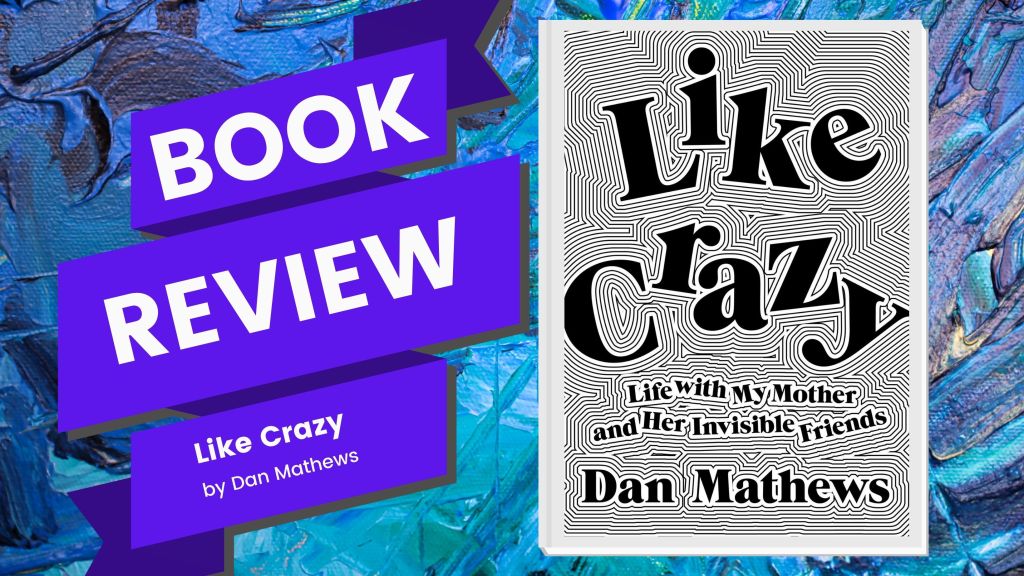
  • Like Crazy: Life With My Mother and Her Invisible Friends by Dan Mathews

    Like Crazy: Life With My Mother and Her Invisible Friends by Dan Mathews

    Genre | Memoir
    Page #s | 244
    Publishing Date | May 2020

    A hilarious and heartbreaking memoir about an outlandish mother and son on an odyssey of self-discovery, and the rag-tag community that rallied to help them as the mother entered the final phase of her life.

    Dan Mathews knew that his witty, bawdy, unhinged mother, Perry, was unable to maintain her fierce independence at seventy-eight—so he flew her across the country to Virginia to live with him in an 1870 townhouse badly in need of repairs. But to Dan, a screwdriver is a cocktail not a tool, and he was soon overwhelmed with two fixer-uppers: the house and his mother.

    Unbowed, Dan and Perry built a rollicking life together fueled by costume parties, road trips, after-hours gatherings, and an unshakeable sense of humor as they faced down hurricanes, blizzards, and Perry’s steady decline. They got by with the help of an ever-expanding circle of sidekicks—Dan’s boyfriends (past and present), ex-cons, sailors, strippers, deaf hillbillies, evangelicals, and grumpy cats—while flipping the parent-child relationship on its head.

    But it wasn’t until a kicking-and-screaming trip to the emergency room that Dan discovered the cause of his mother’s unpredictable, often caustic behavior: Perry had lived her entire adult life as an undiagnosed schizophrenic.

    Irreverent and emotionally powerful, Like Crazy is a darkly comic tale about the perils and rewards of taking in a fragile parent without derailing your life in the process. A rare story about mental illness with an uplifting conclusion, it shows the remarkable growth that takes place when a wild child settles down to care for the wild woman who raised him.

    Goodreads

    Like Crazy, the story of Dan welcoming his aging mother into his home for the last few years of her life, strikes an incredible balance between earnest affection and morbid black humor. I have found this book hard to describe, which is usually a sign that something has touched me deeper than words can describe. But I will try!

    For starters, this book hinges on the relationship between Dan and Perry; they share a dark sense of humor, a love for people and spontaneous adventures, and a passion for activism. Perry’s total acceptance of her son’s homosexuality is a beacon of pure goodness, and I was especially touched that so many of Dan’s ex-boyfriends remained close to Perry after their breakup. But no matter how great they are individually and together, it’s always hard to live to parent, never mind one who is physically and mentally unwell.

    Perry isn’t diagnosed with schizophrenia until she is in her 80s and has a breakdown. It is heartbreaking to read about, but Dan is right for being in awe of her inner strength to survive so long with an untreated mental disorder. It felt very true to watch him understand in hindsight memories of Perry’s “quirks.” So often we normalize abnormal behavior because we don’t know to think differently.

    It sounds a little cliché, but this book about Perry’s last few years is a true celebration of life. The way she is cared for and celebrated is beautiful, and though her ultimate passing is definitely sad, we are left with the knowledge that she had a full and meaningful life because of her resilience and the love of her family.

    I loved everything about this book, from its content to its tone, which is irreverent and loving and overwhelmed and intelligent. I’m so grateful that Mathews shared his story with all of us.

    What Makes This Book Queer?

    Dan is a gay man whose ex-boyfriends make frequent appearance throughout, since his mom is a wonderfully supportive women who welcomes all people into her life. Eventually Dan meets Jack, a recently out man who offers all of the stability and support that Dan didn’t know he needed. So cute!

    Who Would I Recommend This Book To?

    I think anyone who has both a dark side and a sweet side will appreciate the dark subject matter of this book that is handled with love and black humor.

    Rating: 5 out of 5.

    Check out our Queer Lil Library for more book recommendations and reviews!

  • Tomorrow Will Be Different: Love, Loss, and the Fight for Trans Equality by Sarah McBride

    Tomorrow Will Be Different: Love, Loss, and the Fight for Trans Equality by Sarah McBride

    Genre | Memoir
    Page #s | 272
    Publishing Date | March 2018

    A timely and captivating memoir about gender identity set against the backdrop of the transgender equality movement, by a leading activist and the National Press Secretary for the Human Rights Campaign, the nation’s largest LGBTQ civil rights organization.

    Sarah McBride is on a mission to fight for transgender rights around the world. But before she was a prominent activist, and before she became the first transgender person to speak at the Democratic National Convention in 2016, she was a teenager struggling with her identity.

    With emotional depth and unparalleled honesty, Sarah shares her personal struggle with gender identity, coming out to her supportive but distraught parents, and finding her way as a woman. She inspires readers with her barrier-breaking political journey that took her, in just four years, from a frightened, closeted college student to one of the nation’s most prominent transgender activists walking the halls of the White House, passing laws, and addressing the country in the midst of a heated presidential election. She also details the heartbreaking romance with her first love and future husband Andy, a trans man and activist, who passed away from cancer in 2014 just days after they were married.

    Sarah’s story of identity, love, and tragic loss serves as a powerful entry point for readers who want to gain a deeper understanding of gender identity and what it means to be openly transgender. From issues like bathroom access to healthcare, identification and schools, Sarah weaves the important political milestones, cultural and political debates, and historical context into a personal journey that will open hearts and change minds.

    Tomorrow Will Be Different highlights Sarah’s work as an activist and the key issues at the forefront of the fight for trans equality, providing a call-to-arms and empowering look at the road ahead. The fight for equality and freedom has only just begun.

    Goodreads

    I read this book in two days, utterly engrossed in Sarah’s personal story of coming out as a young trans woman, pursuing a career in politics and activism, and falling in love with a trans man who tragically and suddenly died of cancer. She has lived a more eventful life in her early 20s than most do in a lifetime, and I see from Instagram that after this book was published she became a Delawarean state senator!

    The first third of the book covers her childhood and coming out process. Despite some truly painful reactions from her parents, she makes it clear that their statements were largely based in fear for what the world would hold for a trans woman. She dedicated her life to ensuring laws would be in place to protect people like her so that parents would never have to worry about that again; the fact that her parents joined and supported her political fight is incredibly touching. Similarly touching was the way her identity was embraced by the Democratic political leaders she had served under, including now President Joe Biden.

    I’m not usually one to be on the edge of my seat while someone describes a law being passed, but Sarah’s descriptions of the Delawarean state legislature arguing over trans rights laws and how she angrily and empathetically shared her story to put a humanizing face to the issue was riveting. She has an inner strength that is absolutely laudable.

    In the midst of political stress and success, Sarah falls in love with Andy, a trans man who is an activist for the health care of trans people. They are adorable, romantic, and supportive, but their relationship is cut short when Andy develops fast-moving and fatal cancer. I ugly cried on public transit reading this book; Sarah’s descriptions of their conversations was heartbreaking and lovely. Once again, she allowed her story to be a humanizing element – by showing the depth of trans love, she allows cis people the chance to empathize and understand that love is love is love.

    I adored this book, and I now adore Sarah McBride. I can’t wait to see what she does next, both as an author and as a politician. If there’s any justice in the world (and there will be if people like Sarah continue to fight for it), she will go far!

    What Makes This Book Queer?

    This is a memoir about a trans woman who marries a trans man and fights for trans rights in Delaware and DC – it’s about as queer as a book can get!

    Who Would I Recommend This Book To?

    Fans of political memoirs who want the inside scoop on how progressive laws take shape AND fans of tragic romance will be equally pleased with this book.

    Rating: 5 out of 5.

    Check out our Queer Lil Library for more book recommendations and reviews!

    iscord.

  • We Have Always Been Here: A Queer Muslim Memoir by Samra Habib

    We Have Always Been Here: A Queer Muslim Memoir by Samra Habib

    How do you find yourself when the world tells you that you don’t exist?

    Samra Habib has spent most of her life searching for the safety to be herself. As an Ahmadi Muslim growing up in Pakistan, she faced regular threats from Islamic extremists who believed the small, dynamic sect to be blasphemous. From her parents, she internalized the lesson that revealing her identity could put her in grave danger.

    When her family came to Canada as refugees, Samra encountered a whole new host of challenges: bullies, racism, the threat of poverty, and an arranged marriage. Backed into a corner, her need for a safe space–in which to grow and nurture her creative, feminist spirit–became dire. The men in her life wanted to police her, the women in her life had only shown her the example of pious obedience, and her body was a problem to be solved.

    So begins an exploration of faith, art, love, and queer sexuality, a journey that takes her to the far reaches of the globe to uncover a truth that was within her all along. A triumphant memoir of forgiveness and family, both chosen and not, We Have Always Been Here is a rallying cry for anyone who has ever felt out of place and a testament to the power of fearlessly inhabiting one’s truest self.

    Goodreads

    An excellent memoir about the intersectionality of being Muslim and queer, written with honesty and directness. Habib’s story is one of restriction to freedom, including the freedom to return to the religion that imposed the original restrictions. After growing up in Pakistan, Habib and her family fled to Canada to escape religious persecution. She was married twice by the time she was 20, first in an arranged marriage to her cousin, and second to a friend who agreed to marry her primarily to provide her social security. As an adult, she began to accept her queerness, dating women, trans women, and gender non-binary folx. Having come to terms with her queer identity, she returned to Islam. She came out to her parents, who were also changed by their time in Canada, and discovered a mosque for LGBTQ+ Muslims. She developed a passion for sharing photographs of queer Muslims, giving a face to a population few realize exist.

    I think Habib is a remarkable woman, and I enjoyed this short memoir very much. However, it does suffer slightly from a common memoir issue: The stories of her childhood are fluid and concise. The nearer she gets to her current age, the more details are included, sometimes unnecessarily.

    The section that resonated with me most deeply was Habib’s description of traveling when she was newly out. She talks about the freedom of self-expression while traveling, of trying out a new identity in a place where no one knows the older versions of you. I have experienced that many times myself, and she expressed the joy and relief very well.

    I have to admit that before reading this book, I was one of those people who didn’t know much about queer Muslims. I knew that it was statistically likely that just as many people were queer in Muslim countries as in others, but I couldn’t point to any stories or people that I knew. I would love for Habib to write a book highlighting all of the queer Muslim folx that she interviewed – it would be hugely beneficial to me, and I assume to many others as well.

    Rating: 4 out of 5.

    Check out our Queer Lil Library for more book recommendations and reviews!