Tag: Book Review

  • Tomorrow Will Be Different: Love, Loss, and the Fight for Trans Equality by Sarah McBride

    Tomorrow Will Be Different: Love, Loss, and the Fight for Trans Equality by Sarah McBride

    Genre | Memoir
    Page #s | 272
    Publishing Date | March 2018

    A timely and captivating memoir about gender identity set against the backdrop of the transgender equality movement, by a leading activist and the National Press Secretary for the Human Rights Campaign, the nation’s largest LGBTQ civil rights organization.

    Sarah McBride is on a mission to fight for transgender rights around the world. But before she was a prominent activist, and before she became the first transgender person to speak at the Democratic National Convention in 2016, she was a teenager struggling with her identity.

    With emotional depth and unparalleled honesty, Sarah shares her personal struggle with gender identity, coming out to her supportive but distraught parents, and finding her way as a woman. She inspires readers with her barrier-breaking political journey that took her, in just four years, from a frightened, closeted college student to one of the nation’s most prominent transgender activists walking the halls of the White House, passing laws, and addressing the country in the midst of a heated presidential election. She also details the heartbreaking romance with her first love and future husband Andy, a trans man and activist, who passed away from cancer in 2014 just days after they were married.

    Sarah’s story of identity, love, and tragic loss serves as a powerful entry point for readers who want to gain a deeper understanding of gender identity and what it means to be openly transgender. From issues like bathroom access to healthcare, identification and schools, Sarah weaves the important political milestones, cultural and political debates, and historical context into a personal journey that will open hearts and change minds.

    Tomorrow Will Be Different highlights Sarah’s work as an activist and the key issues at the forefront of the fight for trans equality, providing a call-to-arms and empowering look at the road ahead. The fight for equality and freedom has only just begun.

    Goodreads

    I read this book in two days, utterly engrossed in Sarah’s personal story of coming out as a young trans woman, pursuing a career in politics and activism, and falling in love with a trans man who tragically and suddenly died of cancer. She has lived a more eventful life in her early 20s than most do in a lifetime, and I see from Instagram that after this book was published she became a Delawarean state senator!

    The first third of the book covers her childhood and coming out process. Despite some truly painful reactions from her parents, she makes it clear that their statements were largely based in fear for what the world would hold for a trans woman. She dedicated her life to ensuring laws would be in place to protect people like her so that parents would never have to worry about that again; the fact that her parents joined and supported her political fight is incredibly touching. Similarly touching was the way her identity was embraced by the Democratic political leaders she had served under, including now President Joe Biden.

    I’m not usually one to be on the edge of my seat while someone describes a law being passed, but Sarah’s descriptions of the Delawarean state legislature arguing over trans rights laws and how she angrily and empathetically shared her story to put a humanizing face to the issue was riveting. She has an inner strength that is absolutely laudable.

    In the midst of political stress and success, Sarah falls in love with Andy, a trans man who is an activist for the health care of trans people. They are adorable, romantic, and supportive, but their relationship is cut short when Andy develops fast-moving and fatal cancer. I ugly cried on public transit reading this book; Sarah’s descriptions of their conversations was heartbreaking and lovely. Once again, she allowed her story to be a humanizing element – by showing the depth of trans love, she allows cis people the chance to empathize and understand that love is love is love.

    I adored this book, and I now adore Sarah McBride. I can’t wait to see what she does next, both as an author and as a politician. If there’s any justice in the world (and there will be if people like Sarah continue to fight for it), she will go far!

    What Makes This Book Queer?

    This is a memoir about a trans woman who marries a trans man and fights for trans rights in Delaware and DC – it’s about as queer as a book can get!

    Who Would I Recommend This Book To?

    Fans of political memoirs who want the inside scoop on how progressive laws take shape AND fans of tragic romance will be equally pleased with this book.

    Rating: 5 out of 5.

    Check out our Queer Lil Library for more book recommendations and reviews!
    iscord.

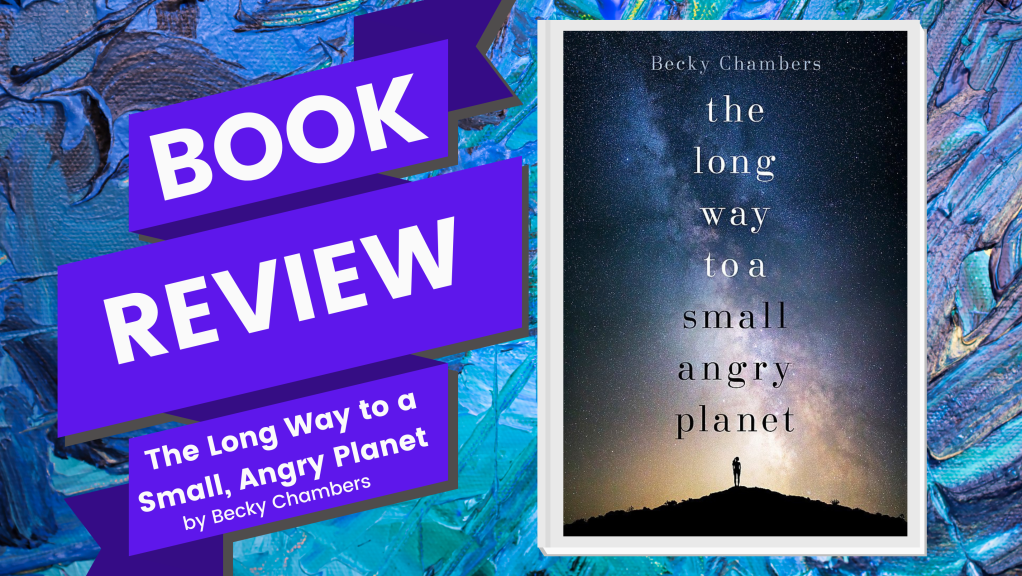
  • The Long Way to a Small, Angry Planet by Becky Chambers

    The Long Way to a Small, Angry Planet by Becky Chambers

    Genre | Science Fiction
    Page #s | 518
    Publishing Date | July 2014

    Follow a motley crew on an exciting journey through space-and one adventurous young explorer who discovers the meaning of family in the far reaches of the universe-in this light-hearted debut space opera from a rising sci-fi star.

    Rosemary Harper doesn’t expect much when she joins the crew of the aging Wayfarer. While the patched-up ship has seen better days, it offers her a bed, a chance to explore the far-off corners of the galaxy, and most importantly, some distance from her past. An introspective young woman who learned early to keep to herself, she’s never met anyone remotely like the ship’s diverse crew, including Sissix, the exotic reptilian pilot, chatty engineers Kizzy and Jenks who keep the ship running, and Ashby, their noble captain.

    Life aboard the Wayfarer is chaotic and crazy—exactly what Rosemary wants. It’s also about to get extremely dangerous when the crew is offered the job of a lifetime. Tunneling wormholes through space to a distant planet is definitely lucrative and will keep them comfortable for years. But risking her life wasn’t part of the plan. In the far reaches of deep space, the tiny Wayfarer crew will confront a host of unexpected mishaps and thrilling adventures that force them to depend on each other. To survive, Rosemary’s got to learn how to rely on this assortment of oddballs—an experience that teaches her about love and trust, and that having a family isn’t necessarily the worst thing in the universe.

    Goodreads

    I don’t know how I slept on this Hugo award-winning queer science fiction novel that focuses on characterization and cultural worldbuilding over plot (my favorites), but I’m so glad I found it now! Every page of this book was a delight, and I can’t wait to continue with the rest of the Wayfarer series!

    The people on board the Wayfarer spaceship are the heart and soul of this book. There’s Rosemary, a human woman from Mars who serves as the ship’s clerk, and Captain Ashby, a human man having an illicit affair with a sapient race that forbids interspecies relationships. Kizzy and Jenks are the ship mechanics – Kizzy is a dizzying force of nature and Jenks has fallen in love with Lovey, the ship’s AI. Corbin is the cantakerous algae specialist (because spaceships run on algae, it’s incredible) and Dr. Chef is the doctor/chef (I love this book so much) whose six handfeet make short work of cooking. Then there’s the mysterious Ohan, who are a Pair merged with the Whisperer that allows them to see into subspace, and pilot Sissix, MY FAVORITE, an alien lizard species that thrives off of cuddling because of social bonding and also being cold-blooded.

    The crew is hired to build a tunnel from one end of the galaxy to the other, and the majority of the book takes place in the long space between destinations. We get to see the world through each character’s eyes as they stop at port cities, survive attacks, and meet each other’s families. Each alien culture is well thought out and interacts with each other in very realistic ways – although there is a feeling of progress to the story (things are definitely better in this future), there are still war criminals, prejudice and conflicting arguments about free will and sapient consciousness.

    This might be my favorite book of the year. Although I’m embarrassed to have not known about it for so long, I’m glad I’ve discovered the series after it’s finished so that I don’t have to wait to continue in Chambers’ world!

    What Makes This Book Queer?

    Not only does this book take advantage of space cultures to explore queer themes of identity, interpersonal relationships, and family, it also explicitly pairs a human woman and a female Aandrisk (lizard-type alien) in the beginnings of a polyamorous relationship. I honestly didn’t expect it, and when they started hooking up, I literally read every paragraph out loud to my girlfriend because I was so delighted.

    Who Would I Recommend This Book To?

    The Long Way to a Small, Angry Planet is the perfect book for anyone who is a fan of the TV show Firefly – aka anyone who loves sci-fi stories that focus on a small band of diverse people who become a found family to each other.

    Rating: 5 out of 5.

    Check out our Queer Lil Library for more book recommendations and reviews!
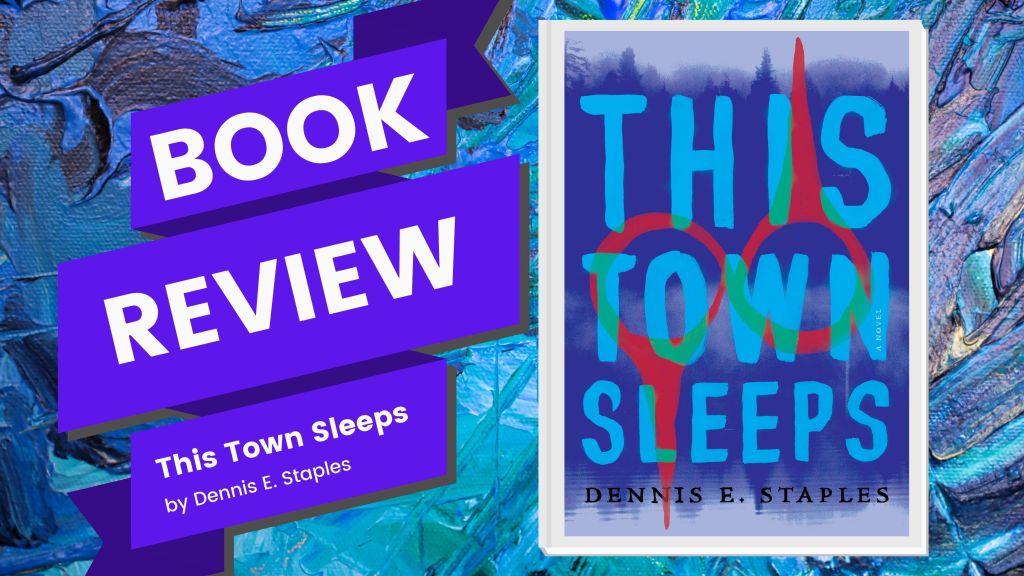
  • This Town Sleeps by Dennis E. Staples

    This Town Sleeps by Dennis E. Staples

    Genre | Contemporary Fiction
    Page #s | 208
    Publishing Date | March 2020

    On an Ojibwe reservation called Languille Lake, within the small town of Geshig at the hub of the rez, two men enter into a secret romance. Marion Lafournier, a midtwenties gay Ojibwe man, begins a relationship with his former classmate Shannon, a heavily closeted white man. While Marion is far more open about his sexuality, neither is immune to the realities of the lives of gay men in small towns and closed societies.

    Then one night, while roaming the dark streets of Geshig, Marion unknowingly brings to life the spirit of a dog from beneath the elementary school playground. The mysterious revenant leads him to the grave of Kayden Kelliher, an Ojibwe basketball star who was murdered at the age of seventeen and whose presence still lingers in the memories of the townsfolk. While investigating the fallen hero’s death, Marion discovers family connections and an old Ojibwe legend that may be the secret to unraveling the mystery he has found himself in.

    Set on a reservation in far northern Minnesota, This Town Sleeps explores the many ways history, culture, landscape, and lineage shape our lives, our understanding of the world we inhabit, and the stories we tell ourselves to make sense of it all.

    Goodreads

    A dreamy mystery set in a small Ojibwe reservation town in Michigan, This Town Sleeps dives into intergenerational violence, trauma, and stunted potential through the eyes of a young gay Indigenous man. I was totally engrossed by Marion’s story, and though I might have wished for a happier ending, the one that was given was hopeful enough, and true.

    The mystery at the center of the book is not so much why a young man was murdered ten years ago so much as why this tragedy is haunting (literally and figuratively) Marion. An Indigenous nonbeliever, he allows Native spirituality into his life to reveal the reason a revenant dog keeps connecting him to deceased Kayden Kelliher, culminating in a really lovely cathartic basketball game (words I never thought I’d say).

    This book is deliciously ambiguous like the best books with magical realism, full of coincidences that can’t be explained and spectral figures that disappear when someone else enters the room. “Spectral figures” might sound creepy, but it’s not. Instead, the whispers of the past and of death serve to highlight the tragedy that seeps through the stories of every person in Geshig.

    Throughout the book, we increasingly get sections or whole chapters from perspectives of people who are connected to Marion and Kayden; they all struggle with family, loss, and disappointment. The whole town is traumatized. Marion himself keeps trying to leave and start a new life for himself, living on the outskirts of his old home but always returning to childhood haunts. But the pull of place is impossible to resist, as is his relationship with Shannon. Despite the fact that Shannon is closeted and struggling with some intense internalized homophobia, Marion can’t keep away. It’s a theme, and one that is crystalized in the final pages when we hope he will break free of his roots but despair that he will lose something if he does. There are no easy answers here, but the story surrounding the questions is beautiful.

    Who Would I Recommend This Book To?

    This is a book for people who want to read fictional stories about modern Indigenous experiences.

    Rating: 4 out of 5.

    Check out our Queer Lil Library for more book recommendations and reviews!

  • The Seven Husbands of Evelyn Hugo by Taylor Jenkins Reid

    The Seven Husbands of Evelyn Hugo by Taylor Jenkins Reid

    Genre | Historical Fiction
    Page #s | 391
    Publishing Date | June 2017

    Aging and reclusive Hollywood movie icon Evelyn Hugo is finally ready to tell the truth about her glamorous and scandalous life. But when she chooses unknown magazine reporter Monique Grant for the job, no one is more astounded than Monique herself. Why her? Why now?

    Monique is not exactly on top of the world. Her husband has left her, and her professional life is going nowhere. Regardless of why Evelyn has selected her to write her biography, Monique is determined to use this opportunity to jumpstart her career.

    Summoned to Evelyn’s luxurious apartment, Monique listens in fascination as the actress tells her story. From making her way to Los Angeles in the 1950s to her decision to leave show business in the ‘80s, and, of course, the seven husbands along the way, Evelyn unspools a tale of ruthless ambition, unexpected friendship, and a great forbidden love. Monique begins to feel a very real connection to the legendary star, but as Evelyn’s story near its conclusion, it becomes clear that her life intersects with Monique’s own in tragic and irreversible ways.

    Goodreads

    The world’s straightest title masks a deeply romantic bisexual love story. If you love Old Hollywood, (fictional) tell alls, and confident women who are unapologetic about the course their life has taken, then this is the book for you!

    Smartly written, protagonist Monique has been plucked from reporter obscurity to write a biography of superstar Evelyn Hugo for seemingly no reason. While Monique’s story is interesting, Reid knows that once we are introduced to Evelyn, hers is the narrative we want to spend the most time with.

    Framed in a timeline that takes us through each of her husbands, Evelyn is young Cuban woman who wants to escape her life of poverty and the dangerous look in her father’s eyes. At age 14 she marries an older man to escape to California and unapologetically uses her sex appeal to start her acting career. Throughout the novel, Evelyn insists that she does not regret any of her actions; what other options did a woman in her position have?

    This is what makes Evelyn such an appealing protagonist. She has lost much – her Cuban heritage when Hollywood executives change her name and dye her hair blonde, her innocence when she realizes the only currency she has is sex – but she is so ambitious and determined that she never lets these tragedies define her. They happened, but they served a purpose, and she wouldn’t unwrite them.

    In fact, the only thing that she regrets is the spouse that no one knows about – as a Hollywood starlet determined to be the kind of rich that doesn’t rely on anyone ever, her relationship with co-star Celia St. James had to be hidden. And in hiding their love, Evelyn made choices that nearly ruined their relationship. Now, at the end of her life, she wants to tell the world that she is a bisexual woman and that her seven husbands didn’t hold a candle to her wife.

    This book is compelling, fun, and a total page-turner. Just when we are fully engrossed in Evelyn’s life, her story merges with Monique’s authentically and ties hints from the beginning of the book to its conclusion. It’s a smart, entertaining read that should satisfy anyone looking for a fun summer read.

    What Makes This Book Queer?

    As I mentioned in the review, Evelyn Hugo reveals that the relationship she considers most important was with a woman. More than that, she is unapologetically bisexual, despite the confusion and pain this causes both her heterosexual and homosexual partners. One of her best friends is also gay, and it is heartbreaking to read how even the world’s most powerful people were forced (and often are still forced) to hide who they are to maintain that cultural power.

    Who Would I Recommend This Book To?

    Literally everyone! But if historical fiction about strong women appeals to you, this should satisfy.

    Rating: 5 out of 5.

    Check out our Queer Lil Library for more book recommendations and reviews!
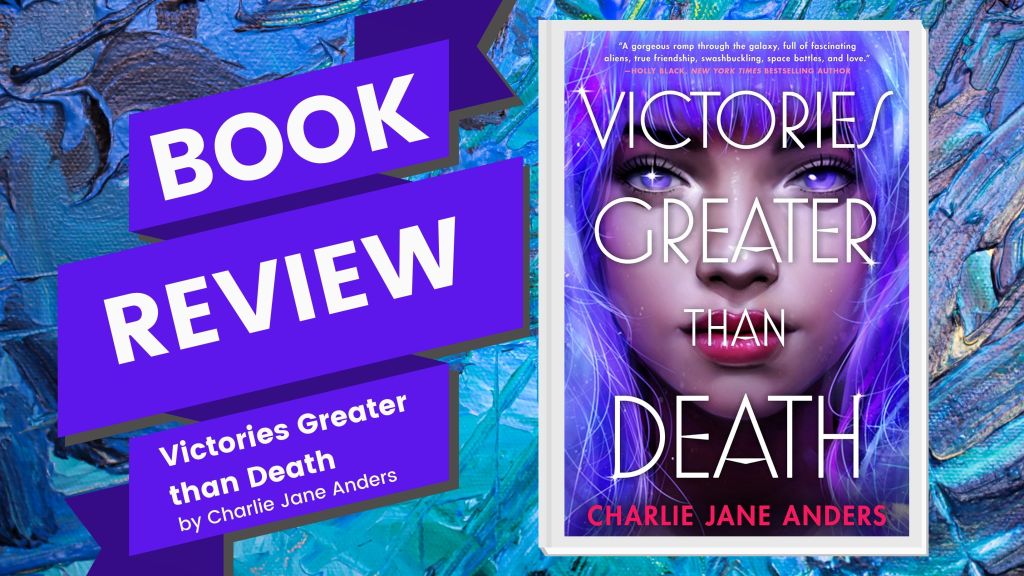
  • Victories Greater Than Death by Charlie Jane Anders

    Victories Greater Than Death by Charlie Jane Anders

    Genre | YA Science Fiction
    Page #s | 283
    Publishing Date | April 2021

    Tina never worries about being ‘ordinary’—she doesn’t have to, since she’s known practically forever that she’s not just Tina Mains, average teenager and beloved daughter. She’s also the keeper of an interplanetary rescue beacon, and one day soon, it’s going to activate, and then her dreams of saving all the worlds and adventuring among the stars will finally be possible. Tina’s legacy, after all, is intergalactic—she is the hidden clone of a famed alien hero, left on Earth disguised as a human to give the universe another chance to defeat a terrible evil.

    But when the beacon activates, it turns out that Tina’s destiny isn’t quite what she expected. Things are far more dangerous than she ever assumed. Luckily, Tina is surrounded by a crew she can trust, and her best friend Rachel, and she is still determined to save all the worlds. But first she’ll have to save herself.

    Buckle up your seatbelt for this thrilling sci-fi adventure set against an intergalactic war from international bestselling author Charlie Jane Anders.

    Goodreads

    Boasting some of the most creative sci-fi elements I’ve ever seen in a novel, I really wanted to like Victories Greater than Death. Unfortunately, the characters felt unrealistic and the plot felt like a series of events that the author wanted to happen rather than a cohesive series of consequences.

    Tina’s mother always told her that she was an alien with human DNA who was implanted with a rescue beacon in her chest. I kept waiting for this to be questioned by someone, but no, it is a fact that is accepted despite Earth having no previous contact with extraterrestrial beings. When the rescue beacon does, in fact, go off, Tina and her best friend Rachael are whisked into an interstellar adventure.

    There were many details that enthralled me and kept me reading. Some were pure creativity, like the Cydoghian egg burst, an alien meal that expands and contracts as you attempt to eat it. Others were politically creative, like the culture they come across that only allows people to participate in governmental leadership while pregnant (male or female) because they are then more likely to consider the future. I also love the queer expansion of a sci-fi trope, making the universal translator automatically include people’s pronouns when they introduce themselves.

    And then there was the legitimately creepy death goo coating the Big Bad’s hands. When he touches someone, they melt into a puddle. Even worse, everyone’s memory of that person is permanently tainted, leaving them with the belief that the deceased was a worthless, gross being. This is so cool and disturbing! Unfortunately, it also loses its bite, since Tina quickly realizes what has happened and constantly reminds herself that this feeling isn’t true.

    This is a YA book, but this lack of a bite is felt in a lot of ways, and I think the novel suffers for it. Tina and Rachael bring four other earthlings aboard the space ship before they book it into outer space. These four are explicitly meant to be the smartest students on the planet, but they’ve definitely never left the planet before. Nevertheless, it is our humans who save the day and stay alive while much more experienced creatures die in the emotional moments. Eventually it made me lose any fear of confrontations since I knew who would survive.

    I did enjoy reading this book, and as I said, the creativity is really fun. But I feel like it could have used another round of editing while asking, “Does it make sense for this person to say and/or do this right now?”

    What Makes This Book Queer?

    Undoubtedly, the queerness of this book is the strongest point in its favor. In addition to my earlier mention about sharing pronouns being standardized, there are multiple nonbinary and trans characters in addition to multiple gay, pan, and queer characters, plus a description of a culture where polyamory is the norm.

    Who Would I Recommend This Book To?

    This is a good book for someone who wants a light read and is more interested in world building than in plot.

    Rating: 3 out of 5.

    Check out our Queer Lil Library for more book recommendations and reviews!
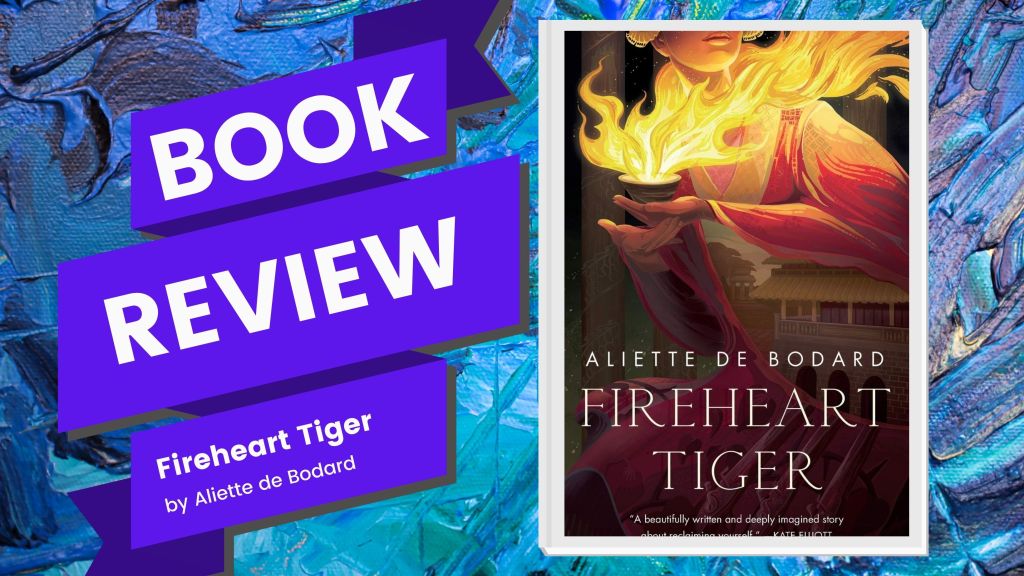
  • Fireheart Tiger by Aliette de Bodard

    Fireheart Tiger by Aliette de Bodard

    Genre | Fantasy Novella
    Page #s | 99
    Publishing Date | February 2021

    Award-winning author Aliette de Bodard returns with a powerful romantic fantasy that reads like The Goblin Emperor meets Howl’s Moving Castle in a pre-colonial Vietnamese-esque world.

    Fire burns bright and has a long memory….

    Quiet, thoughtful princess Thanh was sent away as a hostage to the powerful faraway country of Ephteria as a child. Now she’s returned to her mother’s imperial court, haunted not only by memories of her first romance, but by worrying magical echoes of a fire that devastated Ephteria’s royal palace.

    Thanh’s new role as a diplomat places her once again in the path of her first love, the powerful and magnetic Eldris of Ephteria, who knows exactly what she wants: romance from Thanh and much more from Thanh’s home. Eldris won’t take no for an answer, on either front. But the fire that burned down one palace is tempting Thanh with the possibility of making her own dangerous decisions.

    Can Thanh find the freedom to shape her country’s fate—and her own?

    Goodreads

    Although the themes of power differentials and self-empowerment were great, the fact that they were portrayed through the lens of two romances that I found fairly equally unappealing led to an ambivalent reading experience for me.

    Thanh is in her home country of Bihn Hai, still reeling from a traumatic fire six years ago and feeling useless in her position as princess and diplomat. When their powerful neighbor to the north comes to negotiate, Thanh must make some huge decisions that will impact both herself and her country. Her ex-lover, Princess Eldris of Ephteria, has come to propose, but Thanh isn’t sure that this is what she wants.

    I think the biggest problem for me was that we get hints of Eldris’s anger and control because Thanh says so, but we what we see is someone who professes their love and defends their relationship against those who would try to exploit it (until the end, anyway). I do appreciate the fact that in this relationship, Thanh would never truly be Eldris’s equal because of politics, but I’m not convinced that the romantic alternative is much better.

    Now, I love a fire elemental. But the fact that this book opens with Thanh having a traumatic flashback to the fire that almost killed her (and did kill others) but finds the elemental responsible a viable love interest didn’t track for me. Thanh! You don’t have to choose between two powerful and dangerous women! Find yourself a better girlfriend.

    The romances are central to the story, but what I liked best was Thanh’s growing confidence as a diplomat and a stateswoman. She is eventually able to stand up to her mother the Queen and create a path to a more independent future for her country. That stuff was all awesome, and if the romances had been left out I might have liked the book a lot more (chalk that up to something I never thought I’d say!).

    Who Would I Recommend This Book To?

    Despite my ambivalence, this is a great little book to give to a friend who wants to dip their toes into Asian-based fantasy worlds with queer lady protagonists.

    Rating: 3 out of 5.

    Check out our Queer Lil Library for more book recommendations and reviews!
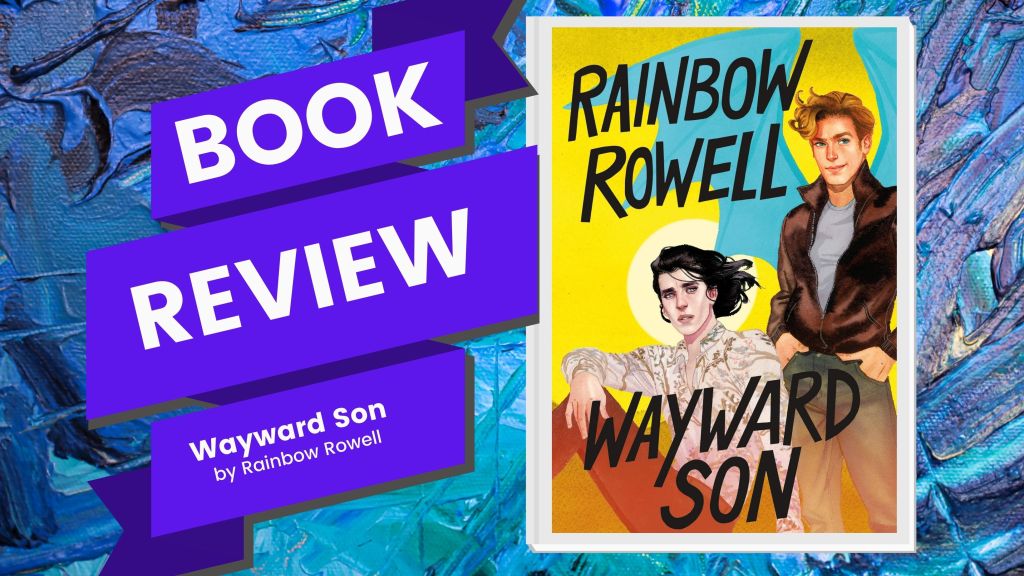
  • Wayward Son by Rainbow Rowell

    Wayward Son by Rainbow Rowell

    Genre | YA Fantasy
    Page #s | 356
    Publishing Date | September 2019

    The story is supposed to be over.

    Simon Snow did everything he was supposed to do. He beat the villain. He won the war. He even fell in love. Now comes the good part, right? Now comes the happily ever after…

    So why can’t Simon Snow get off the couch?

    What he needs, according to his best friend, is a change of scenery. He just needs to see himself in a new light…

    That’s how Simon and Penny and Baz end up in a vintage convertible, tearing across the American West.

    They find trouble, of course. (Dragons, vampires, skunk-headed things with shotguns.) And they get lost. They get so lost, they start to wonder whether they ever knew where they were headed in the first place…

    With Wayward Son, Rainbow Rowell has written a book for everyone who ever wondered what happened to the Chosen One after he saved the day. And a book for everyone who was ever more curious about the second kiss than the first. It’s another helping of sour cherry scones with an absolutely decadent amount of butter.

    Come on, Simon Snow. Your hero’s journey might be over – but your life has just begun.

    Goodreads

    When I first read Carry On, I expected to love it as a self-referential ode to Harry/Draco fanfic. Instead, I found a thoughtful book in its own right. Wayward Son moves even further into its own unique space, taking Simon, Baz, and Penelope on an American road trip to save Agatha and avoid the existential angst of outliving one’s role as the Chosen One.

    I adore every single character in this book. Simon is depressed, having lost his magic and his purpose (though he also gained a tail and wings) after the events of the previous book. It is painful and all too real to watch him doubt himself and his relationship with Baz. Speaking of, Baz is going through his own struggles trying to support someone with depression; he also gets a wrench thrown into his vampiric worldview when he meets American vampires who aren’t absolutely monstrous.

    Penelope shines in this book, confronted with consequences as a result of her controlling tendencies; I loved that her arc included realizing she is bossy but responding, “Yeah, well, I should be the boss; I’m the smartest.” And then there’s Agatha! My darling Agatha, who just wants to get away from the fantasy world of magic and danger. I’m so glad she has continued to be a part of the story after fleeing England, and I hope she is an even bigger part of the next book.

    The third book in this series, Any Way the Wind Blows, comes out today! I can’t wait to get my hands on it.

    What Makes This Book Queer?

    Simon and Baz are in a gay relationship, though since this is the middle book in a trilogy (?), they are not in the best of places. They are constantly misunderstanding each other and missing opportunities for romance (though that means when they DO connect, it is all the more precious).

    Who Would I Recommend This Book To?

    Anyone who enjoys loving deconstructions of traditional YA books and storylines.

    Rating: 5 out of 5.

    Check out our Queer Lil Library for more book recommendations and reviews!

    d.

  • Sometimes You Have to Lie: The Life and Times of Louise Fitzhugh, Renegade Author of Harriet the Spy by Leslie Brody

    Sometimes You Have to Lie: The Life and Times of Louise Fitzhugh, Renegade Author of Harriet the Spy by Leslie Brody

    Genre | Biography
    Page #s | 335
    Publishing Date | December 2020

    In this inspiring biography, discover the true story of Harriet the Spy author Louise Fitzhugh — and learn about the woman behind one of literature’s most beloved heroines.

    Harriet the Spy, first published in 1964, has mesmerized generations of readers and launched a million diarists. Its beloved antiheroine, Harriet, is erratic, unsentimental, and endearing-very much like the woman who created her, Louise Fitzhugh.

    Born in 1928, Fitzhugh was raised in segregated Memphis, but she soon escaped her cloistered world and headed for New York, where her expanded milieu stretched from the lesbian bars of Greenwich Village to the art world of postwar Europe, and her circle of friends included members of the avant-garde like Maurice Sendak and Lorraine Hansberry. Fitzhugh’s novels, written in an era of political defiance, are full of resistance: to authority, to conformity, and even — radically, for a children’s author — to make-believe.

    As a children’s author and a lesbian, Fitzhugh was often pressured to disguise her true nature. Sometimes You Have to Lie tells the story of her hidden life and of the creation of her masterpiece, which remains long after her death as a testament to the complicated relationship between truth, secrecy, and individualism.

    Goodreads

    I was excited to read a biography of a lesbian children’s author, but I found it very difficult to connect with Louise Fitzhugh and therefore the book itself. In a stunning example of intersectionality at work, Fitzhugh’s race and class gave her so much privilege that her queerness very rarely resulted in consequences. If I’m totally honest, she came across quite spoiled, and though there were some interesting anecdotes, on the whole I wasn’t interested.

    The best parts of the book were the beginning and the end. Her parents tumultuous marriage and public divorce was novel for the time, and the fact that they tried to hide it from little Louise was definitely traumatizing. But her storyteller brain spun herself into a victim and potentially kept her from enjoying healthy relationships with her stepmother at the very least.

    I did also enjoy her early forays into romantic and sexual relationships. I was surprised that she was sure of her attraction to women early on, and no one seemed to care beyond the heartbroken young men she passed over for a woman. I appreciated the stories of her romantic attraction to various men and how she tried to see if it could work before ultimately realizing the sexual attraction wasn’t there.

    Unfortunately, it then devolved into a rotating series of relationships with women who gave and gave, but I wasn’t sure what exactly Louise was giving back. Apparently she was quite the charmer, but she seemed very unhealthy to me.

    Readers who are more strongly attached to Harriet the Spy will likely be more interested in its author’s story, but I couldn’t get past her unexamined privilege. Has anyone else read this? Am I missing something?

    Who Would I Recommend This Book To?

    Fans of Harriet the Spy who want to know how Louise Fitzhugh’s personal life influenced characters and themes.

    Rating: 3 out of 5.

    Check out our Queer Lil Library for more book recommendations and reviews!
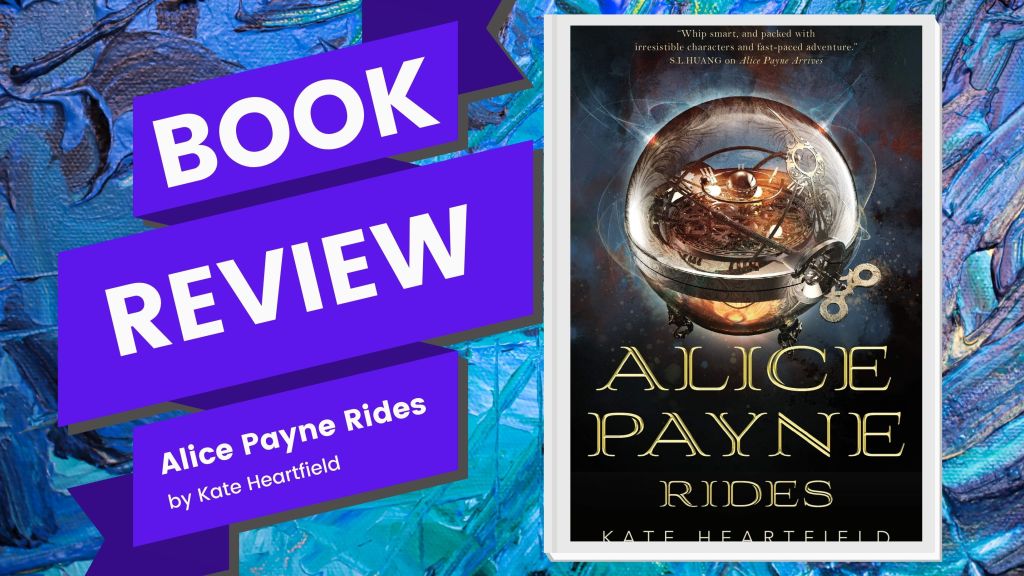
  • Alice Payne Rides by Kate Heartfield

    Alice Payne Rides by Kate Heartfield

    Alice Payne returns in the thrilling sequel to Kate Heartfield’s Alice Payne Arrives.

    After abducting Arthur of Brittany from his own time in 1203, thereby creating the mystery that partly prompted the visit in the first place, Alice and her team discover that they have inadvertently brought the smallpox virus back to 1780 with them.

    Searching for a future vaccine, Prudence finds that the various factions in the future time war intend to use the crisis to their own advantage.

    Can the team prevent an international pandemic across time, and put history back on its tracks? At least until the next battle in the time war…

    Goodreads

    Whereas the first novella in this series focused primarily on two alternating threads featuring Alice Payne and Prudence Zuniga respectively, the sequel has much more of an adventure team feel. I loved getting more time with Jane Hogdson and Constable Wray Auden. They’re all in the know where time travel is concerned, and I found it uniquely delightful to read about time travelers who are (mostly) from the 1780s. It’s such a fun juxtaposition to have futuristic tech in a historical setting.

    I also thought it was unique and clever of Heartfield to dwell on the ramifications of time travel and disease transmission. The group hops through time and accidentally brings smallpox home, then has to jump forward to get a vaccine, and of course – hijinks! For anyone with COVID fatigue, please be assured that this is neither an overwhelming part of the book nor is it portrayed with much fear. I had just never seen a book about time travel address the fact that it would be super easy to screw history up with a sneeze.

    Like Alice Payne Arrives, the science fiction aspects of the story are just outside of my understanding, but not so much that it affects the joy of the story. The characters are what really matter here, and watching them accidentally gather a motley crew of abandoned historical footnotes (there would have been an actual King Arthur if not for their meddling!) at Alice’s English estate. I hope we get to see more of them in the future!

    Rating: 4 out of 5.

    Check out our Queer Lil Library for more book recommendations and reviews!

  • Sharp Ends by Joe Abercrombie

    Sharp Ends by Joe Abercrombie

    Genre | Grimdark Fantasy
    Page #s | 287
    Publishing Date | April 2016

    Sharp Ends is the ultimate collection of award winning tales and exclusive new short stories from the master of grimdark fantasy, Joe Abercrombie.

    Violence explodes, treachery abounds, and the words are as deadly as the weapons in this rogue’s gallery of side-shows, back-stories, and sharp endings from the world of the First Law.

    The Union army may be full of bastards, but there’s only one who thinks he can save the day single-handed when the Gurkish come calling: the incomparable Colonel Sand dan Glokta.

    Curnden Craw and his dozen are out to recover a mysterious item from beyond the Crinna. Only one small problem: no one seems to know what the item is.

    Shevedieh, the self-styled best thief in Styria, lurches from disaster to catastrophe alongside her best friend and greatest enemy, Javre, Lioness of Hoskopp.

    And after years of bloodshed, the idealistic chieftain Bethod is desperate to bring peace to the North. There’s only one obstacle left — his own lunatic champion, the most feared man in the North: the Bloody-Nine . . .

    Goodreads

    I am not a person who is drawn to grimdark stories, but Joe Abercrombie is Rachel’s favorite fantasy author. She asked me to read Best Served Cold a year ago, and this year she had me read Sharp Ends. We couldn’t stop talking about it for two days, so even though my main reaction is, “He’s clearly an amazing author; why can’t he just write about nice things?”, it is clear his work leaves a mark.

    Sharp Ends is a series of interlocking short stories that can be read alone but would resonate more deeply if you already knew the characters from his other series. Even though I only recognized some of the names, I was still immediately drawn in. Abercrombie is an absolute master when it comes to creating relatable characters with rich personalities in only a few lines. I honestly don’t know how he makes dozens of believable characters, some of whom only live for a page or two.

    Because that’s the thing…this book is so violent! And gratuitously so. If the people in the stories weren’t having such interesting feelings about the terrible things they find themselves doing, I wouldn’t give this book even one star. But every character is so interesting, most of them wrestling with some kind of cognitive dissonance, wanting to be good people but then rationalizing leaving a wounded person to be murdered or having to kill ten people to finish a thieving job. If nothing else, this book makes a very compelling case for the philosophical argument that people aren’t bad, we’re all just products of a system that necessitates bad actions.

    I also admire Abercrombie for never shying away from the implications of the violence in his world. In one of the most memorable short stories, we see “nobodies” who died in the wake of Murcatto’s warpath of revenge in Best Served Cold. From a bank teller who worries about pleasing his wife to a prostitute who comforts a soldier who needs a good cry, their lives are snuffed out by another protagonist’s actions. We aren’t allowed to revel in the violence, because the faceless masses are given faces. I like that quite a lot.

    Another thing Abercrombie does well is his ability to write women as actual people. They’re as grumpy, snarky, and brutal as any man in the book, but they also worry about their itchy inseams and if the girl they’ve always pined after is only using them. Even though there is a lot of prostitution in his stories, there isn’t explicit sexual violence. Instead, the job is portrayed like all the other jobs – something that is often unwanted and unsavory, but necessary to get by.

    I’m never going to gravitate to a Joe Abercrombie book because my heart is overly sensitive. But I can appreciate his skill and wish I had a stronger stomach when Rachel offers me the next book in a year.

    What Makes This Book Queer?

    The only storyline that is repeatedly returned to is of Shev, a lesbian thief who has fallen in love with courier who repeatedly sells her out. Romance is not an optimistic endeavor in this book, but Shev’s relationship with Carcolf isn’t the one that’s most meaningful. Instead we get an amazing female duo in Shev and Javre, a massive warrior woman who insists that Shev is her henchman, sidekick maybe, definitely not partner. They are a joy to behold, and I would definitely read a whole book about them without needing a yearlong break in between.

    Who Would I Recommend This Book To?

    Sharp Ends is great little book for someone who wants to dip their toes into Abercrombie’s world or for someone who just wants a “realistic” fantasy setting (aka violent and dark).

    Rating: 4 out of 5.

    Come chat books with us on Roar Cat Reads’ discord.

  • We Have Always Been Here: A Queer Muslim Memoir by Samra Habib

    We Have Always Been Here: A Queer Muslim Memoir by Samra Habib

    How do you find yourself when the world tells you that you don’t exist?

    Samra Habib has spent most of her life searching for the safety to be herself. As an Ahmadi Muslim growing up in Pakistan, she faced regular threats from Islamic extremists who believed the small, dynamic sect to be blasphemous. From her parents, she internalized the lesson that revealing her identity could put her in grave danger.

    When her family came to Canada as refugees, Samra encountered a whole new host of challenges: bullies, racism, the threat of poverty, and an arranged marriage. Backed into a corner, her need for a safe space–in which to grow and nurture her creative, feminist spirit–became dire. The men in her life wanted to police her, the women in her life had only shown her the example of pious obedience, and her body was a problem to be solved.

    So begins an exploration of faith, art, love, and queer sexuality, a journey that takes her to the far reaches of the globe to uncover a truth that was within her all along. A triumphant memoir of forgiveness and family, both chosen and not, We Have Always Been Here is a rallying cry for anyone who has ever felt out of place and a testament to the power of fearlessly inhabiting one’s truest self.

    Goodreads

    An excellent memoir about the intersectionality of being Muslim and queer, written with honesty and directness. Habib’s story is one of restriction to freedom, including the freedom to return to the religion that imposed the original restrictions. After growing up in Pakistan, Habib and her family fled to Canada to escape religious persecution. She was married twice by the time she was 20, first in an arranged marriage to her cousin, and second to a friend who agreed to marry her primarily to provide her social security. As an adult, she began to accept her queerness, dating women, trans women, and gender non-binary folx. Having come to terms with her queer identity, she returned to Islam. She came out to her parents, who were also changed by their time in Canada, and discovered a mosque for LGBTQ+ Muslims. She developed a passion for sharing photographs of queer Muslims, giving a face to a population few realize exist.

    I think Habib is a remarkable woman, and I enjoyed this short memoir very much. However, it does suffer slightly from a common memoir issue: The stories of her childhood are fluid and concise. The nearer she gets to her current age, the more details are included, sometimes unnecessarily.

    The section that resonated with me most deeply was Habib’s description of traveling when she was newly out. She talks about the freedom of self-expression while traveling, of trying out a new identity in a place where no one knows the older versions of you. I have experienced that many times myself, and she expressed the joy and relief very well.

    I have to admit that before reading this book, I was one of those people who didn’t know much about queer Muslims. I knew that it was statistically likely that just as many people were queer in Muslim countries as in others, but I couldn’t point to any stories or people that I knew. I would love for Habib to write a book highlighting all of the queer Muslim folx that she interviewed – it would be hugely beneficial to me, and I assume to many others as well.

    Rating: 4 out of 5.

    Check out our Queer Lil Library for more book recommendations and reviews!

  • Basically Queer edited by Claire Robson, Kelsey Blair, and Jen Marchbank

    Basically Queer edited by Claire Robson, Kelsey Blair, and Jen Marchbank

    Basically Queer offers an introduction to what it can look and feel like to live life as lesbian, gay, bisexual, asexual, two spirited and trans. Written by youth and elders who’ve lived these lives first hand, the book combines no-nonsense explanations, definitions, and information with engaging stories and poetry that bring them to life. Basically Queer answers those questions that many want to ask but fear will give offence: What is it really like to be queer? What’s appropriate language? How can I be an ally? It also provides a succinct and readable account of queer history and legal rights worldwide, addresses intergenerational issues, and offers some tips and tricks for living queer. It does so in an easy and conversational style that will be accessible to most readers, including teens. The text will be of interest to those teaching courses in gender, sexuality, queer and women’s studies. It will be a useful resource for those who are questioning or examining their sexual or gender identities and those who are in relationship with them, such as doctors, teachers, parents, or friends.

    Goodreads

    This local book was recommended in Olga and Natasha’s interview, so of course I had to check it out! This series of essays is a collaboration between Quirk-e (Queer Imaging & Riting Kollective for Elders) and YfAC (Youth for A Change), two activist groups in the Vancouver area. Although the group of youth have some excellent poems, I have to say the essays that won me over were almost entirely from the elders.

    Anyone who wants to learn more about queer history from multiple individual’s perspectives would enjoy this book, but it’s especially meaningful for those of us who live in Vancouver. There’s something very special about seeing how different neighborhoods have evolved in their attitudes toward LGBTQIA2S+ communities (and sometimes, how they have not). And the overarching conceit – of queer elders offering wisdom and queer youth offering new insights – is an intergenerational joy. A lovely anthology.

    Rating: 4 out of 5.

    Check out our Queer Lil Library for more book recommendations and reviews!

  • Carry On by Rainbow Rowell

    Carry On by Rainbow Rowell

    Simon Snow is the worst Chosen One who’s ever been chosen.

    That’s what his roommate, Baz, says. And Baz might be evil and a vampire and a complete git, but he’s probably right.

    Half the time, Simon can’t even make his wand work, and the other half, he starts something on fire. His mentor’s avoiding him, his girlfriend broke up with him, and there’s a magic-eating monster running around, wearing Simon’s face. Baz would be having a field day with all this, if he were here — it’s their last year at the Watford School of Magicks, and Simon’s infuriating nemesis didn’t even bother to show up.

    Carry On – The Rise and Fall of Simon Snow is a ghost story, a love story and a mystery. It has just as much kissing and talking as you’d expect from a Rainbow Rowell story – but far, far more monsters.

    Goodreads

    I’ve JUST finished the book, like two seconds ago, and I LOVED IT.  I expected to like it, an a sort of ironic “Isn’t this odd, reading a pseudo Harry Potter fanfiction that was excerpted in Rowell’s Fangirl?” And for a while, I was mostly interested in assigning every character to their HP equivalent, but that quickly turned into genuine investment.

    I LOVE Simon!  I love Baz!  I love Penelope!  I even love Agatha, although for a while she was a useless wet blanket (but then she acknowledges her role as a useless wet blanket, only meant to further someone else’s story, and when she said “peace out!” I adored her for it).  I love the magical world in Carry On, how they have phones and computers and are simply just like Normals, but with magic.  That makes more sense to me than Harry Potter’s culturally-backwards wizarding world.  But!  I’m not comparing!  (Okay, it’s impossible not to compare.)  

    I loved the crackling dialogue, and I laughed out loud SO OFTEN at Simon and Baz’s repartee, like when arguing about the benefits and challenges of being a vampire:

    Simon lowers his eyebrows.  “When you look at it that way, why doesn’t everyone cross over?”
    “Because it’s death,” I say.
    “It clearly isn’t.”
    “They say your soul dies.”
    “That’s tosh,” he says.
    “How would you know, Snow?”
    Observation.”
    “Observation,” I say.  “You can’t observe a soul.”
    “You can over time,” he says.  “I think I’d know–”
    “It’s death,” I say, “because you need to eat life to stay alive.”
    “That’s everyone,” he says.  “That’s eating.”

    Those crazy kids.  But seriously, there’s nothing I love more than a romance built on hatred!  Or, in this case, mutual obsession that turns into need that turns into trust that turns into a love based on their mutual brokenness. And Penelope!  She and Simon are such great friends, and I loved how Rowell had her and Baz become friends too.  They all felt like real characters with interlocking lives and independent motivations.  Very impressive for, as I mentioned earlier, a pseudo-Harry Potter fanfiction that was excerpted in Rowell’s Fangirl.

    Originally posted on my other blog, www.itistrish.com.

    Check out our Queer Lil Library for more book recommendations and reviews!

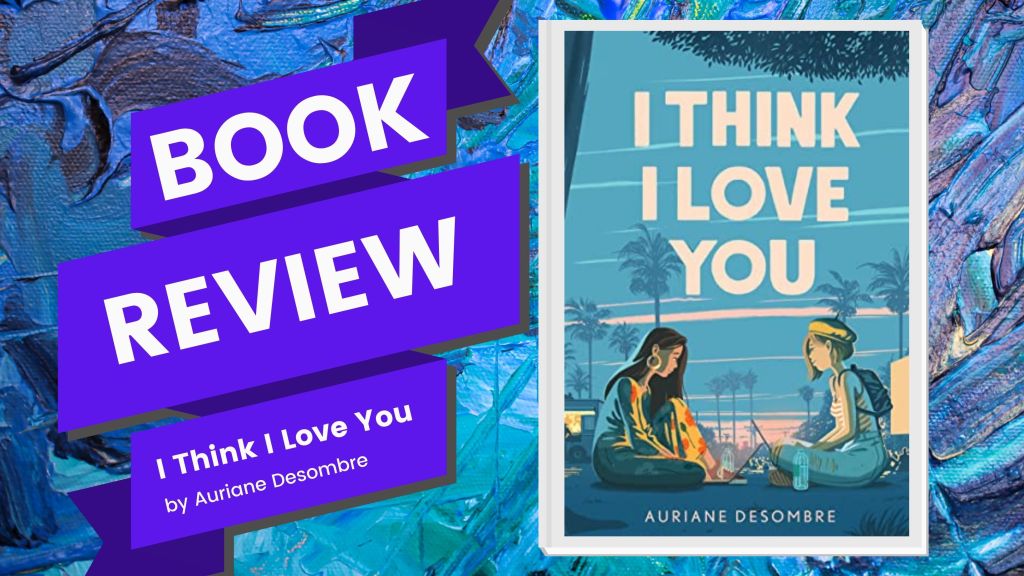
  • I Think I Love You by Auriane Desombre

    I Think I Love You by Auriane Desombre

    A sweet and funny debut novel about falling for someone when you least expect it . . . and finding out that real life romance is better than anything on screen.

    Emma is a die-hard romantic. She loves a meet-cute Netflix movie, her pet, Lady Catulet, and dreaming up the Gay Rom Com of her heart for the film festival competition she and her friends are entering. If only they’d listen to her ideas. . . 

    Sophia is pragmatic. She’s big into boycotts, namely 1) relationships, 2) teen boys and their BO (reason #2347683 she’s a lesbian), and 3) Emma’s nauseating ideas. Forget starry-eyed romance, Sophia knows what will win: an artistic film with a message.

    Cue the drama. The movie is doomed before they even start shooting . . . until a real-life plot twist unfolds behind the camera when Emma and Sophia start seeing each other through a different lens. Suddenly their rivalry is starting to feel like an actual rom-com.

    Goodreads

    I love a good queer love story, and I love fanfic tropes, but I Think I Love You fell flat for me. But before I get into that, let’s talk about the positives.

    Desombre captured Emma’s fear of coming out to her parents really well. No matter how progressive someone seems, it still feels desperately confusing to anticipate how they will react to you. And I appreciated a story that shows the hurt that comes from parents reacting with a calm and cool demeanor…saying it isn’t a big deal is hard to hear when you’ve worked up more courage than you thought you could muster.

    I also appreciated Sophia’s character throughout the first half of the book. Her fear of being excluded from her friends but reacting by overcompensating with stories about her time in France felt so realistic. She couldn’t stop shooting herself in the foot, and wow, I have been there.

    Unfortunately, almost nothing else felt realistic about this book. Emma and Sophia hate each other, which splits the group apart. So their friends tell each of them that the other has a crush on them, and suddenly their eyes are opened! For a moment I thought it was a funny acknowledgment about how powerful it is to be liked. “She likes me? She has good taste, maybe she’s better than I realized.” But they fall in love so fast (oh, and all of these 14-year-olds are throwing around the word “love”), ignoring all of the things that they disliked about each other for years before. That would be enough to drive me crazy, but then there are plot twists and misunderstandings, and nobody acts like a real human being. Maybe I should have let the drama of it all wash over me, but I just couldn’t. It was too much drama for the sake of drama.

    I love a story with a bisexual girl and a lesbian falling in love. But unfortunately, not this one.

    Rating: 2 out of 5.

    Check out our Queer Lil Library for more book recommendations and reviews!
  • Alice Payne Arrives by Kate Heartfield

    Alice Payne Arrives by Kate Heartfield

    A disillusioned major, a highwaywoman, and a war raging across time.

    It’s 1788 and Alice Payne is the notorious highway robber, the Holy Ghost. Aided by her trusty automaton, Laverna, the Holy Ghost is feared by all who own a heavy purse.

    It’s 1889 and Major Prudence Zuniga is once again attempting to change history―to save history―but seventy attempts later she’s still no closer to her goal.

    It’s 2016 and . . . well, the less said about 2016 the better!

    But in 2020 the Farmers and the Guides are locked in battle; time is their battleground, and the world is their prize. Only something new can change the course of the war. Or someone new.

    Little did they know, but they’ve all been waiting until Alice Payne arrives.

    Goodreads

    Alice Payne Arrives is a fun novella about women of color being awesome during all time periods. Alice is an 18th century Englishwoman who has a side hobby of robbing men who are known to be rapists or wifebeaters with the help of her lady lover’s automaton. Prudence is a 22nd century teleosopher (someone who studies the way time travel changes history) with a drastic plan to end the History War.

    I’ll be honest, the nuances of time travel usually go over my head, so what I’m looking for in a time travel story is interesting characters (mentioned above) and something thought-provoking. In the future, time travelers are divided between Farmers and Misguideds. Prudence is a Farmer, the more conservative group that believes history should be altered with care. The Misguideds (“No one is wrong, the Farmer’s creed declared. Only misguided.”) are more liberal, traveling throughout history to nudge people into more progressive timelines, usually with negative effects.

    I was surprised at first, as I assumed that the book was therefore anti-progressive. That’s not it at all, though. The book is anti-extremism. As the two groups further entrenched themselves in their viewpoints, traveling throughout history to counteract the other group’s actions, time spiraled out of control into chaos. Reactionary extremism is a very salient topic nowadays, and not one I expected to find in a sci-fi novella!

    What Makes This Book Queer?

    Alice is explicitly bisexual and is in a secret relationship with Jane, her companion and a talented scientist. They are in an established relationship, and I am astounded at home much depth their relationship is given in such a short novel (I keep mentioning this fact – I wish the story were longer!).

    I mean, how can you not love a book that includes one lady saying to another: “Kiss me, and then take my hand, because I don’t know what happens next.”

    I’ve already got the second book, Alice Payne Rides on hold. I can’t wait to read it!

    Rating: 4 out of 5.

    Check out our Queer Lil Library for more book recommendations and reviews!