Genre | Science Fiction Graphic Novel Page #s | 533 Publishing Date | May 2018
Throughout the deepest reaches of space, a crew rebuilds beautiful and broken-down structures, painstakingly putting the past together. As new member Mia gets to know her team, the story flashes back to her pivotal year in boarding school, where she fell in love with a mysterious new student. Soon, though, Mia reveals her true purpose for joining their ship—to track down her long-lost love.
An inventive world, a breathtaking love story, and stunning art come together in this new work by award-winning artist Tillie Walden.
Goodreads
Do you remember the moment when you realized that there are no women in The Hobbit? It was strange, right, because the story felt so natural and complete. Well, I’m here to offer you the exact opposite: On a Sunbeam, a science fiction graphic novel in which there are absolutely no men. It took me awhile to realize, since I assumed the story was simply focused on a queer group of construction workers, one of whom had flashbacks to her time at an all-female boarding school. But as we see more of the world, I’m pretty sure there are just…no men. Only women and nonbinary people allowed!
It’s awesome, especially since the story revolves around the aforementioned construction crew (that works on giant floating buildings in a glorious tribute to “my sci-fi is cool rather than realistic”) and a mob boss family that protects an isolated planet of magical healing energy. Traditionally male playgrounds, but they aren’t missed here. Instead, we get to explore sisterhood, both biologically and found. The families here are hard won and well deserved, and I loved reading every page.
What Makes This Book Queer?
There are multiple sapphic romances in this book, from the lesbians who run the construction crew and must re-evaluate how they want to spend their lives together after an excitingly dangerous phase of getting to know each other. There’s a nonbinary character on the crew, and interestingly, the lack of men in this world doesn’t mean a lack of discrimination. Elliot’s pronouns are defended in a stand-up-and-clap scene that is a lesson to all feminists. And at the heart of the story is the slow burn / cut short / reunion romance between our protagonist Mia and the girl who got away back in school.
Who Do I Recommend This Book To?
On a Sunbeam is perfect for anyone who likes a found family narrative set in a gorgeously realized fantasy sci-fi world.
Check out our Queer Lil Library for more book recommendations and reviews!
This week Roar Cat answers a question by a Dungeons and Dragons player who wants to GM but is intimidated by all the rules. Roar Cat offers advice on how to jump into GMing in the midst of learning the rules.
Dear Roar Cat,
I want to GM, but there are SO MANY rules in D&D, and if I’m honest, they really intimidate me. How closely do I need to stick to the rules, or can I just tell a fun story and make things up as I go?
Sincerely,
Overwhelmed by Rulebooks
Dear Overwhelmed by Rulebooks,
You are not the only person who has looked at the 320-page Player’s Handbook and 320-page Dungeon Master’s Guide with fear and trembling. The rules are there for a reason; after all, without them there would be no game! However, that doesn’t mean they are all equally important. When you are GMing, we recommend that you start with a knowledge of core rules and build from there as you play the game. Get a good sense of the following as a foundation:
How to Build a Character
Basic Combat Rules
Ability Checks
Here at Roar Cat Reads, we also believe that the rules of D&D are flexible, meant to be read as guidelines to foster ideas and create game cohesion. When you are creating a game, take the rules that work for you and leave others behind. If you later realize that some of those rules that you ignored would have been useful, that’s totally okay! Use them in your next session. Many of us want our D&D sessions to be perfectly smooth from the jump, but the reality is often messy. A key GM trait is the flexibility to react to new information – both from players in-game and from your expanding knowledge.
While you learn the rules and adapt them to your group’s style, keep the following in mind:
Accept corrections with humility and gratitude. You might GM for players who know more of the rules than you do. This can be uncomfortable, but keep in mind that D&D is a collaborative game. Any information shared at the table is useful for everyone, and it doesn’t all have to come from you as the GM.
If you’ve homebrewed a rule (accidentally or on purpose) and someone corrects you, make the decision as to whether you’re going to go with the established rulebook or homebrew as a group. While you have the final call as the GM, asking for a vote can keep players feeling like they have a voice at the table.
Similarly, if you get into a situation where a rule is not obvious or doesn’t exist, try to avoid breaking out of the story to spend several minutes Googling the scenario. Instead, let your players know that you are making your best call. Then note the question, look it up after the session, and let players know how that scenario will be played out in the future.
Explain your thought process as much as possible to your players, balancing the impact upon the session (“If I let this player do this thing, is it going to derail the story so completely that I won’t be able to recover?”) with the rule of cool.
Have confidence in your decision!
D&D is fundamentally a game about creativity, and that includes rules. Do your best to learn, but in the end, all that matters is that you and your players are having fun. I recently ran a game where a player wanted to be a wood elf the size of a sprite. Instead of saying no or checking how this request would affect weapon attacks, I simply agreed and let the chaos roll. Everyone had a good time, which is what ultimately matters.
Since Week 12’s recap was cancelled due to final exams, Rachel has generously summarized each matchup with a single word:
One Word Week 12 Matchups
The replacements vs Seacows: Seacows!
Battling Finger Puppets vs Real Slim Brady: Felted-Finger-Puppets-of-War! (& Top Score)
Beards ‘R Us vs Bad News Bears: Excessive!
Team Sorto vs Eurasian Collared Doves: Coooo!
Purple Moose vs Fire Pandas: Gory!
Last Week’s Games
Seacows vs Real Slim Brady
Seacows win! For the second time in a row, with top score of the week…what is happening?
Team Sorto vs Bad News Bears
A close game decided by less than 3 points, Jonathan further pads his den with wins.
Battling Finger puppets vs Purple Moose
The second meeting between these teams this year. The Finger Puppets seem to have found their playoff form, while the Moose are saving it all for the final rounds. Carrie leads the series between these teams 2-0.
Replacements vs Beards
We all remember last time these two teams met, how Amy reigned supreme? Well this time it was Jayse’s turn! Sharing victories, how sweet. Except the team that lost this game is in danger of missing the playoffs…
Doves vs Pandas
Panda > Dove. if only there was some kind of chart that could track the greatness of the animal based teams…
Standings After Week 13
The Chart (of Almost Certainly Truth)
All season I have been calling this chart a liar, and I’m not about to stop today! The chart has gathered so much data by this point in the season, its accuracy is pretty much a 15 yard field goal with 2 seconds on the clock… but will it doink?
If it doesn’t doink (aka if the chart is true) it will mean that Carrie of the Battling Finger Puppets will beat the Bad News Bears by 6 points this week (the necessary margin to split the tie).
If it doinks (aka if the chart failed to truly value an underdog (or in this case Undercow) comeback narrative), the replacements will slip to 9th and the Seacows will rise from the murk to 8th and sweet sweet playoff football.
I shall be cheering for a doink!
Preview of This Week’s Games
Seacows Vs Team Sorto
The first step in the process of the chart doink is for the Seacows to secure a win in this game. If they fail, the Seacows and team Sorto will spend a total of one month playing each other to see who will have first pick next year.
the replacements vs Purple Moose
Step two of the chart doink is for the Purple Moose to be victorious over the replacements. Only if the replacements lose can the Seacows sneak in to the playoffs. Will Amy shut the door on a manatee that has been gathering momentum the last two weeks?
Beards vs Fire Pandas
The app thinks there is still a chance the Beards won’t qualify for the playoffs. I’m not sure how it works this out, but the only way to truly know is if the Fire Pandas torch the Beards, by as many points as possible. Burn Beardy Burn!
Real Slim Brady vs Eurasian Collared Doves
The most civilised game this week that has no implications for playoff qualification and only a mild impact on Krista’s playoff match up…it must be nice.
Bad News Bears vs Battling Finger Puppets
BATTLE OF TITANS! If you have never watched another team’s game before, now is the time. This matters (kind of), this is for all the marbles (not really), this is for justice for all teams who lost to the Bad News Bears this year and that’s pretty much all of us. Put on your fuzzy felted hats, raise your tiny weapons and release your battle cry: Bad News, Bears! Punctuation matters!
When did you begin playing D&D? And what do you love most about the game?
I started playing D&D after the chaos of planning my wedding in 2018. I always wanted to play, but never really had a chance, time, or energy to learn. Thankfully my brother stepped up and taught me. I just love how D&D has become this incredible excuse to celebrate my friends regularly and cooperatively use our imaginations.
As a queer person, have roleplaying games helped you explore or express your queer identity?
I would say so. When I play with people I trust, I know I don’t have to worry about managing (or hiding) my queerness.
What drew you to want to play the Curse of Strahd adventure?
I’ve always been drawn to dark fiction and mystery. When I read the title, I immediately wanted to know what the curse is. Throw in a vampire overlord, and I’m sold! After I played through as a PC, I knew I would love to run it. It was unique in that it’s tightly self-contained compared to other modules — the party can’t just run from the problem forever. That leaves a lot of opportunity for intrigue, red herrings, and drama.
Do you have any tips or tricks for DMs who want to run the adventure?
I have so many tips. Two important things to consider for this module are safety tools and how a GM wants to run Strahd. First, figure out what your group is comfortable with in terms of horror. Their answers will dictate how far you can push the module. When it comes to Strahd, there are several different schools of thought. Some like a ruthless general, some like an evil tyrant. I prefer the patient noble archetype. Once you’ve decided how you want to run Strahd, you can shape your NPCs around their experience within Barovia.
On November 16th, What Crooked Roots (15 folk-horror themed role-play encounters) was released. How do you envision DMs incorporating this material into their sessions?
The encounters within What Crooked Roots are purposely loose. My hope is that GMs can twist them to fit their world quite easily and with a low amount of prep.
What inspired you to create within the folk horror genre, and how is that set apart from other kinds of horror stories?
My current Curse of Strahd party inspired me! At our 6-month anniversary, I sent out a survey to get their feedback on the campaign as a whole. I asked them about several genres and which one they wanted to see more of. Folk horror was the most requested. As I set out for resources, I couldn’t find anything to suit my needs. I originally planned on making a d20 roll table, but my ideas got ahead of me.
Folk horror shares a lot of similarities with other genres, and I think the definition is fairly broad. I break it down a bit in What Crooked Roots, but to summarize, it’s a realization of anxieties regarding the unknown within nature and the wild within humans.
Do you have any recommendations of queer nerdy content that you would like people to know about?
Twice Bitten is an amazing Curse of Strahd actual play with passionate players who do a wonderful job of roleplaying diverse characters.
Planet Arcana is a podcast with a delightfully rich world unlike any I’ve seen in the D&D space before. I recommend giving them a listen all the time.
Sign up for Roar Cat Reads’ Monthly Newsletter
Every month one subscriber wins a prize!
Processing…
Success! You're on the list.
Whoops! There was an error and we couldn't process your subscription. Please reload the page and try again.
By clicking submit, you agree to share your email address with the site owner and Mailchimp to receive marketing, updates, and other emails from the site owner. Use the unsubscribe link in those emails to opt out at any time.
There are a multitude of reasons to love Black Sails and to proclaim it “the best show of all time,” as the fans so often do, and one of those reasons is that it rewards analysis. Black Sails is many things: a manifesto demonstrating the power of solidarity between the oppressed in the fight against white supremacy; a commentary on how the history of the marginalized is a narrative manipulated by those in power; and a story about stories–to name only a few. But its open awareness of all of its themes is partially what makes it so powerful, self-referential, and multifaceted. That is especially true when it comes to analyzing the depth and complexity of the dynamics between its main cast of characters, nearly all of whom are explicitly or subtextually queer.
The need for more queer representation in media is an ongoing and popular conversation topic. More recently, many of the public discussions tend to revolve around people’s opinions that surely there must be One Superior Way to depict queer relationships and identities. For most, that superior way is considered to be “explicit representation,” often defined more or less as “queer content so obvious and loud that even cisgender heterosexual people can’t argue against its validity.” Interestingly, different people have different ideas of what, by this metric, constitutes as “good enough.” As a result, the goalposts seem to always be moving, and are based on the shifting sands of personal opinions. No single person has the authority to decide what “counts,” but that doesn’t stop many people from trying anyway. It is a debate fundamentally doomed to failure, because its basic premise is a flawed one: the value of queer representation should not and cannot be measured by the thoughts of those who misunderstand it at best, or act as queer oppressors at worst. To futilely attempt to measure it in such a way is to try to bend queer content to honor the impossibility of cisheteronormative standards or requirements, while seeking unwinnable, universal cisheteronormative approval.
So truly, what does it mean to be “queer enough,” either personally or narratively? Is it using a specific label to describe oneself? Proclaiming romantic love openly, in so many words? Visibly being in a romantic relationship with someone of the same sex, and defining it as such? Holding hands? Kissing? Having sex? The point is that there is no single or correct answer, and queerness as an umbrella concept is somewhat less about what one is specifically, and rather more about what one is not (namely, cisgender and/or heterosexual). Queer identities, relationships, and experiences are as diverse as every visible and invisible color in the wavelengths that make up a rainbow. Having enough variety in media to even scratch the surface of portraying that diversity should be the ultimate goal.
Black Sails is the rare piece of media that understands this concept, and embodies it to a groundbreaking and incomparable level. Because the writers built its narrative on central queer themes, Black Sails exists in an extraordinarily unique space: it includes explicit textual representation that meets the most popular mainstream standards, but it also includes subtext and queercoding to inform and enrich the story’s layers. Having the former meant the writers had the hard-won luxury of not feeling an obligation to sacrifice the latter, as well as the brilliance to recognize that there is value in and a need for both forms of representation to coexist.
The writers did not give into the false dichotomy that drags down so much of the common circular debates, as people argue that surely there must be only one correct way to depict queerness properly. Instead, by choosing to show a myriad of queer relationships both explicitly and subtextually–with no pressure to openly define all or even most of them by cisheteronormative standards–the show not only did right by its characters and what was best for its narrative, but it also exemplifies the very principles the story is about. The characters live and love diversely, while simultaneously acting as mirrors of one another in the literary sense. As they reflect and reveal each other’s traits, the resulting parallels between the more openly queer and the more subtly queer relationships highlight what the deliberate similarities can tell you about both. Underlining those similarities through these methods also effectively emphasizes how many of the characters are alike in more ways than they differ–or at least, in the ways that count the most.
As Charles Vane says to Billy Bones, “They can’t tell the difference between you and I.” The pirates are all defined in the same way by their oppressors, labeled as uncivilized monsters because they dare to fight for freedom, and love, and freedom to love without restraint. It demonstrates why solidarity amongst the oppressed is both valuable and essential. The various undefined examples of queerness that the show sets also take it a step further: true freedom is arguably being allowed to coexist authentically, beyond the constraints of expectation or the requirements of definitions. The diversity of such portrayals, depending on context, can even act as a commentary on the variety of real life queer experiences. Queer love, identities, and relationships are no less valid or impactful–or, in the case of fiction, no less canonical–for sometimes remaining somewhat undefined or understated. Simultaneously, when care is taken to define them, there is power in acknowledging such specificity without losing sight of how it does not or should not compromise the solidarity found in the community.
This is the value in subtext and queercoding as deliberate media languages. Such tools of the trade were invented to and are still used to navigate around imposed restriction and censorship of stories. If one knows or learns to stop seeing heterosexuality as the default, a whole world of depth comes to light, particularly when and where one can factor in precious knowledge of authorial intent. There should be no standard these media languages must be beholden to, or no requirements that they must adhere to, in order to be “good enough”; they can be placed with intention to be seen and understood, and if we see and understand them, then that is inherently enough in its own way. This remains true even when overt restriction and censorship are not present, such as was presumably the case in regards to Black Sails. These media languages are originally by us, for us, and there is beauty and power in their subtlety and complexities, as well as the shared community of understanding that they encourage. While explicit representation is undeniably important, overemphasizing it as the only valid way of canonically conveying queerness runs the risk of devaluing the inherent, inarguable canonicity of other methods–or losing acknowledgment of what makes them beautiful and valuable to include at all.
Including subtext and queercoding in stories encourages mutual conversations rather than passivity–conversations between a piece of media and its audience members, between one audience member and others, between one audience member and their internal self, and so on. Black Sails’ creators understood that intimately, and used it to inform and enrich their story, while also doing justice to their characters’ situations and dynamics with realistic–and thus, sometimes understated and complicated–portrayals. The result is some of the truest, most profound, and most nuanced depictions of queerness in a fictional narrative of all time. How apt it is that such a narrative was created by people who clearly both understand and revere how stories work.
This show is many things, but ultimately, it is an invitation and a challenge to look deeper. But like any invitation or challenge, the choice is left in the hands of the viewers. Black Sails is, of course, an entertaining piece of media even from a surface level perspective, and how deeply a person examines the media they consume is always optional. This show’s explicit queer representation also means that looking deeper is not a requirement for queer recognition, yet its creators still understood and exemplified the value of multifaceted queer portrayals. To consciously oversimplify this show and its varied subtext–or, worse yet, disregard those who highlight its complexities–does its creators, their work, and the points that this story is carefully conveying a disservice.
While the show mirrors its characters and relationships, it also holds up a mirror to viewers in a variety of ways. This topic is only one, and it connects to how the show makes us repeatedly aware of the power that stories hold, as it reminds us that the show itself is a story too. It asks us questions: This is a story, and stories have power, so what do you see in this? What do you take from it? What do your experiences tell you about its characters, and in turn, what do its characters reveal to you about yourself?
In the eternally applicable words of Jack Rackham, “It’s the art that leaves the mark. But to leave it, it must transcend. It must speak for itself. It must be true.” As a body of work, Black Sails speaks for itself quite clearly in multiple avenues. It has a lot to say, explicitly and subtextually alike, and demonstrates the power in and necessity of both.
It’s simply up to us how much we choose to listen.
Char Q (they/she) identifies as multiple passionate interests stacked in a human shape, often says they don’t know how to casually like things, and believes that storytelling is part of what it means to be human. Graphic designer by trade and writer by hobby, you may find them inadvisably writing character-counted media analysis as Twitter threads like it’s an extreme sport. Very occasionally, they write a longer piece elsewhere, as a treat.
Genre | Fiction Page #s | 329 Publishing Date | February 1987
The classic forerunner to The Fall of the Kings now with three bonus stories.
Hailed by critics as “a bravura performance” (Locus) and “witty, sharp-eyed, [and] full of interesting people” (Newsday), this classic melodrama of manners, filled with remarkable plot twists and unexpected humor, takes fantasy to an unprecedented level of elegant writing and scintillating wit. Award-winning author Ellen Kushner has created a world of unforgettable characters whose political ambitions, passionate love affairs, and age-old rivalries collide with deadly results.
Swordspoint
On the treacherous streets of Riverside, a man lives and dies by the sword. Even the nobles on the Hill turn to duels to settle their disputes. Within this elite, dangerous world, Richard St. Vier is the undisputed master, as skilled as he is ruthless–until a death by the sword is met with outrage instead of awe, and the city discovers that the line between hero and villain can be altered in the blink of an eye.
Goodreads
Swordspoint is a gorgeously written novel with incredible character work, but…I just couldn’t get invested in the story. It felt like nothing much was happening for the first half of the book, and the “polite society talks around itself in hidden messages” often went over my head. I loved Richard and Alec, and goodness knows that arrogant young men with swords and books are my weakness, but I ended the book without any compulsion to indulge in more.
That’s not to say there’s nothing good here. The world building is simple but deeply satisfying, with the lower class Riverside district nicely compared and contrasted with The Hill where nobility live. The role of swordsmen as a bridge between these worlds is excellently demonstrated in St Vier’s story, as he acts with all of the honor of a nobleman but is treated with the disdain of a Riversider. He also encapsulates the hypocrisy of the nobility, since they have no problem killing each other, but only if a long list of rules have been checked off first.
It’s worth mentioning that the women in this book are not treated well. Granted, it was written in 1987, but it’s still uncomfortable to read about women casually being called whores and being mistreated by the men who own them (either formally or informally). There is one woman with power who is quite interesting, but because she’s the only one and her power comes through subterfuge and sexual favors, she instead comes across rather stereotypical.
What Makes This Book Queer?
For a moment, I thought everyone in Swordspoint was bisexual, and this is almost the case. That is awesome, but we do only get to spend time with male/male partners. I love Richard and Alec, but combined with the uncomfortable female characters, the queerness is tainted by a whiff of misogyny.
⭐⭐⭐⭐
Rating: 3.5 out of 5.
Check out our Queer Lil Library for more book recommendations and reviews!
It’s the most wonderful time of the year! The excuse to stay at home (like we didn’t have one already), curl up, and dive into something fun or cozy or both! My definition of cozy might be a tad different than most, but that’s only because I think cozy can include nonfiction, too! Let’s dive in!
This was a little bit of a sleeper book from Rowley (The Editor), which is a shame because it’s a ton of fun. Patrick has his niblings, Maisie and Grant, for the summer and they’re ensconced in bright, sunny Palm Springs. Patrick is a well known TV star who lost his partner a few years back, so he’s been in self-isolation ever since. But he can relate to his niblings as they’re going through some tough stuff too; their mother has passed away and their father (Patrick’s brother) is in rehab. So while they’re together and healing and learning how to navigate their summer together, Patrick meets Emory, another actor, and sparks fly.
This had me at “magical library and books”. Done. Game over. I’m right there. Now, all kinds of novels have been written with this convention, but never quite like this. Hawk, a trans author, puts a ton of heart, heat, and thrills into his books. The first novel in this series, Widdershins, is far too fun and when you combine magic, books, a grumpy ex-dectective, a nerdy scholar, a murder, AND monsters? Sign me right up. I adore this series.
Honestly, anything by Sam Irby is an auto-read for me. It’s her hilarious, deadpan voice and how she tackles all kinds of topics: marriage, aging, chronic illness (I related so hard to her here in particular, as someone whose body often betrays her), and so much more. Everything that falls off her fingertips and is translated into writing makes me that much more of a fan. And honestly, this IS cozy…in a sarcastic, life-affirming, smart, companionable kind of way. Reading Irby is like having drinks in your living room with a good friend who makes you laugh until you cry, and then makes you cry, then laugh again.
I have been a fan of Lavery’s since his work on The Toast (RIP). I followed him to Slate, to his books, and now I simply eagerly await any of his offerings. There is something ephemeral about Lavery’s voice; managing to be funny, imaginative, and at times cryptic and thoughtful. He can rant about William Shatner as well as engage you in a dialogue about Lord Byron or Jane Austen and all of it feels like you get it. Because Lavery does, and so he passes on those strange, hilarious, and oddly specific rants to your brain, too. Like a precious little gift. I recommend reading this with a nice hot toddy or a cup of strong black tea.
If you’ve ever asked yourself, “Is any of this struggle or fighting worth it?”, R. Eric Thomas is here to tell you YES. Bolded, all caps, absolutely, 100% YES. It’s hard not to feel down about the last few years, and turning to books for comfort is something I think a lot (and I mean A LOT) of us have done. Add Thomas to your feel good list. He’s struggled with self-acceptance and image, racism, sexuality, religion, and yeah, that question of, “What the hell am I even fighting for?” It’s an affirmation of what we see as joyful in life, as worth it, and he fills the book with hilarious and honesty, a honey-sweet combination that we all need a little bit in tougher days.
Halli Starling (she/they) writes fantasy worlds, vampires, and romance, focusing on stories with deep emotional investment. And the occasional bloody bit of violence.
Amy Fox (she/her) is a creative producer and tax witch who figures out how to create (and pay for) film projects. She also does bicycle commuting, diversity strategizing, tabletop gaming, and stuff with lasers. She lives in collective housing in Vancouver in the terribly-named province of “British Columbia” on Coast Salish lands that are both unceded and underhoused. She has a side gig in the Naval Reserves. She loves the future, because that’s where the possible becomes the real, and looks forward to seeing y’all there.
Hello Amy! You are the showrunner of Synthesis, an “optimistic science fiction” television show about an underfunded mutual aid organization in space. What can you tell us about the show?
Synthesis is an optimistic science fiction story that shows us multiple, differing utopias and asks, “How do we build a better world when we don’t agree on what that looks like?” Some utopian science fiction TV series (ahem) default to a bland office building future where we have all the materials that we need all of the time and use heavily armed “science” vessels to fix social problems, all within a naval hierarchy. Which is no good.
Our show is about an underfunded interstellar non-profit/mutual aid organization trying to help a huge variety of extrasolar habitats, all of which have pursued radically different kinds of utopia and aren’t sure how to work together. For example, Earth has dug into deep green politics while pursuing Indigenous sovereignty while Rumah loves tech entrepreneurship as mediated by Sharia-based financial laws. Verdant believes in pastoral family life, while Chandrasekhar is an anarcho-syndicalist moon. The show itself has a procedural space adventure format with characters from each world exploring unfamiliar settings and dealing with hard questions about society. Because they work for an underfunded aid organization, the group has to cut corners, which leads to some…socially responsible heists.
In what ways does Synthesis address gaps that are often found in traditional sci-fi stories?
Synthesis demonstrates that we can create radically different utopias and disagree with each other, because in our differences, we will find strength. That’s new. I like talking about characters who aren’t all powerful and don’t have all the resources they need. It’s going to be hard to solve problems – so what can you do? And why is that meaningful? All this is a radical and necessary thing to say about a better society.
That sounds truly amazing, and I want to watch it immediately. What stage of “in development” is Synthesis in?
We have shot a trailer that we’re using as a proof of concept, and we are putting together a pitch package.
When we took the idea to a large streamer, they told us to dial back the scope of our sci-fi vision for practical reasons. As an alternative response, we are using virtual production, which involves a 20-foot cube that can track where the camera is and render backgrounds accordingly. With it, we can shoot fourteen locations in four days – thus bringing a series of this scope in reach for Canadian indie production. To our knowledge, this will be the world’s largest independent virtual production.
Synthesis is “cozy science fiction” that focuses on characters first. A lot of the time, science fiction relies on story and spectacle first, but when a show obeys its budget and makes a bottle episode just about the people, those often turn out to be a better story. If you have good characters, you’ll have good stories. That isn’t to say we won’t have spectacle! It’s really amazing what we are able to do with virtual production.
If everything goes as planned, we hope to begin shooting in 2022.
Amy, you are passionate about living up to the utopian ideals of your stories. What does that mean for you?
One of my goals is to change the unhealthy power structures at the center of how television gets made. A show about a brighter future that is made in a shitty way undercuts its own point. The message shouldn’t stop when the credits roll. We’re moving into an age of greater literacy of the production process, beyond just box office stats. As a society, we are learning about the social effects of production – how people are treated on set – and that affects what it means for a project to be a success.
For example, we all know how weird it feels to watch a Woody Allen film. The badness creeps into his film; his actions affect the finished product. Conversely, the creators of Jessica Jones and other recent series intentionally hire more female directors, production designers of colour, and this approach means that even if you as a viewer don’t know who is making the art, you can tell that the art is better. Our first show “The Switch” was made by and for gender diverse people. You can see this at work there. If we had made an uplifting story about human rights for marginalized peoples who will not be appearing in it…that really undercuts what we’d have done.
With Synthesis, I worked with the lead producer of our previous show The Switchto reinvent how we created a team. Did our writers reflect the intersectional diversity in our show? Often people worry that this value will jam their creative freedom, but we find that collaboration makes for better art. Likewise, were we providing both leadership and introductory opportunities to a range of people? We tested out this approach on our trailer and it worked. We also shortened our camera days to 10 to 12 hours instead of the film standard of 12 to 16. All this worked.
Which science fiction stories have most influenced you as a creator?
Star Trek. I love that people take different things away from the show. Some people love the special effects; I loved the idea of knowing what clothes I’m going to wear with people I like doing work that matters to us.
John Varley writes queer sci-fi books.
Octavia Butler. She is not afraid to talk about real issues and real complications.
Ursula Le Guin. She followed her parents as they moved from culture to culture, and that is reflected in her writing.
Star Wars. The production design and world building is inspirational.
Babylon 5. It is an incredibly ambitious show with early serialized storytelling in the 90s.
Do you have any other television related projects that you’re working on?
In early 2022, we will be shooting the pilot episode for a spin off from The Switch called Doom Ball. It’s about queer nerd sports and will star Nyla Rose as well as Nathania Bernabe and Jackie Hanlin from Affair of Honour.
You’re also developing a tabletop game called Burn about social hierarchies, burnout and solidarity. What can you tell us about it?
Burn asks the question, “How much stress, damage, and complications are you willing to inflict on yourself, the people in your community, and the people you have power over in order to accomplish your goals?” It’s about deciding to get hurt and who gets hurt. And I don’t just mean being bitten or stabbed – but social and economic harm. And it’s about making change.
Right now we’re two rounds into the play testing phase.
What is your history with TTRPGS?
I started by reading the Choose Your Own Adventure stories and Fighting Fantasy. When I was eleven and had pneumonia, my mum accidentally gave me a tabletop RPG setting version of the latter. I started playing at my twelfth birthday so I’ve been able to see the hobby change in so many ways. Online communication and access to digital tools for writing, design, and editing has opened RPG creation to more people. This has also led to large designers realizing that they need to look at intersectionality and design.
Is there a commonality of theme across the projects you work on?
Narratively and practically, both of these projects are about the wise use of resources to create change in a community.
We live in a society that is not interested in the wise use of resources; we want to think everything is unlimited. We also don’t believe in community. So I think exploring these themes is very necessary.
Do you have any recommendations of queer nerdy content?
Any RPG by Avery Alder. Monster Hearts is her most famous, but you should also check out the others that she has made.
Porpentineis a surreal trans game designer and flash creator. I should give a trigger warning for their work – not for anything in particular, but it will make you uncomfortable.
Behold Her is a tabletop podcast about femme gamers.
Do you want to stay up to date on Roar Cat Reads events and announcements? Sign up for our monthly newsletter, and enter for a chance to win a prize!
Processing…
Success! You're on the list.
Whoops! There was an error and we couldn't process your subscription. Please reload the page and try again.
Little known fact about me: I went to seminary! I love thinking about the theological messages that are implicit and explicit in the media I love, and Black Sails has some VERY interesting things to say about religion in general and Christianity in particular. In the following four discussions, we’ll dig into what the characters of Pastor Lambrick and Thomas Hamilton reveal about the Black Sails theological framework.
Season 1, Episode 3: Miranda Barlow and Pastor Lambrick
Pastor Lambrick: I’m afraid I’ve become a burden. Miranda: Far from it. I look forward to our conversations. This week’s sermon? PL: Your thoughts are always enlightening.
From their first lines together, we see that Pastor Lambrick frequently visits Miranda and asks her opinion on his sermon notes. Taken charitably, this shows his willingness to accept a woman’s spiritual leading. This is something that is fought about today and perhaps shows the spiritual freedom of 1715 Nassau away from “civilization’s” influence. Cynically, this is Pastor Lambrick’s excuse for spending time with a beautiful woman or a desire for external validation. Since one of Black Sails‘ theological themes is the concurrent sinfulness and saintliness of every man and woman, I like to think that his motivations include all three.
Miranda: Easter. Is it Easter already? ‘It is Christ’s love of sinners that gave him the strength to endure agony. This, the truest form of love, love through suffering.’ Do you believe this? Pastor Lambrick: It’s not to be believed or disbelieved. It’s God’s gospel truth, is it not? M: ‘Thy navel is like a round goblet which wanteth not liquor. Thy belly is like a heap of wheat set about with lilies. Thy breasts are like two fawns, twins of a gazelle. Thy stature is like that of a palm tree and thy breasts like clusters of grapes. I will go up the palm tree and take hold of its fruits.’ God wrote that, too. True love shouldn’t require suffering. And you don’t have to take my word for it.
Over and over again, we will see that Lambrick’s faith is simplistic. When Miranda asks him if he believes what he has written about Christ’s love and suffering, his reaction is one of confusion. It is truth, and not to be questioned. Interestingly, Miranda’s argument is not so much about the statement’s truth, but about its totality.
In quoting the erotic love poetry of Song of Solomon, she reminds Lambrick that love, as explained by God, has many forms. Christ’s suffering is one form, but it is not the only way that love exists, and we should not exalt it as such. In effect, she calls Lambrick out on picking and choosing Scripture to suit his message. She is here, I believe, a wonderful example of a systematic theologian.
Pastor Lambrick: I must confess there is an ulterior motive for my visit today beyond the content of my sermon. Miranda: Is that so? PL: There are whispers among my flock that a ship of the Royal Navy docked in Harbour Island recently. The Scarborough. They say the king means to reassert colonial rule here. Perhaps soon. Judgment in this world, not the next. For those who are a part of my flock when that judgment arrives, their righteousness will almost certainly go beyond doubt. M: It’s not quite that simple for me. PL: Is he keeping you here? M: Good day, Pastor.
In the final part of their exchange, Lambrick further reveals the motivations for his visit. Before I discuss the negative implications of what he says, I do want to give credit for his asking if Captain Flint is keeping Miranda in the house against her will. More faith leaders would do well to look for and address potential instances of domestic violence among their parishioners. But let’s delve into his assertion that his church will be spared when the British arrive to reassert their dominance.
To begin, his words have an air of paternalistic protection that Miranda clearly has no interest in. It’s telling that she just demonstrated a greater understanding of Scripture than he has, so his sudden switch to “I’ll protect you” contains hints of reasserting power over her.
Far more damning is the way his words bely an exclusionary view of Nassau, one in which his “righteous” flock will be spared. The implication, of course, is that the heathen pirates will not. Although we do not yet know Miranda’s full story, or her opinion of the pirates of Nassau, her disinterest in his proposition is our first hint that she might not see the world so divided.
Ultimately, Lambrick is pretending to be a leader, though one whose leadership is granted through capitulation to England and “civilization.” This is a theme that has yet to be fully fleshed out in the show, but it is important to note going forward.
In our first scene that explicitly discusses theology, we are treated to two drastically different theologians. One is primarily concerned with upholding the status quo, both spiritually and culturally. The other questions what is “obvious,” thinks deeply, and refuses to benefit from the advantages of living under the status quo. It remains to be seen which of these theologians we are meant to admire and imitate.
Season 1, Episode 7: Pastor Lambrick Preaches to an Empty Field
The seventh episode begins with Pastor Lambrick practicing his Easter sermon to an empty field before he is interrupted by a messenger on horseback tearing through his oration.
“Easter is upon us, an opportunity for renewal and rebirth both in spirit and the flesh. And yet we may also ask ourselves, ‘When the spirit is renewed and the body resurrected, what becomes of the sin?’ Will not a trace of it linger to mock and torment us, to remind us of the roiling pit of despair that awaits the unrepentant beyond this life? And yet does it not often feel as if life itself is the pit?”
It’s a short bit of preaching, but it’s fitting in an episode focused on Captain Flint’s plan for Nassau and the partners who fail to support his vision.
For what is Flint’s plan if not one of renewal and rebirth, one in which a wealthy Nassau can allow pirates to become soldiers and farmers? But Lambrick’s sermon asks us to consider this rebirth – can pirates-turned-farmers truly leave behind their old ways? Is a renewed Nassau possible, or will it forever be marred with the sins of corruption, greed, and violence?
Flint believes that, in the words of Lambrick, Nassau can be reborn without sin. But he is very much caught in the “roiling pit of despair” that Lambrick worries is a hellish current existence. Flint tells Miranda that he has made enormous sacrifices for his cause, some of which he is experiencing in this episode as Gates and Miranda abandon his vision. We later learn that James McGraw created the persona of Flint to accomplish Thomas’s plan, and that he hated this persona (aka himself) a little more every day. For ten years. In pursuit of the dream of a renewed Nassau, he lost Thomas and then Miranda. He murdered Gates, his closest friend. He endured mutinies and sent his crew to their deaths on innumerable occasions. He partnered with men he despised and attacked innocent men. His life truly is a hell on earth, but astonishingly, he continues to hope for a hell-free future.
Season 3, Episode 9: Pastor Lambrick and Charles Vane
When Lambrick visits Vane before his execution, his attempt to offer peace and repentance is rejected.
Lambrick enters and offers Vane bread, which coming from a clergyman seems pretty obviously to symbolize Communion. But bread is only one half of the grace of Communion, just as the peace Lambrick is about to offer is not complete. He wants Vane to feel fear for what is coming so that the mighty pirate will need a pastor’s solace.
Lambrick: Men who’ve never experienced fear are said to know it for the first time. But in this moment, there is quiet. An opportunity to find some measure of peace. Vane: Get many takers, do you? For the kind of peace you’re offering? Lambrick: It is a different experience to what you may imagine it being. Surely a man like you has faced death before, but never so nakedly.
Lambrick’s pretense is revealed when Vane shows zero interest in accepting what he offers.
“I can help you do that. To repent.” “I have nothing to repent for with you.”
Tellingly, Vane does not say he has nothing to repent for. He just doesn’t want to repent to Lambrick, later insisting that “whatever I have to say to God, I’ll tell him myself or not at all.” We know that Vane has begun to see the wider ramifications of his kill-or-be-killed worldview. When fighting the Spaniard in 305, Vane realized that everyone isn’t fighting for the glory of fighting. Some fight simply so that their dead bodies will be evidence enough to provide their families with food.
But whatever sins Vane believes he has committed, he has no interest in sharing them with someone like Lambrick, who will use them as evidence to distance himself, a “good” man, from “monsters” like Vane.
“Don’t you? I understand you believe your violence is justified in the name of a defiance of tyranny, but there are mothers who buried their sons because of you. Wives widowed because of you. Children awoken in their sleep to be told their father was never coming home because of you. What kind of man can experience no remorse from this?”
“What kind of man” reveals that Lambrick shares civilization’s instinct to make pirates inhuman. Vane clearly sees Lambrick as representative of the people he hates, those who would willingly enslave themselves to England, and an English worldview, for a bit of comfort and security.
Lambrick: I am a shepherd sent to help you find a path to God’s forgiveness. Vane: A shepherd? You are the sheep.
Sheep are consumed by fear, and a shepherd leads them into a new world of freedom and hope. Vane sees Lambrick’s hypocrisy and therefore wants nothing from this man of God who is blind to his own failings.
Ironically, although Lambrick did not get what he wanted, Vane does leave their conversation with peace. He has seen himself as a shepherd capable of leading people into freedom, and as such he delivers one hell of a last speech. It probably wasn’t quite what Lambrick intended.
Pastor Lambrick and Thomas Hamilton
There are two main characters in Black Sails whose actions are explicitly motivated by Christianity: Pastor Lambrick and Thomas Hamilton. Together they represent the best and worst of their religion, with one embodying its privilege and the other its sacrifice. This duality is perfectly expressed in the metaphor of a shepherd and the sheep. A shepherd leads people and challenges the status quo for the betterment of their flock, even at personal risk. The sheep follow people and fearfully accept the status quo out of a desire to maintain their privilege.
Pastor Lambrick believes he is a shepherd, but his conversations with Miranda and Vane reveal his inner sheep. As I mentioned earlier, Lambrick has an exclusionary view of Nassau that separates his “righteous” flock from the heathen pirates. This becomes even more obvious in his conversation with Vane, which ends with him implying that Vane is inhuman. He sees his connection with civilization as something that elevates him above others. We have never seen him try to create a better life for the men and women of Nassau in the present, and when forced to interact with a pirate, the only hope he offers is a fear-based call to repentance in hope of a better life to come. One imagines Vane might have been more open to repenting to Lambrick if he had seen the man fight against slavery and injustice rather than enjoy a comfortable life in the island’s interior. Lambrick’s power is entirely based upon capitulation to England. He believes he is a shepherd when in reality, he is a sheep.
Miranda: In some ways he [Thomas] was like you, a shepherd to his flock.
-Episode 106
Unofficially, Thomas Hamilton established himself as a shepherd to men and women in England by hosting salon conversations with the goal of seeing “the yoke of shame lifted from your shoulders,” a habit that seems to be grace incarnate. Both in word and in deed, Thomas believes that his social and political privilege is something to be sacrificed, not clung to. In episode 201, he gives money to the poor, which seems to be a regular occurrence. His plan to offer pardons to the pirates of Nassau is done out of a desire to inspire England to live up to its Christian ideals (204) despite the possibility, and eventual reality, of it costing him everything. Thomas passionately lives out his ideals, leading others into freedom as their shepherd.
Lambrick, the sheep, sees monsters where there are men, and he wants people to change in order to better serve England. Thomas, the shepherd, sees men where others see monsters, and he wants England to change in order to better serve people. There is no question as to who is more fully living out Christ’s belief in inherent human dignity and His willingness to sacrifice privilege for others’ gain. The fact that Black Sails chose to show Christ embodied in a rich white queer polyamorous man opens spiritual doors that some churches currently keep closed, and I personally find that incredibly beautiful.
Genre | Fantasy / Romance Page #s | 256 Publishing Date | August 2021
“They say we are born, not made, as vampires. Created vampires are feral, ruthless killers who desire blood above all else. Those who are born into this fate have better control and thus are civilized. That we are only brutal if we choose to be. And so because we have free will, we are more like the humans and the other creatures with souls. I have never once felt human, or like anything else. I know what I am, and it is because of that feeling, and because of the marks on my flesh, that I stand steadfast in my cause.”
Wilderwood is a haven for those who have been cast out of “proper” society: academics, artists, the eccentrics and undesirous. It is also home to other kind and having weres, mages, and even an ancient griffin living amongst mortals just isn’t done.
Except in Wilderwood.
Octavia Wilder cares for those who live in the town her ancestor built and when a feral vampire threatens the peace, she partners with the Ranger who has brought word of the threat.
Ranger Roderick Arman hunts Corbin Luther, the feral vampire who killed his partner two years ago. When Luther’s trail leads him to the odd little town of Wilderwood, he quickly realizes there’s more to the town – and his hunt – than expected.
Ranger Bellemy Eislen disappeared two years ago when what was to be a quick trip to the Faelands on behalf of the Rangers went entirely wrong. Trapped in another realm, they tirelessly sought a way back to their world. And to Wilderwood and Octavia.
The three of them must fight to save Wilderwood from an invasion from another realm and protect the town from the Faelands Queen.
Wilderwood is a fantasy/romance book with some violent and sexual elements. The story features a polyamorous, queer romance between three consenting adults.
Goodreads
If you’ve ever read a book and rolled your eyes at the developing love triangle, thinking, “Why don’t they just bone each other?” then boy, is this the book for you! It was so refreshing to see three competent adults deal with their attraction to each other with communication, a priority for their partner’s happiness, and an openness to new experiences.
Although Wilderwood is set in the “1800’s,” it’s first and foremost a fantasy, with all the word’s implications. If you have to handwave away a linguistic anachronism here or a modern concept there, well, get used to it. There are vampires and encroaching fey worlds; realism is not the point here.
You know what’s also not realistic? How horny everyone gets in the most horrific situations! I have a feeling that my opinion is only revealing how rarely I read erotica, because these people sure got turned on at the most inopportune times. The sex scenes were good fun, but I couldn’t help wishing that they would like, rest before the big battle or just have an anxious sulk….This is probably why no one is writing a book about my life.
The highlight of this book for me was how unapologetically queer it is. There is a trans character whose pronouns are immediately respected by all, gay love between side characters, and the aforementioned polyamory between magical beings of all genders. It was so nice to see diverse relationships play out with no mention of their diversity. This is my favorite part of fantasy – showing the world as we want it to be (though I would prefer mine with a LOT fewer melted cows).
Check out our Queer Lil Library for more book recommendations and reviews!
Why not buy a gift for your queer nerdy friend that was made by a queer nerdy person? Our community has made crafts, created D&D supplemental material, offered dice subscriptions, and written holiday romances!
The Roar Cat Reads community is full of creative, talented people. Check out our 2021 Holiday Gift Guide below!
Isn’t that how most small town romance stories begin?
But this isn’t any love story – it’s several stories of love, romance, and sex. The stories cross paths and connections, age, gender, sexuality, and different kinds of relationships. Stories like that of Harriet, the owner of Twelfth Moon perfumery and adopted mother to her nephew, Nu. Harriet always figured she’d be single for the rest of her life, but Dela Atwater appearing in her shop one blustery autumn day sparks something within her. A bit of romance and longing she’d long thought buried.
With stories like this and many more, Twelfth Moon is about hope and joy and queer love in so many shapes and forms, from the author of the dark fantasy/romance novel Wilderwood(“…will shatter readers’ expectations with its bewitching complexities…” – The BookLife Prize).
If you’re a fan of adorable monsters, consider adding a Mini Monstrosity to your holiday wish list. These tentacled cuties are the perfect addition to your potted plant or birthday cake!
Made from polymer clay, Mini Monstrosities are available in any colour and can be purchased in small ($10) or large ($15) sizes.
Faerie Fire is a supplemental anthology compatible with Fifth Edition tabletop games, adding new depth and mechanics to the fairy realm. This book features over 50 new original creatures (from CR 1/4 to 19), new player options, and a module (appropriate for a party of level 5 characters). Each page is boldly illustrated with a colorful retro aesthetic, reminiscent of 80s synthwave and 90s school supplies; the book itself is bound in a high-quality hardcover with a vibrant design.
Featuring over 70 artists with a cover design by Yuko Ota, Faerie Fire is certain to be a glamorous addition to your tabletop collection.
Adventure Dice Subscription: A new or unreleased set every month. This subscription ships the same set of new/unreleased dice to each subscription in that month
Blue Box Subscription: One random set of polyhedral dice from our current collection to you each month. Dice are randomly pulled from our current inventory, which means each Blue Box subscription set is usually different!
Premium Subscription: Ships one new/unreleased set of premium polyhedral dice to you each month. Metal, wood, glass–oh my! Due to the premium nature of these dice sets, they will ship in their retail packaging to keep them safe. This is a metal tin with foam insert.
Welcome to Mina’s is all about exploring Vancouver and the people who live in it through the lens of a fictional diner: Mina’s. The book was created and edited by Cloudscape board member, Emily Lampson and features heartwarming stories of life, love, and food, all of which connects the stories characters when they enter Mina’s. Some contributors have brought their own experiences to the book and others were inspired about moments throughout the history of Vancouver. This book features ethnic diversity and represents all walks of life including individuals old and young, LGBTQ and people with disabilities throughout the history of the city we all love.
Second Blog Off: I have my final for the course I’m taking next week so won’t be able to write the Week 12 review. If anyone else would like to submit a week review, sent it to roarcatreads@gmail.com by Thursday Dec 2nd.
Last Week’s Games
Seacows vs Bad News Bears
Sad news league, the Bears aren’t in hibernation yet. They stopped on the way to the den for one last snack, and it was Seacow flavored:
*like this but if the salmon was a Manatee
Scapecow of the week continues with the theme of “I would have done better if I’d started no one,” with the proverbial algae on the Seacow hide, turning what should be a graceful cruise into an arduous slog…Tyler Bass with -1 points.
Eurasian Collared Doves vs Beards ‘R Us
It was a close game between two teams fighting to stay out of the basement (a feat that is almost assured). The mutton chop formation got mixed up after Aaron Jones got shaved due to injury. While Dalvin Cook, Keenan Allen and Mike Evans coordinated their 20 point scores, James Robinson gave the formation it’s off-kilter look with only 11:
The Doves survived Monday night and secooored their 4th win.
Real Slim Brady vs Replacements
The replacements were due for a quiet game but Real Slim Brady were taking no chances and brought it all to this match up claiming top score of the week! They needn’t have, however, as the replacements did not waiver from their ebb and flow, ebbing only 86 points.
Fire Pandas vs Finger Puppets
Johnathan Taylor brought the heat and set the Finger Puppets felt to melting. He was, however, the only Fire the Pandas brought to the game. Carrie and the Finger Puppets firmly gripped the fire extinguisher and doused all fiery hope, claiming sole possession of top spot in the Plucky Underdogs division.
Purple Moose vs Team Sorto
The Purple Moose guaranteed themselves a spot in the playoffs with a win over Team Sorto. Moose caught a couple of the hotter performances of the week from Herbert and Swift and ended the week with a very respectable 141 points. Like much of the season, nothing went right for team Sorto in week 11. With the Doves win over the Beards moving them another game ahead, playoff qualification is all but out of reach…but there is still a chance.
Standings After Week 11
Division leaders and bitter rivals, Bad News Bears and Battling Finger Puppets line themselves up for a meeting in the playoff finals. Can they hold on to their top spots in the few remaining weeks?
The Chart (of Lies)
With each passing week the chart of lies becomes more truthful. There is no way now for the Seacows to prove it wrong without totally tanking and claiming tenth place…that’ll show you chart.
Preview of This Week’s Games
The replacements vs Seacows
86 points last week for the replacements means 140+ this week. The Seacows know which way the tide flows and will be along for the ride this week.
Battling Finger Puppets vs Real Slim Brady
One to watch here, as two top teams who may well meet in the playoffs will get to test each other before the knockout rounds begin.
Beards ‘R Us vs Bad News Bears
Get em’ Bears…said no one except the Seacows with playoff hopes (currently 8%). The other 92% of Seacows and possibly the rest of the league want the Beards to slow the Bears roll. The first snow has fallen in the prairies, Christmas decorations are going up in my house, so seriously, when does hibernation start?
Team Sorto vs Eurasian Collared Doves
Here it is, the thing with feathers, right in front of Team Sorto…catch it, beat it, take its feathers and make them your own.
Purple Moose vs Fire Pandas
A rematch of the unbeaten streak snapper from earlier this year. Now the teams have equal records, and both teams have qualified for the playoffs, so this one is just for pride and the title of greatest animal-based team!
You have been editor for two books of D&D 5e supplemental material, Faerie Fire and Witch + Craft. When did you begin playing D&D? Do you play or GM (or both)? What do you love most about the game?
I was a big fan of Neverwinter Nights 1 & 2 when I was a kid, but I didn’t play my first table game until 4th edition, when I played a halfling chicken farmer-turned-rogue. I’m a very, very lazy GM with a very, very short attention span, so I love improvising one-shots but tend to get too much executive dysfunction to GM a longer campaign. So just by a metric of hours spent, I’m definitely a player first and a GM second.
What gaps (in the system / in the D&D culture) are you trying to fill when you create supplemental material?
I think it’s hard to say any of Astrolago’s projects start with trying to fulfill a need–first and foremost, the impetus for each project is what we would find fun to work on. I tend to get my inspiration from a mood or setting–with Witch+Craft, for example, I was watching Kiki’s Delivery Service and wondering, “Could we play this as a campaign if we wanted to? What would be missing?” and from that an entire crafting system sprung up. The adventure I wrote for that book attempts to tap into that, too: it’s slower-paced, with recurring familiar faces, and it’s possible to play through the entire adventure (which should take several sessions IRL) without engaging in combat even once, if that’s your jam (though obviously there’s no shame, and plenty of opportunities for roughhousing, if it is). All the designers involved have full-time jobs (most of us in video games) and while I always have the bottom line bookmarked for budget considerations, mostly we just make what we want to make and don’t even worry about whether anyone will actually want the content. Fortunately, that’s worked out pretty well so far!
How do you choose contributors for something like Faerie Fire?
Because of the way the books are made, I like to have as much of the written content done as possible before we bring artists in, but the first step once a theme has been decided is to generate a long list of artists whose style and sensibilities match the aesthetic we’re going for, and then I invite the book’s design team to pick their favourites. When available, I also make note of any self-identifiers the artist might use–queer, BIPOC, disabled, neurodivergent, etc–because I find that the best book gets made when the artists are all coming from different perspectives. The artists get a lot of free rein on what they draw (we often provide loose guidelines and try to make sure that we don’t get too much doubling-up if multiple artists have the same idea for a subject) and the best part of getting the art back is seeing something I never expected to get in the book.
You also contributed to the magazine Rolled & Told. Can you tell us a little about the project? Do you think the magazine format offers a unique platform for roleplaying material?
Rolled & Told was such a great magazine. As far as I know it’s currently on hiatus–I wrote an adventure for one issue that never got out into the world–but I really hope it comes back. There was a lot of love and enthusiasm in its pages that I think made it really accessible to a wide range of players. It managed to straddle that line of being both inviting enough to welcome in new players, but with enough depth to give even seasoned GMs something new to play with.
Are there any other projects you are working on or have worked on that you would like to plug?
If you’d asked me this question in early 2020 I would’ve had a list of books that we planned to publish over the next year, but the pandemic has really derailed a lot of creative steam. There are currently three books that are still in pre-production, but until I know my designers are feeling good and ready to tackle something without pushing themselves too hard, we’re effectively also on hiatus. But I will say hearing more and more people get into our books, and share their experiences with the content, the easier it is to get excited about what we’ll do next–spoons allowing, of course. But I suppose, unrelated to D&D, the video game I’ve been writing for the past few years finally came out during the summer! It’s called Griftlands AND, if you think you see queer subtext in it, I can confirm that yes, you do. My personal ships are Sal/Oolo and Sal/Kalandra, Smith/Moreef, and Rook/his lost leg.
As a queer person, have roleplaying games helped you explore or express your queer identity?
YES. It was a combination of D&D (and VR, actually) that helped me realize I was nonbinary. Roleplay is a perfect opportunity for you to stretch out your skin and flex different aspects of your personality you didn’t necessarily realize were there. My heart honestly breaks when I consider players who might be having these quiet realizations about themselves at an unsafe or bigoted table. Not to get too hokey, but we forget that so much of the function of play of any kind–no matter our age, no matter the game–is about trying on different hats and seeing what clicks. Kids look for slots they can fit themselves into, but we all keep changing and developing as we get older, and tabletop RPGs are just another avenue through which we can get that benefit. Sometimes I’ll meet someone who says they could “never play X” as that would exceed the limits of their imagination–where “X” is a different body type or a different gender or sexuality than their own–but they’ll be playing an Aasimar paladin as if they weren’t IRL a pretty normal human. I think you’ll very, very much surprise yourself with what you can play, and what you learn about yourself when you do.
Other than D&D or comics, what nerdy interests are you most excited about right now?
I’ve actually gone back to school part-time recently! I have a master’s degree in writing so I’m no stranger to academia, but during the pandemic I started learning about carbon sequestering agriculture, and that was a real emotional balm for me. So I decided to reward myself with a bachelor’s degree in sustainable agriculture, and I remembered that school… is very fun. It’s like a video game except instead of stalking the vaguely historical illuminati pope, you’re doing homework, and instead of achievements, you get grades. And that is extremely satisfying to my reward-motivated brain. Oh also I spent the past four months hyperfixating on Ace Attorney, Good Omens, and Hades so come at me with your 120k-word slowburn friends-to-lovers fanfic recs.
Do you have any recommendations of queer nerdy content that you would like people to know about?
Because my brain is moving at a snail’s pace lately, I feel like the stuff I absorbed at the start of 2020 is still the stuff that’s at the front of my mind, so these might be old recs but I stand by them: This is How you Lose the Time Warby Amal El-Mohtar and Max Gladstone is a gorgeous, hilarious, magical queer romance and The Vanished Birds by Simon Jimenez was the best sci-fi I read all of last year, and is also a queer love story at its heart.
Literally EVERYTHING. This is Top Flint, from his insistence upon healing his relationship with Silver, to fighting giant Billy and winning, to seeing through Jack and Silver’s betrayal, to THAT SPEECH THOUGH. And then, either in truth or in fiction, his absolutely beautiful reunion with Thomas. God. This rewatch has only confirmed without question that I love Captain James Flint beyond anything.
TODAY’S RUNNER UP
Madi! She outsmarts a man who would murder her, she is thrilled to see that the revolution she risked death for has survived and even defeated the man who kept her captive, and then…she dresses up like a pirate when her lover betrays her and tries to tell her a story to make it all better. MY LIFE FOR A STORY WHERE MADI RE-STARTS A REVOLUTION.
LOL MOMENT
Max, about to lockdown a deal with Grandma Guthrie, interrupted by:
Jack: Just one more thing. Max: *eyeroll*
WELL-FORMED THOUGHTS
I love this show for presenting two endings and letting its viewers decide which is true, while at the same time telling us that they are both true, though in different ways. It is my personal reading that Silver killed Flint, but it is my personal belief that Silver sent Flint to reunite with Thomas (and my favorite fanfiction involves James and Thomas either escaping or reforming the prison farm together). Obviously, both events cannot exist simultaneously…but in story, they can. That is the beauty of art, that it can create and sustain paradoxes that are somehow bigger and more beautiful in their contradictions than in either version told separately.
FRAGMENTED THOUGHTS
The opening at the Nice Farm Prison opens up SO MANY things to think about, especially that civilization defines itself by the things it excludes, but that it is JUDGED by how it treats those that are excluded.
It’s incredibly sad that their idea of “protection” is that a man “must cease to be in order to find peace.” Silver bought this line of reasoning in his attempt to unmake Captain Flint. Season 2 Flint would have agreed. Now, at the end of all things, do we?
Billy sees Flint trying to save someone, and shoots the Someone. Honorable Billy would have shot Flint regardless of the consequences from Woodes Rogers.
Sulky Featherstone, pissed that Jack’s drive might be compromised, is so cute.
In telling a version of the story to Jack, Flint is protecting Silver (by not saying that Silver was willing to give up the cache) and Madi (by not saying where the cache is until she’s safe).
Flint refuses to use the ship’s guns because it puts Madi’s life at greater risk, and only NOW does Silver realize Flint was never betraying him. The difference between them is that Silver cannot stop being a pirate – betraying and assuming betrayal. The irony is that Captain Flint, Pirate of Pirates, really means his offer of friendship to people that he has decided to love and trust.
After twelves minutes of silence, Silver’s first sullen words are, “He’s right, and you know it.” That’s the show!
“Please know I was so conflicted about all this when it began. I knew it would be difficult to separate them, Flint and Silver. They’d grown so close, it was hard to know where one ended and the other began. I worried that the act of separating them might destroy them both when what I wanted was to remove Flint. And I saw no other way. But the things I’ve done in the pursuit of it were intended to honor my oath. But somehow, here I am now. What I’ve just done, there’s no coming back from that.“
Poor Billy. He got caught up in something much bigger than himself, and he wasn’t emotionally strong enough to either fully adapt or to keep himself away from it all.
Madi’s dead stare as she is forced to listen to her would-be murderer monologue about his problems is haunting. But in the midst of it, she’s thinking faster than he is.
“I do not wish to board her. I wish to cause confusion and terror amongst her men. I wish to shatter their spirits. I wish to break them. And then I wish to board her.”
Just in case we needed one last reminder of how evil civilization can be when it decides to use its power against its enemies!
Flint using the mast and sails as cover and giving just enough information to others to prove how brilliant he is EXCELLENT.
Flint knowing ships so intimately that he can cut one rope and change the battle entirely is EXCELLENT.
Flint fighting giant Billy after four seasons of build up and kicking him off the bottom of his shoe like an nuisance is EXCELLENT.
I loved seeing Silver use his crutch as both shield and weapon.
When Silver is confronted with his past self/persona in the form of a cowardly cook, he chooses NOT to kill the man. That feels important.
MADI’S ALIVE, and the twist in the music from tragic to romantic is stunning!
I love Jack, but I’m glad Flint had to help him defeat Woodes Rogers. There’s no way it would have been realistic otherwise, and anyway, Jack’s strength has never been in his physicality.
Madi comes out of the hold and immediately sees Flint. Silver sees Madi’s helpless smile at Flint’s victory.
Jack and Silver are partnering against Flint, and watching Flint’s sad expressions is heartbreaking. He knows, but he goes along with them.
“This war. Your war. Her war…As long as you and she stand for it, as long as the treasure powers it, nothing can stop it from beginning now…This is what it would be. Time after time after time. Endlessly. The measuring of lives and loves and spirits so that they may be wagered in a grand game. How much ransom can be afforded for the cause? How many casualties can be tolerated for the cause? How much loss? That isn’t a war. That is a fucking nightmare.”
Silver is tired, of this version of himself he’s created, of this life of pain and struggle. But he’s tired because he’s seen this as a “grand game” rather than a life or death situation in which the only hope for a better future where black or queer men and women can live without shame and without abuse is by fighting this war.
The thing is, Silver CHOSE to align himself with revolutionaries, he is clearly drawn to friends and lovers who are passionate and dangerous. He could have avoided all this long ago and let them have their war without him. But he inserted himself into their narrative and then took it apart around them. I love that he is not made villainous in this moment, but he IS made complex and pitiable and small.
“This is how they survive. They paint the world full of shadows, and then tell their children to stay close to the light. Their light. Their reasons, their judgments. Because in the darkness, there be dragons. But it isn’t true. We can prove that it isn’t true. In the dark, there is discovery, there is possibility. There is freedom in the dark once someone has illuminated it. And who has been so close to doing it as we are right now?”
GOD, THIS SPEECH. Everyone (rightfully) loves it, but I am continually struck by the beauty of Flint’s hope. He has now fully abandoned his shame, confident that the worst of him, whether that be the love society condemned or the rage inspired by their punishment, is all part of a greater story that can illuminate the darkness. Stunning.
Both Flint and Silver had no real vision of a better world, but they both fell in love with people who were Visionaries. James was changed by Thomas, but Silver was not changed by Madi. Another fundamental difference between the two men.
“All this will have been for nothing. We will have been for nothing. Defined by their histories, distorted to fit into their narratives until all that is left of us are the monsters in the stories they tell their children.”
Is there a more tragic moment in this episode than when Mrs. Hudson reads “General History of Pirates” to her children, thus confirming Flint’s greatest fear?
Framing Treasure Island Long John Silver as a man haunted by regret is masterful. “Someday, you will [care]. The comfort will grow stale, and casting about in the dark for some proof that you mattered and finding none, you’ll know that you gave it away in this moment on this island.”
Jack says, “Captain Flint is gone,” as a candle is extinguished. WOW THE METAPHOR, because Flint was a light to illuminate civilization’s created darknesses, but no more. It is very hard not to see Jack and Silver as the bad guys here!!
The show makes it explicit that it is the former slaves who would have been emboldened to fight for freedom by a story of Flint’s death, and Jack and Silver took even that away from them. They are…super selfish.
And then Madi is reduced to being “a few scattered objections” to the treaty with England that she repeatedly felt was worth dying to oppose, and UGH. I’m very unhappy with Jack and Silver (and to a lesser extent, though it’s very much in her characterization to do so, Max) taking the easy way out.
After the emotional devastation of the showdown between Flint and Silver, it is such a palate cleanser to experience uninhibited joy at Anne and Jack’s reunion.
And it is lovely to see that Jack’s victory comes by writing Woodes Roger’s story.
How much of Silver’s story about Flint’s fate for Madi, and how much is him trying to make himself feel better?
You can see Madi want to believe him, and hating herself for wanting to believe him.
However you see the ending, as truth or fiction, watching James realize he is seeing Thomas is So Fucking Beautiful.
AGGGHGHHHHH. I always cry at their reunion. It’s just stunning.
“You didn’t just betray my trust. You have planned to betray it all that time. Get out.”
Silver’s final story is ineffective. The show ends with the unmaking of both Flint and Silver.
Madi returning to Silver, albeit at a significant distance, says a lot about love overcoming pain and betrayal. But clearly their relationship can never be what it might have been, and I like to think this is also the regret that motivates Silver to return to his past in Treasure Island.
Jack, interviewing a new pirate: And that’s my whole life story! Wait, what did you ask?
The fact that the pirates are allowed to continue because their existence lines the pockets of civilization is…super disappointing. They’ve given up their power and their honor. Can’t help thinking Charles Vane would be super disappointed in Jack…
Anne’s look from “Mark” to Jack is 100% “Are you shitting me? You don’t realize you just invited another woman on our ship?”
“What’s it all for if it goes unremembered? It’s the art that leaves the mark. But to leave it, it must transcend.”
Black Sails definitely transcended. I’m so grateful for the True stories it tells, and I can’t wait to rewatch it a third time.
Not done reliving the episode? Listen to Daphne and Liz’s podcast at Fathoms Deep!
Genre | Contemporary Romance Page #s | 106 Publishing Date | January 2019
Alyssa Cole returns with a fun, sexy romance novella in the Reluctant Royals series!
While her boss the prince was busy wooing his betrothed, Likotsi had her own love affair after swiping right on a dating app. But her romance had ended in heartbreak, and now, back in NYC again, she’s determined to rediscover her joy–so of course she runs into the woman who broke her heart.
When Likotsi and Fabiola meet again on a stalled subway train months later, Fab asks for just one cup of tea. Likotsi, hoping to know why she was unceremoniously dumped, agrees. Tea and food soon leads to them exploring the city together, and their past, with Fab slowly revealing why she let Likotsi go, and both of them wondering if they can turn this second chance into a happily ever after.
Goodreads
Once Ghosted, Twice Shy is the bite-sized romance you want to sink into on a rainy day. It’s a sweet story about two women who are given a second chance to get things right, told in present day with flashbacks to their initial meeting. There isn’t much of a mystery here, but it’s satisfying to learn what happened and how they got to the place of hurt in which we first find them.
Likotsi and Fabiola are queer black women who are on opposite ends of the class spectrum. While Likotsi works for the prince of a Wakanda-esque country, while Fabiola dreams of being a jewelry entrepreneur and deals with the repercussions of the American immigrant system. They come from different perspectives but share a love of fashion, exploration, and each other.
I’m a sucker for this kind of story. They originally met with the explicit intention of hooking up, but couldn’t resist Their Feelings and the desire for a deeper connection. There is a lot of unnecessary miscommunication (or actual lack of communication entirely), but they get there in the end.
Who Would I Recommend This Book To?
Once Ghost, Twice Shy is a great little romance to boost spirits on a boring afternoon.
⭐⭐⭐
Rating: 3 out of 5.
Check out our Queer Lil Library for more book recommendations and reviews!








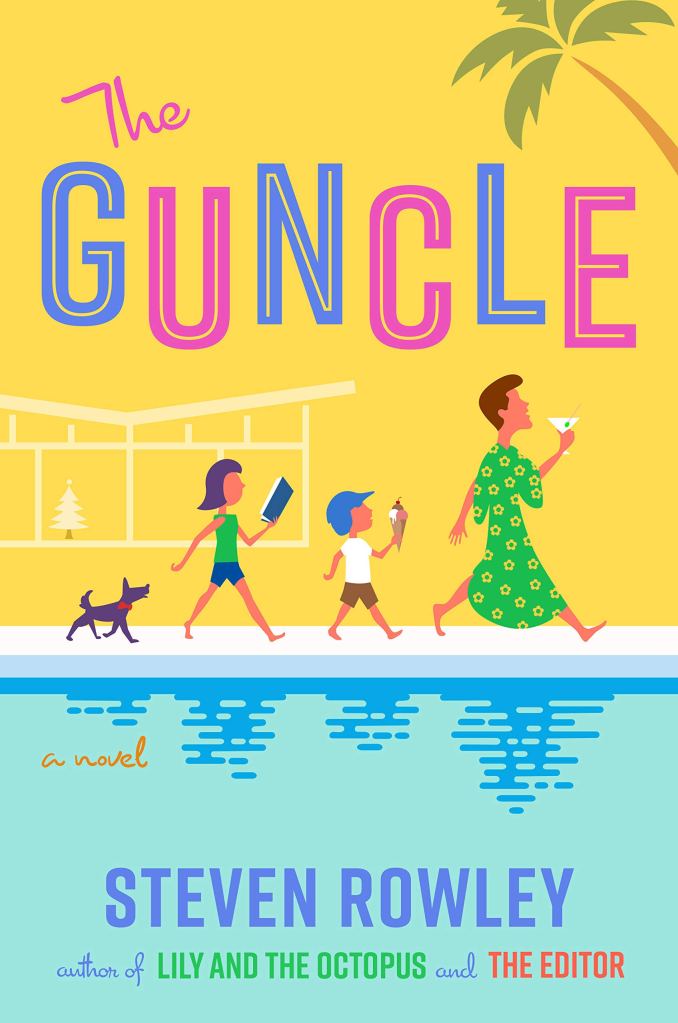

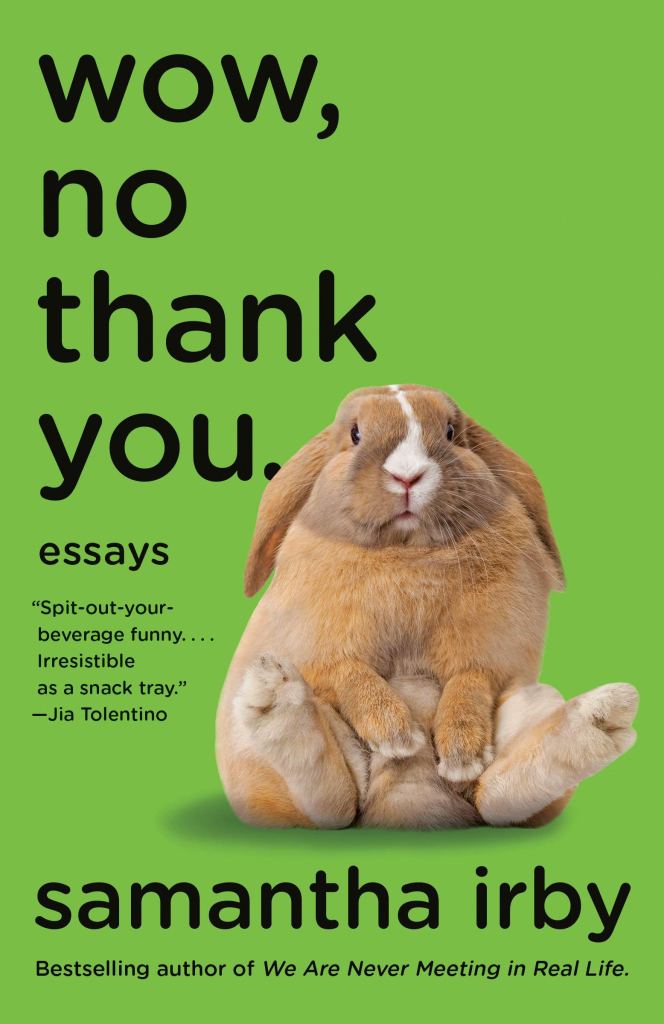

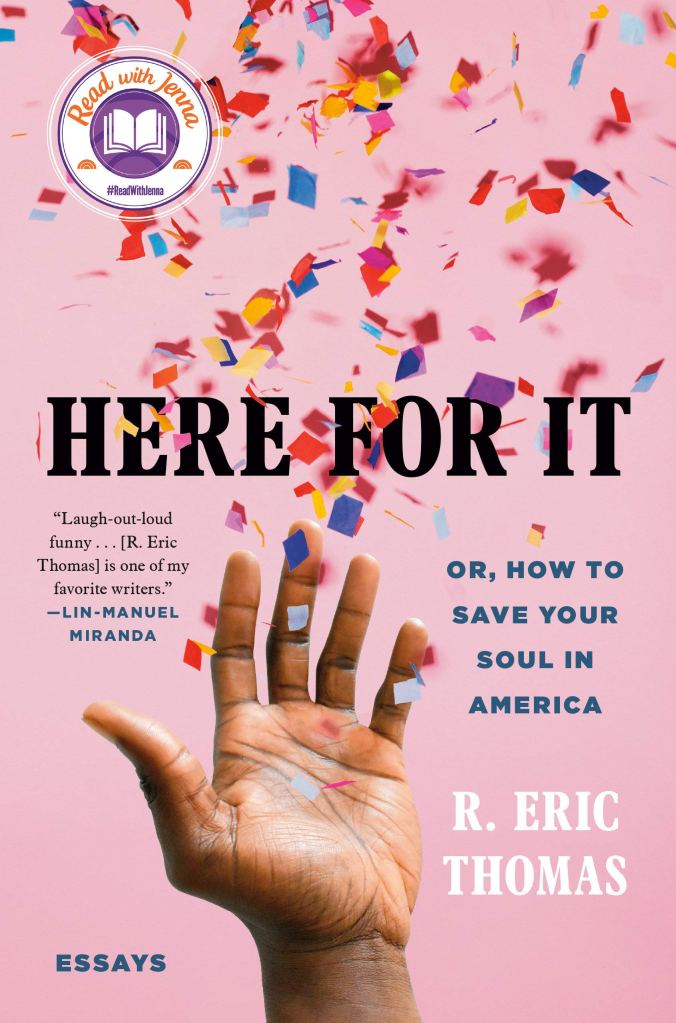


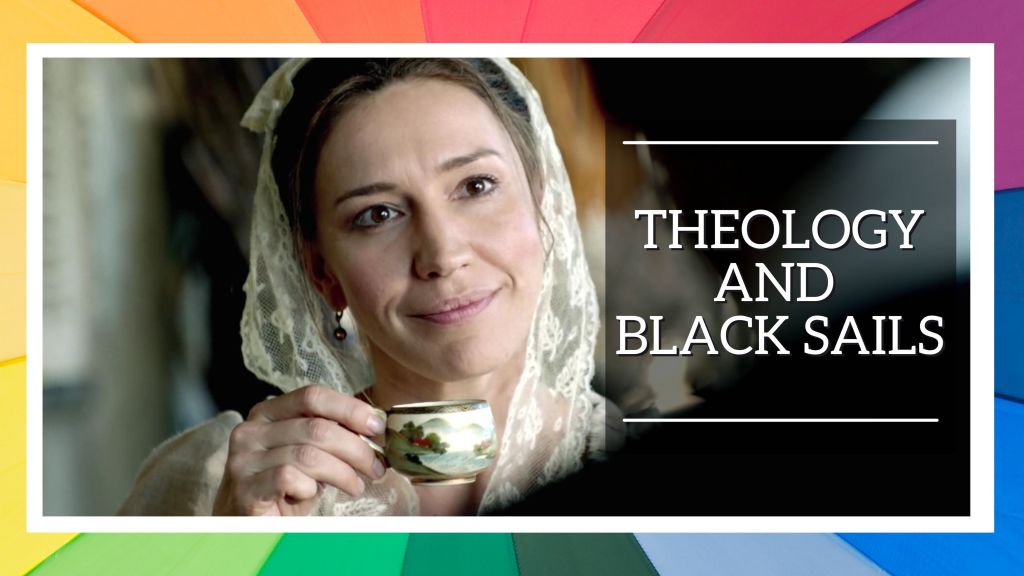


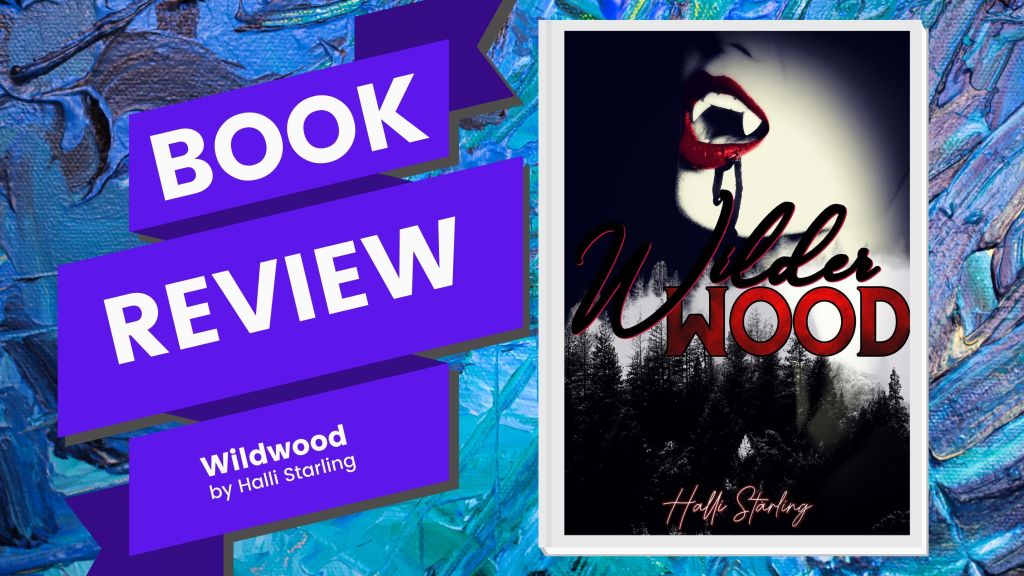

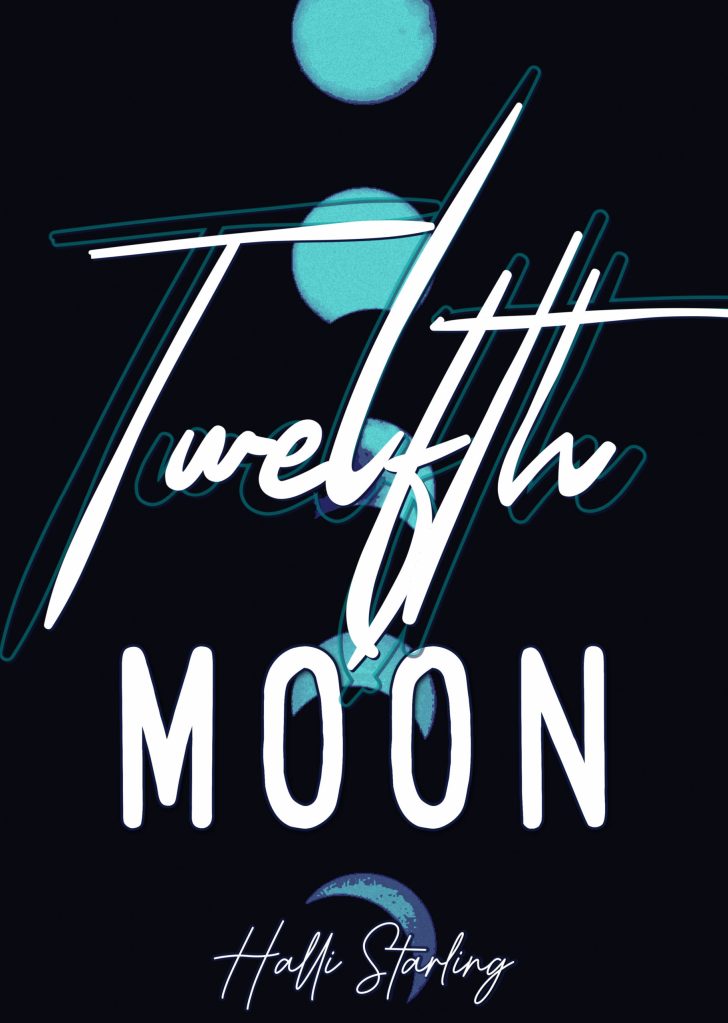
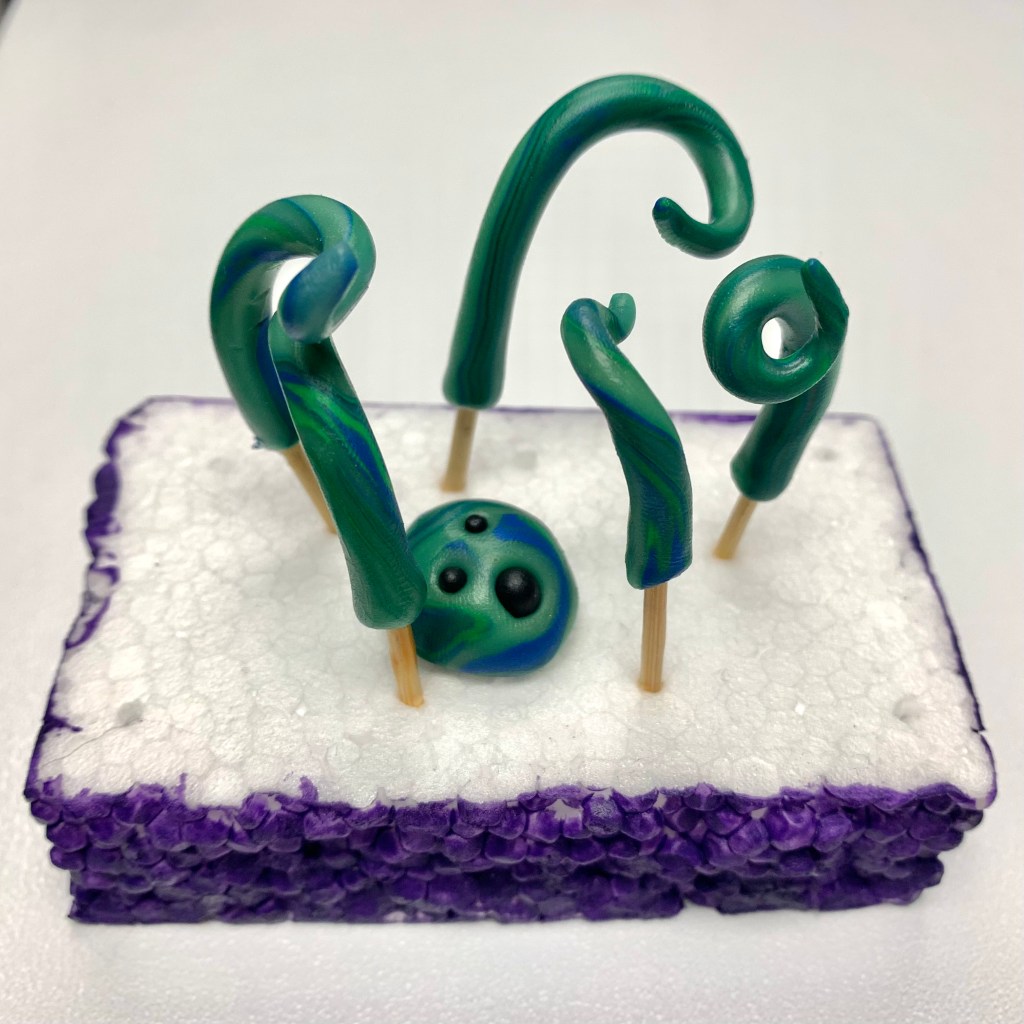
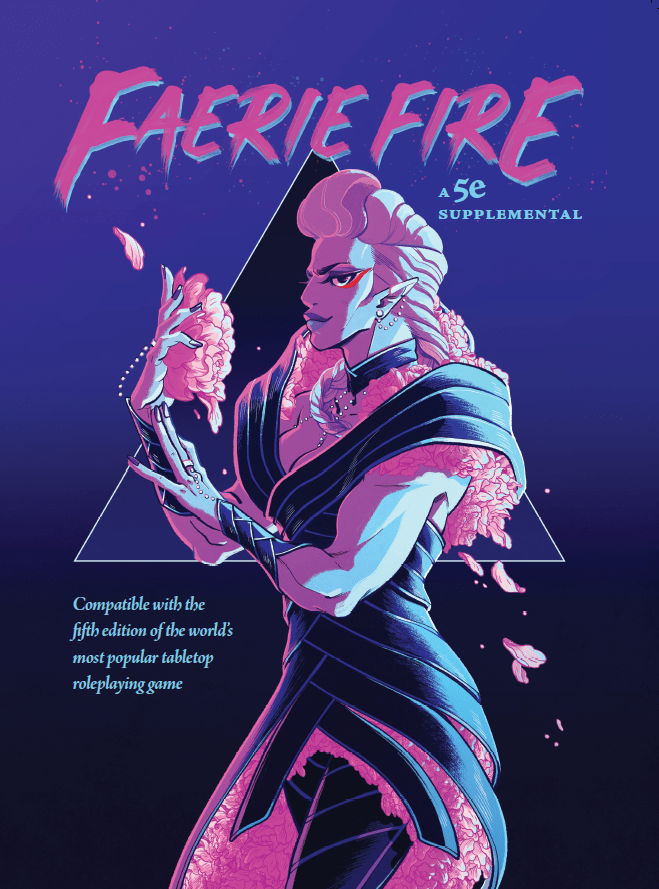







 Roar Cat Reads